/pre-wedding-photoshoot
Photography rules at Con Dao beaches: permits, drones, etiquette
Con Dao beaches require advance permission from the national park authority—no permit, no shoot. Drones are prohibited entirely. The calmest seas and clearest light run March to June; avoid July–November when monsoon rains, rough water and low visibility block shots. Solo or couple photoshoots work best with a local photographer vetted through the park office or a mainland studio (like Cáo Studio in Ho Chi Minh City or Hanoi) that coordinates permits on your behalf. Plan 2–3 weeks ahead, budget travel and park fees as cost factors, and arrive early—morning light before 08:00 hits the eastern beaches with soft, warm side light that needs no reflectors or posing cues. 📸 Book on WhatsApp — couple photoshoot ---
Why does Con Dao need a shoot permit before you arrive?
Con Dao is a national park with restricted access to preserve the ecosystem and archaeological sites. Any commercial photography—weddings, elopements, pre-wedding sessions, even solo travel portraits—requires written permission from the park's management office. Tourist snapshots on your phone don't need clearance; a hired photographer or videographer does. The permit process typically takes 1–2 weeks and involves providing a letter of intent, photographer credentials, planned shoot dates and locations, and proof of insurance or a letter from your tour operator or studio. Delays happen if paperwork is incomplete or the park is managing site restoration; applying early avoids last-minute cancellations.
Can you fly a drone for aerial beach shots?
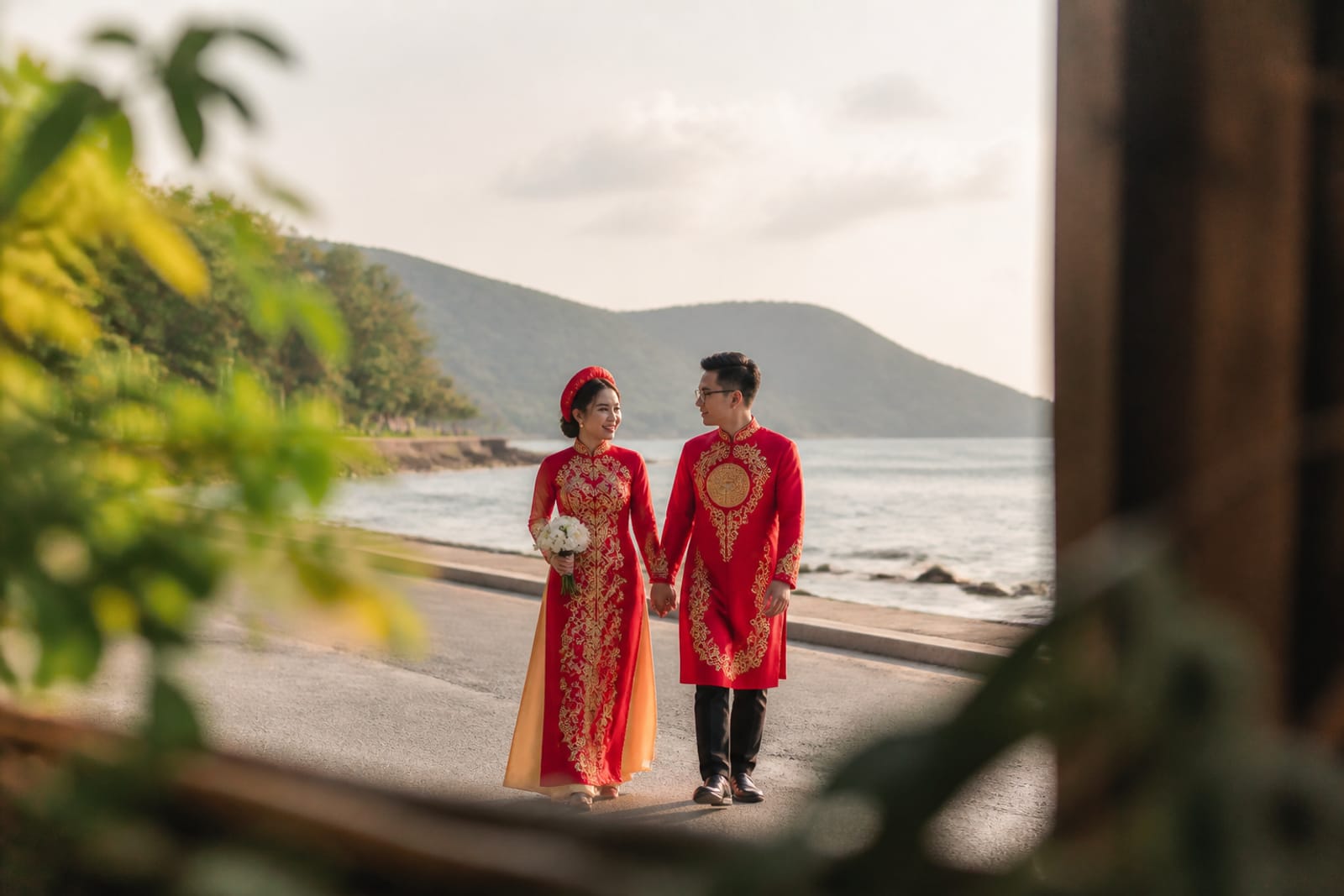
No. Drones are banned in Con Dao National Park without exception—even for personal use. The restriction is in place to protect bird nesting sites, prevent disturbance to the marine reserve, and maintain security. If your creative brief depends on drone footage, you'll need to source aerial images from licensed stock libraries or hire a filmmaker who has worked legally in permitted zones outside the park boundaries (possible on the nearby mainland coast, depending on that region's rules). Check those mainland regulations directly with local film commissions before booking. Con Dao's ground-level and water-level shots are strong enough for pre-wedding storytelling—walking along the shore, sitting on rocks, rowing a small boat—without overhead framing.
What's the best season to shoot at Con Dao?
March to June offers the calmest seas, clearest skies and most predictable light. Waters are warmest and most swimmable; mornings stay dry and wind stays light until noon. The sun rises in the east and sets in the west, giving you soft, warm light on the western beaches (An Hai, Dam Trau) in the late afternoon (4:00–5:30 pm) and on the eastern shore (Nhat Tuan, Ben Dam) in early morning (6:30–8:00 am). July to November is the monsoon and typhoon season—daily afternoon downpours arrive around 2:00 pm, skies cloud by mid-morning, seas turn grey and rough, and visibility for clear water shots drops sharply. Tet (late January–mid February) is unpredictable; the weather is cool and sometimes drizzly, and the park may have reduced staffing. Winter months (December–February) bring occasional cool, grey days unsuitable for warm, tropical framing.
| Season | Best for | Light quality | Water & crowds | Why book then |
|---|---|---|---|---|
| Mar–Jun | Couples, elopements, solo travel | Warm, soft dawn & dusk; dry mornings | Calm, clear, few tourists | Predictable weather; golden hour on both coasts same week |
| Jul–Nov | None—avoid | Grey, overcast, low angle | Rough, limited visibility | Monsoon rains, typhoon risk, park access delays |
| Dec–Feb | Winter couples, moody tones | Cool, sometimes dull; Tet chaos | Cool, occasionally rough | Quieter after Tet; challenging light reduces crowds |
| Tet week | Not recommended | Unpredictable | Crowded before, quiet after | Park staffing thin; permit processing slower |
How do you plan a shoot timeline on the island?
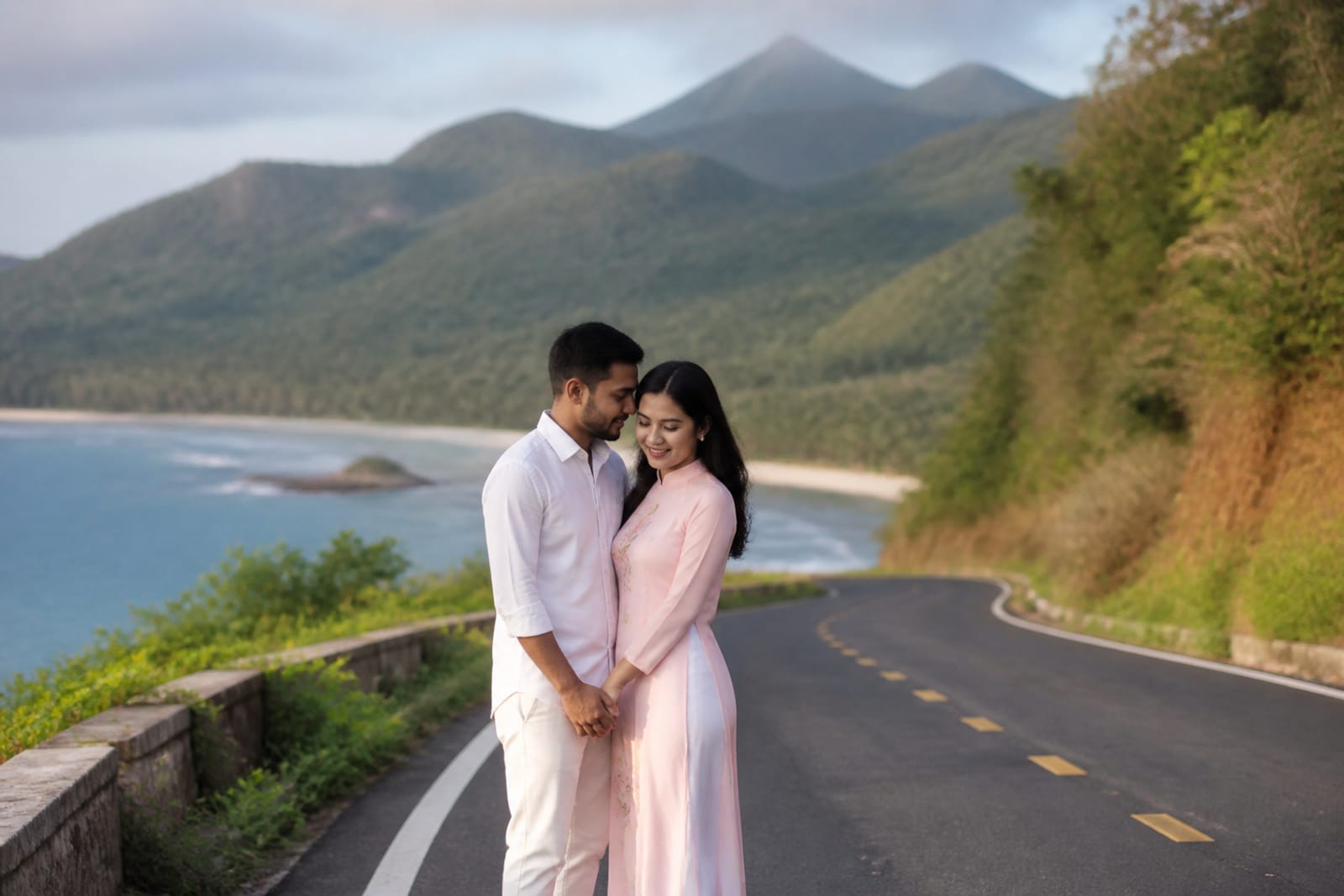
Arrive on Con Dao 1–2 days before your shoot to scout locations, adjust to the light, and confirm the permit is registered with the beach rangers. On shoot day, start at 6:30 am on your chosen beach—eastern or western coast, depending on whether you want dawn or afternoon golden hour. Eastern beaches (Nhat Tuan, Ben Dam) face the sunrise and suit dawn sessions (6:30–8:30 am), when the sun is low, side light is warm, and the beach is deserted. Western beaches (An Hai, Dam Trau) suit late afternoon (4:00–5:30 pm), when the same low, warm light comes from behind you or to the side. Midday (10:00 am–3:00 pm) is useless—harsh overhead sun creates dark eye sockets and flat, unflattering shadows. Plan outfit changes on the beach or carry a changing tent; moving between beaches adds 30–45 minutes each. A single-beach, single-outfit morning session (2–3 hours) is more realistic than chasing two coasts in one day. If you're booking a photographer through Cáo Studio (which operates from Ho Chi Minh City), the team can coordinate permits and logistics from the mainland; if hiring locally, meet your photographer the evening before to confirm the itinerary and parking.
What happens if the park denies or delays your permit?
Park denials are rare if your paperwork is complete and your intended shoot respects restricted zones (archaeological sites, breeding beaches, research areas). Delays of 2–5 business days are common during peak seasons or if staff are managing urgent conservation tasks. Never assume the permit will be approved; build a buffer of at least 3 weeks between deciding on Con Dao and your intended shoot date. If the park delays approval past your travel dates, you have two fallback options: reschedule your trip, or pivot to a mainland beach within Ho Chi Minh City's day-trip radius—Vung Tau or Mui Ne—where no national-park permit is required (local tourism boards may require a small notification, but turnaround is 24 hours). Cáo Studio's couple photoshoot team is based in Saigon and can pivot to these alternatives quickly if Con Dao permits fall through. Never book a non-refundable hotel without confirming the permit in writing first.
Do I need to notify local rangers before the shoot?
Yes. The day before or the morning of your shoot, visit the nearest beach ranger station with a printed copy of your approved permit. Introduce your photographer (or team if Cáo Studio's crew is traveling to support you), confirm your planned shoot start time and beach boundary, and ask about any temporary closures, wildlife nesting activity, or tide tables. Rangers appreciate courtesy and can warn you of hazards—strong currents, rockfall after rain, occasional unexploded ordnance in historical zones—that could affect your framing or safety. If your session includes water shots (wading, boat hire), rangers can direct you to safe entry points and approved boat operators. Early-morning notification ensures rangers on the dawn shift know you're there and won't question your presence.
---
What to check before you book a Con Dao photoshoot
Permit readiness: Does the studio or photographer you're considering handle the park permit application, or do you? If you're hiring independently, apply yourself 3 weeks before your date—don't assume your photographer will. Cáo Studio manages the permit process for its clients; ask on WhatsApp for confirmation.
Season fit: Is your travel date between March and June? If you're locked into July–November, Con Dao is risky—ask for a fallback plan (Vung Tau, Mui Ne, or a reshooting clause).
Local coordination: Who arranges parking, beach access, and ranger notification? A studio with a Saigon base like Cáo Studio has existing park contacts; a purely online or international freelancer may not. Verify they've shot Con Dao before.
Outfit and weather: Con Dao has no shade and no facilities—bring sunscreen, a sarong or lightweight cover-up, and a dry bag for valuables. Ao dai shoots need careful planning (fabric gets wet easily); pair with hotel makeup & hair so you can freshen up between locations.
Drone and video: If your brief mentions "aerial shots" or "drone footage," clarify upfront that drones are banned. Ground-level video is allowed with a permit; confirm your photographer has videography permission if that's part of your package.
---
FAQ
Can I hire a Con Dao local photographer to avoid dealing with permits?
Local photographers still need a permit from the park office. The permit is tied to the shoot date, location and photographer name—not to you. A reputable local can navigate the process faster (2–3 days vs. 1–2 weeks for overseas applicants), but you need to verify they're registered with the park authority. Ask for proof of past approvals before booking. Local photographers still need a permit. Hiring one doesn't skip the requirement—it only speeds the process if they have existing park contacts. Confirm they've shot Con Dao legally before. Cáo Studio's mainland base (Saigon or Hanoi) can also coordinate by working with local fixers if you prefer a known international team.
What if I just want casual travel snapshots—do I need a permit?
No. Personal photos on your phone or camera are fine. A permit is only required when you hire a photographer or videographer for a commercial shoot (wedding, elopement, pre-wedding, couple session, even a solo travel session you're paying someone to direct). Instagram content shot by the people in the photo is not commercial.
Are there restricted zones I can't shoot in?
Yes. Archaeological sites (old prisons, tombs), military monuments, and marked nesting beaches are off-limits or require separate permission from heritage authorities. Your permit letter will list permitted beaches. Ask rangers for an up-to-date map when you check in.
Can I reschedule my shoot if the permit is delayed?
Yes. Reputable studios and photographers offer flexible dates with a buffer. If you're booking with Cáo Studio, discuss contingency dates when you inquire on WhatsApp. If you're hiring independently, agree on a reschedule clause or refund policy in writing before you pay.
Is Con Dao better for pre-wedding or couple shoots than other Vietnam beaches?
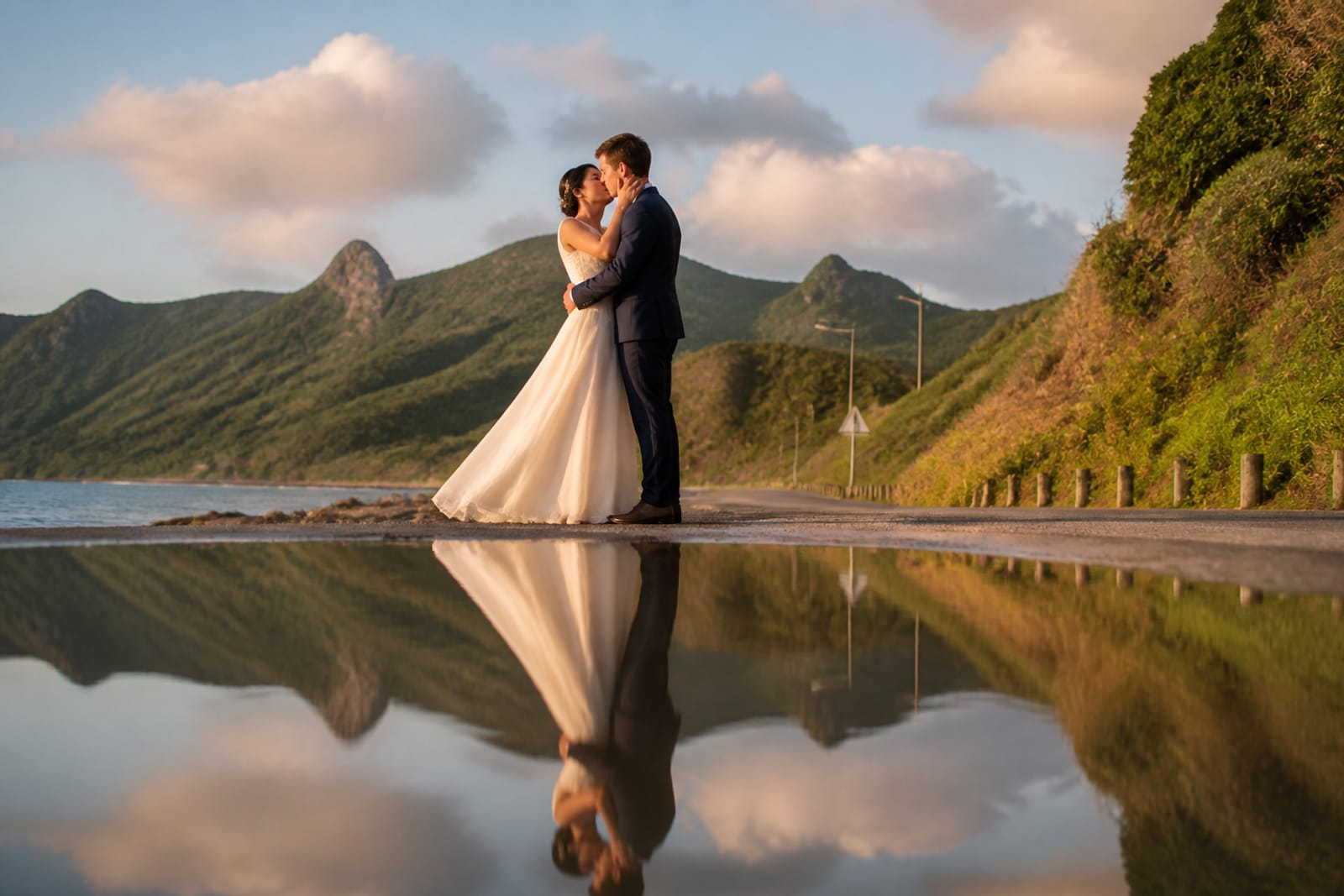
Con Dao suits intimate, quieter couple or elopement shoots (no crowds, dramatic rocks, clear water). If you want a larger bridal party or a high-volume of outfit changes, the logistical overhead (permit, ferry, island timing) makes it harder than a mainland beach. Compare Cáo Studio's pre-wedding options in Hanoi, Ho Chi Minh City, or Hoi An—each has its own light, season and permit profile.
How much does the permit cost?
Park entry and permit fees vary; check the current prices directly with Con Dao National Park's office or ask when you reach out to Cáo Studio on WhatsApp for a quote. Fees are a cost factor (paid separately from photographer fees), not included in a photoshoot package. --- 🌸 See the lookbook | 📋 FAQ | 👰 Pre-wedding & elopement
FAQ
Can I hire a Con Dao local photographer to avoid dealing with permits?
Local photographers still need a permit from the park office. The permit is tied to the shoot date, location and photographer name—not to you. A reputable local can navigate the process faster (2–3 days vs. 1–2 weeks for overseas applicants), but you need to verify they're registered with the park authority. Ask for proof of past approvals before booking. Local photographers still need a permit. Hiring one doesn't skip the requirement—it only speeds the process if they have existing park contacts. Confirm they've shot Con Dao legally before. Cáo Studio's mainland base (Saigon or Hanoi) can also coordinate by working with local fixers if you prefer a known international team.
What if I just want casual travel snapshots—do I need a permit?
No. Personal photos on your phone or camera are fine. A permit is only required when you hire a photographer or videographer for a commercial shoot (wedding, elopement, [pre-wedding](/pre-wedding-photoshoot), couple session, even a solo travel session you're paying someone to direct). Instagram content shot by the people in the photo is not commercial.
Are there restricted zones I can't shoot in?
Yes. Archaeological sites (old prisons, tombs), military monuments, and marked nesting beaches are off-limits or require separate permission from heritage authorities. Your permit letter will list permitted beaches. Ask rangers for an up-to-date map when you check in.
Can I reschedule my shoot if the permit is delayed?
Yes. Reputable studios and photographers offer flexible dates with a buffer. If you're booking with [Cáo Studio](/saigon), discuss contingency dates when you inquire on WhatsApp. If you're hiring independently, agree on a reschedule clause or refund policy in writing before you pay.
Is Con Dao better for pre-wedding or couple shoots than other Vietnam beaches?
Con Dao suits intimate, quieter couple or elopement shoots (no crowds, dramatic rocks, clear water). If you want a larger bridal party or a high-volume of outfit changes, the logistical overhead (permit, ferry, island timing) makes it harder than a mainland beach. Compare [Cáo Studio's pre-wedding options](/pre-wedding-photoshoot) in Hanoi, Ho Chi Minh City, or Hoi An—each has its own light, season and permit profile.
How much does the permit cost?
Park entry and permit fees vary; check the current prices directly with Con Dao National Park's office or ask when you reach out to [Cáo Studio on WhatsApp](/book) for a quote. Fees are a cost factor (paid separately from photographer fees), not included in a photoshoot package. --- [🌸 See the lookbook](/lookbook) | [📋 FAQ](/faq) | [👰 Pre-wedding & elopement](/pre-wedding-photoshoot)
Ao dai, makeup, hair and a local photographer in Hanoi or Saigon — one WhatsApp message.