/pre-wedding-photoshoot
Photography rules at Da Lat flower gardens: permits, drones and what t
Da Lat's flower gardens—Dalat Flower Park, Thien Vien Tram Huong, and private tunnel gardens—each have distinct photography policies. Most permit still photography free for tourists but restrict drones, tripods or commercial crews without permission; private gardens often allow both but charge a booking fee. Light is best during golden hour (sunrise 6–7 am, sunset 4:30–5:30 pm, depending on season); midday sun flattens color and washes out blooms. Dry season (Dec–Apr) offers clear skies and peak blooms (dahlias, roses, carnations); rainy season (May–Nov) brings mist that can work for moody frames but reduces flower vibrancy. Before booking a photoshoot, verify the specific garden's current rules on WhatsApp with Cáo Studio—if you want a directed shoot with makeup and styling, the team can scout permitted angles; if you're shooting self-guided, confirm whether tripods and drones are allowed on the day you plan to visit.
Which Da Lat flower gardens allow commercial photography?
Dalat Flower Park (the main municipal garden near the city center) permits tourist photography but requires a commercial photography permit or guide liaison for crew shoots—book in advance. Thien Vien Tram Huong (the Buddhist-affiliated garden with tunnel walkways and rose lanes) has stricter rules; still photography is allowed for visitors, but tripods and formal sessions need the manager's approval and sometimes a fee. Private tunnel gardens scattered around the outskirts often welcome photoshoots if you book directly with the owner—some offer makeup facilities, others don't. Each garden changes its policies seasonally and after weather damage, so ask Cáo Studio to confirm current rules before you commit to a shoot date.
📸 Book on WhatsApp — ao dai photoshoot
What's the best time of day to shoot at Da Lat flower gardens?
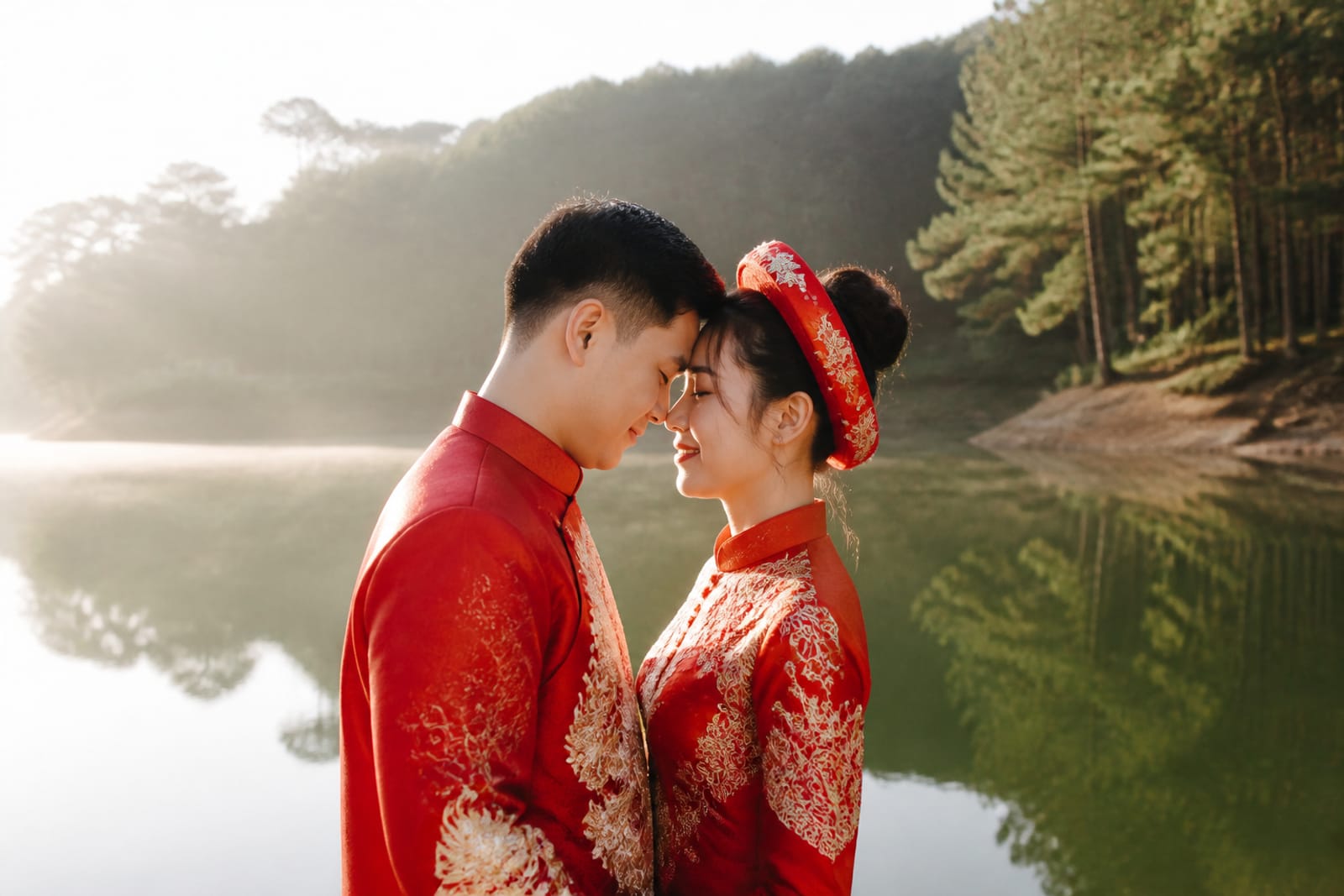
Golden hour (6–7 am at sunrise, 4:30–5:30 pm at sunset) delivers soft, warm light that flatters blooms and skin tone without harsh shadows. Morning light is steadier; evening light shifts fast. Midday (10 am–3 pm) is usually flat and harsh, washing color from flowers and creating unflattering shadows on faces. Early morning also means fewer tourists, so framing is cleaner. If you book a pre-wedding photoshoot at Da Lat, timing at sunrise or late afternoon is non-negotiable—it's the difference between frames you treasure and frames that look like midday snapshots. Weather in Da Lat at sunrise is often misty (Dec–Apr especially); that mist can be beautiful if you expect it, but it also reduces bloom visibility.
What to wear under an ao dai in Da Lat gardens for comfort and framing.
Wear a fitted white or cream slip dress (knee-length, thin cotton or silk blend) under your ao dai—it prevents transparency and reduces bunching at the waist. Avoid padded bras or visible undergarments; a simple bandeau or seamless bra works best. Flat shoes or soft ballet flats are essential; garden paths are uneven, wet in the morning, and stilettos sink into soil. If you're not wearing an ao dai, choose soft fabrics (linen, cotton) in jewel tones or pastels that won't compete with flower color—avoid bright white or neon, which overexposes in morning light. Long sleeves or a light cardigan help if morning is cool (it often is in Dec–Feb). Cáo Studio's makeup & hair at your hotel service can prime your look for Da Lat's altitude and humidity—makeup lasts longer if applied with setting spray before you travel to the gardens.
Drone and tripod rules: what you can and can't do.
Most Da Lat flower gardens prohibit drones without a permit from the municipality or garden management—ask first, never assume. Tripods are often allowed for tourist photos but can be restricted during group tour hours (late morning to early afternoon). Commercial drone footage requires a formal aviation permit from Vietnam's Civil Aviation Authority and garden permission; if your shoot includes drone work, Cáo Studio can coordinate with local fixers, but this adds time and cost factors. Handheld shooting (camera or phone) is universally permitted as a tourist. If you're planning a couple photoshoot or elopement with overhead or drone framing, confirm with your photographer before booking—a local crew familiar with Da Lat's current rules saves delays.
Dry season vs. rainy season: which is actually better for flower shots?
| Season | Bloom quality | Light conditions | Crowds | What to expect |
|---|---|---|---|---|
| Dry (Dec–Apr) | Peak—dahlias, roses, carnations at full color | Clear sunrise/sunset, occasional mist 6–8 am | Moderate to high, especially weekends | Cool mornings (12–18°C), midday warmth; stable light for editing |
| Rainy (May–Nov) | Reduced—some blooms stressed, colors muted | Morning mist (moody but dim), afternoon clouds block light | Lower, shorter tours | Afternoon showers, wet paths, unpredictable light; mist fades by 8:30 am |
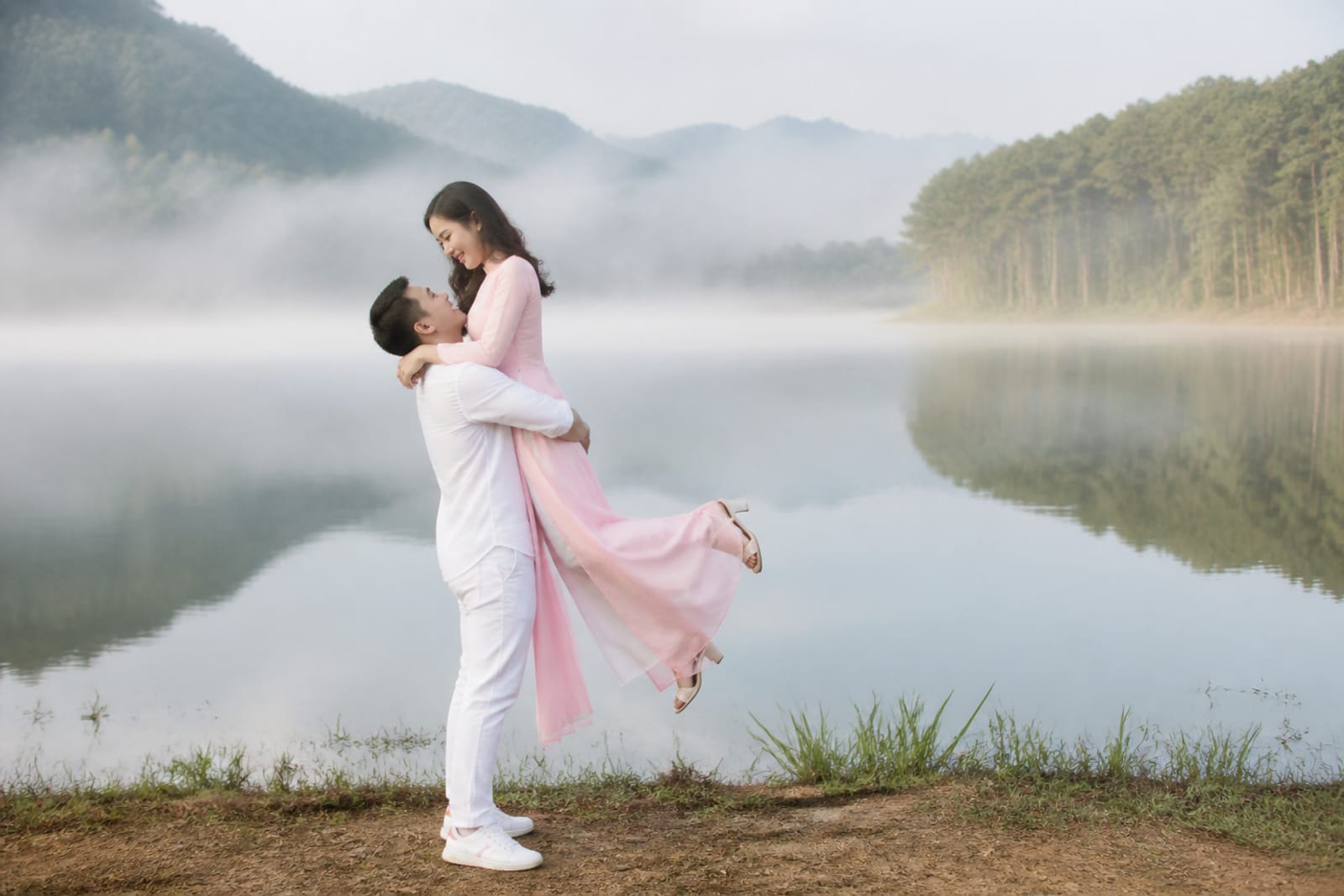
Dry season is objectively better for color saturation and predictable light; rainy season requires technical skill to expose for mist and compensate for dim mornings. If you're booking a professional pre-wedding photoshoot in Da Lat, dry season (Dec–Mar) minimizes rescheduling risk. Rainy season is possible if you're comfortable with moodier frames and earlier call times (5:30 am to catch usable light before clouds thicken).
How to compare hiring Cáo Studio vs. a local Da Lat photographer.
| Factor | Cáo Studio | Local Da Lat photographer |
|---|---|---|
| One-team experience | Director + makeup artist + photographer in one booking; coordinated vision, no vendor juggling | Often freelance; you coordinate makeup, styling, location separately |
| Ao dai, hair & makeup included | Outfit, artist and camera in one session (confirmed on WhatsApp) | You source or rent separately; timing depends on multiple vendors |
| Turnaround & edits | 48-hour delivery (exact inclusions confirmed on WhatsApp) | Varies; local photographers often slower, especially peak season |
| Garden knowledge | Coordinates permit checks; familiar with Hanoi/Saigon/Hoi An light; Da Lat is outside main bases | Deep local knowledge of current rules, best light angles, seasonal changes |
| Cost factors | Travel time from Hanoi/Saigon; booking in advance preferred | Lower daily rate if based in Da Lat; no travel surcharge; May require deposit |
| Best for | Elopement, couple session with styling; you want one message, one team | Budget-conscious, last-minute bookings; you're comfortable coordinating vendors |
Cáo Studio shoots in Hanoi, Ho Chi Minh City and Hoi An—Da Lat requires a planning conversation on WhatsApp to discuss travel dates and logistics. A local Da Lat photographer costs less per hour but you manage multiple services. If you want makeup, outfit and direction all in one booking with edited frames in 48 hours, Cáo Studio is the fit; if you prefer a local fixer who knows Da Lat's gardens intimately and you're flexible on turnaround, a local crew may suit you better.
What to check before you book: the pre-shoot checklist.
- Garden rules, current month. Contact the garden directly or ask Cáo Studio to confirm on WhatsApp. Rules change after weather or new management.
- Light & season. Pick dry season (Dec–Apr) for predictable color; rainy season for moody but dimmer frames.
- Call time realism. Golden hour at 6:30 am means arriving 5:45 am. Da Lat altitude is 1,500 m; allow extra time if you're traveling from the lowlands.
- Makeup durability. If booking makeup at your hotel, ask for a setting spray suited to cool, humid mountain air.
- Outfit fit & undergarments. If wearing an ao dai, try it on the day before and confirm shoe grip on wet garden paths.
- Photographer familiarity with the specific garden. Ask whether they've shot there recently and how they'd frame your session around current crowds and light.
- Delivery & editing timeline. Confirm exactly how many edited photos and what format (digital only, prints, album) before you pay.
- Permit or commercial liability. If the photographer uses a tripod or drone, ask whether they have the garden's written permission.
- Backup plan. Rain is rare in Dec–Feb morning, but ask the photographer what happens if weather closes the garden.
- Meet-and-greet or site scout. If possible, have a video call with the team to review angles and confirm your vision—it reduces mismatched expectations.
---
Why Cáo Studio for Da Lat shoots.
If you're planning a pre-wedding photoshoot in Da Lat, the advantage of working with Cáo Studio is one coordinated team: the director scouts light and permits before the shoot day, the makeup artist travels with you (if booked), and the photographer knows the studio's framing language. You get one consistent message, not three vendors pulling in different directions. The studio is based in Hanoi and Ho Chi Minh City; Da Lat shoots require advance planning on WhatsApp to arrange travel and timing. For a full ao dai photoshoot or couple photoshoot in Da Lat, this upfront coordination means fewer surprises and faster edits after the shoot.
📸 Book on WhatsApp — ao dai photoshoot
---
FAQ
Do I need a permit to shoot at Da Lat Flower Park if I'm a tourist with a phone camera?
Tourist photography is free and unrestricted. Commercial crews (tripods, drones, makeup artists on-site, paid sessions) need to ask the garden office in advance. Confirm current rules before you arrive, as policies change.
What's the altitude in Da Lat and does it affect photography?
Da Lat sits at 1,500 m elevation. Air is thinner and cooler; light appears crisper but can shift faster in evening. Bring extra water if traveling from lowlands, as altitude can affect energy for early morning shoots.
Can I rent a wedding dress or ao dai in Da Lat, or should I bring one?
Limited rental options exist in Da Lat; most outfits are DIY or shipped from Hanoi/Saigon. Cáo Studio can coordinate ao dai rental and deliver to your Da Lat hotel—confirm timing on WhatsApp.
Which garden has the fewest crowds for a quiet couple shoot?
Private tunnel gardens and smaller municipal gardens are quieter than Dalat Flower Park, especially before 8 am and after 4 pm. Ask your photographer to scout or book a private-access time with the garden owner.
If it rains the morning of my shoot, can we reschedule for the same day?
Rain in Da Lat (May–Nov) usually passes by 8:30–9 am. Morning showers don't ruin shoots if light returns; discuss backup timing with your photographer beforehand. Dry season (Dec–Apr) rarely has rain, so scheduling flexibility is lower.
How do I know if a local photographer has the current rules for Da Lat gardens?
Ask them: "When was the last time you shot at [garden name], and what were the tripod/drone rules?" Ask for recent example photos shot there. If they guess or seem unsure, ask Cáo Studio to coordinate—the team vets rules before confirming your date.
FAQ
Do I need a permit to shoot at Da Lat Flower Park if I'm a tourist with a phone camera?
Tourist photography is free and unrestricted. Commercial crews (tripods, drones, makeup artists on-site, paid sessions) need to ask the garden office in advance. Confirm current rules before you arrive, as policies change.
What's the altitude in Da Lat and does it affect photography?
Da Lat sits at 1,500 m elevation. Air is thinner and cooler; light appears crisper but can shift faster in evening. Bring extra water if traveling from lowlands, as altitude can affect energy for early morning shoots.
Can I rent a wedding dress or ao dai in Da Lat, or should I bring one?
Limited rental options exist in Da Lat; most outfits are DIY or shipped from Hanoi/Saigon. Cáo Studio can coordinate [ao dai rental](/ao-dai-rental) and deliver to your Da Lat hotel—confirm timing on WhatsApp.
Which garden has the fewest crowds for a quiet couple shoot?
Private tunnel gardens and smaller municipal gardens are quieter than Dalat Flower Park, especially before 8 am and after 4 pm. Ask your photographer to scout or book a private-access time with the garden owner.
If it rains the morning of my shoot, can we reschedule for the same day?
Rain in Da Lat (May–Nov) usually passes by 8:30–9 am. Morning showers don't ruin shoots if light returns; discuss backup timing with your photographer beforehand. Dry season (Dec–Apr) rarely has rain, so scheduling flexibility is lower.
How do I know if a local photographer has the current rules for Da Lat gardens?
Ask them: "When was the last time you shot at [garden name], and what were the tripod/drone rules?" Ask for recent example photos shot there. If they guess or seem unsure, ask Cáo Studio to coordinate—the team vets rules before confirming your date.
Ao dai, makeup, hair and a local photographer in Hanoi or Saigon — one WhatsApp message.