/pre-wedding-photoshoot
Photography rules at Ghenh Rang: permits, drones and what to check bef
Ghenh Rang (also called Ghenh Rang Tien Sa) is a protected rocky coastline near Quy Nhon, central Vietnam. Drones and tripods require local permits—many photographers skip this step, risking fines. Best light runs 6–7 am (soft side light on rock faces, no crowds) or 5–6 pm (golden hour, tourists leaving). Sessions last 2–3 hours including walks between coves. Cáo Studio does not shoot Quy Nhon, but our Saigon team has coached couples heading south on permits, tides and outfit fit for rocky terrain. Book a local Quy Nhon photographer who verifies drone status and checks tide charts 48 hours before your date—skipping these steps wastes your morning light and money. 📸 Book on WhatsApp — pre-wedding photoshoot ---
Is a drone shot legal at Ghenh Rang, and what paperwork do I need?
Ghenh Rang sits within a protected coastal area. Drone flights require a permit from the local People's Committee in Quy Nhon District and formal approval from the Ministry of Defense (for airspace clearance). Most individual photographers do not hold this permit; many ignore the requirement. If caught, fines are substantial and photos are confiscated. Hire a local photographer licensed to fly drones, or commit to ground-level frames only. Ask your photographer to show proof of permits in writing before your booking date.
---
What time of day gives the best light for rocky coastline shots?
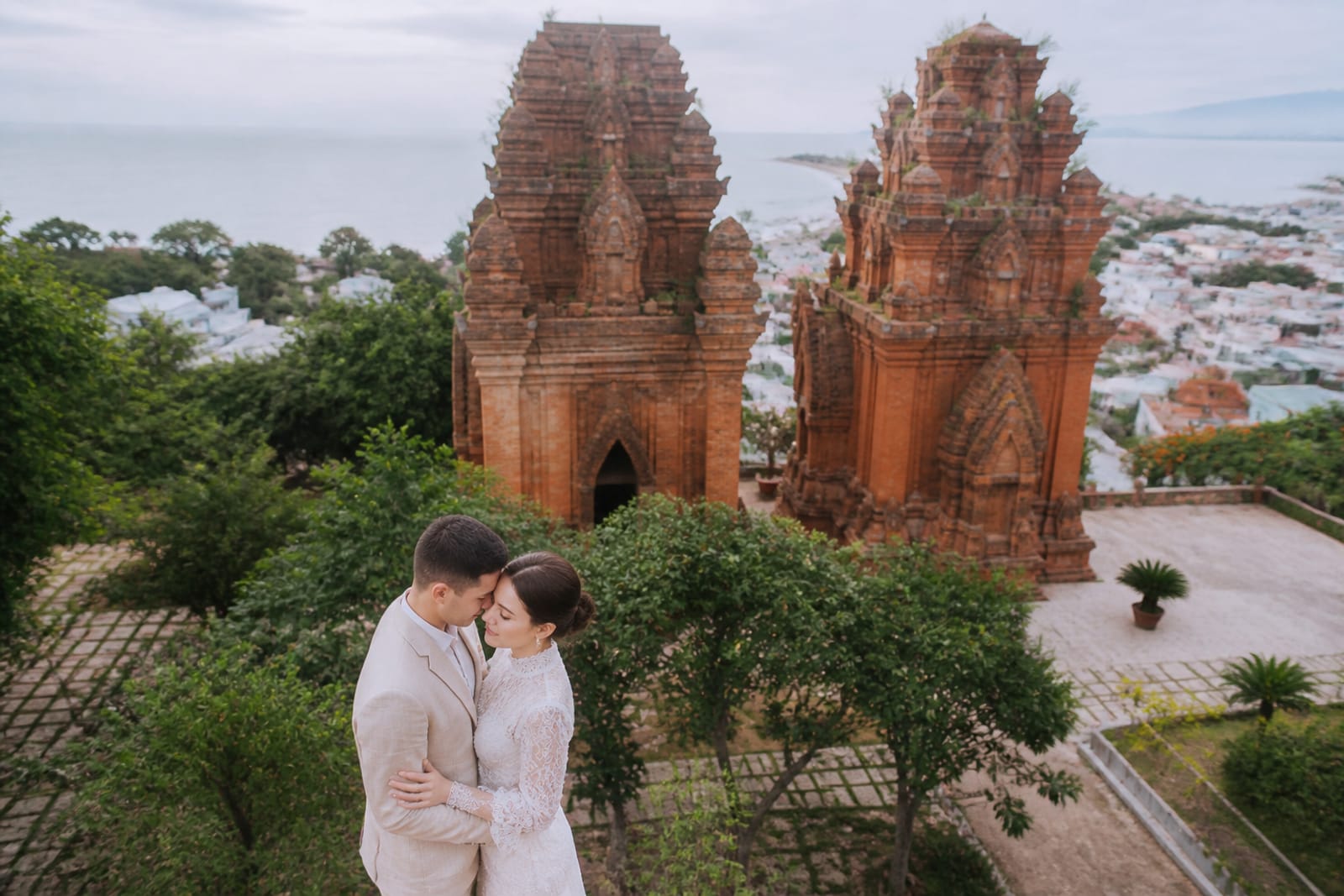
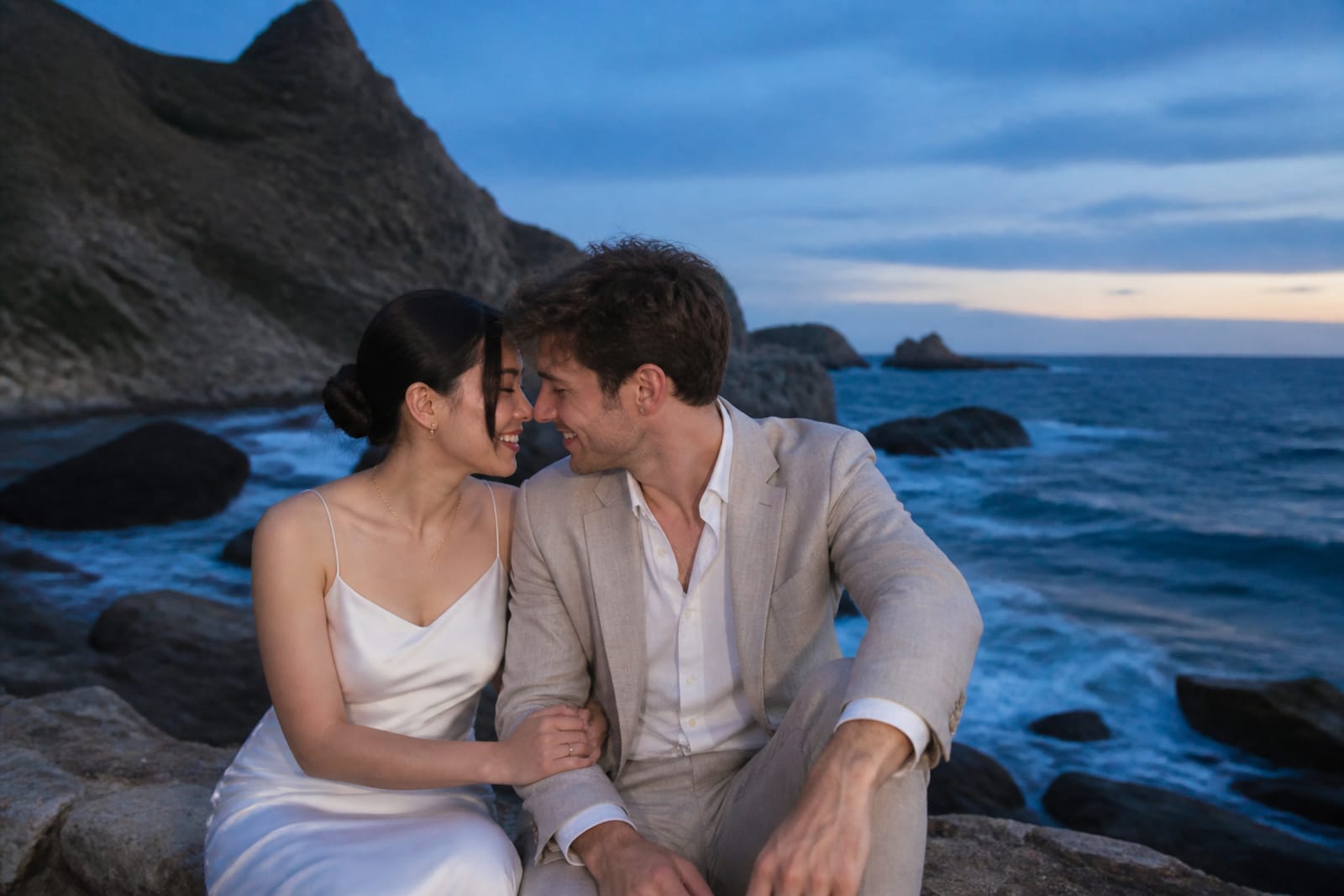
Early morning (6–7 am, Feb–Aug) produces soft side light that sculpts the grey and rust-coloured rocks without flattening them. Water is calmest then, and tourists have not yet arrived. Late afternoon (5–6 pm) delivers golden hour glow on rock faces, but the sun dips fast and crowds linger. Midday (10 am–3 pm) is bright and harsh—rocks lose texture, and harsh shadows fall under your face. Schedule your session for one of the two windows above. Confirm tide height 48 hours before: low tide exposes smooth platforms (safe for outfit shots), high tide narrows walkable space but frames rockier, more dramatic backdrops.
---
How do I choose between a Quy Nhon local photographer and travelling to Hanoi or Ho Chi Minh City for a shoot?
| Option | Best for | Light & Season | Logistics & Cost |
|---|---|---|---|
| Local Quy Nhon photographer | couples prioritising Ghenh Rang and minimal travel time | Feb–Aug, 6–7 am or 5–6 pm; typhoon risk Sep–Dec | Must vet permits, portfolio, outfit/hair knowledge; no backup if weather delays |
| Cáo Studio Saigon team (travel-coordinated to Quy Nhon) | couples wanting one team handling makeup, hair, outfit and camera; no vendor-stitching | Same ideal light; team scouts location in advance | one booking covers all services; higher base cost offset by outfit rental, hair and makeup included |
| Hanoi-based photographer (post-visit shoot) | couples already in Hanoi for a few days; lower travel friction | best Feb–Apr (cool, clear); May–Sep hot and grey | works if Ghenh Rang timing is flexible; easy rescheduling in city |
Local Quy Nhon photographers are cheaper upfront if they hold permits; Cáo Studio travel shoots cost more but eliminate vendor coordination and ensure backup light alternatives (other coves, city backdrops). If your session is your main reason to visit Quy Nhon, a local is sensible. If you want one team handling makeup and outfit, book Cáo Studio and confirm travel dates on WhatsApp.
---
What should I wear to look good on rocky terrain, and how does ao dai work at Ghenh Rang?
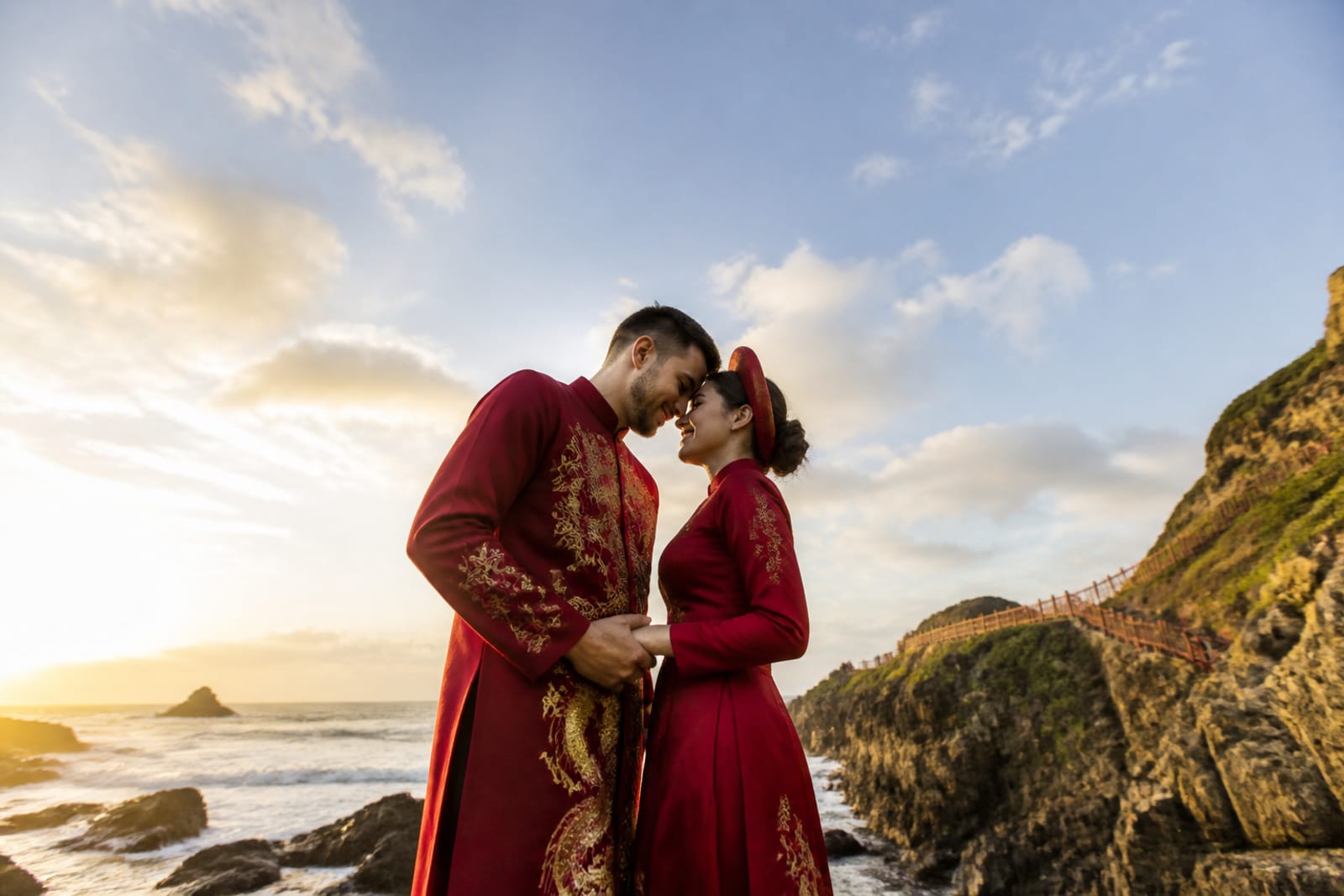
Rocks are sharp and unforgiving. Avoid flowing, heavy skirts (ao dai) on uneven surfaces—fabric catches, and you'll stumble. If set on traditional dress, pair a lightweight, knee-length ao dai with flat slip-on shoes (not heels; rocks crumble underfoot). Couples often switch outfits: light ao dai for calm-water shots near tide line, then shorts or lightweight pants for clambering over rock faces. Bring a change of top—moisture from sea spray and sweat will mark fabric, and a fresh layer mid-shoot costs nothing. Hair works best in loose, textured waves or half-up styles; tight buns blow apart in coastal wind. Plan outfit transport in a waterproof bag; rocks leave marks on fabric if you sit down.
Rent an ao dai from a Saigon or Hanoi studio beforehand if hiring a local Quy Nhon photographer—they won't know which styles work on rocky coastlines.
---
What are the biggest mistakes couples make at Ghenh Rang, and how do I avoid them?
Timing mistakes:
- Booking a 10 am shoot and losing light before reaching the best coves (Ghenh Rang spans a wide coastline; walking takes 20–30 minutes between spots).
- Ignoring tide charts: high tide can trap you on isolated rocks, and low tide sometimes exposes slippery algae or unsafe drop-offs.
- Shooting mid-season (May–Sep) during rainy or grey weather without a backup date clause in your contract.
Permit & safety mistakes:
- Hiring a photographer who brings a drone without permits (fines, confiscated footage, ruined session).
- Ignoring warnings about slippery rock surfaces—couples injure ankles and knees trying posed shots on wet stone.
Outfit & logistics mistakes:
- Wearing white or pale fabric that shows dirt and salt spray immediately (greys, warm earth tones, navy hold colour better).
- Not scouting the location with your photographer beforehand; many photographers shoot Ghenh Rang only once and miss protected zones or best light angles.
Before booking, ask your photographer:
- "Can you show me your drone permits or confirm this shoot is tripod-only?" (in writing)
- "Have you shot Ghenh Rang before? Do you know the tide chart for my date?"
- "If weather forces a reschedule, does my booking roll to another date?"
- "What's your backup plan if the permit office denies my session?"
A photographer who hesitates on these questions has not worked Ghenh Rang seriously.
---
Should I hire a Quy Nhon photographer or book a pre-wedding session in Hanoi or Ho Chi Minh City instead?
If Ghenh Rang is a must-have backdrop and you're already in Quy Nhon, a local photographer saves travel cost and knows the site. If you want one coordinated session with makeup, hair, outfit and camera in one team, or if you're flexible on location, book Cáo Studio's pre-wedding package in Hanoi or Ho Chi Minh City. A local Quy Nhon photographer typically costs less upfront but requires you to vet permits and outfit knowledge independently. Cáo Studio's travel-coordinated sessions cost more but include wardrobe, styling and a team that scouted the site—no vendor stitching, no permit surprises.
Check permit and tide status 2 weeks before your date. If your photographer cannot confirm both in writing, reschedule or hire someone else.
📸 Book on WhatsApp — pre-wedding photoshoot
---
What to check before you book
| Item | Check | How |
|---|---|---|
| Drone permits | Ask for written proof of local district + Defence Ministry clearance | Request copies of permits or confirmation letter from the permit office |
| Site familiarity | Photographer has shot Ghenh Rang at least twice | Ask for portfolio from Ghenh Rang, not generic Vietnam coastal shots |
| Tide & weather backup | Photographer provides tide chart for your date and rescheduling clause | Review the contract; confirm backup date is free, not charged extra |
| Outfit safety | Photographer knows which fabrics and shoes work on rocks | Show photos of your planned outfit; ask if they recommend changes |
| Accessibility | Photographer assesses walking difficulty (rocky terrain, slippery zones, climbing) | Discuss your fitness level and any mobility concerns upfront |
---
How do seasonal changes (Feb–Aug vs Sep–Dec) affect light and safety at Ghenh Rang?
Feb–Aug (dry season, best for shoots):
- Light: predictable, clear sky 6–7 am and 5–6 pm; minimal grey overcast.
- Water: calm, turquoise, safe for wading and swimming shots.
- Weather risk: low; occasional afternoon showers don't disrupt early sessions.
- Tourism: moderate (peak in Apr–May); accessible parking and reasonable crowds.
- Outfit fit: lightweight fabrics work; avoid heavy ao dai.
Sep–Dec (rainy and typhoon season, avoid for critical sessions):
- Light: grey, diffuse; no golden hour drama; sunrise often overcast.
- Water: rough, dark; unsafe for in-water shots or close rock-face framing.
- Weather risk: high—tropical downpours, flash flooding, typhoons can cancel or force reschedule same-day.
- Tourism: low; fewer crowds, but fewer backup service options if weather delays.
- Outfit fit: heavier fabrics absorb moisture; hair and makeup fail in humidity.
If your date falls Sep–Dec, ask your photographer about indoor or sheltered alternatives (beach pavilions, local heritage sites). Book rescheduling insurance into your contract.
---
How far is Ghenh Rang from Quy Nhon city, and what travel logistics should I plan?
Ghenh Rang is roughly 15 km north of Quy Nhon city centre by road, a 20–30 minute drive depending on traffic. Parking is limited; many couples park at a small visitor area and walk 10–15 minutes to the best rocky outcrops. Sunrise shoots (6–7 am) mean an early departure from your hotel. Confirm transportation with your photographer—some include driver coordination; others expect you to arrange your own. If you're hiring a local photographer and unfamiliar with the route, book a ride service in advance. Budget 1.5 hours total for arrival, outfit changes and setup before the first light shot.
---
Final recommendation: who to book and why
Book a local Quy Nhon photographer if:
- You're already in Quy Nhon and want a quick, cost-effective shoot.
- You're comfortable verifying permits and outfit safety yourself.
- You don't need professional hair or makeup services.
Book Cáo Studio (Saigon team, travel-coordinated) if:
- You want one team handling makeup, hair, outfit and photography—no stitching three vendors together.
- You value professional backup (outfit rental, hair styling, alternative light locations).
- You're willing to absorb travel coordination cost for a stress-free session.
Before any booking, confirm in writing:
- Drone permits (or confirm ground-level-only framing).
- Tide chart and weather backup plan.
- Outfit recommendations for rocky terrain.
- Rescheduling terms (free date shift vs. deposit forfeit).
A photographer who hesitates on these four items is not prepared for Ghenh Rang. Move on.
---
FAQ
Can I use a tripod at Ghenh Rang without a permit?
Tripods (and stabilisers) on protected coastal areas technically require permits in some districts. Most photographers use handheld techniques to avoid paperwork. Confirm with your photographer whether they'll use a tripod and, if so, whether they hold the necessary approval.
What's the best month to shoot at Ghenh Rang?
Feb–Aug offers the most reliable light, calm water and low weather risk. Apr–May has clear skies but peak tourism crowds. Mar and Jun–Aug are quieter with equally good light. Avoid Sep–Dec (typhoon and grey skies).
Will my ao dai get damaged on the rocks?
Lightweight ao dai can snag on sharp edges and pick up rust stains. Pair it with flat, secure footwear and limit rock-scrambling shots. Bring a second outfit (shorts, lightweight top) for dramatic climbing shots. Confirm outfit choice with your photographer before the date.
Do I need to pay a permit fee to shoot at Ghenh Rang?
Permit fees vary by district and photographer licensing. Ask your photographer upfront whether permits are included in their quote or billed separately. Most reputable local photographers factor permit costs into their booking price.
Can I reschedule if weather is bad on my shoot day?
Rescheduling terms depend on your contract. Some photographers offer free date shifts; others charge a fee or forfeit your deposit. Confirm the reschedule clause in writing before paying. Budget a backup date 5–7 days after your first choice, especially during rainy season.
Is Ghenh Rang safe for couples who aren't rock-climbing experienced?
Rocks are uneven, slippery when wet and sharp. Walk slowly, wear flat shoes with good grip and avoid solo shots near edges. If you have mobility concerns, discuss accessible alternatives (tide-line shots, nearby beaches, sheltered pavilions) with your photographer before booking.
FAQ
Can I use a tripod at Ghenh Rang without a permit?
Tripods (and stabilisers) on protected coastal areas technically require permits in some districts. Most photographers use handheld techniques to avoid paperwork. Confirm with your photographer whether they'll use a tripod and, if so, whether they hold the necessary approval.
What's the best month to shoot at Ghenh Rang?
Feb–Aug offers the most reliable light, calm water and low weather risk. Apr–May has clear skies but peak tourism crowds. Mar and Jun–Aug are quieter with equally good light. Avoid Sep–Dec (typhoon and grey skies).
Will my ao dai get damaged on the rocks?
Lightweight ao dai can snag on sharp edges and pick up rust stains. Pair it with flat, secure footwear and limit rock-scrambling shots. Bring a second outfit (shorts, lightweight top) for dramatic climbing shots. Confirm outfit choice with your photographer before the date.
Do I need to pay a permit fee to shoot at Ghenh Rang?
Permit fees vary by district and photographer licensing. Ask your photographer upfront whether permits are included in their quote or billed separately. Most reputable local photographers factor permit costs into their booking price.
Can I reschedule if weather is bad on my shoot day?
Rescheduling terms depend on your contract. Some photographers offer free date shifts; others charge a fee or forfeit your deposit. Confirm the reschedule clause in writing before paying. Budget a backup date 5–7 days after your first choice, especially during rainy season.
Is Ghenh Rang safe for couples who aren't rock-climbing experienced?
Rocks are uneven, slippery when wet and sharp. Walk slowly, wear flat shoes with good grip and avoid solo shots near edges. If you have mobility concerns, discuss accessible alternatives (tide-line shots, nearby beaches, sheltered pavilions) with your photographer before booking.
Ao dai, makeup, hair and a local photographer in Hanoi or Saigon — one WhatsApp message.