/pre-wedding-photoshoot
Photography rules at Moc Chau tea hills: permits, drones and what to c
Moc Chau tea hills (Son La province, 3 hours southwest of Hanoi) allow photography on public terraces without a formal permit, but drones require a flight permit from local aviation authority — apply via your hotel or a Hanoi-based fixer. Winter (Dec–Feb) brings cool mist and soft side light ideal for portraits; plum and cherry blossoms peak late Jan–Feb around Tet. Afternoon heat and noon sun wash out colour May–Sep. Wear neutral tones to let the green dominate. Most travellers shoot alone or hire a local guide; Cáo Studio's pre-wedding team works in Hanoi and can direct a full-day session here with outfit changes, hair and makeup — one message, real light, edited frames in 48 hours. Check accessibility of your chosen terrace (muddy paths, uneven steps) before booking. A solo permit isn't required, but drone operations need pre-clearance.
Do you need a permit to shoot at Moc Chau?
Most of Moc Chau's tea hills are on private or collectively owned land, but tourists photograph them freely from public viewing areas and roadside terraces. A formal photography permit does not exist for still cameras. Drones, however, require a flight authorization from Vietnam's aviation authority before takeoff — submit your application 5–7 days ahead via your accommodation or a Hanoi-based tourism fixer. Without clearance, you risk a fine or confiscation. Solo photographers with handheld cameras face no legal barrier; the risk is trespassing onto fenced plantation areas or disturbing workers during harvest (Sep–Nov). Check signage before walking onto private terraces.
📸 Book on WhatsApp — ao dai photoshoot
When is the light best for tea hill portraits?
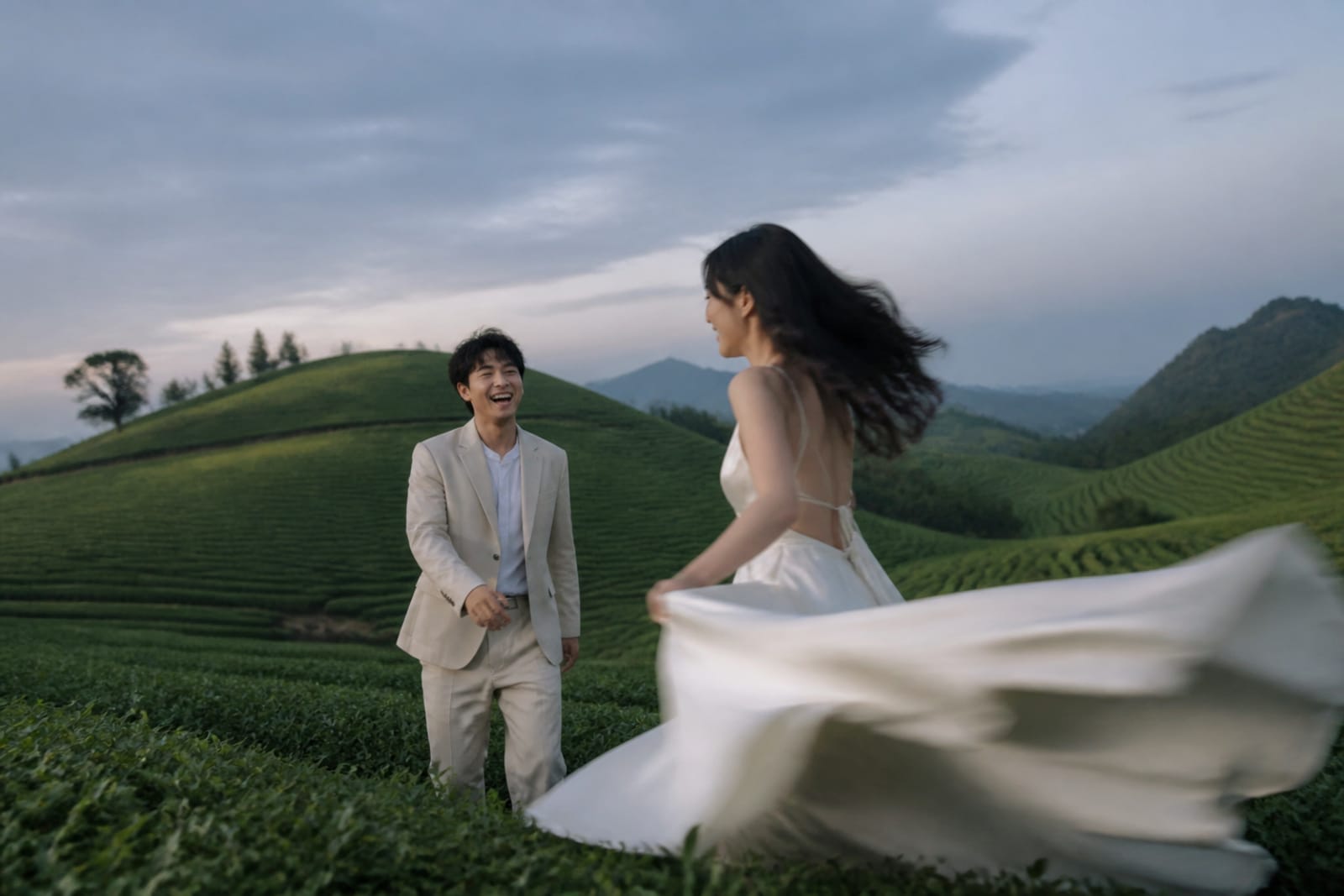
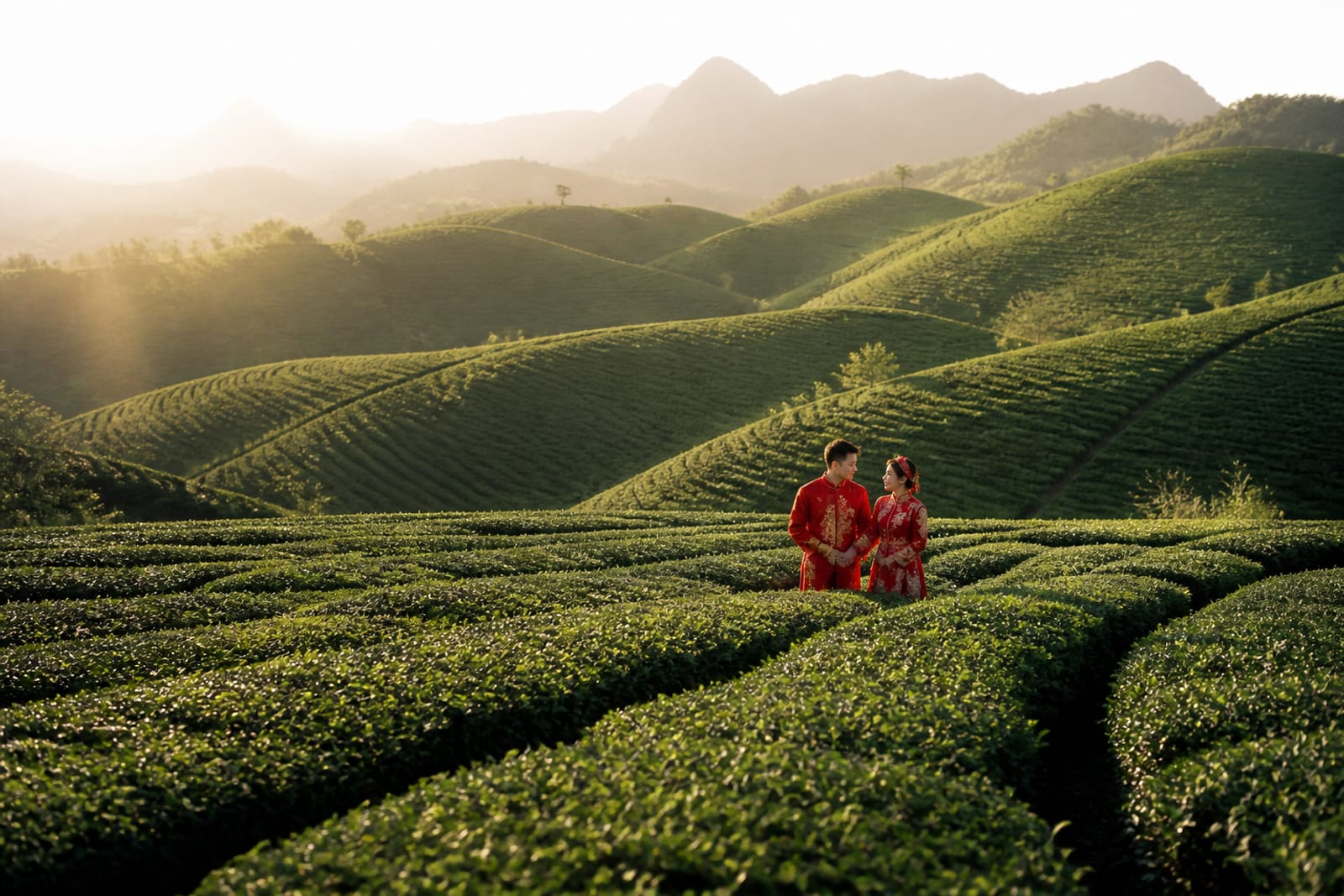
Winter (Dec–Feb) delivers the most consistent, directional light: cool mist rises early morning (6–8 am), side-lighting the terraces in soft gold. Foreground stays green, shadows are gentle, and skin tones hold warmth without noon glare. Blossom season (late Jan–Feb, around Tet) adds cherry and plum flowers to the edges — white petals frame tea green. Spring (Mar–Apr) is warm and clear but hotter; afternoon (4–6 pm) still works if you position your subject on a north-facing slope to avoid direct overhead sun. Summer (May–Sep) is wet and hot; mist turns heavy, and afternoon downpours close visibility fast. Avoid midday (11 am–3 pm) any month — flat, harsh, unflattering light. Early morning and late afternoon (5–7 pm) are your only options in warm months.
What outfit choice works best on green terraces?
Neutral, cool or jewel tones pop against tea green without competing. Avoid bright white (bounces glare and bleaches skin) or lime green (melts into the landscape). Cream, soft grey, sage or navy create contrast while keeping the scene intimate. Ao dai in cream silk or pale blue photographs beautifully here — the drape flows against the angular terrace lines, and the fabric catches morning light naturally. Long sleeves protect skin during early-morning shoots (6–7 am can be chilly). Bare feet or simple sandals suit the rural feel, though muddy terraces in wet season (Sep–Nov) demand closed shoes with grip. A shawl or light scarf helps with wind and warmth. Avoid patterns, logos or busy prints — simplicity lets the landscape and light do the storytelling.
Solo visit vs. guided team session: what's the real difference?
| Approach | Best for | Light window | Walking & access | Why it works or doesn't |
|---|---|---|---|---|
| Solo photographer, own camera | Flexible scheduling, low cost, full creative control | Any hour; you choose framing | Variable — depends on your fitness and local knowledge | Freedom, but weak light window and no safety backup in remote areas |
| Hired local guide with native knowledge | Cultural context, safe access, route timing | Guided to best morning or sunset window | Structured 2–4 hour walk; guide picks accessible terraces | Hands-on direction, but guide may not be trained in composition or light |
| Cáo Studio pre-wedding team (Hanoi-based, booked in advance) | Directed narrative, one outfit message, hair/makeup and photography in one booking, finished frames in 48 hours | Planned for peak light (6–8 am winter, 5–6 pm spring) | Scouted terrace, safe paths, outfit changes managed on-site | Professional light reading, consistent framing, backup gear, cultural sensitivity baked in |
Solo visits demand you scout in advance and commit to very early (5:30 am) or late starts (5 pm). Light quality drops fast outside these windows. Guided local teams offer safety and insider routes but may lack photography training — frames often look posed or flat. A directed pre-wedding session with Cáo Studio prioritizes real light, outfit consistency and edited deliverables; the team handles logistics so you walk, look at each other, and move through the landscape naturally.
What goes wrong on Moc Chau shoots — and how to avoid it?
Overcast midday light. Clouds are common even in "dry" season. Mist looks romantic at sunrise but blurs detail by 9 am. Shoot early or plan for overcast diffusion as a feature, not a flaw. Bring a reflector to bounce side light onto faces if the sun is too low.
Muddy or unsafe paths after rain. Terraces drain slowly; a morning shower leaves slick steps through mid-afternoon. Check weather 48 hours ahead and ask your accommodation about recent conditions. Wear grip-soled shoes, not sandals.
Worker presence during harvest. Sep–Nov (tea and plum harvest) brings teams into the fields early morning. Coordinate with your guide or fixer to shoot adjacent terraces or shift your hour. Never photograph workers without permission.
Uneven pacing and fatigue. Terraces feel flat from a distance but demand constant climbing. A pre-dawn start means 2–3 km of vertical steps before good light ends (8 am). Build in rest and hydration. If you're booking a team, confirm they carry water and plan rest stops.
Rushed editing or underexposed files. Cold morning light and dark green create exposure metering chaos. Shoot in RAW and bracket (take 3 shots at different exposures). If using a local photographer, ask for RAW files and a one-week turnaround; rushed JPEG exports lose green detail and skin tone.
Booking a shoot: what to verify before you commit?
- Drone use? If yes, confirm the photographer or fixer has filed the flight permit 5–7 days before your session. Ask for the permit number.
- Outfit handling. Does the team bring wardrobe, or do you? If you bring an ao dai, will they steam it on-site? Check what's included.
- Terrace access. Ask which specific terraces they'll use (name or GPS). Confirm they're public or have owner permission. Avoid promises of "exclusive secret spots" — they usually mean trespassing.
- Light and timing. Agree on shoot start time (5:30 am for winter, 5 pm for spring) and end time. Confirm the photographer understands directional light and won't waste prime hours on setup.
- Deliverables. How many edited photos? Turnaround time? Format (digital, prints)? What's included — outfit, hair, makeup? Get this in writing.
- Backup and safety. Does the team have a vehicle, first aid, and communication plan if someone falls or gets lost? Ask directly.
- Cost factors. Quote includes travel time from Hanoi, number of outfit changes, and delivery speed. No price is a fixed number — it scales with season, group size and edit depth. Discuss factors, not figures, and confirm the quote on WhatsApp before committing.
For Cáo Studio's Hanoi-based pre-wedding sessions, WhatsApp is your booking channel — ask what's included in their Moc Chau day rate and turnaround, and whether they've shot there before. Their process is directed from real light, one outfit message, and finished frames fast; ask for a lookbook link to see how they handle landscape and portrait balance.
---
FAQ
Can I fly a drone at Moc Chau without a permit?
No. Vietnam's aviation authority requires a flight permit for all drone operations, even on private tea hills. Apply 5–7 days ahead via your hotel or a Hanoi fixer. Flying without clearance risks confiscation and a fine. Check the current permit process with your accommodation.
What's the best month to shoot at Moc Chau?
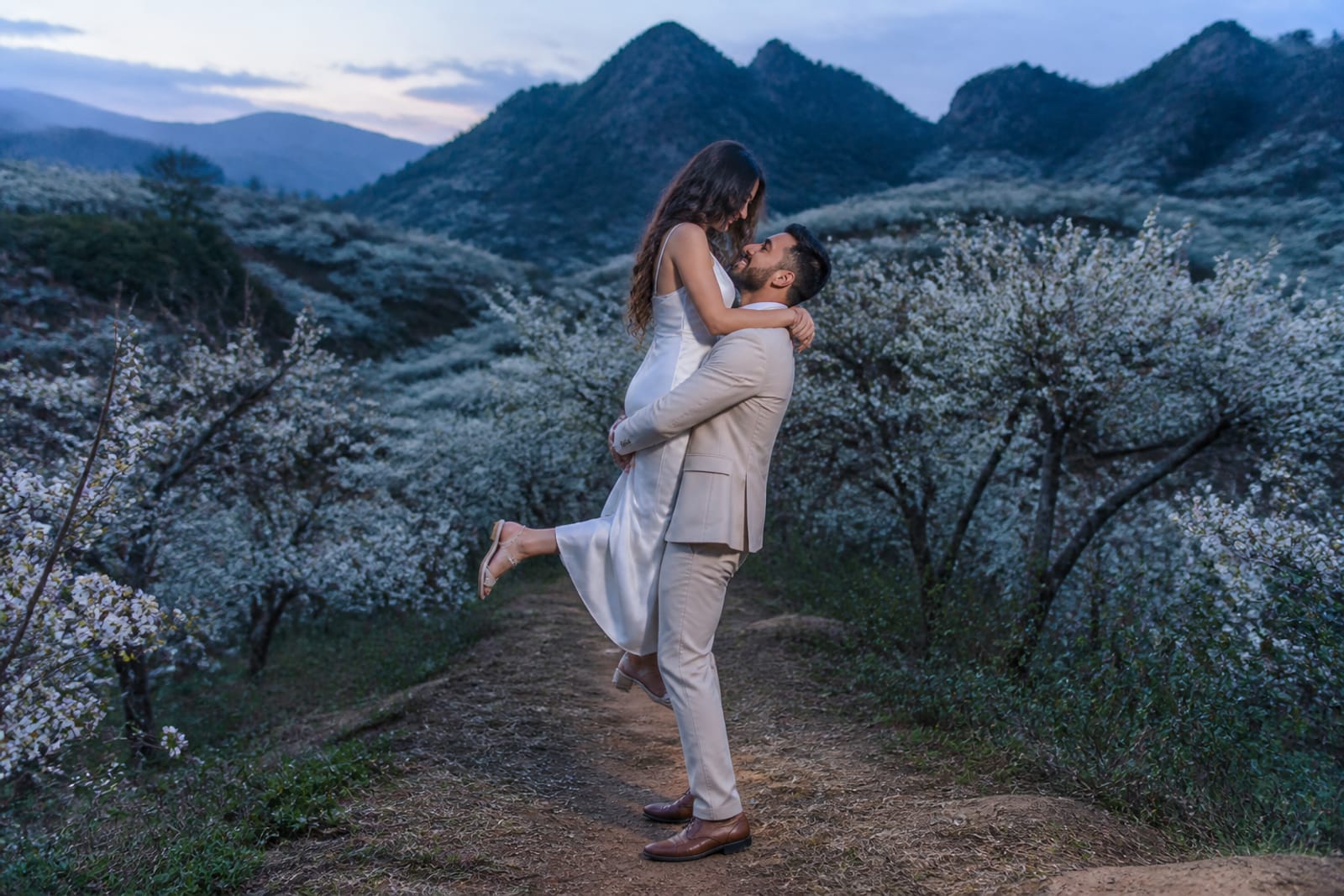
December–February (winter, cool and misty, soft side light) and late Jan–Feb (plum and cherry blossom season, around Tet) are ideal. Mist rises early morning, lighting is directional, and the landscape is lush. Summer (May–Sep) is hot and wet; midday light is harsh. Avoid Oct–Nov — it's rainy and crowds swell before Tet.
Do I need permission to photograph tea workers during harvest?
Yes. Always ask before photographing people in the fields. Sep–Nov harvest season brings workers early morning; they may not consent. Work with a local guide or your accommodation to coordinate timing and permissions. Respect privacy and cultural norms.
Should I hire a local guide or book a professional photoshoot team?
Local guides offer access and cultural context but may lack composition training. A professional team (like Cáo Studio's Hanoi-based pre-wedding option) brings light expertise, outfit coordination, and edited deliverables — but costs more and requires booking ahead. Solo photographers get full creative freedom but need strong light knowledge and early starts.
How do I get from Hanoi to Moc Chau for a shoot?
Moc Chau is 3 hours southwest of Hanoi by car (about 150 km). Rent a vehicle or hire a driver through your hotel; book a night before to start early (5–6 am) and catch sunrise light. Most teams (including Cáo Studio) factor travel time into their session cost. No public bus runs early enough for sunrise shoots.
What should I wear under an ao dai at Moc Chau?
Wear fitted dark trousers (navy or black) and a thin, long-sleeved shirt in cream or white to prevent sun exposure and wind chill at dawn. Avoid loose layers that bunch under the ao dai. Compression leggings work under silk for comfort on steep terrain. Bring a shawl for wind and warmth before sunrise light builds.
FAQ
Can I fly a drone at Moc Chau without a permit?
No. Vietnam's aviation authority requires a flight permit for all drone operations, even on private tea hills. Apply 5–7 days ahead via your hotel or a Hanoi fixer. Flying without clearance risks confiscation and a fine. Check the current permit process with your accommodation.
What's the best month to shoot at Moc Chau?
December–February (winter, cool and misty, soft side light) and late Jan–Feb (plum and cherry blossom season, around Tet) are ideal. Mist rises early morning, lighting is directional, and the landscape is lush. Summer (May–Sep) is hot and wet; midday light is harsh. Avoid Oct–Nov — it's rainy and crowds swell before Tet.
Do I need permission to photograph tea workers during harvest?
Yes. Always ask before photographing people in the fields. Sep–Nov harvest season brings workers early morning; they may not consent. Work with a local guide or your accommodation to coordinate timing and permissions. Respect privacy and cultural norms.
Should I hire a local guide or book a professional photoshoot team?
Local guides offer access and cultural context but may lack composition training. A professional team ([like Cáo Studio's Hanoi-based pre-wedding option](/pre-wedding-photoshoot)) brings light expertise, outfit coordination, and edited deliverables — but costs more and requires booking ahead. Solo photographers get full creative freedom but need strong light knowledge and early starts.
How do I get from Hanoi to Moc Chau for a shoot?
Moc Chau is 3 hours southwest of Hanoi by car (about 150 km). Rent a vehicle or hire a driver through your hotel; book a night before to start early (5–6 am) and catch sunrise light. Most teams (including Cáo Studio) factor travel time into their session cost. No public bus runs early enough for sunrise shoots.
What should I wear under an ao dai at Moc Chau?
Wear fitted dark trousers (navy or black) and a thin, long-sleeved shirt in cream or white to prevent sun exposure and wind chill at dawn. Avoid loose layers that bunch under the ao dai. Compression leggings work under silk for comfort on steep terrain. Bring a shawl for wind and warmth before sunrise light builds.
Ao dai, makeup, hair and a local photographer in Hanoi or Saigon — one WhatsApp message.