/pre-wedding-photoshoot
Photography rules at Mui Ne white sand dunes: permits, drones and what
Mui Ne white sand dunes don't require a formal photoshoot permit, but drone flights need Civil Aviation Authority approval (apply weeks ahead through a local handler). The best window is 5:30–6:30 am year-round: soft side light, minimal crowds, and cooler sand. November–March brings strong winds that shift the dunes visually but can scatter sand onto skin and gear; April–October is calmer but hotter. A professional local photographer knows the exact dune entrance that avoids congestion, carries protective gear for electronics, and times your outfit changes to avoid sand damage. Cáo Studio doesn't operate in Mui Ne, but we can guide you on booking a vetted local team through our WhatsApp: the one-team approach (photographer, makeup touch-up, outfit management) prevents the chaos of juggling separate vendors in a windy, remote location. ---
Do I need a permit to shoot at Mui Ne dunes?
No formal photoshoot permit exists for Mui Ne white sand dunes. Entry is free and unrestricted for tourists and small crews. However, any drone flight—commercial or personal—requires Civil Aviation Authority (CAA) approval; applications typically take 2–4 weeks through a local licensed drone handler. A photographer based in Mui Ne or Ho Chi Minh City can manage this on your behalf. If you're hiring a local team, confirm in advance whether they've filed the drone application and keep copies of the approval in your camera bag—authorities rarely check, but proof prevents delays if stopped.
📸 Book on WhatsApp — ao dai photoshoot | 💄 Makeup & hair at your hotel | 🌸 See the lookbook
---
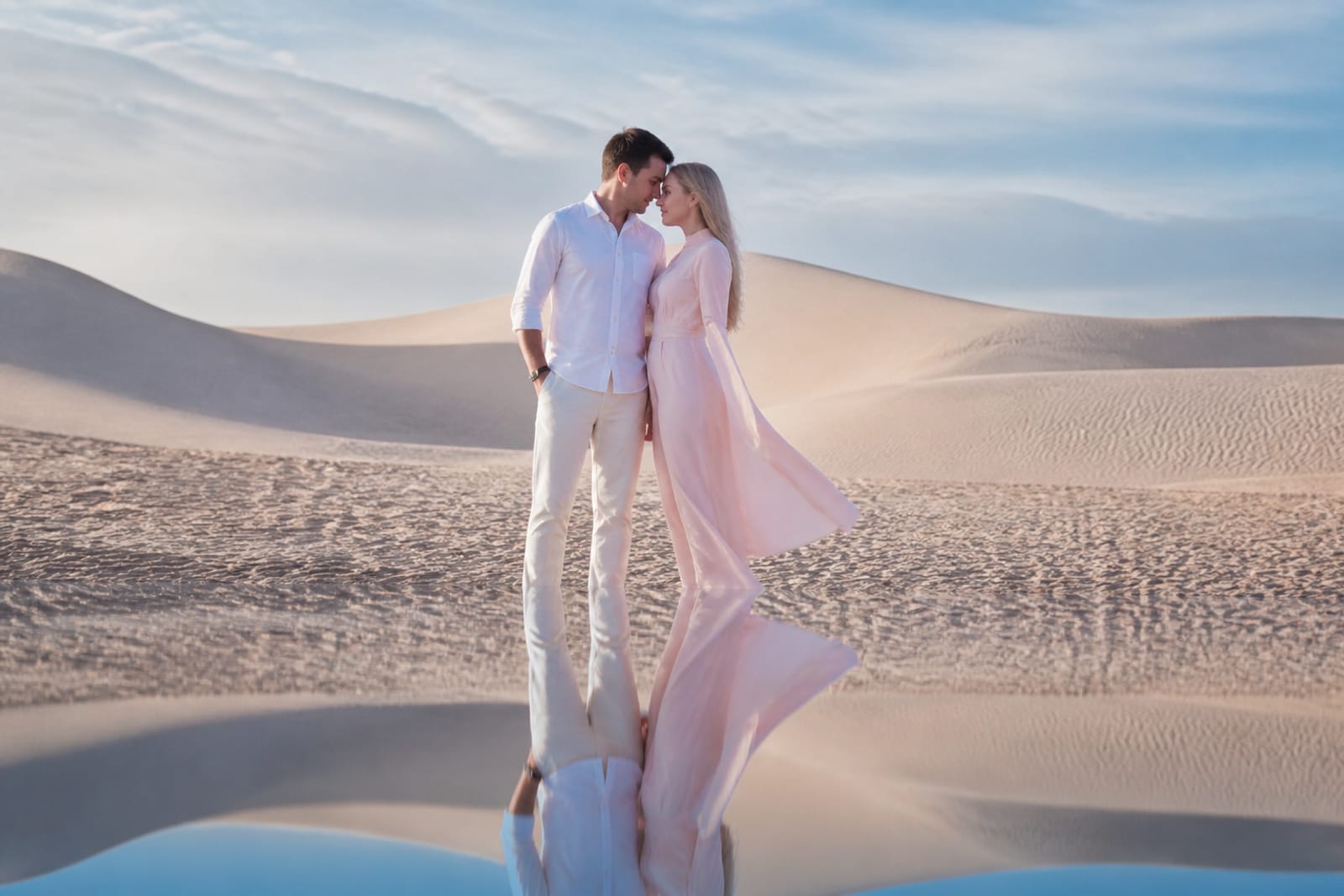
What's the best time of day to shoot at the dunes?
Sunrise (5:30–6:30 am) is the only reliable window. Side light from the east-northeast rakes across the sand texture, casting long shadows that sculpt the dunes and make every step visible in the frame. By 7 am, families and tour groups arrive; by 9 am, midday glare flattens everything and heat becomes uncomfortable for outfit changes. A professional photographer will have a vehicle ready at your hotel by 5:00 am, drive you directly to the dune entrance farthest from the car park (usually a 10–15 minute walk), and shoot for 90 minutes before crowds peak.
---
Which season is best, and what changes month to month?
| Season | Best for | Light & crowds | Wind & sand | Outfit concerns |
|---|---|---|---|---|
| Nov–Mar | Pre-wedding, couples | Soft morning light; few tourists; cool air | Strong winds shift dunes daily; sand blows onto skin, hair, camera sensor | Windy days risk outfit tears and sand in delicate fabrics; veil work is difficult |
| Apr–Oct | Families, casual sessions | Clear light but hotter by 6:45 am; groups increase mid-May | Light winds; sand stable; easier gear handling | Heat creates sweat marks; makeup touch-ups needed every 20 minutes |
Mui Ne sits in Vietnam's driest region. November–March winds are strongest; many couples still choose this season for the sharper dune shapes and cooler air, but hire a team with wind-resistant gear and outfit protection. April–October is calmer and sand is more stable, but the session starts before sunrise to beat the heat—plan for a 4:30 am pick-up. Choose the season based on your outfit comfort, not just light.
---
What outfit and gear issues come up on sand, and how do practitioners avoid them?
Sand damages fabrics, electronics, and skin in ways studio or city shoots don't. A professional pre-wedding team brings: protective garments (thin cover-ups worn between shots), sealed camera bags with silicone gel canisters, lens caps for every lens, and baby wipes to brush sand off skin without grinding it in. Ao dai shoots on dunes need extra care—traditional silk snags easily, and embroidery can catch on sand if you're not walking deliberately. A one-team approach (photographer + makeup artist on-site) means the makeup artist can reapply powder and lip colour between takes, and the photographer can signal you to walk, not pose, so sand doesn't accumulate on sitting surfaces. If you're booking a local Mui Ne photographer, ask whether they've shot ao dai before and whether they'll bring outfit bags and protective covers. Rental outfits (wedding dress, suit, ao dai) should be inspected for sand damage the moment you return and cleaned immediately—delays risk staining.
📍 See pre-wedding & elopement options
---
How do I find and vet a local Mui Ne photographer?
Cáo Studio operates in Hanoi, Ho Chi Minh City, and Hoi An by appointment—not in Mui Ne. For a Mui Ne shoot, find a local photographer through: (1) Instagram tags #muinephotography and #muinephotoshoot; filter for accounts with 200+ posts from actual dune sessions (not stock images); (2) ask your hotel concierge for referrals to photographers who've worked with guests; (3) contact Saigon-based studios (under 3 hours' drive) and ask if they've shot Mui Ne and can travel. When vetting, ask: Have you shot pre-wedding ao dai on dunes? Do you have drone approval or handle it? What's your early-morning availability year-round? Do you bring protective gear for sand and electronics? Can you provide a shot list and reference clients? A photographer who hesitates on any of these isn't ready for dune work. Request to see 10–15 unedited frames from a recent dune session—sharp sand texture, no blown-out sky, and natural walking poses are signs of experience. Vet them on WhatsApp with photos and questions, same as you would with us.
---
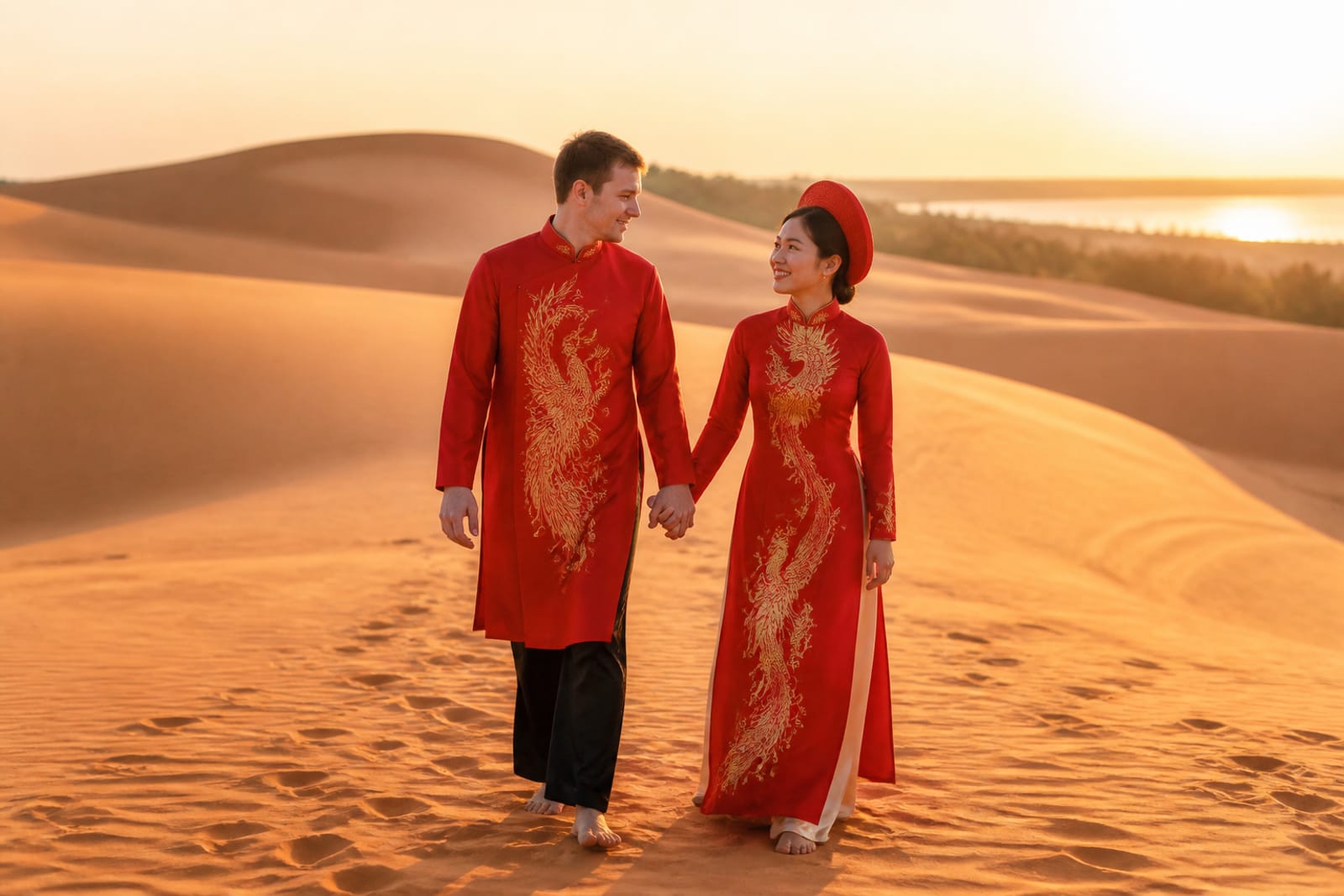
What should I check before booking and shooting?
Booking checklist:
- Confirm the photographer has CAA drone approval filed or will apply immediately.
- Ask for a detailed shot list: wide (landscape + subjects together), medium (close-up walking or talking), detail (hands, rings, shoes on sand).
- Verify they own or will rent backup camera gear in case sand enters the main body.
- Confirm outfit protection is included (covers, wipes, reapplication of makeup between takes).
- Request 48-hour edited turnaround (standard in Vietnam) and ask how many edited images you'll receive.
- Clarify cancellation terms if weather is unsafe (high winds that prevent safe shooting).
On-location checklist:
- Bring sunscreen (reapply every 30 min; sand reflects UV), a water bottle, and a wide-brimmed hat for gaps between shots.
- Wear shoes with grip on sand; open sandals slip and look awkward in frames.
- If wearing ao dai, have the photographer or assistant hold the hem while you walk to prevent sand entering the layers.
- Confirm the photographer has a sealed spare battery, card reader, and power bank; sand can corrupt electronics mid-session.
- Take 10 minutes at the 45-minute mark to rest, hydrate, and let the makeup artist check your skin and reapply powder.
After the shoot:
- Don't leave sand in rental outfits overnight; rinse gently with a hose the moment you return and air-dry flat.
- Review unedited frames within 24 hours to flag any that need re-shooting (if the photographer returns to Mui Ne within a week, a reshoot is sometimes possible).
---
How does Cáo Studio approach pre-wedding shoots for couples booking in Hanoi or Saigon?
If you're based in or can travel to Hanoi or Ho Chi Minh City, Cáo Studio's pre-wedding & elopement service uses a one-team model: photographer, makeup artist, and stylist work together to direct you through real light instead of posing you in front of landmarks. We scout locations for soft morning or golden-hour light, guide you to walk and interact naturally, and deliver edited photos and a short vertical film within 48 hours. For couples drawn to Mui Ne's visual drama but prioritizing a seamless shoot experience, we recommend instead booking a couple session in Hanoi or Saigon, where we control all variables—light, outfit changes, timing—and eliminate the coordination risk of hiring separate vendors in a remote location. Ask on WhatsApp whether a Hoi An appointment (we travel by arrangement) might work for your dates if you want a central Vietnam shoot.
---
Why hire a team instead of going solo or splitting vendors?
A one-team photoshoot (photographer + makeup + stylist present) means: (1) the makeup artist can pivot instantly if wind or sand affects your complexion; (2) the photographer reads light in real time and signals you to turn, walk, or pause—no awkward directions from a separate person; (3) outfit changes happen on-site without a separate logistics person juggling bags; (4) everyone moves at the same pace, so you're not waiting for the photographer to walk back to the car for a lens or the makeup artist to catch up. This matters most on sand, where every minute of delay costs light and heat. If you're comparing a solo photographer + separate makeup artist against a studio with a coordinated team, ask the solo photographer to name the last time they managed outfit changes, wind gusts, and sand cleanup all at once. Most Mui Ne photographers work solo or with one assistant, which is fine for casual family shots but risky for a pre-wedding shoot where the frames need to tell a story.
---
What's the cost range, and how does location affect pricing?
Pricing for a local Mui Ne shoot varies by photographer experience, outfit count, travel time from Ho Chi Minh City, and drone approval handling. Factors include: session length (2–4 hours), number of outfits (ao dai, dress, suit), whether drone footage is included, and how many edited images you receive. A one-team studio (photographer, makeup, stylist in one booking) typically costs more than a solo photographer but avoids hidden coordination costs (separate transport, timing delays, outfit miscommunications). On WhatsApp, ask us for a quote if you'd like to compare our Hanoi or Saigon pre-wedding pricing; local Mui Ne photographers can give you a direct comparison once you've decided on shot scope.
---
FAQ
Do I need permission to fly a drone at Mui Ne dunes for photography?
Yes. Any drone flight, commercial or personal, requires Civil Aviation Authority approval. A local Mui Ne or Ho Chi Minh City–based photographer can file the application on your behalf; it typically takes 2–4 weeks. Confirm they've done this before you book. Keep copies of the approval in your camera bag in case you're checked by authorities.
What's the ideal sunrise time for dune photography in November versus June?
Sunrise occurs around 6:30 am in November and 5:20 am in June. Plan for soft light between 5:30–6:30 am year-round; by 7 am, tourist groups arrive and midday glare begins. A professional team will have you on-site by 5:00 am regardless of season and shoot before crowds peak.
How does sand damage wedding dresses and ao dai, and how do I prevent it?
Sand scratches silk embroidery, enters hem layers, and leaves salt stains if left overnight. Ask your photographer or makeup artist to hold the hem while you walk, use protective covers between outfit changes, and rinse rental garments with fresh water immediately after the session—never wait until the next day. A one-team approach means the makeup artist is there to manage this in real time.
Can I book Cáo Studio for a shoot at Mui Ne dunes?
Cáo Studio operates in Hanoi, Ho Chi Minh City, and Hoi An by appointment. We don't have a team based in Mui Ne. We recommend booking a local Mui Ne photographer and vetting them on the criteria in this guide, or consider a pre-wedding shoot in Saigon if travel is feasible—we control all variables and deliver seamlessly. Ask us on WhatsApp for local photographer recommendations.
What's the difference between November–March and April–October for dune shoots?
November–March has stronger winds (dunes shift daily, sand blows easily) but cooler air and fewer tourists; ideal for pre-wedding ao dai if your team has protective gear. April–October is calmer and hotter; plan a 4:30 am pick-up to beat the heat. Choose based on your comfort with wind and outfit, not just light—both seasons work if timed correctly.
Should I hire a solo photographer or a team with makeup and styling?
A coordinated team (photographer + makeup + stylist) manages wind, sand, and outfit changes seamlessly—everyone moves at one pace and communicates in real time. A solo photographer is often cheaper but requires you to hire a separate makeup artist, adding coordination risk. On sand, the one-team model prevents delays and ensures your frames tell a cohesive story.
FAQ
Do I need permission to fly a drone at Mui Ne dunes for photography?
Yes. Any drone flight, commercial or personal, requires Civil Aviation Authority approval. A local Mui Ne or Ho Chi Minh City–based photographer can file the application on your behalf; it typically takes 2–4 weeks. Confirm they've done this before you book. Keep copies of the approval in your camera bag in case you're checked by authorities.
What's the ideal sunrise time for dune photography in November versus June?
Sunrise occurs around 6:30 am in November and 5:20 am in June. Plan for soft light between 5:30–6:30 am year-round; by 7 am, tourist groups arrive and midday glare begins. A professional team will have you on-site by 5:00 am regardless of season and shoot before crowds peak.
How does sand damage wedding dresses and ao dai, and how do I prevent it?
Sand scratches silk embroidery, enters hem layers, and leaves salt stains if left overnight. Ask your photographer or makeup artist to hold the hem while you walk, use protective covers between outfit changes, and rinse rental garments with fresh water immediately after the session—never wait until the next day. A one-team approach means the makeup artist is there to manage this in real time.
Can I book Cáo Studio for a shoot at Mui Ne dunes?
Cáo Studio operates in Hanoi, Ho Chi Minh City, and Hoi An by appointment. We don't have a team based in Mui Ne. We recommend booking a local Mui Ne photographer and vetting them on the criteria in this guide, or consider a [pre-wedding shoot in Saigon](/saigon) if travel is feasible—we control all variables and deliver seamlessly. Ask us on WhatsApp for local photographer recommendations.
What's the difference between November–March and April–October for dune shoots?
November–March has stronger winds (dunes shift daily, sand blows easily) but cooler air and fewer tourists; ideal for pre-wedding ao dai if your team has protective gear. April–October is calmer and hotter; plan a 4:30 am pick-up to beat the heat. Choose based on your comfort with wind and outfit, not just light—both seasons work if timed correctly.
Should I hire a solo photographer or a team with makeup and styling?
A coordinated team (photographer + makeup + stylist) manages wind, sand, and outfit changes seamlessly—everyone moves at one pace and communicates in real time. A solo photographer is often cheaper but requires you to hire a separate makeup artist, adding coordination risk. On sand, the one-team model prevents delays and ensures your frames tell a cohesive story.
Ao dai, makeup, hair and a local photographer in Hanoi or Saigon — one WhatsApp message.