/pre-wedding-photoshoot
Photography rules at Ta Phin Village: permits, drones & what to check
Ta Phin Village (northwest Sapa, Ha Giang) attracts pre-wedding couples for its golden terraces, traditional Hmong stilt houses, and soft dawn light. Photography is permitted for personal use; drones require explicit village and provincial approval — not routine. Sessions run best May–Jun (green water) or mid-Sep to early Oct (harvest gold), avoiding Dec–Feb fog and Jul–Sep rain. You'll need a local guide (mandatory for trekking) and a photographer based in or familiar with Sapa; Cáo Studio does not operate in Sapa — the team is in Hanoi, Ho Chi Minh City, and Hoi An. Hire a vetted Sapa-based photographer, confirm permits in writing, and plan light around 5:30–7:00 am for side-lit terraces before crowds arrive. ---
Where exactly is Ta Phin Village, and what makes it photograph well?
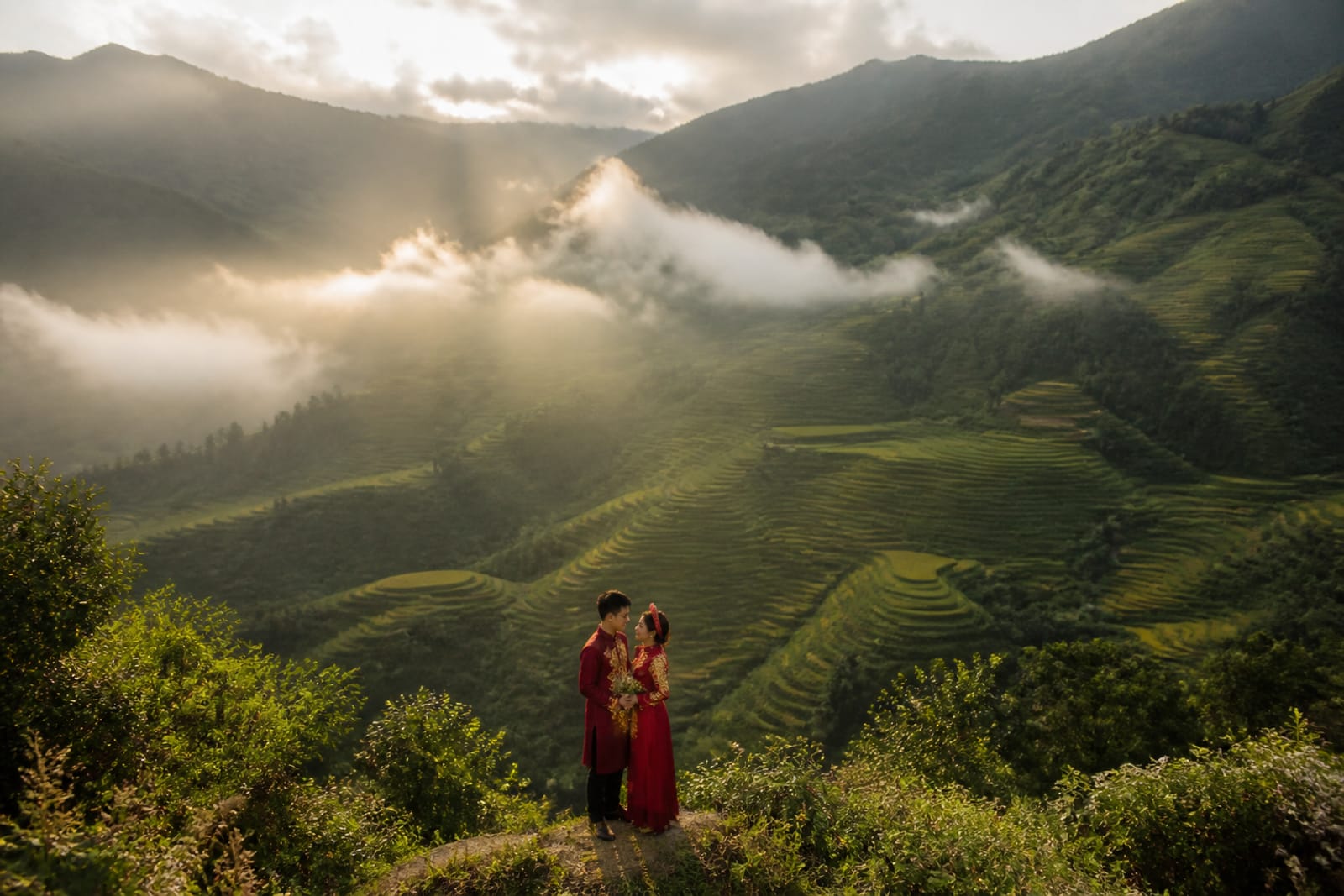
Ta Phin sits in northwestern Ha Giang, about 15 km (roughly 45 min by motorbike) from Sapa town. The village spreads across steep rice paddies, Hmong homes built on stilts, and a small stream — a landscape that catches side light beautifully in early morning. The terraces reflect water in May, glow amber in September–October harvest, and turn grey-brown in winter. Foreground (water, crops, wooden fences) and background (far ridges, mist) layer naturally, suiting wide-angle frames with depth. Most pre-wedding couples shoot there for authenticity, not Instagram polish — the appeal is documentation of real place and culture, not posed portraits.
Do you need permits to shoot at Ta Phin Village?
Yes — photography for weddings, pre-weddings, and commercial content requires village permission. Personal holiday snapshots with a phone are routine; a professional team (photographer, makeup artist, outfit changes, several hours on-site) must inform the village administration and, for some seasons and activities, the district tourism office. Permits are not always a formal certificate — often a conversation with the village headman or tourism liaison — but skipping this step risks your shoot being stopped mid-session. A local guide (who will be with you anyway) can facilitate this. Drones are almost never approved without written advance request to both village and provincial authorities; assume drones are off the table unless you've received explicit written consent weeks ahead. Ask your photographer to confirm permit status in writing before you pay.
📸 Book on WhatsApp — pre-wedding photoshoot | 💄 Makeup & hair at your hotel
What's the best season and time of day for light in Ta Phin?
| Season | Light character | Terrace look | Weather risk | Crowds |
|---|---|---|---|---|
| May–early Jun | Soft, diffuse; mist until 7:00 am | Water-filled, reflective | Afternoon showers | Light |
| Mid-Sep to early Oct | Side-lit gold, long shadows; clear by 6:30 am | Harvest-golden, textured | Rare rain | Moderate |
| Dec–Feb | Weak, grey, flat; heavy fog until 10:00 am+ | Bare, muddy | Cold, frost possible; fog persists | Very light |
| Jul–Sep | Harsh, humid; clouds until late morning | Green but waterlogged | Daily rain 2–5 pm | Light |
Early morning (5:30–7:00 am) is non-negotiable — side light rakes the terraces, water glints, and Hmong residents are active without tourists. By 9:00 am, light flattens and hikers arrive. May–June offers soft, diffuse light if you tolerate afternoon showers; mid-September to early October is the sweet spot (harvest, clear mornings, dry afternoons). Winter is grey and fogged until late morning, pushing shoots to 10:00 am or later — flat, unflattering light. Avoid July–September peak rain; typhoon season (Oct–Nov) brings unpredictable downpours.

How do you hire a photographer in Sapa who knows Ta Phin?
Cáo Studio operates in Hanoi, Ho Chi Minh City, and Hoi An, not Sapa — you'll need a Sapa-based or Ha Giang-based team. Check these markers:
- Portfolio: ask for 5+ Ta Phin or similar village shoots (not generic Sapa lake or Fansipan shots). Look for natural movement, morning light, and genuine cultural moments — not stiff couple poses in front of landmarks.
- Local presence: do they live in Sapa or visit regularly? Familiarity with village dynamics, light patterns, and permit contacts matters.
- Guide coordination: they must work with or hire a licensed trekking guide (required anyway for safe access). Ask if they handle permits or if you must arrange them separately.
- Outfit logistics: who brings and handles clothing? If you're wearing a traditional áo dài or an outfit requiring hair and makeup, does the photographer coordinate this, or must you hire a Sapa-based makeup artist separately?
- Backup plan: what happens if dawn fog doesn't lift or you're asked to move by village authorities? Do they reshoot free, or is there a weather clause?
Interview at least two photographers; ask for contact details of a recent couple and message them directly about their experience.
💄 Makeup & hair at your hotel | 🌸 See the lookbook
What should you check before booking a Ta Phin photoshoot?
Permit confirmation Ask your photographer to confirm in writing that they've spoken to the village administration and that photography is cleared for your date. "Cleared" means either a formal letter, a recorded chat, or a note from the guide who vouches for the photographer — avoid vague "should be fine" answers.
Outfit fit and practicality Ta Phin involves 2–4 km of uphill walking on uneven, often muddy paths. If you're wearing an áo dài, a formal gown, or high heels, you'll need outfit changes and support. Ask your photographer how many outfits are realistic (usually 1–2), who carries them, and whether you can change at a local home (often possible with permission). Practical options: sturdy hiking boots or sandals for walking, then change into heels for specific framed shots on flat ground.
Timing and energy Early morning shoots mean a 4:30 am wake-up and hiking in dim light. Confirm your photographer knows the path and can navigate safely before dawn. A 4–5 hour session is typical (pre-dawn walk, 2–3 hours of shooting as light improves, breakfast break). Build in a 30-min buffer; if light is perfect at 7:30 am, you may want to keep shooting.
Weather contingency Ask about the rescheduling policy if it rains heavily or fog doesn't lift. A good photographer will offer a free reshoot or adjustment, not keep your deposit.
Cultural sensitivity Ta Phin is home to Hmong people, not a theme park. Agree on how and where you'll shoot near homes and residents. Hiring a local guide and a photographer who respects this boundary is non-negotiable.
---
Can Cáo Studio shoot at Ta Phin Village?
No. Cáo Studio operates in Hanoi, Ho Chi Minh City, and Hoi An, where the team controls light, makeup, hair, and all framing on-site. Sapa and Ta Phin Village require a local photographer and guide; coordinating across remote logistics doesn't align with our "one team, one message" model. If you're planning a Vietnam pre-wedding trip, consider a pre-wedding session in Hanoi (Old Quarter, West Lake, French colonial architecture) or Hoi An (lantern town, riverside, countryside), where we can deliver edited photos and a short film within 48 hours. For Sapa, use a local hire; for multi-location trips, ask us on WhatsApp about mixing a Cáo Studio session elsewhere with a separate Ta Phin shoot.
---
FAQ
Is drone photography allowed at Ta Phin Village?
Drones are not routinely approved. You must request explicit written permission from village administration and the district tourism office weeks in advance. Most photographers and couples assume drones are off-limits unless you have signed approval — do not attempt without it.
What time should we arrive at Ta Phin for a morning shoot?
Arrive by 5:00–5:15 am at the village or trailhead. Your photographer and guide need 15–30 min to scout light and position you before the best side-lit window (roughly 5:45–7:15 am). Arriving later compresses this into flat, overhead light.
Do we need to hire a trekking guide separately from the photographer?
Yes. Guides are legally required for trekking in the region and coordinate village access. Many photographers work with established guides; confirm your photographer has a guide partner or can recommend one. Budget for both separately.
Can we wear a traditional áo dài at Ta Phin if we're hiking uphill?
Yes, but plan outfit changes. Wear practical boots for the hike; change into the áo dài and heels at a scenic flat spot for 30–45 min of framed shots. Your photographer should confirm a safe place to change and coordinate help carrying outfits.
What if fog doesn't clear by 7:00 am on our shoot day?
Confirm a rescheduling policy before you book. If fog lingers past 8:00–9:00 am and light stays flat, a good photographer offers a free reshoot within a set window (e.g., next clear morning) or adjusts the session scope. Avoid photographers who keep payment no matter conditions.
Is there entry fee or permit cost for Ta Phin Village photography?
Permit conversations are typically informal (handled by your guide or photographer with village contacts); entry fees for trekking or guide services apply — confirm current amounts with your photographer or guide, as prices change. Never ignore permit costs when budgeting; ask upfront.
FAQ
Is drone photography allowed at Ta Phin Village?
Drones are not routinely approved. You must request explicit written permission from village administration and the district tourism office weeks in advance. Most photographers and couples assume drones are off-limits unless you have signed approval — do not attempt without it.
What time should we arrive at Ta Phin for a morning shoot?
Arrive by 5:00–5:15 am at the village or trailhead. Your photographer and guide need 15–30 min to scout light and position you before the best side-lit window (roughly 5:45–7:15 am). Arriving later compresses this into flat, overhead light.
Do we need to hire a trekking guide separately from the photographer?
Yes. Guides are legally required for trekking in the region and coordinate village access. Many photographers work with established guides; confirm your photographer has a guide partner or can recommend one. Budget for both separately.
Can we wear a traditional áo dài at Ta Phin if we're hiking uphill?
Yes, but plan outfit changes. Wear practical boots for the hike; change into the áo dài and heels at a scenic flat spot for 30–45 min of framed shots. Your photographer should confirm a safe place to change and coordinate help carrying outfits.
What if fog doesn't clear by 7:00 am on our shoot day?
Confirm a rescheduling policy before you book. If fog lingers past 8:00–9:00 am and light stays flat, a good photographer offers a free reshoot within a set window (e.g., next clear morning) or adjusts the session scope. Avoid photographers who keep payment no matter conditions.
Is there entry fee or permit cost for Ta Phin Village photography?
Permit conversations are typically informal (handled by your guide or photographer with village contacts); entry fees for trekking or guide services apply — confirm current amounts with your photographer or guide, as prices change. Never ignore permit costs when budgeting; ask upfront.
Ao dai, makeup, hair and a local photographer in Hanoi or Saigon — one WhatsApp message.