/pre-wedding-photoshoot
Photography rules at Ta Van village: permits, drones and what to check
Ta Van lies in Sapa's protected mountainous zone (Lao Cai province, north Vietnam). Formal photography permits are required; drones are restricted without advance government permission. The best light is May–Jun and Sep–Oct (clear skies, green/golden terraces, mild weather). Shoots run 4–6 hours, starting before 6 a.m. or mid-afternoon to catch side light on the slopes. You'll need a registered local guide, and outfits (ao dai, casual layers) that work in cool, muddy terrain. Cáo Studio does not operate in Ta Van—it shoots in Hanoi, Ho Chi Minh City, and Hoi An—but this guide covers how to vet a local photographer and what to check before booking any mountain photoshoot in Sapa district. ---
Do you need a permit to photograph at Ta Van?
Yes. Ta Van is an ethnic minority protected area; commercial photography requires written permission from Sapa District People's Committee. Many guides and photographers handle this on your behalf, but confirm the permit is filed before arrival. Non-commercial personal snapshots are tolerated, but any organized session (hiring a photographer, making content for business) must be pre-approved. Allow 5–7 days for processing. Check with your photographer or guide: if they claim permits "aren't needed," ask to see a copy of the approval letter. The fine for shooting without one is substantial and unpredictable.
What are the drone rules in Ta Van?
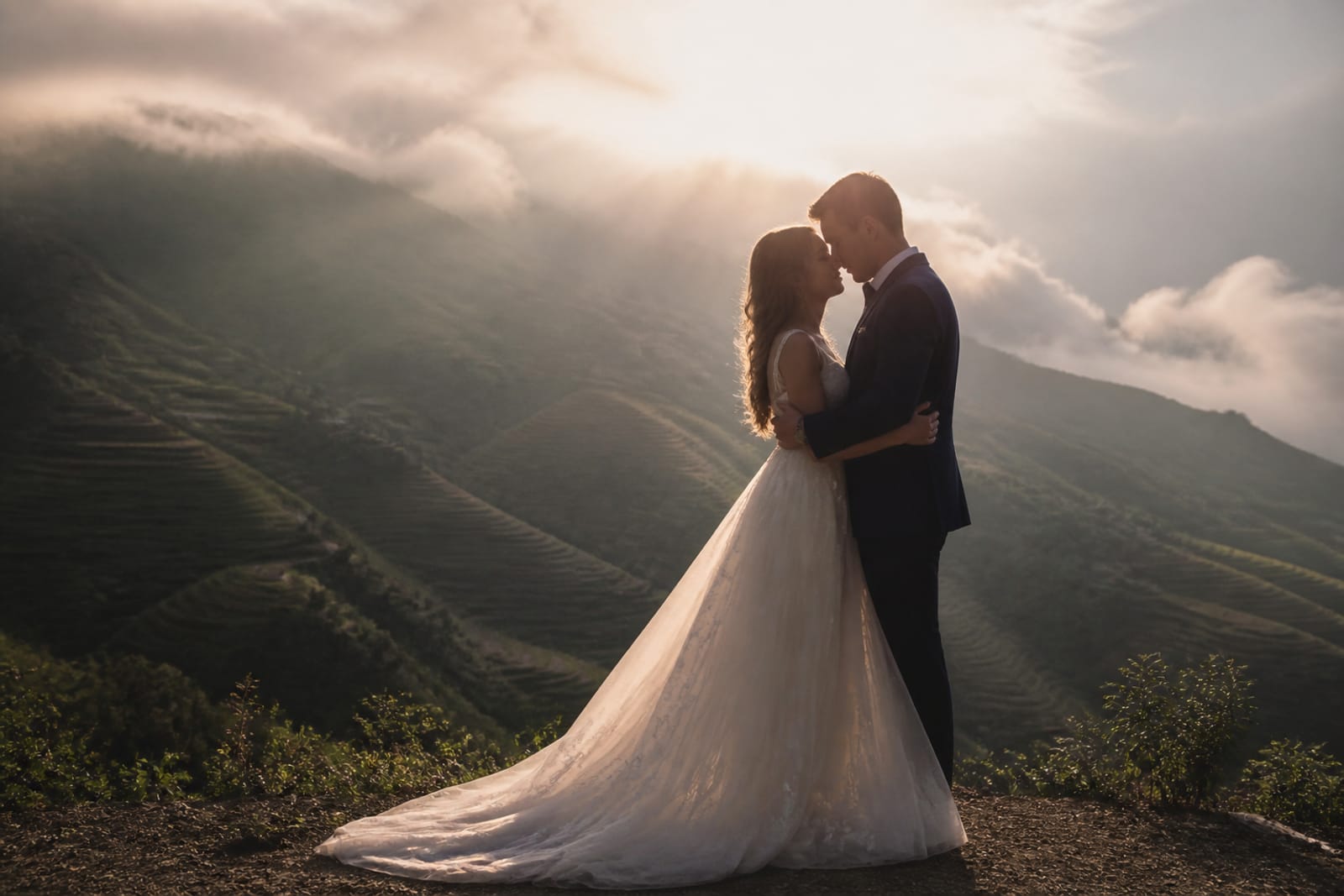
Drones are banned in Ta Van without explicit permission from Lao Cai's Department of Transport or military approval. This is national airspace restriction, not just local. If aerial footage is central to your plan, explore alternatives: hire a licensed drone operator in Hanoi or Ho Chi Minh City (who holds the permits and insurance) several weeks in advance, or shoot from ground-level high points (ridge paths, rice-paddy edges) that achieve a similar panoramic feel. Most pre-wedding shoots skip drones entirely and rely on wide-lens photography from hillsides instead.
When is the light best for Ta Van landscape and couple photos?
Season and month comparison table:
| Season | Months | Light quality | Terrain | Rain risk | Outfit fit |
|---|---|---|---|---|---|
| Spring | Mar–Apr | Soft morning mist, variable shadows | Muddy paths, new shoots | Low–moderate | Layers essential; mist adds mystery |
| Summer | May–Jun | Bright, golden side-light on slopes; deep shadows in ravines | Wet, vibrant green terraces | High afternoon showers | Long sleeves, waterproof boots |
| Autumn | Sep–Oct | Clear, warm side-light; terraces turn golden harvest | Firm paths, least muddy | Low–moderate | Layers; cool morning/evening |
| Winter | Dec–Feb | Grey fog, flat light, rare clear breaks | Cold, firm ground, brown terraces | Low but overcast | Heavy layers, thermals; harsh shadows on clear days |
Best windows: May–Jun (green, warm) or Sep–Oct (clear, harvest gold). Start shoots at 5:30 a.m. to catch the first sun on the eastern slopes; light hardens by 9 a.m., so finish the "golden hour" shots early and move to shaded village work or wide landscape shots by mid-morning. Afternoon sessions (3–5 p.m.) work if you're chasing western side-light on the ridges.
How do you work with a local guide and photographer in Ta Van?
Ta Van requires a licensed guide (mandatory, enforced). The guide handles permit paperwork, translates with villagers, and shows the photographer the best light angles and pathways. A skilled guide knows which families allow homestay backdrop shots and what compensation is customary. Your photographer—whether local or hired from Hanoi—should have worked with this guide before or be briefed on the permit status before arrival.
Vet your photographer and guide as a pair: ask for a past couple's album shot in Ta Van or another Sapa village, confirm the guide's license number, and ensure both are clear about your outfit, duration, and the number of outfits or scenes you want. Many Sapa photographers are freelancers; book through an agency (Sapa's tourism office lists accredited guides) or ask your hotel to recommend a trusted pair. Meet them 1–2 days before the shoot to walk the paths and scout light.
What outfit and gear should you bring to Ta Van?
For the shoot:
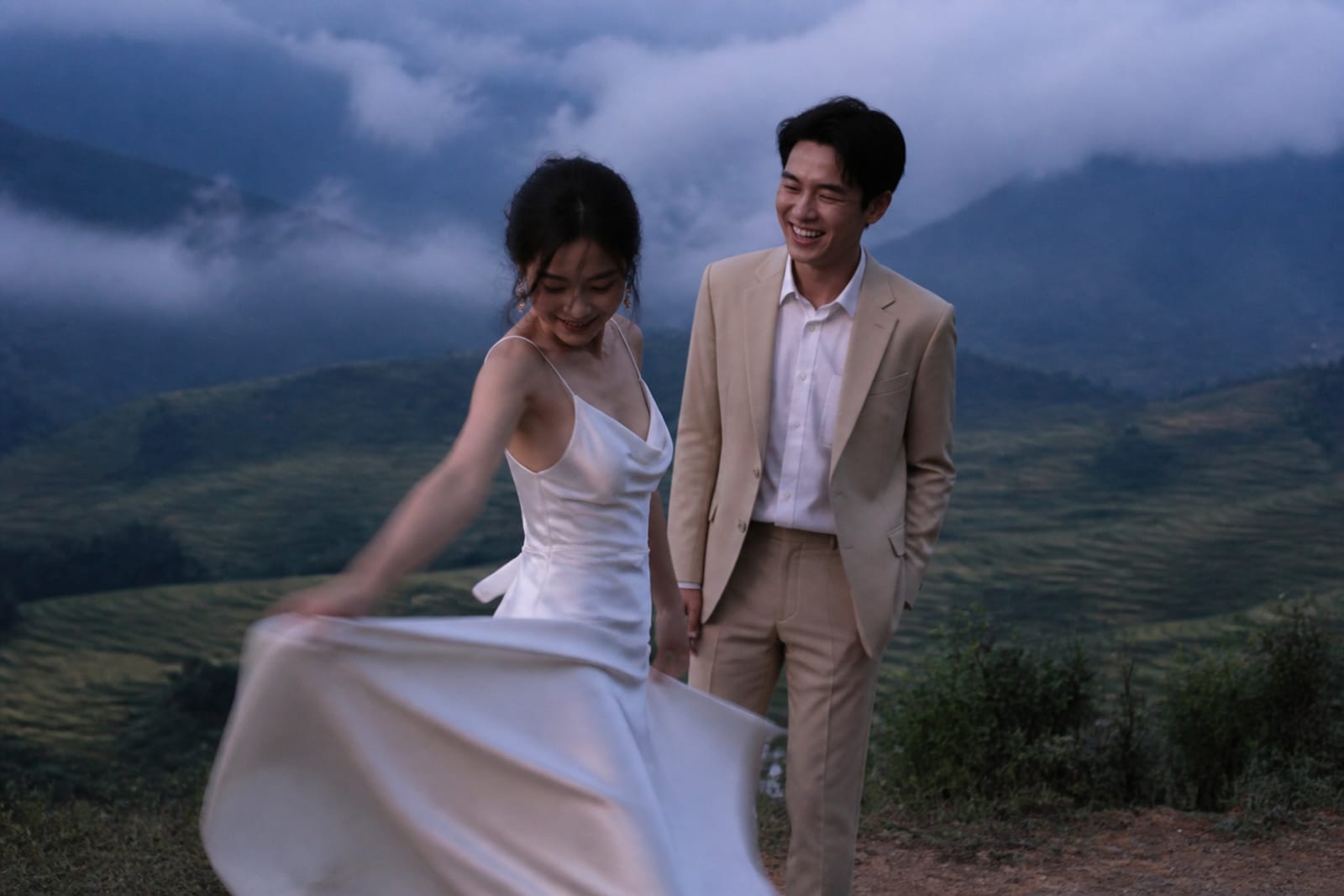
- Ao dai or formal wear: bring one outfit already; humidity and altitude make fitting new pieces on-site risky. A tailor in Sapa (1–2 days' notice) can adjust, but plan ahead.
- Casual layers: t-shirt, cardigan, light jacket. Morning temperatures drop to 10–15°C; dress in layers you can peel.
- Footwear: waterproof hiking boots (not heels; paths are muddy, steep, and uneven). Bring a second pair—one will get soaked.
- Undergarments & accessories: quick-dry materials, minimal jewelry (catches on branches, muddy hands). A small bag for makeup touch-ups and phone.
For the photographer:
- Wide-angle lens (16–35 mm) for landscape context and terraces.
- Fast 50 mm or 85 mm for couple close-ups in soft light.
- ND and polarizing filters (high-altitude light is harsh; filters cut glare).
- Weather-sealed camera body and a rain sleeve.
- Sturdy tripod legs (unstable terrain).
Bring 2–3 memory cards and a portable charger. Altitude and cold drain batteries fast. The photographer will carry most gear; you carry water, sunscreen, and a change of socks.
📸 Book on WhatsApp — pre-wedding photoshoot
---
What to check before you book a Ta Van photoshoot
| Checkpoint | What to confirm | Why it matters |
|---|---|---|
| Permit status | Ask for a copy of the approved permit or the guide's license number. | Without it, your shoot may be stopped mid-session. |
| Photographer's portfolio | Request a Ta Van or Sapa village album (not just studio work). | Mountain light and terrain demand experience; studio portraits don't prove it. |
| Guide qualifications | Ensure the guide is registered with Sapa District or a licensed agency. | Unlicensed guides may not have paid local-site fees; authorities may fine you. |
| Weather window | Book for May–Oct; confirm a rain contingency date. | Dec–Feb is overcast; Jun–Aug has frequent afternoon downpours. Winter/spring fog is beautiful but unpredictable. |
| Outfit logistics | Will a tailor alter the ao dai on-site? How many outfits are included? | Poor fit on a steep mountain is uncomfortable and frames look stiff. |
| Start time and duration | Confirm exact departure and end times; include travel from town. | Sapa town to Ta Van is 30–45 min by vehicle; mountain shoots need 4–6 hours of daylight work. |
| Compensation for villagers | Ask if the photographer/guide pays local families for homestay or portrait shots. | Ethical shooting means budgeting for this; some photographers include it, others don't. |
| Delivery timeline | When are edited photos ready? Do you get RAW files or just edited JPEGs? | Mountain shoots often have internet delays; clarify before you book. |
---
Hanoi-based option: If you're flying in from Hanoi or want a cohesive pre-wedding package, Cáo Studio's Hanoi team can coordinate a day trip to Sapa with an accredited local photographer. They handle the brief, outfit fit, and a makeup touch-up before you leave the city. You work with a vetted partner on-site; shots are returned with Cáo Studio's editing consistency. This suits couples who want one point of contact and guaranteed professional backups.
Hoi An or Ho Chi Minh City base: If your pre-wedding includes Hoi An photoshoots or a Ho Chi Minh City session as part of a longer Vietnam trip, book the Hoi An or Saigon team first, then ask on WhatsApp about a Sapa day-trip add-on. They may recommend a trusted Sapa partner or advise whether the timing and logistics suit your schedule.
Local-only option: Book directly with a Sapa-based agency. Advantages: they know the terrain intimately and permit workflows are faster. Disadvantages: editing styles vary; coordination across time zones is slower; you're trusting a single operator. Always request a past portfolio and a video call to meet the photographer and guide before committing.
---
Why lighting and season matter most in Ta Van
Mountain photography differs from studio or urban shoots. Terraced slopes amplify shadow contrast—a 3-meter vertical drop casts hard shadows that split a couple's face unevenly. Early morning side-light wraps around the hills smoothly; direct overhead sun (9 a.m.–3 p.m.) creates unflattering shadows. This is why May–Jun and Sep–Oct win: the sun angle is lower and steadier.
Rain also changes everything. Wet terraces turn mirror-black and reflective; pathways become slippery. A summer downpour (June–August) can end a shoot in 20 minutes. Many photographers build in a "rain contingency location"—a covered market or tea house—but couple shots in rain are romantic only if planned. If weather is unpredictable on your shoot date, negotiate a reschedule clause in advance.
---
Key takeaways and next steps
- Permits are non-negotiable. Confirm your photographer or guide has filed them 1–2 weeks before arrival.
- Drones are restricted. Plan ground-level shots instead; ridge photography achieves the panoramic feel without regulatory risk.
- May–Jun and Sep–Oct are peak seasons for light, clarity, and terrain firmness. Winter and early summer carry fog or rain.
- Hire a guide and photographer as a team. Vet their past work in Sapa, not just generic portfolios.
- Budget 4–6 hours for the shoot, plus travel time from Sapa town. Bring waterproof gear, layers, and hiking boots.
- Confirm outfit logistics and on-site tailor access before you travel. Mountain fits are harder to adjust than studio fits.
- Ask about villager compensation and internet/delivery timeline before signing.
For a seamless experience with professional oversight, book a pre-wedding photoshoot with Cáo Studio—the Hanoi or Saigon team can brief a local partner and ensure editing consistency. Or contact us on WhatsApp to discuss how a Ta Van day-trip fits into a broader Hanoi or Vietnam pre-wedding plan.
---
FAQ
Do I absolutely need a permit to photograph in Ta Van?
Yes, for any organized commercial or content-creation shoot. Personal travel snapshots are typically tolerated, but hiring a photographer requires advance approval from Sapa District People's Committee (5–7 days processing). Confirm your photographer or guide has filed this before arrival. Shooting without permission risks fines.
Can I use a drone to shoot Ta Van?
No, without explicit military or transport authority approval. Drones are banned in this airspace nationally. Ground-level wide-angle and ridge-path shots achieve panoramic scale without regulatory risk. A licensed drone operator from Hanoi may apply for permits weeks in advance, but rarely succeeds for commercial use in Ta Van.
What's the best time of year to shoot in Ta Van?
May–Jun (green, warm, 5–10 a.m. soft light) and Sep–Oct (clear, harvest terraces, cool morning light) are ideal. Dec–Feb is grey and overcast. Summer afternoons (Jun–Aug) see frequent rain. Winter terrain is firm but lacks colour and daylight is short.
How long does a Ta Van photoshoot take?
4–6 hours on-site, plus 30–45 minutes travel from Sapa town each way. Start before 6 a.m. to catch first light on the slopes; wrap by early afternoon or restart at 3 p.m. for evening western side-light. Pack water and snacks; there are limited cafés on the mountain.
What outfit works best in Ta Van?
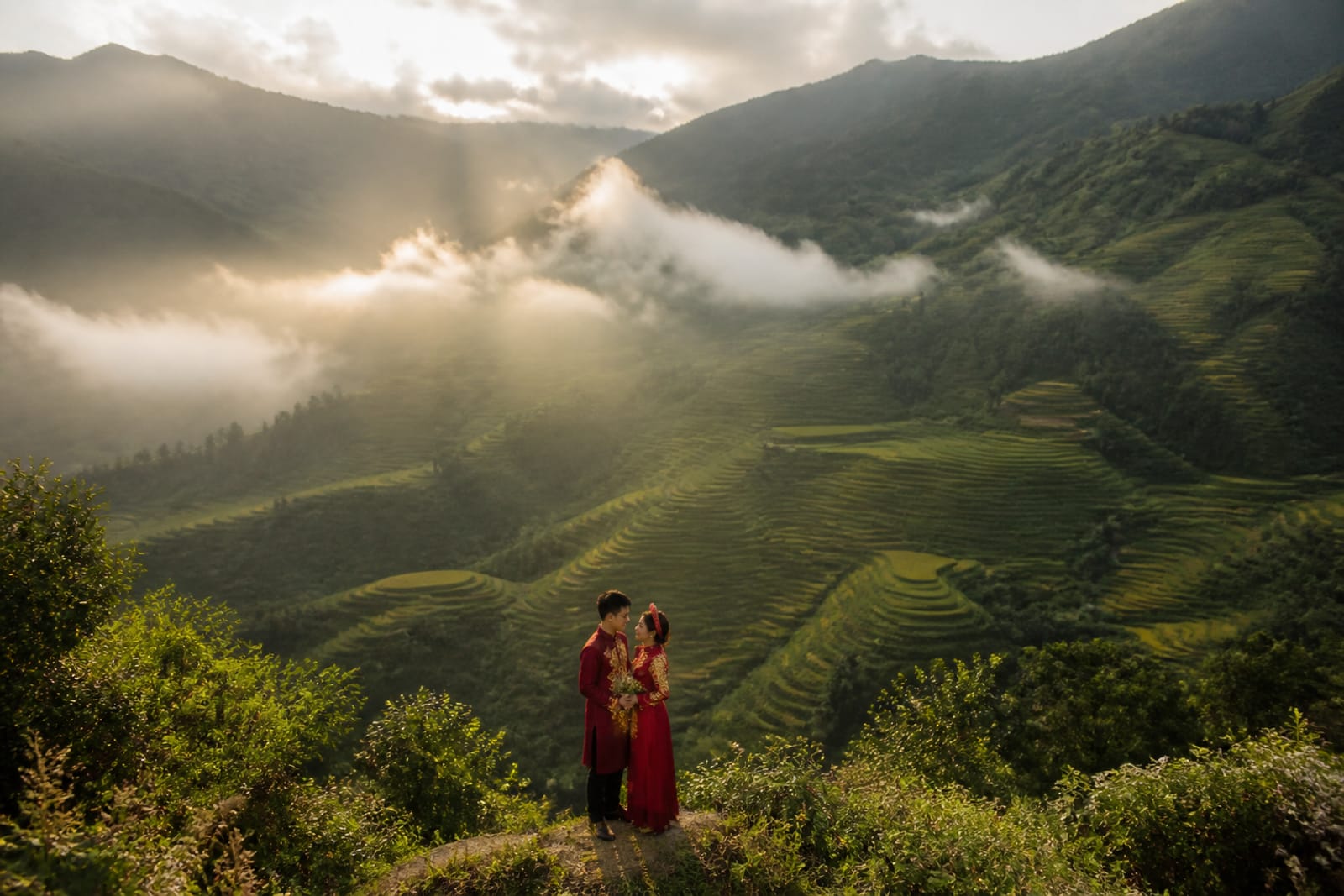
One tailored ao dai (have it fitted before arrival; mountain tailors need 1–2 days). Bring layers (cardigan, light jacket), waterproof hiking boots, and quick-dry undergarments. Heels and heavy fabrics don't work on muddy slopes. Most couples bring one formal outfit and one casual change for variety.
How do I vet a local Ta Van photographer before booking?
Ask for a portfolio of past couple shoots in Ta Van or other Sapa villages (not just studio work). Confirm their guide's license number and request a video call. Check if they handle permits or expect you to. Ask for a past client reference. Avoid photographers who claim permits "aren't needed" or have no Sapa experience.
What if it rains during my Ta Van shoot?
Wet terraces are photogenic (reflective, moody), but steep paths become hazardous fast. A prepared photographer scouts a covered backup location (tea house, market shelter). Negotiate a reschedule clause in your contract for extreme weather (thunder, hail, flooding). Afternoon rain showers are common Jun–Aug; plan accordingly.
Can Cáo Studio shoot in Ta Van?
Cáo Studio operates in Hanoi, Ho Chi Minh City, and Hoi An. For a Ta Van pre-wedding shoot, the Hanoi team can coordinate with a vetted local photographer and brief them on your vision, ensuring editing consistency. Contact us on WhatsApp to discuss how this fits your overall Vietnam pre-wedding plan.
FAQ
Do I absolutely need a permit to photograph in Ta Van?
Yes, for any organized commercial or content-creation shoot. Personal travel snapshots are typically tolerated, but hiring a photographer requires advance approval from Sapa District People's Committee (5–7 days processing). Confirm your photographer or guide has filed this before arrival. Shooting without permission risks fines.
Can I use a drone to shoot Ta Van?
No, without explicit military or transport authority approval. Drones are banned in this airspace nationally. Ground-level wide-angle and ridge-path shots achieve panoramic scale without regulatory risk. A licensed drone operator from Hanoi may apply for permits weeks in advance, but rarely succeeds for commercial use in Ta Van.
What's the best time of year to shoot in Ta Van?
May–Jun (green, warm, 5–10 a.m. soft light) and Sep–Oct (clear, harvest terraces, cool morning light) are ideal. Dec–Feb is grey and overcast. Summer afternoons (Jun–Aug) see frequent rain. Winter terrain is firm but lacks colour and daylight is short.
How long does a Ta Van photoshoot take?
4–6 hours on-site, plus 30–45 minutes travel from Sapa town each way. Start before 6 a.m. to catch first light on the slopes; wrap by early afternoon or restart at 3 p.m. for evening western side-light. Pack water and snacks; there are limited cafés on the mountain.
What outfit works best in Ta Van?
One tailored ao dai (have it fitted before arrival; mountain tailors need 1–2 days). Bring layers (cardigan, light jacket), waterproof hiking boots, and quick-dry undergarments. Heels and heavy fabrics don't work on muddy slopes. Most couples bring one formal outfit and one casual change for variety.
How do I vet a local Ta Van photographer before booking?
Ask for a portfolio of past couple shoots in Ta Van or other Sapa villages (not just studio work). Confirm their guide's license number and request a video call. Check if they handle permits or expect you to. Ask for a past client reference. Avoid photographers who claim permits "aren't needed" or have no Sapa experience.
What if it rains during my Ta Van shoot?
Wet terraces are photogenic (reflective, moody), but steep paths become hazardous fast. A prepared photographer scouts a covered backup location (tea house, market shelter). Negotiate a reschedule clause in your contract for extreme weather (thunder, hail, flooding). Afternoon rain showers are common Jun–Aug; plan accordingly.
Can Cáo Studio shoot in Ta Van?
Cáo Studio operates in Hanoi, Ho Chi Minh City, and Hoi An. For a Ta Van pre-wedding shoot, the Hanoi team can coordinate with a vetted local photographer and brief them on your vision, ensuring editing consistency. Contact us on WhatsApp to discuss how this fits your overall Vietnam pre-wedding plan.
Ao dai, makeup, hair and a local photographer in Hanoi or Saigon — one WhatsApp message.