/pre-wedding-photoshoot
Photography rules at Tra Su cajuput forest: permits, drones and what t
Tra Su cajuput forest is a nature reserve in the southern Mekong Delta requiring entry tickets and camera permits for commercial or semi-commercial photoshoots. The best season is December to April (dry, stable water, clear light). Drones are banned across the reserve. A professional local guide (or a guide paired with a photographer) is required by the reserve authority; you cannot shoot alone. Shoots run 2–4 hours depending on boat routes and light. Most couples book a local photographer or guide-photographer team from nearby An Phu or Chau Doc; Cáo Studio does not operate in the Mekong Delta, but we can recommend vetting criteria and planning angles from Hanoi, Ho Chi Minh City or Hoi An if you're already booked with us.
Do you need a permit to shoot at Tra Su?
Yes. Entry tickets are required for all visitors—check the current price on the official reserve site. Commercial and semi-commercial shoots (couple sessions, editorial, brand content) need explicit camera permits or commercial photography authorization from the An Phu District People's Committee or reserve management. Tourist snapshots do not; professional or posed couple shots do. Apply 3–7 days before your shoot; processing can be slow during peak season (Jan–Mar). Bring passport, shoot plan, and contact details. No permit = your photos can be confiscated and you may be fined.
Are drones allowed at Tra Su cajuput forest?
No. Drones are prohibited across the entire reserve. This includes aerial shots, sweeping landscape pulls, or gimbal footage. The ban protects nesting birds and enforces airspace control over a protected wetland. If aerial photography is essential to your shoot concept, pivot to drone-permitted locations (Mekong Delta banks, open water channels outside the reserve, or cleared agricultural zones nearby—check with your local guide). Horizontal and water-level shots are your main angles here.
What's the best season and light window for Tra Su photos?
December to April is dry season: water levels are stable, sky is clearer, mornings have soft gold-to-white light, and trails are walkable. Early morning (6:00–8:30 am) gives side-lit reflections on still water. Midday (10:00 am–2:00 pm) is harsh but acceptable over water (reflections soften direct glare). Late afternoon (4:00–5:30 pm) is golden but boats are busier and birds rest. Avoid May–November (rainy, high water, overcast, afternoon downpours, fewer birds). Peak crowds are January–February (Tet holiday aftermath). Shoot in December, March or April for solitude and control.
| Season | Water level | Light quality | Crowds | Walk difficulty | Best for |
|---|---|---|---|---|---|
| Dec–Jan | Stable, low | Golden, reflective | High (Tet) | Easy | Detail shots, couple walks |
| Feb–Mar | Stable, low | Soft morning, gold afternoon | Medium | Easy | Wide frames, landscape, portraits |
| Apr | Stable, low | Bright, clean | Low | Easy | Solo light work, flexible timing |
| May–Sep | High, turbid | Grey, flat | Low | Wet, slippery | Not recommended |
| Oct–Nov | Rising, flood risk | Dull, rainy | Very low | Difficult | Not recommended |
Early morning shoots (dawn to 8:30 am) suit couple portraits and reflections. Afternoon suits landscape-wide frames and outfit changes. Plan your outfit changes and makeup touch-ups around light windows—no dressing rooms exist on the reserve.
📸 Book on WhatsApp — ao dai photoshoot
Should you hire a local photographer or a guide with a camera?
This is the biggest decision. Tra Su requires a human guide; a guide-photographer is one person doing both jobs (less ideal). A standalone local photographer plus a separate guide gives you professional framing but splits focus and adds cost. Here's how to choose:
Guide with basic camera skills: Knows trails, water conditions, bird behaviour. Shoots on phone or basic DSLR. Cheaper. Suit: you just want memories, not directed frames. Downside: no cinematic eye, rushed positioning, basic editing.
Local photographer (not guide-certified): Professional framing, light knowledge, post-production. Cannot navigate reserve rules or bird zones alone; needs a licensed guide alongside. Two people = higher cost, scheduling complexity. Suit: you want quality frames and can manage two vendors. Downside: photographer and guide may not sync; you're logistics coordinator.
Guide-photographer (rare, hybrid role): Licensed guide + camera operator in one booking. Knows trails, permits, light, and framing. Rarest option; most reserves don't train guides to shoot professionally. Suit: solo couple, small party, willing to accept a guide's framing (not a director's). Downside: guide prioritizes navigation; photography is secondary.
Cáo Studio remote consultation (Hanoi, Ho Chi Minh City, Hoi An base): If you're already booked with Cáo Studio for a shoot elsewhere in Vietnam, we can advise on Tra Su angles, outfit choices, and local vetting via WhatsApp—but we do not send a team to the Mekong Delta. Contact us to discuss planning.
Most international couples hire a local guide + local photographer separately, or commit to a guide-photographer hybrid and adjust expectations. Verify the guide's reserve credentials (ask for a photo of their guide card) and the photographer's past work (request Tra Su portfolio). Meet both 1–2 days before if possible.
What outfit, hair and makeup work best at Tra Su?
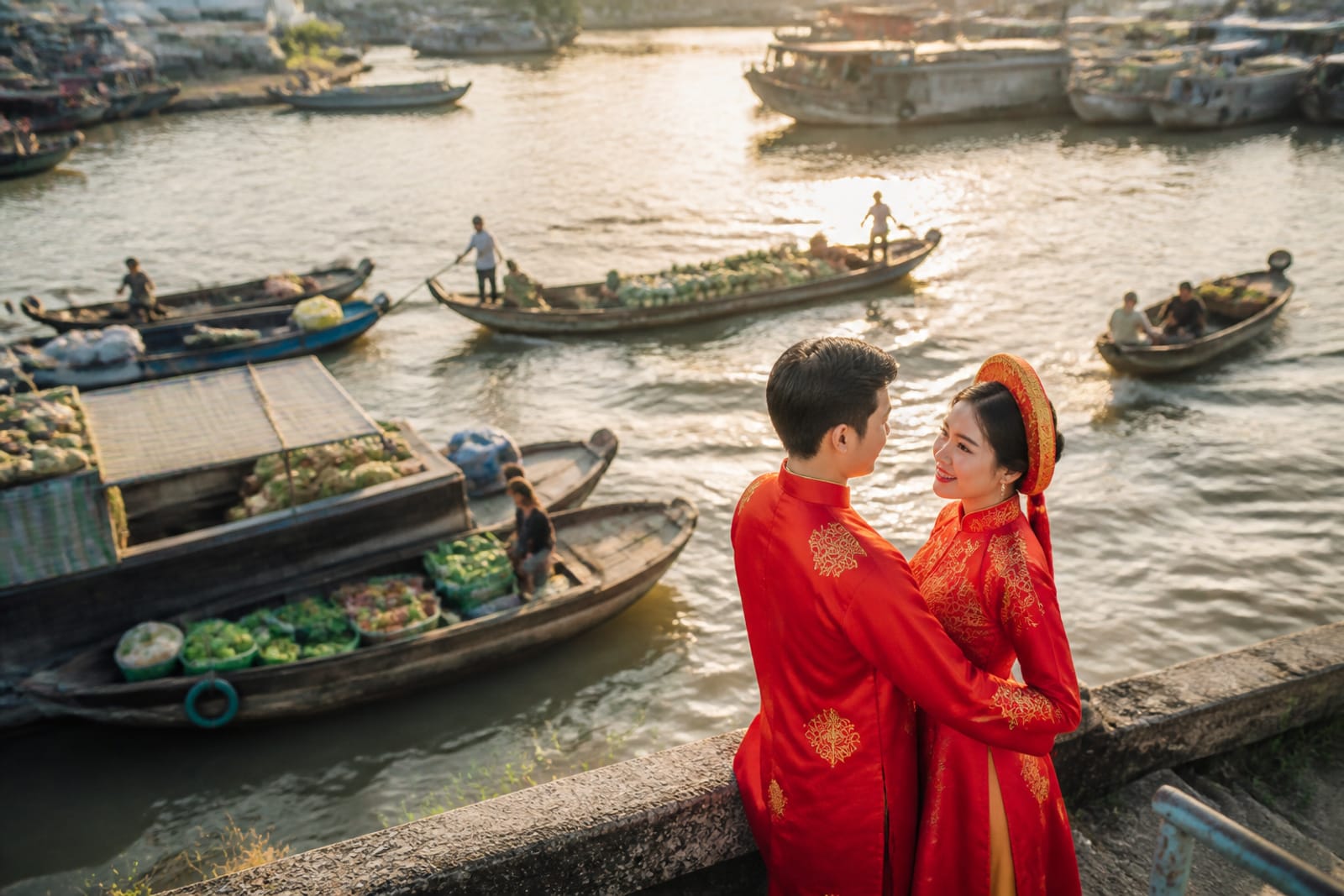
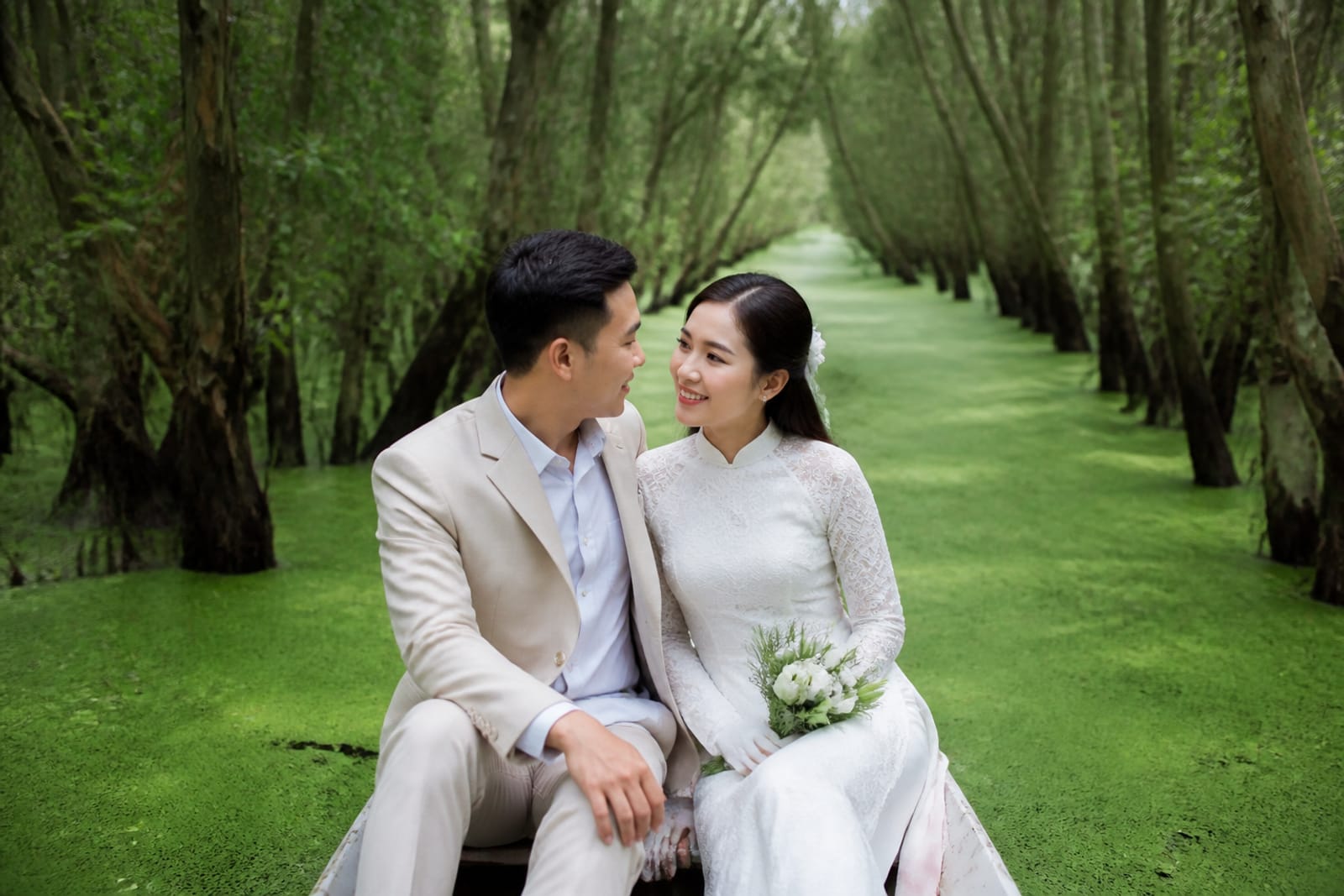
Áo dài (traditional Vietnamese dress) is iconic here and photographs beautifully in soft morning light—the fabric drapes well and contrasts the grey-green water. Rent locally (Chau Doc has rental shops) or bring one from Hanoi or Ho Chi Minh City. Avoid heavy fabrics in high heat (Apr). Lighter cotton áo dài suits comfort and movement on boats.
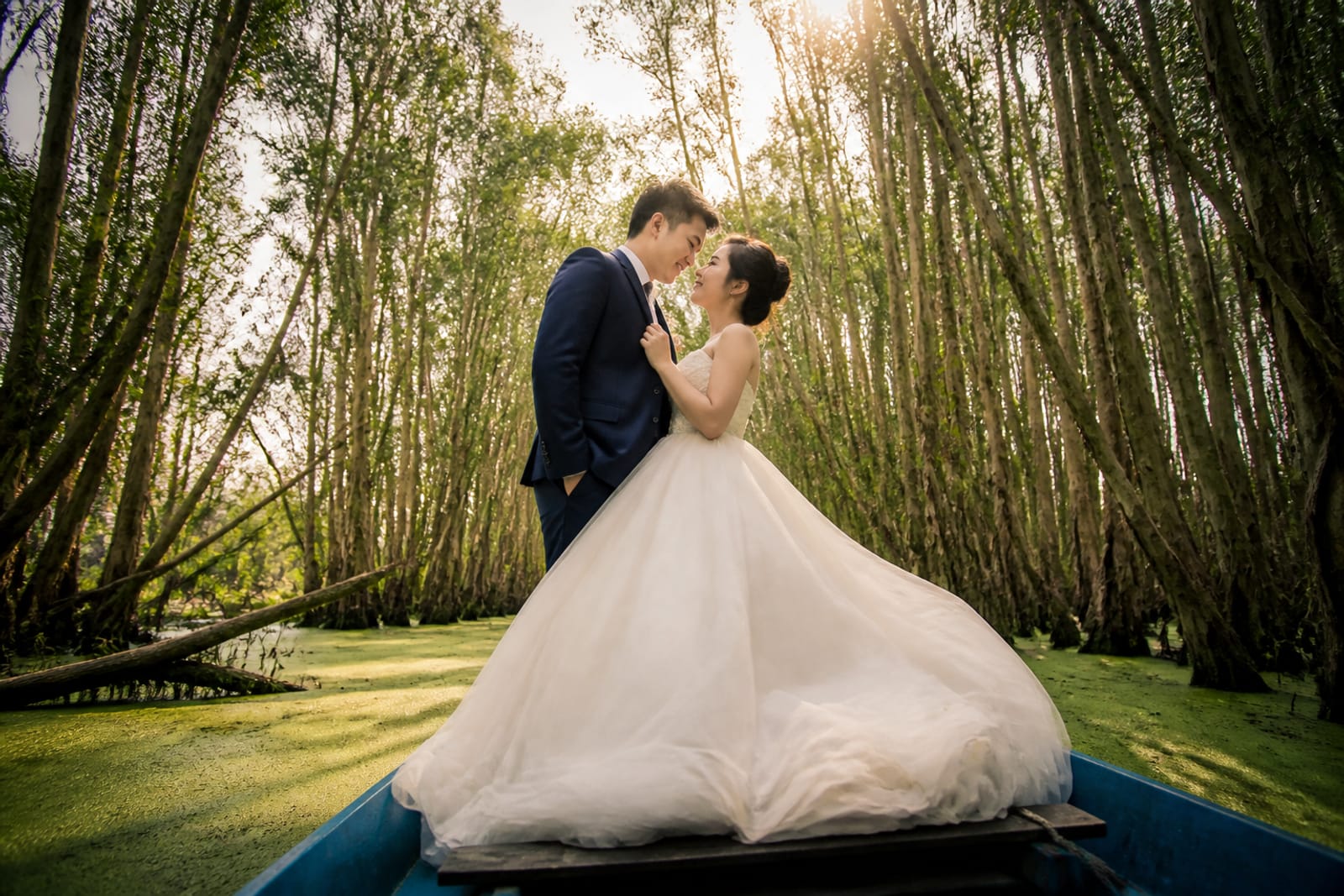
Western bridal gowns are challenging: boat boarding is risky in a long train, water splashes stain white fabric, and fabric weight is a logistics issue. If you insist on a gown, choose a shorter, darker, water-resistant option and accept higher cleaning costs.
Casual couple looks (linen shirt + soft trousers, midi dress) work well for candid boat shots and sunrise walks. Hair in loose waves or braids survives humidity and water mist. Makeup should be waterproof (water spray from boat movement is constant); heavy contouring fades in humidity. Minimal, natural makeup photographs best in soft morning light.
Shoes: water-resistant sandals or hiking shoes for walkways (no heels—trails are muddy even in dry season). Plan a shoe change for boat shots if aesthetic matters.
If you're already booked with Cáo Studio at our Hanoi or Saigon base and considering Tra Su as an add-on, we can coordinate outfit and makeup advice via WhatsApp—but our makeup artists do not travel to the Mekong Delta.
What else do you need to check before booking a Tra Su shoot?
Reserve entry tickets: Book 3–5 days ahead (capacity limits in peak season). Know the ticket price and cancellation policy.
Guide availability: Ask if your guide has a specific boat and backup weather plan. Typhoons and floods occur Oct–Nov; confirm November is off-limits.
Photographer backup: If hiring a photographer, ask: do they have a weather backup date? What if light is poor (monsoon fringe, heavy cloud)? Do they deliver raw files, edited files, or both? How many days to delivery?
Outfit contingency: If renting an áo dài locally, size it 2–3 days before; no alterations happen during your shoot. Bring a backup casual look for midday light.
Mobility: Boat ride is 1.5–2 hours. Not suitable for guests with mobility issues or sea sickness. Confirm boat size and safety gear with your guide.
Bird disturbance: Do not chase birds for photos. Respect nesting zones (usually roped off). The guide will indicate where you can walk. Aggressive positioning results in fines or expulsion.
Timing contract: Agree in writing (WhatsApp is fine) on start time, end time, number of outfit changes, and delivery date. Miscommunication is common with local vendors.
For pre-wedding shoots at Tra Su, hire your guide and photographer at least 2 weeks ahead. Peak-season availability (Jan–Mar) fills fast.
---
What to check before you book
- Permit status: Reserve confirms your commercial photography permit 5 days before arrival.
- Guide credentials: Ask for their photo ID or guide card number; verify with An Phu tourism office if unsure.
- Photographer portfolio: Request 3+ past Tra Su shoots; assess if their style matches your vision.
- Boat safety: Life jackets provided? Boat insured? Ask your guide directly.
- Outfit fit: Rental áo dài tried on and adjusted 2–3 days before the shoot.
- Weather backup: Shoot date moved if forecast shows rain >50% after Oct 15 or during flood season.
- Delivery timeline: Photos promised in writing—email or WhatsApp confirmation of date.
- Payment schedule: Deposit upfront (verify with guide how much), balance after delivery. Never pay 100% in advance to an unknown vendor.
If you're planning a multi-location Vietnam shoot (Hanoi + Hoi An + Mekong concept), Cáo Studio coordinates couple and family photoshoots in Hanoi, Ho Chi Minh City, and Hoi An. We can advise on Tra Su as a third-party shoot and help you integrate those photos into your story. Contact us on WhatsApp.
FAQ
Can we shoot at Tra Su with our own camera and no permit?
Tourist snapshots are fine; couple poses, engagements or editorial work require a commercial permit from An Phu District. Fines and photo confiscation happen if caught without one. Apply 3–7 days ahead.
What is the cheapest way to shoot at Tra Su?
Hire a reserve-licensed guide (no photographer). Cost depends on boat rental and guide day rate—ask your hotel in Chau Doc or An Phu for current rates. Trade-off: no professional framing, basic composition, minimal editing.
Can we use a drone to film a cinematic aerial shot?
No. Drones are banned across the entire reserve. Pivot to a location outside the reserve (open Mekong channels, cleared banks) if aerial is critical—check with your guide on legal alternatives.
How long does a typical Tra Su photoshoot take?
2–4 hours depending on light window (early morning or late afternoon), number of outfit changes, and boat route. Most couple sessions are 3 hours (sunrise/golden hour). Budget extra if you want both morning and afternoon light on different days.
Do we need to book a guide and photographer from the same company?
No, but hiring separately means coordinating two vendors. One person doing both (guide-photographer) is simpler but sacrifices professional photography quality. Verify they've worked together before or communicate clearly on timing, boat access, and payment splits.
What is the best month to shoot at Tra Su without crowds?
March and April are dry, clear, and far less busy than January–February (post-Tet). December is dry but starts to fill with holiday bookings. Avoid May–November (rain, high water, monsoon).
Can Cáo Studio send a team to Tra Su for my shoot?
No. Cáo Studio operates in Hanoi, Ho Chi Minh City, and Hoi An. We do not have a Mekong Delta team. We can advise on planning, outfit, and local vetting via WhatsApp if you're coordinating a multi-location Vietnam shoot with us elsewhere.
FAQ
Can we shoot at Tra Su with our own camera and no permit?
Tourist snapshots are fine; couple poses, engagements or editorial work require a commercial permit from An Phu District. Fines and photo confiscation happen if caught without one. Apply 3–7 days ahead.
What is the cheapest way to shoot at Tra Su?
Hire a reserve-licensed guide (no photographer). Cost depends on boat rental and guide day rate—ask your hotel in Chau Doc or An Phu for current rates. Trade-off: no professional framing, basic composition, minimal editing.
Can we use a drone to film a cinematic aerial shot?
No. Drones are banned across the entire reserve. Pivot to a location outside the reserve (open Mekong channels, cleared banks) if aerial is critical—check with your guide on legal alternatives.
How long does a typical Tra Su photoshoot take?
2–4 hours depending on light window (early morning or late afternoon), number of outfit changes, and boat route. Most couple sessions are 3 hours (sunrise/golden hour). Budget extra if you want both morning and afternoon light on different days.
Do we need to book a guide and photographer from the same company?
No, but hiring separately means coordinating two vendors. One person doing both (guide-photographer) is simpler but sacrifices professional photography quality. Verify they've worked together before or communicate clearly on timing, boat access, and payment splits.
What is the best month to shoot at Tra Su without crowds?
March and April are dry, clear, and far less busy than January–February (post-Tet). December is dry but starts to fill with holiday bookings. Avoid May–November (rain, high water, monsoon).
Can Cáo Studio send a team to Tra Su for my shoot?
No. Cáo Studio operates in Hanoi, Ho Chi Minh City, and Hoi An. We do not have a Mekong Delta team. We can advise on planning, outfit, and local vetting via WhatsApp if you're coordinating a multi-location Vietnam shoot with us elsewhere.
Ao dai, makeup, hair and a local photographer in Hanoi or Saigon — one WhatsApp message.