/pre-wedding-photoshoot
Photography rules at Tran Quoc Pagoda: permits, drones, what to check
Tran Quoc Pagoda (on the Red River islet in Hanoi) requires prior permission for professional photoshoots; drones are prohibited. Permit requests must go through the pagoda office days in advance—personal travel photos don't need clearance, but wedding or commercial sessions do. Autumn (October–November) offers the clearest light and fewest crowds; early morning (6–7 a.m.) gives soft, directional sun and empty spaces before tourists arrive. Sessions typically run 1–2 hours to capture the main temple, surrounding gardens and water reflections without rushing between angles. Cáo Studio – Makeup & Photoshoot arranges pagoda permits as part of pre-wedding shoots and couple sessions in Hanoi; confirm permission status on WhatsApp before finalizing a booking. Avoid midday harsh light, heavy rain (May–September) and peak tourist times (9 a.m.–4 p.m.). 📸 Book on WhatsApp — pre-wedding photoshoot ---
Do you need a permit to photograph at Tran Quoc Pagoda?
Yes. Professional photoshoots—weddings, pre-weddings, engagements and commercial sessions—require written permission from the pagoda office. Personal snapshots during visits don't. Submit requests 3–5 working days ahead; expect approval or denial within 48 hours. The pagoda office opens mornings; ask your photographer or guide to submit the form in person or by phone (hire a local fixer if you're unfamiliar with Vietnamese bureaucracy). Unpermitted shoots risk removal and blacklisting from future bookings.
Conclusion: Always confirm permit status through your photographer before booking a professional session.
Can you use drones at Tran Quoc Pagoda?
No. Drone flights are forbidden over the pagoda and its surrounding area. National airspace restrictions around Hanoi, combined with the pagoda's sacred status and proximity to residential zones, make aerial shots impossible. Professional photographers who know this site accept the limitation and frame creative angles from ground level—the pagoda's position on the river and its ancient architecture offer plenty of strong compositions without height.
Conclusion: Plan your shoot expecting only ground-level angles and reflections from the water.
When is the best light and season for shooting at Tran Quoc Pagoda?
Autumn (October–November) is ideal: dry, mild air, soft golden-hour light and no monsoon haze. Temperatures hover around 20–25°C—comfortable for long takes and walking between spots. Winter (December–February) is cool and often grey and drizzly; avoid unless you want moody, diffused tones. Spring (March–April) brings humidity, haze and occasional drizzle. Summer (May–September) is hot, very humid and rainy; typhoon remnants can flood the site. Shoot sunrise (6–7 a.m.) or late afternoon (4–5 p.m.) year-round; midday sun creates harsh shadows across the temple's south face.
Conclusion: October–November sunrise is your strongest window; plan alternatives if rain threatens.
What outfit choices work best at a sacred site?
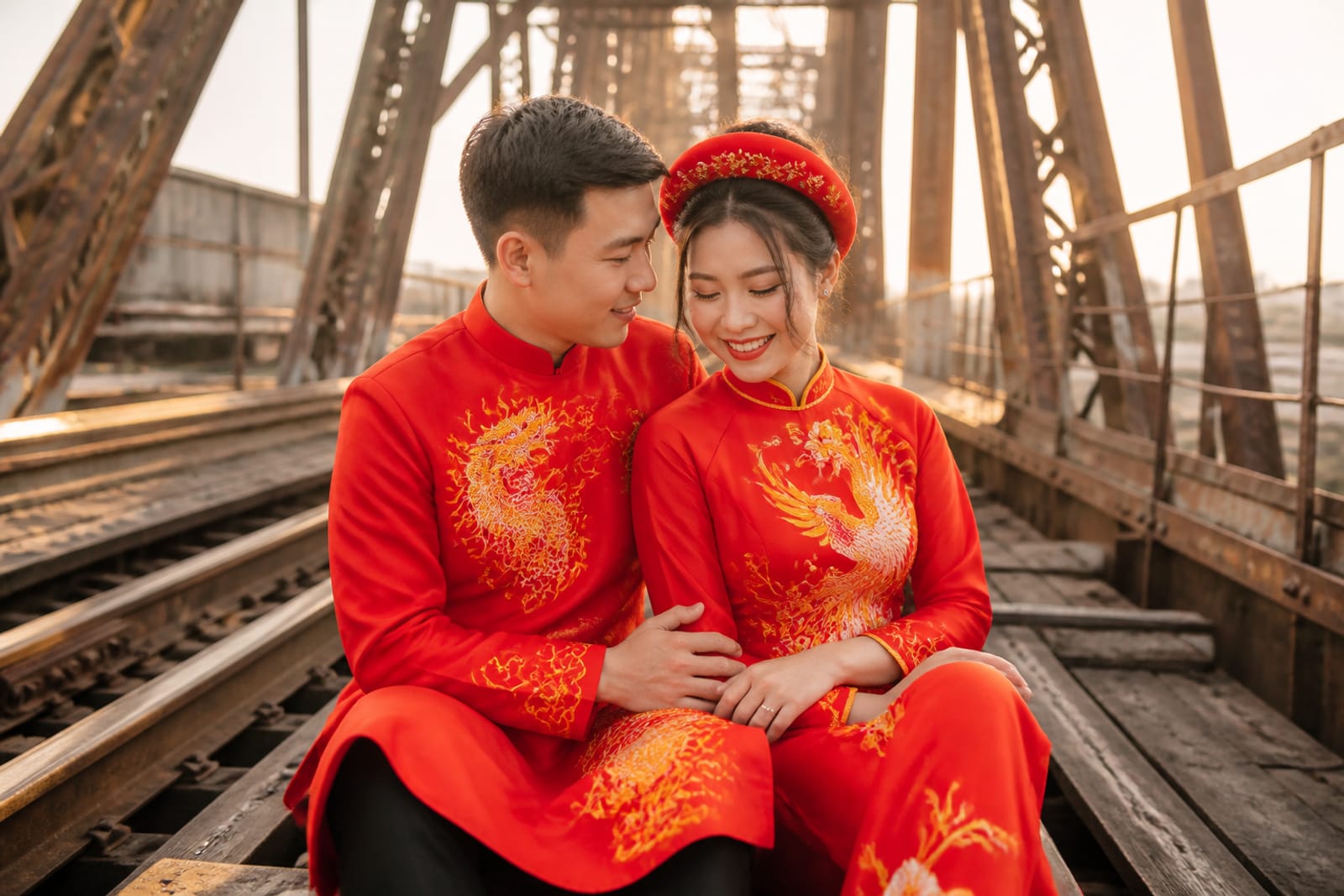
Wear respectful, modest clothing: long pants or skirts, covered shoulders, no transparent fabrics. An ao dai (traditional long tunic) is perfect—it's culturally appropriate, photogenic and shows respect to the space. Avoid bright neon or costume looks. Neutral or jewel-tone fabrics photograph better in soft light. Footwear matters: wear comfortable shoes for walking uneven paths (the pagoda sits on stone platforms); have backup shoes in your bag in case the site requests removal indoors. Makeup should be long-wearing if you're shooting early morning when humidity and perspiration are lower.
Conclusion: An ao dai wins on beauty and respect; otherwise choose neutral, covered outfits.
How do you compare shooting at Tran Quoc vs. other Hanoi temples and pagodas?
| Site | Best for | Light/Season | Permit? | Walking | Why it works |
|---|---|---|---|---|---|
| Tran Quoc | Romance, lakeside backdrops, couples | Autumn sunrise/late afternoon | Yes, required | Easy on stone paths | Water reflections, aged red walls, iconic Red River view |
| Thay Pagoda (Hoa Binh) | Adventure, isolation, nature | Spring–autumn, early morning | Ask locally | Steep stairs, long hike | Mountain setting, dramatic caves, fewer tourists |
| One Pillar Pagoda | Iconic, urban, quick | Autumn, 6–7 a.m. (arrive before 8) | No for quick shots | Minimal | 11th-century history, tight framing, high foot traffic midday |
| Quan Su Pagoda | Inner peace, quiet, details | Any season, 6–7 a.m. | No for personal shoots | Courtyard only | French colonial influence, cypress trees, fewer crowds |
| Tran Phu Pagoda (Hoi An) | Traditional, lantern light | Spring–autumn, sunset | Check locally | Confined street | Colorful lanterns, ancient street, close to water (ask Cáo on Hoi An dates) |
Conclusion: Tran Quoc suits couples wanting natural water and architecture; choose others if you prefer isolation or quicker access.
💄 Makeup & hair at your hotel | 🌸 See the lookbook
What are the most common photo mistakes at this pagoda—and how to avoid them?
Timing mistakes: Arriving 9 a.m.–4 p.m. means competing with tour groups for space and tolerating hard overhead light. Solution: book a 6–7 a.m. slot and confirm it in writing with your photographer and the pagoda office. Many Hanoi photographers know the site well and have existing relationships that speed permit approval.
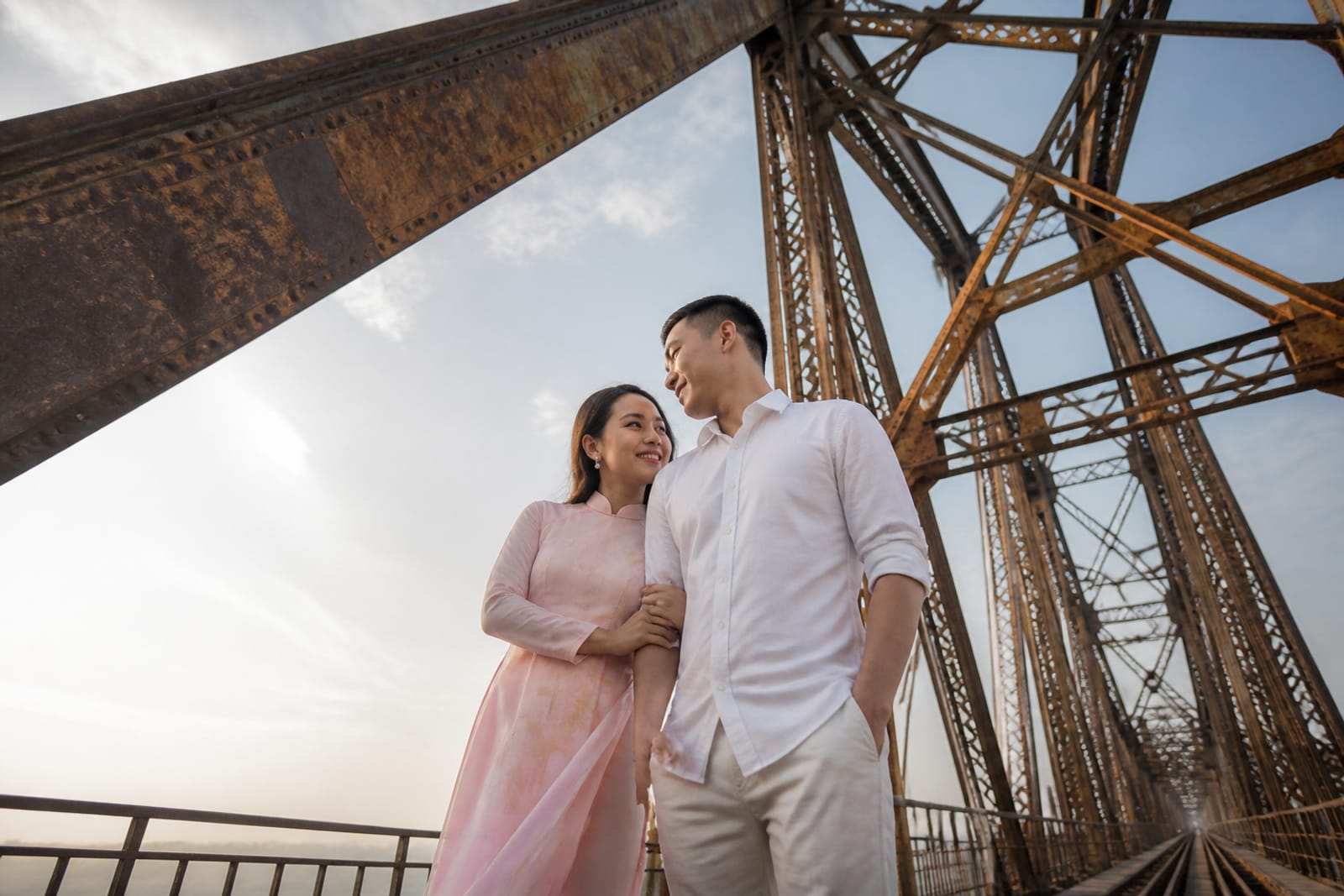
Outfit fails: Wearing white or very pale clothing can cause overexposure in early-morning backlit shots. Solution: bring neutral or jewel tones; white works only in open shade or overcast light.
Logistical oversights: Assuming the permit is "standard" or delegating it entirely to a photographer who hasn't shot the site before. Solution: confirm in writing that your photographer has submitted the permit and received approval; ask for a copy. Many travelers book without realizing permits exist, then face last-minute cancellations.
Reflections gone wrong: The best water reflections happen at sunrise or late afternoon when the sun is low; shooting midday produces flat, washed-out mirror images. Solution: time your session to golden hour and expect the photographer to spend time positioning you near the water's edge.
Permit delays: Submitting requests <3 days before a shoot often results in "come back later" or outright denial during peak season. Solution: book your shoot 2 weeks ahead if possible; last-minute bookings risk being rerouted to other Hanoi temples.
Conclusion: Communicate directly with your photographer about timing, outfit color and permit status weeks in advance.
---
Which Cáo Studio session fits a Tran Quoc shoot?
Couples and pre-wedding clients use this site most. Pre-wedding photoshoots typically span 2–3 hours across multiple locations; Tran Quoc works as a primary or secondary stop depending on your package. Couple sessions are shorter (1–2 hours) and ideal if you want a single, focused location. Ao dai photoshoots paired with traditional attire are especially strong here—the temple's age and the tunic's cultural roots create an authentic frame. Family photoshoots also work, though the stone platforms and stairs require careful navigation with young children or elderly members.
For makeup and hair, book hotel-based services the morning of your shoot to avoid traveling with finished looks through Hanoi traffic. If you're arriving from outside Hanoi or planning multiple locations, a Hanoi-based session with pre-planned logistics saves stress.
📸 Book on WhatsApp — couple photoshoot
---
What should you check before booking a Tran Quoc shoot?
Before you commit, confirm with your photographer:
- Permit status. Has the photographer shot here before? Do they have an existing relationship with the pagoda office that speeds approval? Or will they handle your first-time request? Ask for a timeline and written confirmation once approved.
- Arrival time and group size. Confirm your precise start time (ideally 6–7 a.m.) and whether your group size (you, partner, family, makeup artist, videographer) will be flagged during permit submission. Large groups sometimes face limits.
- Weather backup. Does your package allow a reshoot if rain cancels your autumn morning session? Get this in writing.
- Outfit approval. Share your outfit photos or descriptions; ask the photographer to confirm they're temple-appropriate and well-suited to autumn light. Avoid whites and pale greys for backlit shots.
- Location flexibility. If the pagoda is suddenly closed or off-limits on your date, which Hanoi temples or outdoor spots does your photographer offer as replacements? Know your backup spots before you book.
- Parking and access. Is there paid parking nearby? Can you arrive via taxi, Grab or personal vehicle? Ask your photographer how you'll meet and how long logistics take.
- Edited file delivery. How many edited images do you receive, and by when? (Specifics are confirmed on WhatsApp; don't assume "all shots" or "next-day delivery.")
Ask these on WhatsApp before paying any deposit; a transparent photographer will answer clearly.
---
Other popular Hanoi photoshoot locations for reference
If Tran Quoc doesn't suit your vibe, consider these alternatives. Hoan Kiem Lake (urban elegance, weekend evenings pedestrian-only) works for quick city-backdrop shots but is crowded. Phan Dinh Phung Street (autumn tree canopy, soft light) is free and perfect for ao dai but lacks the spiritual depth of a pagoda. Trang An Boat Tour (limestone karst, morning mist) suits adventure-focused couples but requires extra time and boat-permit logistics. Ho Tay Lake (West Lake, quieter shores) offers water reflections without the permit hassle. Hoi An Ancient Town (lantern-lit streets, tropical light) is a 3-hour drive but iconic for pre-wedding work; Cáo Studio travels there by appointment—ask on WhatsApp for dates. Each location trades off permit friction, crowd control and seasonal suitability differently.
---
How long does a typical Tran Quoc shoot run?
A focused couple shoot lasts 1–1.5 hours: 15 minutes to settle and scout angles, 45 minutes of active posing and movement around the main temple and lakeside, 15 minutes for detail shots or backup locations on the grounds if time and energy allow. Pre-wedding shoots that use Tran Quoc as one stop in a multi-location day (e.g., street market, lake, temple, silk village) allocate 1 hour here and move on. Sunrise shoots (6–7 a.m.) capture the temple's best light and empty grounds; factor in 30 minutes of travel from central Hanoi, 15 minutes to meet your photographer and crew, and 90 minutes of actual shooting before 9 a.m. when tour groups arrive. Weather delays (drizzle, low cloud, reflections on water) can stretch this by 20 minutes.
Conclusion: Plan 2–2.5 hours door-to-door if Tran Quoc is your only stop; longer if you're combining it with other Hanoi spots in one day.
FAQ
Do I need a permit for personal vacation photos at Tran Quoc?
No. Tourists taking casual snapshots during visits don't require permission. Professional photoshoots (weddings, pre-weddings, commercial work) do. If you're uncertain whether your shoot counts as professional, ask your photographer or call the pagoda office before your session.
What should I wear under an ao dai for a lakeside photoshoot?
Wear smooth undergarments (neutral slip or lightweight tank) so seams and lines don't show through the fabric. Avoid visible bra straps; ao dais are designed to drape over minimal understructure. Bring a cardigan or shawl for layering indoors if the pagoda's interior is cool or dimly lit.
Can I reshoot if rain cancels my autumn morning session?
Rescheduling policies vary by photographer and package. Confirm in writing whether your booking includes a free reshoot date or a partial refund if weather forces cancellation. Ask this when you book, not after rain strikes.
How early should I arrive before a 6 a.m. photoshoot?
Aim for 5:45 a.m. so makeup and final outfit adjustments are complete before the photographer starts framing shots. Allow 30 minutes travel time from your hotel; leave by 5:15 a.m. to account for Hanoi traffic (surprisingly heavy even early). Confirm the exact meeting spot and parking details with your photographer.
What if the pagoda denies my permit application?
Reasons include shoot date conflicts with ceremonies, group-size limits or sudden closures. When booking your session, ask your photographer what alternative Hanoi temples they use if Tran Quoc falls through. One Pillar Pagoda, Quan Su Pagoda and Thay Pagoda are common backups; each has different permit rules.
Can I bring a videographer to Tran Quoc?
Yes, but submit permit requests for both still photography and video in one application; the pagoda office may impose different rules (e.g., one camera only, restricted areas for video). Confirm with your photographer before booking a videographer alongside a photo shoot.
How much does a Tran Quoc permit cost?
Permit fees vary and may be included in your photographer's package or charged separately. Ask your photographer directly on WhatsApp for clarity on who pays and how much.
FAQ
Do I need a permit for personal vacation photos at Tran Quoc?
No. Tourists taking casual snapshots during visits don't require permission. Professional photoshoots (weddings, pre-weddings, commercial work) do. If you're uncertain whether your shoot counts as professional, ask your photographer or call the pagoda office before your session.
What should I wear under an ao dai for a lakeside photoshoot?
Wear smooth undergarments (neutral slip or lightweight tank) so seams and lines don't show through the fabric. Avoid visible bra straps; ao dais are designed to drape over minimal understructure. Bring a cardigan or shawl for layering indoors if the pagoda's interior is cool or dimly lit.
Can I reshoot if rain cancels my autumn morning session?
Rescheduling policies vary by photographer and package. Confirm in writing whether your booking includes a free reshoot date or a partial refund if weather forces cancellation. Ask this when you book, not after rain strikes.
How early should I arrive before a 6 a.m. photoshoot?
Aim for 5:45 a.m. so makeup and final outfit adjustments are complete before the photographer starts framing shots. Allow 30 minutes travel time from your hotel; leave by 5:15 a.m. to account for Hanoi traffic (surprisingly heavy even early). Confirm the exact meeting spot and parking details with your photographer.
What if the pagoda denies my permit application?
Reasons include shoot date conflicts with ceremonies, group-size limits or sudden closures. When booking your session, ask your photographer what alternative Hanoi temples they use if Tran Quoc falls through. One Pillar Pagoda, Quan Su Pagoda and Thay Pagoda are common backups; each has different permit rules.
Can I bring a videographer to Tran Quoc?
Yes, but submit permit requests for both still photography and video in one application; the pagoda office may impose different rules (e.g., one camera only, restricted areas for video). Confirm with your photographer before booking a videographer alongside a photo shoot.
How much does a Tran Quoc permit cost?
Permit fees vary and may be included in your photographer's package or charged separately. Ask your photographer directly on WhatsApp for clarity on who pays and how much.
Ao dai, makeup, hair and a local photographer in Hanoi or Saigon — one WhatsApp message.