services/ao-dai-photoshoot
Phu Quoc Ao Dai Photoshoot Guide – Plan Your Session
Phu Quoc's natural light and architectural variety make it a compelling destination for ao dai photoshoots. Unlike studio settings, outdoor sessions here demand knowledge of timing, tides, seasonal weather, and local sensitivities. This guide addresses the practical choices travelers face when planning an ao dai shoot on the island.
Can I shoot ao dai in Phu Quoc year-round?
Phu Quoc has two seasons: dry (November–April) and monsoon (May–October). November through March offer the most consistent light and dry conditions; humidity remains moderate. April and May are hot but clear. June–September bring afternoon downpours and overcast skies. Shoot between 6:30–7:30 a.m. or 4:30–5:30 p.m. for golden hour without harsh midday shadows on your áo dài fabric and face.
📸 Book on WhatsApp — ao dai photoshoot
What layering goes under an ao dai for photoshoots?
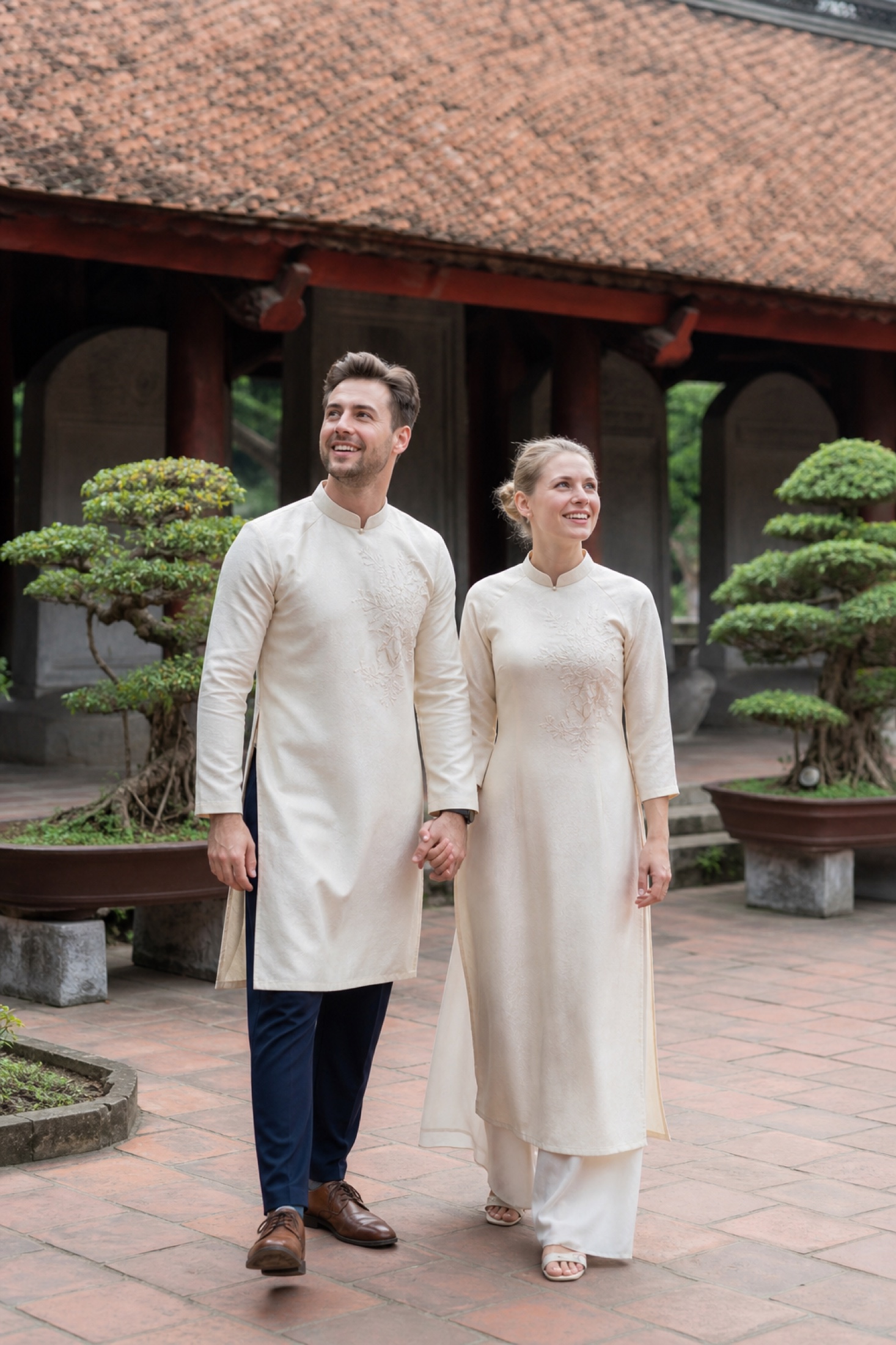
An áo dài sits over slim pants (áo dài pants are supplied by most studios) and an undershirt. Wear a breathable, skin-tone-matched slip or camisole under the silk overlay to prevent transparency and chafing. Many travelers rent or buy áo dài locally; ensure the inner pants fit snugly so the outer silk drapes cleanly. If shooting in 28–32°C heat, bring a moisture-wicking undershirt to stay comfortable during 1–3 hour sessions.
Where are the best photo spots on Phu Quoc?
Beach locations (Tran Hung Dao Street, Ong Lang Beach): soft sand, blue water, minimal crowds before 8 a.m. Wear reef shoes or sandals until shoot starts; sand damages áo dài hems.
Dinh Cau Temple & Phu Quoc Prison ruins: colonial and spiritual backdrops; visit in early morning before tourists arrive. Check local etiquette—temples require covered shoulders, though the áo dài's long sleeves comply.
Pepper plantations (inland, 20+ minutes by vehicle): green rows and dramatic earth tones frame dark silk beautifully; book access ahead.
Duong Dong night market fringe (weekday mornings): lanterns and weathered architecture offer ambient character without crowds.
Cacao gardens (southwest highlands): moody, lush canopy; best 7–9 a.m. before heat peaks.
How do I choose between renting or buying an ao dai?
| Option | Best For | Upfront Cost | Fit Risk | Laundry After |
|---|---|---|---|---|
| Rent locally | One-time travelers, tight budgets | $15–25 USD per day | Sizes limited; tailoring rare | Studio handles cleaning |
| Rent before arrival (online) | Travelers wanting pre-fit assurance | $40–80 USD | Custom sizing; shipping delays | You launder or pay extra |
| Buy in Hanoi/HCMC | Collectors, repeat visitors, multiple shoots | $80–200+ USD | Full tailoring available; time-intensive | Personal care required |
| Buy in Phu Quoc market | Budget travelers, last-minute decisions | $50–120 USD | Tourist-aimed quality; variable seams | You launder; hand-wash recommended |
Cáo Studio – Makeup & Photoshoot, based in Hanoi and Saigon, does not rent ao dai; however, if you book a session in Hanoi or Saigon before/after Phu Quoc, our team can advise on fit and styling. For Phu Quoc sourcing, ask hotel concierges; Duong Dong's central streets stock rental áo dài at negotiable rates.
What should I check before hiring a photographer in Phu Quoc?
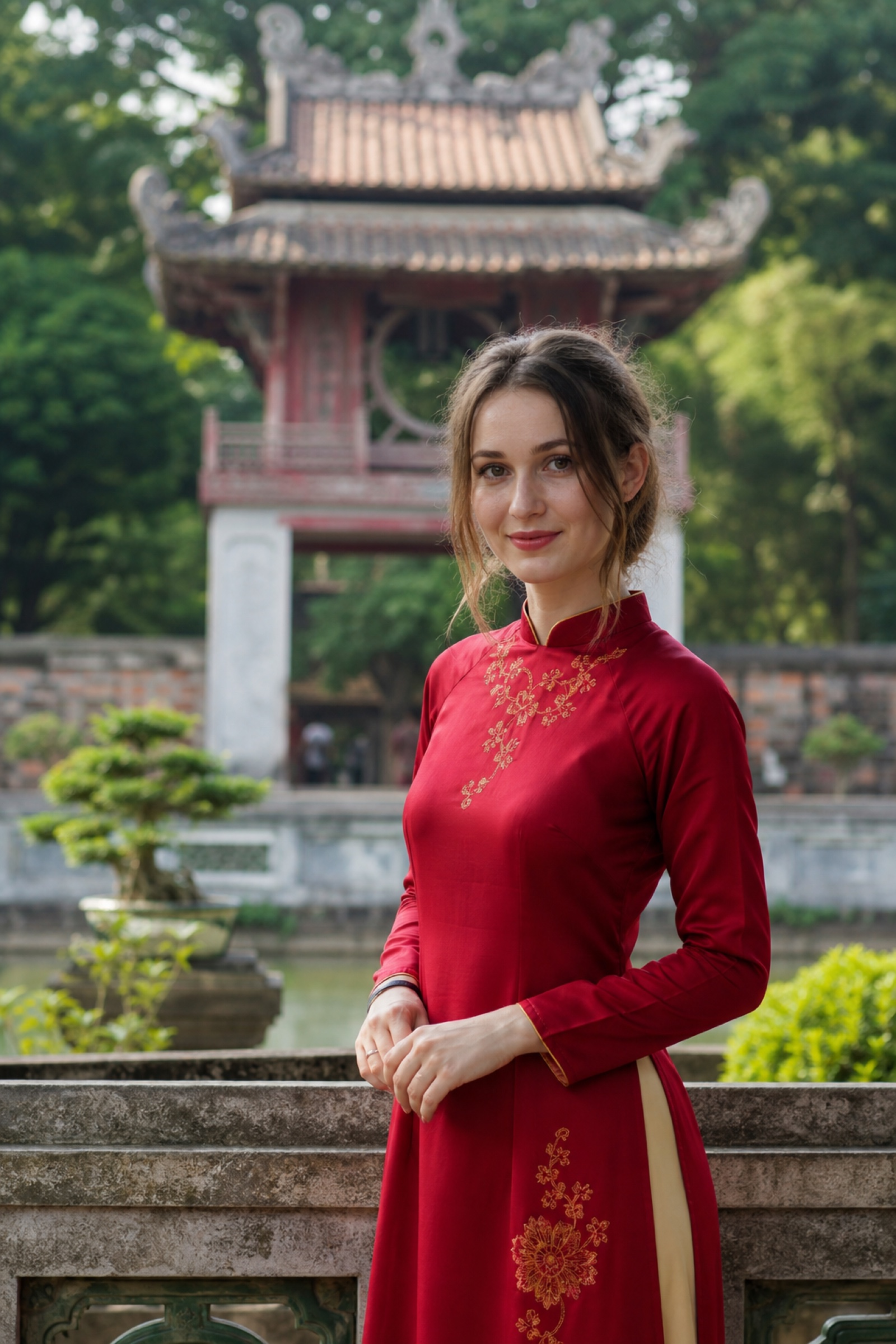
Portfolio clarity: Ask to see 10+ full ao dai shoots in similar light (sunrise beach, temple). Poor editing or blurry motion signals inexperience with silk fabric and moving fabrics.
Session length and output: Confirm whether you receive RAW files, edited JPEGs, or a mix. Typical packages: 1 hour = 30–50 edited images; 2 hours = 80–120. Cheaper vendors may cap edits.
Local vendor credibility: Check Google reviews (4.5+ stars, 20+ reviews minimum). Message 2–3 past clients directly via Instagram comments or WhatsApp.
Makeup & hair inclusion: Many local photographers don't offer on-site styling. If you want touch-ups, confirm the vendor provides it or pre-book a separate stylist. Phu Quoc has fewer makeup artists than Hanoi; see how makeup & hair services work at Cáo Studio's branches.
Editing timeline: Reputable vendors deliver within 2–4 weeks. Promises of same-day edits often mean minimal retouching.
Contract or deposit: A 30–50% deposit protects both parties; written agreement should cover weather reschedules, cancellation terms, and image rights.
How do I respect local culture while shooting ao dai?
The áo dài is Vietnam's national symbol and cultural dress, not a costume. In temples, dress modestly: ensure áo dài covers shoulders and knees (it does naturally). Remove shoes before entering prayer areas. Don't pose irreverently on altars or sacred objects. Tip locals if they appear in background shots; a small gesture is customary.
At beaches, keep contact minimal with fishermen's nets and boats unless invited. Avoid shooting during funerals or major ceremonies. If photographing Phu Quoc Prison historical site, frame shots respectfully—this is a solemn space.
What to check before booking
- Season & light: Book November–March for dry conditions and predictable golden hour.
- Outfit sourcing: Confirm whether rental, purchase, or your own áo dài; allow 1 week lead time if renting long-distance.
- Makeup: Pre-book a stylist if the photographer doesn't offer it; Phu Quoc has fewer available.
- Transport & timing: Account for 20–40 minute travel to rural shoot spots; start sessions early to avoid midday crowds.
- Backup plans: Confirm rescheduling policy for rain (common May–September).
- File delivery: Request a timeline and format (cloud link, USB, prints) in writing.
---
If you prefer working with an established team, Cáo Studio operates in Hanoi and Saigon with dedicated makeup artists, lighting control, and guaranteed turnaround. Explore our ao dai photoshoot service or see recent shoots in our lookbook. For Phu Quoc specifically, this guide equips you to vet local photographers and execute a professional session independently.
📸 Book on WhatsApp — ao dai photoshoot
---
FAQ
Do I need to buy an ao dai in Vietnam, or can I bring one from home?
You can bring your own; ensure it's hand-carry-friendly (roll, don't fold). Silk wrinkles easily; pack it in a garment bag and have it steamed on arrival. Local rental avoids luggage stress and supports artisans. Most travelers rent to avoid laundry and customs hassle.
What time of year has the best light for ao dai photography in Phu Quoc?
November through March offers consistently dry weather, calm seas, and golden-hour light. April–May are hot but clear. Avoid June–September (monsoon): overcast, rain, and humidity make silks stick and colors muddy in photos.
Can I do an ao dai shoot at multiple locations in one session?
Yes, if your session is 2+ hours. Discuss location scouting and travel time with your photographer beforehand. Beach → temple usually takes 20–40 minutes transit; plan 30 minutes per location minimum to avoid rushed shots.
How much does an ao dai photoshoot typically cost in Phu Quoc?
Local vendors in Phu Quoc charge $150–400 USD for 1–2 hour sessions with 30–80 edited images. Rates vary by portfolio, experience, and addon services (makeup, transportation, albums). Always request a quote in writing and confirm what's included (edits, prints, digital files).
Do I need special insurance or permits to shoot ao dai in temples on Phu Quoc?
Most temples permit photography respectfully; ask the keeper before setting up. No formal permit required for casual sessions. Avoid tripods and drones without permission. If hiring a commercial photographer, some temples request a small donation ($5–10) or prior notice.
What's the difference between a solo ao dai shoot and couple/family sessions?
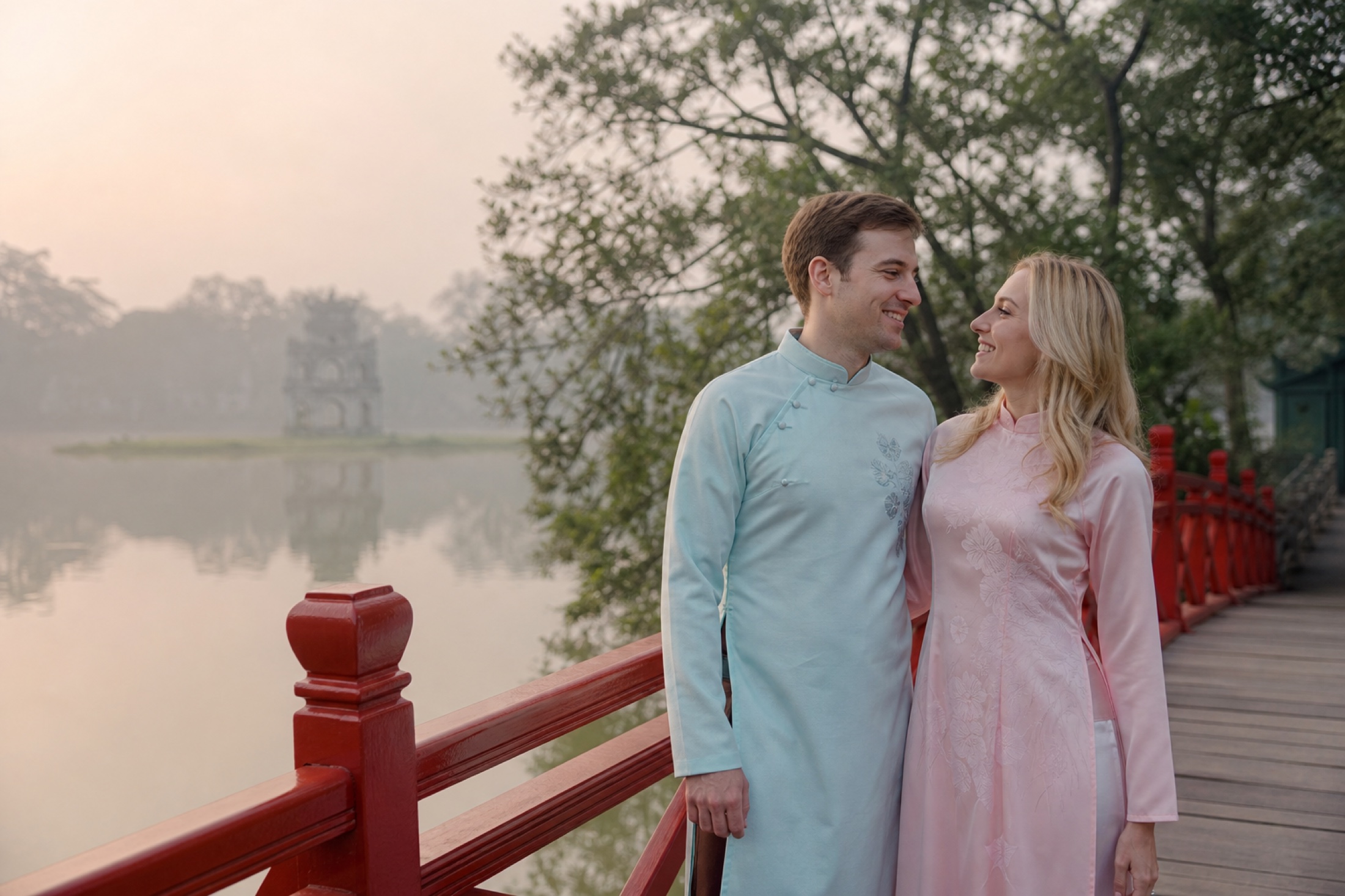
Solo sessions focus on the áo dài's draping and movement; typically 1 hour, 30–50 images. Couple sessions emphasize interaction (hand-holding, forehead-touching poses rooted in Vietnamese courtship); 1.5–2 hours, 50–80 images. Family shots coordinate multiple ao dai and backgrounds; 2+ hours. Learn more about couple and family sessions.
FAQ
Do I need to buy an ao dai in Vietnam, or can I bring one from home?
You can bring your own; ensure it's hand-carry-friendly (roll, don't fold). Silk wrinkles easily; pack it in a garment bag and have it steamed on arrival. Local rental avoids luggage stress and supports artisans. Most travelers rent to avoid laundry and customs hassle.
What time of year has the best light for ao dai photography in Phu Quoc?
November through March offers consistently dry weather, calm seas, and golden-hour light. April–May are hot but clear. Avoid June–September (monsoon): overcast, rain, and humidity make silks stick and colors muddy in photos.
Can I do an ao dai shoot at multiple locations in one session?
Yes, if your session is 2+ hours. Discuss location scouting and travel time with your photographer beforehand. Beach → temple usually takes 20–40 minutes transit; plan 30 minutes per location minimum to avoid rushed shots.
How much does an ao dai photoshoot typically cost in Phu Quoc?
Local vendors in Phu Quoc charge $150–400 USD for 1–2 hour sessions with 30–80 edited images. Rates vary by portfolio, experience, and addon services (makeup, transportation, albums). Always request a quote in writing and confirm what's included (edits, prints, digital files).
Do I need special insurance or permits to shoot ao dai in temples on Phu Quoc?
Most temples permit photography respectfully; ask the keeper before setting up. No formal permit required for casual sessions. Avoid tripods and drones without permission. If hiring a commercial photographer, some temples request a small donation ($5–10) or prior notice.
What's the difference between a solo ao dai shoot and couple/family sessions?
Solo sessions focus on the áo dài's draping and movement; typically 1 hour, 30–50 images. Couple sessions emphasize interaction (hand-holding, forehead-touching poses rooted in Vietnamese courtship); 1.5–2 hours, 50–80 images. Family shots coordinate multiple ao dai and backgrounds; 2+ hours. [Learn more about couple and family sessions](/services/couple-photoshoot).
Ao dai, makeup, hair and a local photographer in Hanoi or Saigon — one WhatsApp message.