/proposal-and-anniversary
Planning a proposal at Eo Gio with a photographer
Eo Gio (Mong Cai, Quang Ninh) is a cove framed by a limestone arch—soft morning light hits the water between 6:30 and 8:00 a.m., best Feb–May when the sea is calm and the sky is clear. A proposal shoot there runs 2–3 hours: hair and makeup happen in your Mong Cai hotel, then the team travels to the cove, films you walking toward the arch, captures the moment, and shoots the after-frame. Tides and crowds shift hourly; a director who has shot there knows which hour protects intimacy and which light holds color in the rock. Cáo Studio does not operate in Quang Ninh—you'll hire a local photographer or travel with Cáo's Hanoi team (ask on WhatsApp). What matters: one stylist, one camera, one message, so the proposal feels directed, not staged.
Why Eo Gio works for a proposal moment
Eo Gio is not a landmark to stand in front of—it's a frame that happens around you. The limestone arch rises from turquoise water; a narrow strip of sand sits between rock pools. Photographically, the cove has no flat horizon and no crowds at dawn; the arch casts soft shadow on one side and catches gold light on the other. A proposal works here because the location already tells a story—you're walking into it, not posing against it. The walk itself becomes the shot: you reach the arch, you turn to each other, the water is behind you. No stiff stance, no "now look this way." This is why a director matters more than a pretty spot.
What season and tide should you choose?
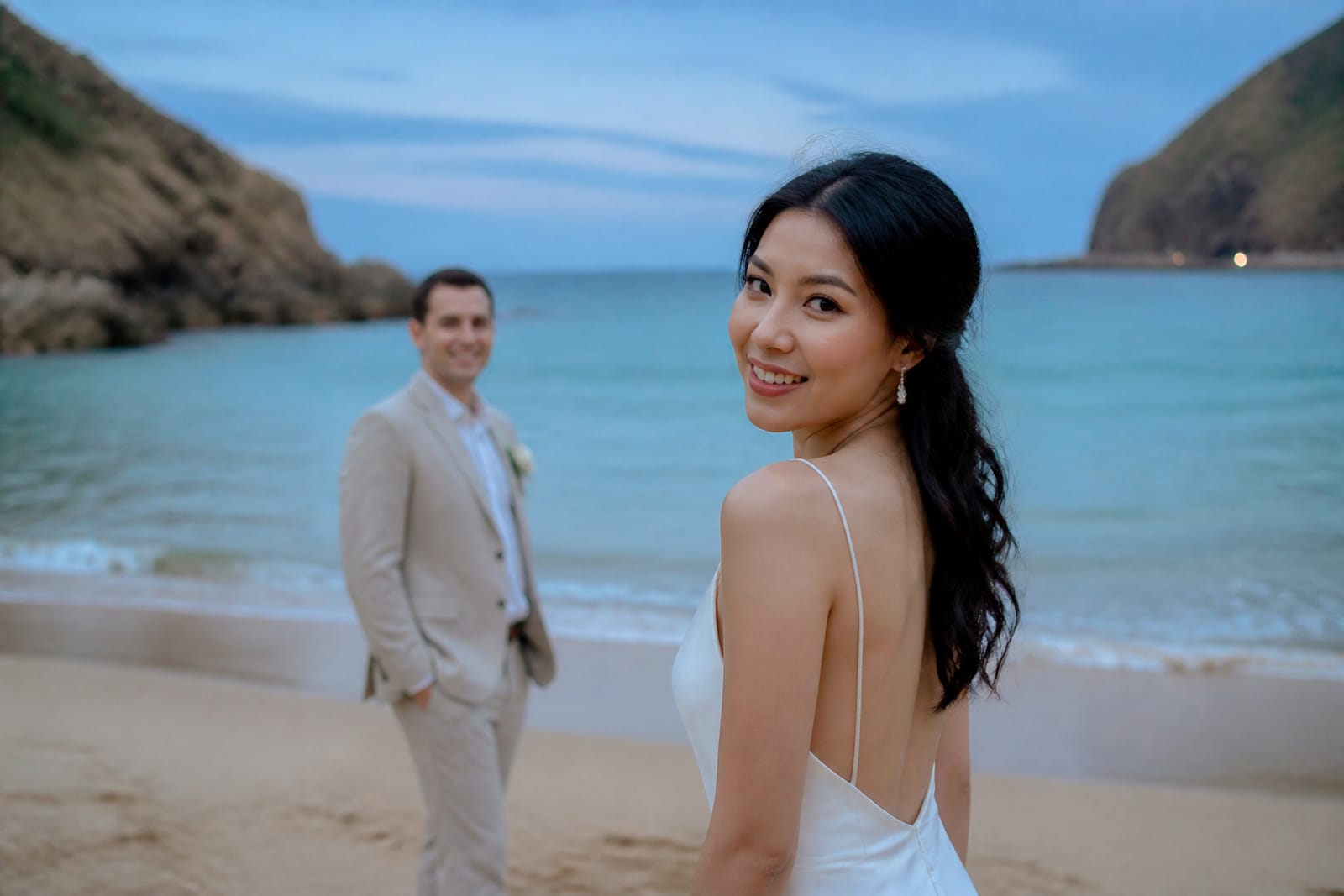
Eo Gio sits on the northern coast, where Feb–May brings calm, clear water and stable weather. The cove is rockiest in the dry season (Feb–Apr); by June, afternoon heat rises and the sea grows choppy. Sep–Dec is the rainy and typhoon season—the arch is less photogenic in grey light, and tides become unpredictable. If you're set on another month, morning shoots (5:30–7:30 a.m.) work better than afternoon because the light is softer and tides are less aggressive. Check a local tide chart 2–3 days before—high tide floods the beach; low tide reveals rock pools that add depth to wide shots. A photographer who knows the cove will time your arrival around the tide, not the clock.
Local photographer vs. a traveling creative team—what fits?
| Option | Best for | Why it works | What to check |
|---|---|---|---|
| Local Mong Cai photographer | Budget-conscious, simple shot | Knows local tides and light hours | Portfolio at Eo Gio, early-morning availability, hair/makeup plan |
| Cáo Studio traveling from Hanoi | One message (outfit, hair, makeup, camera) | Director handles timing and styling; you show up ready | Confirmed Hanoi team travel cost, makeup artist fit, 48-hour editing, hotel base |
| Freelancer from Hanoi | Shared cost, flexible dates | Can negotiate timing around your proposal window | References shooting coastal/rock scenes, how they handle 2–3 hour logistics |
A local guide is fast and cheaper—they know the tides and which hour avoids tour boats. But you'll coordinate hair, makeup and outfit separately, and a first-time photographer may miss the light direction or walk-toward-the-arch timing. Cáo Studio does not have a Quang Ninh base, but the Hanoi team can travel; you'd confirm logistics (hotel, timing, team composition) on WhatsApp. A freelancer from Hanoi splits cost but increases coordination friction. Choose local if timing is flexible and you're happy with simple reportage; choose a traveling team if you want one person orchestrating the morning.
📸 Book on WhatsApp — proposal & anniversary
How to plan the morning: location, light, and wardrobe
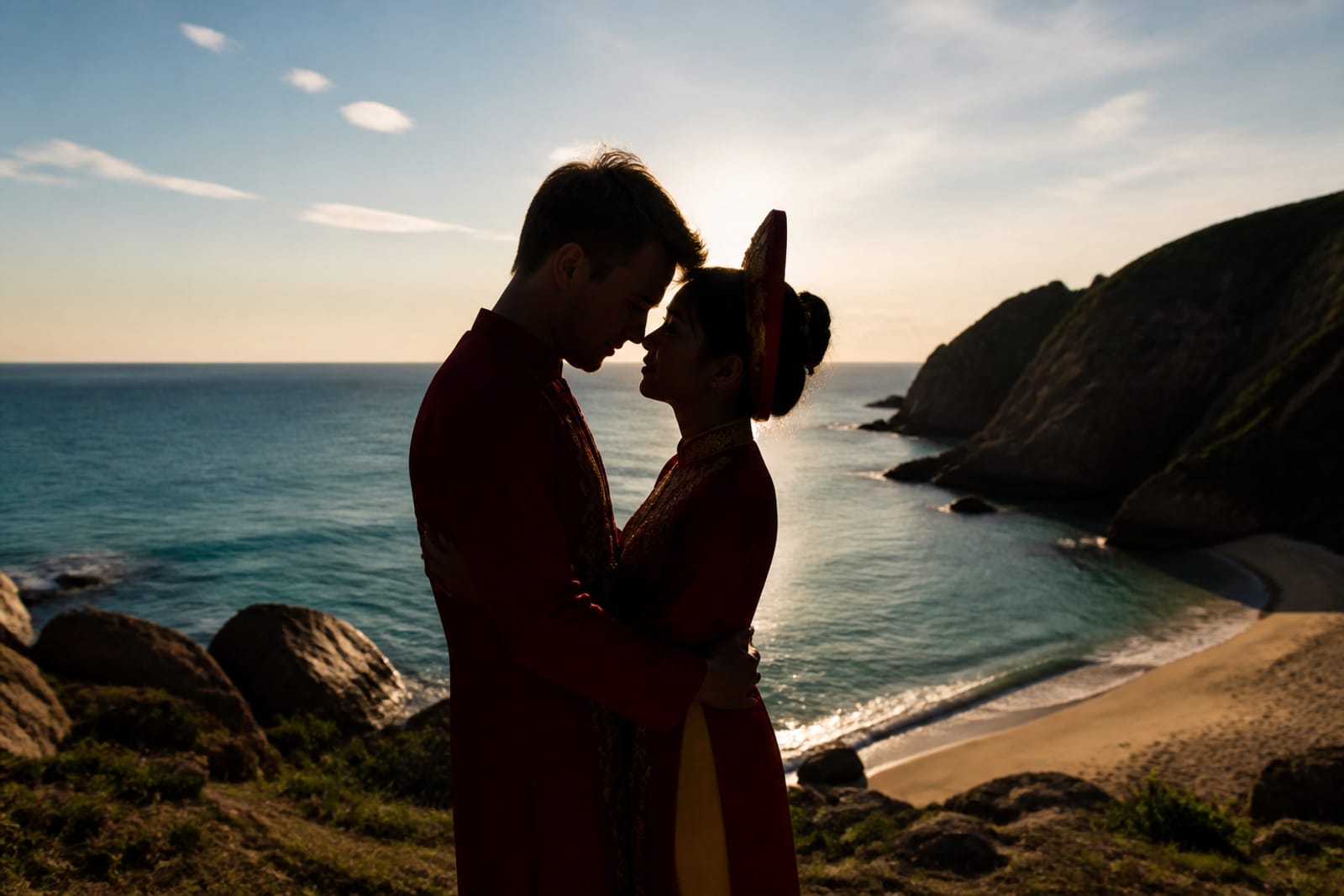
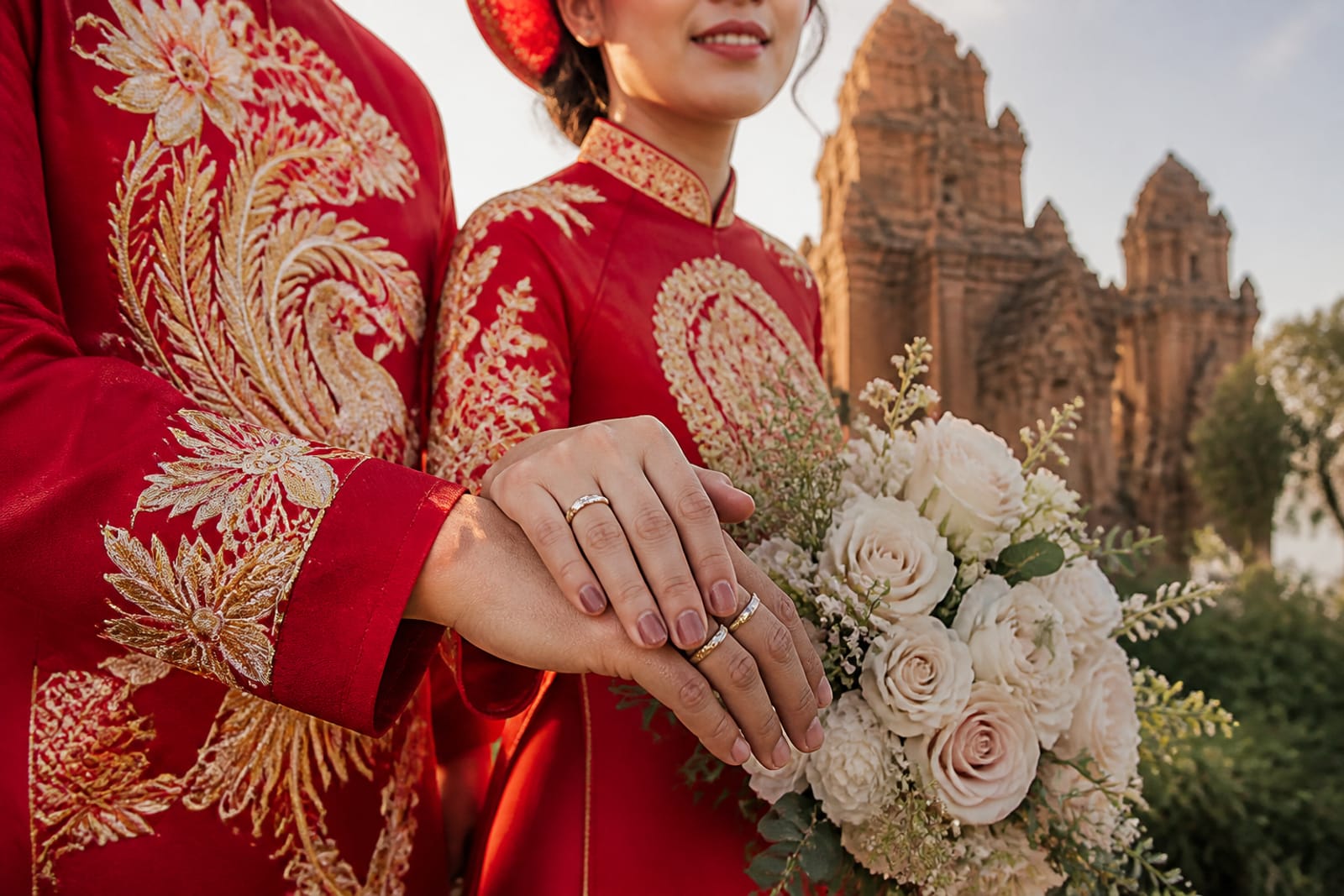
A proposal shoot at Eo Gio is a 4-hour block: hair and makeup at your hotel (45 min–1 hour), then 20–30 min drive to the cove, 90 min on location, and a 30 min return. Arrive at the cove by 6:45 a.m. to catch soft side light on the arch; by 8:30 a.m., the sun is high and shadows flatten. Wear something that moves—a light dress or linen suit lets you walk naturally. If you're proposing in an ao dai, bring a second outfit for after the proposal moment (a casual dress or shirt works; the ao dai reads formal and heavy once you've knelt in sand). The photographer shoots wide first (you and the arch, the cove around you), then medium (you two, the arch tighter), then detail (hands, ring, water). One outfit per location is enough; switching clothes adds 15 min and breaks the energy. Hair should be pulled back or braided—wind off the water moves loose strands, and the light reads better on a clear face.
What can go wrong and how to avoid it
Tide timing. High tide fills the beach; low tide leaves a wide, flat sand. Ask your photographer to check the tide chart 3 days before—not the day of. A missed tide means you're either wading in water or standing on rocks; neither feels natural.
Cold water and wind. The northern sea is cold even in spring; if you're in a dress, bring a shawl or sweater for between shots. Wind off the water messes with hair and makes you tense—expect it, and lean into the movement.
Tour boat crowds. By 8:00 a.m., small tour groups arrive. Shoot before 7:30 a.m. or ask your photographer if they know a less-trafficked entry point (locals often do).
Outfit saturation. If your outfit is bright white or neon, it can overexpose in early morning light and lose detail. Soft neutrals, pastels, and jewel tones hold color in low-light coves.
Logistics fatigue. Hair, makeup, hotel to cove, then 90 min of emotional intensity—you'll be tired. Eat something and drink water at the hotel before you leave. The photographer should have a clear shot list so you're not waiting around deciding what comes next.
Choosing a keepsake after the shoot
Once you have the edited photos (delivered within 48 hours if you book Cáo Studio, or per your photographer's timeline), consider what keeps the proposal feeling alive. A printed album with 20–30 images in a leather or linen cover holds weight and presence; you'll hand it to family and flip through it for years. A framed wide shot of you two at the arch with the cove behind—printed large—works as bedroom or hallway art. Some couples order a custom map print showing the exact coordinates of Eo Gio with the date and proposal moment labeled; it's subtle, personal, and not a typical photoshoot prop. Avoid digital-only storage—a proposal deserves paper, ink, and a moment when you can hand someone the image and say here is where it happened.
See wedding photo album options | Browse photo prints & frames
---
Real questions before you book
Who handles the proposal script? You do—the photographer frames it, doesn't direct it. Tell them your plan (you'll kneel, you'll walk toward the arch, you'll turn and ask) so they know where to position the camera and when to stay quiet.
What if the weather turns? Feb–May is stable, but a rare rainy morning means grey light and puddles. Shoot anyway—soft, diffused light is honest and moody. If lightning or strong wind arrives, postpone to the next calm morning.
Do I need a second person for logistics? Ideally yes—someone to hold bags, watch the tide, and hand you your sweater between shots. If it's just you two and the photographer, it's manageable but tighter.
How do I vet a local photographer? Ask for portfolios shot at Eo Gio or similar northern coves (rocky, early light, water scenes). Check if they're available at 6:00 a.m. and if they have a hair/makeup partner or if you're sourcing that separately. Video calls work—ask them to walk you through the cove's layout and tides.
Can Cáo Studio shoot my Eo Gio proposal? Cáo Studio operates in Hanoi, Ho Chi Minh City, and Hoi An—not Quang Ninh. But the Hanoi team can discuss travel logistics on WhatsApp. A Hanoi-based team would handle hair, makeup, styling and direction, and you'd confirm costs and dates directly.
---
🌸 See the lookbook | 📸 Book on WhatsApp — proposal & anniversary | 💄 Makeup & hair at your hotel
FAQ
What time of year is best for an Eo Gio proposal shoot?
Feb–May, when the northern coast is calm, the water is clear, and the sky is stable. Morning light (6:30–8:00 a.m.) is softest. Sep–Dec is rainy and typhoon season; light is grey and tides are unpredictable.
How do tides affect the shoot?
High tide floods the sand; low tide reveals rock pools. Ask your photographer to check the tide chart 3 days before and time your arrival so you're shooting during low-to-mid tide—wide sand and visible cove bottom make for better framing.
Should I hire a local photographer or travel with a team from Hanoi?
Local photographers know tides and early-morning light; they're faster and cheaper. A traveling team (like Cáo Studio) handles hair, makeup, outfit and direction as one message, so less coordination. Choose local for simplicity; choose a team for cohesion.
What should I wear for an Eo Gio proposal?
Wear something that moves—a light dress or linen suit. If you're in an ao dai, bring a casual outfit for after the proposal moment. Avoid bright white (overexposes in low light); soft neutrals and jewel tones hold color in the cove's early light.
How long does a proposal shoot take?
4 hours total: 45 min–1 hour for hair/makeup at your hotel, 20–30 min drive, 90 min on location, 30 min return. Arrive at the cove by 6:45 a.m. to catch the best light window.
Does Cáo Studio shoot at Eo Gio?
Cáo Studio operates in Hanoi, Ho Chi Minh City, and Hoi An. The Hanoi team can discuss travel to Quang Ninh on WhatsApp; confirm dates, costs and logistics directly. For Eo Gio, you may also hire a local Mong Cai photographer or a Hanoi-based freelancer.
What kind of keepsake lasts after the shoot?
A printed album in leather or linen, a framed wide shot for your bedroom, or a custom map print showing Eo Gio's coordinates with the proposal date. Digital files fade in memory; paper and ink stay tangible.
FAQ
What time of year is best for an Eo Gio proposal shoot?
Feb–May, when the northern coast is calm, the water is clear, and the sky is stable. Morning light (6:30–8:00 a.m.) is softest. Sep–Dec is rainy and typhoon season; light is grey and tides are unpredictable.
How do tides affect the shoot?
High tide floods the sand; low tide reveals rock pools. Ask your photographer to check the tide chart 3 days before and time your arrival so you're shooting during low-to-mid tide—wide sand and visible cove bottom make for better framing.
Should I hire a local photographer or travel with a team from Hanoi?
Local photographers know tides and early-morning light; they're faster and cheaper. A traveling team (like Cáo Studio) handles hair, makeup, outfit and direction as one message, so less coordination. Choose local for simplicity; choose a team for cohesion.
What should I wear for an Eo Gio proposal?
Wear something that moves—a light dress or linen suit. If you're in an ao dai, bring a casual outfit for after the proposal moment. Avoid bright white (overexposes in low light); soft neutrals and jewel tones hold color in the cove's early light.
How long does a proposal shoot take?
4 hours total: 45 min–1 hour for hair/makeup at your hotel, 20–30 min drive, 90 min on location, 30 min return. Arrive at the cove by 6:45 a.m. to catch the best light window.
Does Cáo Studio shoot at Eo Gio?
Cáo Studio operates in Hanoi, Ho Chi Minh City, and Hoi An. The Hanoi team can discuss travel to Quang Ninh on WhatsApp; confirm dates, costs and logistics directly. For Eo Gio, you may also hire a local Mong Cai photographer or a Hanoi-based freelancer.
What kind of keepsake lasts after the shoot?
A printed album in leather or linen, a framed wide shot for your bedroom, or a custom map print showing Eo Gio's coordinates with the proposal date. Digital files fade in memory; paper and ink stay tangible.
Ao dai, makeup, hair and a local photographer in Hanoi or Saigon — one WhatsApp message.