/proposal-and-anniversary
Planning a proposal at Mui Ne white sand dunes with a photographer
Mui Ne's white sand dunes offer soft, sculptural light at sunrise (5:30–6:30 am) and a near-empty landscape before noon—ideal for a proposal. The dunes sit in Vietnam's driest zone, so Nov–Apr is safest; strong winds Nov–Mar blow sand but create dynamic texture. A photographer must arrive early, scout the exact dune rise for your framing, and move fast once the moment unfolds. Cáo Studio operates from Ho Chi Minh City and Saigon bases, and can coordinate makeup and outfit prep at your hotel beforehand; for Mui Ne specifically, ask on WhatsApp about travel logistics. Avoid mid-day heat (11 am–4 pm), pack water and a change of clothes, and confirm the photographer's backup plan if weather shifts.
A proposal at Mui Ne is possible because the dunes stay quiet, the light is honest, and sand creates a texture that reads in photos—but only if you book the right photographer, hit the right hour, and plan for sand logistics.
Why sunrise at Mui Ne dunes works better than other times
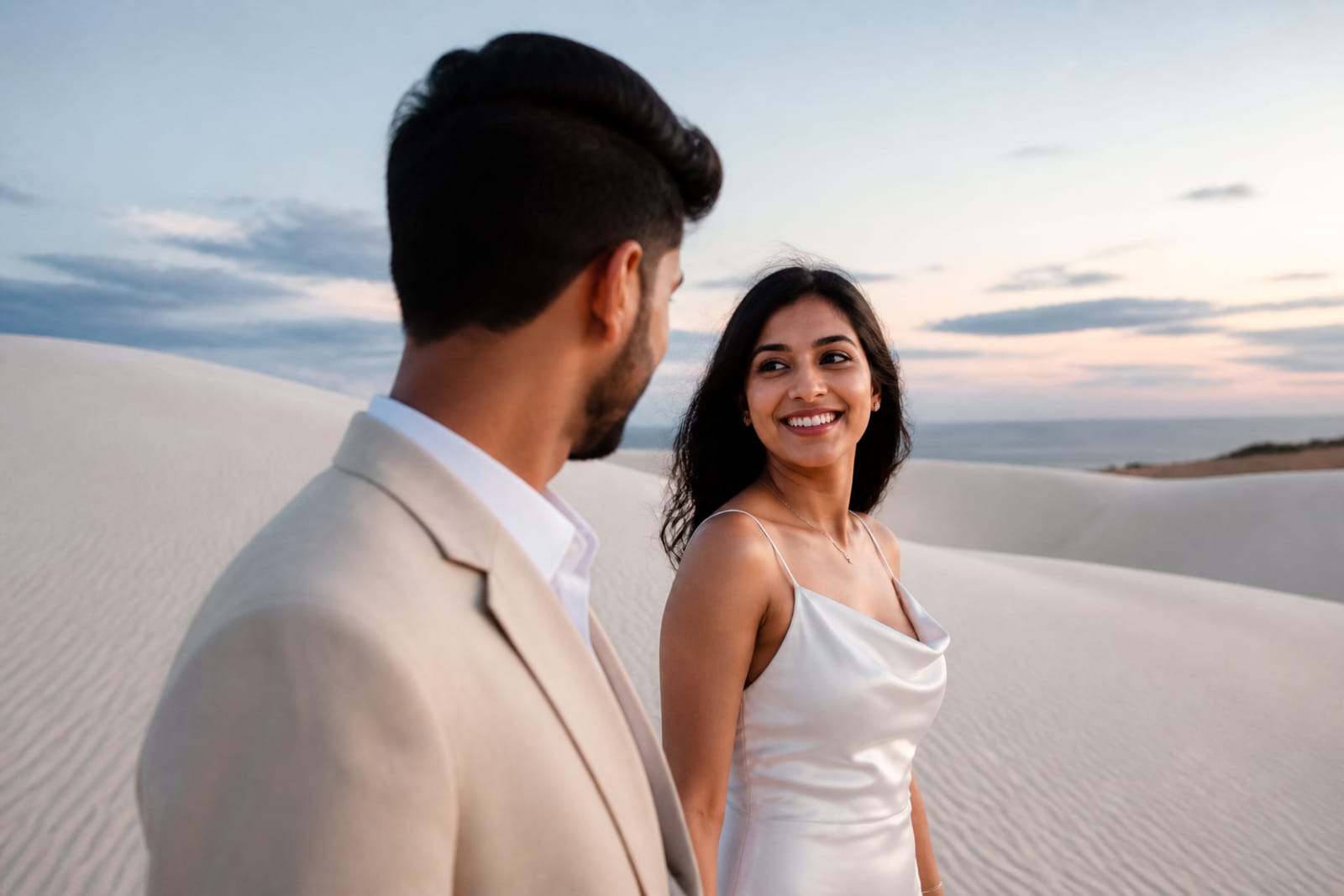
Sunrise (5:30–6:30 am) delivers side light that sculpts the dunes and keeps the sky graduated: deep blue at the top, peach and pink near the horizon. By 7 am the light flattens; by 9 am the dunes glare white and you squint. The dunes are emptiest before 7 am, so your photographer can frame wide shots without crowds in the frame. After that, families, tourists and kite surfers populate the sand. If you propose at sunrise, your photographer captures the moment in real light—not flash, not haze, not crowds. This hour is non-negotiable.
📸 Book on WhatsApp — proposal & anniversary
When to visit Mui Ne so weather and wind don't ruin the shoot
Mui Ne is one of Vietnam's driest regions. Nov–Apr is the safest window: stable skies, low rainfall, and minimal rain risk. Nov–Mar brings strong winds that blow sand; this creates texture in photos (sand in motion, dunes sculpted by wind) but also means sand sticks to skin, clothes and camera lenses. Apr sees lighter winds and warmer air. May–Oct brings afternoon downpours and humidity; the dunes are muddy and the light is muted. Jan–Feb (Tet season) crowds the beaches, though the dunes themselves stay quieter. Book Nov–Mar or early Apr if you want guaranteed dry light; plan for sand-management logistics (extra towels, lens cleaning kit, a change of clothes).
What to wear under and over an ao dai so sand doesn't ruin the fit
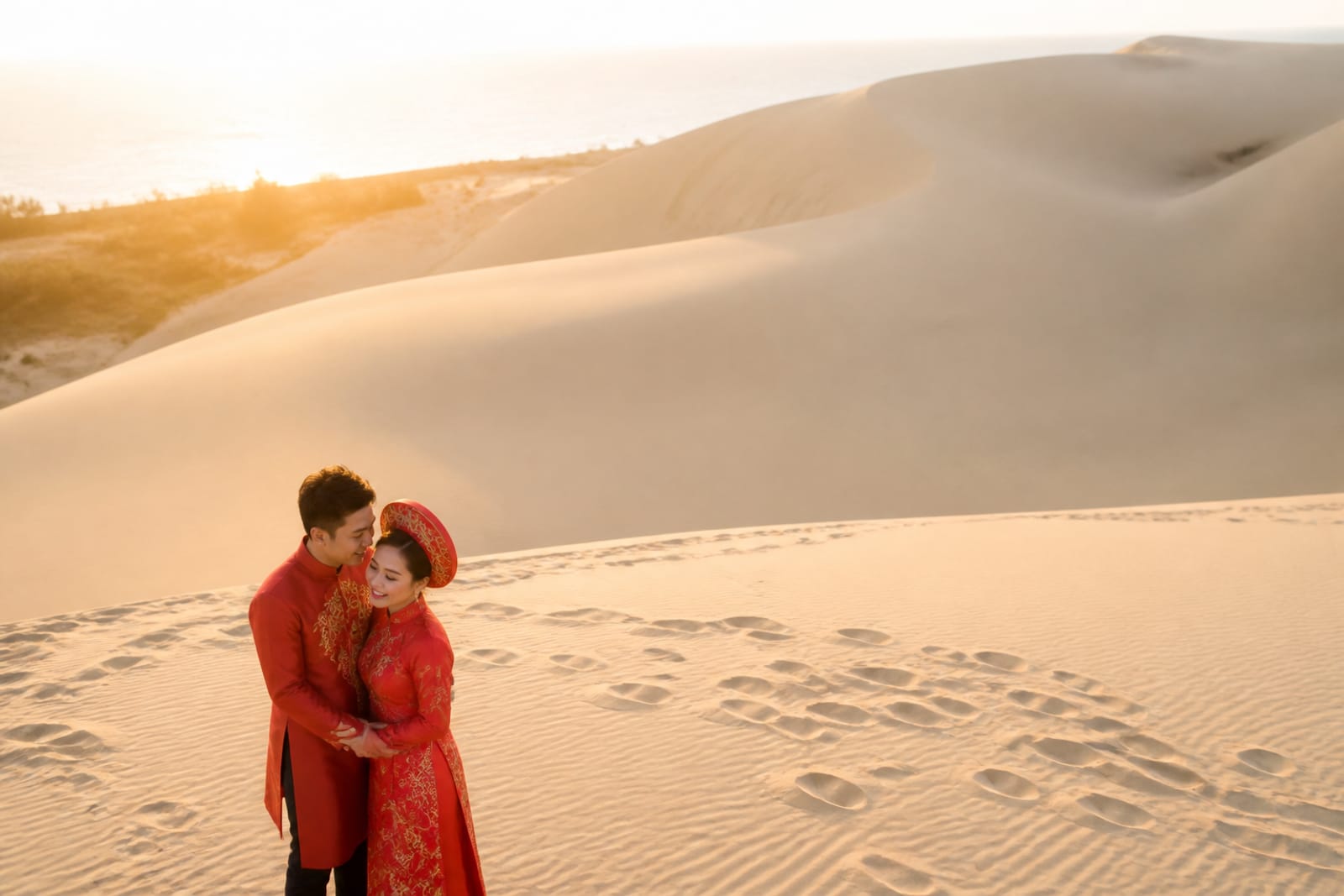
If you wear an ao dai at the dunes, sand gets into every seam. Wear tight-fitting slip shorts and a thin tank under the áo dài so sand doesn't lodge against skin. Choose a light, flowing silk or cotton áo dài in white, cream or pastel—dark colors show sand, heat up, and photograph grey. Avoid long sleeves; the dunes heat fast even at sunrise. Bring a silk scarf or lightweight shawl to drape over your shoulders during the shoot—it photographs better than bare skin and protects you from wind. The áo dài train will drag; plan for your photographer to guide you to walk sideways or lift the train slightly as you move. If you wear Western formal wear (suit, dress), wear breathable fabrics and skip layers; bring a change of shoes so you don't walk the full route in formal ones.
| Outfit type | Best for | Light/season fit | Why it works |
|---|---|---|---|
| Ao dai (white, cream, pastel silk) | couples, Vietnamese heritage moments | Nov–Mar sunrise, soft side light | Flows with movement, reads clean against sand texture |
| Western formal (suit, simple dress) | Western or blended proposals | Nov–Mar, early morning to avoid sweat | Minimal sand cling, reads formal and sharp |
| Casual linen, cotton layers | intimate, laid-back proposals | Nov–Apr, flexible timing | Sand visible but intentional; easier to move in |
How to find and vet a photographer if Cáo Studio can't reach Mui Ne that day
Cáo Studio is based in Hanoi and Ho Chi Minh City; Mui Ne is a 4-hour drive from Ho Chi Minh City. Ask on WhatsApp if Cáo Studio can coordinate your session; if the date doesn't align, here's how to vet a local photographer. Ask to see their portfolio from Mui Ne dunes specifically—not beach sunsets or posed family shots. Look for photos shot at sunrise with side light, movement (walking, looking at each other), and minimal posing. Ask their process: do they scout the dune at 5 am, or do they arrive 30 minutes before the proposal? Do they bring a makeup artist and stylist, or do they hand off to a separate team? (One team that handles outfit, hair, makeup and photography shoots cleaner than three vendors.) Ask about their backup plan if wind or sand affects the shoot—do they have a second location, or do they refund? Ask what they deliver and by when: edited photos only, or a short film too? Request a signed agreement that includes shot list (wide dune, medium walk, close detail), delivery timeline, and refund terms. Meet them (video or in person) before booking; proposals are not the moment to discover your photographer's style doesn't match your vision.
What to check before booking: a step-by-step checklist for your Mui Ne proposal shoot
- Confirm the photographer has shot proposals at sunrise on dunes. Ask for a portfolio edit, not a general portfolio. Sunrise dune light is specific; a beach photographer is not the same.
- Nail down the date, time (sunrise start), and location. Some dunes are private; ask if permits are needed or if the photographer handles access.
- Agree on the shot list. Wide dune landscape, you and your partner walking away from camera, close moment of the proposal, detail shots (rings, faces, reaction). Write it down.
- Discuss outfit and hair prep. Does the photographer coordinate with a makeup artist and stylist, or do you book them separately? If separate, who briefs the other? Miscommunication breaks proposals.
- Clarify the deliverable. How many edited photos? A short film? By when? Ask for a sample edit (style, color grade, pacing).
- Plan sand logistics together. Does the photographer bring lens-cleaning kits, towels, a change of shoes? Do you? Sand in a lens ruins the frame.
- Get a contract. It names the date, time, location, shot list, deliverables, timeline, and refund terms. Verbal agreements don't survive miscommunication.
- Ask for a backup date or partial refund clause. Bad weather happens; what's the plan?
If you book with Cáo Studio from Ho Chi Minh City or Saigon, these steps are built in—the team handles wardrobe, makeup, hair and photography in one session, and coordinates with you via WhatsApp to confirm light, outfit and moment.
Why a "one team" approach works better than hiring outfit, hair and photographer separately
Three separate vendors (stylist, makeup, photographer) must communicate twice—once each to you, and then to each other. Timings slip, styles clash, and the photographer shoots an outfit no one prepped for light. A single team (photographer, stylist, makeup artist, wardrobe) briefs together, walks the dunes together, adjusts together, and delivers frames that read as one vision. Cáo Studio operates this way: the photographer, makeup artist and wardrobe person arrive as one team, scout the dune at dawn, and execute the shot list without waiting for a third vendor to show up. This costs less in total (one arrival, one coordination) and delivers faster—edited photos within 48 hours. If you use three separate vendors, confirm they've worked together before; ask each for the others' contact details and phone them yourself to verify they're aligned on timing and style.
How to confirm your moment will be captured without staged poses
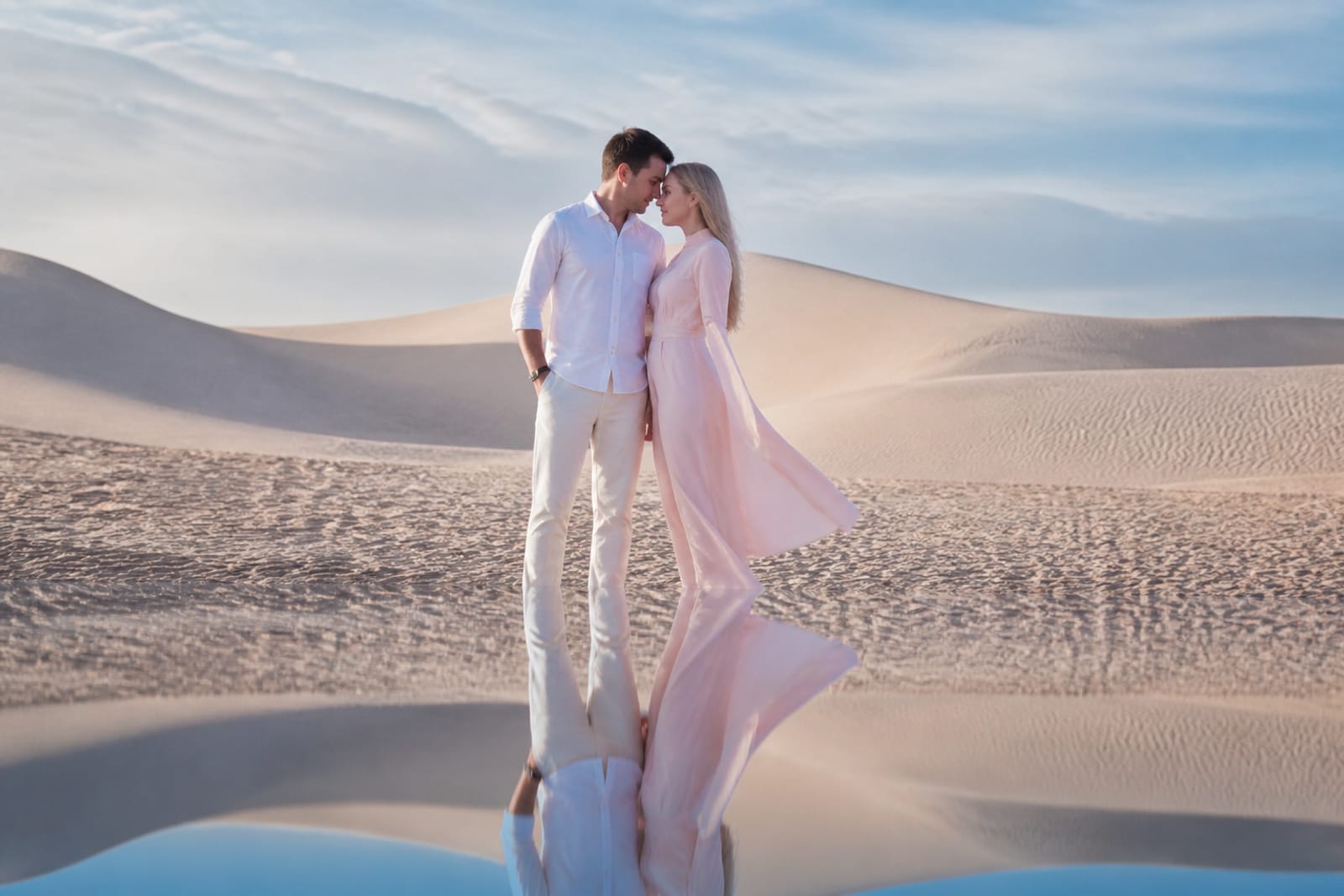
Ask your photographer how they frame proposals. "Posed" means stiff angles, forced smiles, or moments that look set-up (both facing camera, both smiling, holding flowers stiffly). "Directed" means the photographer guides you to walk, look at each other, react naturally—and shoots the real moment, not the set-up. At Mui Ne, request your photographer frame it as movement: you walking toward a specific dune rise, your partner following, the actual proposal moment (kneeling, ring reveal), your partner's reaction, then the two of you walking away together into the dunes. These are real frames, not posed angles. Ask the photographer to show you a sample proposal edit so you see their style. If every shot has both people facing the camera, that's not your photographer.
---
What to check before you book
Light & timing: Confirm sunrise start time (5:30 am arrival). Ask the photographer to scout the dune the evening before or early morning to find the exact rise that catches first light.
Permits & access: Ask if Mui Ne dunes require permits or access fees. Some dune areas are private; the photographer should confirm access beforehand.
Wardrobe & makeup: If you wear an ao dai, confirm the photographer has styled dunes shoots before. If makeup and hair are separate vendors, call them both to verify they know the 5:30 am start time and sand logistics.
Deliverables & timeline: Get a written agreement on the number of edited photos, video (if any), and delivery date. "ASAP" is not a timeline; "48 hours" is.
Backup plan: Ask what happens if sunrise is cloudy, windy, or sand-blown. Do you reschedule, do you shoot anyway, or do you get a refund? Get this in writing.
Portfolio proof: Ask for a dunes-specific edit, not a general portfolio. Sunrise dune light is unique; a photographer strong in beach sunsets may not deliver in side light.
---
For proposal and anniversary sessions, Cáo Studio coordinates everything from Hanoi and Saigon bases. For Mui Ne specifically, message on WhatsApp +84 338 762 340 to confirm dates and logistics. If Cáo Studio's availability doesn't match your dates, the vetting checklist above will help you find a local photographer who can.
See the lookbook for examples of how directed light works in real settings. For outfit and makeup prep at your hotel before a Saigon or Ho Chi Minh City shoot, book makeup and hair services.
FAQ
Can Cáo Studio shoot proposals at Mui Ne dunes?
Cáo Studio operates from Hanoi and Saigon bases. Mui Ne is 4 hours from Ho Chi Minh City. Ask on WhatsApp +84 338 762 340 to confirm availability and travel coordination for your date. If Cáo Studio can't reach Mui Ne that day, we'll advise on vetting a local photographer.
What's the best time of day to propose at Mui Ne?
Sunrise (5:30–6:30 am) delivers soft, sculpted light and near-empty dunes. By 9 am the light flattens and crowds arrive. Mid-day (11 am–4 pm) is too hot and glaring. Late afternoon (5–6 pm) works if you want warmer tones, but dunes are crowded and sand heats skin.
What month should I book a Mui Ne proposal shoot?
Nov–Apr is safest: low rainfall, stable skies, and predictable light. Nov–Mar brings strong winds (sand texture but sand logistics). Early Apr has lighter winds and warm air. Avoid May–Oct (afternoon downpours, muted light, muddy dunes).
Should I wear an ao dai or Western formal wear at the dunes?
Both work. Ao dai photographs beautifully (flows with movement, reads clean against sand) but requires sand-management (slip shorts underneath, light silk, a scarf for protection). Western formal (suit, simple dress) is easier logistically but shows sand more. Choose based on heritage and comfort; ask your photographer how they've styled dunes shoots before.
How do I avoid sand getting into photos and ruining the shoot?
Scout the dune with your photographer at dawn before the proposal so you know the exact framing and dune rise. Bring towels, a lens-cleaning kit, and a change of clothes. Walk purposefully (don't dance or roll around). Ask your photographer to wipe lenses between shots. If sand gets on skin during the moment, it reads as real in photos—don't stop the shoot.
FAQ
Can Cáo Studio shoot proposals at Mui Ne dunes?
Cáo Studio operates from Hanoi and Saigon bases. Mui Ne is 4 hours from Ho Chi Minh City. Ask on WhatsApp +84 338 762 340 to confirm availability and travel coordination for your date. If Cáo Studio can't reach Mui Ne that day, we'll advise on vetting a local photographer.
What's the best time of day to propose at Mui Ne?
Sunrise (5:30–6:30 am) delivers soft, sculpted light and near-empty dunes. By 9 am the light flattens and crowds arrive. Mid-day (11 am–4 pm) is too hot and glaring. Late afternoon (5–6 pm) works if you want warmer tones, but dunes are crowded and sand heats skin.
What month should I book a Mui Ne proposal shoot?
Nov–Apr is safest: low rainfall, stable skies, and predictable light. Nov–Mar brings strong winds (sand texture but sand logistics). Early Apr has lighter winds and warm air. Avoid May–Oct (afternoon downpours, muted light, muddy dunes).
Should I wear an ao dai or Western formal wear at the dunes?
Both work. Ao dai photographs beautifully (flows with movement, reads clean against sand) but requires sand-management (slip shorts underneath, light silk, a scarf for protection). Western formal (suit, simple dress) is easier logistically but shows sand more. Choose based on heritage and comfort; ask your photographer how they've styled dunes shoots before.
How do I avoid sand getting into photos and ruining the shoot?
Scout the dune with your photographer at dawn before the proposal so you know the exact framing and dune rise. Bring towels, a lens-cleaning kit, and a change of clothes. Walk purposefully (don't dance or roll around). Ask your photographer to wipe lenses between shots. If sand gets on skin during the moment, it reads as real in photos—don't stop the shoot.
Ao dai, makeup, hair and a local photographer in Hanoi or Saigon — one WhatsApp message.