/proposal-and-anniversary
Planning a proposal at Temple of Literature with a photographer
A proposal photoshoot at the Temple of Literature (Văn Miếu) in Hanoi pairs the cultural symbolism of Vietnam's oldest university with intimate photography during the moment you ask. The site is open daily; photography is permitted but crowds peak midday and around Tet (late January to mid-February). The best light for portraits falls in early morning (before 9 a.m.) or late afternoon (after 4 p.m.), when soft sunlight rakes across the courtyards and side temples without harsh shadows. You'll work with a photographer to scout the exact spot days ahead, confirm whether you need a permit (local rules shift), plan your outfit and backup route in case of unexpected crowds or weather. Cáo Studio – Makeup & Photoshoot offers proposal & anniversary packages that include pre-shoot coordination, on-site hair and makeup, and a dedicated photographer who knows the temple's light and flow. Avoid proposing midday (11 a.m.–2 p.m.) when crowds and overhead sun flatten images. Autumn (October–November) and spring (March–April) offer the most reliable weather, though autumn has drier, sharper light. 📸 Book on WhatsApp — proposal photoshoot
What makes the Temple of Literature a proposal location worth the planning?
The Temple of Literature holds symbolic weight for proposals in Vietnam — it's the site where scholars were honored for centuries, and its tranquil courtyards, stone pathways and ancient architecture create a backdrop that feels intimate despite its public profile. The compound has multiple courtyards separated by gates, which means a skilled photographer can isolate you from crowds even on busy days. The older stone work and mature trees photograph with genuine texture, not the flat backdrop feel of many modern venues. That said, it is a working cultural site and tourist destination; you cannot simply close it or control its pace. The key is timing your shoot window so the location feels like yours without disrupting visitors or violating site rules.
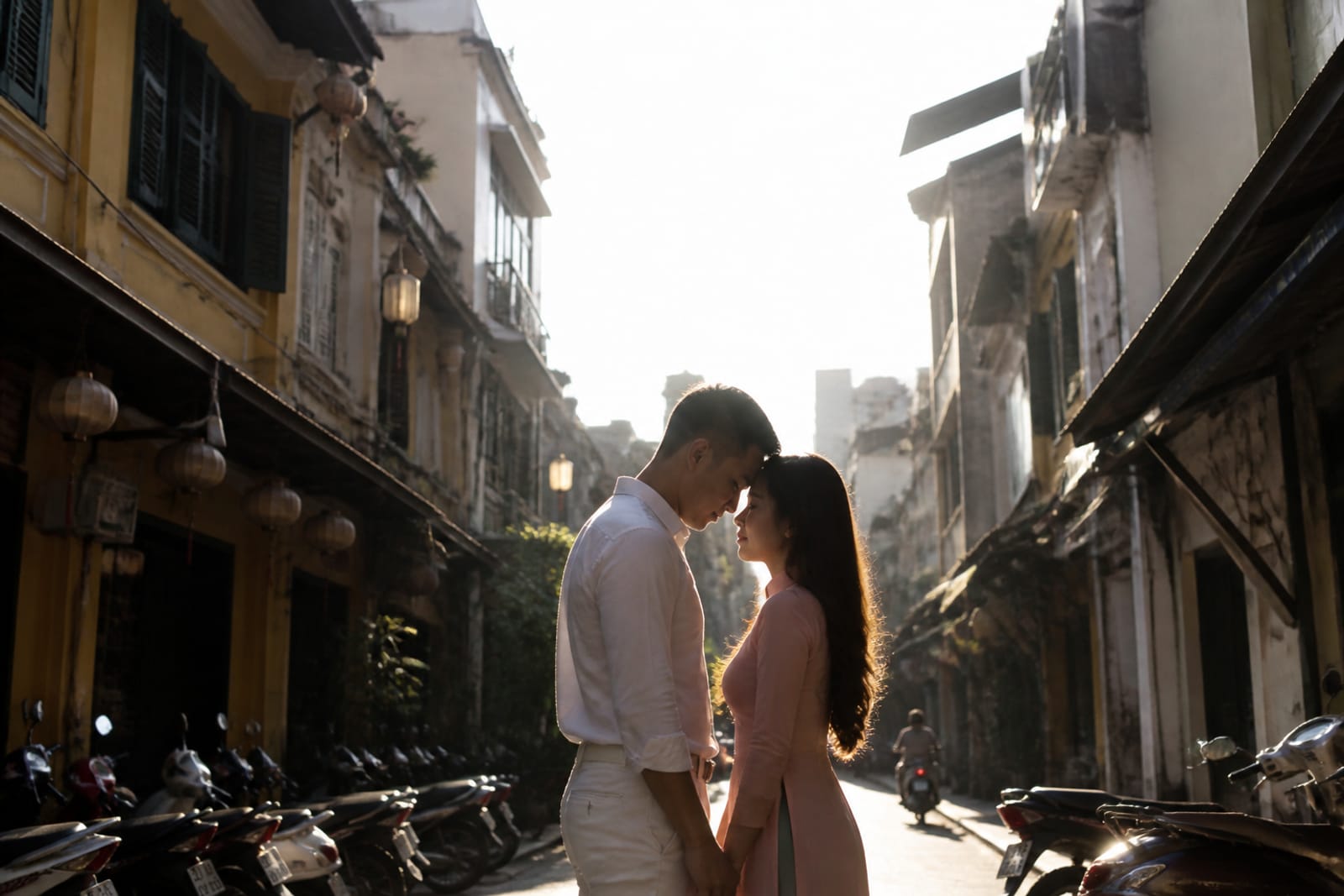
Which season and time of day will give you the best light and smallest crowds?
| Season/Time | Best for | Light quality | Crowd factor | What to expect |
|---|---|---|---|---|
| Oct–Nov (autumn) | Sharp, consistent imagery | Clear, soft mid-morning to afternoon | Moderate (local holidays vary) | Dry, 18–25°C; trees lose leaves; golden-hour glow 4–5:30 p.m. |
| Mar–Apr (spring) | Romantic softness | Diffused by haze; early morning crisp | Moderate to high (Tet just past) | Mild 20–28°C; frequent overcast; unpredictable drizzle; peach blossoms in nearby Nhat Tan if timing aligns |
| May–Sep (summer) | Moody, contrasty | Harsh overhead; soft only before 8:30 a.m., after 5 p.m. | Very high (tourists, school groups) | Hot 30–35°C+; heavy midday downpours; typhoon risk (Sep); outdoor sessions exhausting |
| Dec–Feb (winter) | Crisp detail, gold tones | Clear, cool; sunset 4:45–5:15 p.m. | High just before/after Tet; low other times | 10–20°C; frequent drizzle and overcast; Tet week (late Jan–early Feb) site may close or run reduced hours; many vendors closed |
| Early morning (6:30–9 a.m.) | Isolation, soft side-light | Raking light on stone; no shadows under trees | Lowest (few vendors, light foot traffic) | Cool air; fewer tourists; gates open early; photographer can reposition freely |
| Late afternoon (4:30–6 p.m.) | Golden hour, tree silhouettes | Golden-hour glow rakes across courtyards | Low to moderate (departing tour groups) | Warm, flattering tone; sunset 5:15–5:45 p.m. (varies by month); limited time window; site closing procedures begin around 5 p.m. |
Autumn early-morning shoots (6:30–8:30 a.m.) offer the fewest trade-offs — dry weather, sharp light, almost no crowds, and reliable access. Spring and summer require earlier starts or late sessions to avoid heat and crowds. Winter and Tet bring weather unpredictability and closure risk.
How do you coordinate with a photographer to ensure the moment is captured without logistical chaos?
Start by hiring a photographer who has shot proposals at the Temple of Literature before — they know where crowds gather, which courtyards stay quietest, and how light moves through the site at different times. A reputable studio like Cáo Studio – Makeup & Photoshoot will insist on a pre-shoot scout visit (usually a week or two before) so the photographer can identify your proposal spot, test light angles, plan your walking route and identify backup locations if crowds surge unexpectedly.
Pre-shoot checklist:
- Book a specific date and time window (e.g., 7–9 a.m. on October 18) with the photographer; do not propose on a different day or time without confirming light and access.
- Arrange with the photographer to arrive 30 minutes early to compose shots of the location and your approach.
- Confirm with the temple or local authorities whether you need a permit; rules change — ask your photographer to verify current requirements.
- Have a text or call plan with anyone who will capture the moment on their phone (family member, close friend) so you're not relying solely on the professional camera.
- Discuss outfit choices with the photographer; bulky or reflective clothing can flatten in certain light.
- Plan a backup time window (e.g., 7–8 a.m. instead of 8–9 a.m.) in case of unexpected crowds or light changes.
What often goes wrong: Proposers assume the photographer will find them in a crowd or adapt to a surprise time change; they wear an outfit that photographs poorly in the chosen light; they invite too many people, which disrupts other visitors and tangles the shot; or they don't confirm access rules, only to learn a permit is required an hour before the shoot.
What outfit and styling choices photograph best in the Temple of Literature's light?
The Temple of Literature's stone courtyards, red columns and mature trees create a warm, earthy canvas. This means clothing that contrasts subtly — jewel tones (navy, emerald, burgundy), soft pastels and whites read clearly without clashing with the heritage backdrop. Avoid neon, oversized logos or reflective fabrics, which can dominate the frame or wash out in certain angles.
If you're planning to wear an áo dài (a natural choice for the cultural symbolism), choose a fitted style in a solid or understated pattern — the garment's vertical lines and flowing fabric photograph beautifully in early-morning and golden-hour light, especially if it's a traditional silk in a rich color. Shorter, fuller áo dài may catch on the temple's stone pathways or narrow gates, so a tapered cut is practical.
For Western wedding attire (suit and dress), fitted silhouettes work best; loose or voluminous skirts and oversized jackets can look formless in soft, diffuse light. Avoid all-black pairs (they read as silhouettes rather than individuals) and all-white (which can blow out in midday sun).
Hair and makeup are worth investing in — hotel makeup and hair services allow your stylist to adjust coverage and shine for outdoor light on the shoot day itself, rather than relying on preparation hours before. This is especially useful if you're nervous and perspiring, or if light conditions shift.
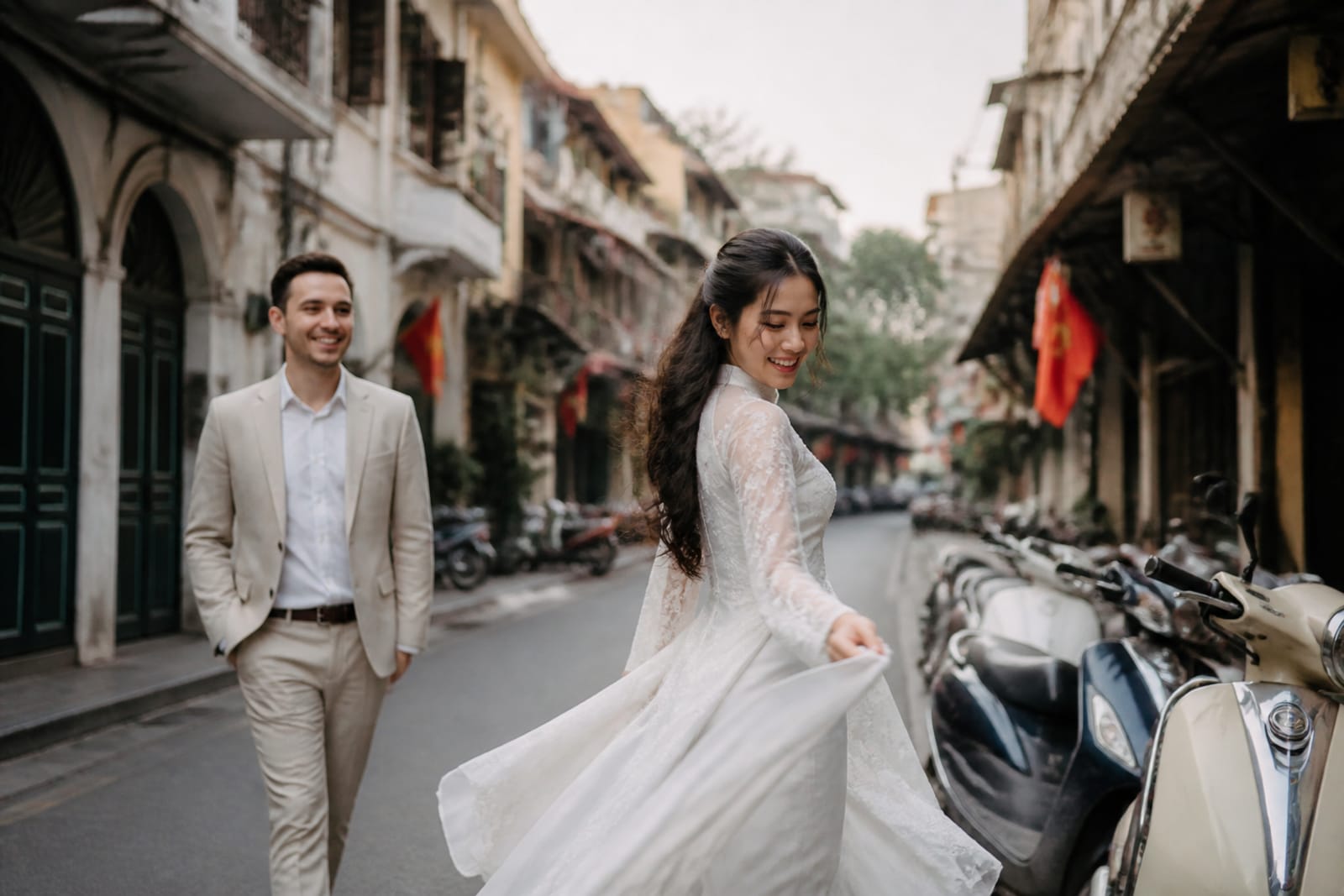
Should you hire a professional photographer or rely on phone cameras and friends?
A professional photographer who has shot at the Temple of Literature brings three irreplaceable skills: timing (they know the exact moment your expression changes as you propose and can capture it, not the 30 seconds after when you're already reacting), location knowledge (they've tested light at that time on that date and can position you in the strongest frame), and backup (if a crowd blocks the main shot, they already have alternatives scouted). A friend with a phone camera will be anxious about composition and focus, will miss the peak moment, and cannot reposition quickly if a tour group walks into frame.
That said, many proposers hire a photographer to capture the formal shot (the moment of asking, the kiss, the ring detail) and invite close family to document celebration moments afterward — this gives you intimacy and creative professional work without feeling entirely staged. Some choose a hybrid: a photographer for a 1–2 hour window during the proposal and early celebration, then casual phone video for the dinner or gathering afterward.
Hiring a professional also solves logistical stress. The photographer liaisons with any local contacts, confirms access and permits, manages timing so you're not checking your phone three minutes before asking, and delivers finished images (often edited within a week or two, depending on package terms). This lets you focus on the proposal itself, not the technical setup.
How does a proposal shoot differ from a couple or pre-wedding photoshoot, and which suits your needs?
| Package type | Best for | Session length (typical) | Coverage | Outfit changes | Follow-up options |
|---|---|---|---|---|---|
| Proposal only | Capturing the ask & immediate celebration | 1–3 hours | Proposal moment + location portraits | 0–1 (what you wear to propose) | Optional couple session weeks later |
| Couple/anniversary shoot | Celebrating an existing proposal or milestone | 2–4 hours | Poses, interaction, location versatility | 1–2 (casual + formal, or ao dai) | Often includes album or print options |
| Pre-wedding photoshoot | Engaged couples building a visual story before the wedding day | 3–6 hours (often full-day option) | Multiple locations, outfit changes, couple + group portraits | 2–4 (formal, casual, cultural, wedding attire) | Album, video, prints; ties into wedding-day photography |
A proposal-specific package focuses entirely on the ask moment and immediate joy, whereas a pre-wedding shoot is designed to show your relationship over time and in multiple contexts. If you want the Temple of Literature moment captured (proposal package) and then plan engagement portraits elsewhere weeks later, you can book a proposal session and later add couple photoshoots at other Hanoi landmarks. If you want one comprehensive shoot that includes the proposal, celebration, and formal engagement portraits in one day, discuss a pre-wedding photoshoot with extended time and location variety.
Cáo Studio – Makeup & Photoshoot offers proposal & anniversary packages tailored to the scale and timeline you prefer. Pricing factors include session length, number of locations, outfit changes, and editing delivery time — confirm exact inclusions on WhatsApp before booking.
What hidden logistics should you know before you book?
Temple access and permit rules. The Temple of Literature opens daily; however, photography at certain times or for commercial intent may require a permit. Rules shift with local policy — do not assume. Ask your photographer to confirm current requirements when you book; they'll handle verification or liaison with local contacts. If a permit is needed, factor in lead time (often 1–2 weeks) and any associated cost in your planning.
Monsoon and weather fallback. December to February brings occasional drizzle and overcast skies; May to September has heavy downpours and typhoon remnants (September worst). If you're proposing in these months, agree on a rain backup plan with your photographer — either a nearby indoor location (museum, hotel lobby) or a rescheduled date. Do not assume the photographer can magically work around a downpour.
Tet timing. If you're proposing during Tet (late January to mid-February), the temple may close for a day or two, vendor-operated areas may be unmanned, and crowds will spike. Book well in advance and confirm closure dates and access hours with your photographer.
Tour groups and unexpected foot traffic. Even early in the morning, school groups, tour buses and local visitors appear without warning. A photographer who has scouted can suggest alternative spots or timing adjustments, but you cannot guarantee a completely empty courtyard. If having absolute privacy is essential, propose at your hotel or in a reserved space instead.
Timing the moment itself. The photograph of the proposal (you on one knee, ring in hand, her expression) lasts a few seconds in real time. The photographer will typically shoot multiple frames in rapid succession, but will also need clear sight lines and your and your partner's positioning to be predictable. Over-choreographing kills spontaneity; light guidance (stand here so the light hits your face) is useful, but "hold that exact expression for three frames" is awkward and rarely works. Trust the photographer's eye and let the emotion be real.
---
FAQ
Do I need a permit to propose and photograph at the Temple of Literature?
Permit requirements vary by local policy and change periodically. Your photographer must confirm current rules before you book. Ask your studio to verify during booking — do not assume. Many professional photographers have established relationships with site authorities and can expedite permits if required.
What's the cheapest time to book a proposal photoshoot at the Temple of Literature?
Cost depends on photographer availability, session length and editing time — not the season or location itself. Off-season months (May–August, December–February) may have lower demand, potentially faster booking slots, but weather trade-offs (heat, rain, overcast) can complicate shoots. October–November is the most popular season and may have longer wait lists. Contact Cáo Studio on WhatsApp to discuss your dates and get a personalized quote.
Can I wear an áo dài for a proposal at the Temple of Literature, and does it photograph well there?
Yes; an áo dài is ideal culturally and photographically. A fitted, solid-color traditional silk áo dài in jewel tones (navy, emerald, burgundy) or soft pastels photographs beautifully in the temple's warm, earthy light. Avoid oversized or loose styles, which can tangle on stone steps and narrow passages. Confirm with your photographer that your tailor has fitted it for comfortable walking and sitting, as you'll be posing across multiple courtyards.
Should I tell my partner about the proposal shoot, or keep it a surprise?
Both work. Telling them allows outfit planning, hair/makeup coordination, and reduces anxiety on the day — you both show up camera-ready and present. Keeping it a surprise creates spontaneous emotion but risks poor outfit choices, messy hair and genuine panic on camera. Many propose privately with a photographer present (partner knows), then celebrate with family later. Discuss your preference with your photographer; they'll adjust their approach and camera positioning accordingly.
How far in advance should I book a proposal photoshoot at the Temple of Literature?
Book 2–4 weeks ahead to secure your preferred date, allow time for a pre-shoot scout visit, and confirm permits if needed. Autumn (October–November) is the most popular season — aim for 4–6 weeks if you have a fixed date. Contact Cáo Studio on WhatsApp with your desired date, and the team will confirm availability and walk you through next steps.
What happens if it rains on my proposal shoot day?
Light rain can add atmosphere and texture to portraits, especially in the temple's stone courtyards. Heavy downpours are more challenging; visibility drops, your outfit may get soaked, and the photographer's equipment is at risk. Agree on a backup plan with your photographer before the day — either a rescheduled date, a nearby indoor location, or a move to later the same day if weather clears. Do not assume the photographer will push through dangerous conditions.
FAQ
Do I need a permit to propose and photograph at the Temple of Literature?
Permit requirements vary by local policy and change periodically. Your photographer must confirm current rules before you book. Ask your studio to verify during booking — do not assume. Many professional photographers have established relationships with site authorities and can expedite permits if required.
What's the cheapest time to book a proposal photoshoot at the Temple of Literature?
Cost depends on photographer availability, session length and editing time — not the season or location itself. Off-season months (May–August, December–February) may have lower demand, potentially faster booking slots, but weather trade-offs (heat, rain, overcast) can complicate shoots. October–November is the most popular season and may have longer wait lists. Contact Cáo Studio on WhatsApp to discuss your dates and get a personalized quote.
Can I wear an áo dài for a proposal at the Temple of Literature, and does it photograph well there?
Yes; an áo dài is ideal culturally and photographically. A fitted, solid-color traditional silk áo dài in jewel tones (navy, emerald, burgundy) or soft pastels photographs beautifully in the temple's warm, earthy light. Avoid oversized or loose styles, which can tangle on stone steps and narrow passages. Confirm with your photographer that your tailor has fitted it for comfortable walking and sitting, as you'll be posing across multiple courtyards.
Should I tell my partner about the proposal shoot, or keep it a surprise?
Both work. Telling them allows outfit planning, hair/makeup coordination, and reduces anxiety on the day — you both show up camera-ready and present. Keeping it a surprise creates spontaneous emotion but risks poor outfit choices, messy hair and genuine panic on camera. Many propose privately with a photographer present (partner knows), then celebrate with family later. Discuss your preference with your photographer; they'll adjust their approach and camera positioning accordingly.
How far in advance should I book a proposal photoshoot at the Temple of Literature?
Book 2–4 weeks ahead to secure your preferred date, allow time for a pre-shoot scout visit, and confirm permits if needed. Autumn (October–November) is the most popular season — aim for 4–6 weeks if you have a fixed date. Contact Cáo Studio on WhatsApp with your desired date, and the team will confirm availability and walk you through next steps.
What happens if it rains on my proposal shoot day?
Light rain can add atmosphere and texture to portraits, especially in the temple's stone courtyards. Heavy downpours are more challenging; visibility drops, your outfit may get soaked, and the photographer's equipment is at risk. Agree on a backup plan with your photographer before the day — either a rescheduled date, a nearby indoor location, or a move to later the same day if weather clears. Do not assume the photographer will push through dangerous conditions.
Ao dai, makeup, hair and a local photographer in Hanoi or Saigon — one WhatsApp message.