/pre-wedding-photoshoot
Pre-Wedding Photo Ideas and Poses at Cau Dat Tea Hills
Cau Dat tea hills, 20 minutes northeast of Da Lat, deliver wide green rows, cool mist at sunrise, and natural contrast between outfits and landscape. Pre-wedding shoots here run 2–3 hours at dawn (6–8 am) or late afternoon (4–5 pm) when side light flatters faces and terraces glow. Avoid midday direct sun; it hardens shadows and washes greens. Walking poses—moving through rows, looking at each other, one partner ahead—work far better than static posing because the terrain and light feel alive in the frame. Cáo Studio directs every session with one team (photographer, makeup, stylist, director) so outfit, light and framing align; for Cau Dat you'd coordinate with a local photographer unless shooting in nearby Da Lat or booking Hanoi-based travel. Check entry and transport costs locally, and confirm whether your photographer has shot there before—foot traffic, access roads, and permits change seasonally. ---
What Light and Season Work Best at Cau Dat?
Cau Dat sits at roughly 1,200 m elevation, so it's cool and misty year-round. Dry season (Dec–Apr) brings clearer skies, sharper light and less muddy paths; morning mist is thickest in Dec–Feb, creating dramatic backlit shots. Rainy season (May–Nov) produces morning fog and lush greens but afternoon showers can ruin afternoon shoots and make walking difficult. Late Feb–Mar and Nov offer a balance—greens are vivid, mist is present, and rain is rare.
For pre-wedding shoots, aim for 6–7 am start to catch side-lit mist before crowds arrive (tea-pickers and tourists both peak by 8:30 am). By 7:30 am, direct sun begins to dominate and mist burns off. Late afternoon (4:30–5:30 pm) works if you accept harsher shadows, but the view becomes monotonal as sun drops. Sunrise is the filmmaker's choice: the light moves, the landscape feels alive, and you and your partner move with it.
Conclusion: Dec–Feb dawn shoots offer the most cinematic conditions; mid-year early mornings still work if you stay ahead of crowds and mist.
📸 Book on WhatsApp — pre-wedding & elopement
How Do Directed Poses Differ From Standing-in-Front-of-Hills Posing?
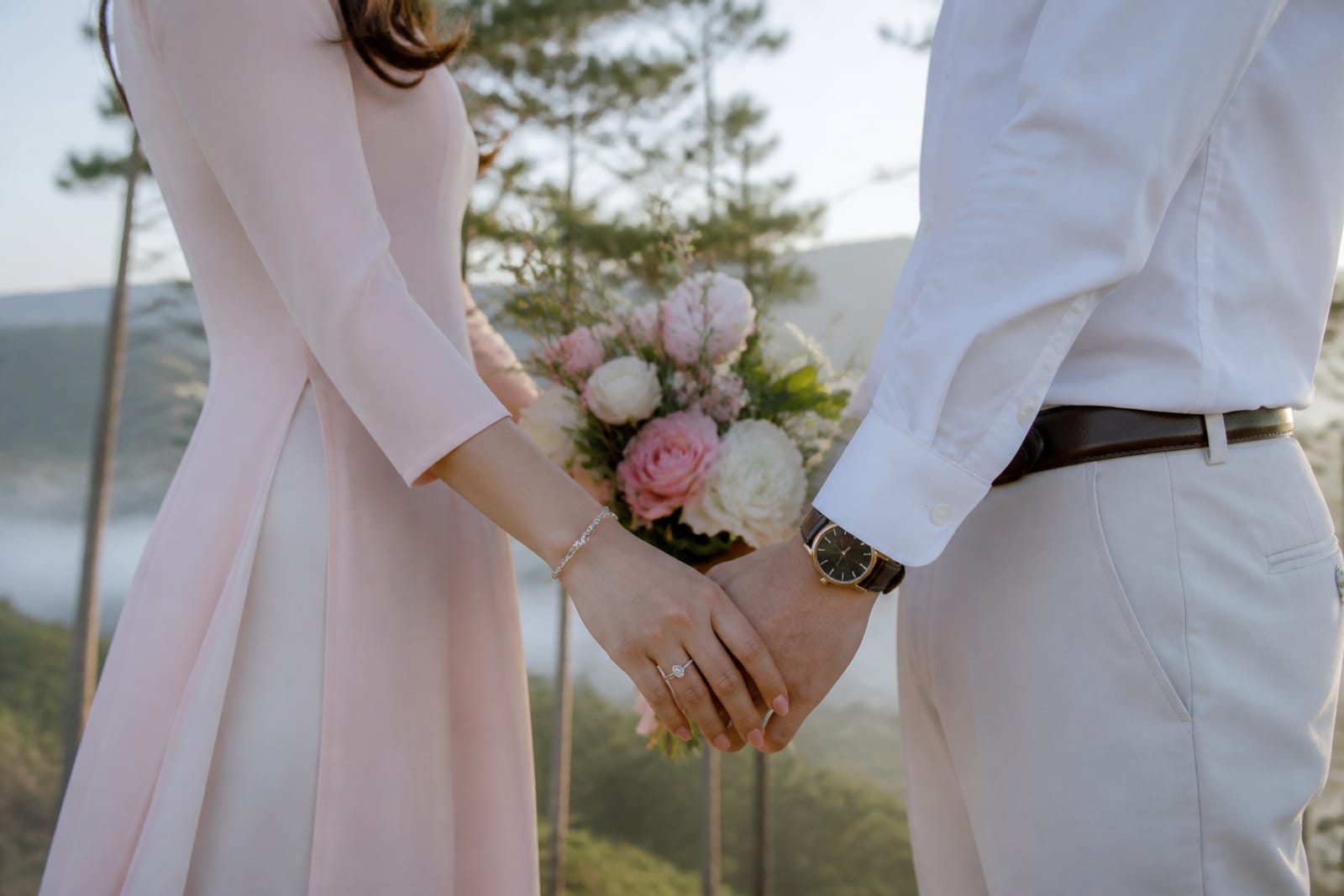
Most pre-wedding shoots at tea hills place couples in rows and ask them to face the camera. This stiffens frames and ignores the landscape's rhythm. Directed poses guide you to move—walk a row hand-in-hand, have one partner walk ahead while the other watches, sit on a terrace edge and look at each other, kneel and frame the valley behind you. Motion reads as intention; stillness reads as frozen.
The photographer needs clear light (not midday) and at least 2–3 hours to capture wide shots (you tiny in the hills), medium shots (waist-up while walking), and close details (hands, expressions). One team—photographer, director and stylist—runs faster because the director sets the light window, outfit and movement together. Mismatched vendors waste 30 minutes per outfit change coordinating what the other didn't know.
Conclusion: Moving through the landscape, not posing in it, creates frames that feel like moments, not monuments.
What's the Real Difference: Local Photographer vs. One Integrated Team?
| Option | Best For | Light/Season Fit | Why It Works (Or Doesn't) |
|---|---|---|---|
| Local Da Lat photographer | Budget-aware couples, day-trip from Da Lat | Any season if they know the timing | Knows access, permits, crowds; may not direct outfit/hair to match light |
| Visiting photographer hired separately | Couples with a vision and flexible timeline | Dry season, Dec–Feb dawn preferred | Risk: misaligned expectations on movement, outfit, edits; 3 separate vendors slow down |
| Cáo Studio with Da Lat coordination (Hanoi-based team travels) | Couples wanting directed, styled, cinematic frames | Book for dry season (Dec–Apr), dawn | One creative brief: outfit, hair, light and framing all planned; hair/makeup arrives ready; no vendor lag |
| Elopement or pre-wedding shoot in Hanoi/Saigon + tea-hill reference mood board | Couples matching Cau Dat's aesthetic (green, mist, natural movement) but shooting closer to home | Hanoi: winter mist (Dec–Feb); Saigon: dawn year-round | Faster, no travel logistics; similar light and pose direction applied locally |
What to look for: A photographer who has shot Cau Dat in your preferred season, understands how mist and sun angle change by 15 minutes, and can direct movement without asking "what pose do you want?"
What Outfit Choices Matter Most on Tea Hills?
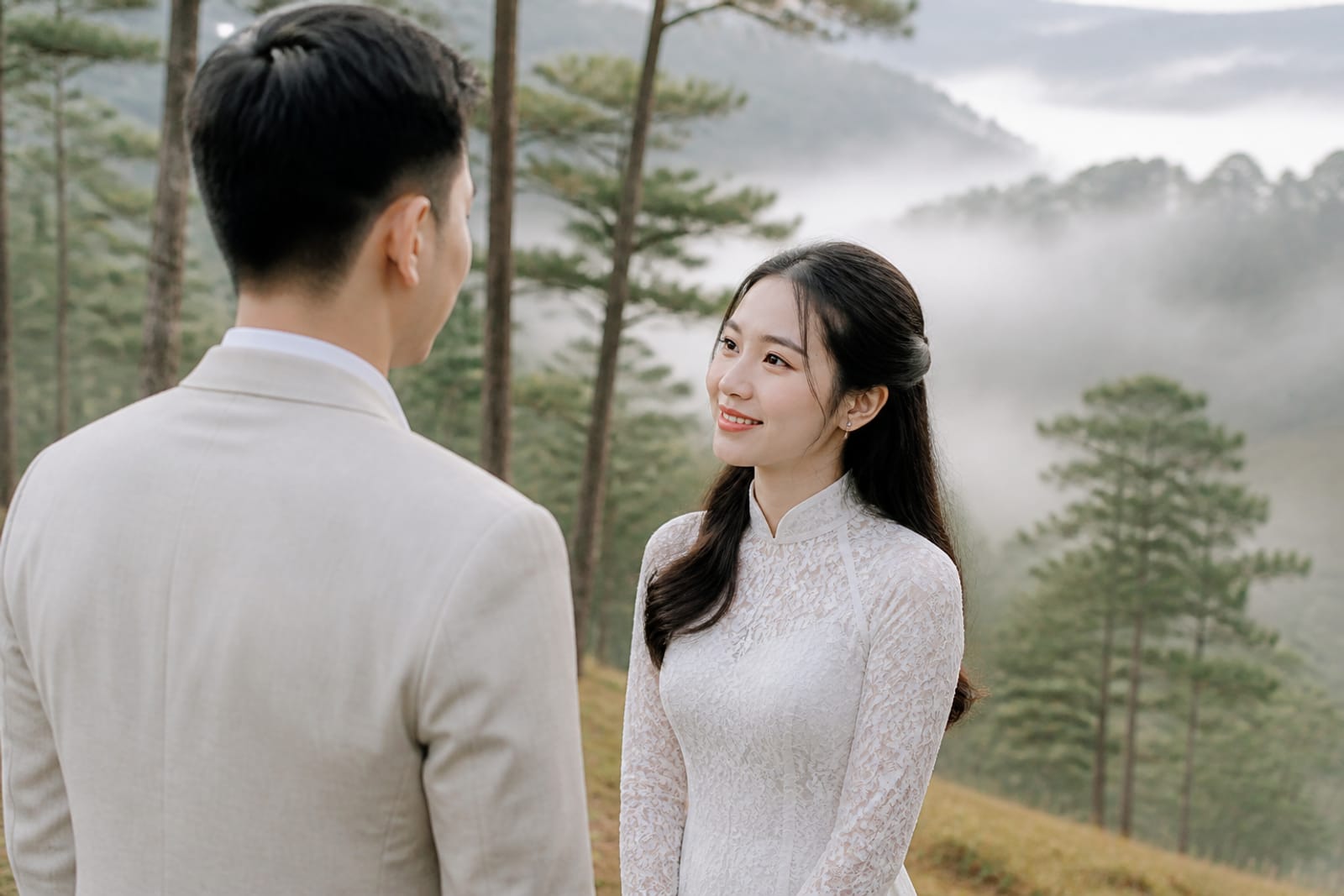
Soft, flowing fabrics read better than tight or structured ones in wind and walking. Áo dài (traditional Vietnamese gown) photographs beautifully here—the fabric moves, the colour pops against green, and it carries cultural weight. Pastel silk, cream linen, or earth tones photograph warmly in cool, diffused light. Avoid pure white (will blow out at dawn) and pure black (will lose detail in shadows).
A groom in a suit can feel formal against the casual landscape; linen shirt and tailored trousers, or a open shirt with an undershirt, feel grounded. Bare feet or simple sandals work if the terrace is dry; avoid heels (they sink). Bring a second outfit if the shoot runs 3+ hours—morning light differs sharply from mid-morning, so a lighter or warmer piece extends visual story.
Hair and makeup should account for mist and wind: keep hair soft and loose rather than tight (wind will break tight styles); use waterproof makeup because humidity is high. A makeup artist on-site (not done in Hanoi 8 hours prior) can touch up between outfit changes.
Conclusion: Áo dài or soft fabrics, minimal jewellery, and fresh makeup on-site give you frames that age 10 years without looking dated.
How Do You Avoid Crowds, Mud, and Permit Friction at Cau Dat?
Arrive by 5:45 am to shoot before 7:30 am. After 8 am, tour buses park at the entrance and trekkers fill the main rows. The upper, less-photographed terraces are quieter but muddy in rainy season and harder to light. Ask your photographer whether they have a relationship with the entrance staff—some photographers have informal arrangements to access quieter sections or stay a few minutes past the posted "golden hour" window.
Permits and fees: The tea estate collects a small entry fee per visitor (confirm locally); some photographers split this, others roll it into the shoot cost. No special "photoshoot permit" exists, but commercial filming or large crews (4+ people) sometimes need notice. A solo photographer with one couple usually moves unquestioned.
Mud and footing: Terraces are slippery after rain. Shoot 2–3 days after rain (when the earth is packed, not soupy) or during dry season. Wear shoes with grip, not flip-flops, during setup. The photographer should scout the path the day before if possible.
What to confirm before booking: Has your photographer shot Cau Dat in your chosen month? Do they know the entry process and typical crowds? Will they coordinate with the estate if you're there for 2+ hours?
Conclusion: Dawn shoots (before 8 am), a photographer with local ties, and a post-rain timing window eliminate 80% of logistical friction.
Should You Shoot Cau Dat or Nearby Alternatives?
Cau Dat is best for intimate, romantic frames—mist, soft light, and deep greens. It suits couples who want to move and feel small in a vast landscape. The walk from the car is 10–15 minutes uphill; not strenuous but requires steady footing.
Prenn Waterfall (near Da Lat, 5 km south) offers height, water, and drama but is crowded by 9 am and the light is often harsh or backlit. White water reads poorly in morning mist—you lose detail.
Langbiang Mountain (2 km east) delivers panoramic views and cooler air but the exposed summit is windier (hair and focus suffer) and there's no natural framing of the couple within the landscape—you feel small in an empty space rather than intimate in a layered one.
Valley of Love (Da Lat, 6 km south) has manicured gardens, boating, and pastel villas—fine for a second outfit or a lighter mood but no natural drama.
For pre-wedding shoots, Cau Dat is the strongest single choice. Combine it with a second location (a café in Da Lat town, or a nearby garden) only if you have 4+ hours and want visual variety—more locations mean less time in each, so fewer frames per mood.
Conclusion: Cau Dat alone, shot over 2.5–3 hours, yields more cohesive, beautiful frames than splitting time across three sites.
---
What to Check Before You Book a Cau Dat Pre-Wedding Shoot
- Photographer experience: Ask to see a portfolio from Cau Dat, ideally in your target season (Dec–Apr for dry, Jan–Feb for mist). Ask how they direct movement and time the light window.
- Travel and timing: Confirm whether your photographer charges extra for travel from Da Lat (if based there) or Hanoi (if using a full team). Confirm the exact start time and how long the shoot runs.
- Weather guarantee or reschedule clause: Heavy rain at Cau Dat means a cancelled shoot or reschedule. Clarify this before paying.
- Outfit and hair: If you want makeup and hair, confirm whether the artist travels with the photographer or is arranged separately. On-site touch-ups matter in mist and wind.
- Edits and delivery: Ask how many photos you receive, when edits arrive, and in what format (digital gallery, prints, album). Cáo Studio delivers edited photos and a short vertical film within 48 hours; other photographers may take weeks.
- Cost factors (never amounts): Season (dry is busier, cost factors up), travel distance from the photographer's base, number of outfits, makeup/hair inclusion, and album or print requests all affect the final quote. Ask on WhatsApp for a personalized estimate if working with Cáo Studio; ask the local photographer for a detailed breakdown.
---
FAQ
Can Cáo Studio shoot pre-wedding photos at Cau Dat tea hills?
Cáo Studio is based in Hanoi and Saigon; Cau Dat near Da Lat is outside our service area. We coordinate with local Da Lat photographers for couples wanting Cau Dat shoots. For pre-wedding sessions in Hanoi or Ho Chi Minh City with similar light and pose direction, message us on WhatsApp.
What time of year has the best mist and green at Cau Dat?
Jan–Feb offers the thickest mist and sharpest light contrast; Mar–Apr brings vivid greens and clearer skies. Rainy season (May–Nov) makes terraces muddy and afternoon showers common, though early mornings are still misty. Avoid Oct–Nov typhoon season.
How long should a pre-wedding shoot at Cau Dat last?
2.5–3 hours, starting by 6 am, covers wide landscape shots, medium walking poses, and close-up details across one or two outfits. Shorter shoots (1.5 hours) risk missing light transitions and feeling rushed.
Do I need an áo dài to shoot at Cau Dat, or can I wear Western wedding dress?
Both work. Áo dài reads beautifully against green and moves well in wind; a lightweight wedding dress or flowing linen gown also photograph well. Avoid heavy, structured dresses—they restrict movement and catch wind awkwardly on steep paths.
How much does entry to Cau Dat cost, and do I pay extra for a photoshoot?
A small entry fee per person is collected at the gate; check the current rate locally. No separate "photoshoot permit" is required for a couple and one photographer, but confirm with your photographer whether they budget this cost separately or include it.
Can I book a Cáo Studio pre-wedding session and use a Cau Dat mood board for inspiration?
Yes. Book a pre-wedding shoot in Hanoi or Ho Chi Minh City and share Cau Dat references—we'll match the directed movement, mist-inspired mood, and soft aesthetic in local settings. Message us on WhatsApp to discuss.
FAQ
Can Cáo Studio shoot pre-wedding photos at Cau Dat tea hills?
Cáo Studio is based in Hanoi and Saigon; Cau Dat near Da Lat is outside our service area. We coordinate with local Da Lat photographers for couples wanting Cau Dat shoots. For pre-wedding sessions in Hanoi or Ho Chi Minh City with similar light and pose direction, [message us on WhatsApp](/book).
What time of year has the best mist and green at Cau Dat?
Jan–Feb offers the thickest mist and sharpest light contrast; Mar–Apr brings vivid greens and clearer skies. Rainy season (May–Nov) makes terraces muddy and afternoon showers common, though early mornings are still misty. Avoid Oct–Nov typhoon season.
How long should a pre-wedding shoot at Cau Dat last?
2.5–3 hours, starting by 6 am, covers wide landscape shots, medium walking poses, and close-up details across one or two outfits. Shorter shoots (1.5 hours) risk missing light transitions and feeling rushed.
Do I need an áo dài to shoot at Cau Dat, or can I wear Western wedding dress?
Both work. Áo dài reads beautifully against green and moves well in wind; a lightweight wedding dress or flowing linen gown also photograph well. Avoid heavy, structured dresses—they restrict movement and catch wind awkwardly on steep paths.
How much does entry to Cau Dat cost, and do I pay extra for a photoshoot?
A small entry fee per person is collected at the gate; check the current rate locally. No separate "photoshoot permit" is required for a couple and one photographer, but confirm with your photographer whether they budget this cost separately or include it.
Can I book a Cáo Studio pre-wedding session and use a Cau Dat mood board for inspiration?
Yes. [Book a pre-wedding shoot](/pre-wedding-photoshoot) in Hanoi or Ho Chi Minh City and share Cau Dat references—we'll match the directed movement, mist-inspired mood, and soft aesthetic in local settings. Message us on WhatsApp to discuss.
Ao dai, makeup, hair and a local photographer in Hanoi or Saigon — one WhatsApp message.