/pre-wedding-photoshoot
Pre-Wedding Photo Ideas and Poses at Con Dao Beaches
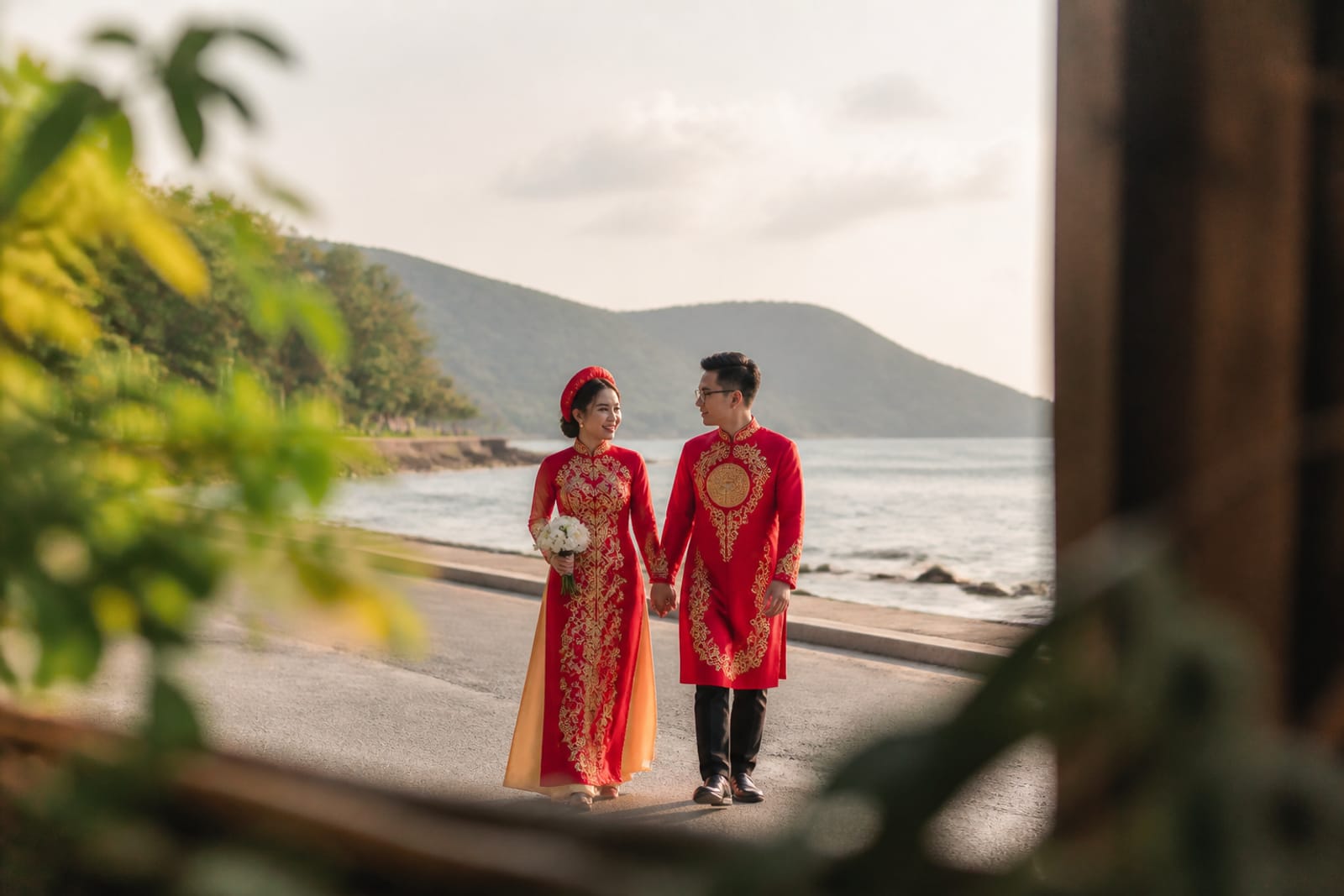
Con Dao beaches work for pre-wedding shoots because they stay calm and uncrowded year-round—rare in Vietnam. The calmest seas run roughly March to June; avoid July–November (rainy season, rough waters). Best light falls in the first two hours after sunrise or the last hour before sunset on the east-facing beaches (Ong Dung, Dam Trau). Poses work best when you walk, look at each other, or sit on rocks or in shallow water—never stiff standing. Cáo Studio does not shoot Con Dao (it requires travel coordination beyond our Hanoi, Ho Chi Minh City, and Hoi An base); instead, this guide helps you plan with a local photographer or choose a nearby option like Hoi An or Ho Chi Minh City.
Why Con Dao Works for Pre-Wedding Frames
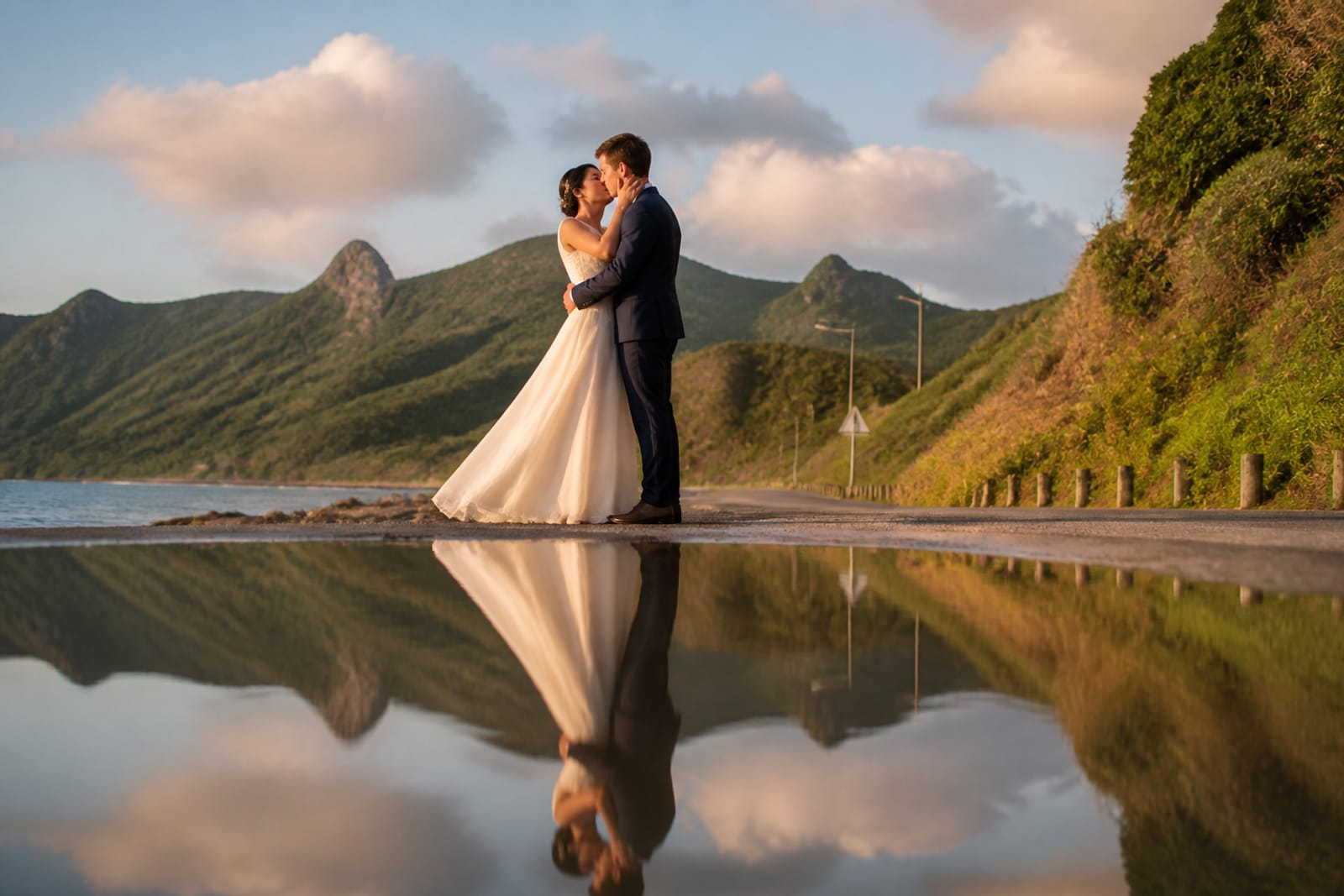
Con Dao feels private because tourists rarely stay there. Most Vietnam beach shoots happen in Hoi An or Nha Trang, where crowds peak by 7 a.m. Con Dao's national-park status means fewer resorts, fewer day-trippers. The beaches are narrow, rocky-edged, and protected—no strong currents or heavy swell during calm months. Morning light hits the east-facing coves (Ong Dung, Dam Trau) soft and side-lit, which is cinema-quality for couple framing. The trade-off: you must book accommodation, travel by ferry, and hire a local photographer (no studio team travels there regularly). If isolation and genuine light matter more than convenience, Con Dao delivers.
📸 Book on WhatsApp — pre-wedding shoot | 🌸 See the lookbook
Which Beach Suits Your Shoot Style?
Con Dao has six main beaches. Each has different light, crowd patterns, and practical challenges. Below is a qualitative comparison:
| Beach | Best Light Hour | Why It Works | Walking Ease | Outfit Fit |
|---|---|---|---|---|
| Ong Dung (east-facing) | 5:30–7 a.m. | Soft side light, soft sand, rocks frame shots | Easy 10 min walk from town | Áo dài dries well; wear slip-ons or go barefoot |
| Dam Trau (east-facing) | 5:30–7 a.m. | Calm, shallow entry, sand bar, low rocky outcrop | Moderate; 15 min trek, some loose stone | Áo dài drags—plan to hike skirts up or wear shorts under |
| An Hai (west-facing) | 4:30–5:30 p.m. | Golden backlight, rocky headland frames couples | Hard; steep path, loose gravel, no shade | Best for Western dress; áo dài risky on rocks |
| Nhat Tao (south-facing, sheltered) | 6–7:30 a.m. or 4–5 p.m. | Flat light in morning, golden at dusk, protected | Very easy; resort access, no climb | Best for formal; minimal sand, mostly hard-pack |
| Ben Dam (north cove, sheltered) | 7–8 a.m. | Soft reflected light, no direct glare | Moderate; short walk, some seaweed | Áo dài safe; shallow wading possible |
Conclusion: Ong Dung or Dam Trau at sunrise gives you the light most photographers want; if you're in an áo dài and want to move freely, Ong Dung is safer.
How to Direct Poses on Sand and in Water
Stiff poses kill pre-wedding frames. Poses that move, look, or interact stay on film because they tell something real.
On sand:
- Walk toward or away from the camera, then pause to look at each other.
- Sit on rocks (test stability first); groom behind, bride in front, both looking seaward.
- Walk hand-in-hand into the frame from the side, then turn to embrace.
- Stand with your back to the camera, arms around each other, looking at the horizon.
In shallow water (ankle to knee depth):
- Walk hand-in-hand parallel to shore, let waves push you slightly off-balance—real motion reads better than held poses.
- Sit in thigh-deep water facing each other, foreheads close.
- Wade in, bride ahead, groom following; bride looks back over shoulder.
At rocky outcrops:
- Climb one step higher than your partner; stand side-by-side, lean on each other.
- Sit on a rock edge, legs dangling; groom wraps bride's shoulders; look down together.
Red flags: standing rigid in front of landmarks, forced smiles to the camera, stiff hand-holding at arm's length, both looking at the lens. Every pose should answer "what is this couple doing?" not "smile for the photo."
Choosing Between Solo, Local Hire, and a Full Team
Con Dao has no studio-based photographer or makeup artist on permanent staff. You have three realistic paths:
Path 1: Solo tripod and self-timer
- Cost factor: only gear rental or purchase.
- Pros: total freedom, no scheduling delays, no language barrier.
- Cons: you're not both in most frames, wind blows tripod over on sand, water spray ruins electronics, battery dies fast in salt air.
- Best for: engaged couples who've shot their own content before, don't mind being camera-absent from half the images.
- Tip: pack a weighted phone tripod, extra batteries, waterproof bag, and a Bluetooth remote (easier than self-timer on sand).
Path 2: Hire a local photographer
- Cost factor: search freelancers on Instagram (tag Con Dao + wedding photographer), email guesthouses for recommendations, video-call to vet their style.
- Pros: real framing, second person to spot backgrounds, someone knows the tides and light.
- Cons: communication gaps (language, style expectation), unclear editing timeline, no hair/makeup coordination, limited portfolio online.
- Best for: couples who speak some Vietnamese or hire a bilingual guide, willing to accept variable post-processing.
- Tip: ask for past couple shoots (not just family or solo tourist shots), confirm delivery time in writing, pay a deposit only after seeing samples.
Path 3: Book a full team (based in Hanoi or Ho Chi Minh City)
- Cost factors: photographer travel time, accommodation, number of outfits, makeup included or separate.
- Pros: one message (hair, makeup, photographer, outfit coordination), faster turnaround, professional equipment maintained.
- Cons: higher cost, requires advance booking (2–4 weeks), team availability tied to ferry schedules.
- Best for: couples who want hassle-free execution and cinematic editing, can plan 2–4 weeks ahead.
- Tip: Cáo Studio shoots in Hanoi, Ho Chi Minh City, and Hoi An—ask on WhatsApp if a Con Dao trip is possible for your dates (logistics are custom per season and team calendar).
Decision framework: If you have ≤1 week to plan, go solo or hire local. If you have 3+ weeks and want one team that handles outfit, hair, makeup, and frame direction, explore booking a traveling team.
📸 Book on WhatsApp — couple & family photoshoot
Season, Weather, and Light Patterns to Plan Around
Con Dao's light and accessibility shift dramatically by month.
March–June (calm season, best for shoots):
- Sea state: flat, glass-calm; best for water entry and wading shots.
- Light: soft at sunrise (5:30–6:30 a.m.), high by 8 a.m., golden at 4:30–5:30 p.m.
- Crowds: minimal; tourists increase in May–June but still far quieter than Hoi An.
- Weather: 25–30°C, occasional light rain, mostly dry mornings.
- Pro tip: book early (6–8 weeks out); calm seas mean photographers can wade freely and catch reflection shots.
July–November (rainy and rough season):
- Sea state: 1–2 m swells, frequent storms, ferry delays common.
- Light: overcast mornings, brief sunny windows mid-afternoon (if any).
- Crowds: almost none; resorts discount heavily.
- Weather: 26–28°C, persistent afternoon rain, typhoons possible Oct–Nov.
- Risk: shoot gets rescheduled last-minute, equipment exposed to salt spray and humidity.
December–February (cool, dry, reliable):
- Sea state: calm to moderate; consistently shootable.
- Light: longer golden hour (6–7 a.m., 4–5:30 p.m.); midday glare strong.
- Crowds: pickup late Dec through early Jan (Tet holidays); quieter mid-Jan onwards.
- Weather: 20–24°C, dry, occasional drizzle.
- Pro tip: ideal for outdoor makeup (no sweat or frizz), but bring a light wrap for groom; light gear works well but needs reflection reflectors.
Bottom line: March–May gives you the most reliable light and calmest seas for movement shots. July–Nov is beautiful but risky and logistically harder.
What to Check Before You Book
Before confirming a pre-wedding shoot at Con Dao, verify these details with your photographer or accommodation provider:
- Ferry schedule and backup date: Con Dao ferry runs 1–2 times daily; storms cancel it. Build a 1–2 day buffer into your timeline.
- Sunrise/sunset access: confirm beach access is open (some rocky coves require park permission in peak season—rare but check).
- Makeup and hair on-site: most resorts lack a salon. Either hire a local artist, ask your photographer for a referral, or book makeup and hair at your hotel before arrival (Cáo Studio offers this in Hanoi/Saigon, but not Con Dao).
- Áo dài or Western dress: áo dài needs a slip-on or silk slip underneath to stay dry; Western dresses need line-drying time after water shots.
- Equipment protection: salt air and sand damage cameras and lenses fast. Confirm your photographer brings lens caps, UV filters, and rain covers.
- Editing timeline: ask when you'll see edits (many local photographers deliver 2–4 weeks out; travel-based teams often deliver in 48 hours).
- Backup plan for rain: confirm if the shoot is rescheduled to the next calm day or refunded.
---
Why Cáo Studio Recommends Exploring Alternatives Too
Cáo Studio specializes in directed, one-team shoots in Hanoi, Ho Chi Minh City, and Hoi An. We do not operate in Con Dao because the logistics—ferry delays, limited accommodation, single light window per day—sit outside our core model (predictable turnaround, one message). That doesn't mean Con Dao isn't worth it. It means if you value isolation and genuine light more than convenience and 48-hour delivery, Con Dao suits you. If you want a full team, professional makeup, and cinematic editing without travel complications, Hoi An's Old Town and beaches or Ho Chi Minh City's urban and nearby beach options are easier to coordinate.
🌸 See the lookbook | 📸 Book on WhatsApp — pre-wedding shoot
FAQ
Can I wear an áo dài in the water at Con Dao?
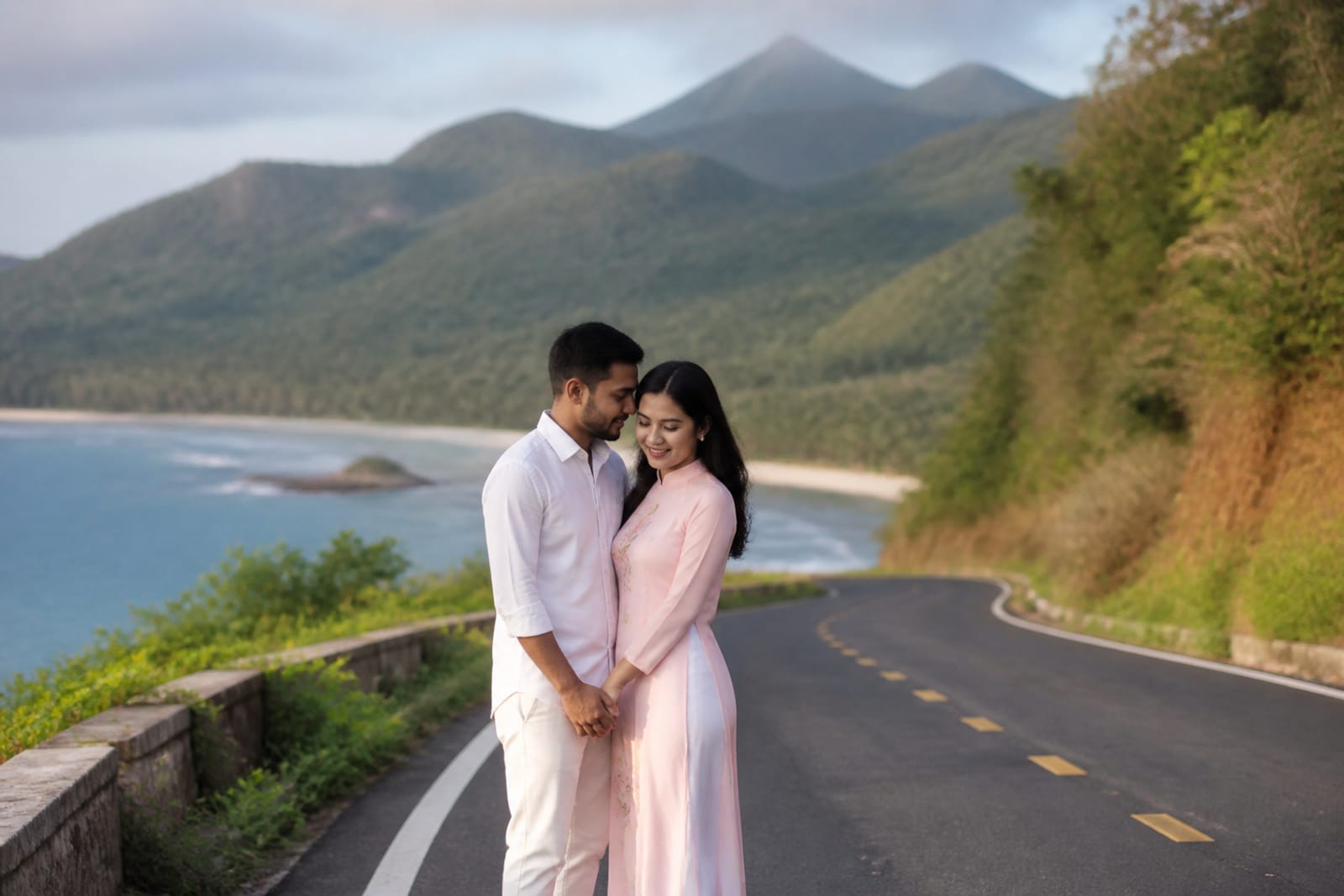
Yes, if you wear a slip or shorts underneath. The silk will dry, but water makes it cling and heavy; plan to hike the skirts up or change into a dry one for later shots. Bare feet or slip-ons work best on wet sand.
What's the best time of day for light at Con Dao beaches?
First two hours after sunrise (5:30–7 a.m. on east-facing beaches) or the last hour before sunset (4:30–5:30 p.m. on west-facing coves). Midday (10 a.m.–3 p.m.) has harsh shadows and glare—avoid it for posed frames.
How far in advance do I need to book a photographer for Con Dao?
Local freelancers can often move within 1–2 weeks; travel-based teams need 4–6 weeks. Book early if your dates fall in the calm season (March–June) when photographers fill up fast.
Will a local Con Dao photographer know how to frame pre-wedding shots?
Varies widely. Ask for past couple or engagement shoots (not just family portraits or tourist snapshots). Video-call them, discuss poses and light, and ask how they edit. A strong portfolio is the best vetting tool.
Is Con Dao worth the ferry journey for a pre-wedding shoot?
If you value quiet, genuine light, and isolation over convenience, yes. If you need a fast turnaround or full-team coordination, Hoi An or Ho Chi Minh City deliver the same cinematic framing with fewer logistical hurdles. Weigh isolation against accessibility.
FAQ
Can I wear an áo dài in the water at Con Dao?
Yes, if you wear a slip or shorts underneath. The silk will dry, but water makes it cling and heavy; plan to hike the skirts up or change into a dry one for later shots. Bare feet or slip-ons work best on wet sand.
What's the best time of day for light at Con Dao beaches?
First two hours after sunrise (5:30–7 a.m. on east-facing beaches) or the last hour before sunset (4:30–5:30 p.m. on west-facing coves). Midday (10 a.m.–3 p.m.) has harsh shadows and glare—avoid it for posed frames.
How far in advance do I need to book a photographer for Con Dao?
Local freelancers can often move within 1–2 weeks; travel-based teams need 4–6 weeks. Book early if your dates fall in the calm season (March–June) when photographers fill up fast.
Will a local Con Dao photographer know how to frame pre-wedding shots?
Varies widely. Ask for past couple or engagement shoots (not just family portraits or tourist snapshots). Video-call them, discuss poses and light, and ask how they edit. A strong portfolio is the best vetting tool.
Is Con Dao worth the ferry journey for a pre-wedding shoot?
If you value quiet, genuine light, and isolation over convenience, yes. If you need a fast turnaround or full-team coordination, [Hoi An](/hoi-an) or [Ho Chi Minh City](/saigon) deliver the same cinematic framing with fewer logistical hurdles. Weigh isolation against accessibility.
Ao dai, makeup, hair and a local photographer in Hanoi or Saigon — one WhatsApp message.