/pre-wedding-photoshoot
Pre-wedding photo ideas and poses at Cua Dai Beach
Cua Dai Beach, a wide sandy shore 5 km from Hoi An Ancient Town, is a popular pre-wedding location for its soft morning light and open horizon. A typical shoot runs 1.5–2 hours (sunrise or late afternoon), covering romantic poses in sand, shallow water walks, and outfit changes near tree-line shelter. Cáo Studio – Makeup & Photoshoot coordinates Hoi An shoots by appointment; the team travels to the beach, handles makeup and hair on-site or in advance, and works around tide and weather. Avoid midday (10 am–3 pm) glare and harsh shadows; book December–April for calm seas and mild temperatures. Confirm exact timings and what outfits/makeup are included on WhatsApp before committing. ---
What poses actually work in sand and shallow water?
Sand is forgiving for kneeling and lying shots, but avoid sinking (wear flat shoes, test ground first). Walk backward through ankle-deep water holding hands; let the groom lead slightly ahead for natural framing. Standing back-to-back with heads turned, sitting hip-to-hip facing the horizon, and him lifting her (brief, dry run first) all read well in wide shots. Shallow-water poses work best in still morning conditions; wind ruins hair and creates backlight flare. Avoid deep water—safety and costume ruin outweigh any shot.
📸 Book on WhatsApp — pre-wedding photoshoot
Is sunrise or late afternoon better for Cua Dai light?
Sunrise (5:30–6:30 am, December–April) gives soft, directional gold light and zero crowds. Late afternoon (4–6 pm) is also warm but draws tourists and fishing boats, adding unwanted elements to wide shots. Sunrise requires early wake-up; late afternoon allows a more relaxed morning. Cloud cover helps both times; bright blue skies create unforgiving contrast unless you shoot into shade (tree line, umbrella diffusion). Ask your photographer to scout the location the morning before, note tide tables, and plan exact positions to avoid glare on skin and dress.
What should you wear under an ao dai for a beach shoot?
Wear form-fitting shorts (black, dark blue, or flesh-tone) under the lower panel; they prevent water transparency and chafing during movement. Skip underwear visible through wet fabric—this ruins keepsake photos. A thin, quick-dry undershirt (or none, if comfortable) keeps the ao dai from clinging uncomfortably. For Western-style pre-wedding outfits (dresses, suits), wear breathable, sweat-resistant undergarments; sand sticks to wet skin. If doing an ao dai change mid-shoot, bring a lightweight robe or sarong to preserve modesty between outfits. Test everything in advance; wet fabric behaves differently than dry.
How do you compare a Cua Dai beach shoot to other Hoi An locations?
| Option | Best for | Light & season | Why it works |
|---|---|---|---|
| Cua Dai Beach | Romantic, spacious, horizon drama | Sunrise or late afternoon; Dec–Apr calm seas | Open space, soft sand, minimal crowds early morning |
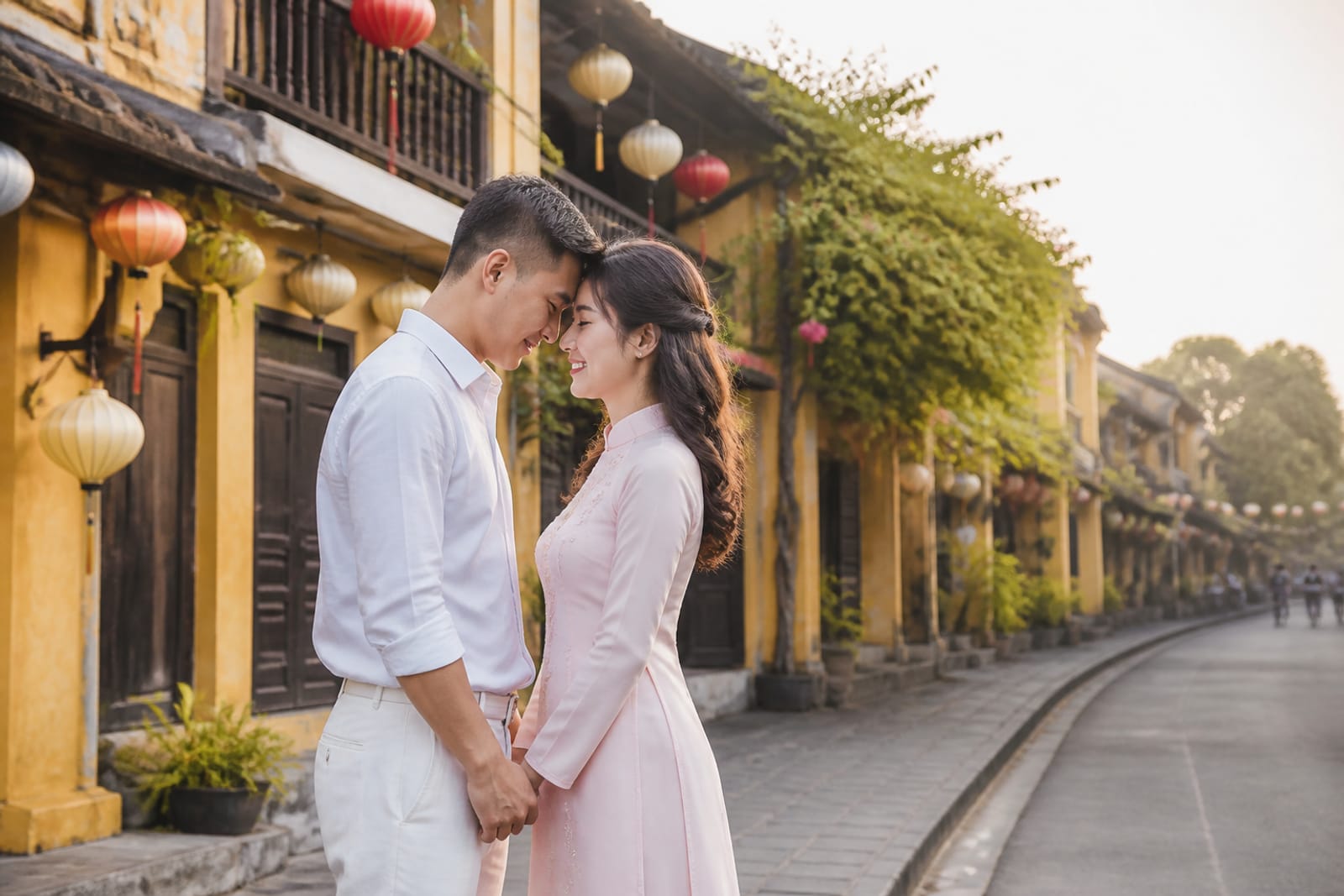
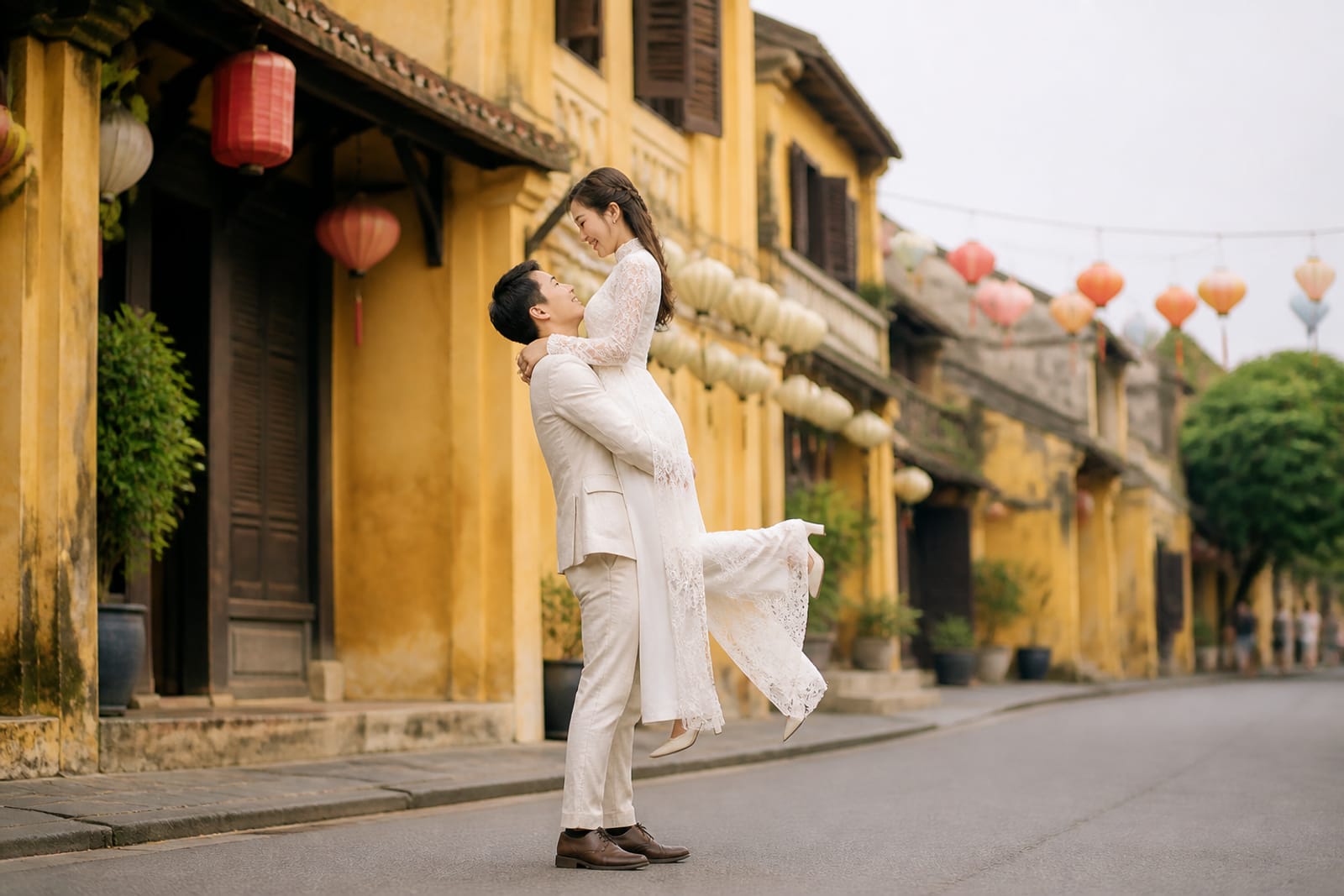
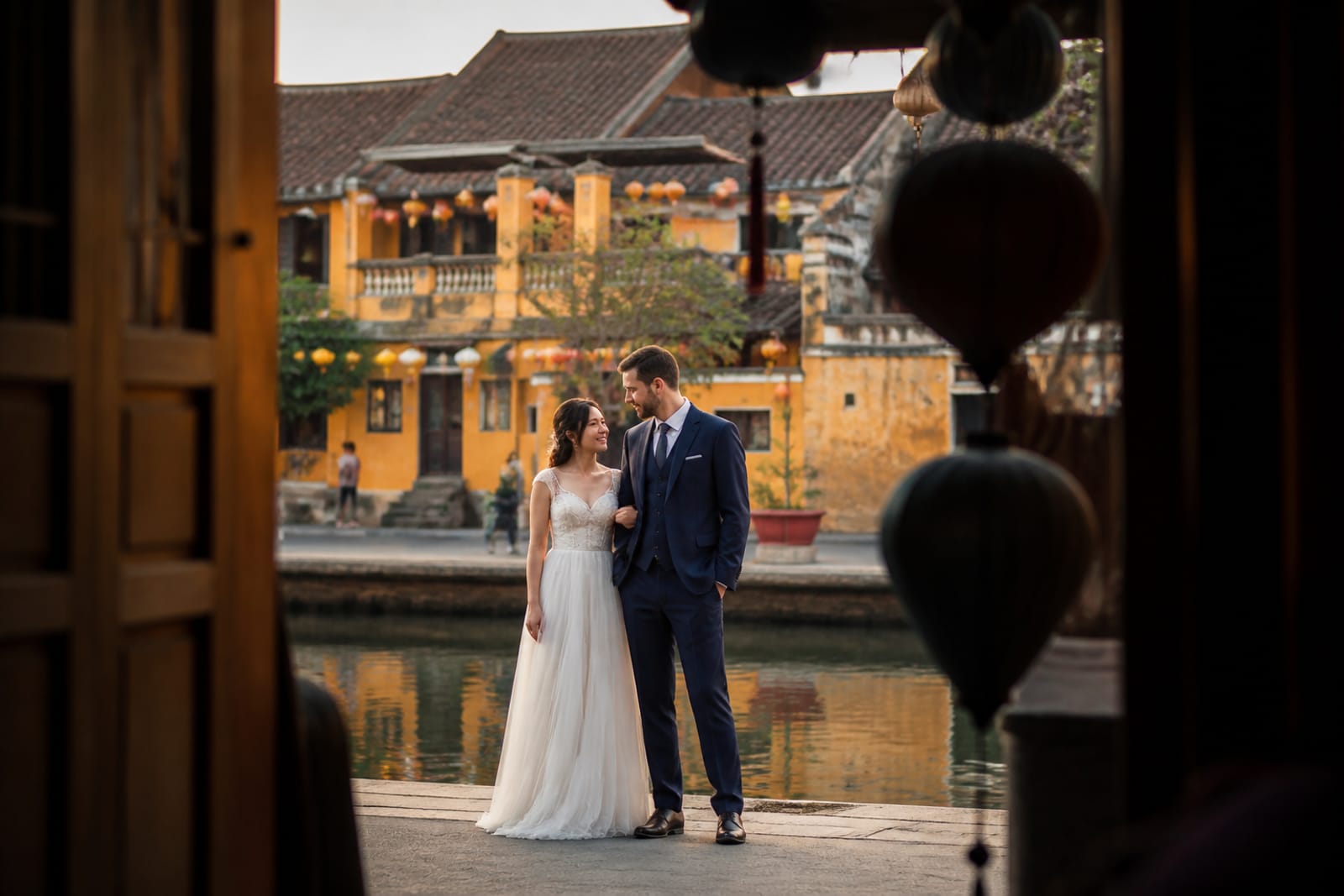
| Ancient Town streets | Cultural storytelling, lanterns, architecture | Late afternoon/dusk; Feb–Apr mild; avoid Oct–Nov flooding | Iconic backdrop, intimate framing, evening lantern lighting |
| Rice fields near Tra Que | Green, pastoral, quiet | Dawn or late afternoon; Feb–Apr greenest; May–Aug very hot | Fewer tourists, natural layering, soft directional light |
| Cam Thanh coconut forest | Moody, water reflections, sheltered | Early morning mist; Dec–Feb cooler; May–Sep hot | Unique texture, dappled light, peaceful boat rides |
A beach shoot suits couples wanting openness and horizon; Ancient Town suits cultural storytelling. Beach requires tide awareness and early starts; town requires crowd patience. Combine both in one session for variety—ask your photographer if timing allows.
What gear and logistics do photographers need for a Cua Dai beach session?
Photographers bring weather-sealed camera bodies (salt spray is corrosive), polarizing filters (reduce water glare), and a long lens (compress distance for romantic framing). Props stay minimal—a fabric wrap, a simple bouquet, or a wooden frame for foreground interest. Assistants carry an umbrella diffuser, reflectors, and gear bags in waterproof cases. Sunscreen and water bottles prevent heat exhaustion during early-morning shoots. Footwear: sandals or water shoes; shoes left on sand risk loss. Transport a backup outfit if a couple's first choice gets wet. Communicate parking (pay lots exist near the beach) and tide tables in advance; low tide gives wider sand flats, high tide limits space.
What are the real challenges—and how do you avoid them?
Sand in gear: Use a UV filter as a sacrificial lens protector; pack silica gel and lens-cleaning wipes. Glare headaches: Shoot into the sun (backlit) or use a large diffuser; avoid bright white; ask couples to wear ivory, blush, or champagne (colors that glow without washing out). Wind and hair: Book calm-weather months (Dec–Mar best); bring bobby pins and light hairspray; accept some flyaways—movement looks romantic. Couples sinking or slipping: Scout the ground 30 minutes before shoot; test each pose location first; avoid heels and loose clothing. Tide timing: Check tide charts daily; high tide can arrive 10 minutes early depending on moon phase. Costume transparency: Test fabrics wet beforehand; bring a secondary outfit or slip. Overcrowding: Sunrise avoids daytime tourists; weekdays (Mon–Thu) are quieter than weekends.
---
How to choose between booking Cáo Studio or a local Hoi An photographer
Cáo Studio – Makeup & Photoshoot travels to Hoi An by appointment, bringing Hanoi/Saigon experience and consistent editing. Local photographers offer lower travel fees and intimate venue knowledge. Compare what matters: travel coordination, makeup on-site, editing style, album design, and editing turnaround. Ask for lookbooks—Cáo Studio's visual style is here. Request references (not invented testimonials, but real examples). Confirm what's included before booking: number of edited files, outfit changes, makeup, and delivery timeline. If you want Vietnamese cultural depth (ao dai expertise, temple-shoot etiquette), Cáo Studio specializes in this. If you prefer hyperlocal logistics and walk-able scouting, a resident Hoi An photographer may suit better.
---
What to check before you book
- Season & weather: December–April is dry and mild; May–August is very hot (35°C+); September–December brings typhoons and October–November flooding. Confirm your chosen date won't clash with heavy rain.
- Tide tables: Ask your photographer for tide forecasts. Low tide (wider sand) is preferable; high tide reduces shooting space.
- Beach access fees: Cua Dai is public, but some zones have informal parking or local-use protocols. Your photographer should know current local practices.
- Makeup & hair: Confirm whether makeup is included in the package or booked separately (ask on WhatsApp). Salt air and sand affect product longevity; waterproof makeup is essential.
- Outfit plan: Decide on ao dai, Western dress, or both. Test how each fits when wet. Bring a change if budget allows.
- Time commitment: Budget 2–3 hours total (shoot + setup + outfit changes). Early sunrise requires transport at 4:30–5 am.
- Backup plan: Rain or extreme wind should trigger a reschedule or alternative location. Confirm the photographer's rescheduling policy in writing.
- Final edits: Ask how many edited images you receive, delivery format, album options, and any print or frame add-ons.
For more pre-wedding inspiration, explore our full pre-wedding photoshoot guide, or check how couples combine beach shoots with ao dai sessions for cultural richness.
---
FAQ
Can we do a beach pre-wedding shoot in October or November?
October–November brings typhoons, floods (especially in Hoi An town), and rough seas. Beach shoots are risky; ask your photographer about January–April alternatives or covered locations like the Ancient Town or coconut forest.
How much does a Cua Dai beach pre-wedding shoot cost?
Pricing depends on shoot length, number of outfits, makeup inclusion, and editing delivery. Contact us on WhatsApp for a personalized quote based on your needs.
What if it rains on shoot day?
Light drizzle can create moody, romantic shots. Heavy rain usually triggers a reschedule. Confirm your photographer's bad-weather policy and rescheduling terms before booking.
Can we include an ao dai change during the beach shoot?
Yes. Allow extra time (2–3 hours total) and bring a changing robe or sarong. Your photographer will scout a sheltered spot (tree line or nearby café). Confirm outfit changes are included in your package.
Do we need permits to shoot at Cua Dai Beach?
Cua Dai is public beach; no formal shoot permit is required. Local authorities may ask questions; your photographer should handle polite explanations. Avoid blocking foot traffic or commercial fishing zones.
What should we do with our shoes and belongings during the shoot?
Leave shoes on dry sand near your photographer's gear or secure them in a beach bag. Use a waterproof pouch for phones and keys. Never leave valuables unattended; arrange for an assistant or trusted friend to watch belongings.
Can we book Cáo Studio for a Cua Dai shoot if we live outside Vietnam?
Yes. Contact us on WhatsApp with your travel dates, outfit preferences, and shot list. We'll confirm availability, coordinate timing, and arrange makeup/hair. International clients typically book 2–4 weeks in advance.
How long does editing take after a Cua Dai beach shoot?
Delivery timelines vary based on package scope. Confirm the exact turnaround (e.g., 2 weeks, 4 weeks) on WhatsApp before booking. Rush editing may incur additional costs—ask during the quote.
FAQ
Can we do a beach pre-wedding shoot in October or November?
October–November brings typhoons, floods (especially in Hoi An town), and rough seas. Beach shoots are risky; ask your photographer about January–April alternatives or covered locations like the Ancient Town or coconut forest.
How much does a Cua Dai beach pre-wedding shoot cost?
Pricing depends on shoot length, number of outfits, makeup inclusion, and editing delivery. Contact us on WhatsApp for a personalized quote based on your needs.
What if it rains on shoot day?
Light drizzle can create moody, romantic shots. Heavy rain usually triggers a reschedule. Confirm your photographer's bad-weather policy and rescheduling terms before booking.
Can we include an ao dai change during the beach shoot?
Yes. Allow extra time (2–3 hours total) and bring a changing robe or sarong. Your photographer will scout a sheltered spot (tree line or nearby café). Confirm outfit changes are included in your package.
Do we need permits to shoot at Cua Dai Beach?
Cua Dai is public beach; no formal shoot permit is required. Local authorities may ask questions; your photographer should handle polite explanations. Avoid blocking foot traffic or commercial fishing zones.
What should we do with our shoes and belongings during the shoot?
Leave shoes on dry sand near your photographer's gear or secure them in a beach bag. Use a waterproof pouch for phones and keys. Never leave valuables unattended; arrange for an assistant or trusted friend to watch belongings.
Can we book Cáo Studio for a Cua Dai shoot if we live outside Vietnam?
Yes. Contact us on WhatsApp with your travel dates, outfit preferences, and shot list. We'll confirm availability, coordinate timing, and arrange makeup/hair. International clients typically book 2–4 weeks in advance.
How long does editing take after a Cua Dai beach shoot?
Delivery timelines vary based on package scope. Confirm the exact turnaround (e.g., 2 weeks, 4 weeks) on WhatsApp before booking. Rush editing may incur additional costs—ask during the quote.
Ao dai, makeup, hair and a local photographer in Hanoi or Saigon — one WhatsApp message.