/pre-wedding-photoshoot
Pre-wedding photo ideas and poses at Dai Yem waterfall
Dai Yem waterfall is a 90-minute drive from Hanoi in the Ha Giang highlands; the best light arrives before 8 a.m., when mist hangs over the rocks and side light sculpts the water without harsh shadows. A full pre-wedding photoshoot here runs 4–5 hours (outfit changes, hair and makeup touch-ups on-site) and yields wide, medium and detail frames — couple walking, ao dai trailing in spray, stillness by the pool. The key: arrive early, bring minimal luggage and prepare for wet rocks; the waterfall suits couples who want movement and landscape story, not formal poses. Cáo Studio brings makeup, styling and the camera as one team, so the flow never breaks between outfit changes — no coordinating three vendors in a remote spot. ---
Why does Dai Yem waterfall work for pre-wedding frames?
The waterfall sits at 800+ metres elevation in karst terrain; morning mist clings until 9 a.m., diffusing light so skin tones stay even and the water reads as soft silver, not blown-out white. Rock formations create natural frames — you can shoot through archways, use boulders as mid-ground depth and position the cascade as a backdrop without fighting perspective. The pool below is calm enough for reflection shots. By 10 a.m. the mist clears and direct sun flattens the scene; couples who shoot later lose the advantage.
📸 Book on WhatsApp — pre-wedding photoshoot | 💄 Makeup & hair at your hotel
What poses and movement work best in flowing water?
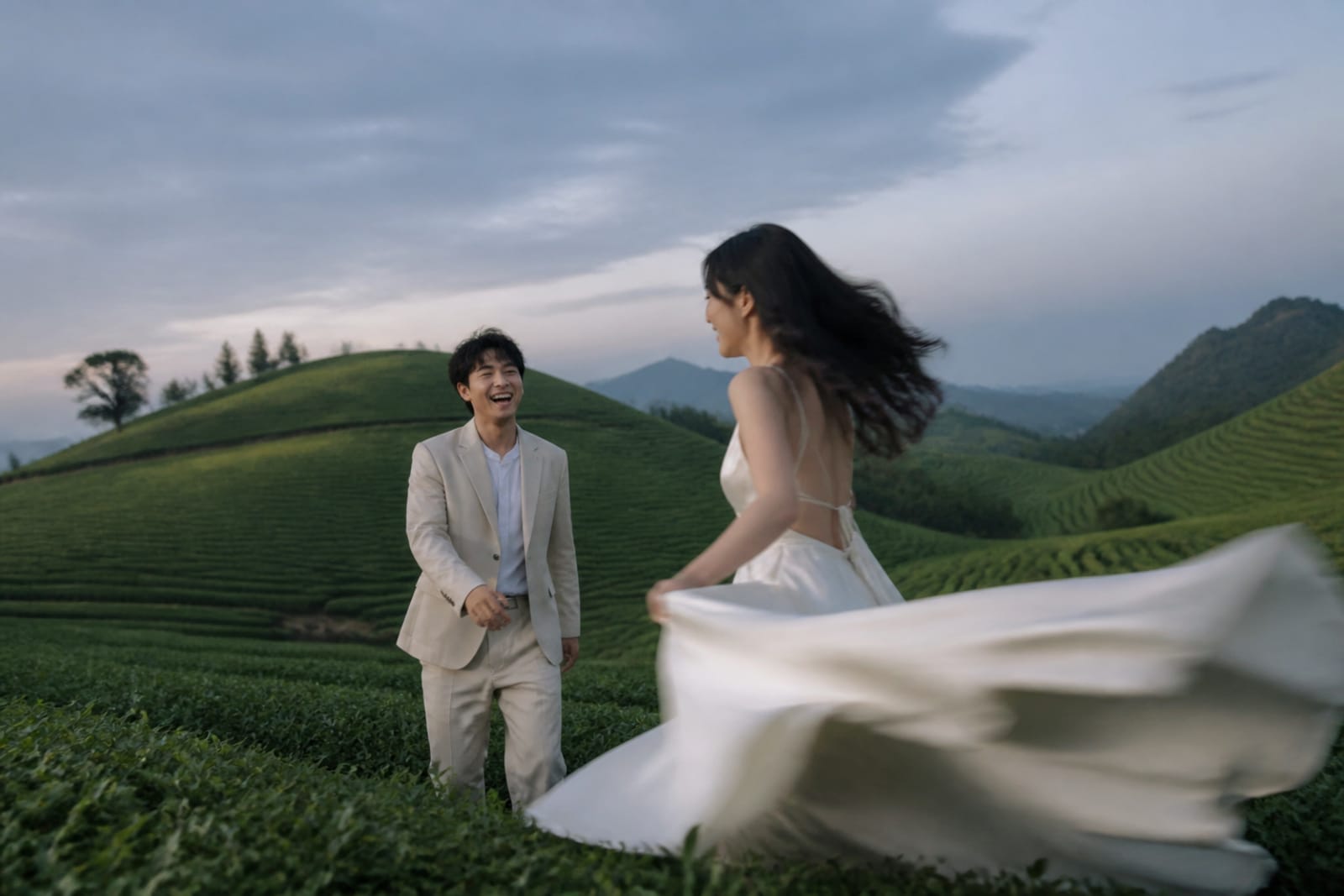
Forget stiff couple poses; the waterfall is cinematic, so the frame works when you two are doing something — walking hand-in-hand toward the pool, one partner turning to look at the other mid-stride, or standing side-by-side watching the water. Ao dai photographs beautifully in motion because the silk catches mist and moves independently of your body. A director frames these as wide shots first (you two walking out of frame into the landscape), then medium (faces, the dress, emotion), then detail (hands touching, fabric folds, the ao dai hem trailing in water). Avoid facing the camera directly; instead, have the camera follow your movement or position it at a 45-degree angle so the waterfall, your frame and the rock are all in conversation.
How does season and weather affect the shoot?
| Season | Light Quality | Mist | Water Level | Best For |
|---|---|---|---|---|
| Dec–Feb (cool, dry) | Soft, low angle, no glare | Heavy until 9 a.m. | Lower, rocks visible | Morning early arrival; misty ao dai frames; coldish wind |
| Mar–May (warming) | Warmer, clearer side light, slight haze | Thinner, clears by 8:30 a.m. | Rising post-rains | Faster setup; fewer outfit repeats due to heat |
| Jun–Sep (hot, wet) | Humid haze, afternoon downpours likely | Rare; humidity feels wet | High, spray intense | Risky; avoid afternoon; bring protective gear for camera |
| Oct–Nov (flood, typhoon) | Unreliable; storms move fast | Yes, but dangerous water flow | Dangerous; access may close | Not recommended without local permit checks |
Conclusion: Dec–Feb and Mar–May are safest; Dec–Feb delivers the mist texture couples want, Mar–May requires earlier mornings but avoids cold wind.
Should we hire a local Ha Giang guide or book Cáo Studio for the full day?
A local guide can navigate the trek and know seasonal access; they cost less than a full photoshoot. But a guide is not a director — they point, you pose, someone else edits photos weeks later. Cáo Studio pre-wedding team combines navigation (we know the light windows, safe rock approach, where water spray reaches) with styling (makeup, ao dai fit, outfit changes mid-shoot) and direction (we frame, we move you, we shoot as you walk). The one-team model means no time lost briefing a photographer about your vibe or waiting for a makeup artist to touch up between outfit swaps. Cost factors: Cáo Studio includes travel to Ha Giang from Hanoi, on-site styling and a 48-hour edit; a guide + freelance photographer + your own hair/makeup coordination spreads cost and risk. If budget is the main factor, a guide + smartphone photography works; if you want frames you'd print and keep, one team delivers faster and tighter.
What outfit combinations work at the waterfall?
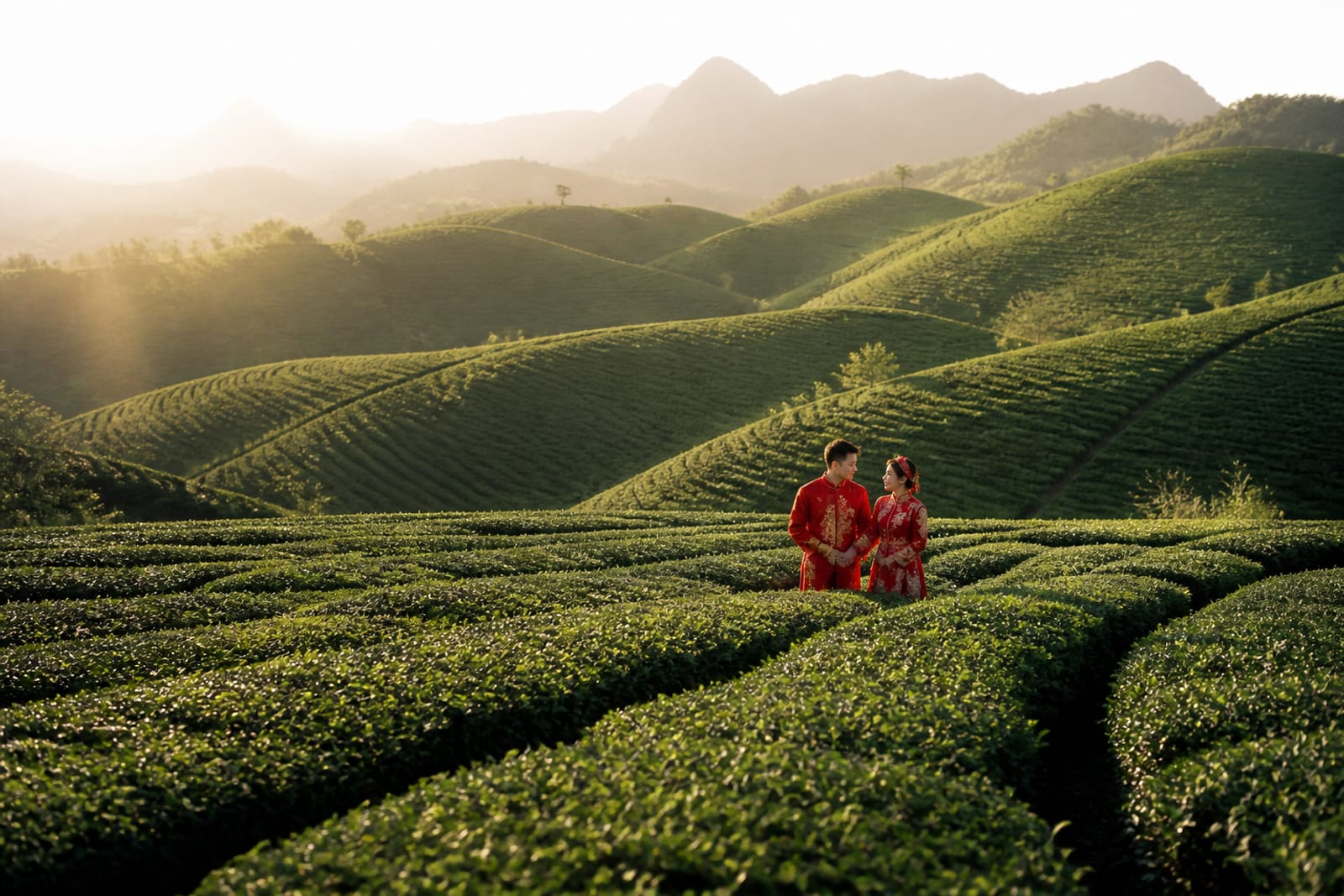
Ao dai is the traditional anchor — the fabric moves, the color reads against wet rocks, and it is culturally resonant in North Vietnam. Pair it with a second outfit for contrast: western bridal white (dress or suit), casual linen, or a second ao dai in a different shade. The waterfall is wet and rocky, so each outfit needs a wardrobe window — you change while the team resets the tripod and checks light. Three outfits stretch the shoot to 5+ hours and risk losing the best morning light to logistics.
Recommended pairing:
- First light (6:30–7:45 a.m.): Ao dai (jewel tone or cream) — mist is deepest, side light is softest, the silk glows.
- Mid-morning (8:00–9:00 a.m.): Western bridal or casual outfit — mist starts to clear, light hardens slightly, a contrast outfit feels fresh.
- Backup (if time and light hold): Detail shots (hands, fabric, rings) in either outfit — no repositioning, just close frames.
Avoid dark colors in mist (they read as silhouettes); wear jewel tones or neutrals that separate from grey rock. Heels do not work on wet stone — bring flat sandals or water shoes for the walk, then change into formal footwear for static frames.
How far is Dai Yem from Hanoi and how should we plan travel time?
Dai Yem waterfall is roughly 90 minutes to 2 hours by road from central Hanoi, depending on traffic and which trailhead you access. The road is paved until the last village; the trek from parking to the waterfall base is 15–30 minutes on foot, with uneven stone steps and one scramble over boulders. A 4 a.m. pickup from your Hanoi hotel means a 6:30 a.m. arrival at the waterfall, catching the peak mist window and soft light. Return to Hanoi by 2–3 p.m., giving time for a light meal before editing begins. Cáo Studio coordinates the full timeline — early pickup, on-site makeup and wardrobe, a safety check of the rock approach — so you arrive ready to move and frame, not logistically scrambled.
---
What to check before you book
- Waterfall access: In heavy rain or after typhoons (Sep–Nov), water levels spike and sections close. Confirm access 3–5 days before the shoot date.
- Weather forecast: Check the 10-day Hanoi/Ha Giang forecast one week out. If rain is predicted within 24 hours before your shoot, reschedule or plan indoor hotel makeup shots as a backup.
- Fitness and footwear: The walk is moderate but requires balance on wet stone and comfort with heights (some views are vertical). Wear grip-sole shoes or water sandals; the team will scout the safest path.
- Ao dai fit and movement: If wearing ao dai, try it on beforehand and confirm the length works with water (too-long hems tangle; tapered cuts restrict walking). Cáo Studio can advise fit during the hotel makeup session.
- Light timing: Confirm your pickup time locks the early arrival — do not negotiate for a later start and expect the same mist quality.
- Backup outfit storage: The team carries a weatherproof bag, but your personal items should fit in a small, water-resistant pouch.
---
📸 Book on WhatsApp — pre-wedding photoshoot
For more pre-wedding ideas, explore Cáo Studio's lookbook or see how couple photoshoots work in other North Vietnam locations. If you'd prefer a hotel-based session with easier logistics, makeup and hair at your hotel pairs well with a shorter outdoor shoot closer to Hanoi.
---
FAQ
Can we shoot Dai Yem waterfall if we are not wearing ao dai?
Yes. Bridal white, casual linen, or formal western wear all photograph well here. Ao dai is traditional and moves beautifully in water, but it is not required. The key is fabric that reads on film and suits the light — avoid dark colors in mist.
What time should we arrive to catch the best mist and light?
Aim for 6:30–7:30 a.m. Mist is thickest and side light is softest in this window. By 8:30 a.m. mist thins; by 10 a.m. direct sun flattens the scene. Cáo Studio coordinates a 4 a.m. Hanoi pickup to lock this timing.
Is Dai Yem waterfall safe for a formal photoshoot, or is it too remote?
Safe, but requires caution: rocks are slippery, the trek is 15–30 minutes, and the pool is deep. The team scouts the path, advises on footwear and pace, and avoids risky angles. Not suitable for very young children or mobility-limited guests without discussion first.
How long does a full pre-wedding shoot at Dai Yem take?
4–5 hours from arrival to departure, including travel time to/from Hanoi, makeup and styling, two outfit changes, light-dependent framing, and a safety buffer. The actual shoot (directed frames, walking, poses) is 2–3 hours within this window.
Can we use a local Ha Giang photographer instead of Cáo Studio?
Yes, but trade-offs exist. A local knows the terrain and seasons; Cáo Studio brings styling (makeup, ao dai fitting, wardrobe coordination) and direction as a single team, eliminating delays between outfit changes and ensuring cinematic framing over posed moments. Consider your priorities — cost, creative vision, or logistics comfort.
What if it rains or the light is poor on shoot day?
Cáo Studio confirms access 3–5 days prior and monitors the forecast. If conditions are unsafe, the team will reschedule or pivot to hotel-based makeup and indoor framing. Discuss contingency plans during the WhatsApp consultation.
FAQ
Can we shoot Dai Yem waterfall if we are not wearing ao dai?
Yes. Bridal white, casual linen, or formal western wear all photograph well here. Ao dai is traditional and moves beautifully in water, but it is not required. The key is fabric that reads on film and suits the light — avoid dark colors in mist.
What time should we arrive to catch the best mist and light?
Aim for 6:30–7:30 a.m. Mist is thickest and side light is softest in this window. By 8:30 a.m. mist thins; by 10 a.m. direct sun flattens the scene. Cáo Studio coordinates a 4 a.m. Hanoi pickup to lock this timing.
Is Dai Yem waterfall safe for a formal photoshoot, or is it too remote?
Safe, but requires caution: rocks are slippery, the trek is 15–30 minutes, and the pool is deep. The team scouts the path, advises on footwear and pace, and avoids risky angles. Not suitable for very young children or mobility-limited guests without discussion first.
How long does a full pre-wedding shoot at Dai Yem take?
4–5 hours from arrival to departure, including travel time to/from Hanoi, makeup and styling, two outfit changes, light-dependent framing, and a safety buffer. The actual shoot (directed frames, walking, poses) is 2–3 hours within this window.
Can we use a local Ha Giang photographer instead of Cáo Studio?
Yes, but trade-offs exist. A local knows the terrain and seasons; Cáo Studio brings styling (makeup, ao dai fitting, wardrobe coordination) and direction as a single team, eliminating delays between outfit changes and ensuring cinematic framing over posed moments. Consider your priorities — cost, creative vision, or logistics comfort.
What if it rains or the light is poor on shoot day?
Cáo Studio confirms access 3–5 days prior and monitors the forecast. If conditions are unsafe, the team will reschedule or pivot to hotel-based makeup and indoor framing. Discuss contingency plans during the WhatsApp consultation.
Ao dai, makeup, hair and a local photographer in Hanoi or Saigon — one WhatsApp message.