/pre-wedding-photoshoot
Pre-wedding photo ideas and poses at Dong Van Karst Plateau
Dong Van Karst Plateau sits in Ha Giang province, 4.5 hours north-east of Hanoi, and delivers jagged limestone backdrops and sweeping valley views that suit pre-wedding frames. The dry season (Dec–Feb) offers clear skies and crisp morning light; avoid Oct–Nov when rain and landslides close mountain roads. A pre-wedding session here is not a single-afternoon booking—it requires a multi-day trip, a local photographer experienced with altitude and weather shifts, and outfits chosen for cold wind and uneven terrain. Cáo Studio operates in Hanoi, Ho Chi Minh City and Hoi An; for Ha Giang, book a local photographer who shoots at Dong Van and has a portfolio of mountain light, and plan the session as part of a larger Ha Giang travel itinerary. 📸 Book on WhatsApp — ao dai photoshoot
Why Dong Van's light works better than lowland backdrops
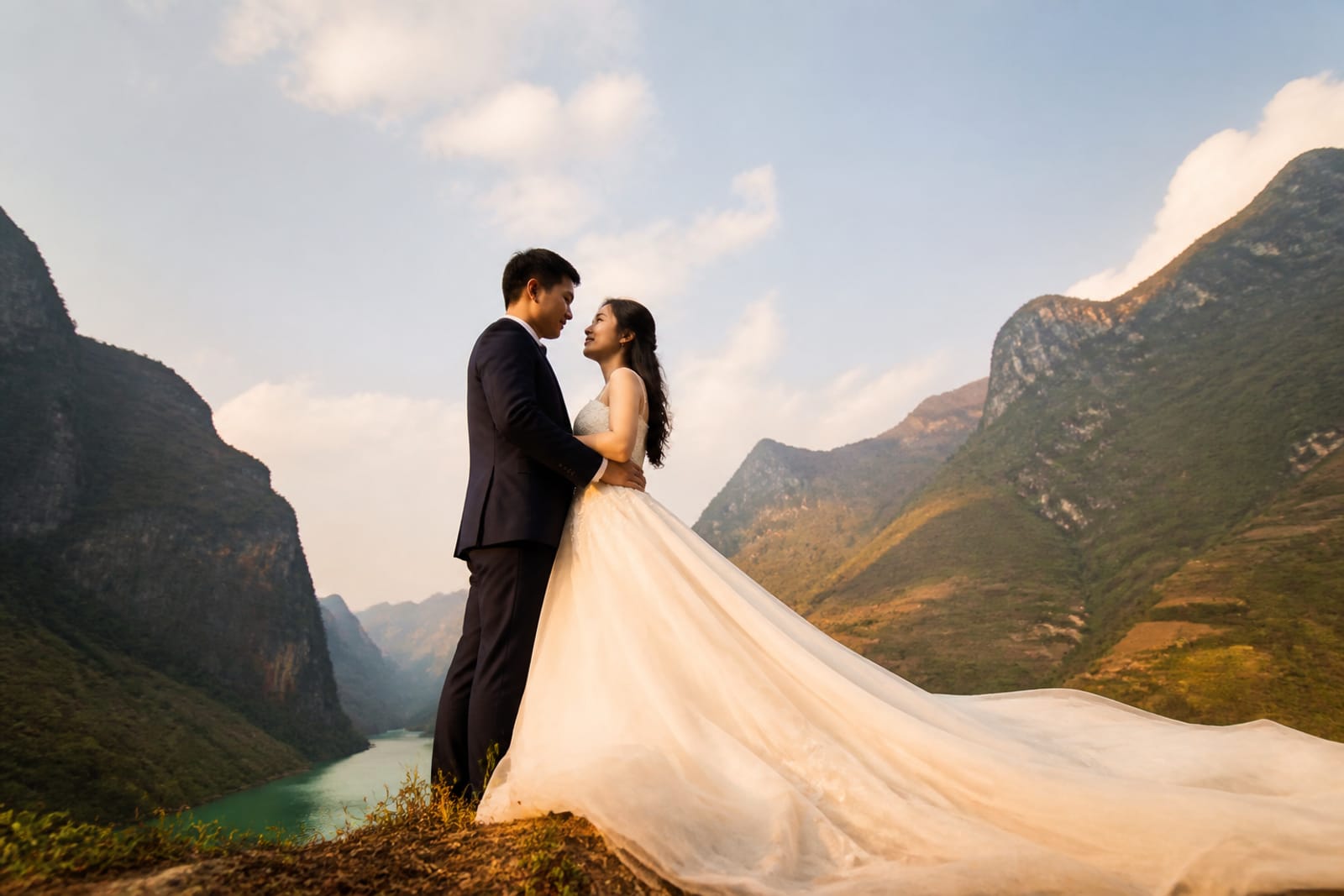
The plateau sits at roughly 1,000 metres elevation. Morning light hits limestone cliffs from the side at a low angle, creating shadow and texture—not the flat, overexposed midday glare you get at sea-level heritage sites. Afternoon light shifts orange across the rock, turning each frame cinematic without filters. A photographer unfamiliar with mountain light often overexposes white stone or underexposes faces in shadow. Choose a local photographer who has shot Dong Van in Dec–Feb and can frame the couple against the plateau's geometry without blown-out skies.
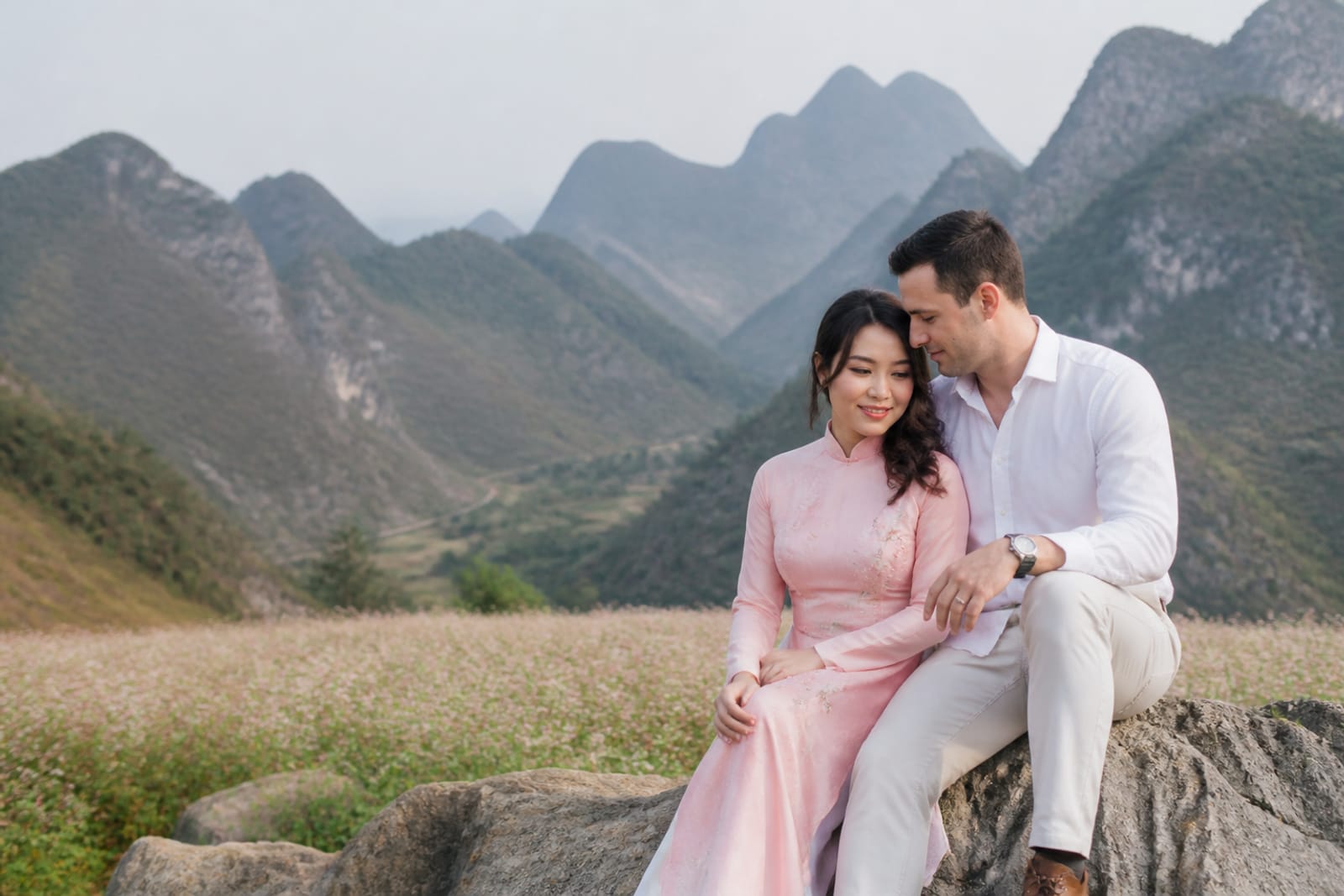
How to pick an outfit that moves on uneven terrain
Ao dai (traditional tunic) photographs beautifully at Dong Van—the fabric catches wind and light—but the train drags on loose rocks and wet grass. Pair a floor-length or knee-length ao dai with flat shoes or ankle boots: the tunic flows while your feet grip the path. A groom in a light wool suit or linen blend stays warm at dawn (cold) and breathable by noon. Avoid long silk that catches stone or heavy brocade that overheats you during the climb to viewpoints. Plan 2–3 outfit changes if you're staying multiple days; bring a compact garment bag and check with your hotel if pressing is available.
| Outfit type | Best for | Terrain readiness | Seasonal fit |
|---|---|---|---|
| Ao dai + ankle boots | Traditional frames, movement | Good grip, fabric lifts clear | Dec–Feb warmth, no rain soaking |
| Linen groom suit + breathable shirt | Walking between locations, dusk light | Flexible, pockets, dries fast | Dry season only; avoid if rain forecast |
| Light shawl or jacket layer | Sunrise shots, wind buffering | Easy to drop for midday frames | Essential Dec–Feb; skip May–Sep |
What happens at sunrise, and why you start before dawn
Dong Van's best light arrives 6:00–7:30 am, when sun angles low across the limestone and shadow defines each ridge. Starting before dawn means arriving at the viewpoint while stars still linger—dramatic and rare. A professional local team will book a guide and van the night before, collect you at 4:30 am, and shoot while the plateau is quiet. By 8:00 am, tour buses arrive and crowds fill frames. If you're not a morning person, reset your sleep schedule 3 days before the shoot—fatigue shows in your face, and the light doesn't wait. Plan a second location for midday (a lower terrace, a village path) where shadow still reads, and return for sunset if weather holds.
Landscape-to-couple framing: the decision tree for each location
A pre-wedding shoot at Dong Van isn't a series of poses—it's directed movement through three types of frames. Wide shots: couple walking into distance, plateau backdrop filling two-thirds of frame, no posing (just motion). Medium shots: couple in profile against a single limestone tower, interaction (looking at each other, holding hands), allowing the landscape to breathe. Details: rings on stone, fabric texture, a hand on the rock, the couple's silhouettes. A competent photographer shoots in this order at each location—never tight poses first, never monument-only backgrounds. Ask the photographer's past work: do they show the couple in the landscape, or in front of it? That distinction changes whether you look like tourists or like a narrative.
| Frame type | Guides the eye to | Requires | Why it matters |
|---|---|---|---|
| Wide (couple small, landscape large) | The plateau geometry; couple is scale | Clear sky, distance, early light | Tells a story: you two, your trip, this place |
| Medium (couple mid-frame, landmark framing) | Interaction: look, touch, walk | A single bold backdrop + 20 minutes per location | Tenderness reads; couples often rush past this |
| Detail (ring, fabric, silhouette close) | Texture, emotion, keepsake | Side light, macro or 50mm lens, patience | Prints well; becomes the album anchor |
What to check before you book a Dong Van photographer
Cáo Studio shoots pre-wedding sessions in Hanoi, Ho Chi Minh City and Hoi An; for Ha Giang, you'll work with a local photographer. Before you commit, ask these questions in writing:
- Has the photographer shot at Dong Van in Dec–Feb? (Not October or July—other months have rain, landslides, or poor light.)
- What's the session plan? (Hours, locations, how many outfit changes, delivery timeline—this should be clear in writing.)
- Do they guide movement or pose? (Ask to see 3 sample sessions: watch how the couple interacts with landscape, not monument-hugging stiffness.)
- Weather backup: If the morning turns rainy, what's the reschedule policy? (December has rare rain, but wind and cloud can kill light; you need options.)
- Travel logistics: Do they arrange the guide, van, and early wake-up, or do you coordinate? (A photographer who handles logistics often delivers better framing—they're not chasing logistics mid-shoot.)
Ask for the pre-wedding pricing factors: travel time from Hanoi, number of locations, how many edited files you receive, and delivery time. Quotes vary by season and shoot scope; the photographer should send a written quote on WhatsApp or email.
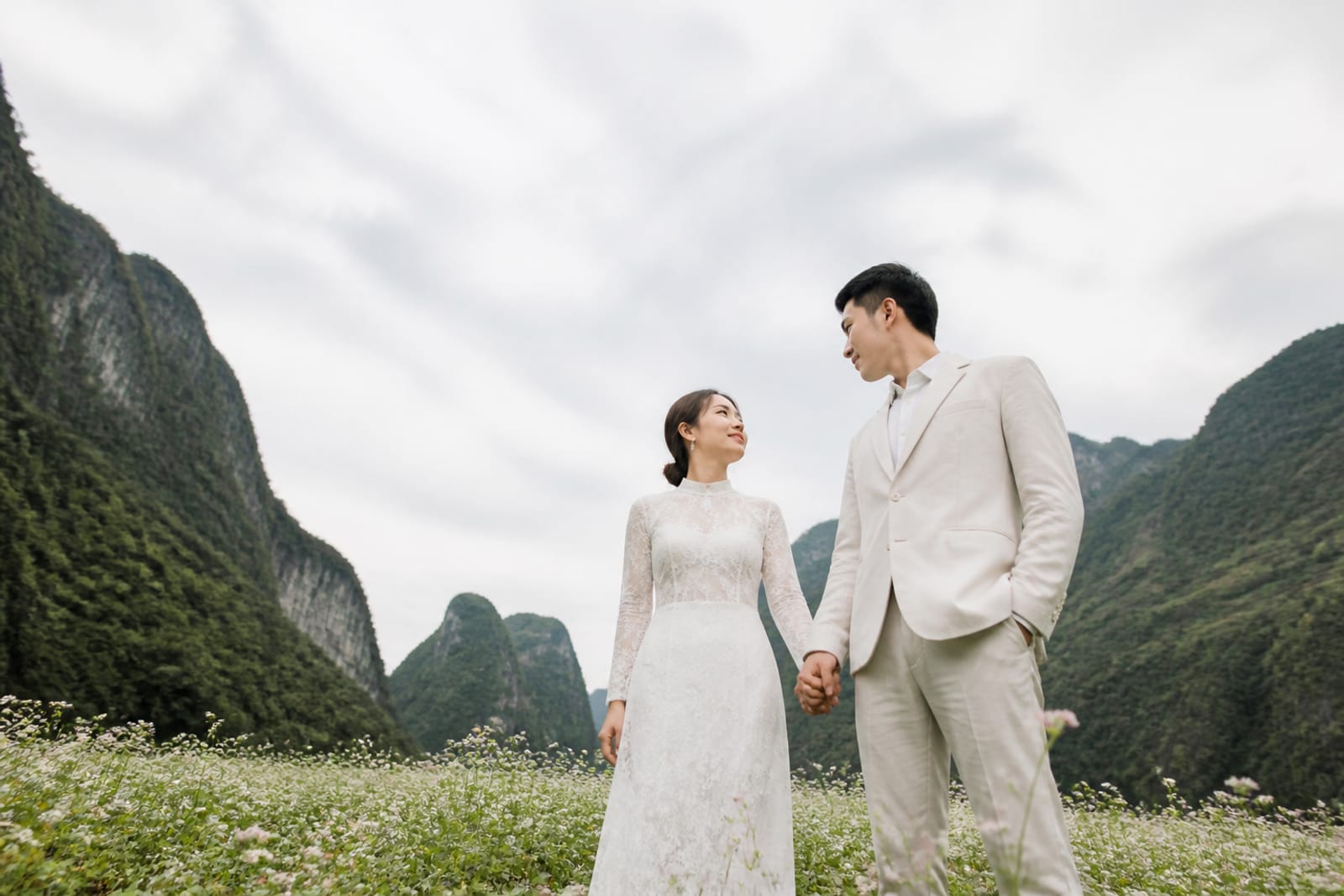
Outfit rental and hair/makeup for remote shoots
If you're flying in from abroad, you may not want to pack a formal ao dai or suit. Ha Giang has no formal rental shops—bring outfits from Hanoi or rent before you travel. Cáo Studio offers ao dai rental and suit rental in Hanoi; if you book a Hanoi session beforehand, you can arrange fittings and transport the outfits to Ha Giang. Alternatively, rent in Hanoi's Old Quarter (check reviews before committing). Hair and makeup: a local salon in Ha Giang city won't match the standard of a pre-wedding artist. If the photographer has a preferred makeup artist who travels to remote shoots, ask; otherwise, do hair/makeup in Hanoi the day before and touch up on-location. Cáo Studio's makeup & hair service is available in Hanoi and Ho Chi Minh City—a professional touch-up kit reduces re-application needs on mountain terrain.
---
A pre-wedding album to hold these frames
After the shoot, your photographer will deliver edited JPEGs and likely a digital gallery. To preserve the frames—especially details and wide shots—consider printing them. Cáo Studio produces wedding photo albums and prints & frames in Hanoi and Ho Chi Minh City; if you're based nearby, explore binding your Dong Van frames into a keepsake. For remote weddings, order prints online through the photographer or a lab, or wait until you return to Vietnam.
---
Season and weather: when Dong Van photography actually works
| Month | Light quality | Rain/wind risk | Outfit comfort | Best for |
|---|---|---|---|---|
| Dec–Feb | Sharp, gold at dawn; crisp midday | Rare; occasional wind | Layers, boots work | Pre-wedding priority season |
| Mar–Apr | Warm dawn; hazy by 8 am | Minimal | Light layers shed fast | Late-season alternative |
| May–Sep | Flat, harsh midday; humid | Frequent afternoon showers; landslides | Saturation visible; soaked outfits | Avoid for formal shoots |
| Oct–Nov | Gold afternoon light (attractive) | Typhoon paths, landslides, flooding | Rain-soaked | High risk; reschedule |
---
Red flags when vetting a photographer
- Claims they "guarantee perfect light" or " 200+ edited photos." (Light and output vary by shoot scope and weather; real professionals quote ranges and conditions.)
- No past Ha Giang work visible, or photos that look flat and posed against monuments. (Landscape and light matter here; suspect studio photographers rehosted as travel shooters.)
- Vague on weather backups or reschedule policy. (Mountain weather changes fast; a professional communicates this clearly.)
- Offers to shoot alone without guides or drivers. (Mountain terrain requires local knowledge and safety; multi-person teams shoot better under pressure.)
Book on WhatsApp — pre-wedding photoshoot
---
FAQ
How far is Dong Van Karst Plateau from Hanoi, and can I shoot there on a single afternoon?
Dong Van is 4.5 hours by van north-east of Hanoi. A single afternoon shoot requires 9+ hours of travel (there and back) plus 3–4 hours of photography, arriving late and exhausted. Pre-wedding shoots here are typically part of a 2–3 day Ha Giang trip with overnight stays in the province.
What month has the best light at Dong Van for pre-wedding photos?
December to February offers clear skies, crisp dawn light, and minimal rain. Avoid October and November (typhoon and landslide risk) and May to September (humidity, afternoon showers, and flat light). March–April is acceptable but warming fast.
Do I need to wear traditional ao dai at Dong Van, or can I wear a Western wedding dress?
Either works. Ao dai flows beautifully in wind and suits the landscape cultural context. A Western dress requires careful terrain selection (avoid rocky climbs in a train). Choose based on what you'll wear at your wedding; consistency across your photo story matters more than location "demands."
What if it rains on the day of my shoot?
Light rain can enhance frames (dramatic clouds, reflective stone). Heavy rain or fog kills light and makes terrain unsafe. Before you book, confirm the photographer's weather reschedule policy in writing—a professional offers a free reshoot within a set timeframe if conditions are unsafe.
Should I hire a guide separately, or does the photographer arrange it?
A guide is essential for safety and logistics (early wake-up, van, route knowledge). Ask the photographer: do they include guide coordination in their quote, or do you arrange independently? Photographers who handle all logistics often deliver better framing because they're not distracted by logistics mid-shoot.
How many edited photos will I receive, and when?
Delivery varies by photographer. Ask in writing: number of edited digital files, timeline (days or weeks), and whether you get video or an album as well. A typical pre-wedding shoot delivers 50–150 edited files within 2–4 weeks. Confirm before booking.
FAQ
How far is Dong Van Karst Plateau from Hanoi, and can I shoot there on a single afternoon?
Dong Van is 4.5 hours by van north-east of Hanoi. A single afternoon shoot requires 9+ hours of travel (there and back) plus 3–4 hours of photography, arriving late and exhausted. Pre-wedding shoots here are typically part of a 2–3 day Ha Giang trip with overnight stays in the province.
What month has the best light at Dong Van for pre-wedding photos?
December to February offers clear skies, crisp dawn light, and minimal rain. Avoid October and November (typhoon and landslide risk) and May to September (humidity, afternoon showers, and flat light). March–April is acceptable but warming fast.
Do I need to wear traditional ao dai at Dong Van, or can I wear a Western wedding dress?
Either works. Ao dai flows beautifully in wind and suits the landscape cultural context. A Western dress requires careful terrain selection (avoid rocky climbs in a train). Choose based on what you'll wear at your wedding; consistency across your photo story matters more than location "demands."
What if it rains on the day of my shoot?
Light rain can enhance frames (dramatic clouds, reflective stone). Heavy rain or fog kills light and makes terrain unsafe. Before you book, confirm the photographer's weather reschedule policy in writing—a professional offers a free reshoot within a set timeframe if conditions are unsafe.
Should I hire a guide separately, or does the photographer arrange it?
A guide is essential for safety and logistics (early wake-up, van, route knowledge). Ask the photographer: do they include guide coordination in their quote, or do you arrange independently? Photographers who handle all logistics often deliver better framing because they're not distracted by logistics mid-shoot.
How many edited photos will I receive, and when?
Delivery varies by photographer. Ask in writing: number of edited digital files, timeline (days or weeks), and whether you get video or an album as well. A typical pre-wedding shoot delivers 50–150 edited files within 2–4 weeks. Confirm before booking.
Ao dai, makeup, hair and a local photographer in Hanoi or Saigon — one WhatsApp message.