/pre-wedding-photoshoot
Pre-wedding photo ideas and poses at Hue Imperial City
The Hue Imperial City—a UNESCO-listed walled complex of royal palaces, gates and courtyards—is Vietnam's premier pre-wedding backdrop for couples seeking heritage elegance. The best light falls Feb–Apr (cool, soft diffusion) and early morning or late afternoon year-round; avoid Oct–Nov typhoon season and peak midday heat. Poses work best at symmetrical gateways (framing the bride in the center), temple courtyards (low angles against intricate ceilings), and garden paths (backlit silhouettes). Entry tickets are required—check the current price on the official site. Permit restrictions apply to professional tripods and drones in certain zones, so confirm with your local photographer before booking. Cáo Studio – Makeup & Photoshoot does not operate in Hue; this guide helps you plan and vet a local team instead. ---
Where in the Imperial City do couples shoot best?
The walled complex divides into zones, each with distinct light and architectural rhythms. The Noon Gate (Cửa Ngọ Môn)—the main southern entrance—offers symmetrical arches and flag towers; shoot facing outward at dawn for warm backlighting on the bride's veil, or facing inward at dusk for shadow drama. The Royal Courtyard (Hoàng Thành inner precinct) has wide stone pathways and formal garden beds; midday overhead sun flattens faces, but 4–5 p.m. raking light sculpts features and fabrics. The Forbidden City (Tử Cấm Thành, innermost zone) includes the royal residence and smaller temples—fewer tourists, intimate courtyards with intricate woodwork, and shade from eaves; best for close-ups and slow movement. The outer royal tombs and pagodas (Minh Mạng, Tự Đức mausolea) sit outside the walled city; each requires separate tickets and 20–40 min travel—plan as a half-day extension, not a main shoot.
🌸 See the lookbook | 📸 Book on WhatsApp — ao dai photoshoot
Which season and time of day give the sharpest results?
February–April is ideal: cool air, low humidity, predictable morning overcast (soft diffusion by 9 a.m.) and clear 5–6 p.m. golden hour. May–August brings heat and afternoon downpours that soak heritage stone; humidity creates haze in midday frames. September–January cools but introduces grey skies and rain risk; October–November is typhoon and flood season—some zones close, paths become slippery, and light is murky. Shoot 6:30–8:30 a.m. for cool tones and low tourist flow, or 4:30–6:30 p.m. for warm side-light and dramatic shadows on carved facades. Midday (10 a.m.–3 p.m.) creates harsh shadows under arches and washes out skin tones; avoid unless the site's stone is the hero and faces are secondary (wide courtyard panoramas). Book your session for Feb–Apr if possible; if shooting Jun–Aug, plan early morning only and carry reflectors to bounce fill light onto faces against backlit stonework.
| Season | Light quality | Crowds | Outfit fit | Best for |
|---|---|---|---|---|
| Feb–Apr | Soft overcast, golden hour | Moderate | Ao dai layers breathe | First choice; soft diffusion, comfort |
| May–Aug | Harsh midday, humid haze | Heavy | Heat stress, moisture on silk | Early dawn only; reflector-dependent |
| Sep–Jan | Grey skies, rain risk | Light | Cool comfort, dry fabric | Avoid Oct–Nov; Feb–Apr safer |
How do poses differ across architectural styles in the city?
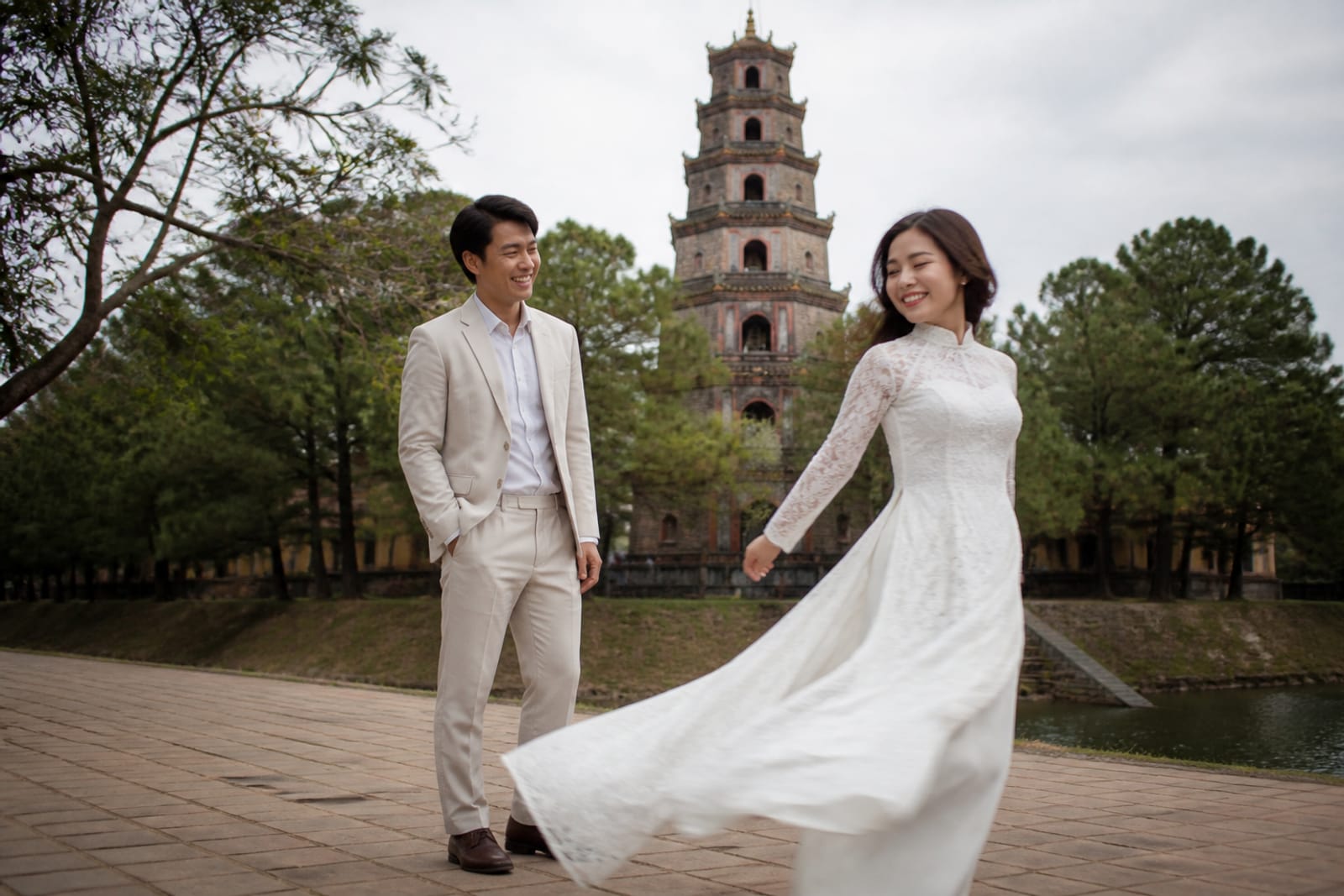
Gate and gateway poses (Cửa Ngọ Môn, inner gates): Frame the bride centered between pillars (V-shaped composition draws the eye); groom stands slightly back and to one side (asymmetry feels natural, not stiff). Ask the bride to hold the ao dai hem with both hands at waist height (reveals embroidered panels, prevents pooling). Shoot at eye level for the gate's visual weight to sit behind her shoulders, not above her head.
Courtyard and open-air poses (Royal Courtyard, garden beds): Use the grid of stone pathways; position the couple offset (not dead center) to avoid "passport photo" flatness. Walking poses work here—bride leading, groom a half-step behind, both looking toward the horizon (movement reads more intimate than standing still). Reflective stone near puddles after rain acts as a natural fill light; use it to brighten faces against shadow.
Temple interior poses (shrines, ancestral halls): Low ceilings mean wide-angle shots risk distortion; shoot tighter crops (headshots, waist-ups) to avoid unflattering geometry. Use natural window light from the side; position the couple so a carved pillar or altar screen sits between them visually (foreground blur frames them, adds depth). Tripod restrictions often apply here—confirm with your photographer.
Tomb and mausoleum poses (outside the main walled city): These stone structures sit in open gardens; morning backlighting against the central stele or garden gates is dramatic. Couple sits on low walls or steps (informal, grounded, less "posed"). Avoid tripods unless pre-approved by site staff.
What should couples wear to suit Hue's heritage backdrop?
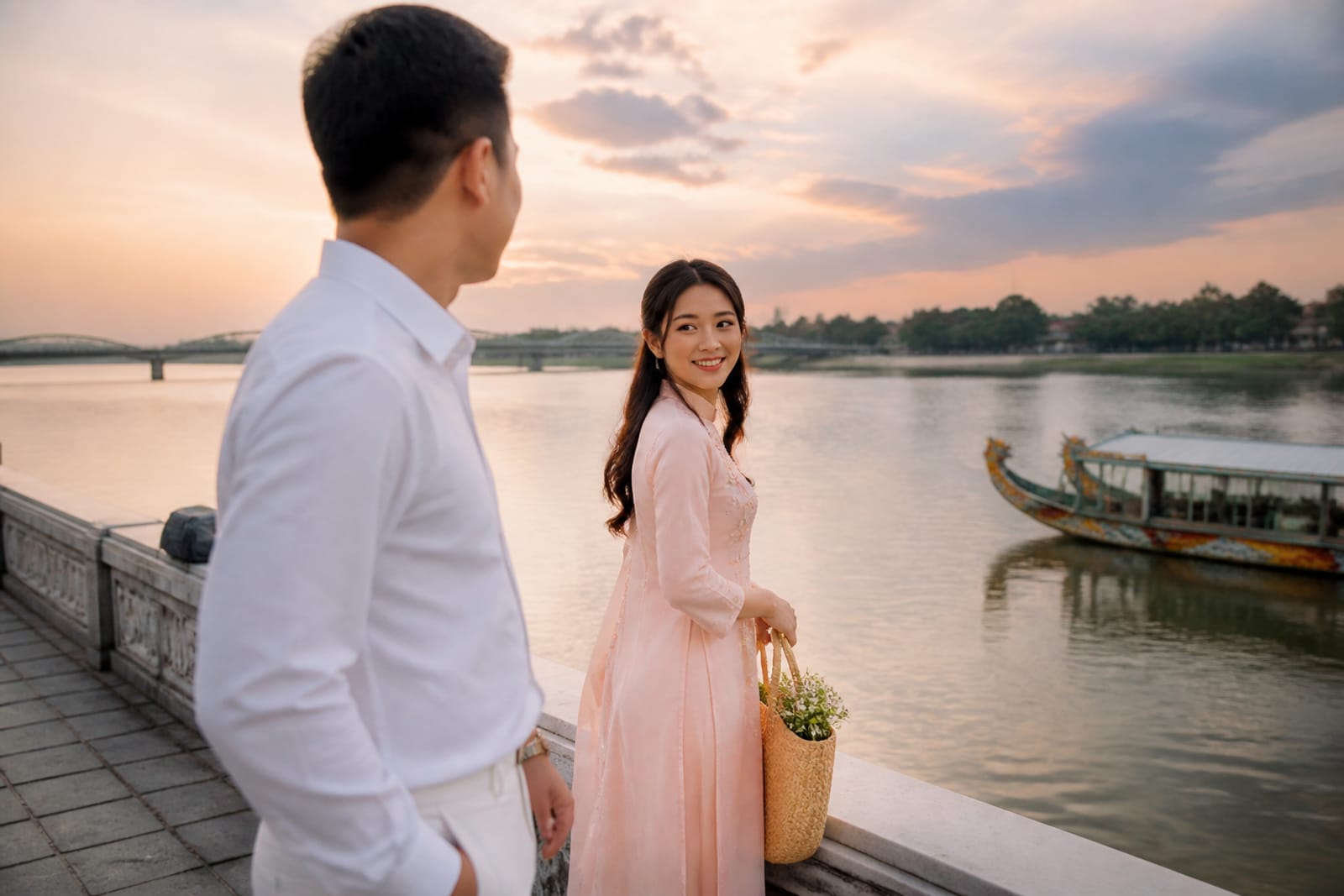
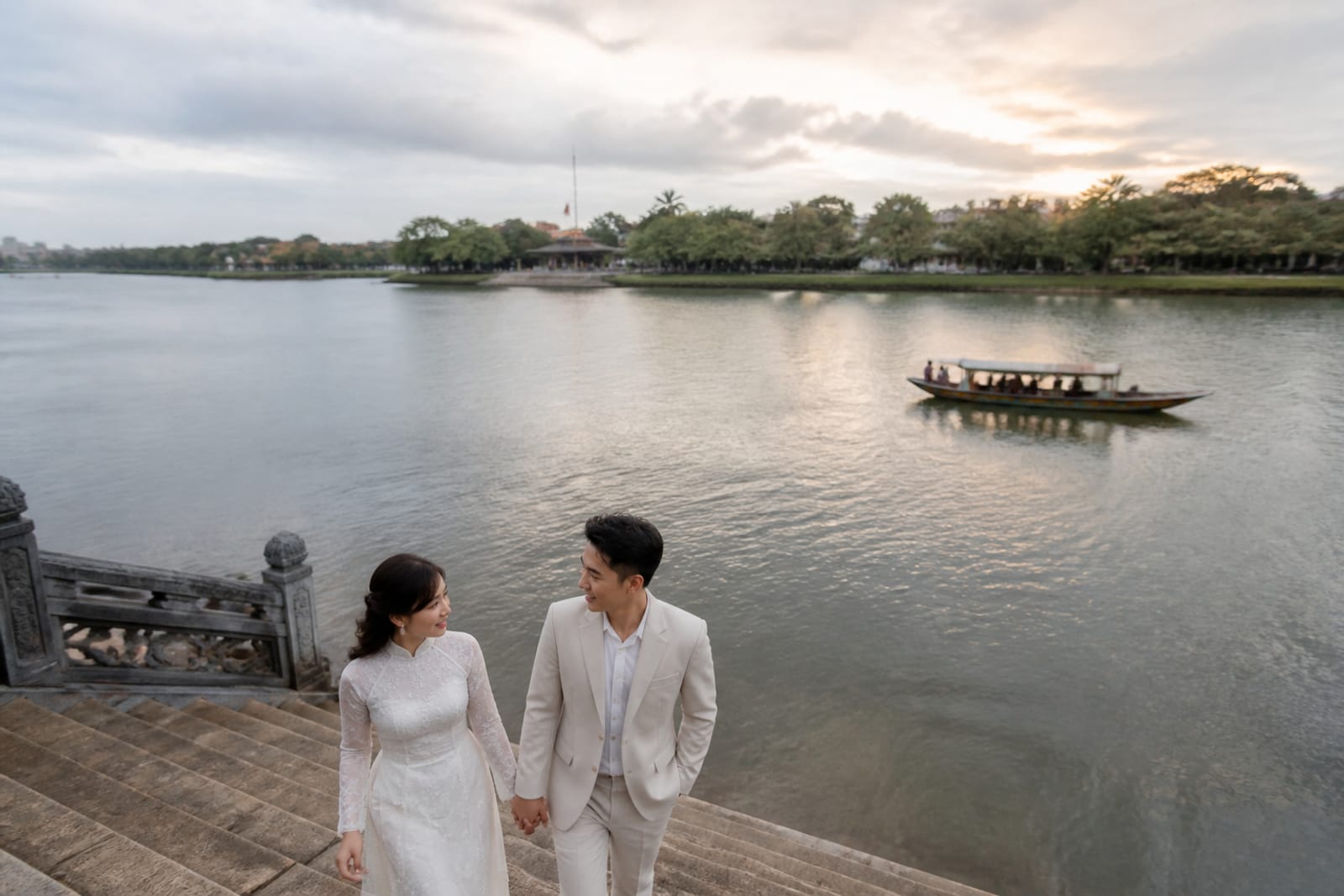
An ao dai is the standard choice—its silk drape and historical resonance match the imperial stone, and the high neckline works with the formal geometry of gateways. Pale silk (white, cream, pale pink) photographs crisply against shadow; darker tones (forest green, navy, burgundy) ground the frame when shot in open courtyards. Ask your tailor or rental service to confirm the hem does not drag on wet pathways (Hue can be damp even in dry season). Underneath, wear a neutral slip (avoid white bra straps visible through pale fabric) and comfortable flat shoes (heels catch on uneven stone; they hurt after 2 hours of walking).
Groom options:
- Matching ao groom (tunic + matching trousers): cohesive, formal, reads well against stone.
- Western suit (charcoal, navy, black): high contrast with pale ao dai, classic for heritage sites. Confirm fit before shooting—humidity and movement affect tailoring; check the suit rental guide.
- Smart casual (fitted shirt, tailored trousers, no jacket): works Feb–Apr; risky May–Aug (sweat marks visible).
Bring a second outfit if your session runs 3+ hours. A change breaks up the gallery, and cooler air at dawn means a heavier tunic reads better than midday linen. Avoid large jewelry (catches light unpredictably) and white sneakers (dates the frame). Hair should be secured or pinned so it doesn't obscure the ao dai neckline or face. If shooting near water or in the tombs' garden, bring a light scarf or wrap (wind and humidity affect fabric flow).
How do you find and vet a local Hue photographer?
Cáo Studio – Makeup & Photoshoot operates in Hanoi, Ho Chi Minh City and Hoi An—not Hue. You'll need to hire a local Hue team. Here's how:
- Search locally: Instagram hashtags #huephotographer, #hueweddingphoto, #huephotoblog; Facebook groups "Hue expat" or "Hue wedding"; Google Maps reviews of local studios.
- Request a site portfolio: Ask for 10–15 Imperial City shots (not just outdoor gardens). Look for sharp focus, balanced exposure in shadow and sun, and natural poses—not stiff or over-edited.
- Confirm permit knowledge: Email "Do you hold a professional photography permit for the Imperial City? Which zones allow tripods?" If they hesitate, they may not have scouted recently.
- Discuss light and timing: Tell them your preferred season and time of day. A photographer who suggests early morning in April—not midday in July—knows the site.
- Request a detailed itinerary: Which gates, courtyards, tombs? How long at each zone? Do they include makeup and hair, or is that separate? A vague plan often means poor time management.
- Check backup options: Ask what happens if it rains (reschedule, covered zones, indoor temple shoots). Oct–Nov typhoon risk demands flexibility.
- Get quotes in writing: Request a signed scope (session length, number of edited photos, file delivery timeline, cancellation terms). Avoid cash-only arrangements.
- Meet before the session: A 15-min video call to discuss poses, outfit fit and any mobility concerns is worth the time. A photographer who asks questions about your vision is more engaged than one who assumes.
If you prefer Cáo Studio's makeup and hair coordination, consider booking them for pre-session touch-ups in your Hue hotel while you shoot with a local photographer—ask on WhatsApp to explore that option.
What technical checks prevent costly reshoot regrets?
Before you sign with a local Hue photographer:
- Verify file format and delivery: Ask for original files (RAW + JPG) or edited JPG only? Delivery via cloud drive or USB? Timeline (same day, one week, later)? Do they include a printed album or is that extra? Clarify all deliverables in a contract.
- Confirm backup equipment: If the camera battery dies or a lens fails mid-session, do they have spares? A solo photographer with no backup is a risk in a 3-hour session.
- Test the light meter: Ask them to show you a test shot from Feb–Apr in the same zone at your preferred time. Does the bride's face read clearly, or is it muddy shadow? This reveals their sensor and editing habits.
- Check travel logistics: How do they reach remote tombs? Do you pay for transport, or is it included? Will they carry all gear, or do you help? Sweat and fatigue affect image quality late in a long session.
- Watermark and usage rights: Can you use photos on your wedding website, Instagram, or printed invitations? Some photographers retain copyright; clarify before booking.
- Reschedule and weather terms: If Oct–Nov and typhoon closes zones, will they reschedule free? Or do you forfeit the session fee? Get this in writing.
For pre-wedding shoots with similar heritage backdrops closer to Hanoi or Ho Chi Minh City—Hoi An's ancient town, Hoi An photoshoots with Cáo Studio offer similar ornate architecture, easier logistics, and professional makeup & hair on-site. Consider that as an alternative if Hue travel is complex.
📸 Book on WhatsApp — ao dai photoshoot | 🌸 See the lookbook
---
Real-world logistic checklist before you book
- [ ] Session date falls Feb–Apr (or confirm rain backup plan if Jun–Jan).
- [ ] Photographer has Imperial City permit; tripod restrictions checked at the gate.
- [ ] Ao dai/suit rented 1 week ahead; hem tested on real stairs (Imperial City has steep palace steps).
- [ ] Makeup artist available on-site or coordinated 90 min before session start.
- [ ] Photographer has shown you 10+ Imperial City shots (sharp, balanced light, poses you like).
- [ ] Written quote includes session length, zones visited, edited photo count, file format, delivery timeline.
- [ ] Entry ticket cost verified on official site (you or photographer pays—confirm who).
- [ ] Backup date agreed if weather closes zones.
- [ ] Hotel location confirmed (how far from Imperial City? 15-min taxi or 45-min ride?).
- [ ] Second outfit ready if session runs 3+ hours.
---
FAQ
Can Cáo Studio – Makeup & Photoshoot shoot my pre-wedding session at Hue Imperial City?
No. Cáo Studio operates in Hanoi, Ho Chi Minh City and Hoi An only. For Hue, hire a local photographer with an Imperial City permit and site experience. We can help coordinate makeup and hair if you book a shoot in one of our service cities.
What's the best time of day to shoot at the Noon Gate?
6:30–8 a.m. for cool light and empty courtyards, or 5–6 p.m. for warm backlighting on the bride's veil and ao dai fabric. Avoid 10 a.m.–3 p.m. (harsh shadows, crowds, heat stress).
Do I need a permit to shoot in the Imperial City as a couple?
Personal photos are fine; professional tripods and drones may face restrictions depending on the zone. Confirm with your hired photographer before booking—they should have a permit and know current rules.
How long does a typical pre-wedding shoot at Hue Imperial City take?
2–3 hours (Noon Gate, Royal Courtyard, one temple zone). Full-day sessions with royal tombs run 5–6 hours. Longer sessions need two outfits and breaks to manage heat and ao dai wear.
Should I hire a local Hue photographer or travel with a photographer from Hanoi/Ho Chi Minh City?
Local photographers know permit rules, light patterns and backup weather plans; travel costs and scheduling are lower. Hanoi/HCMC teams offer consistent pre-wedding style but charge travel fees. A local Hue photographer with a strong portfolio is usually the practical choice.
Can I wear a Western wedding dress instead of an ao dai at the Imperial City?
Yes, but the ornate stone architecture and formal geometry suit ao dai better; a dress photograph less cohesively against carved facades. If you choose a dress, pale colors (ivory, blush) read sharper than dark tones in shadow zones. Confirm hem length doesn't catch on uneven pathways.
What if it rains during my Feb–Apr session?
Feb–Apr rain is light and brief. A good photographer uses it for moody reflections on wet stone and soft diffused light. Confirm your photographer's rain backup plan (reschedule, move to temples, cover zones) before signing.
FAQ
Can Cáo Studio – Makeup & Photoshoot shoot my pre-wedding session at Hue Imperial City?
No. Cáo Studio operates in Hanoi, Ho Chi Minh City and Hoi An only. For Hue, hire a local photographer with an Imperial City permit and site experience. We can help coordinate makeup and hair if you book a shoot in one of our service cities.
What's the best time of day to shoot at the Noon Gate?
6:30–8 a.m. for cool light and empty courtyards, or 5–6 p.m. for warm backlighting on the bride's veil and ao dai fabric. Avoid 10 a.m.–3 p.m. (harsh shadows, crowds, heat stress).
Do I need a permit to shoot in the Imperial City as a couple?
Personal photos are fine; professional tripods and drones may face restrictions depending on the zone. Confirm with your hired photographer before booking—they should have a permit and know current rules.
How long does a typical pre-wedding shoot at Hue Imperial City take?
2–3 hours (Noon Gate, Royal Courtyard, one temple zone). Full-day sessions with royal tombs run 5–6 hours. Longer sessions need two outfits and breaks to manage heat and ao dai wear.
Should I hire a local Hue photographer or travel with a photographer from Hanoi/Ho Chi Minh City?
Local photographers know permit rules, light patterns and backup weather plans; travel costs and scheduling are lower. Hanoi/HCMC teams offer consistent [pre-wedding](/pre-wedding-photoshoot) style but charge travel fees. A local Hue photographer with a strong portfolio is usually the practical choice.
Can I wear a Western wedding dress instead of an ao dai at the Imperial City?
Yes, but the ornate stone architecture and formal geometry suit ao dai better; a dress photograph less cohesively against carved facades. If you choose a dress, pale colors (ivory, blush) read sharper than dark tones in shadow zones. Confirm hem length doesn't catch on uneven pathways.
What if it rains during my Feb–Apr session?
Feb–Apr rain is light and brief. A good photographer uses it for moody reflections on wet stone and soft diffused light. Confirm your photographer's rain backup plan (reschedule, move to temples, cover zones) before signing.
Ao dai, makeup, hair and a local photographer in Hanoi or Saigon — one WhatsApp message.