/pre-wedding-photoshoot
Pre-wedding Photo Ideas and Poses at Mui Ne Red Sand Dunes
The Mui Ne red dunes (Bau Trang, near Phan Thiet, southern Vietnam) are one of the country's most striking pre-wedding locations: rust-coloured sand, minimal crowds before 7 am, and three hours of soft directional light ideal for couple frames. The dunes stay dry Nov–Apr, with peak wind Nov–Mar, so sand can blow; June–Oct brings afternoon downpours. Sessions typically run 2–3 hours at sunrise or late afternoon. Wear breathable, sand-friendly fabrics (linen, silk, avoid heavy hemlines); bring a second outfit and water. If booking locally, vet the photographer's dune portfolio and confirm they scout the spot the morning of the shoot. Cáo Studio does not operate in Phan Thiet; for a guided session with makeup and hair included, book in Hanoi, Ho Chi Minh City or Hoi An instead. 📸 Book on WhatsApp — pre-wedding photoshoot ---
Why Are the Mui Ne Dunes a Popular Pre-Wedding Choice?
The red dunes stand apart from Vietnam's other landscapes—no temples, no urban bustle, no green rice fields. Couples choose them for isolation: you walk far from the main viewpoint (where day-trippers gather) and find ridges with clean horizons and warm, low-angle light. The sand's rust tone photographs warm; the slope creates natural leading lines for walking shots. A sunset or sunrise session avoids the flat, harsh noon light and the crowds who arrive by 8:30 am. The trade-off is logistics: Phan Thiet is a four-hour drive from Saigon, roads are rough, and sand will cling to skin and fabrics all day.
Conclusion: The dunes work if you book an early start and accept the travel time.
What's the Best Season and Time of Day?
Mui Ne is one of Vietnam's driest regions. Nov–Apr is the dry season; the dunes are firm and cleaner. Strong winds Nov–Mar blow fine sand, which creates a hazard for eyes and camera lenses but also sculpts dramatic dune faces. May–Oct brings humidity and occasional afternoon showers that dampen the sand and reduce visibility. For photo quality, Feb–Apr offers the sweetest window: cool enough to walk, dry, and wind-driven sand creates texture without being severe.
Sunrise (5:30–7 am) delivers soft side light that rakes across the dunes, revealing texture and shadow. Crowds are absent. Sunset (5–6:30 pm, depending on the month) offers warm, diffused light and fewer tourists after 6 pm. Midday (11 am–3 pm) is flat, harsh, and crowded—avoid it. Plan 2–3 hours for a full session; the best light window is 45 minutes, so scout beforehand and know which ridge to use.
Conclusion: Sunrise is ideal; sunset is second choice; plan your outfit and route the night before.
How Should You Pose on Sand Without Looking Stiff?
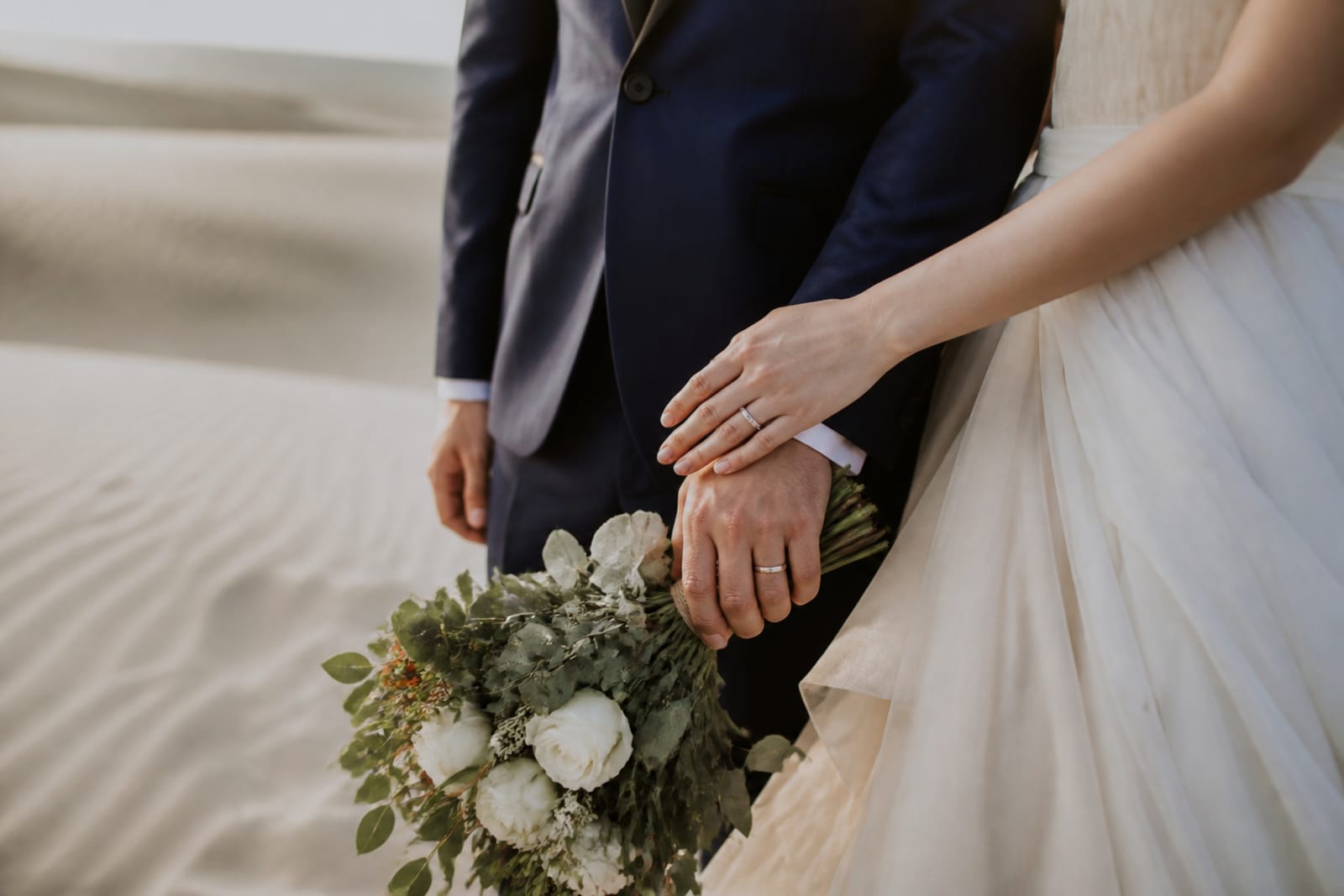
Walking poses work best on slopes: have the couple walk slightly uphill, turn to each other mid-stride, or pause on a ridge looking away from the camera. The sand's angle and texture hide stiffness; movement feels natural. Sitting poses risk sand on wedding attire and unflattering angles—avoid sitting unless you're comfortable with casual, barefoot frames. Have the groom stand behind the bride on a high ridge while she looks back, or both walk away from the camera in silhouette against the sunset. Details matter: shoes off (sand-free), fabric lifted or tucked, no extreme poses—the dunes are the story; the couple is part of it.
Avoid facing the camera directly on flat sand; angles and slopes are more forgiving. Bring a second outfit (a lighter, simpler dress or suit) to change into after the first walk; sand and sweat will mark heavy fabrics. Have the photographer direct you forward, not into stiff smiles—walk, pause, turn toward each other. The best frames are stolen moments, not posed setups.
Conclusion: Movement and angles trump static poses; light and landscape do half the work.
What Outfit Choices Work Best on the Dunes?
| Outfit Type | Best For | Why It Works | Watch Out For |
|---|---|---|---|
| Lightweight wedding dress (linen, silk) | Sunrise, cooler months | Breathes, moves naturally, dries fast | Heavy trains drag; hemline collects sand |
| Tailored suit + open shirt | Year-round couples | Masculine, clean lines; shows dune backdrop | Dark fabric heats up; sweat marks show |
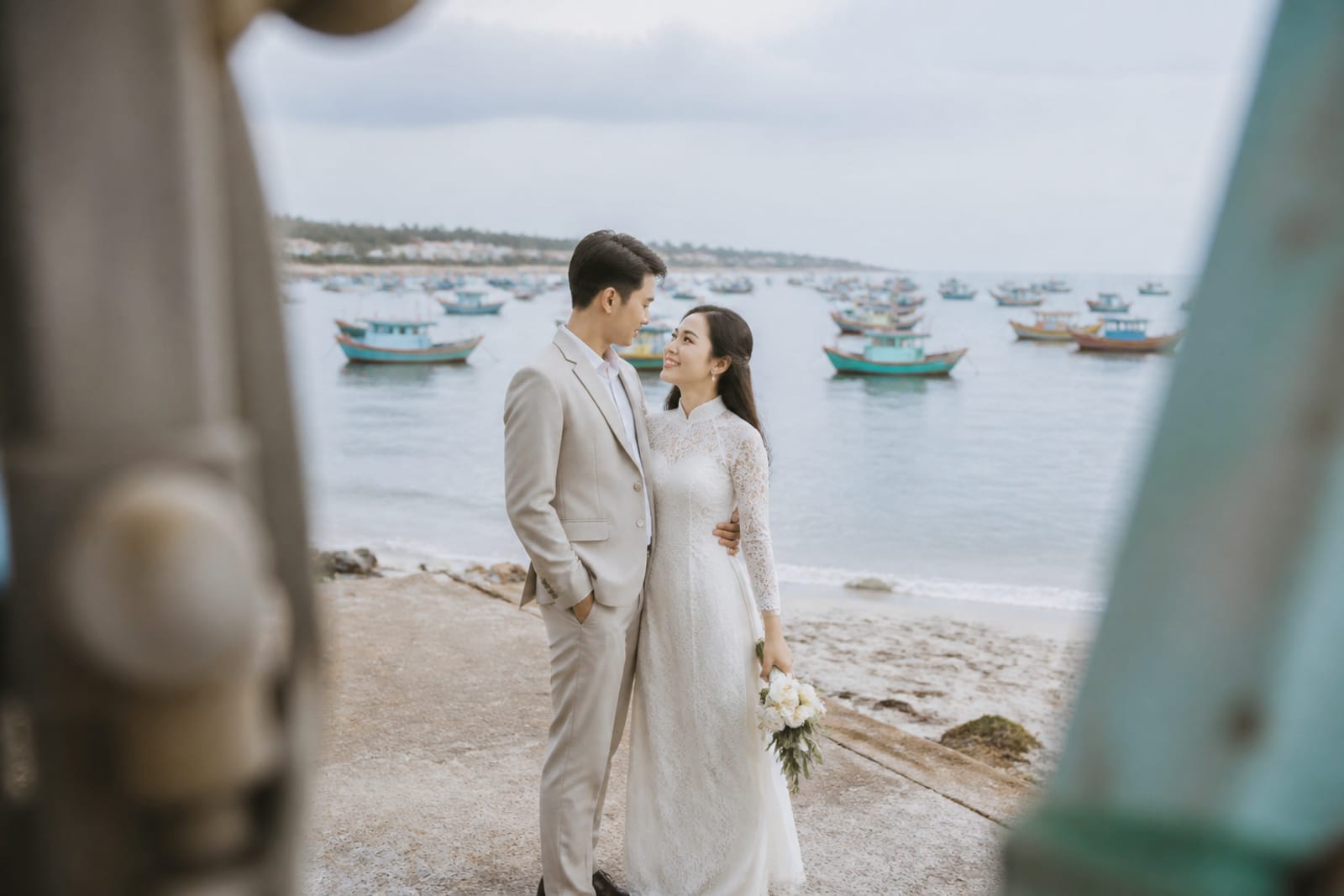
| Ao dai (traditional) | Cultural shoots | Floats on slopes, vibrant against rust sand | Delicate; sand sticks to silk; needs steam after |
| Casual linen/cotton separates | Late afternoon | Comfortable, authentic, dries quickly | Looks less formal; may not suit wedding vibe |
| Barefoot or sandals | All seasons | Practical, reduces drag and sand trapped in shoes | Feet visible in every frame; consider pedicure |
Plan two outfits: one formal (dress or ao dai) for early frames, one lighter (linen, separates) for later light when temperature and wind rise. Pack a change because sand-dampened fabric is uncomfortable. Avoid black (absorbs heat), heavy beading (catches sand), and long hemlines (tangle and drag). Silk sticks to sand more than linen; consider pre-washing fabrics to reduce static. Bring a dedicated bag for sandy clothes, not your luggage.
Conclusion: Breathable, light-coloured fabrics in two outfits beat a single formal look on dunes.
Should You Hire a Local Photographer or Travel to Hanoi/Saigon?
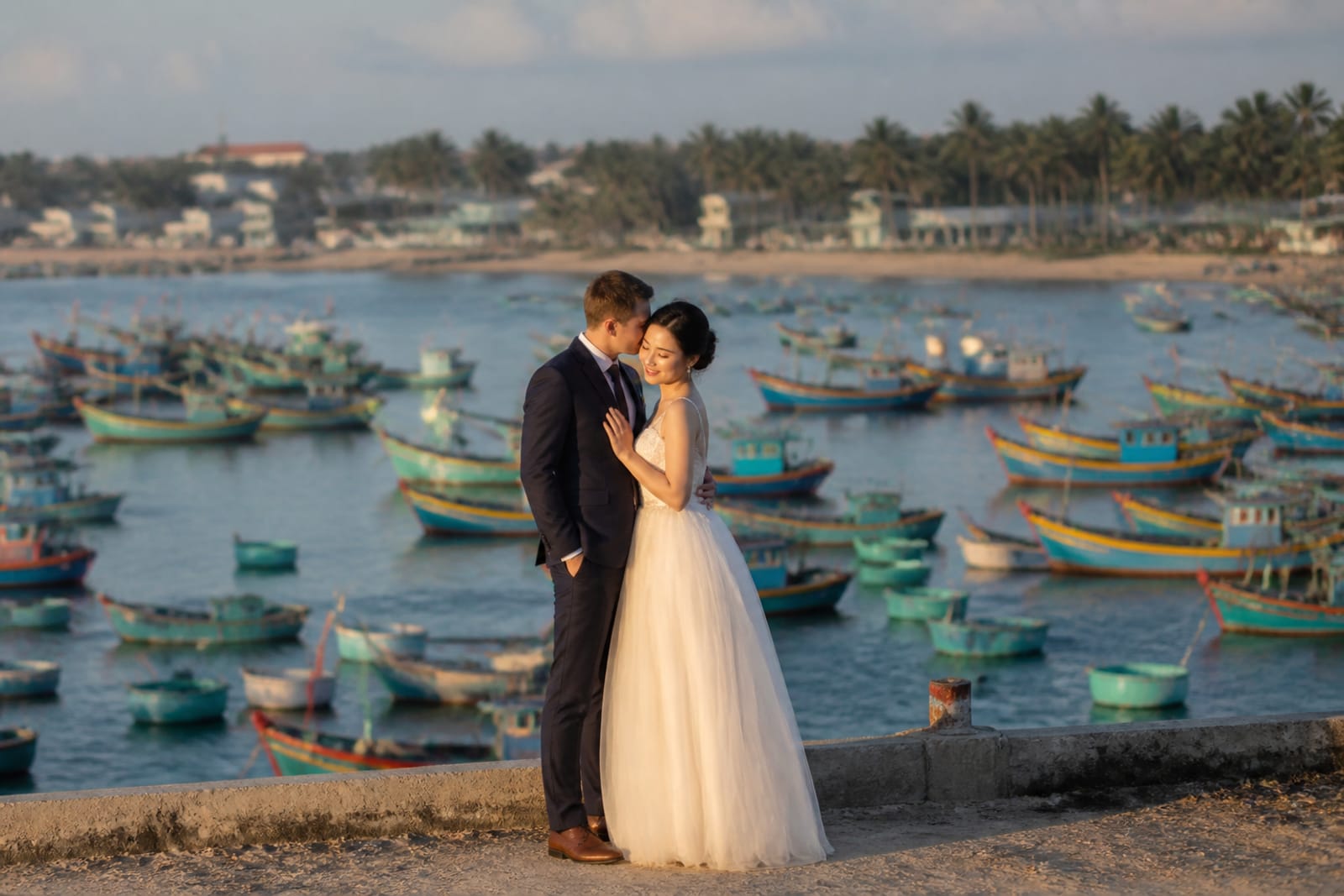
Local photographers in Phan Thiet are cheaper and familiar with the dunes' light and logistics. Vet them by requesting their full dune portfolio (not just one frame), asking if they scout the morning of the shoot, and confirming they understand your pose and framing style. Many lack experience directing movement; some over-edit or deliver frames in 1–2 weeks. Pros: cost factors are lower, no travel coordination. Cons: you manage hair and makeup separately, coordinate outfits yourself, no guarantee on editing or delivery speed.
Cáo Studio in Hanoi or Saigon handles everything: one team scouts, directs, styles (makeup and hair included), and shoots. Frames are edited and delivered within 48 hours. The team is trained in Cáo's signature cinematic style—wide first, then medium, then detail; real light, directed movement. Cost factors are higher due to travel (4 hours from Saigon) and one-team coordination, but you book once, not three vendors. Best for couples who value consistency and a curated, story-driven shoot. Cáo does not operate on-site in Phan Thiet; the team travels if booked; ask on WhatsApp for Mui Ne availability.
| Option | Best For | Coordination | Turnaround | Cost Factor |
|---|---|---|---|---|
| Local Phan Thiet photographer | Budget-aware, flexible couples | DIY hair, makeup, outfits separately | 1–2 weeks | Lower |
| Cáo Studio (travels from Saigon) | Story-first, curated style seekers | One team, everything included | 48 hours | Higher due to logistics |
Conclusion: Local works if you manage logistics yourself; Cáo Studio works if you want one team and fast delivery.
What Practical Challenges Should You Plan For?
Wind and sand in electronics: Strong winds Nov–Mar blow fine sand. Camera lenses, phone screens, and makeup will get gritty. Bring lens caps, keep the camera in a bag between setups, and bring blotting papers for skin. Allow 10 extra minutes between locations for sand to settle.
Dehydration and heat: Walking uphill on sand in Feb–Apr heat is exhausting. Bring at least 2 litres of water per person, a wide-brimmed hat, and sunscreen (reapply after sand gets damp with sweat). Dehydrated skin photographs poorly; take breaks in shade if available.
Vehicle access and parking: The dunes require a short walk (5–15 minutes) from the car park. Wear flip-flops to the shoot site, then change into shoot footwear. Confirm with the photographer where the car parks and how far the walk is.
Outfit and hair durability: Sand sticks to damp fabric and hair. Use a light hairspray (not heavy mousse), keep makeup matte, and wear moisture-wicking undershirts. Plan a rinse or change before leaving the site if you have evening plans.
Time of day shifts: Sunrise light is 15–30 minutes earlier in Jan than Apr. Confirm the exact shoot time with your photographer one week before; don't assume published "sunrise" times.
Conclusion: Bring water, protect electronics, and scout the site logistics the day before.
---
What to Check Before You Book
- Photographer's dune portfolio: Request at least 10 frames from actual Mui Ne shoots (not filtered AI or other locations). Look for consistent light, natural poses, and sharp sand texture—not blurry backgrounds.
- Scout and itinerary in writing: Confirm the photographer will visit the dune location the morning of your shoot and provide a written plan (which ridge, what time, outfit order). Vague "we'll go to the dunes" plans often fail.
- Weather backup: Ask what happens if winds exceed safe levels or clouds block sunrise light. A reschedule clause or partial refund should be offered.
- Hair and makeup on-site or pre-shoot: If booking a local photographer, confirm whether they coordinate makeup and hair or expect you to arrive ready. If pre-dawn, plan makeup at your hotel, not on the dunes.
- Delivery and format: Confirm turnaround time (same week? two weeks?), number of edited files, and whether you get RAW files or edited JPEGs only. Cáo Studio delivers edited images and a short vertical film within 48 hours.
- Sand in fabrics clause: Understand that sand will mark clothing and hair. Ask the photographer if they retouch sand marks or if you accept them as part of the location.
- Travel time and cost factors: Phan Thiet is 4 hours from Saigon. If booking Cáo Studio, confirm whether travel time and fuel affect the quoted cost factor.
---
Summary: A Pre-Wedding Dune Shoot Checklist
- Season: Nov–Apr (dry, firmer sand).
- Time of day: Sunrise (5:30–7 am) or sunset (5–6:30 pm).
- Outfits: Two changes; light, breathable fabrics; second outfit lighter than first.
- Logistics: Scout the site; confirm car park and walking distance; bring water and sun protection.
- Photographer: Request dune portfolio; confirm a written itinerary and same-day scout.
- Booking: If local, manage hair and makeup yourself. If Cáo Studio, one team handles everything; confirm Mui Ne availability on WhatsApp.
- Post-shoot: Plan a rinse or outfit change before evening plans; expect sand on everything.
📸 Book on WhatsApp — pre-wedding photoshoot
For a pre-wedding session in Hanoi, Ho Chi Minh City or Hoi An with full styling and curated direction, contact Cáo Studio. If you're planning a shoot in Mui Ne with a local team, use this guide to vet and brief them. Either way, sunrise light and movement over poses will give you the frames you keep.
---
FAQ
Do I need entry tickets or permits to shoot at Mui Ne dunes?
Entry to the main dune area is free. Check locally with your hotel or photographer about any current restrictions or fees for commercial photography shoots (some areas may require permission from local authorities).
How early do I need to wake up for a sunrise shoot?
Plan to meet the photographer 30–45 minutes before sunrise. Depending on the month and location, sunrise is between 5:30 and 6:30 am. Confirm the exact time with your photographer one week before.
Can I wear a heavy wedding dress on the dunes?
Avoid trains and full skirts; they drag and collect sand. Lightweight silk or linen dresses work. If your dress is heavy, consider a second, simpler outfit for the dunes and reserve the formal dress for a second location (beach, hotel).
What happens if the wind is too strong or it rains?
Strong winds (Nov–Mar) can make shoots uncomfortable and damage electronics. Rain (May–Oct) dampens sand and blocks light. Ask your photographer about a reschedule clause or partial refund if weather is unsafe before the shoot date.
Will sand ruin my wedding dress or suit?
Sand will mark fabrics, especially silk and velvet. Wear a second, disposable outfit for the dunes, or accept sand marks as part of the aesthetic. Plan a rinse or change before evening events.
How long does a typical Mui Ne dune shoot take?
Plan 2–3 hours. The best light window is 45 minutes to 1 hour (sunrise or sunset); the rest is travel, outfit changes, and detail shots on slopes.
FAQ
Do I need entry tickets or permits to shoot at Mui Ne dunes?
Entry to the main dune area is free. Check locally with your hotel or photographer about any current restrictions or fees for commercial photography shoots (some areas may require permission from local authorities).
How early do I need to wake up for a sunrise shoot?
Plan to meet the photographer 30–45 minutes before sunrise. Depending on the month and location, sunrise is between 5:30 and 6:30 am. Confirm the exact time with your photographer one week before.
Can I wear a heavy wedding dress on the dunes?
Avoid trains and full skirts; they drag and collect sand. Lightweight silk or linen dresses work. If your dress is heavy, consider a second, simpler outfit for the dunes and reserve the formal dress for a second location (beach, hotel).
What happens if the wind is too strong or it rains?
Strong winds (Nov–Mar) can make shoots uncomfortable and damage electronics. Rain (May–Oct) dampens sand and blocks light. Ask your photographer about a reschedule clause or partial refund if weather is unsafe before the shoot date.
Will sand ruin my wedding dress or suit?
Sand will mark fabrics, especially silk and velvet. Wear a second, disposable outfit for the dunes, or accept sand marks as part of the aesthetic. Plan a rinse or change before evening events.
How long does a typical Mui Ne dune shoot take?
Plan 2–3 hours. The best light window is 45 minutes to 1 hour (sunrise or sunset); the rest is travel, outfit changes, and detail shots on slopes.
Ao dai, makeup, hair and a local photographer in Hanoi or Saigon — one WhatsApp message.