/pre-wedding-photoshoot
Pre-wedding photo ideas and poses at Nha Trang beach
Pre-wedding shoots at Nha Trang work best January through August, when the bay is calm and light is predictable—early morning (5:30–7 am) gives soft side light off the water; late afternoon (4:30–6 pm) works if you avoid midday glare. Cáo Studio directs couples through walking, looking at each other and doing something (not standing posed in front of monuments); the team handles outfit changes, hair touch-ups and makeup on location, shooting wide first to capture the scene, then medium and detail frames. Book a local photographer if you're not shooting with a studio; always check the current rainy season (October–December, worst October–November) and confirm whether your outfit (traditional áo dài, Western dress or casual) suits the tide line and sand texture you've chosen.
Nha Trang's pre-wedding shoots rely on one decision: light and season. The bay faces east; sunrise shoots see soft, direct light on your faces from the side as the sun clears the horizon. Afternoon shoots (late enough to avoid overhead glare, around 4:30 pm onward) backlighter you against the water, silhouetting or rim-lighting the edges of your hair and dress. January through August is dry and sunny—the sea is calm, visibility is clear, and you can walk the water's edge without sudden squalls. October through December brings rainy season and occasional typhoon swells; the sky turns grey, the sea rough, and sessions often cut short. If you're set on a winter date, budget flexibility for rescheduling and a backup indoor location (hotel lobby, covered pavilion). The time of day matters more than season; a clear 6 am shoot in February beats a cloudy 4 pm shoot in June.
Which Nha Trang beach spot suits your story?
The main promenade (Tran Phu Boulevard, running the beachfront) is crowded by 8 am; if you want it empty or nearly empty for wide frames, you're shooting 5:30–6:30 am. The south end of the beach (near Doc Let or Hon Tre Island views) has fewer early morning walkers and offers cleaner sand. Shallow lagoon areas (e.g., near Vinpearl Cable Car base) let you wade without deep water, useful if your dress is long or you're wearing heels; the sand floor is firmer there. The pier and waterfront cafés add foreground interest (railings, morning light on tables) but come with foot traffic and café staff by 7 am. Nha Trang's tideline (depending on moon phase and time of year) ranges from barely visible to a band of wet sand 10–20 meters wide; wet sand reflects light evenly and looks cleaner in photos. Check the tide time for your shoot date: low tide often exposes a wider, firmer band—easier to walk and frame, but the light is harsher if you're in the middle of the day.
📸 Book on WhatsApp — pre-wedding photoshoot | 🌸 See the lookbook
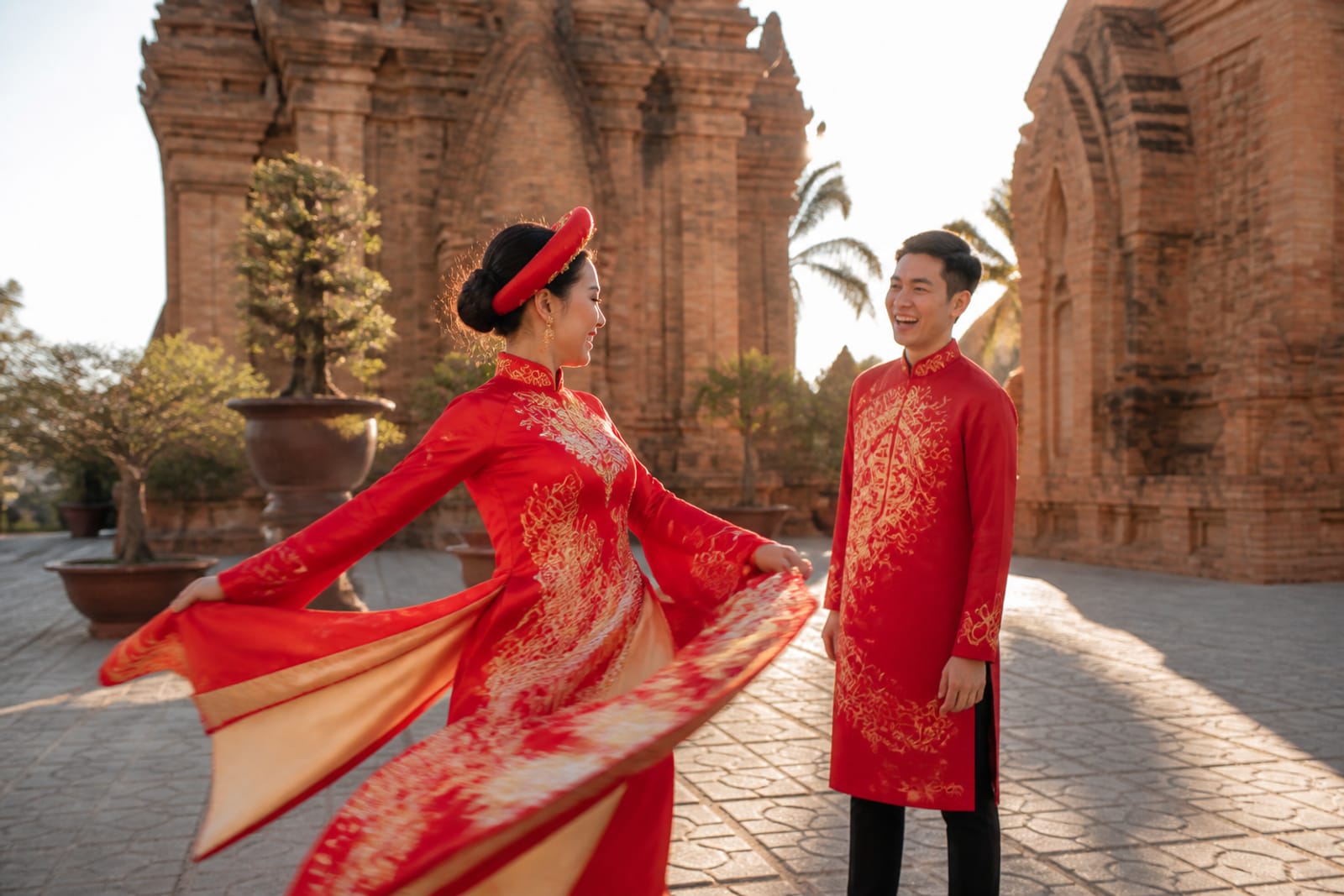
How does outfit choice change your framing?
An áo dài (traditional Vietnamese silk tunic and trousers) flows beautifully in movement and reads clearly in wide shots; the contrast between the dress color and the blue water is high, so you'll stand out even in a busy frame. Silk áo dài photographs with subtle texture and drape when you're walking or turning, not standing still. Ask your photographer to shoot while you're mid-step or looking over your shoulder—the fabric moves naturally. A Western wedding dress (white, cream, or blush) has similar contrast but demands attention to sand and hem; kneel or hold the skirt if you're sitting, and be ready to clean the hem between locations (bring wet wipes). Casual outfits (linen shirts, neutral tones, sunglasses) blend better with the beach environment and let the light and composition do the storytelling; they're easier to move in and suit couples who want candid, walking-focused frames rather than posed shots. Whatever you choose, wear shoes you can walk in (or plan to go barefoot and carry them); sand in heels or stiff formal shoes limits your movement and reads as tension in your face.
| Outfit type | Best for | Light & season | Why it works |
|---|---|---|---|
| Áo dài (silk) | Traditional story, high contrast | Any dry season morning (5:30–7 am) | Flows in motion; color pops against water; cultural framing |
| Western dress | Western/blended ceremony prep | Jan–Aug, early morning or late afternoon | Drape reads in detail shots; requires hem management |
| Casual/linen | Narrative, candid walking | Jan–Aug (easier movement) | Movement-forward; blends environment; suits multiple outfit changes |
How should a photographer direct you—and what poses actually work?
Avoid facing directly at the camera in the middle of the beach; instead, walk toward the camera (so you're moving, not static), or walk side-by-side holding hands while the photographer frames you from the side or slightly behind. Look at each other mid-stride, not down at your feet. If you're standing, one person slightly ahead of the other (not parallel) creates depth. Sit together on the wet sand near the waterline where the light is soft and reflected; lean into each other or rest your head on their shoulder. Details matter: intertwined fingers, a kiss on the temple, or one person adjusting the other's collar. Avoid stiff poses (both facing the camera, arms at your sides, fixed smiles). A single team—photographer, hair and makeup artist in the same booking—means they see your movement from the start and can prompt you to walk, look or do something in real light; they won't waste time repositioning you between outfit changes. If you're booking a local photographer separately, show them examples of movement-forward frames and ask them to direct, not pose.
💄 Makeup & hair at your hotel | 👗 Ao dài rental
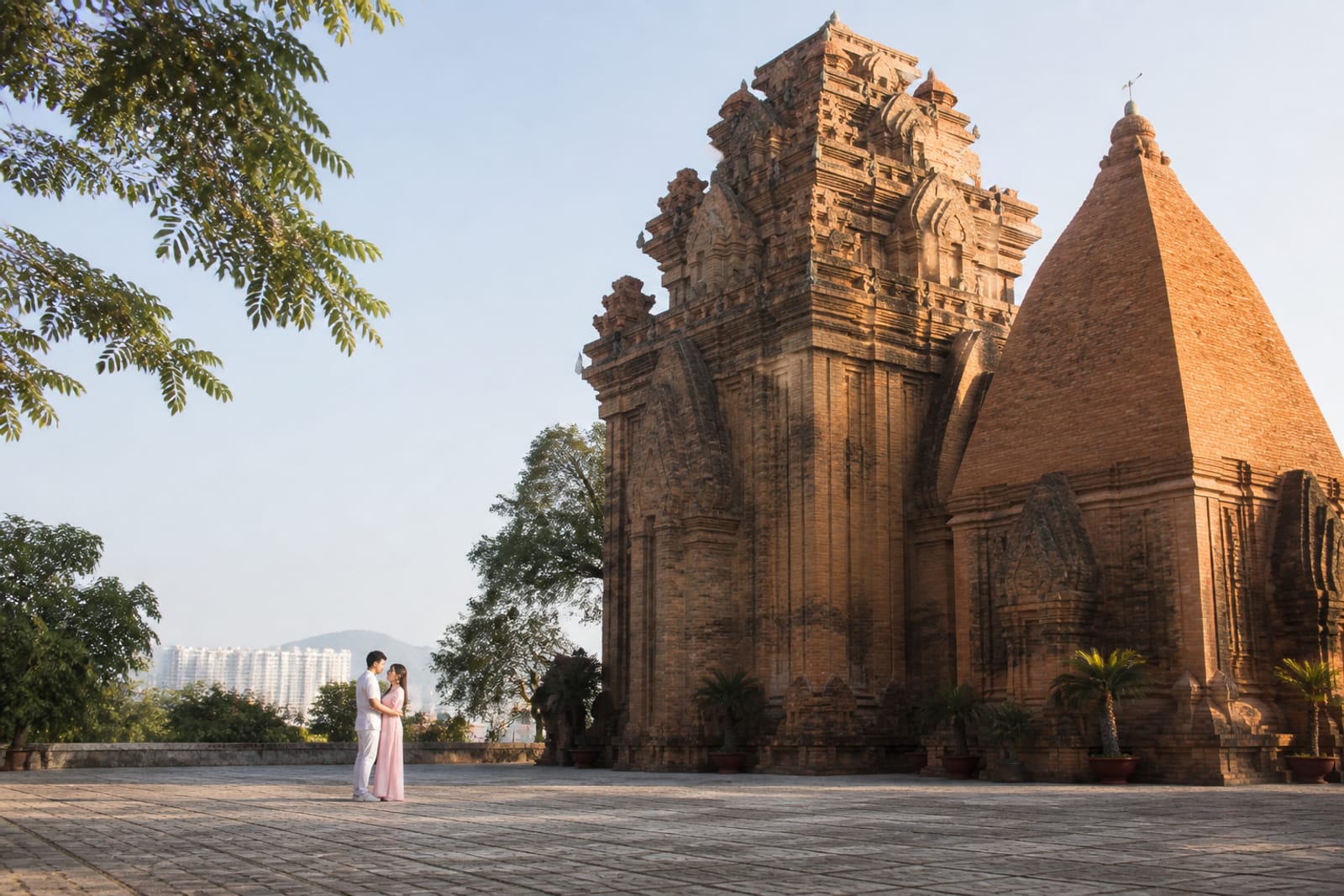
What makes a one-team shoot different from hiring a photographer, makeup artist, and stylist separately?
When you book three vendors, they rarely arrive at the same time or location, and each one approaches the day independently. Coordination falls on you: the makeup artist might finish hair while the photographer is still setting up; the photographer doesn't know that the stylist brought two outfits (now there's a timing mismatch); light changes while everyone's figuring out logistics. A single team that handles hair, makeup and photography in one booking means they've already planned the order of setup, know where and when to do outfit changes (based on light, not just schedule), and can work together to catch a 10-minute window of perfect side light before the sun moves. The photographer sees your makeup in real light and can adjust framing if needed; the hair artist knows where you'll be standing so they can brace a hairstyle for wind off the bay. One message—one story, one look, one consistent direction—runs tighter and faster than three separate vendors syncing notes.
When should you shoot: what's the real difference between morning, afternoon and golden hour?
| Time of day | Light character | Crowds | Framing challenge | Best season |
|---|---|---|---|---|
| 5:30–6:30 am | Soft side light; cool color temp | Almost none | Horizon line low; need wide framing | Jan–Aug |
| 7–9 am | Stronger side light; warm tone entering | Light foot traffic | Light is higher; foreground sun glare if you're not careful | Jan–Aug |
| Midday (11 am–3 pm) | Harsh overhead; blown shadows | Busiest | Avoid unless you're in deep shade; light too contrasty for soft frames | Not recommended |
| 4–5:30 pm | Warm, directional; low angle | Moderate (increasing) | Backlighting strong; must meter for faces, not sky | Jan–Aug |
| 5:30–6:30 pm | Golden hour; very warm | Increasing | Fastest light change; window is 15–20 minutes before sky cools | Jan–Aug |
Sunrise (5:30–7 am) is slowest-changing and softest; you have 45+ minutes of stable, directional light. Sunset (golden hour, 5:30–6:30 pm) is fastest and warmest; the light shifts by the minute, and your window is narrow—good for a short, focused shoot, demanding for multiple outfit changes. If you're comparing venues in Nha Trang, ask the studio whether they'll shoot into or away from the sun (backlit vs. front-lit) at your chosen time; that one choice changes everything about mood and how your dress reads.
📸 Book on WhatsApp — pre-wedding photoshoot
What to check before you book a Nha Trang pre-wedding shoot.
Season and rescheduling policy: October–December is rainy and typhoon season; confirm whether your studio will reschedule if weather turns, and what that means for your budget and timeline.
Team size and roles: Does your photographer handle makeup and hair, or are you coordinating separate vendors? A single booking means one WhatsApp thread and no coordination gaps.
Light timing and backup plan: Ask which time of day the studio recommends and why (sun angle, tide, crowds, your outfit). If morning light is your preference, confirm the exact arrival time (not "early," but "5:15 am pickup").
Tide and beach access: Low tide exposes clean sand and reflects light; high tide may close certain spots. Ask about tide timing for your shoot date.
Outfit changes and styling: Confirm how many outfit changes are included, where you'll change (on location or pre-arranged), and whether the studio brings a kit for sand removal and hem care.
Delivery time and format: Edited photos in 48 hours (Cáo Studio standard) means a fast turnaround; ask how many frames you'll receive, in what resolution, and whether they include a short film.
Delivery location: If you're based elsewhere in Vietnam, ask about local delivery (Nha Trang) vs. online transfer. Cáo Studio's Saigon base and Hanoi base can coordinate, but a Nha Trang shoot is typically arranged by WhatsApp inquiry.
---
For a deeper dive into pre-wedding shoots across Vietnam, see our pre-wedding photoshoot guide. If you're planning an áo dài moment, explore áo dài photoshoot options. Couples in Hanoi or Ho Chi Minh City can also book a proposal or anniversary session.
FAQ
What's the best time of year for a Nha Trang pre-wedding shoot?
January through August: dry, calm seas, predictable light. October–December is rainy season with typhoon risk; if you must shoot then, budget flexibility to reschedule and plan a backup covered location.
Can we shoot with a Western dress at Nha Trang beach?
Yes. White or cream dresses photograph beautifully against the blue water. Wear shoes you can walk in, or go barefoot and carry them; bring wet wipes to clean the hem between locations. Late afternoon light (4:30–6 pm) suits white dresses best.
Why does sunrise work better than afternoon?
Sunrise light (5:30–7 am) is soft, directional and changes slowly; you have 45+ minutes of stable framing. Afternoon (midday–3 pm) is harsh and blown-out. Late afternoon (4:30–6 pm) is warm but shifts by the minute, squeezing your window to 15–20 minutes.
Should we hire a makeup artist separately or book one with the photographer?
One team (photographer + hair + makeup in one booking) coordinates timing, knows your light and outfit changes in advance, and works faster. Three separate vendors mean you coordinate logistics; light changes while they're syncing notes.
How many outfit changes should we plan?
2–3 changes works well: áo dài or casual wear, then a second outfit. More than three means less time in each location and rushed transitions; ask your studio what's included in the booking.
Is Nha Trang suitable for a couple who wants candid, walking-focused frames?
Yes. The long, open beach invites natural movement. Wear casual or linen outfits; walk side-by-side, look at each other mid-stride, and let the photographer frame you from behind or the side. This style suits Nha Trang's scale and light.
How do we find a local photographer if we're not using Cáo Studio?
Search for "Nha Trang pre-wedding photographer" or "Nha Trang couple photoshoot" and ask to see 5–10 examples (not just edited albums—individual frames showing direction and light). Ask whether they direct movement or pose, and whether they've shot at your chosen time of day and season.
FAQ
What's the best time of year for a Nha Trang pre-wedding shoot?
January through August: dry, calm seas, predictable light. October–December is rainy season with typhoon risk; if you must shoot then, budget flexibility to reschedule and plan a backup covered location.
Can we shoot with a Western dress at Nha Trang beach?
Yes. White or cream dresses photograph beautifully against the blue water. Wear shoes you can walk in, or go barefoot and carry them; bring wet wipes to clean the hem between locations. Late afternoon light (4:30–6 pm) suits white dresses best.
Why does sunrise work better than afternoon?
Sunrise light (5:30–7 am) is soft, directional and changes slowly; you have 45+ minutes of stable framing. Afternoon (midday–3 pm) is harsh and blown-out. Late afternoon (4:30–6 pm) is warm but shifts by the minute, squeezing your window to 15–20 minutes.
Should we hire a makeup artist separately or book one with the photographer?
One team (photographer + hair + makeup in one booking) coordinates timing, knows your light and outfit changes in advance, and works faster. Three separate vendors mean you coordinate logistics; light changes while they're syncing notes.
How many outfit changes should we plan?
2–3 changes works well: áo dài or casual wear, then a second outfit. More than three means less time in each location and rushed transitions; ask your studio what's included in the booking.
Is Nha Trang suitable for a couple who wants candid, walking-focused frames?
Yes. The long, open beach invites natural movement. Wear casual or linen outfits; walk side-by-side, look at each other mid-stride, and let the photographer frame you from behind or the side. This style suits Nha Trang's scale and light.
How do we find a local photographer if we're not using Cáo Studio?
Search for "Nha Trang pre-wedding photographer" or "Nha Trang couple photoshoot" and ask to see 5–10 examples (not just edited albums—individual frames showing direction and light). Ask whether they direct movement or pose, and whether they've shot at your chosen time of day and season.
Ao dai, makeup, hair and a local photographer in Hanoi or Saigon — one WhatsApp message.