/pre-wedding-photoshoot
Pre-wedding Photo Ideas and Poses at Starfish Beach
Starfish Beach in Phu Quoc works best for pre-wedding photos during dry season (Nov–Apr) when the sea is calm and morning light (6–9 am) reflects off shallow water, creating mirror-like reflections and soft side light across your frames. Bring lightweight, flowing fabrics (cotton voile, linen, silk—avoid heavy fabrics that photograph stiff) and check the tide: low tide exposes the sandbar and starfish, but mid-to-high tide gives cleaner reflections. A directed photoshoot (not poses in front of landmarks) means your photographer frames you walking, turning toward each other, or standing in real light—wide shots first, then medium, then detail—which reads better on camera than static positioning. Cáo Studio does not operate in Phu Quoc; this guide shows what to ask a local team before booking.
What makes Starfish Beach work for pre-wedding photos?
Starfish Beach's shallow lagoon reflects sky and light directly onto you, creating a natural fill light that softens shadows on your face and body. The sandbar—visible only at low tide—frames wide shots with scale and negative space. Morning light (6–9 am) comes from behind and to the side, wrapping around your figures without harsh overhead shadows. Avoid midday (11 am–3 pm) when the sun is directly overhead and light flattens features. The beach is less crowded before 8 am, which means fewer tourists in background frames. The location's biggest drawback is tide dependency: if you shoot at high tide when the sandbar is underwater, you lose the visual anchor that makes this beach distinctive—plan your shoot time around local tide tables.
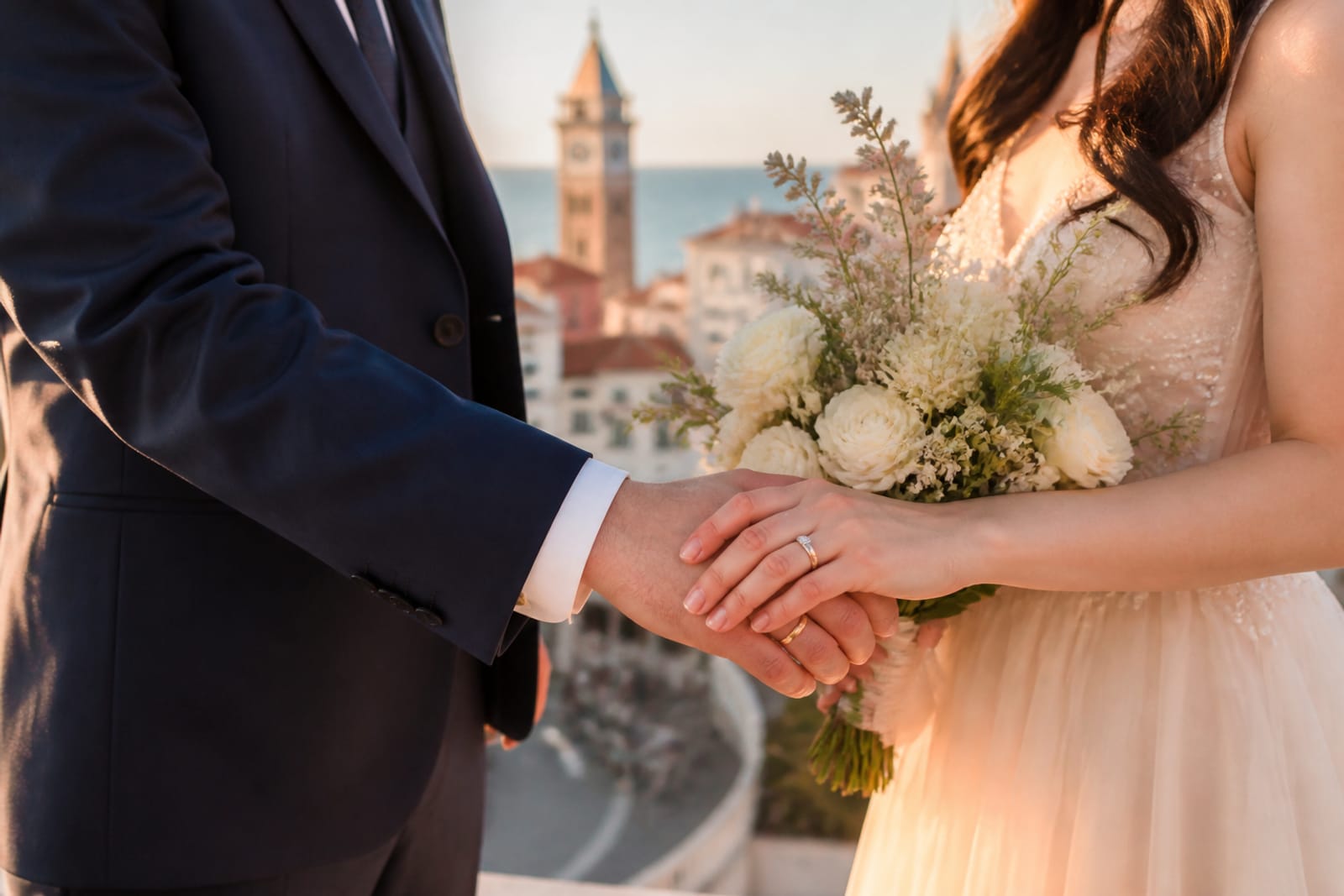
Which outfit choices photograph best in shallow water?
Lightweight, translucent or flowing fabrics work because they move in the wind and catch light, creating visual rhythm across frames. Linen trousers, cotton voile dresses, silk scarves and open shirts photograph better than heavy cotton or dense fabrics that cling and photograph static. If wearing an áo dài, ask the rental shop for a lightweight silk or cotton linen blend—synthetic materials hold water, photograph wet and glossy, and dry slowly in humidity. Avoid all-white outfits in direct midday sun (they blow out in camera), solid dark colours that absorb all shadow detail, and busy patterns that fragment the frame. Consider a second outfit change: a lighter piece for early morning reflection shots, a richer colour for mid-morning when light becomes more directional. Bare feet or minimal sandals work in shallow water; bring a waterproof bag for phones and jewellery.
| Outfit option | Best for | Why it works | Season fit |
|---|---|---|---|
| Linen shirt + flowing trousers | walking, turning, movement | catches light and wind; moves with you | all year |
| Lightweight silk áo dài | standing, close detail, portraits | drapes and reflects light; photographs soft | Nov–Apr (dry) |
| Cotton voile dress | wading, reflection shots | translucent, catches backlight; dries quickly | Nov–Apr |
| Open shirt + fitted shorts | contrast, movement | defines shape; movement photographs better than static poses | Nov–Apr |
When should you shoot—morning, tide, and season?
Dry season (Nov–Apr) in Phu Quoc means calm sea, predictable tides and low humidity—perfect conditions for reflection shots. Morning light (6–9 am) is softer and more directional than midday; the sun is lower, wrapping around your bodies rather than flattening them. Check tide tables before booking: low tide (usually 2–3 hours) exposes the sandbar and starfish; mid-to-high tide gives cleaner reflections in the lagoon water. A experienced local photographer knows the tides and light rhythm at this beach and will time your session to capture both conditions—wide shots during low tide when the sandbar is visible, reflection shots during mid-tide when water is calm and shallow. Arrive 15–20 minutes early to scout light and water clarity; if the water is murky after rain, postpone to the next day. Avoid Tet (late Jan–mid Feb) when beaches are crowded and many services close for several days.
How do you pose naturally instead of standing stiff at a landmark?
Real frames come from movement and direction, not static poses. Ask the photographer to shoot you walking toward or away from the camera, turning to look at each other while walking, or reacting to real moments—not "stand here and look romantic." A director gives you a task ("walk that way, don't look at the camera, I'll tell you when to turn") which occupies your mind and relaxes your body, creating authentic frames. Medium shots of you walking hand-in-hand photograph better than wide shots of you facing the camera standing still. Detail shots—hands touching, a kiss mid-frame, fabric catching wind—tell a story better than full-body poses. The photographer should shoot in a sequence (walk, turn, pause, touch, repeat) rather than stopping between frames, which creates flow on camera. If the team spends time coaching you into poses rather than directing you to move and react, that's a red flag.
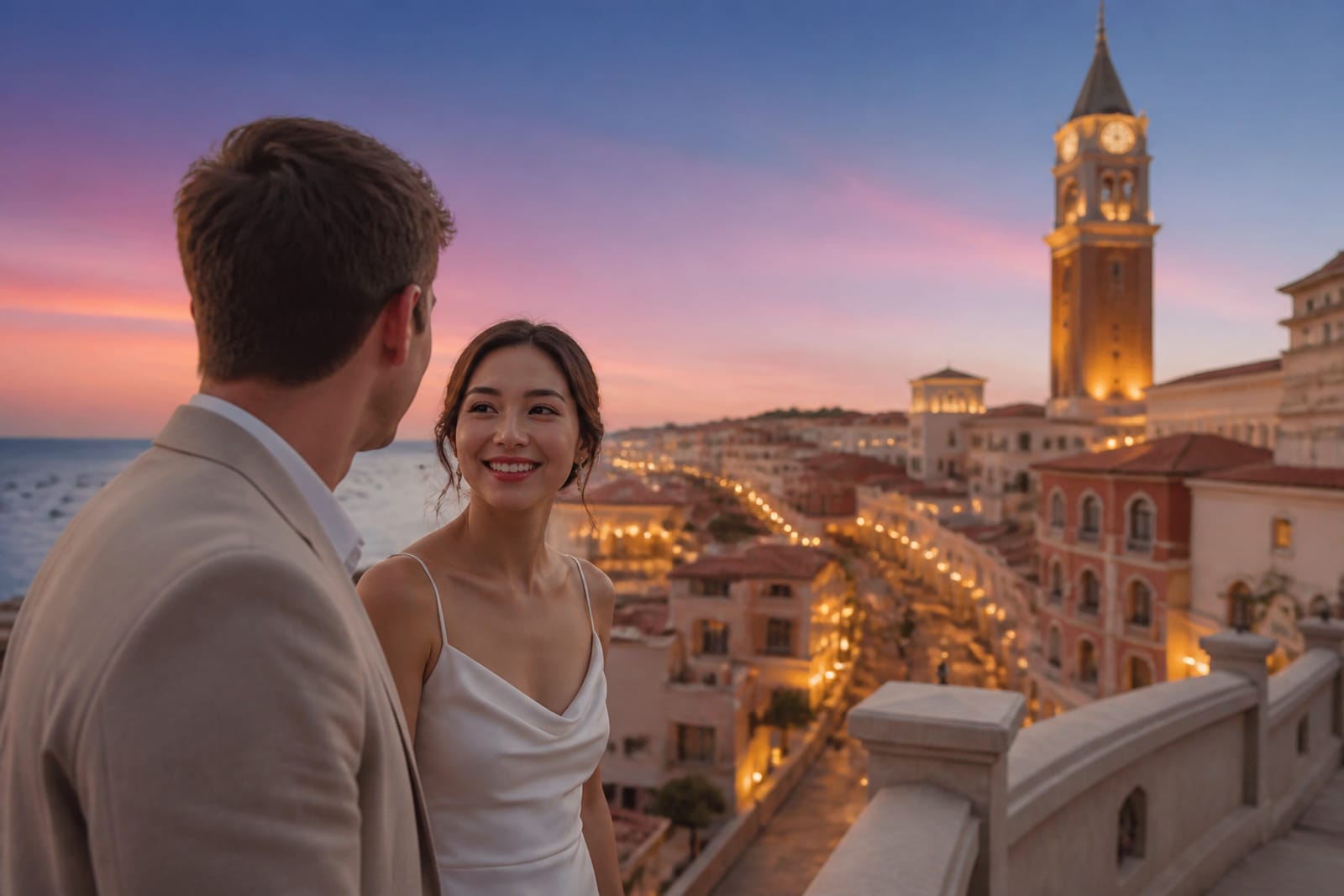
How to find and vet a local photographer in Phu Quoc?
Starfish Beach is a known wedding destination in Phu Quoc; local photographers and tourism concierges can recommend teams. Look for portfolios that show couples moving and interacting (not posed), real light (not heavy editing to hide poor framing), and consistency across multiple shoots (not one perfect frame surrounded by filler). Ask the photographer:
- Do you shoot at Starfish Beach regularly? What time do you shoot there?
- How many frames will I receive edited?
- Do you work as a solo photographer or a team? (A team can adjust lighting, adjust clothing, and capture wider coverage.)
- Can you show me a full session from start to finish—not just highlight frames?
Request a quote before booking; it should account for travel time to Phu Quoc, the length of the session, number of edited files, and delivery timeline. Ask whether the quote includes a makeup artist or stylist; if not, you'll need to hire separately. Agree on a contract or email confirmation that states the date, time, location, what's included, and the delivery date. Check reviews on local travel sites or ask your hotel for recommendations—word of mouth is most reliable in smaller destinations.
💄 Makeup & hair at your hotel | 🌸 See the lookbook | 📸 Ask us about Phu Quoc coordination on WhatsApp
What should you check before booking a Starfish Beach session?
Cáo Studio operates in Hanoi, Ho Chi Minh City and Hoi An; for Phu Quoc, work with a local team. Before confirming:
- Tide and time: does the photographer plan around tide tables and commit to an early start (before 8 am) when light is softest?
- Outfit and styling: does the team provide or approve outfits, or will you hire a stylist separately?
- Logistics: is travel to the beach, parking and beach entry included in the quote, or are you responsible?
- Backup plan: what happens if weather or tide makes the location unsuitable on the day?
- Delivery: what format will edited photos arrive in, and how long is the timeline (same day, 48 hours, a week)?
- Cancellation policy: what are the terms if you need to reschedule?
If you're shooting a pre-wedding photoshoot in Vietnam but based in Hanoi or Ho Chi Minh City, Cáo Studio's team (outfit, hair, makeup, photographer in one booking) eliminates coordination across vendors. For Phu Quoc, coordinate these separately and confirm everything in writing.
---
Starfish Beach vs. other Phu Quoc photo locations
Starfish Beach (shallow lagoon, reflection light, low tide sandbar) suits couples wanting soft morning light and landscape-scale framing. Sunset Town and Kiss Bridge (west-facing, late-afternoon golden light, built landmark) suits couples wanting warm, directional light and recognizable background. Long Beach (wider, busier, less protected) suits couples wanting open horizon and movement but less sheltered from crowds. Choose by light direction (morning reflection vs. afternoon warmth), expected crowds (early morning quieter, afternoon busier), and what you want in the background (natural sandbar vs. built structure vs. open horizon).
📸 Pre-wedding photoshoots in Vietnam | 🌸 See Cáo Studio's couple photoshoots | 💄 Makeup & hair coordination
---
FAQ
Is Starfish Beach safe for a photoshoot in the water?
Yes. The lagoon is shallow (waist-deep or less at mid-tide) and protected by a reef. Check water conditions with locals on the day; avoid swimming or wading during or after heavy rain when visibility drops. Wear reef shoes or go barefoot; bring a waterproof phone bag and leave valuables at your hotel.
Can I wear an áo dài in the water?
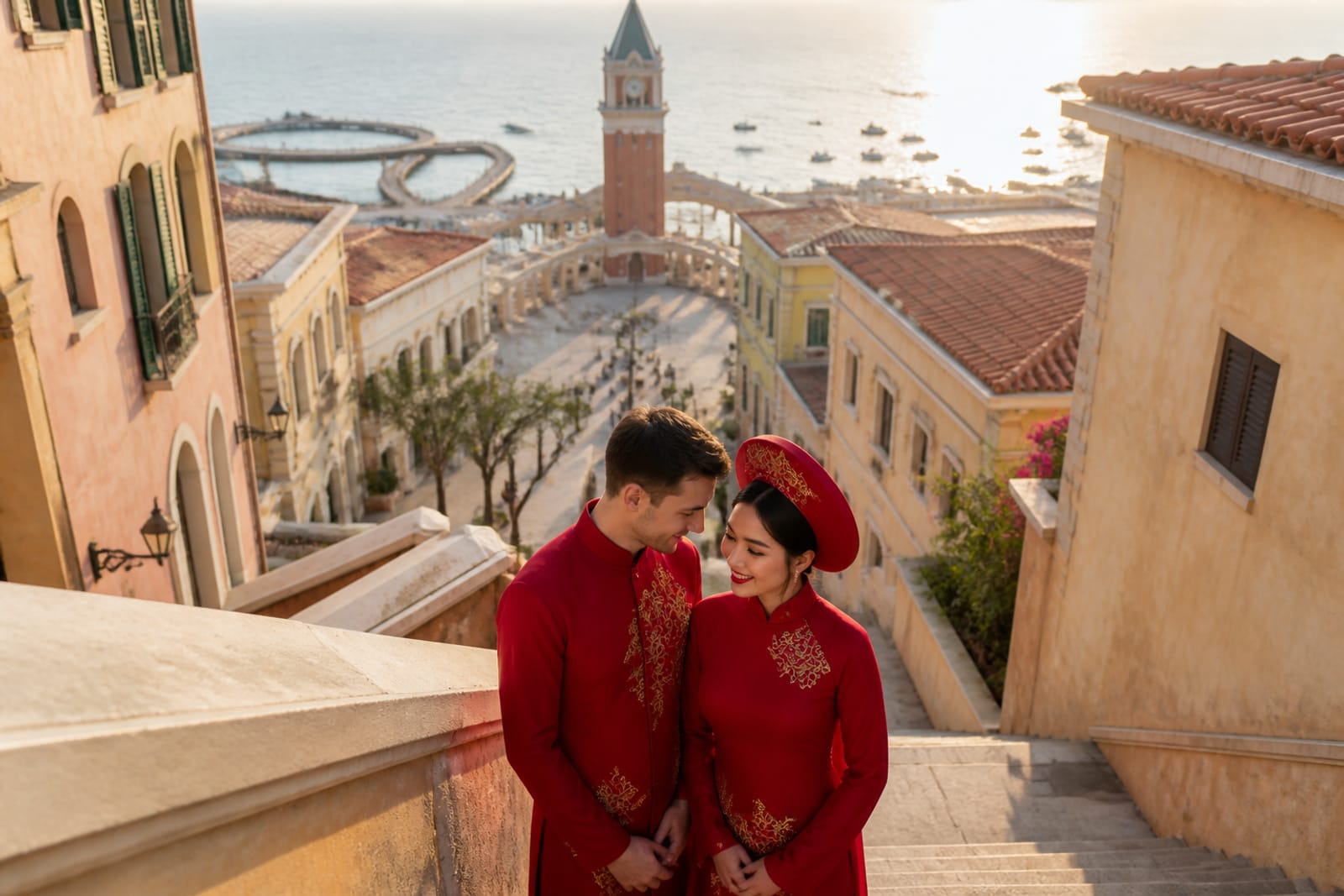
Yes, but choose a lightweight silk or cotton-linen blend—avoid synthetic materials that absorb water and photograph wet. Ask the rental shop for one rated for water photos. Bring spare áo dài if you want a dry outfit for dry-land frames. Plan extra drying time if you photograph in water first.
What month has the calmest water and clearest light?
November to April (dry season) offers calm seas, predictable tides and low humidity. February–March have particularly dry, stable conditions. Avoid September–November (rainy and typhoon season) when tides are unpredictable and afternoon storms can disrupt bookings.
Should I hire a stylist or makeup artist separately?
If working with a local Phu Quoc photographer, ask whether styling and makeup are included. If not, hire separately and confirm they've worked at Starfish Beach before (humidity and salt water affect makeup durability). Arrive with backup powder, lip balm and sunscreen.
How far in advance should I book a Starfish Beach session?
Book 2–4 weeks ahead during dry season (Nov–Apr). Phu Quoc is less busy than Hanoi or Ho Chi Minh City, so availability is usually flexible. Confirm tide tables and light timing with the photographer 3–5 days before your shoot date.
FAQ
Is Starfish Beach safe for a photoshoot in the water?
Yes. The lagoon is shallow (waist-deep or less at mid-tide) and protected by a reef. Check water conditions with locals on the day; avoid swimming or wading during or after heavy rain when visibility drops. Wear reef shoes or go barefoot; bring a waterproof phone bag and leave valuables at your hotel.
Can I wear an áo dài in the water?
Yes, but choose a lightweight silk or cotton-linen blend—avoid synthetic materials that absorb water and photograph wet. Ask the rental shop for one rated for water photos. Bring spare áo dài if you want a dry outfit for dry-land frames. Plan extra drying time if you photograph in water first.
What month has the calmest water and clearest light?
November to April (dry season) offers calm seas, predictable tides and low humidity. February–March have particularly dry, stable conditions. Avoid September–November (rainy and typhoon season) when tides are unpredictable and afternoon storms can disrupt bookings.
Should I hire a stylist or makeup artist separately?
If working with a local Phu Quoc photographer, ask whether styling and makeup are included. If not, hire separately and confirm they've worked at Starfish Beach before (humidity and salt water affect makeup durability). Arrive with backup powder, lip balm and sunscreen.
How far in advance should I book a Starfish Beach session?
Book 2–4 weeks ahead during dry season (Nov–Apr). Phu Quoc is less busy than Hanoi or Ho Chi Minh City, so availability is usually flexible. Confirm tide tables and light timing with the photographer 3–5 days before your shoot date.
Ao dai, makeup, hair and a local photographer in Hanoi or Saigon — one WhatsApp message.