/pre-wedding-photoshoot
Pre-wedding photo ideas and poses at Ta Van village
Ta Van village sits in Mu Cang Chai district, Yen Bai province, three hours northwest of Hanoi. Pre-wedding shoots here mean early mornings (5:30–7 am) to catch golden light before crowds and mist lift. Typical poses: walking through terraces, sitting on field edges, embracing near wooden houses, exchanging rings against the landscape. Outfits—áo dài, Western dress, casual linen—must suit muddy paths and rural settings. Cáo Studio does NOT operate in Ta Van; the distance (180 km) and remoteness require a local Hanoi-based photographer who knows the village well. Expect a full day shoot, 4–6 hour travel, and guide fees. Best seasons: May (green terraces, water-filled fields) or September–October (golden harvest). Hire a photographer who scouts in advance, knows light angles, and has transport to avoid crowds. ---
Why Ta Van works for pre-wedding photography
Ta Van's dramatic terraced landscape and traditional architecture create cinematic frames without feeling staged. The village has no traffic, few tourists before 8 am, and a quiet intimacy that allows genuine interaction between couples. Rice fields reflect light beautifully in morning hours; wooden houses provide strong geometry and warm tones. The challenge is remoteness—no nearby hotels, electricity, or changing facilities—so planning logistics matters more than in city shoots.
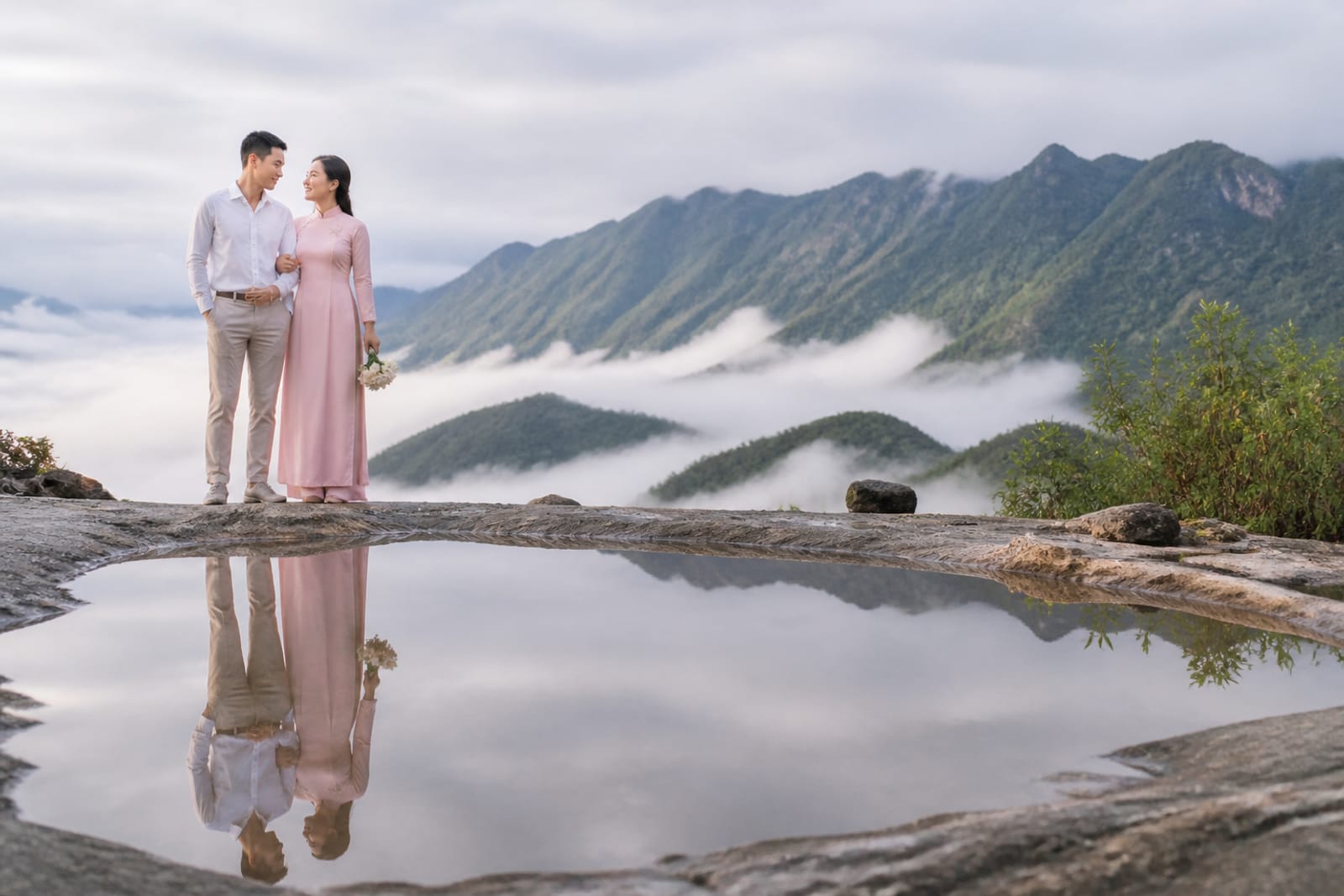
Which season and light window suits your vision?
| Season | Light & Mist | Terraces | Weather | Best Hours | Why Choose |
|---|---|---|---|---|---|
| May | Thick morning mist, soft diffusion | Bright green, water-filled | Warm, occasional rain | 5:30–7 am | Romantic fog; wet fields reflect light. Muddy paths. |
| Jun–Aug | Mist breaks by 7 am; heat haze | Green, lush | Hot, humid, afternoon storms | 5:30–6:30 am only | Greenest terraces; must start very early. Hard heat. |
| Sep–Oct | Clear, golden sun; less mist | Golden-brown (harvest), dry | Cool, crisp, clear skies | 6–7:30 am | Warm tones; firm paths; best accessibility. Crowds grow late Sep. |
| Nov–Feb | Clear, sharp shadows; cold | Bare or newly planted | Cool to cold, occasional fog | 6–8 am | Cleanest light; fewer tourists; paths hardest. |
Verdict: May suits dreamers (mist + green + emotion); September–early October suits couples wanting golden light, comfort, and walkable terrain.
What poses actually work on terraced paths?
Walking poses outperform static frames. Guide your couple to walk toward the camera across a field edge, with morning light raking across their shoulders—this captures movement and landscape depth without artifice. Sitting on a terrace step, her leaning into him, his arm around her: this works because the angle is genuine and the geometry frames them against the slope. Exchanging rings or stealing a kiss on a wooden house platform gives tenderness with architecture as witness. Avoid standing directly facing the camera in the middle of a terrace—it flattens the space and looks posed. Instead, frame them walking away, looking back over a shoulder, or seated with the landscape falling behind them.
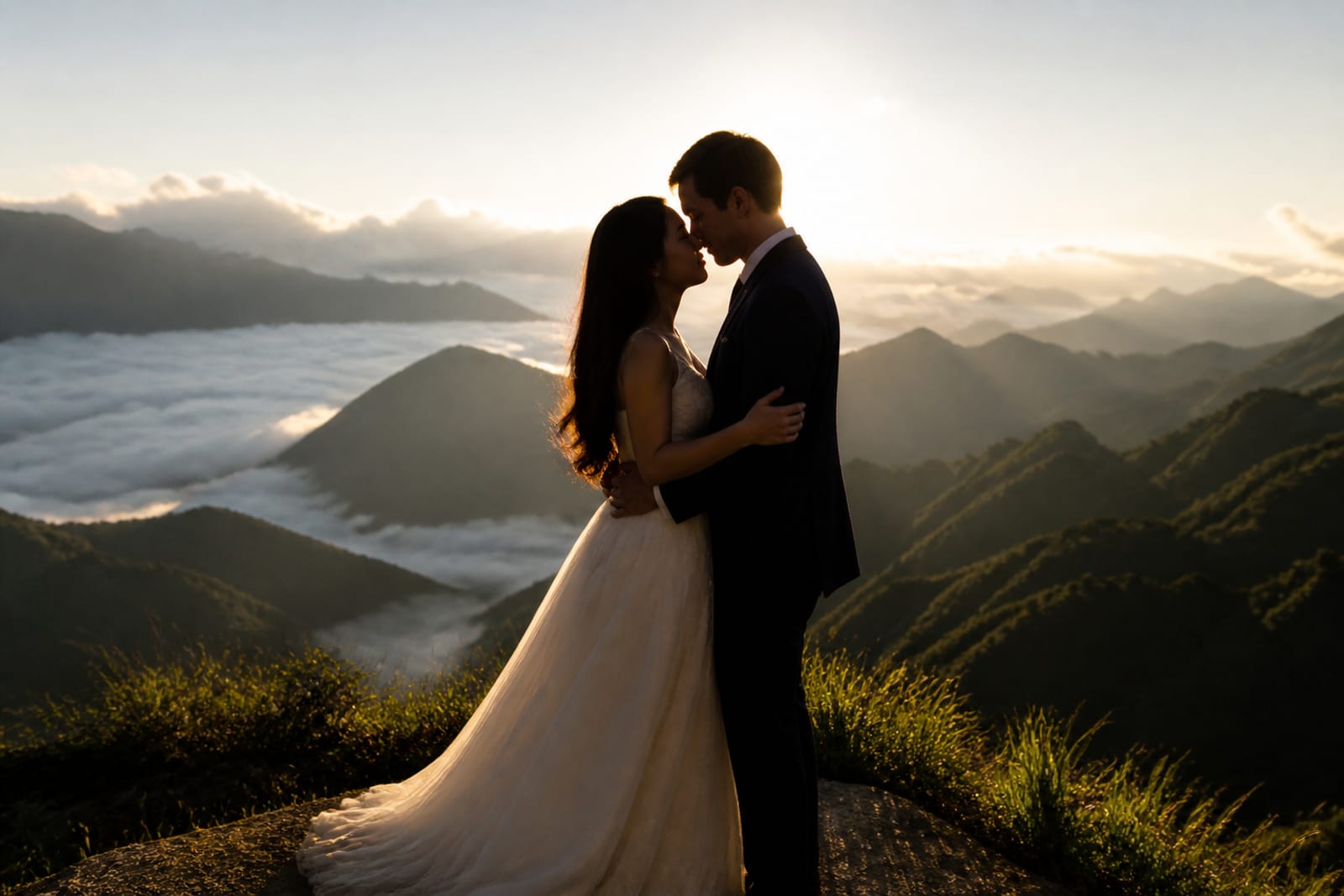
Specific light tip: shoot into the mist at 5:45 am (silhouette, then bright backlit hair), then reposition for side light 30 minutes later. Two light stories in one hour.
How to choose between hiring local or traveling from Hanoi
| Option | Best For | Logistics | Fit if You Want |
|---|---|---|---|
| Local Mu Cang Chai photographer | Budget-conscious, minimal travel | No coordination needed; photographer knows the paths. | Convenience; may lack polished editing or English fluency. |
| Hanoi-based photographer (day trip) | Couples wanting professional portfolio + English-speaking team | 3–4 hour drive each way; early morning pickup required. | Higher production value; risk of fatigue affecting creativity. |
| Cáo Studio (Hanoi-based, pre-wedding specialist) | Full-service vision: shoot + hair + makeup + edited film in 48 hours. | Hanoi team travels; no local base in Ta Van. Requires advance WhatsApp booking. | Directed cinematography, wardrobe changes, styled appearance. Not ideal for remote muddy hikes; better for accessible nearby villages or Hanoi/Hoi An. |
Hire a local guide (not a photographer) alongside any photographer—they know safe paths, respect local customs, and navigate the village's narrow terrain.
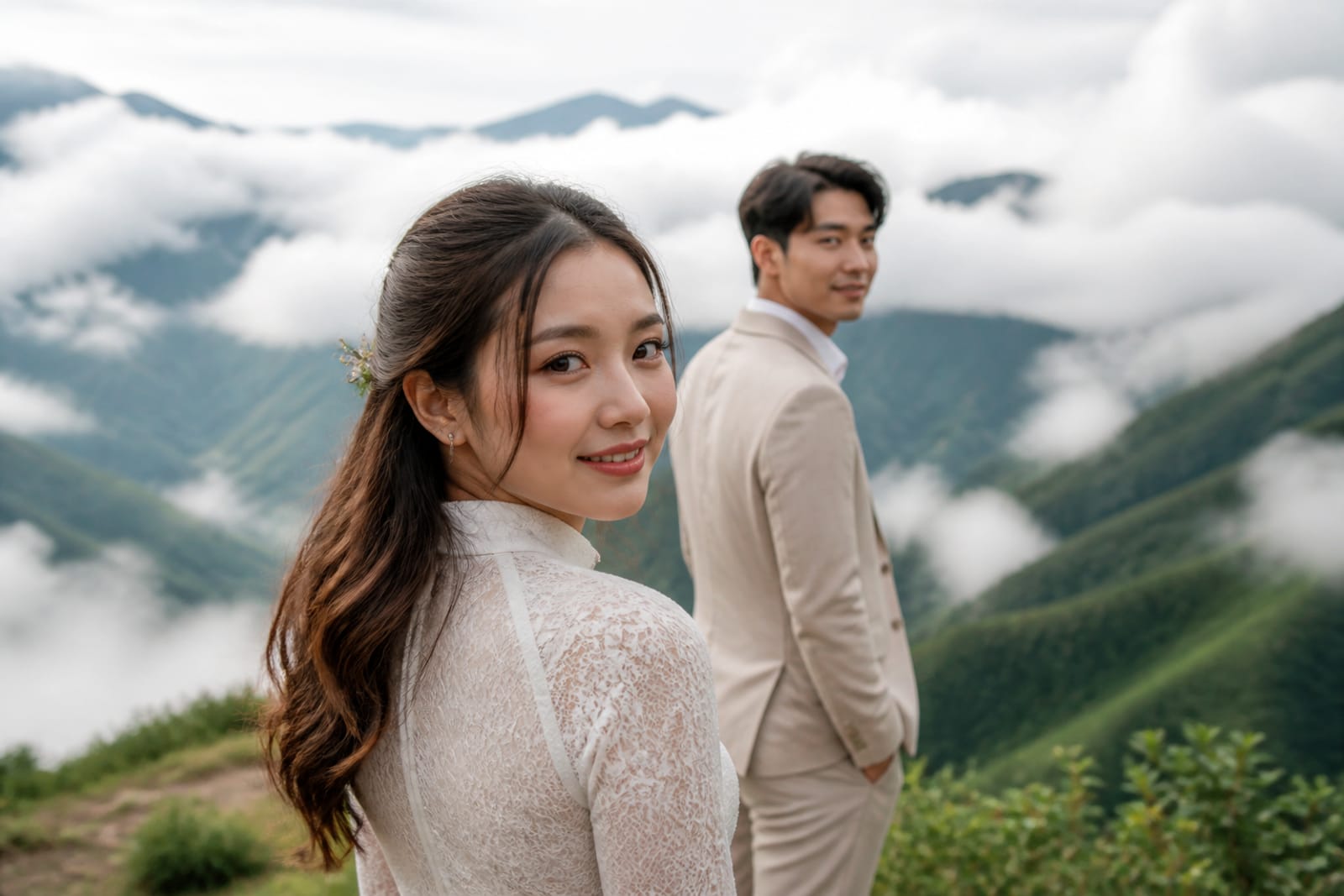
What to wear and how to prepare clothing for mud and terrain
Áo dài works beautifully at sunrise when the fabric catches light, but the hem drags in wet fields and mud—pack a second outfit (linen trousers, simple tunic, or casual dress) for walking sequences. Grooms in suits risk heat and mud stains by 7 am; linen shirts with dark trousers or traditional áo dài for him photograph better and move easier. Bring a rucksack with a second pair of shoes; village paths are steep and muddy even in the dry season.
Consider renting áo dài locally (Hanoi áo dài rental shops deliver to your hotel before departure) or booking a makeup and hair team from Hanoi to travel with your photographer. This eliminates the need for on-site changing facilities.
Layering is essential—mornings are cool, mid-morning warm. A light scarf or shawl hides layering and adds visual texture.
What to check before booking a photographer for Ta Van
Logistics checklist:
- Has the photographer scouted Ta Van recently (in the past month)? Old location knowledge doesn't account for new construction or path changes.
- Who pays for the guide? Local guides cost extra and are non-negotiable.
- Is transport (minivan or car) included? Three-hour drives require reliable vehicles.
- What happens if weather turns? Rain, fog, or mist beyond 7 am affects the shoot—clarify a rescheduling policy in writing.
- Do they shoot video as well as stills? Long travel days justify capturing a short film.
- Can they color-grade for mood? Ta Van's light is bright and cool—editing should warm the palette intentionally.
- Ask to see a prior Ta Van shoot (portfolio proof). Many photographers claim remote expertise without having shot there.
Before you commit:
- Confirm the trip date aligns with the season you want (check the table above).
- Budget for 10–12 hours (travel + shoot + lunch).
- Hire a local guide independently if the photographer doesn't include one.
- Arrange a hotel or guesthouse in Mu Cang Chai the night before; don't drive from Hanoi the same morning.
How Cáo Studio approaches pre-wedding work (and why Ta Van isn't a primary offer)
Cáo Studio specializes in directed, one-team photoshoots in Hanoi, Ho Chi Minh City, and Hoi An—urban and accessible village settings where hair, makeup, and wardrobe styling happen on-site. Ta Van's 180 km distance and lack of facilities make it unsuitable for a multi-person Cáo team. However, if you're drawn to pre-wedding shoots with this level of care and cinematography, consider alternatives:
- Ao dai photoshoots in Hoi An's Ancient Town or surrounding villages (1–2 hours' walk, professional hair/makeup included).
- Pre-wedding shoots in Hanoi with temple visits, lake walks, and Old Quarter backdrops (one-team, 48-hour turnaround).
- A proposal or anniversary session in your destination city, then hire a local photographer for Ta Van as a separate adventure.
For Ta Van specifically: hire a Hanoi-based photographer (ask locally-connected wedding planners in Hanoi for referrals) or contact a Mu Cang Chai guesthouse for guide + photographer connections.
---
📸 Book a pre-wedding shoot in Hanoi or Hoi An | 💄 Add makeup & hair before your shoot | 🌸 Browse our lookbook
---
A final perspective: when remote shoots make sense
Remote pre-wedding shoots justify the effort only if the location is non-negotiable to your story. Ta Van means sacrifice (early mornings, muddy logistics, hours of travel, fewer editing options). If the terraced landscape or village culture is central to your identity as a couple, it's worth it. If you want polished pre-wedding frames quickly, choose an accessible location and a team (like Cáo Studio) that can execute with full control. Mixing remote shoots with city-based professional sessions often yields the best outcome: adventure photos + portfolio-ready frames.
---
FAQ
Can I book Cáo Studio for a Ta Van pre-wedding shoot?
Cáo Studio operates in Hanoi, Ho Chi Minh City, and Hoi An only. Ta Van is 180 km away with no on-site facilities. Instead, ask us on WhatsApp for local photographer referrals, or book a pre-wedding session in Hanoi and hire a local photographer for Ta Van separately.
What's the best time of year to shoot at Ta Van?
May offers misty green fields (romantic, wet); September–early October gives golden harvest tones and firmer terrain (most accessible). Avoid November–February if you dislike cold, and late September onward if crowds matter.
Do I need a local guide?
Yes. Photographers are not guides. A local guide knows safe paths, respects village customs, and prevents getting lost. Hire through a Mu Cang Chai guesthouse or your photographer's network.
How long does a Ta Van pre-wedding shoot take?
Expect 10–12 hours total: 3–4 hour drive from Hanoi, 4–5 hour shoot (two light windows), travel back. Plan it as a full day, not a half-day outing.
What should I wear to avoid ruined clothing in the mud?
Wear áo dài or formal dress for one outfit (light hours only), then change into linen or casual trousers for walking. Pack a second pair of shoes. Rental áo dài from Hanoi works well if you don't want to risk your own.
How do I find a trustworthy photographer for Ta Van if not Cáo Studio?
Ask Hanoi wedding planners, bridal shops, or guesthouses in Mu Cang Chai for referrals. Request a portfolio of prior Ta Van shoots (proof of scouting), clarify all logistics in writing, and confirm rescheduling policies for bad weather.
FAQ
Can I book Cáo Studio for a Ta Van pre-wedding shoot?
Cáo Studio operates in Hanoi, Ho Chi Minh City, and Hoi An only. Ta Van is 180 km away with no on-site facilities. Instead, ask us on WhatsApp for local photographer referrals, or book a [pre-wedding session in Hanoi](/pre-wedding-photoshoot) and hire a local photographer for Ta Van separately.
What's the best time of year to shoot at Ta Van?
May offers misty green fields (romantic, wet); September–early October gives golden harvest tones and firmer terrain (most accessible). Avoid November–February if you dislike cold, and late September onward if crowds matter.
Do I need a local guide?
Yes. Photographers are not guides. A local guide knows safe paths, respects village customs, and prevents getting lost. Hire through a Mu Cang Chai guesthouse or your photographer's network.
How long does a Ta Van pre-wedding shoot take?
Expect 10–12 hours total: 3–4 hour drive from Hanoi, 4–5 hour shoot (two light windows), travel back. Plan it as a full day, not a half-day outing.
What should I wear to avoid ruined clothing in the mud?
Wear áo dài or formal dress for one outfit (light hours only), then change into linen or casual trousers for walking. Pack a second pair of shoes. Rental áo dài from Hanoi works well if you don't want to risk your own.
How do I find a trustworthy photographer for Ta Van if not Cáo Studio?
Ask Hanoi wedding planners, bridal shops, or guesthouses in Mu Cang Chai for referrals. Request a portfolio of prior Ta Van shoots (proof of scouting), clarify all logistics in writing, and confirm rescheduling policies for bad weather.
Ao dai, makeup, hair and a local photographer in Hanoi or Saigon — one WhatsApp message.