/pre-wedding-photoshoot
Pre-wedding photo ideas and poses at Tam Giang Lagoon
Tam Giang Lagoon, near Hue in central Vietnam, is a shallow lagoon with reflective water and mangrove edges that create romantic backdrops for pre-wedding shoots. Best shooting windows are dawn (05:30–07:00) and late afternoon (16:30–18:30) when water lies flat and light is warm and directional. Sessions typically run 2–3 hours; expect boat travel, wading in shallow water, and weather unpredictability—morning rain is common Feb–Apr. Cáo Studio – Makeup & Photoshoot does not operate in Hue, but we can guide you toward finding a local Hue-based photographer and help you prepare poses, outfits, and styling for your shoot when you're in Hanoi, Ho Chi Minh City, or Hoi An. --- Tam Giang Lagoon sits about 20 km southeast of Hue city, accessible by car and boat. The lagoon's defining features—wide, calm waters and low vegetation—create a natural studio that rewards patience and precise timing. Many couples dream of lagoon shoots because water reflects light and sky, doubling the visual depth of every frame. But the logistical reality is different from what Instagram shows: boats rock slightly, light shifts fast, and weather in Hue's rainy season (Sep–Dec, worst Oct–Nov) can erase a morning's shoot in minutes.
Which poses work best in lagoon water and why?
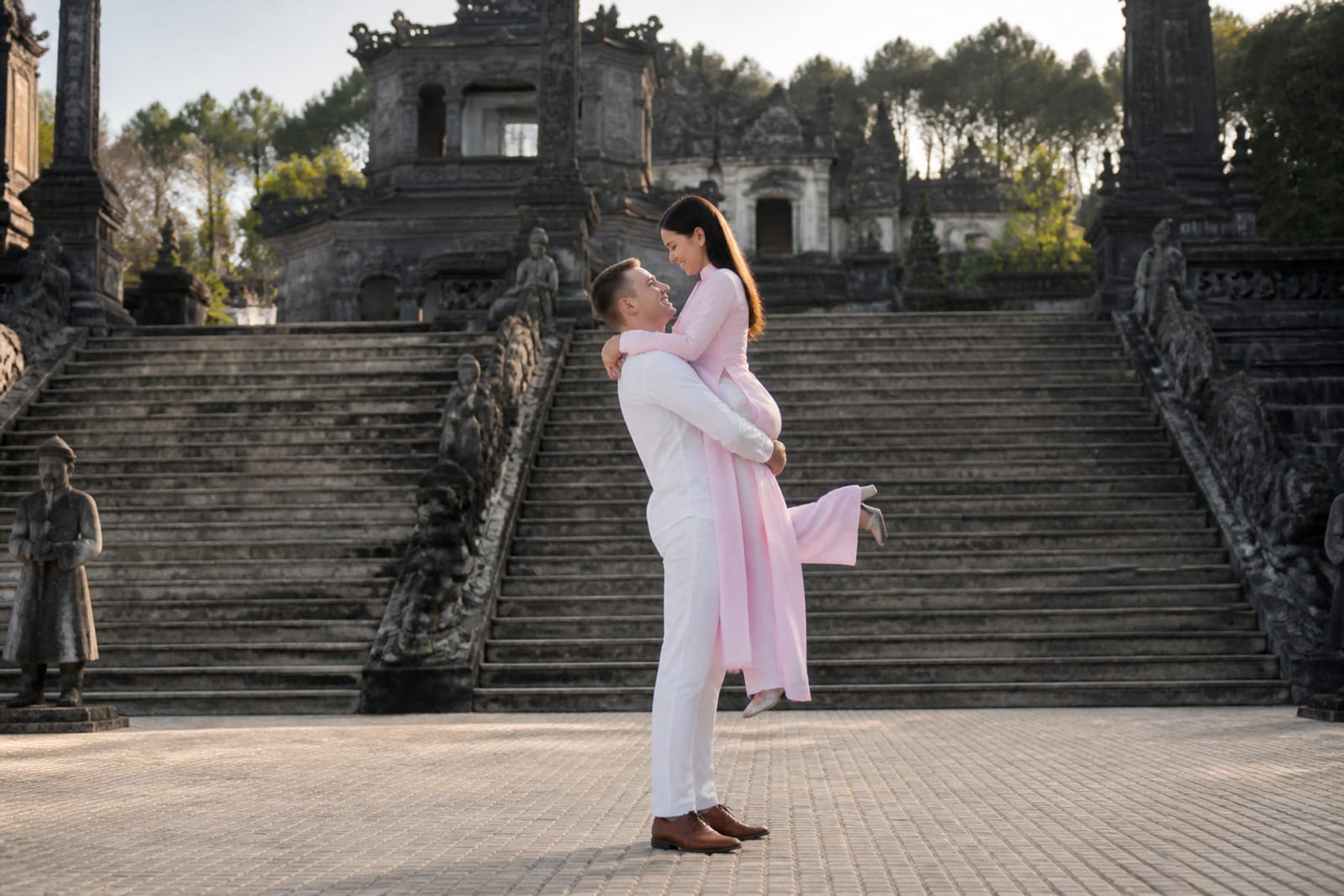
Water-based poses demand balance between romance and practicality. Standing poses in shallow water (ankles to waist depth) work best: couples face each other at arm's length, groom behind bride with hands on her waist, or bride leaning back against groom's chest. These poses feel intimate without requiring the couple to swim or sit (which soaks clothing). Walking poses along water edges—bride in front, groom trailing slightly behind, both looking down or toward the horizon—suit the reflective surface and allow the photographer to capture water movement beneath them. Sitting poses on driftwood or rocks work only if the setup is stable and the couple's outfit can handle dampness; avoid them if wearing heavy fabrics or white silk that stain visibly when wet.
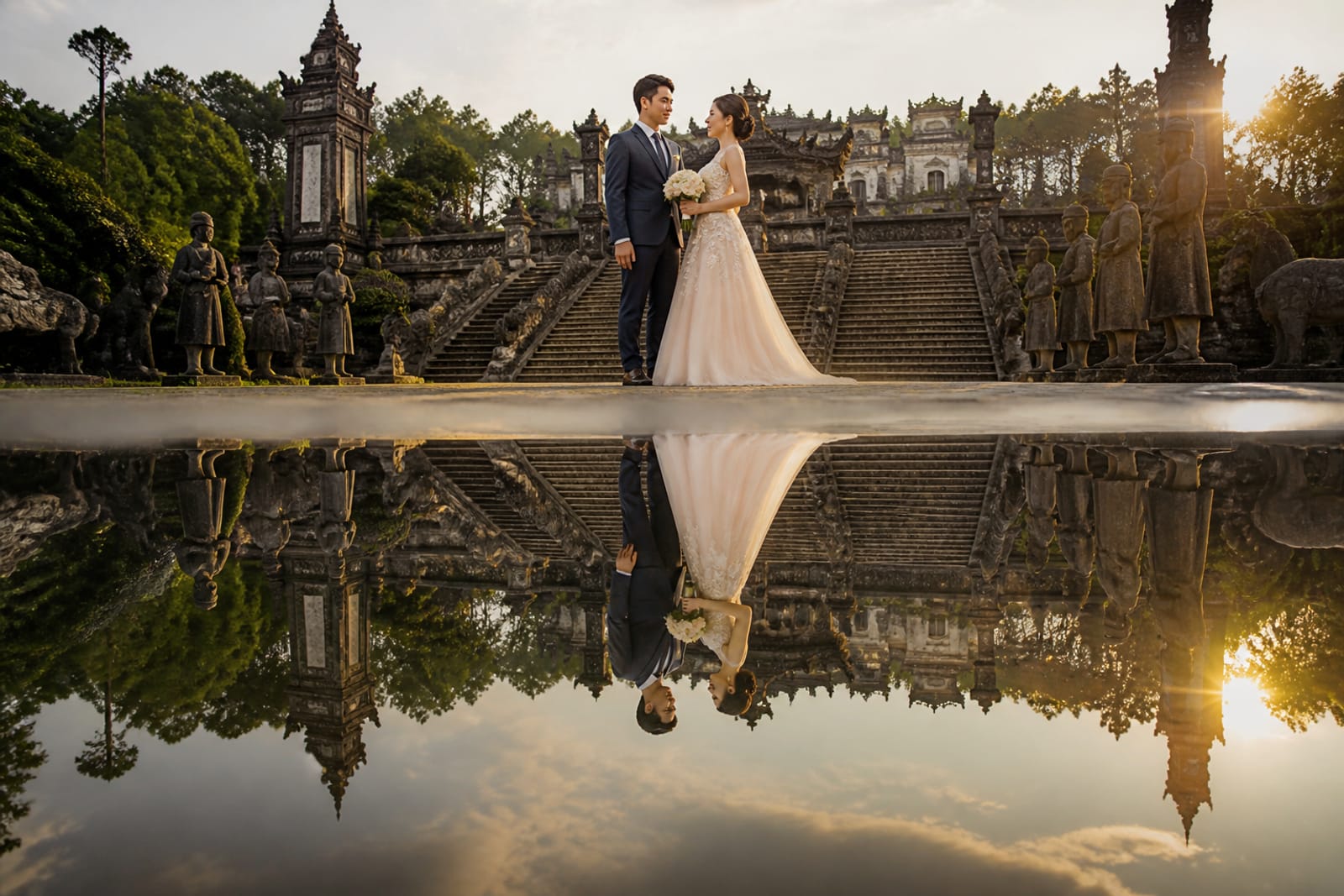
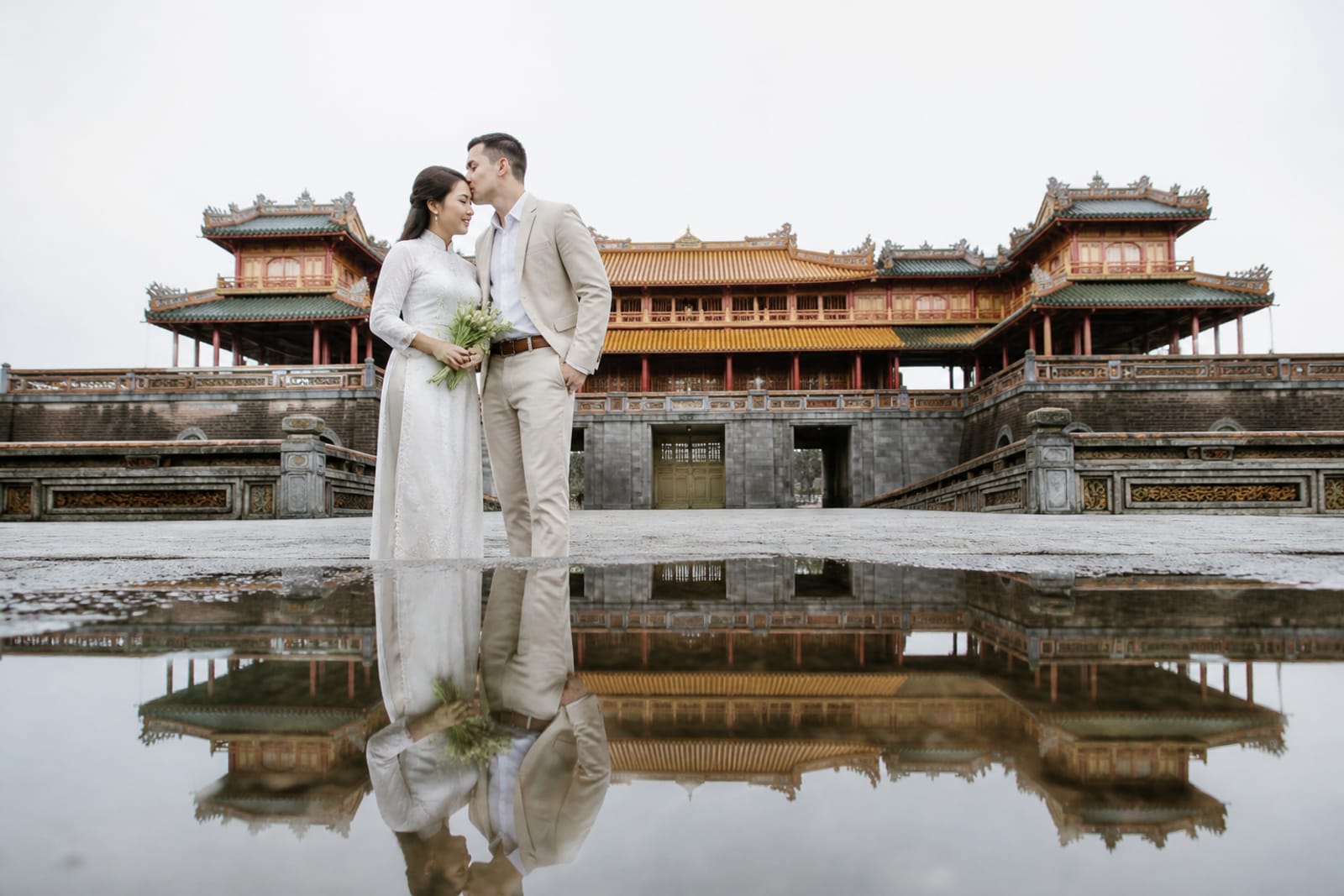
The lagoon's reflections are the pose's secret: when the couple stands still, their reflection doubles the composition's height and emotional weight. Photographers frame shots low (knee-height perspective) to maximize water in the frame. Avoid poses that require the couple to look directly at the camera while wading—the strain shows on faces. Instead, have them look at each other, the horizon, or the photographer's shoulder. This keeps expressions natural and works with the soft, diffuse light that lagoons provide.
What season and time of day gives the clearest lagoon light?
| Season | Best hours | Light quality | Water state | Rainfall risk | Why it works |
|---|---|---|---|---|---|
| Feb–Apr | 06:00–07:30, 16:30–18:00 | Warm, directional | Glassy, mirror-like | Low–mod | Cool air, stable weather, soft golden tone |
| May–Aug | 05:30–06:30 (dawn only) | Intense, harsh by 07:30 | Glassy but humid haze | Low | Heat makes afternoon untenable; dawn is sharp |
| Sep–Dec | 05:30–06:30 (if no rain) | Soft but grey | Choppy, wind-driven | Very high | Rainy season; Oct–Nov nearly unpredictable |
Central-coast climate (Hue's zone) is driest Feb–Aug. February to April offers the sweet spot: cool enough to shoot comfortably, low rain, and warm light that flatters skin. By May, heat and humidity rise; afternoon shoots become unbearable, and dawn is the only option. Sep–Dec is Hue's rainy and typhoon season—Oct–Nov worst. Lagoon water becomes choppy, reflections fracture, and morning downpours can cancel shoots hours before they start.
Timing within the hour matters as much as the season. Shoot 05:30–07:00 for the softest, most diffuse light; by 07:30, sun intensity jumps. In afternoon, begin no later than 16:30; by 17:30, the light flattens and color temperature shifts orange-red, which can clash with certain ao dai fabrics. Overcast mornings (common in cooler months) produce even, shadowless light—ideal for close-ups, but the overall mood feels cooler and less romantic unless the photographer warms tones in editing.
What should the bride and groom wear for water and mud safety?
Outfit choice determines comfort and image quality equally. Traditional choices:
- Ao dai (traditional Vietnamese dress): Silks and satins show water stains immediately and cling heavily when wet. Lightweight silk or synthetic blends dry faster and show fewer marks. Avoid white or very pale pastels for lagoon shoots; dusty rose, sage, or deep jewel tones hide water splashes. The áo dài's long, flowing skirt creates stunning reflections but will drag through water and mud—plan for alterations or a removable train. Rent from Cáo Studio's ao dai collection or a local Hue tailor to avoid travel damage.
- Western bridal wear: A fitted white gown or short dress risks permanent staining. Couples choosing Western styles often opt for a tea-length or knee-length dress in a forgiving fabric (cotton, linen blend), paired with a cover-up or kimono to layer on or off. Grooms in suits look sharp but overheat in humidity; linen or lightweight cotton suits are more practical than wool.
- Undergarments matter: Moisture-wicking undershorts or swim briefs prevent visible chafing or transparency. Bring a change of undergarments because wet cotton stays cold. Grooms should avoid boxers that absorb water; briefs or swim-style trunks stay compact.
- Footwear: Bare feet in shallow water look romantic in photos but expose toes to rocks, shells, and bacteria. Wear water shoes or sandals until the final shots, then remove for the frame. Bring a dry pair for the boat ride home.
Color and fabric checklist:
- Matte silks show water less than glossy satins.
- Jewel tones and warm neutrals photograph better than pure white in reflected light.
- Test fabrics wet before committing: does the stain wash out? Does the dye bleed?
How does local photographer experience change what's possible?
A photographer who has shot Tam Giang repeatedly knows tide timing, which sections of water stay shallowest, and which boat captains cooperate with repositioning. They've learned that a 20-minute boat ride eats into shooting time, that 06:00 start times mean the couple must arrive by 05:15, and that a sudden wind can shred soft light in seconds. They've also built relationships with boat operators and local vendors, meaning faster logistics and access to lesser-known, less-crowded spots within the lagoon.
Vetting a Hue-based photographer:
- Ask for lagoon-specific galleries. If they show only studio shots or urban locations, their lagoon experience is unproven.
- Request a weather contingency plan. A pro has a backup indoor location or a shoot-date-reschedule policy for rain.
- Check their technical knowledge. Ask how they meter exposure over water (which fools many cameras into underexposure). A seasoned shooter uses spot metering on the couple's face and knows how to correct for water glare.
- Confirm gear: Do they bring backup cameras? A gimbal or drone for aerial shots? Extra batteries (heat drains them fast)?
- Understand delivery timings. Ask how many edited photos you'll receive, how soon, and in what format. Compare this to Cáo Studio's pre-wedding photoshoot service so you know the industry standard.
If you're based in Hanoi or Ho Chi Minh City and want to work with a team you trust before traveling to Hue, consider booking a couple photoshoot or trial session with Cáo Studio in your home city to align on pose style, editing taste, and creative direction—then share that brief with your Hue photographer.
📸 Book on WhatsApp — pre-wedding photoshoot
What logistics and weather issues trip up couples the most?
Boat scheduling: Lagoon access is by boat only. Tour operators run shared boats on fixed schedules; private hires cost more but guarantee timing. Many couples book a shared boat thinking it's cheaper, then lose 30 minutes waiting for other tourists. Budget an extra hour for delays.
Tide and water level: Tam Giang's depth varies throughout the day. Low tide (usually midday) exposes mud and rocks; high tide (early morning and evening) floods the water higher up banks. Photographers plan shoots around high tide, but this isn't always predictable. Ask your boatman or local photographer what tide level to expect on your shoot date.
Wind: Afternoon winds whip the lagoon surface into ripples, ruining reflections and blowing lightweight fabrics around. Dawn is calmer but requires an earlier start. Humid, still mornings (Feb–Apr) are ideal; breezy afternoons are risky.
Humidity and heat: May–Aug, morning heat and humidity rise by 07:30, fogging lenses and causing makeup to run. A photographer should carry lens cloths and work fast. Brides sweat under ao dai in heat; plan for makeup touch-ups.
Weather volatility Feb–Apr: Cool-season rain is brief but can be heavy. A downpour at 06:45 might pass by 07:15, but water will be dark and choppy. Rescheduling is safer than rushing through.
Mud on clothing: Wading near mangrove roots kicks up sediment. The bride's ao dai hem and the groom's pant legs will gather mud. Bring a basin or towel for a rinse before final shots. Some local photographers bring portable water for cleaning.
---
Comparing lagoon shoots to other Hue pre-wedding options
| Location | Best for | Water risk | Light predictability | Outfit demands | Crowd level |
|---|---|---|---|---|---|
| Tam Giang Lagoon | Romantic, reflective, unique | High | Moderate (weather-dependent) | Water-safe fabrics | Very low |
| Imperial Citadel grounds | Grand, historical, formal | None | High (controlled) | Any ao dai or Western wear | High |
| Perfume River banks | Scenic, sunset, accessible | Low (dry land) | High | Standard photoshoot outfits | Moderate |
| A Shau Valley / rural villages | Authentic, rustic, adventurous | Varies | Moderate | Practical, weather-appropriate | Very low |
Tam Giang Lagoon suits couples who prioritize uniqueness and romantic intimacy over grandeur. If you want iconic history, the Imperial City delivers more recognizable landmarks. If you want guaranteed light and no water exposure, riverside or urban Hue locations are safer. If you're seeking an adventurous, off-the-beaten-path experience with a strong visual hook, Tam Giang is unmatched.
---
What to check before you book a Tam Giang lagoon pre-wedding shoot
- Photographer's lagoon portfolio: Request at least 3 galleries from different seasons; check water clarity, couple expression quality, and light handling.
- Boat operator clarity: Does the photographer arrange transport, or do you? What time does the boat depart, and who covers lateness?
- Weather policy: Is there a reschedule window if rain or wind is forecast? How many free rescheduling attempts are allowed?
- Outfit guidance: Has the photographer advised on water-safe fabrics, colors, and undergarments? If not, ask directly.
- Edited file count and timeline: How many photos will you receive? Edited, raw, or both? Delivery date? (Compare to Cáo Studio's pre-wedding package details to set expectations.)
- Backup locations: If the lagoon is unsafe (storm, extreme tide), does the photographer have an alternative outdoor spot in Hue?
- Drone or aerial shots: Are these included or extra? Check if permits or special agreements with boat operators apply.
- Make-up and hair: Does the photographer work with a stylist, or should you hire separately? Cáo Studio offers makeup and hair services at your hotel—if you're in Hanoi or Ho Chi Minh City beforehand, book a trial session to perfect your look.
---
If you're based in Hanoi, Ho Chi Minh City, or Hoi An and want to prepare for a Hue lagoon shoot with a trusted team, Cáo Studio can help. Book a couple photoshoot session to test poses, outfits, and your chemistry with a photographer. We can also arrange makeup and hair services to dial in your bridal look before you travel. Discuss your Tam Giang vision with our team on WhatsApp, and we'll connect you with best practices for Hue-based coordinators.
For more pre-wedding inspiration across Vietnam, explore our pre-wedding photoshoot guide, lookbook, and FAQ.
FAQ
Can we shoot at Tam Giang Lagoon year-round?
Technically yes, but Feb–Apr is optimal (cool, dry, soft light). May–Aug requires dawn-only shoots due to heat. Sep–Dec is Hue's rainy season; Oct–Nov is nearly unreliable. Book a photographer with weather rescheduling.
Will our white ao dai stain in lagoon water?
Likely. Pale silks show water marks and mud splashes. Choose jewel tones, dusty pastels, or deep neutrals instead. Test your fabric wet beforehand. Lightweight synthetic blends dry and hide marks better than silk.
How early do we need to wake up for the best light?
Plan to be on the water by 05:45–06:00 for optimal 06:00–07:15 light. This means arriving at the boat landing by 05:15. Afternoon shoots (16:30–18:00) are possible but less reliable for soft reflections.
What if it rains the morning of our shoot?
Ask your photographer about rescheduling policy when you book. Brief morning rain may pass within 30 minutes; a pro will wait or pause and resume. Heavy rain or storms should trigger a full reschedule to a backup date or indoor location.
Do we need a professional waterproof stylist at the lagoon?
Not essential if your outfits are pre-selected and tested. But a stylist on-site handles mud touch-ups, fabric adjustments, and makeup refresh between poses—worth the cost if you're flying in. Cáo Studio coordinates makeup and hair services in Hanoi, Ho Chi Minh City, and Hoi An; ask about coordinating with a Hue-based team.
FAQ
Can we shoot at Tam Giang Lagoon year-round?
Technically yes, but Feb–Apr is optimal (cool, dry, soft light). May–Aug requires dawn-only shoots due to heat. Sep–Dec is Hue's rainy season; Oct–Nov is nearly unreliable. Book a photographer with weather rescheduling.
Will our white ao dai stain in lagoon water?
Likely. Pale silks show water marks and mud splashes. Choose jewel tones, dusty pastels, or deep neutrals instead. Test your fabric wet beforehand. Lightweight synthetic blends dry and hide marks better than silk.
How early do we need to wake up for the best light?
Plan to be on the water by 05:45–06:00 for optimal 06:00–07:15 light. This means arriving at the boat landing by 05:15. Afternoon shoots (16:30–18:00) are possible but less reliable for soft reflections.
What if it rains the morning of our shoot?
Ask your photographer about rescheduling policy when you book. Brief morning rain may pass within 30 minutes; a pro will wait or pause and resume. Heavy rain or storms should trigger a full reschedule to a backup date or indoor location.
Do we need a professional waterproof stylist at the lagoon?
Not essential if your outfits are pre-selected and tested. But a stylist on-site handles mud touch-ups, fabric adjustments, and makeup refresh between poses—worth the cost if you're flying in. Cáo Studio coordinates makeup and hair services in Hanoi, Ho Chi Minh City, and Hoi An; ask about coordinating with a Hue-based team.
Ao dai, makeup, hair and a local photographer in Hanoi or Saigon — one WhatsApp message.