/pre-wedding-photoshoot
Pre-wedding photo ideas and poses at Thanh Ha pottery village
Thanh Ha pottery village near Hanoi is a working artisan community where clay wheels, terracotta kilns, and dusty workshops create naturally textured backdrops. A pre-wedding photoshoot there typically runs 2–4 hours in early morning (5:30–7:30 a.m., before crowds and heat arrive) or late afternoon (4:30 p.m. onwards, as golden light hits the kiln walls). Poses work best around active pottery wheels, stacked clay pots, brick courtyards, and the village's narrow lanes lined with drying vessels. Wear neutral, earthy tones that don't compete with terracotta; avoid white (clay dust shows instantly). The village is still a functioning workspace—potters work year-round regardless of weather. Cáo Studio – Makeup & Photoshoot books shoots there with makeup and hair included; avoid midday heat (11 a.m.–3 p.m.), peak tourist crowds (weekends, holidays), and rainy days that make clay lanes slippery. Sunrise light is soft and directional; sunset warm and golden. Plan ahead because village access requires coordination with workshop owners, and the team travels from Hanoi. ---
How does early-morning light change the mood of your photos?
Sunrise at Thanh Ha (roughly 5:30–6:30 a.m. depending on season) casts long, soft shadows across clay and brick. Early light is directional: it rakes across texture, making weathered kiln walls and raw pottery feel three-dimensional. Shadows fall away from your couple's faces—ideal for close-ups and intimate poses by still wheels or stacked vessels. The light is cool-toned (slightly blue) in winter and warmer (golden) in spring and autumn.
Golden hour—the 45 minutes before sunset—reverses the light direction. Kilns glow amber; clay glows warm orange. Backlit poses (couple silhouetted against a kiln mouth or workshop entrance) work beautifully. This window is shorter than sunrise and crowds peak around 4:30 p.m., so timing is tighter. Many couples choose sunrise for clarity and intimacy, sunset for drama and warmth. Both avoid the harsh, flat midday sun (11 a.m.–3 p.m.) that flattens texture and forces squinting.
Why it matters: Light dictates mood more than pose. Sunrise feels fresh, vulnerable, quiet. Sunset feels romantic, energetic, alive. Choose your time, and the location does half the work for you.
---
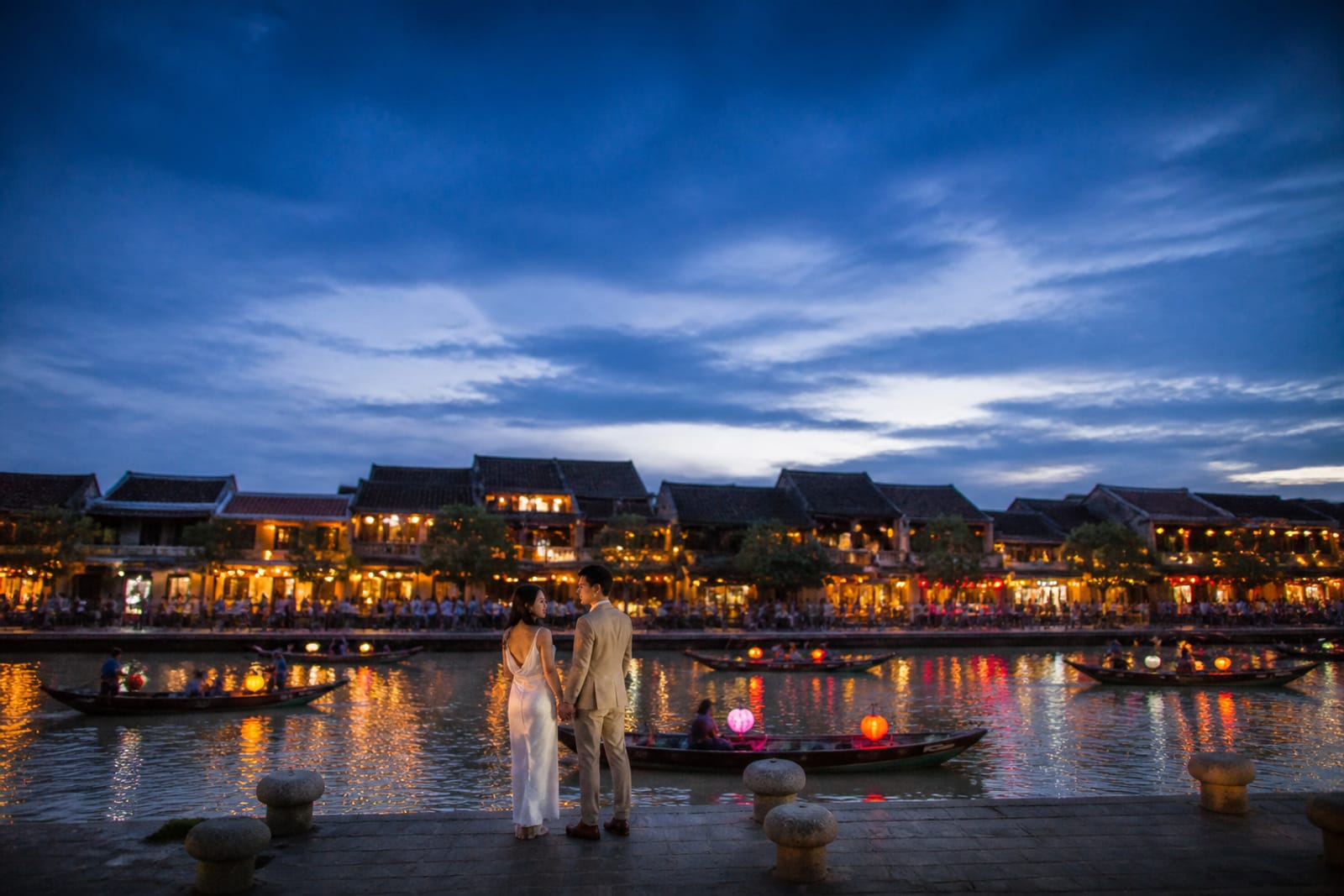
What poses actually work in a working pottery village?
Authentic poses emerge from the landscape, not from posing. At Thanh Ha, potters are working—your couple fits around that activity, not in front of it as performance. This is what distinguishes a real shoot from a staged one.
Posed-but-natural moments:
- Couple standing at a pottery wheel (one touching it, one leaning in from behind)
- Bride sitting on a clay block or wooden bench; groom standing, looking at her
- Both walking hand-in-hand through a narrow lane between stacked pots
- Bride's dress (ao dai or Western gown) draped over a completed clay pot or kiln ledge—detail shot
- Couple framed in a kiln doorway, backlit
- Bride held or dipped near stacked terracotta pots, groom steady beneath
- Sitting cross-legged among clay scraps, foreheads nearly touching
The difference between a tourist photo and a keepsake: the couple interacts with the village as guests, not props. A real photographer (like those at Cáo Studio – Makeup & Photoshoot) notices a potter's hand on a wheel and positions you to frame that moment. You're part of the narrative, not above it.
Common mistake: Over-posing kills authenticity. Standing perfectly still with sculpted smiles feels corporate. Instead, move, laugh, steal glances. The photographer captures the between moments—the laugh, the sigh, the hand adjustment. That's what you'll treasure.
Conclusion: The best poses feel like you weren't posing—because you were busy falling in love in front of a kiln.
---
Which season or weather works best, and when should you avoid shooting?
| Season | Light & Texture | Crowds | Weather Risk | Outfit Feel | Recommendation |
|---|---|---|---|---|---|
| Feb–Apr (spring) | Cool, soft, golden at edges | Moderate weekdays; busy weekends | Occasional drizzle; manageable | Lightweight fabrics, pastels over earth tones | Strong choice: mild air, green landscape backdrop nearby, fewer tour buses |
| May–Aug (summer) | Harsh midday; golden before 6 a.m., after 6 p.m. | Heavy (domestic and international tourism peaks) | None; drought | Heat wears makeup, sweat shows on silk; shoot sunrise only | Sunrise-only option; expect crowds; ao dai or lightweight layers advised |
| Sep–Dec (autumn/winter in the north) | Golden Oct–Nov; grey Dec–Jan | Dec–Jan quiet; Oct–Nov moderate | Oct–Nov sporadic rain; Dec–Jan drizzle common | Layering works; rich, dark tones suit grey skies | Feb–Apr better; if winter shooting, sunrise still golden |
Why these matter: Thanh Ha is outdoors with zero shade at midday. Summer heat (often 32–35°C by 10 a.m.) causes makeup to break down, fabric to cling, and exhaustion. Spring and early autumn offer the sweet spot: cool enough to move comfortably, warm enough for soft light, and fewer crowds on weekdays. Winter drizzle won't stop a shoot if you're prepared (bring a light umbrella for gaps, not during active shots), but dust turns to mud, and grey light is flat—unless you're after moody, overcast texture (which some couples love).
Avoid: Mid-May through mid-September midday shoots; October–November if you can't reschedule (unpredictable rain). December–January shoots are fine, just expect greyness and drizzle, not golden warmth.
Conclusion: Book Feb–Apr or early May sunrise; summer requires dawn timing; winter is doable but moodier.
---
What should you wear to photograph well against clay and terracotta?
The golden rule: your outfit should complement terracotta, not fight it. Clay is warm, earthy, rustic. Pastels, whites, and neon read as divorced from the setting. Your couple becomes two separate objects on a background, not part of a scene.
Outfit framework:
- Bride: Ao dai (traditionally deep jewel tones—emerald, burgundy, navy—or pale cream with burgundy panels) works because it's rooted in Vietnamese culture and the earth tones read warm. A Western white gown can work if photographed in strong backlight (silhouette) or if styled with earthy makeup and a shawl in taupe, sage, or rust. Avoid pure white in flat daylight—it becomes blown-out and clinical.
- Groom: Neutral suit (charcoal, navy, olive, even terracotta-brown linen) or traditional áo ghi (dark, structured, ties the setting together). Avoid bright white shirts without layering.
- Accessories: A straw hat, silk scarf in warm tones, or woven belt adds texture and reads "intentional," not "forgot to plan." Avoid jewelry that sparkles loudly—it distracts.
- Makeup: Warm, earthy tones (bronze, rust, burnt sienna eyeshadow; warm-brown or nude lips) sit naturally against kiln walls. Cool-toned makeup (silver, mauve, cool pink) reads modern and jars the rustic mood.
- Footwear: Avoid white sneakers or heels that sink into clay dust. Leather flats, sandals, or boots anchor you visually and practically.
Why it works: When your outfit echoes the environment's palette, photos feel composed, not shot at. Your couple is one element of a harmonious scene.
📸 Book on WhatsApp — pre-wedding photoshoot
Conclusion: Think warm, natural, textured—let the clay shine; you frame it, not compete.
---
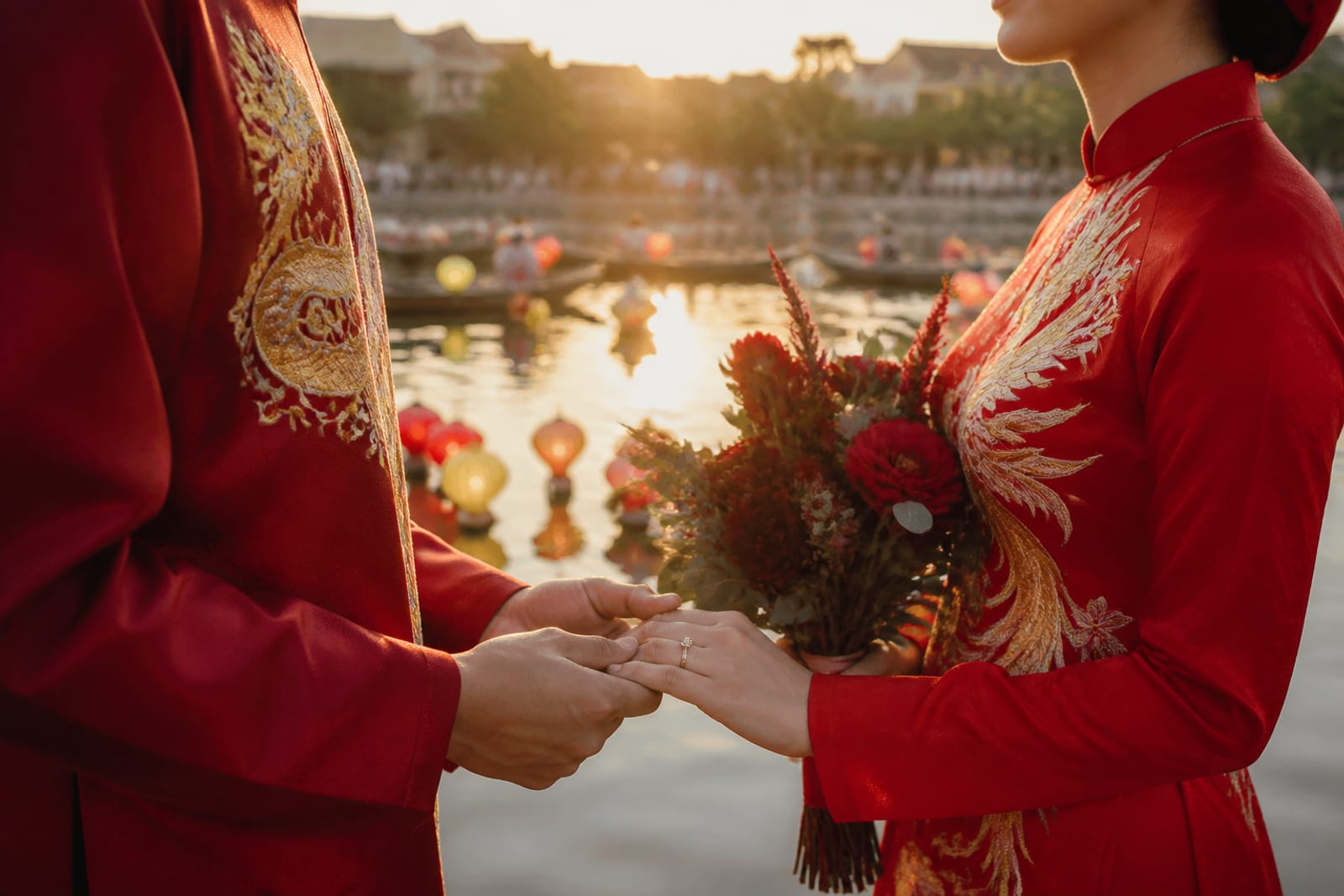
How do you book a shoot at Thanh Ha and what costs should you factor in?
Thanh Ha pottery village is a real working community, not a paid photo set. This means booking is not like renting a venue. Instead, you coordinate with a photographer who has relationships with workshop owners and can arrange access during quiet hours.
Cáo Studio – Makeup & Photoshoot (based in Hanoi) books pre-wedding shoots at Thanh Ha as part of its pre-wedding photoshoot service. The team travels from Hanoi city (roughly 45 minutes each way), so your booking will include:
- Travel time cost factor: The team's commute from central Hanoi is built into quotes—ask on WhatsApp for specifics.
- Session length: Typically 2–4 hours, depending on your package. Exact inclusions (number of edited images, outfit changes, hair and makeup, delivery timeline) are confirmed on WhatsApp.
- Makeup and hair: Often included; confirm when you inquire.
- Village access: The photographer arranges this; you don't negotiate directly with potters. Some workshops may ask for a small gesture (tea, snacks) if you're shooting inside, but this is informal—ask the team.
What to check before booking:
- Is early-morning access possible? (Requires early hotel pickup; confirm if your hotel is far from the village.)
- Do you want to wear an ao dai or bring a gown? (Cáo Studio offers rental; confirm sizing timeline on WhatsApp.)
- How many outfits? (More outfits = longer session, higher cost factor.)
- Will you need makeup and hair done on-location or at a Hanoi studio beforehand?
- What's the turnaround for edited files? (Ask the team—timelines vary by season and workload.)
Booking steps:
- Message WhatsApp +84 338 762 340 with your date, preferred time (sunrise or sunset), and outfit ideas.
- Share reference photos or mood board if you have one (helps the team propose poses).
- Receive a quote (factors: travel, session length, inclusions, season).
- Confirm date, and the team coordinates village access.
- Deposit sent (details on WhatsApp); shoot date confirmed.
Timing: Book at least 2–3 weeks ahead to secure your preferred date and allow time for ao dai or makeup trials if needed.
Conclusion: Booking is straightforward if you contact the studio early and clarify your outfit and timeline expectations.
---
How does a real photographer make Thanh Ha feel timeless, not touristy?
The difference between a snapshot and a keepsake lies in the photographer's eye and how they direct you within the place. A tourist photo: couple poses stiffly in front of a kiln, smiling at the camera, ceramic pots artfully blurred behind them. A Cáo Studio shoot: the photographer notices a potter working at a wheel across the courtyard. They position you near that wheel, not at it. You're laughing at something your partner whispers. The potter keeps working. The wheel, the clay, the hands, your couple—all in one frame, layers of human work nested together.
Timelessness comes from:
- Narrative over posture. You're doing something (walking, leaning, sitting), not holding a pose.
- Texture as subject. Close-ups of a clay pot with your hands framing it. Your bride's ao dai fabric draped over a weathered kiln ledge. These details anchor the story.
- Silence and observation. The photographer isn't barking directions; they're watching. When you relax, forget the camera, and look at each other—that's when the shutter fires.
- Respect for the place. Potters keep working. Tourists pass by. Your couple becomes part of that honest daily scene, not a staged interruption.
Avoid the tourist trap: Hire a photographer who has shot there before, knows the potters' schedules, and can propose a shot list (not a rigid schedule). Look at their lookbook or past work—do the couples in their Thanh Ha photos look like they're living there for a moment, or posing in front of a backdrop?
Conclusion: Timeless photos happen when the photographer sees the place first and fits your couple into that story, not the other way around.
---
What to check before you book
- Sunrise access: Confirm the team can pick you up early enough. Some hotels require advance notice.
- Outfit decision: Ao dai (rental available; confirm sizing 3+ weeks ahead) or Western gown. Decide now so the photographer can advise on lighting and poses.
- Weather flexibility: Book a date with a 1–2 day buffer. If rain is forecast, reschedule rather than shoot in downpour (mud, safety, light).
- Makeup and hair: Included in your package? Confirm on WhatsApp. If done beforehand at a Hanoi studio, allow 1.5 hours and travel time before heading to the village.
- File delivery: Ask when edited files arrive. Peak season (Mar–Apr) can mean 2–4 weeks; off-season faster.
- Budget factors: Session length, outfit count, travel time, makeup/hair—all affect the quote. Ask on WhatsApp for a breakdown.
- Backup indoor option: If weather turns severe, does the studio offer an indoor shoot at one of its Hanoi branches, or a reschedule credit?
---
FAQ
Can we shoot at Thanh Ha during peak tourist hours (10 a.m.–3 p.m.)?
Yes, but light is harsh, heat exhausts couples and makeup, and crowds make intimate poses difficult. Early morning (5:30–7:30 a.m.) or late afternoon (4:30 p.m. onwards) yield better results and fewer onlookers. Discuss timing with the studio when booking.
Is an ao dai required, or can we wear Western wedding outfits?
Both work. Ao dai reads traditional and fits the rustic setting beautifully. Western gowns (especially white or cream) require careful lighting—backlight and silhouette poses work best. Discuss your preference on WhatsApp; the team can advise on outfit rental or styling.
How far is Thanh Ha from central Hanoi, and does the photographer travel there?
Approximately 45 minutes from Hanoi city center by car. Cáo Studio – Makeup & Photoshoot's team travels there as part of the pre-wedding shoot service. Commute time is factored into your quote.
What happens if it rains on our shoot day?
Light drizzle is manageable with an umbrella between shots. Heavy rain risks safety (slippery clay lanes) and visibility. If weather is severe, reschedule with the studio. Confirm your cancellation and reschedule policy on WhatsApp when booking.
Do we need to pay the pottery workshop owners directly, or does the photographer handle access?
The photographer (Cáo Studio) arranges access through existing relationships. You don't negotiate directly. Small courtesies (tea, snacks) are sometimes appreciated but informal—the studio will advise.
How many edited photos do we receive, and when?
Exact deliverables (number of images, editing style, timeline) depend on your package and are confirmed on WhatsApp. Typical turnaround is 2–4 weeks; ask about peak-season delays when booking.
Can we book Thanh Ha photoshoots if we're in Ho Chi Minh City or Hoi An?
Thanh Ha is in northern Vietnam near Hanoi. Cáo Studio shoots pre-wedding photoshoots in Hanoi, Ho Chi Minh City, and Hoi An (by appointment). If you're based elsewhere, ask the team about availability and travel coordination on WhatsApp.
What's the best time of year to shoot at Thanh Ha for weather and light?
February–April offers mild temperatures, soft golden light, and manageable crowds on weekdays. May–August requires sunrise-only shoots (heat and harsh midday sun). October–November may have sporadic rain. December–January is cooler but grey. Book Feb–Apr for optimal conditions.
Do you offer family photoshoots or couple photoshoots at Thanh Ha as well?
Yes. Couple shoots are common there. Family sessions and other formats can be arranged—ask the studio on WhatsApp about your specific needs and how the village setting suits your group.
FAQ
Can we shoot at Thanh Ha during peak tourist hours (10 a.m.–3 p.m.)?
Yes, but light is harsh, heat exhausts couples and makeup, and crowds make intimate poses difficult. Early morning (5:30–7:30 a.m.) or late afternoon (4:30 p.m. onwards) yield better results and fewer onlookers. Discuss timing with the studio when booking.
Is an ao dai required, or can we wear Western wedding outfits?
Both work. Ao dai reads traditional and fits the rustic setting beautifully. Western gowns (especially white or cream) require careful lighting—backlight and silhouette poses work best. Discuss your preference on WhatsApp; the team can advise on outfit rental or styling.
How far is Thanh Ha from central Hanoi, and does the photographer travel there?
Approximately 45 minutes from Hanoi city center by car. Cáo Studio – Makeup & Photoshoot's team travels there as part of the pre-wedding shoot service. Commute time is factored into your quote.
What happens if it rains on our shoot day?
Light drizzle is manageable with an umbrella between shots. Heavy rain risks safety (slippery clay lanes) and visibility. If weather is severe, reschedule with the studio. Confirm your cancellation and reschedule policy on WhatsApp when booking.
Do we need to pay the pottery workshop owners directly, or does the photographer handle access?
The photographer (Cáo Studio) arranges access through existing relationships. You don't negotiate directly. Small courtesies (tea, snacks) are sometimes appreciated but informal—the studio will advise.
How many edited photos do we receive, and when?
Exact deliverables (number of images, editing style, timeline) depend on your package and are confirmed on WhatsApp. Typical turnaround is 2–4 weeks; ask about peak-season delays when booking.
Can we book Thanh Ha photoshoots if we're in Ho Chi Minh City or Hoi An?
Thanh Ha is in northern Vietnam near Hanoi. Cáo Studio shoots [pre-wedding photoshoots](/pre-wedding-photoshoot) in Hanoi, [Ho Chi Minh City](/saigon), and [Hoi An](/hoi-an) (by appointment). If you're based elsewhere, ask the team about availability and travel coordination on WhatsApp.
What's the best time of year to shoot at Thanh Ha for weather and light?
February–April offers mild temperatures, soft golden light, and manageable crowds on weekdays. May–August requires sunrise-only shoots (heat and harsh midday sun). October–November may have sporadic rain. December–January is cooler but grey. Book Feb–Apr for optimal conditions.
Do you offer [family photoshoots](/family-photoshoot) or [couple photoshoots](/couple-photoshoot) at Thanh Ha as well?
Yes. [Couple shoots](/couple-photoshoot) are common there. [Family sessions](/family-photoshoot) and other formats can be arranged—ask the studio on WhatsApp about your specific needs and how the village setting suits your group.
Ao dai, makeup, hair and a local photographer in Hanoi or Saigon — one WhatsApp message.