/pre-wedding-photoshoot
Pre-wedding photo ideas and poses at Thanh Toan tile-roofed bridge
Thanh Toan tile-roofed bridge (Cầu Thanh Toàn), located in Hue's outskirts, sits as a working village crossing with a 200+ year heritage. Pre-wedding couples shoot there for its symmetrical arches, aged tilework, and water backdrop—typically 30–90 minutes per location. Light peaks early morning (6–8 am) or late afternoon (4–5:30 pm) when sun rakes the wooden railings and creates mirror reflections. Best months are February to April: dry, cool, and clear skies without the oppressive heat or September–November typhoon risk. Wear an ao dai for cultural authenticity and flowing movement, or a white dress and suit for Western aesthetic; avoid heavy fabrics that catch wind on narrow walkways. Cáo Studio – Makeup & Photoshoot coordinates pre-wedding shoots in Hoi An and can advise on booking a local Hue-based photographer, including timing, etiquette at the heritage site, and how to manage crowds and permits. ---
Why is Thanh Toan bridge a go-to pre-wedding spot in Hue?
Thanh Toan's appeal lies in its frame-within-frame geometry: the wooden railings, the tiled roof overhang, and the water surface all compress layers that isolate the couple from the background bustle. The bridge is narrow (forcing intimate positioning), functional (locals cross daily, adding authentic activity), and photogenic in every season. Unlike manicured resorts, it feels lived-in—weathered wood and lichen-covered tiles shoot with character, not artifice. Couples choose it over studio backdrops because the age and stillness of the place register in photographs as quiet romance.
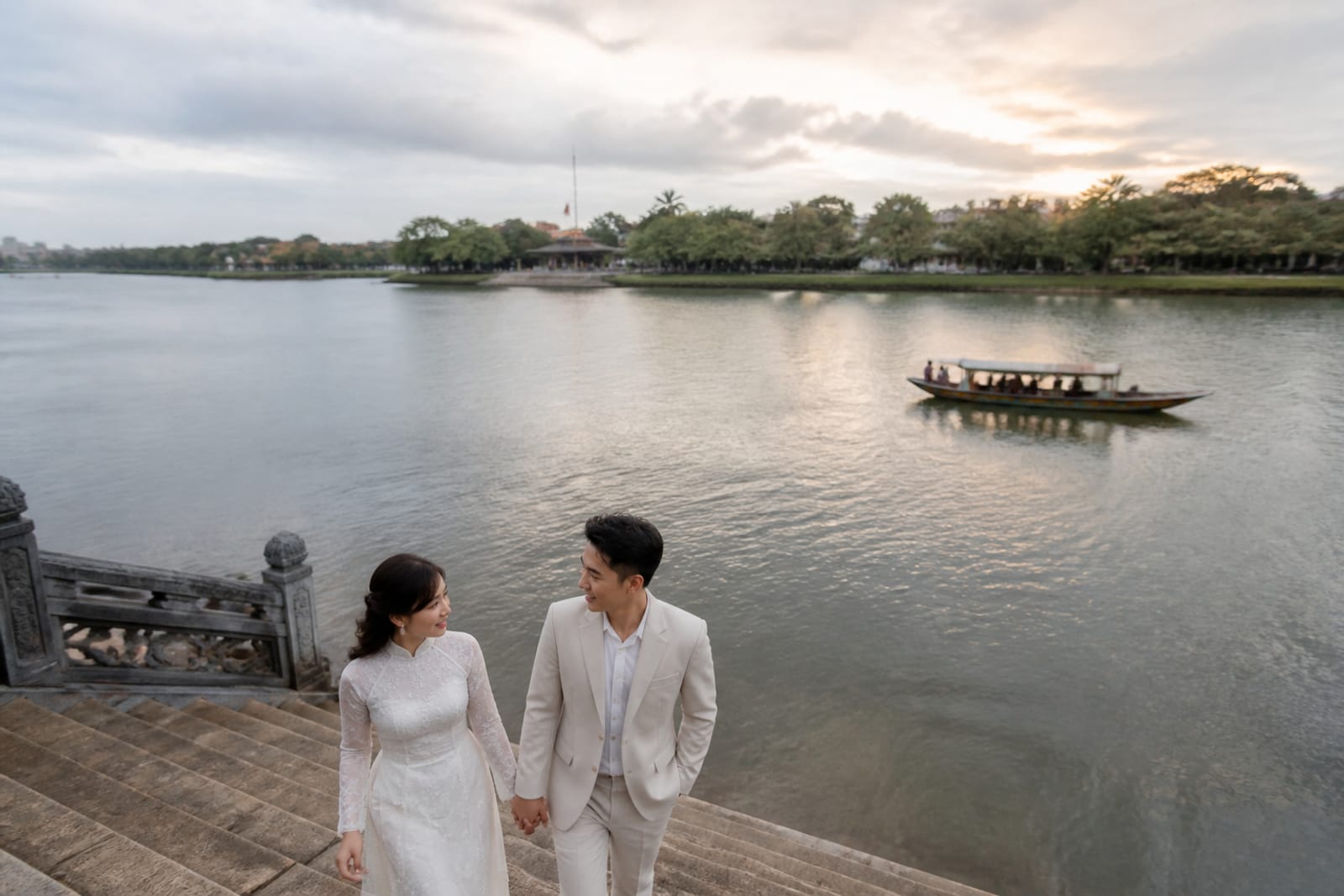
What light times and seasons deliver the sharpest images?
| Time of day | Light quality | Season fit | Crowd level | Why it works |
|---|---|---|---|---|
| 6–8 am | Low-angle raking, golden | Feb–Apr | Few locals; silent | Water mirrors perfectly; long shadows define railings |
| 10 am–2 pm | High, overhead, harsh | Feb–Apr only | Busy (locals cross); bright | Strong contrast; watch for harsh shadows on faces |
| 4–5:30 pm | Golden, side-lit | Feb–Apr | Moderate | Backlighting on water; warm skin tone; railings glow |
| 6 pm+ | Amber, fading fast | Feb–Apr | Very few | Ultra-soft but low; tripod needed; 10-minute window |
February–April is dry, cool (16–22°C), and has cloud-free skies; the photographer can predict light reliably. May–August brings oppressive heat (35°C+) and midday haze. September–November is the typhoon and flood season for central Hue; rain is heavy and frequent, especially October–November. December–January is cool but often grey and overcast. Conclusion: book a February–April morning or late-afternoon slot to maximize light clarity and minimize heat and crowd friction.
📸 Book on WhatsApp — pre-wedding photoshoot
How do you pose naturally without looking stiff on a narrow bridge?
Movement beats stillness on a working structure. Ask your photographer to capture you walking toward or away from the camera, hands linked, shoulders close but not rigid—the pace creates narrative and breaks the "stand and smile" trap. Sit on the bridge edge with feet dangling (ensure it's structurally safe first; ask locals); lean into the wooden railings in profile; lie on the deck floor (brings the water and arch into frame). Avoid facing the camera straight-on in the center—it flattens the geometry. Tilts, angles, and motion (spinning, laughing mid-step) read as spontaneous and conceal the self-consciousness that kills intimate couple photos.
Asymmetrical poses work: one partner higher on a step, the other lower; one framed by the arch, the other closer to the lens. Ask your photographer to shoot from water level (if safe) or from the bridge above—these angles compress the layers and make the couple look embedded in the structure. Avoid posed hand-on-hip or arms-crossed stances; they date fast. The bridge's grain, shadow, and reflection do the heavy lifting—your job is to move, laugh, and look at each other, not at the lens.
What outfit choices photograph best in this setting?
An ao dai (traditional Vietnamese tunic) is the obvious choice—it floats, catches light, and honors the heritage site. Choose jewel tones (emerald, sapphire, burgundy) that pop against aged wood; avoid pure white, which flattens in shadow. Pair with a simple understated ao nam (male tunic) in a complementary shade. White and nude Western wedding dresses work if the couple prefers; they read clean against the weathered backdrop. Avoid black entirely (it vanishes in shadows and against dark railings). Grooms in light linen suits or traditional silk keep the palette coherent.
Textiles matter: silk, cotton, and linen drape and move; tulle and heavy satin snag on wood and railings and look stiff in wind. Sleeveless and loose-sleeve cuts allow the photographer to show the bridge (arms held tight hide the setting). Jewelry should be minimal and non-reflective (avoid anything that catches the sun and creates flare). Shoes are rarely visible due to the framing angle and the bridge's low vantage, but wear something you can walk in safely—the wooden deck is worn and can splinter, and narrow passages demand steady footing.
If you're unsure, wear an ao dai rental sourced locally or book a makeup & hair session at your hotel the morning before to finalize the look with a professional who knows the site.
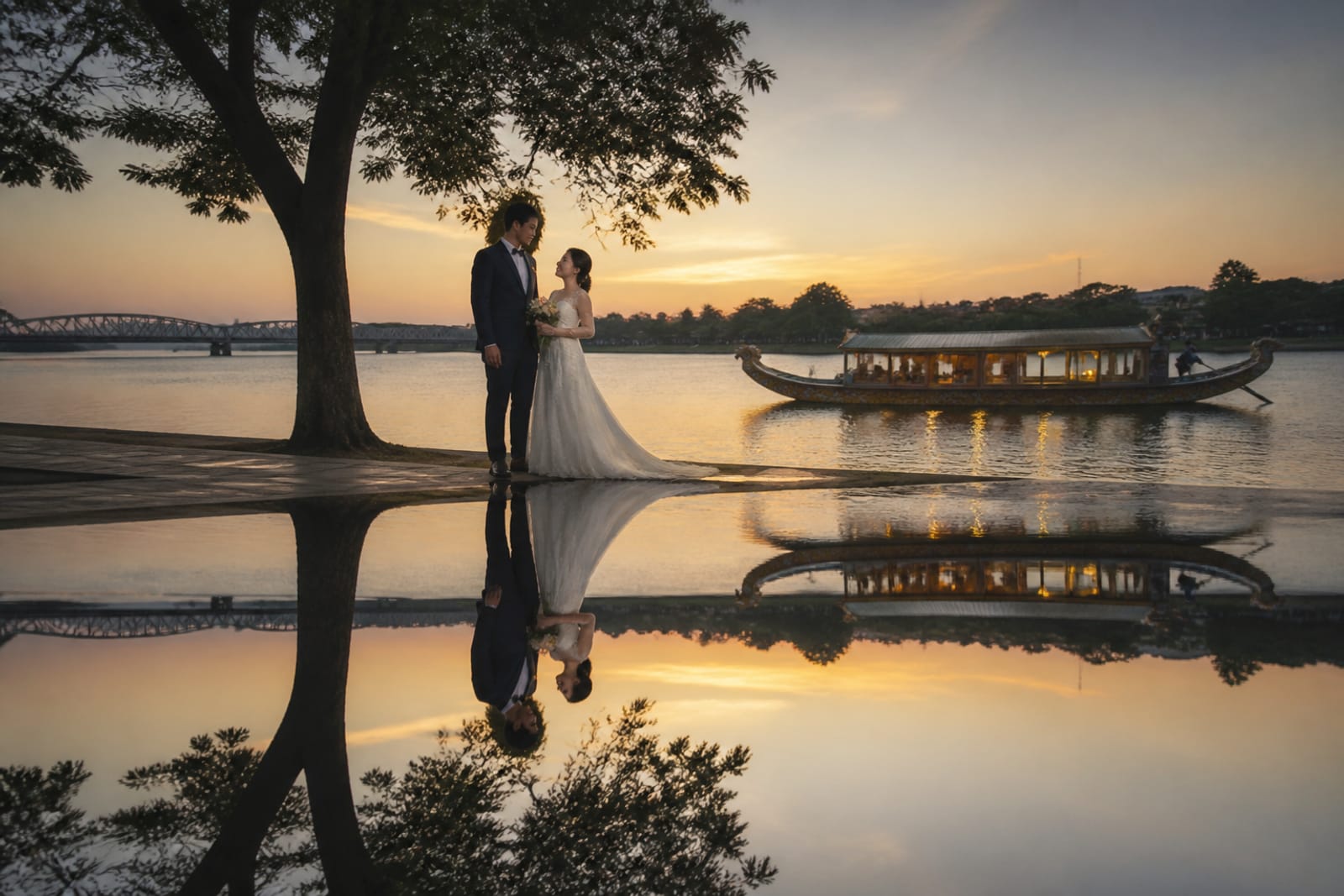
How do you navigate crowds, permits, and heritage site rules?
Thanh Toan is a working bridge and a heritage site; there is no formal entry fee, but local customs and safety matter. Visit early (before 8 am) to avoid school runs and farm traffic. Bring small gifts (candy, cash donation) for locals who cross while you're shooting—it's polite and keeps the energy light. Some photographers claim permits are required; check locally or ask your photographer—rules change. Tripods, reflectors, and large lighting rigs may be restricted; confirm with the site guardians or a local photo guide before arrival.
The walkway is narrow and slippery after rain or dew; avoid shoots within 24 hours of heavy rainfall. If the bridge is actively in use (motorbikes, carts, pedestrians), build pauses into your timeline—it's authentic clutter, not a hindrance, and often adds life to the frame. Respect other people working or living there: don't block traffic, don't move livestock or crops, and don't arrive with a large crew. A couple, a photographer, and perhaps one assistant are ideal. Dress modestly before and after the shoot out of respect for local tradition.
How do you choose between a local Hue photographer and a Hanoi/HCMC-based studio?
| Option | Best for | Logistics | Cost factors |
|---|---|---|---|
| Local Hue photographer | Familiarity with light, weather, permits, locals; native language | No travel time; available same-day or next-day; knows site intimately | Lower base rate; budget for interpreter if needed |
| Hanoi-based studio (Cáo Studio) | Consistency, edited style, makeup/hair included, album design | Travel day required; fixed schedule; Western communication ease | Higher travel cost; bundled services offset per-hour price |
| Self-hire + local coordinator | Maximum budget control; DIY direction | Relies on your research; requires backup plan if photographer cancels | Unpredictable; lowest upfront but highest risk of gaps |
A local Hue photographer knows exactly when the light hits the bridge railings each month, which seasons to avoid, and which village elders expect courtesy. They're faster (no orientation day) and cheaper on hourly rates. A Hanoi studio like Cáo Studio brings consistent post-processing, professional makeup and hair, and fluent English communication; the trade-off is travel logistics and a higher session investment. For couples outside Vietnam, a studio booking includes pre-shoot consultation and a finished album—clarity that a freelancer may not guarantee.
What to check before you book:
- Does your photographer know Thanh Toan's light? Ask for past work shot there; avoid portfolios with heavy midday or overcast images.
- Are permits, parking, or local permissions included in the quote? Confirm in writing what the photographer handles.
- What time of day is the session? Lock in dawn or late afternoon; if they suggest midday, ask why.
- How many edited images do you receive, and in what timeframe? Studio bookings typically specify this; freelancers may be vague.
- Is travel/accommodation your cost or theirs? For a Hanoi-based team, ask whether they charge a travel fee or if it's built into the session price.
- What's the backup plan if weather cancels the shoot? A reputable photographer should offer a reschedule or partial refund.
---
Comparing Thanh Toan with other Hue pre-wedding venues
Thanh Toan's narrow geometry and wooden heritage appeal to couples seeking intimate, atmospheric shots. The Citadel and royal tombs offer grandeur but require tickets and formal permits, and professional equipment may be restricted—useful for regal ao dai work but slower logistics. The Perfume River and Trang Tien Bridge give wider, open compositions but less framing drama and heavier crowds. Thanh Toan wins on character-per-minute and minimal bureaucracy; choose it if you want authentic, layered imagery on a tight timeline.
For couples combining multiple venues in one shoot, start at Thanh Toan (early morning, intimate poses), move to the Perfume River (midday, wider group or landscape shots), and finish at a temple or garden (late afternoon, soft backlit detail). This arc uses each location's peak light and avoids the 10 am–2 pm glare dead zone.
---
Ready to book a pre-wedding shoot at Thanh Toan?
Cáo Studio – Makeup & Photoshoot specializes in pre-wedding and ao dai photoshoots across Hanoi, Ho Chi Minh City, and Hoi An. While Thanh Toan is in Hue (outside our studio locations), we can advise on booking a trusted local photographer, outfit rentals, and post-shoot photo products—albums, prints, and keepsakes—to complete your story. Start with a WhatsApp consultation to discuss your vision, timeline, and budget.
📸 Book on WhatsApp — pre-wedding photoshoot | 💄 Makeup & hair at your hotel | 🌸 See the lookbook
For more pre-wedding and couple photoshoot ideas, explore our couple & family photoshoot page, pre-wedding & elopement guide, and complete pricing & packages to see how a full session and album are structured.
---
FAQ
Do I need a permit to shoot at Thanh Toan bridge?
Thanh Toan is a heritage site but not formally gated; no official permit is typically required for personal photos. However, confirm locally or with your photographer—commercial or large crew rules may differ. Bring small gifts for locals as a courtesy.
What's the best time of year to shoot pre-wedding photos at Thanh Toan?
February–April offers dry, cool weather and clear skies. May–August is oppressively hot and hazy. September–November brings typhoon risk and heavy rain, especially October–November. December–January is cool but often grey and overcast.
Should I wear an ao dai or a Western wedding dress at Thanh Toan?
Either works, but an ao dai honors the heritage site and floats beautifully in photos. Choose jewel tones (emerald, sapphire, burgundy) over white for contrast against aged wood. Western dresses read clean but lack the cultural connection—pair with a simple understated groom outfit to keep visual harmony.
How long does a pre-wedding shoot at Thanh Toan typically take?
Most couples spend 30–90 minutes on the bridge, capturing multiple poses and outfit changes if planned. Exact timing depends on the photographer's workflow, crowds, and light availability. Early morning (6–8 am) or late afternoon (4–5:30 pm) sessions are quieter and faster.
Can Cáo Studio shoot my pre-wedding photos at Thanh Toan?
Thanh Toan is in Hue, outside our studio locations (Hanoi, Ho Chi Minh City, Hoi An). We can advise on booking a local Hue photographer, help finalize outfits and makeup, and design your final album. Message us on WhatsApp to discuss your vision and options.
What should I avoid wearing or doing at Thanh Toan to get the best photos?
Avoid black (vanishes in shadows), heavy fabrics that catch wind, and rigid poses (walk, lean, move instead). Don't block traffic or disrespect locals—it's a working site. Avoid shooting within 24 hours of heavy rain; the deck is slippery. Bring proper footwear for worn wooden floors.
FAQ
Do I need a permit to shoot at Thanh Toan bridge?
Thanh Toan is a heritage site but not formally gated; no official permit is typically required for personal photos. However, confirm locally or with your photographer—commercial or large crew rules may differ. Bring small gifts for locals as a courtesy.
What's the best time of year to shoot pre-wedding photos at Thanh Toan?
February–April offers dry, cool weather and clear skies. May–August is oppressively hot and hazy. September–November brings typhoon risk and heavy rain, especially October–November. December–January is cool but often grey and overcast.
Should I wear an ao dai or a Western wedding dress at Thanh Toan?
Either works, but an ao dai honors the heritage site and floats beautifully in photos. Choose jewel tones (emerald, sapphire, burgundy) over white for contrast against aged wood. Western dresses read clean but lack the cultural connection—pair with a simple understated groom outfit to keep visual harmony.
How long does a pre-wedding shoot at Thanh Toan typically take?
Most couples spend 30–90 minutes on the bridge, capturing multiple poses and outfit changes if planned. Exact timing depends on the photographer's workflow, crowds, and light availability. Early morning (6–8 am) or late afternoon (4–5:30 pm) sessions are quieter and faster.
Can Cáo Studio shoot my pre-wedding photos at Thanh Toan?
Thanh Toan is in Hue, outside our studio locations (Hanoi, Ho Chi Minh City, Hoi An). We can advise on booking a local Hue photographer, help finalize outfits and makeup, and design your final album. Message us on WhatsApp to discuss your vision and options.
What should I avoid wearing or doing at Thanh Toan to get the best photos?
Avoid black (vanishes in shadows), heavy fabrics that catch wind, and rigid poses (walk, lean, move instead). Don't block traffic or disrespect locals—it's a working site. Avoid shooting within 24 hours of heavy rain; the deck is slippery. Bring proper footwear for worn wooden floors.
Ao dai, makeup, hair and a local photographer in Hanoi or Saigon — one WhatsApp message.