/pre-wedding-photoshoot
Pre-wedding photo ideas and poses at Thap Doi Cham towers
Thap Doi Cham towers in Quy Nhon offer pre-wedding couples a Cham heritage backdrop and natural rock formations, best shot during Feb–Aug when the coast is driest. Sessions work early (5:30–7:30 am) to avoid heat and tour groups; couples shoot walking between towers, sitting on weathered stone, and framed against the sea. The rocks are uneven and slippery — wear practical shoes under your wedding outfit, and bring a local photographer familiar with the towers' narrow pathways and tidal access. A full session (outfits, hair, makeup and directed frames) takes 2–3 hours on-site; Cáo Studio does not operate in Quy Nhon, but can guide you on posing, light and crew vetting if you book a session in Hanoi, Ho Chi Minh City, or Hoi An instead — the principles of directed, story-driven framing apply everywhere.
Is Thap Doi Cham worth the pre-wedding trip?
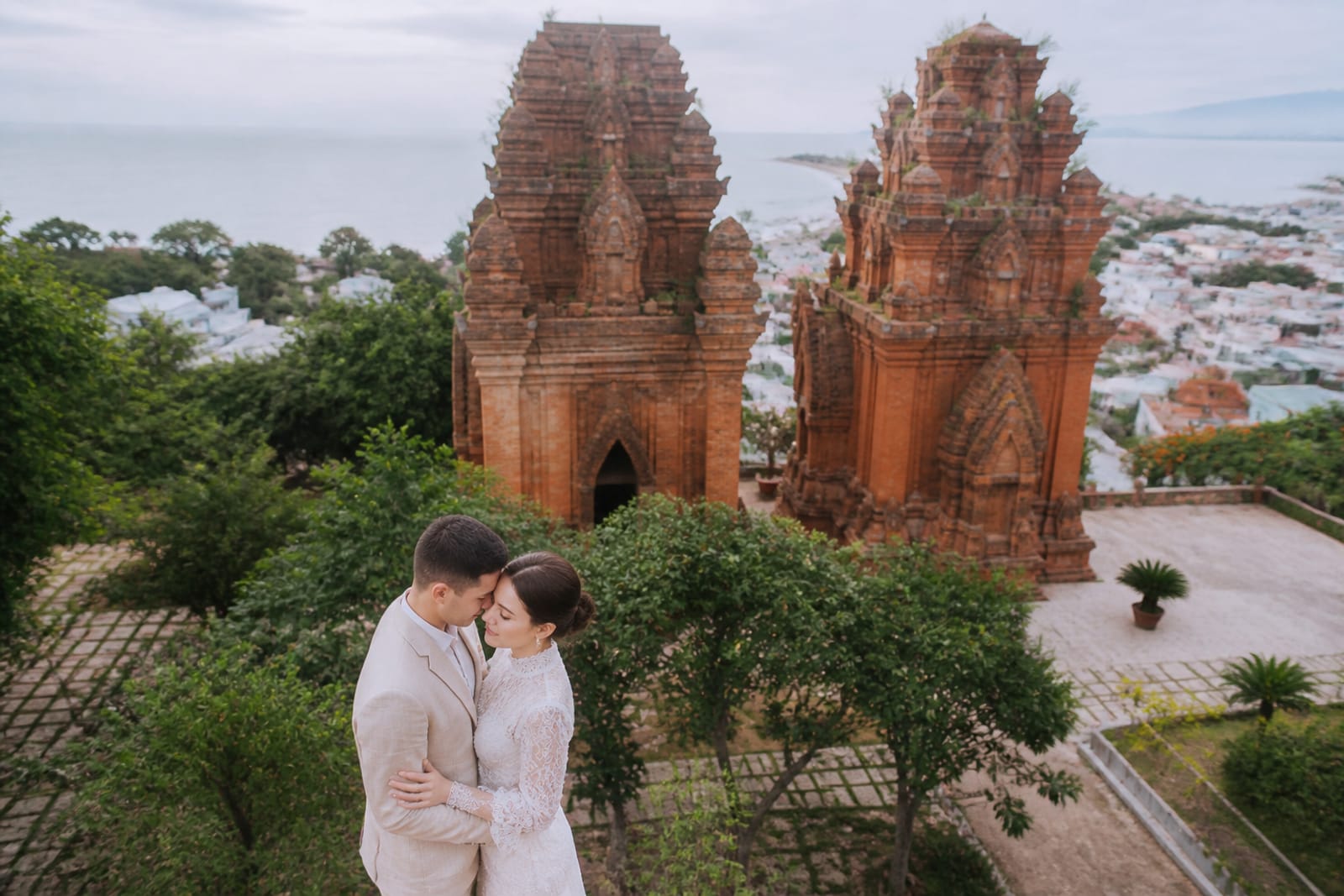
Thap Doi Cham's appeal lies in its specificity: two restored 11th-century Cham towers, no crowds before 8 am, and a rocky peninsula with unobstructed sea views. Unlike crowded mainland monuments, the towers sit isolated and low-key. The trade-off is access — it's a 20-minute drive south from Quy Nhon city center, over a potholed coastal road. Early morning light grazes the towers' brick texture and turns the rocky foreground golden; by 10 am, overhead sun flattens the scene. Pre-wedding couples who hire a local crew and arrive before sunrise find frames that feel cinematic rather than tourist-snapshot. The site suits couples seeking heritage and isolation over scale.
📸 Book on WhatsApp — pre-wedding photoshoot | 🌸 See the lookbook
What light and season work best at the towers?
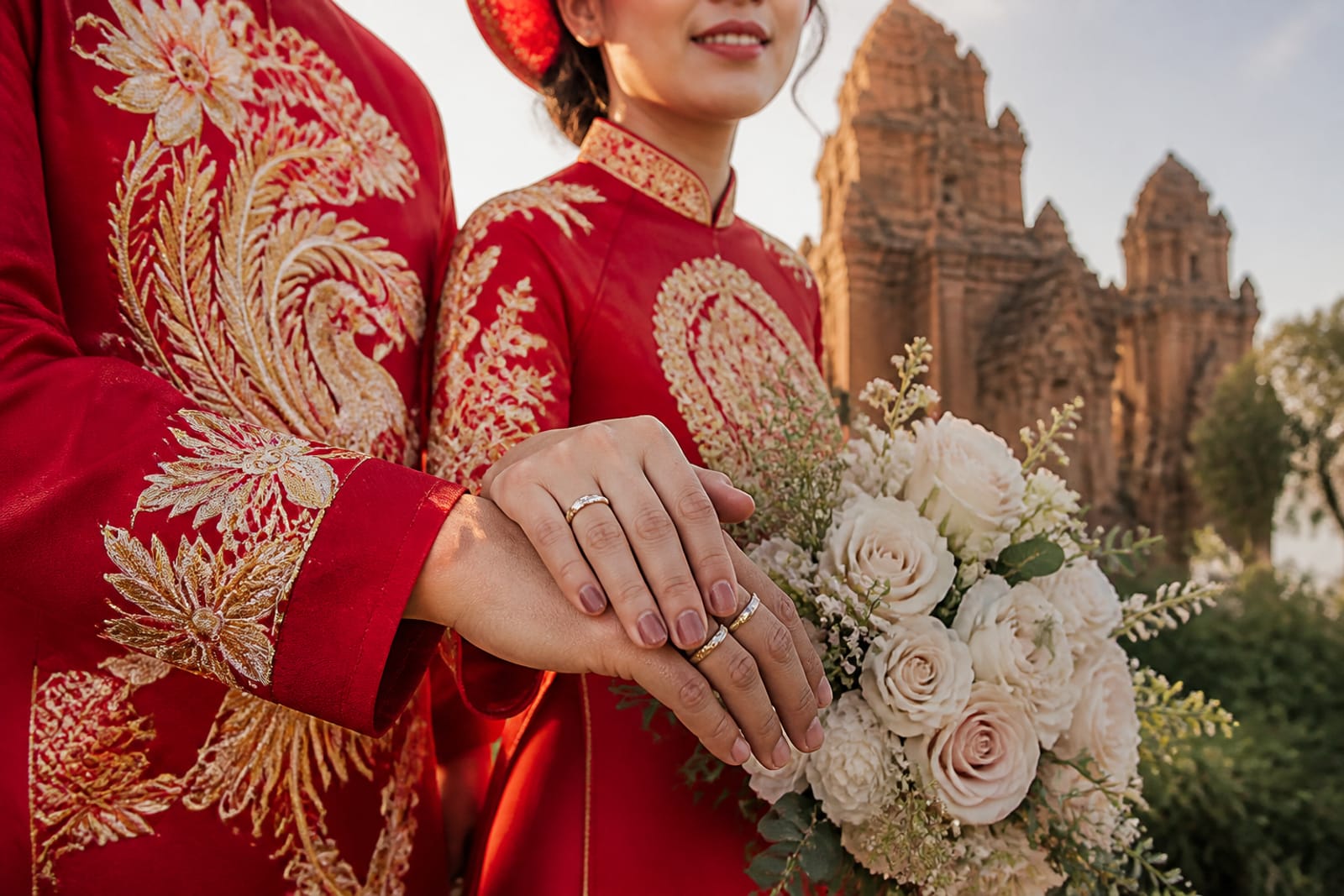
Quy Nhon sits on the central coast, driest Feb–Aug with clear skies and gentle moisture. Sep–Dec brings typhoon risk and afternoon downpours — avoid Oct–Nov entirely. Within Feb–Aug, shoot between 5:30–7 am (sun low on the east, side light rakes the towers and sea) or 5–6 pm (warm, raking from the west, but crowds peak). Midday (10 am–3 pm) is harsh: overhead sun bleaches color and creates hard shadows on uneven stone. Cloud cover in early morning (Feb–Apr, rare but possible) softens light and reduces glare on water. On a clear Feb morning, the sea reads turquoise; by May, haze builds inland, though the coast stays bright. Plan two time windows per day and scout the previous evening to identify rock formations and tide level.
How do you pose on uneven rock without looking stiff?
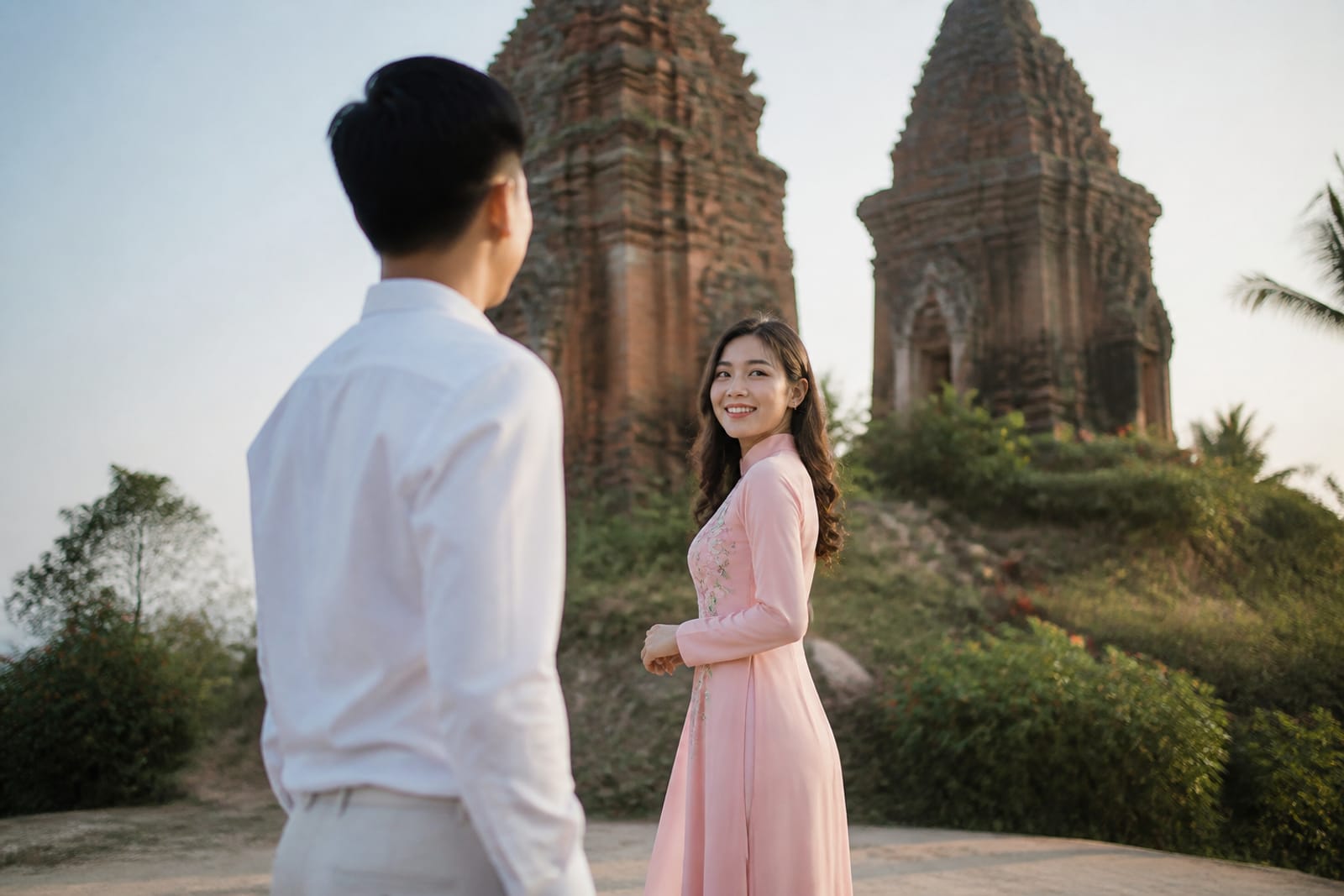
Movement and anchoring work better than stillness. Direct your couple to walk between tower bases (narrow, photogenic paths), pause at a specific stone outcrop, then look out to sea while you walk beside them — this creates natural body language and lets the photographer capture a genuine moment, not a freeze. Sitting poses risk looking awkward on sharp rock; instead, suggest kneeling on a flat stone with the partner standing behind, or both standing at different heights on the sloped terrain. The asymmetry of the site is an asset: one partner on higher stone, the other lower, creates depth and narrative. Avoid facing the camera straight-on at the tower base — shoot walking away from the camera toward a distant rock formation, then turning to glance back. This mimics real behavior (exploring, pausing, connecting) and suits the site's directional light. For outfit changes, scout a sheltered spot near the parking area or bring a lightweight tent — the wind picks up by 8 am and loose fabrics catch it loudly.
What outfit styles work at Thap Doi Cham?
| Outfit type | Best for | Why it works | Practical notes |
|---|---|---|---|
| White or cream formal dress | Traditional pre-wedding aesthetic | Reads pure against turquoise sea and weathered brick; sunrise light bounces softly off fabric | Avoid trailing hems; rocks snag and soil hems fast |
| Ao dai (traditional Vietnamese) | Heritage narrative, cultural resonance | Matches the Cham architecture; indigo, cream or jewel tones glow at sunrise; movement catches wind and camera beautifully | Wear sturdy undergarments; wind pulls at the outer layer; bring a second silk undertunic in case of tears |
| Linen or cotton separates (loose trousers, linen shirt or vest) | Candid, elopement-style energy | Breathes in heat; loose fabric moves naturally with walking poses; neutral tones emphasize landscape and architecture | Linen wrinkles visibly; press the night before or accept intentional crease as texture |
| Dark suits (groom or both) | Formal contrast, minority choice | Creates silhouettes against sea and sky; structured tailoring grounds uneven terrain | Jacket cuffs catch on rough stone; wear a protective undershirt or prepare for styling touch-ups |
Avoid heavy beading or trailing hems that catch on rock. Bring two complete outfits if budget allows: one heritage piece (ao dai or formal gown) and one that reads as personal (linen, suits, cultural dress that belongs to your family or identity). The site rewards contrast — light skin and fabric against dark stone and sea, or dark clothing against the sky. Check tide tables before booking: high tide drowns lower rocks and closes some pathways; low tide opens more terrain but means wet, slippery stone.
💄 Makeup & hair at your hotel | 🌸 See the lookbook
How do you find and vet a local photographer in Quy Nhon?
Quy Nhon has no established wedding photography brand (Cáo Studio operates in Hanoi, Ho Chi Minh City, and Hoi An only); vetting a local crew is essential. Ask your hotel concierge or the Quy Nhon tourism board for photographer referrals — they often know who works early mornings at the towers. Request a portfolio of 3–5 sessions shot at Thap Doi Cham or similar rocky coastlines; look for sharp focus, accurate color in sunrise light, and evidence of directed poses (walking, interacting) rather than rigid standing shots. Confirm they own a tripod and backup camera body — Quy Nhon's salt air corrodes gear fast, and a dropped camera on rock ends the session. Ask for a test call or short trial shoot (e.g., 30 minutes at sunrise) before committing to a full day. Clarify delivery timeline: a reputable crew delivers edited photos within 48 hours (the Cáo Studio standard), not weeks later. Hire a separate makeup artist and hair stylist if the photographer doesn't collaborate with one — Cáo Studio's philosophy is that one coordinated team (photographer + makeup + hair + stylist) shoots better than three vendors stitched together, and that principle applies even when you work locally. If booking a videographer, ensure they've filmed on rock terrain and know how to stabilize handheld footage on uneven ground.
What logistics and risks should you plan for?
Early arrival means a 4:30 am departure from central Quy Nhon (allow 30 minutes for traffic and the coastal road). Bring sunscreen, a thermos of water, and electrolyte drinks — heat on exposed rock intensifies, and makeup melts fast. The tower site has no bathrooms or shade; scout a backup indoor location (a hotel lobby or air-conditioned cafe) for outfit changes and makeup touch-ups. Tidal access: check the tide table and confirm with your local crew that the time window you've booked aligns with low or mid-tide; high tide can cut off sections of the site. Wear water shoes or secure flip-flops under your formal outfit — the rocks are sharp and unforgiving, and injuries mid-session waste time and photos. Hire a local assistant or ask the photographer to bring one; they carry bags, manage outfit changes, and spot hazards so you stay focused on posing. Insurance: ask your photographer if they carry liability coverage (equipment failure, accident on-site). Weather contingency: if a sudden downpour hits (rare in Feb–Aug but possible), retreat to the vehicle and reschedule the afternoon or next morning rather than push forward on slippery rocks. The site is remote; a minor stumble in the wrong place is serious.
📸 Book on WhatsApp — pre-wedding photoshoot | 💄 Makeup & hair at your hotel
What to check before you book a crew
Crew coordination: Has the photographer, makeup artist and stylist worked together before? Ask for a reference from a couple they've shot as a team. A coordinated crew means makeup and hair are timed to the light window; a trio meeting for the first time risks mismatched timings and avoidable delays.
Early morning logistics: Confirm the photographer's start time is 5:30 am or earlier. Many crews in Quy Nhon operate on a tourism schedule (9 am–6 pm); early morning sessions are rarer and require explicit booking.
Editing timeline: Ask for a written timeline — when you'll receive a preview of shots, when fully edited photos are ready, and how many edits per image you get. Cáo Studio delivers edited photos within 48 hours; local crews should commit to a similar standard (within 1 week maximum).
Backup plan: What happens if weather forces a cancellation? Does the crew reschedule free, or charge a partial session fee? Get this in writing.
Outfit consultation: Before the shoot, share your outfit photos or swatches with the photographer and makeup artist. Makeup looks different under coastal light and golden sunrise — they need to adjust tone and intensity accordingly.
Cultural etiquette: Thap Doi Cham is an active heritage site. Ask your crew if any areas are off-limits, whether photography permits are needed (most personal sessions don't require formal permits, but confirm), and if respectful timing near prayer hours is expected.
For pre-wedding shoots in locations where Cáo Studio operates, we handle crew coordination, early-morning light scouting, and 48-hour editing as standard. Explore our pre-wedding and elopement packages, and see how our directed approach works in the lookbook.
FAQ
Do I need a permit to photograph at Thap Doi Cham?
Personal pre-wedding sessions typically don't require formal permits. Confirm with your local photographer and the Quy Nhon tourism board; commercial or large-group shoots may need advance approval from the site administrator.
What's the best month to shoot at the towers?
Feb–Aug is the dry season on Quy Nhon's coast. Feb–Apr offers cool mornings (easier for makeup and posing in formal dress); May–Aug is hotter but still reliably clear. Avoid Sep–Dec due to typhoon and flood risk.
Can we shoot at both sunrise and sunset on the same day?
Yes, if you're prepared for heat. Shoot 5:30–7 am (sunrise, cooler, fewer crowds), return to your hotel for rest and a second outfit change, then shoot again 5–6 pm (golden light, but crowds increase). This requires a full-day booking and a coordinated crew. Bring extra water and a makeup touch-up kit.
What if the rocks are wet or the tide is high?
Scout the previous evening and check tide tables (available online for Quy Nhon). If high tide blocks key formations, shift your shoot time to early morning when tide is lower, or choose an alternative rocky spot nearby. Wet rocks are slippery — wear water shoes and move slowly; wet fabric also changes color, so alert your makeup artist to adjust tone if a outfit gets splashed.
Should we hire a videographer separately or as part of the photography crew?
A videographer familiar with rocky terrain and early-morning logistics strengthens your session. Confirm they own stabilization gear (gimbal or steadicam) for handheld work on uneven ground, and ask to see footage from similar sites. Separate videography costs more but allows specialist expertise; bundled crew (photographer + videographer + makeup) is cheaper but requires seamless coordination.
How long does a full pre-wedding session take at Thap Doi Cham?
Plan 2–3 hours on-site: 30 minutes for setup and light check, 45 minutes per outfit (including posing, outfit change and makeup touch-ups), and travel to backup locations if weather requires a move. Arrive 30 minutes early for a crew briefing and site safety check.
Can we use Thap Doi Cham for both engagement and pre-wedding shoots?
Yes. An engagement session (casual, candid) works well 6–12 months before the wedding, then a formal pre-wedding shoot 4–8 weeks before the wedding at the same or a nearby site (e.g., Quy Nhon beach or Eo Gio). Each shoot should have its own mood and outfit strategy; a local photographer can advise on seasonal and light differences between bookings.
FAQ
Do I need a permit to photograph at Thap Doi Cham?
Personal pre-wedding sessions typically don't require formal permits. Confirm with your local photographer and the Quy Nhon tourism board; commercial or large-group shoots may need advance approval from the site administrator.
What's the best month to shoot at the towers?
Feb–Aug is the dry season on Quy Nhon's coast. Feb–Apr offers cool mornings (easier for makeup and posing in formal dress); May–Aug is hotter but still reliably clear. Avoid Sep–Dec due to typhoon and flood risk.
Can we shoot at both sunrise and sunset on the same day?
Yes, if you're prepared for heat. Shoot 5:30–7 am (sunrise, cooler, fewer crowds), return to your hotel for rest and a second outfit change, then shoot again 5–6 pm (golden light, but crowds increase). This requires a full-day booking and a coordinated crew. Bring extra water and a makeup touch-up kit.
What if the rocks are wet or the tide is high?
Scout the previous evening and check tide tables (available online for Quy Nhon). If high tide blocks key formations, shift your shoot time to early morning when tide is lower, or choose an alternative rocky spot nearby. Wet rocks are slippery — wear water shoes and move slowly; wet fabric also changes color, so alert your makeup artist to adjust tone if a outfit gets splashed.
Should we hire a videographer separately or as part of the photography crew?
A videographer familiar with rocky terrain and early-morning logistics strengthens your session. Confirm they own stabilization gear (gimbal or steadicam) for handheld work on uneven ground, and ask to see footage from similar sites. Separate videography costs more but allows specialist expertise; bundled crew (photographer + videographer + makeup) is cheaper but requires seamless coordination.
How long does a full pre-wedding session take at Thap Doi Cham?
Plan 2–3 hours on-site: 30 minutes for setup and light check, 45 minutes per outfit (including posing, outfit change and makeup touch-ups), and travel to backup locations if weather requires a move. Arrive 30 minutes early for a crew briefing and site safety check.
Can we use Thap Doi Cham for both engagement and pre-wedding shoots?
Yes. An engagement session (casual, candid) works well 6–12 months before the wedding, then a formal pre-wedding shoot 4–8 weeks before the wedding at the same or a nearby site (e.g., Quy Nhon beach or Eo Gio). Each shoot should have its own mood and outfit strategy; a local photographer can advise on seasonal and light differences between bookings.
Ao dai, makeup, hair and a local photographer in Hanoi or Saigon — one WhatsApp message.