/pre-wedding-photoshoot
Pre-wedding photo ideas at Da Lat cherry blossoms: poses, seasons, pos
Da Lat cherry blossom pre-wedding shoots work best January–February when trees bloom and cool mornings (12–18°C) suit romantic poses without overheating. The town's 1,500 m elevation brings mist over lakes and pine hills at sunrise, creating soft, diffused light ideal for intimate couple shots. Sessions run 2–4 hours, starting before 8 a.m. to catch low-angle gold light and avoid midday harshness. Poses range from classic walking-hand-in-hand through blossom avenues to seated lakeside framing. Cáo Studio – Makeup & Photoshoot operates in Hanoi and Ho Chi Minh City; for Da Lat shoots, you'll hire a local photographer or book a team that travels from Hanoi (4–5 hour drive). Check weather forecasts daily—afternoon showers (even in dry season) can scatter blooms and darken skies within minutes. ---
How do cherry blossom seasons affect your pose options?
January–February blooms last 2–3 weeks per tree variety; early-month shoots catch full canopy density, ideal for overhead framing and tunnel walks where petals frame the couple. Late-month sessions offer sparser trees, suiting intimate foreground-flower-to-distant-couple compositions. Mist is heaviest at dawn, fading by 9 a.m.—use it for dreamlike silhouette poses, or shoot after 10 a.m. for clearer detail and color saturation. Off-season (March–December) poses shift to lake reflections, pine-tree backgrounds, and waterfall settings; light stays softer due to cloud cover, but romance feels less seasonal. Choose your month based on whether you want blossom-dense coverage or moody, minimalist framing.
What time of day gives the best light for cherry blossom portraits?
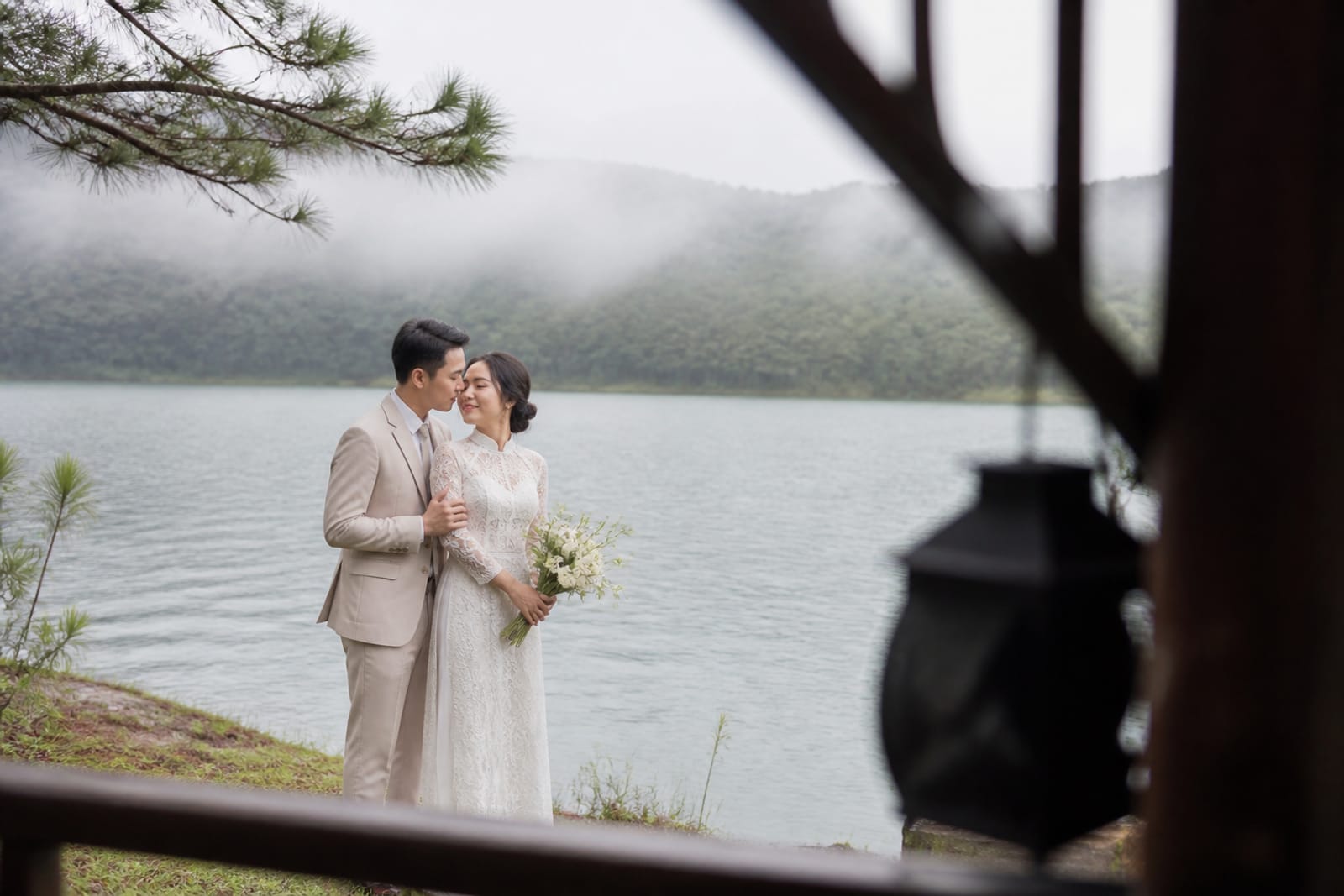
5:30–8:00 a.m. delivers low, warm directional light that skims blossom petals and creates golden rim-light on hair and fabric. Faces stay soft and shadows are long—ideal for silhouettes or backlit poses where the couple stands against dawn sky or blooming trees. 8:00–10:00 a.m. transitions to neutral, flat light; blooms appear brightest and most colorful, but faces flatten—use this window for detail shots (hands, ao dai embroidery, jewelry) or group poses. After 11 a.m., overhead sun bleaches petals and casts harsh shadows under eyes; avoid unless shooting with shaded tree canopy or overcast skies. Afternoon mist reappears 4–6 p.m. but crowds peak and light turns blue. Plan the shoot to start before sunrise and wrap by 10 a.m.
Should you wear an áo dài or Western dress for Da Lat blossoms?
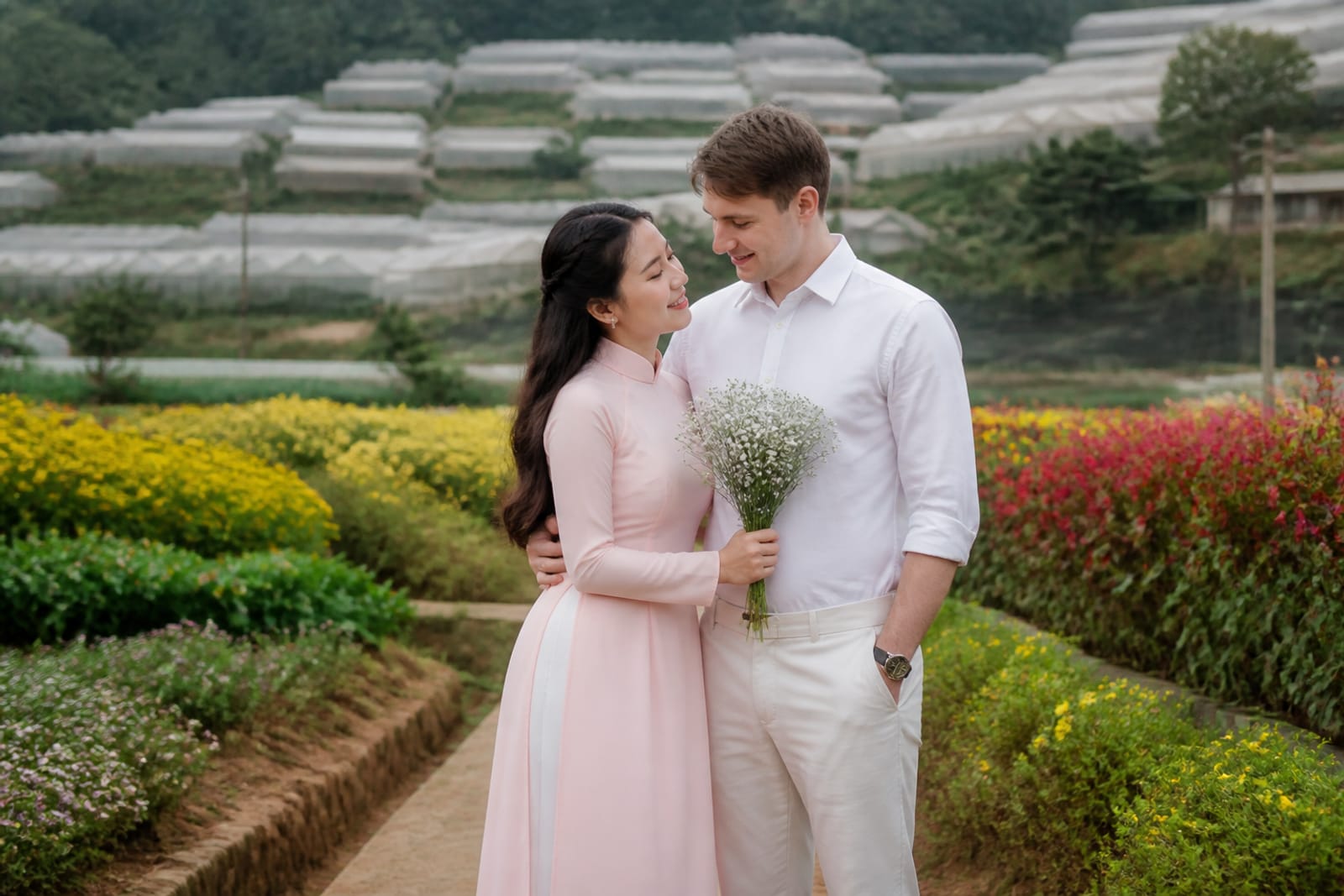
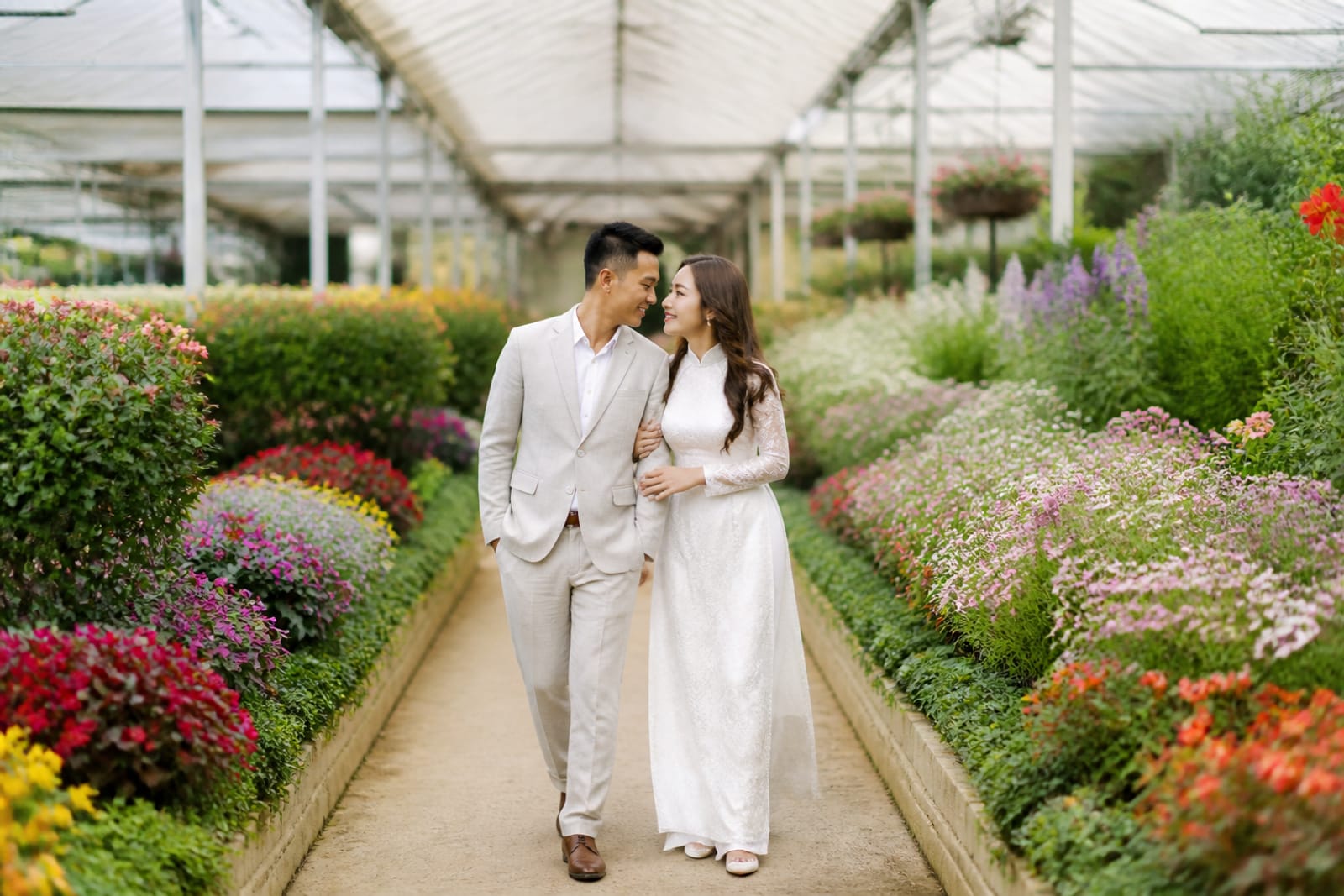
Áo dài in soft pastels (cream, blush, pale gold) photographs luminously against pink cherry petals—the contrast and cultural harmony draw viewers. Silk áo dài flows in the cool breeze and allows seated poses without fabric bunching. Western wedding dresses photograph crisply but require undergarment care in cool mornings; lace details catch mist beautifully. Consider a two-outfit session: áo dài for blossom-avenue walks and lakeside shots, then change to Western dress for intimate foreground-flower poses or indoor pagoda shots. Layers matter—Da Lat mornings are 12–15°C; a lightweight silk shawl or tulle overskirt adds movement and warmth. Avoid heavy beading or sequins that flatten in soft light; choose matte silk or linen. Áo dài rental is available in Hanoi; coordinate with a local Da Lat team if shooting independently.
| Outfit type | Best for | Light/season fit | Why it works |
|---|---|---|---|
| Áo dài (cream, blush) | Blossom avenue walks, lakeside framing | Early morning, full bloom | Silk drapes, cultural harmony, glows in soft light |
| Western dress (lace or matte) | Intimate foreground poses, pagoda interiors | 8–10 a.m., any season | Sharp detail, undergarment control, photos crisp indoors |
| Layered tulle + dress | Transition scenes, movement shots | Golden hour, sparser blooms | Adds flow, warmth in cool air, romantic silhouette |
| Suit + groom outfit | Groom/couple balance, seated poses | Any season, shaded trees | Tailored line, less affected by breeze, formal framing |
What pose ideas work in a real Da Lat blossom setting?
Walking hand-in-hand through blossom avenue (5:30–7:30 a.m.): backlight captures petals in their hair and creates golden rim-light on shoulders—avoid looking at camera mid-stride; look ahead or at partner. Seated on a low stone by the lake (6:30–8:30 a.m.): she leans into his shoulder, his arm around her waist; mist and tree reflection fill the background, keeping focus on intimacy rather than setting grandeur. Standing in dappled tree shadow (8:00–10:00 a.m.): soft light avoids harsh shadows; pose her slightly forward with his hand on small of back, both gazing toward blooms instead of camera—creates narrative rather than stiff portrait feel. Hands detail shot (any morning): close-up of engagement ring, her hand resting on his chest or theirs interlaced on a áo dài lapel; early light shows texture and warm undertones. Silhouette against sunrise (5:30–6:30 a.m.): couple stands facing dawn behind blooming trees; expose for sky, letting their outline go dark and romantic—works only in first 30 minutes. Avoid mid-face shadowing by having the photographer position sun slightly to one side.
📸 Book on WhatsApp — pre-wedding photoshoot
How do you choose between a local Da Lat photographer and hiring a traveling team?
Local photographer: lower session cost, intimate knowledge of specific blossom sites and light angles, no travel surcharge, can do same-day turnaround for sneak-peeks. Vet via Instagram reels (look for technical consistency—sharp focus, balanced exposure, no overblown skies), ask for 3–5 couple references, confirm they've shot in January–February before. Risk: seasonal availability (many rest Nov–Dec), inconsistent editing, language barrier if English isn't fluent. Traveling team from Hanoi/HCMC (e.g., Cáo Studio + makeup artist): includes professional hair & makeup starting 6 a.m., consistent editing style you've seen in their portfolio, no language gaps, but add 4–5 hour travel time and multi-day accommodation into logistics. Best for couples who want premium finish and stress-free coordination. Hybrid: book a local photographer but hire a makeup artist from your city to travel with you—splits cost while ensuring bridal prep runs smoothly. Choose based on how much control and stress-free experience matter versus budget.
What should you check before booking a Da Lat pre-wedding shoot?
Blossom forecast: confirm tree variety blooming dates via Da Lat tourism office (early January for cherry, late January for apricot, February for plum)—no guarantee if you book 6+ months ahead. Photographer's weather policy: does he/she reschedule free if heavy rain (not common Jan–Feb but possible) or only if completely impassable? Backup indoor location: ask what pagoda or café interiors are booked in case dawn is overcast; mist can be romantic but solid cloud cover flattens light and kills blossom color. Number of outfits and outfit-change time: confirm how long to allow if switching from áo dài to dress—5 minutes for outdoor quick-change, 15–20 if using a hotel room (adds commute time). Editing turnaround: local photographers often deliver finals in 3–4 weeks; studios may promise 1–2 weeks—ask when you'll see first edits and full gallery. Permit or access: some pagodas (Hang Nga, Thien Vien Truc Lam) charge entry or request permits for commercial shoots—ask if the photographer handles this or you pay directly. Copyright and usage rights: confirm you own high-resolution files for printing and sharing; some contracts restrict commercial reuse.
---
Why does Da Lat's altitude and climate matter for pre-wedding photos?
At 1,500 m elevation, Da Lat stays cool (12–25°C year-round) and misty—humidity and cloud cover create soft, diffused light that flatters skin tones and minimizes harsh shadows. Winter air is crisp, so breath may fog during outdoor takes (embrace it as romance or ask the photographer to shoot faster). Vegetation stays green and lush even in dry season due to frequent light rain and altitude; backgrounds never look brown or parched. The pine-forest landscape feels European, contrasting starkly with lowland Vietnam—if you want a "different" aesthetic for pre-wedding frames, Da Lat's cool tones and misty mornings deliver naturally. Rain risk is low January–February but afternoon showers can arrive suddenly; always have a waterproof backup plan (café interior, pagoda, covered market).
---
Can you hire Cáo Studio for a Da Lat pre-wedding shoot?
Cáo Studio – Makeup & Photoshoot operates in Hanoi, Ho Chi Minh City, and Hoi An (by appointment). For pre-wedding shoots in Da Lat, you have two options: book a local Da Lat photographer (recommended for same-day logistics and local knowledge), or contact Cáo Studio on WhatsApp to ask about coordinating a team travel to Da Lat—pricing and availability depend on group size, travel dates, and number of outfit changes. If you're based near Hanoi and prefer a known studio aesthetic, a Hanoi-based pre-wedding photoshoot with Cáo Studio followed by a separate Da Lat blossom session with a local photographer is also an option. Learn more about Cáo Studio's pre-wedding and elopement services.
📸 Book on WhatsApp — couple & family photoshoot
---
Honest advice: when not to shoot Da Lat cherry blossoms
If you're inflexible on dates (e.g., can only shoot in March–May for work reasons), Da Lat loses its seasonal magic—blooms are gone, and morning light becomes hotter and harsher. If budget is very tight, travel, accommodation, and local photography add significant cost (consider Hanoi áo dài shoots or Ho Chi Minh City couple sessions with Cáo Studio instead—no travel overhead). If you dislike crowds, January–February brings domestic tourism peaks during Tet holidays—quiet shoots happen early January or late February. If you have mobility issues, blossom-lined paths are often uneven stone or grass; pagoda interiors with stair access may be tricky. Mist and overcast skies are romantic but can feel gloomy if you prefer high-saturation, bright colors.
---
FAQ
When exactly do Da Lat cherry blossoms peak?
Early-to-mid January through February, depending on variety (cherry blooms first, apricot mid-month, plum late). No guaranteed dates; confirm with Da Lat tourism office 4–6 weeks before. Morning mist is heaviest at sunrise, fading by 9 a.m.
Can I shoot áo dài and Western dress in one session?
Yes. Plan 15–20 minutes for outfit change if using a hotel room. Áo dài photographs brilliantly in early morning gold light; Western dress is sharper 8–10 a.m. when light flattens. Confirm outfit-change location and time with your photographer beforehand.
What if it rains the day of my shoot?
January–February rain is rare but possible. Ask your photographer's weather policy before booking—do they reschedule free, or only partially refund? Backup indoor venues (pagodas, cafés) offer softer, diffused light; mist can feel romantic if it's light drizzle rather than heavy downpour.
Should I book a local Da Lat photographer or hire a team from Hanoi?
Local photographers offer lower cost and site expertise; Hanoi-based studios (like Cáo Studio) include professional makeup & hair and consistent editing. Weigh budget vs. stress-free coordination. Ask local photographers for Instagram reels and couple references before committing.
How early should I arrive for golden-hour photos?
Arrive by 5:15 a.m. if shooting starts at 5:30 a.m. to allow time for final touch-ups and location scouting. Peak golden light lasts 5:30–7:30 a.m.; after 8 a.m., overhead light flattens faces and blooms lose glow. Plan a 2–3 hour session to capture multiple poses and outfit changes.
Do I need a permit to shoot commercially in Da Lat?
Some pagodas (Hang Nga, Thien Vien Truc Lam) charge entry fees or request permits for commercial shoots. Ask your photographer if they handle permits or if you pay directly on the day. Budget time and cost for these requirements when planning the itinerary.
FAQ
When exactly do Da Lat cherry blossoms peak?
Early-to-mid January through February, depending on variety (cherry blooms first, apricot mid-month, plum late). No guaranteed dates; confirm with Da Lat tourism office 4–6 weeks before. Morning mist is heaviest at sunrise, fading by 9 a.m.
Can I shoot áo dài and Western dress in one session?
Yes. Plan 15–20 minutes for outfit change if using a hotel room. Áo dài photographs brilliantly in early morning gold light; Western dress is sharper 8–10 a.m. when light flattens. Confirm outfit-change location and time with your photographer beforehand.
What if it rains the day of my shoot?
January–February rain is rare but possible. Ask your photographer's weather policy before booking—do they reschedule free, or only partially refund? Backup indoor venues (pagodas, cafés) offer softer, diffused light; mist can feel romantic if it's light drizzle rather than heavy downpour.
Should I book a local Da Lat photographer or hire a team from Hanoi?
Local photographers offer lower cost and site expertise; Hanoi-based studios (like Cáo Studio) include professional makeup & hair and consistent editing. Weigh budget vs. stress-free coordination. Ask local photographers for Instagram reels and couple references before committing.
How early should I arrive for golden-hour photos?
Arrive by 5:15 a.m. if shooting starts at 5:30 a.m. to allow time for final touch-ups and location scouting. Peak golden light lasts 5:30–7:30 a.m.; after 8 a.m., overhead light flattens faces and blooms lose glow. Plan a 2–3 hour session to capture multiple poses and outfit changes.
Do I need a permit to shoot commercially in Da Lat?
Some pagodas (Hang Nga, Thien Vien Truc Lam) charge entry fees or request permits for commercial shoots. Ask your photographer if they handle permits or if you pay directly on the day. Budget time and cost for these requirements when planning the itinerary.
Ao dai, makeup, hair and a local photographer in Hanoi or Saigon — one WhatsApp message.