/pre-wedding-photoshoot
Pre-Wedding Photo Ideas at Da Lat Wild Sunflower Roads
Da Lat's wild sunflower roads (Da Quy) peak in November and December, offering couples a vibrant, unstructured setting for pre-wedding frames. The roads wind through Ta Nung and Thien Vien Truc Lam areas at roughly 1,500 m elevation, where soft morning light (best from 5:30–7:30 am) catches blooms without harsh shadows. Shoots here work best with a local photographer who knows access times, walking safety and which sections have the fullest flowers—crowds peak mid-morning, so an early start separates you from day-trippers. A half-day session on a sunflower road typically includes outfit changes and movement-based framing (walking between rows, turning toward each other) rather than posed stillness. Avoid mid-day glare (10 am–2 pm) and the rainy season (May–September); even in dry season, afternoon showers can arrive suddenly, so morning-only booking is safest. Cáo Studio does not operate in Da Lat—see "how to find and vet a local photographer" below. ---
Why are Da Lat's wild sunflower roads famous for pre-wedding photos?
The Da Quy (wild sunflower) roads are unplanned, rural, and bloom densely—qualities that feel authentic rather than staged. Rows stretch for kilometers, so a photographer can frame you walking, stopping, or turning without the static monument-pose look. The flowers are at eye level, not towering above, which means frames show your faces and interaction rather than just the blooms. Most pre-wedding couples choose here to escape Ho Chi Minh City or Hanoi studios and capture movement and light together. The landscape rewards a director who plans light and timing—improvised or midday shoots often yield flat, washed-out frames with blown-out skies.
When should you book a Da Lat sunflower photoshoot?
November through December is peak season: sunflowers are fullest, mornings are cool (around 15–18°C), and the sky is clearest. Earlier, in late October, blooms are less dense and rains linger. January and February bring mist over the hills at sunrise—beautiful, but unpredictable for consistent light. May through September is the wet season; mornings may be clear, but afternoon showers force early finishes and muddy roads. December 25–January 2 and the week before Tet (late January) see the most visitor traffic, which means road access is slower and blooms trampled. Book your local photographer 4–6 weeks ahead if shooting in peak season (November–December); availability drops sharply and travel logistics to Da Lat (a 5-hour drive from Ho Chi Minh City, 8+ hours from Hanoi) require coordination.
What outfit choices work best on sunflower roads?
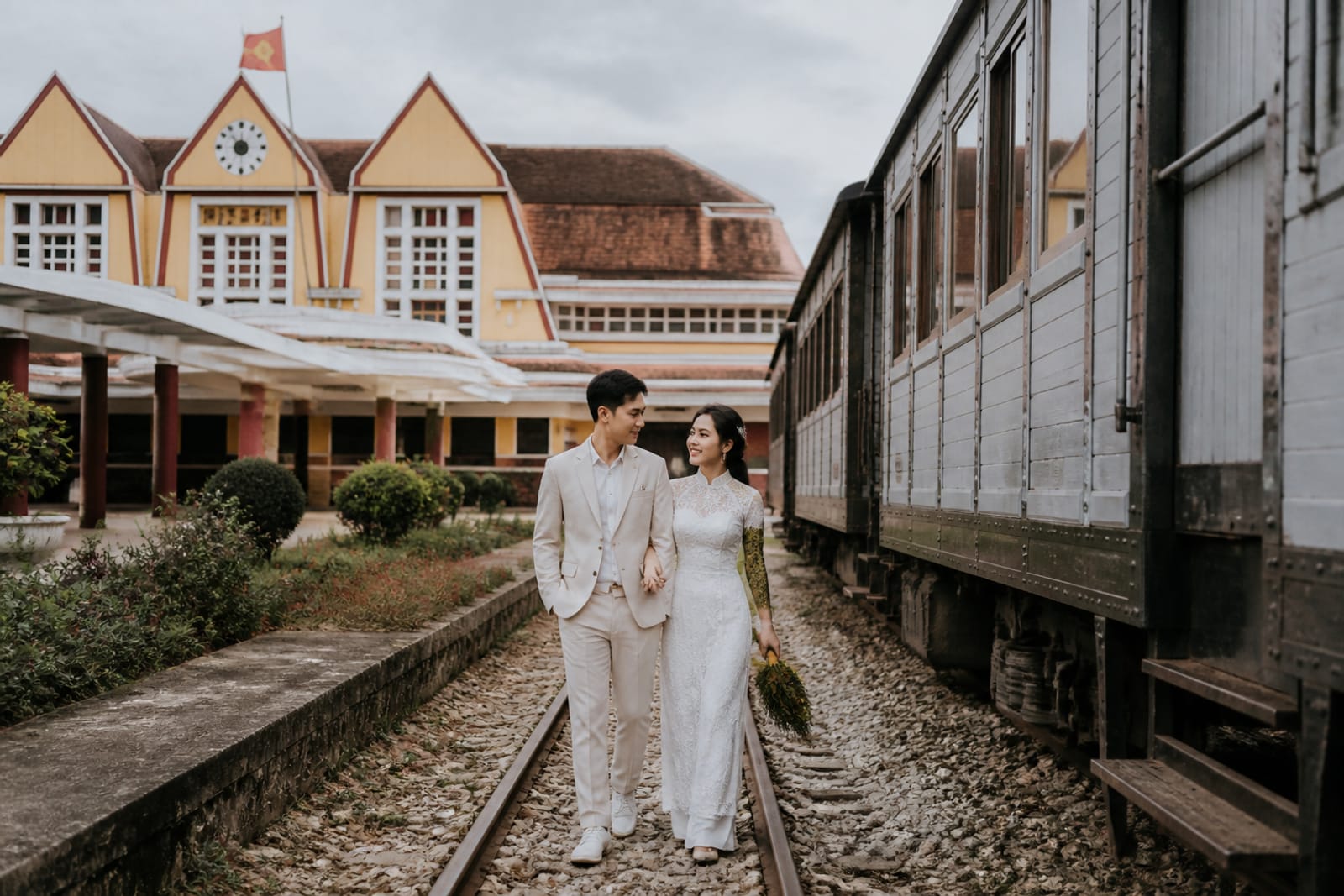
A long, flowing dress in white, cream, or soft pastels photographs cleanly against yellow blooms and green stems. Vietnamese ao dai in pastels or classic white is also popular and photographs distinctly on rural roads—it signals cultural connection and moves beautifully in wind, which adds life to frames. Avoid black, dark red, or saturated colors; they visually compete with the flowers and read as heavy in natural light. Grooms in light linen suits or cream/beige tones pair well; dark formal wear can look out of place on a rural road and heats you in the cool morning air. Avoid heels: sunflower roads are often unpaved or muddy, especially after early-morning dew. Flat sandals, boots, or bare feet (if the couple is comfortable) work better and let you walk naturally for 2–3 hours. If you're wearing an ao dai, check whether the photographer or rental shop includes undergarments—some do, some don't—and confirm fit before the shoot day.
| Option | Best for | Light/Season | Why it works |
|---|---|---|---|
| White/cream dress + suit | Classic, timeless frames; European couples | Nov–Dec mornings, 5:30–7:30 am | Neutral colors pop against yellow blooms; light reflects softly off pale fabrics. |
| Ao dai (white or pastel) | Cultural relevance; strong visual story | Nov–Dec, early morning | Moves in wind; reads distinctly rural; signals Vietnam immersion. |
| Mixed casual (linen shirt + skirt) | Relaxed, editorial feel; shorter shoots | Early morning, wind to move fabric | Less formal; works if you want "walking candid" over posed frames. |
| Evening golden-hour shoot | Warm, amber tones; fewer crowds | 4:00–5:30 pm, dry season only | Backlighting adds dimension; crowds have left; note: blooms face east, so some may be in shadow. |
How do you plan framing and poses on sunflower roads?
A strong shoot starts with a director's plan, not improvisation. Early morning, before 7:30 am, the light is soft and comes from the side or front, flattering skin and creating depth. Walk the road first light to scout: which direction faces east (where blooms catch sunrise)? Where are the densest, least-trampled sections? Are the roads muddy or dry? A working sequence might be: wide frame of you two walking apart, camera following; medium frame as you slow and look at each other; detail of hands touching or you pausing mid-walk. Movement beats stillness—the photographer should guide you to walk, turn, sit between rows and talk, not stand and smile. Avoid the "bride-groom pose" (facing camera, hands clasped); instead, try walking parallel, looking back over shoulders, or sitting with the road stretching behind you. At midday (which you should avoid), direct sunlight creates harsh shadows under the eyes and nose, so morning-only booking ensures clean, even light. Bring water and a light layer; mornings are cool and you'll be outdoors for 3–4 hours.
How do you find and vet a local Da Lat photographer?
Da Lat has no shortage of wedding photographers, but quality varies widely. Look for a photographer or studio with a portfolio showing Da Lat sunflower road shoots (not just studio work or other landscapes) and at least 5–10 pre-wedding sessions visible. Ask: do they shoot only in raw + lightroom, or do they offer edited JPEGs? When is the edited gallery delivered—48 hours, one week, two weeks? Do they know the sunflower roads by season, or are they guessing? A reliable choice has shot there in the season you plan and can name specific light times and road sections. Ask for references from at least two recent couples. Confirm in writing: shoot start time (typically 5:30 am to beat crowds), number of outfits, number of edited images, delivery timeline, and cancellation policy (weather happens). Budget for travel time; if the photographer is in Da Lat city and the road is 30 km away, plan 45 minutes transport each way. If you're not based in Vietnam, ask the photographer to coordinate with a local hotel or arrange a makeup artist and dresser; many photographers work solo, which can slow outfit changes on location. Pay a non-refundable deposit (ask what percentage locally) and the balance on shoot day or upon delivery.
How does pre-wedding photoshoot planning in Da Lat differ from studio or Hanoi shoots?
Studio and urban shoots (Hanoi's Old Quarter, Ho Chi Minh City's District 1) offer controlled light, quick outfit changes indoors, and on-location hair and makeup support. Da Lat outdoor shoots depend on weather, require early starts, and involve travel logistics—there's no shelter if rain arrives, and you're 5–8 hours from major cities. Urban shoots work for couples wanting consistent, polished frames and several outfit changes in one day; Da Lat suits those prioritizing narrative (blooms, landscape, movement, season) over variety. Urban shoots with a full team (photographer + makeup artist + stylist, traveling together) ensure seamless outfit transitions. Da Lat typically involves a photographer only—so bring an assistant or partner to help with outfit, hair touch-ups, and water. If you want the full-team experience (makeup, hair, wardrobe, photography in one booking), Cáo Studio offers pre-wedding photoshoots in Hanoi, Ho Chi Minh City, and Hoi An. For Da Lat, you'll coordinate separately with a local photographer, or arrange makeup and hair through a Da Lat salon and meet the photographer on location.
📸 Book on WhatsApp — pre-wedding photoshoot
What should you check before booking a Da Lat sunflower road shoot?
- Weather and blooms: Ask the photographer when they last shot the road and what the bloom density looked like. Late November and early December are safest; late October risks sparse flowers and rain.
- Light plan: Confirm the start time (5:30 am or later?), direction you'll shoot (which way does the road face at sunrise?), and whether the photographer has a backup plan if clouds dominate.
- Access and crowds: Ask if the road is open to vehicles or foot-only, whether there's an entrance fee, and what time crowds typically arrive. Some sections may be private farmland—a local photographer knows the current rules.
- Outfit logistics: Bring a change bag in a vehicle or have someone meet you midway. Sunflower roads have no nearby restrooms or shelter; plan outfit changes carefully.
- Delivery and style: Confirm the number of edited images, file format (RAW, high-res JPEGs, or prints), and editing style. Ask to see a full edited gallery from a recent pre-wedding shoot, not just highlights.
- Insurance and cancellation: If you're traveling internationally for this shoot, ask about weather-related rescheduling and whether the photographer holds insurance or has a reschedule policy.
---
What other pre-wedding shoot options are there in Vietnam?
If Da Lat's sunflower roads don't fit your timeline or season, consider:
- Ao dai photoshoot: Focus entirely on traditional Vietnamese dress in cultural settings—temples, rice fields, urban landmarks—with full styling.
- Pre-wedding and elopement in Hanoi, Ho Chi Minh City, or Hoi An: Cáo Studio combines photography, makeup, hair, and wardrobe in one team, with delivery in 48 hours. Morning Old Quarter light or evening Hoi An lantern shoots are popular timing choices.
- Hoi An riverside or rice-field shoots: Hoi An offers ancient architecture and evening lantern light without the travel to Da Lat. Ask us on WhatsApp for Hoi An dates.
- Ninh Binh limestone and rice terraces (Hanoi region): Dramatic, misty landscapes; best dry season (November–February).
Compare based on your priorities: cultural narrative (ao dai), minimal crew time (local photographer only), or integrated team experience (Cáo Studio). Each has different light timings, season constraints, and cost factors (travel, team size, editing turnaround).
---
FAQ
What time in November should we book to catch peak Da Lat sunflower blooms?
Mid-to-late November (roughly November 10–30) typically shows the densest blooms. Early November can have sparse flowers; late December blooms fade. Confirm current conditions with your photographer 2–3 weeks before. Rain in October affects bloom timing, so flexibility helps.
Can we shoot Da Lat sunflower roads in the afternoon instead of early morning?
You can, but light quality suffers. Afternoon sun (12–4 pm) is harsh and direct, creating dark shadows and blown-out skies. Blooms also face east, so many are backlit and less vibrant in afternoon frames. Early morning (5:30–7:30 am) yields the clearest, softest light and fullest color. Plan morning-only to maximize light quality.
Do we need a permit or special access to shoot on Da Lat sunflower roads?
Some sections are public roads; others cross private farmland. Rules change seasonally and by local government. Your photographer will know current access. Ask them directly—do not assume roads are open. Entry fees or farmer permissions may apply; budget for these as part of your booking discussion.
How long does a typical Da Lat sunflower road pre-wedding shoot take?
Plan 3–4 hours with one local photographer (typically one outfit change included). Full-day shoots (6–8 hours) cost more and allow 2–3 outfit changes and wider area coverage. Confirm duration when booking; most photographers offer half-day or full-day rates with different image counts.
Should we hire makeup and hair in Da Lat, or bring someone from Ho Chi Minh City or Hanoi?
Da Lat has local makeup and hair salons, but quality is inconsistent for pre-wedding standards. If you want polished, editorial makeup and hair-styling continuity throughout the shoot, bring a trusted artist from your city or ask your photographer for a reliable local recommendation. Budget travel time and accommodation if bringing a team from outside Da Lat.
How do we compare Da Lat sunflower shoots to Cáo Studio's pre-wedding photoshoots in Hanoi or Ho Chi Minh City?
Cáo Studio's pre-wedding photoshoots include photography, makeup, hair, and wardrobe in one team, with a 48-hour turnaround and a director's approach to light and framing. Da Lat sunflower shoots are typically one photographer, longer setup, and standard turnaround (5–14 days). Choose Cáo Studio for integrated team experience and quick delivery in urban or Hoi An settings; choose a local Da Lat photographer for seasonal, landscape-focused narrative. Both can deliver strong pre-wedding frames—the difference is crew integration and light environment.
FAQ
What time in November should we book to catch peak Da Lat sunflower blooms?
Mid-to-late November (roughly November 10–30) typically shows the densest blooms. Early November can have sparse flowers; late December blooms fade. Confirm current conditions with your photographer 2–3 weeks before. Rain in October affects bloom timing, so flexibility helps.
Can we shoot Da Lat sunflower roads in the afternoon instead of early morning?
You can, but light quality suffers. Afternoon sun (12–4 pm) is harsh and direct, creating dark shadows and blown-out skies. Blooms also face east, so many are backlit and less vibrant in afternoon frames. Early morning (5:30–7:30 am) yields the clearest, softest light and fullest color. Plan morning-only to maximize light quality.
Do we need a permit or special access to shoot on Da Lat sunflower roads?
Some sections are public roads; others cross private farmland. Rules change seasonally and by local government. Your photographer will know current access. Ask them directly—do not assume roads are open. Entry fees or farmer permissions may apply; budget for these as part of your booking discussion.
How long does a typical Da Lat sunflower road pre-wedding shoot take?
Plan 3–4 hours with one local photographer (typically one outfit change included). Full-day shoots (6–8 hours) cost more and allow 2–3 outfit changes and wider area coverage. Confirm duration when booking; most photographers offer half-day or full-day rates with different image counts.
Should we hire makeup and hair in Da Lat, or bring someone from Ho Chi Minh City or Hanoi?
Da Lat has local makeup and hair salons, but quality is inconsistent for pre-wedding standards. If you want polished, editorial makeup and hair-styling continuity throughout the shoot, bring a trusted artist from your city or ask your photographer for a reliable local recommendation. Budget travel time and accommodation if bringing a team from outside Da Lat.
How do we compare Da Lat sunflower shoots to Cáo Studio's pre-wedding photoshoots in Hanoi or Ho Chi Minh City?
Cáo Studio's [pre-wedding photoshoots](/pre-wedding-photoshoot) include photography, makeup, hair, and wardrobe in one team, with a 48-hour turnaround and a director's approach to light and framing. Da Lat sunflower shoots are typically one photographer, longer setup, and standard turnaround (5–14 days). Choose Cáo Studio for integrated team experience and quick delivery in urban or Hoi An settings; choose a local Da Lat photographer for seasonal, landscape-focused narrative. Both can deliver strong pre-wedding frames—the difference is crew integration and light environment.
Ao dai, makeup, hair and a local photographer in Hanoi or Saigon — one WhatsApp message.