/pre-wedding-photoshoot
Pre-wedding photo ideas at Sapa Stone Church: poses, timing, outfits
Sapa Stone Church (also called Sapa Cathedral) sits on a hillside in Sapa town, northwest Vietnam. The white stone exterior and surrounding mountains create strong visual contrasts. Best light is early morning (6:30–7:30 am, side-lit stone and clear skies) and late afternoon (5:00–6:00 pm, golden hour across the mountains). Most couples shoot in Sep–Nov (cool, clear weather, minimal rain) or Mar–May (spring blooms, warm). A directed session runs 2–3 hours and involves walking into and out of frame, not posing in front of the building—think: walking the steps together, looking at each other while the light hits the stone behind you, a detail shot of a ring or dress hem against the steps. Avoid noon (harsh shadow, blown highlights on white walls). Cáo Studio directs these sessions one team at a time: photographer, makeup artist, stylist, and director work together to read the light and move you through it. Ask on WhatsApp for a Sapa pre-wedding quote and current availability.
Why does light matter more than the building itself?
Stone Church's white façade reflects hard light at midday and casts strong shadows that split your face. Early morning sun, at a 45° angle from the east, wraps around the stone without flattening your features. Late afternoon light is warmer but lower, which means it can backlight the building and silhouette you—beautiful if that's the message, wasted if you want to see your expression. Overcast mornings (common Sep–Nov) give you soft, directional light for 3–4 hours straight. The best sessions start before 7:00 am or after 4:30 pm. This timing decides whether you look rested or squinting.
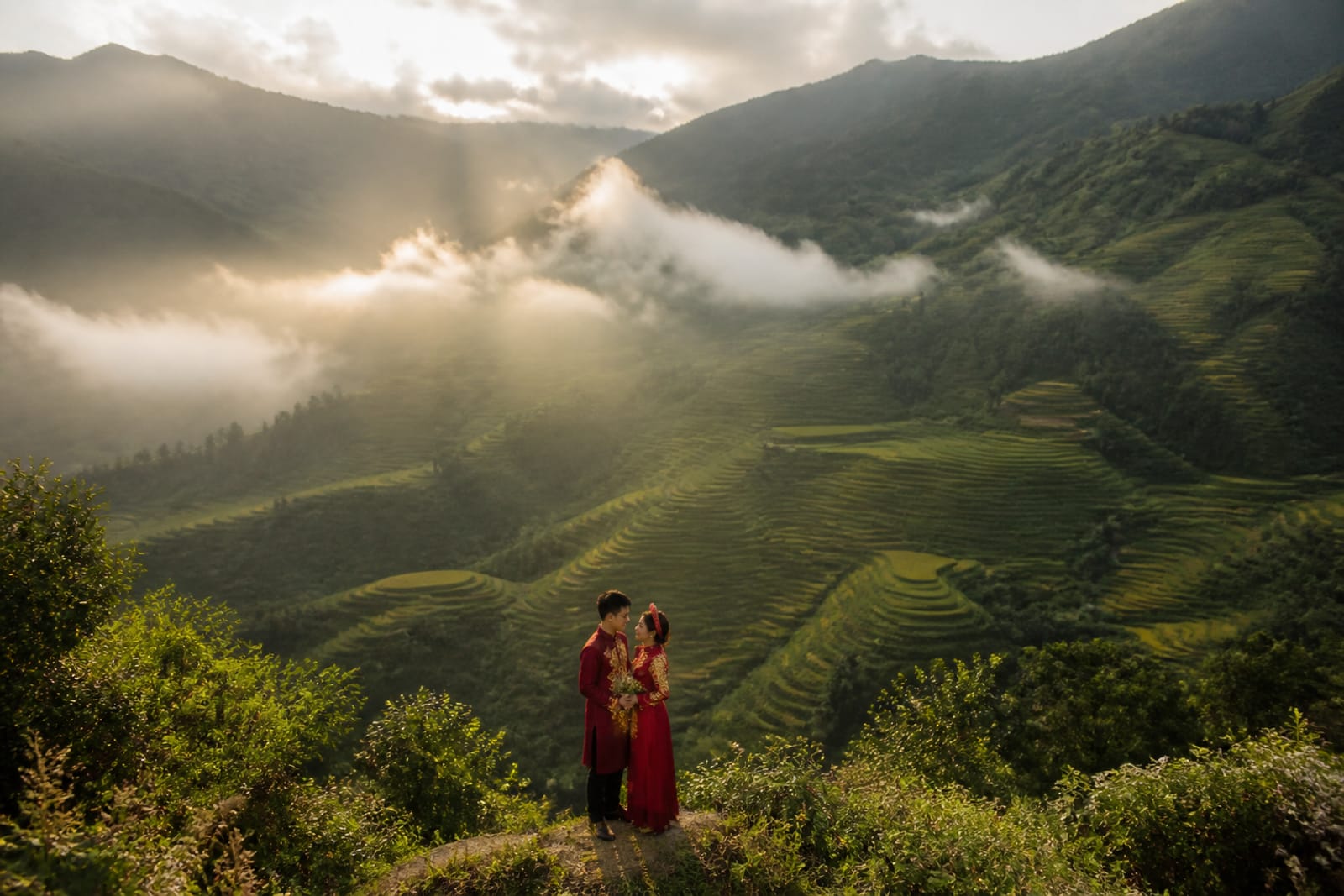
What should you wear under an ao dai at Stone Church?
An ao dai (traditional Vietnamese gown) is layered over fitted silk pants. Stone Church's cool mountain air (10–15°C in winter, 20–22°C in shoulder seasons) means a thin thermal layer under the silk keeps you warm during long takes without adding bulk. Wear neutral underwear (white, nude, or a matching slip) so if the ao dai moves, you're covered. Flat shoes or embroidered traditional slippers work best on stone steps; heels catch and slow down movement. If you're not wearing an ao dai, choose a dress or suit that breathes (cotton, linen blends)—you'll walk for 2+ hours and microfiber clings when you sweat. Avoid busy patterns near the white stone; solid, jewel tones, or pastels read better in photographs. Ask the studio what outfits they bring and whether you need to source yours.
Which season actually delivers the best weather and light?
| Season | Best light | Walking comfort | Rain risk | Crowds | Best for |
|---|---|---|---|---|---|
| Sep–Nov | Clear, directional mornings; cool 18–22°C | Excellent | Low–medium | Low weekdays | Most couples; ideal window |
| Dec–Feb | Shorter days; occasional fog; cold 10–15°C | Moderate (cold hands, breath visible) | Low | Higher Tet period only | Intimate feel; fewer tourists |
| Mar–May | Warm mornings; haze increases May | Very good | Low until late May | Medium | Spring blooms; longer light window |
| Jun–Aug | Shorter clear spells; afternoon fog; 22–25°C | Good if dry | High (daily showers 3–5 pm) | Medium | Lush green; risky scheduling |
The Sep–Nov window is why most studios book 4–8 weeks ahead. Clear skies mean you can shoot at 6:30 am and still have light. Dec–Feb cold is real—your breath shows, fingers stiffen—but the air is clean and tourist crowds are lower on weekdays. Mar–May is a second-choice slot: warmer, greener, but haze starts building (reduces contrast). Jun–Aug rain is unpredictable; a 3 pm downpour can cancel a 4 pm session with no warning.
How do you pose at Stone Church without looking stiff?
Most couples freeze when asked to "stand here and look at each other." Real direction means: Walk toward the camera, stop when I call it, now look left at the mountain, now at each other, keep walking. This creates motion and genuine connection. Sit on the steps with your back to the camera, hold hands, look over your shoulder—the stone and steps become the story, not a backdrop. Details work too: close-up of your hands, her shoes on the weathered stone, his suit jacket with the church doorway blurred behind. Wide frame first (both of you in the landscape), medium frame (you and the church), then detail (the dress, the ring, the steps under your feet). The photographer should move, not rotate you. Avoid: both facing the camera, arms akimbo, forced smiles, rigid "bride and groom" poses. The church is beautiful; your job is to move through it naturally and let the light do the work.
📸 Book on WhatsApp — pre-wedding photoshoot
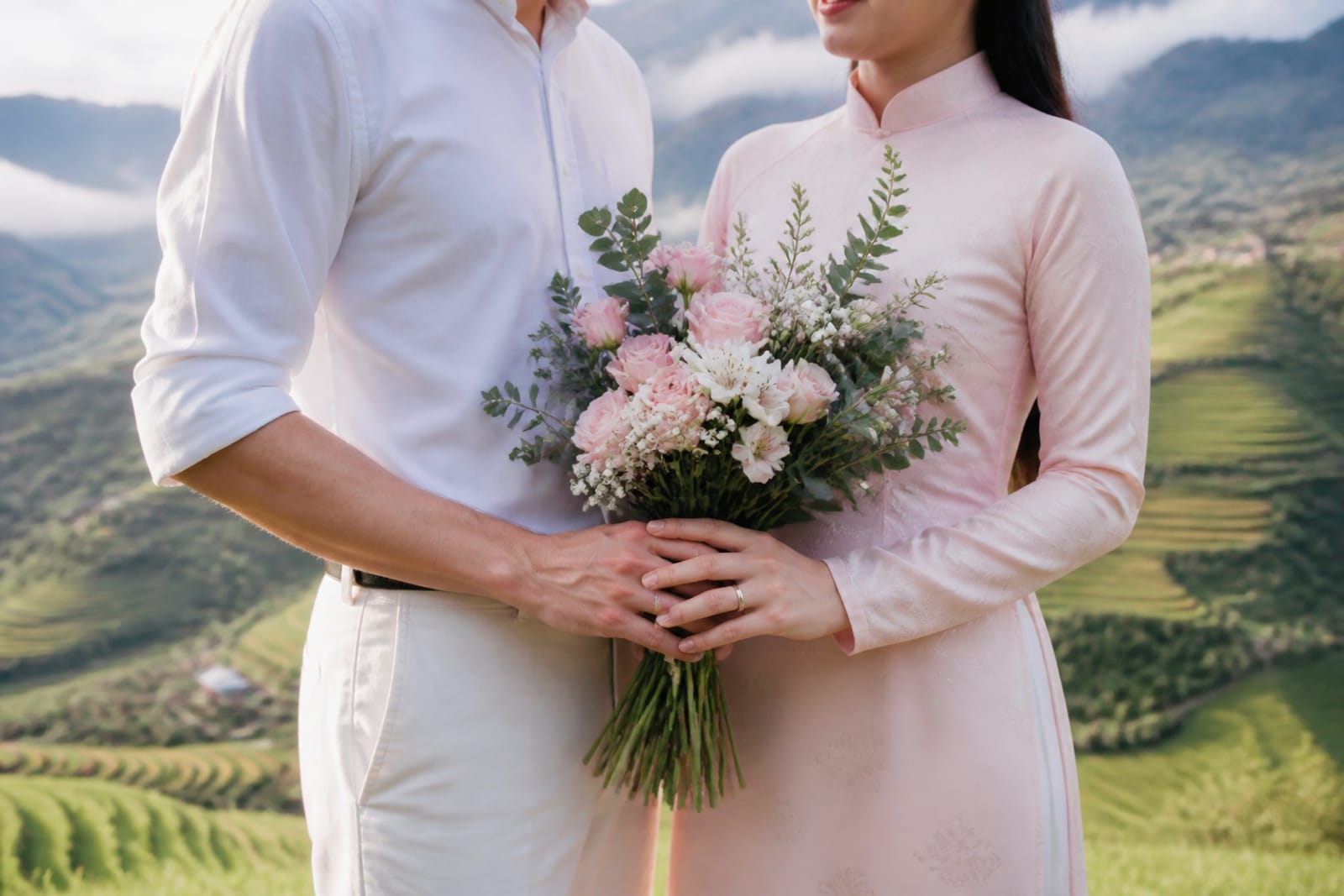
What permissions and timing do you need to shoot there?
Stone Church is an active Catholic parish; services are held, and entry outside visiting hours is not guaranteed. Check locally or via the studio whether you need a guide, donation, or permit. Many couples book early morning (before 7:00 am) to avoid crowds and service times. Travel to Sapa from Hanoi is 5–6 hours by car or bus; budget a full day. The studio should arrange your transportation, timing, and any necessary permissions when you book—do not arrive assuming the church will be empty. Some couples hire a local guide (ask the studio for referrals). Weather delays are common; a solid backup location (nearby village, terraces, stone paths) protects your shoot if fog rolls in by 7:30 am.
Should you shoot at Stone Church alone or hire a multi-vendor crew?
One-team approach (Cáo Studio model): A single photographer, makeup artist, stylist, and director move together. The director reads the light in real time and repositions everyone—you stay warm in a heated van between takes, the makeup artist touches up while the photographer scouts the next frame, and the stylist adjusts your ao dai or suit on the move. Cost and coordination are simpler; the vision is cohesive. Best for: couples who value fluidity, limited prep time, or travel logistics.
Multi-vendor approach: You hire a photographer, a separate makeup artist (who may be in Hanoi, 5+ hours away), and rent or bring your own outfit. The photographer waits while makeup finishes; the makeup artist is not present for touch-ups on location. Coordination falls on you; the shoot can feel fragmented. Best for: couples with a trusted local team already in place or a very specific aesthetic a single photographer cannot deliver.
Sapa shoots favor one-team coordination because of the travel, early light window, and temperature swings—flexibility and speed matter more than splitting vendors.
---
What to check before you book
- Seasonal availability. Sep–Nov books 6–8 weeks ahead; confirm dates with the studio now.
- Transportation included. Does the quote cover Hanoi–Sapa transfer? Return timing?
- Outfit sourcing. Do you bring your own ao dai, or does the studio provide it? If provided, is it included or rental?
- Backup plan. What happens if fog or rain cancels the morning session? Can you reshoot?
- Edited delivery. Confirm how many photos you receive, when, and in what format (digital gallery, prints, album).
- Team composition. Ask if the photographer works alone or with a makeup artist and stylist on location.
- Local permissions. Does the studio handle church access, or do you need to arrange it?
---
If you want an ao dai, see the ao dai rental and ao dai photoshoot pages for outfit and styling options. For couple or family sessions in Sapa or beyond, check couple & family photoshoot. Cáo Studio operates in Hanoi, Saigon, and Hoi An; for Sapa shoots, ask on WhatsApp whether the team travels or can refer a trusted local photographer.
FAQ
Can we shoot at Stone Church without a permit?
Entry during open hours is public. Early morning (before 6:30 am) or service-free times may require coordination with the parish. The studio handles this when you book—do not assume access.
What's the ideal ao dai color for Stone Church photos?
Jewel tones (emerald, sapphire, burgundy) and pastels (blush, lavender, mint) read well against white stone and green mountains. Avoid white (blends with the building) or very pale shades (wash out in overcast light).
How many outfits should we bring?
One ao dai (or suit) is enough for a 2–3 hour session. A second outfit (casual modern dress or suit) works if you want variety, but it adds time and logistics. Confirm with the studio what's included.
Is Dec–Feb too cold to shoot?
No—cold air is crisp and clean (fewer tourists, clear light). Dress in thermal layers under your outfit, plan shorter takes to let you warm up, and schedule a heated van nearby. Wind can be harsh; avoid windy days if possible.
How long until we see the edited photos?
Cáo Studio delivers edited photos within 48 hours of your shoot. Exact deliverables (number of photos, gallery format, prints) are confirmed on WhatsApp when you book.
FAQ
Can we shoot at Stone Church without a permit?
Entry during open hours is public. Early morning (before 6:30 am) or service-free times may require coordination with the parish. The studio handles this when you book—do not assume access.
What's the ideal ao dai color for Stone Church photos?
Jewel tones (emerald, sapphire, burgundy) and pastels (blush, lavender, mint) read well against white stone and green mountains. Avoid white (blends with the building) or very pale shades (wash out in overcast light).
How many outfits should we bring?
One ao dai (or suit) is enough for a 2–3 hour session. A second outfit (casual modern dress or suit) works if you want variety, but it adds time and logistics. Confirm with the studio what's included.
Is Dec–Feb too cold to shoot?
No—cold air is crisp and clean (fewer tourists, clear light). Dress in thermal layers under your outfit, plan shorter takes to let you warm up, and schedule a heated van nearby. Wind can be harsh; avoid windy days if possible.
How long until we see the edited photos?
Cáo Studio delivers edited photos within 48 hours of your shoot. Exact deliverables (number of photos, gallery format, prints) are confirmed on WhatsApp when you book.
Ao dai, makeup, hair and a local photographer in Hanoi or Saigon — one WhatsApp message.