/pre-wedding-photoshoot
Pre-wedding photos in Vietnam's rice terrace season: timing & guide
Pre-wedding photos in Vietnam's rice terrace season require timing your shoot to the northern harvest window (September–October for early rains and green fields, or May–June for pre-harvest gold tones). The north's terraces (Sapa, Ninh Binh, Ha Giang) offer the most photogenic stacks and steps; central regions like Hoi An's rice belt have flatter, wider paddies. Sessions work best in early morning (5:30–8:00 a.m.) when light is soft and mist lingers, or late afternoon (4:00–6:00 p.m.) as shadows lengthen. Avoid midday (10:00 a.m.–3:00 p.m.) when glare flattens color. Pack lightweight, breathable ao dai or Western dresses that don't snag on mud or step risers—undergarments matter (slip shorts prevent slipping, thin layers avoid sweat stains in humidity). Weather swings: bring a backup outfit and rain cover. Cáo Studio – Makeup & Photoshoot coordinates shoots in Hanoi and Hoi An by appointment; the team travels to terraces with lighting kits and backup plans for sudden downpours common in shoulder seasons. 📸 Book on WhatsApp — pre-wedding shoots
When do rice terraces look best for pre-wedding shoots?
Vietnam's rice cycle follows the monsoon. In the north (Hanoi, Sapa, Ha Giang), the main crop matures July–September; secondary crop grows October–December. Late May through June shows golden, nearly-ready fields—dramatic backlighting if you shoot into the sun at 5:30–6:30 p.m. September–October brings fresh green after monsoon rains, with softer light but higher humidity and cloud cover. Central Hoi An has a single main harvest February–March and second crop August–September; the driest window (February–August) means clearer skies and sharper shadows—better for color saturation if clouds work against your vision. Peak visual impact: May–June (gold, dry, sharp light) or October (vibrant green, diffuse light after rain). Choose based on mood: gold = warmth and urgency; green = tranquility and depth.
Which rice terrace regions photograph best?
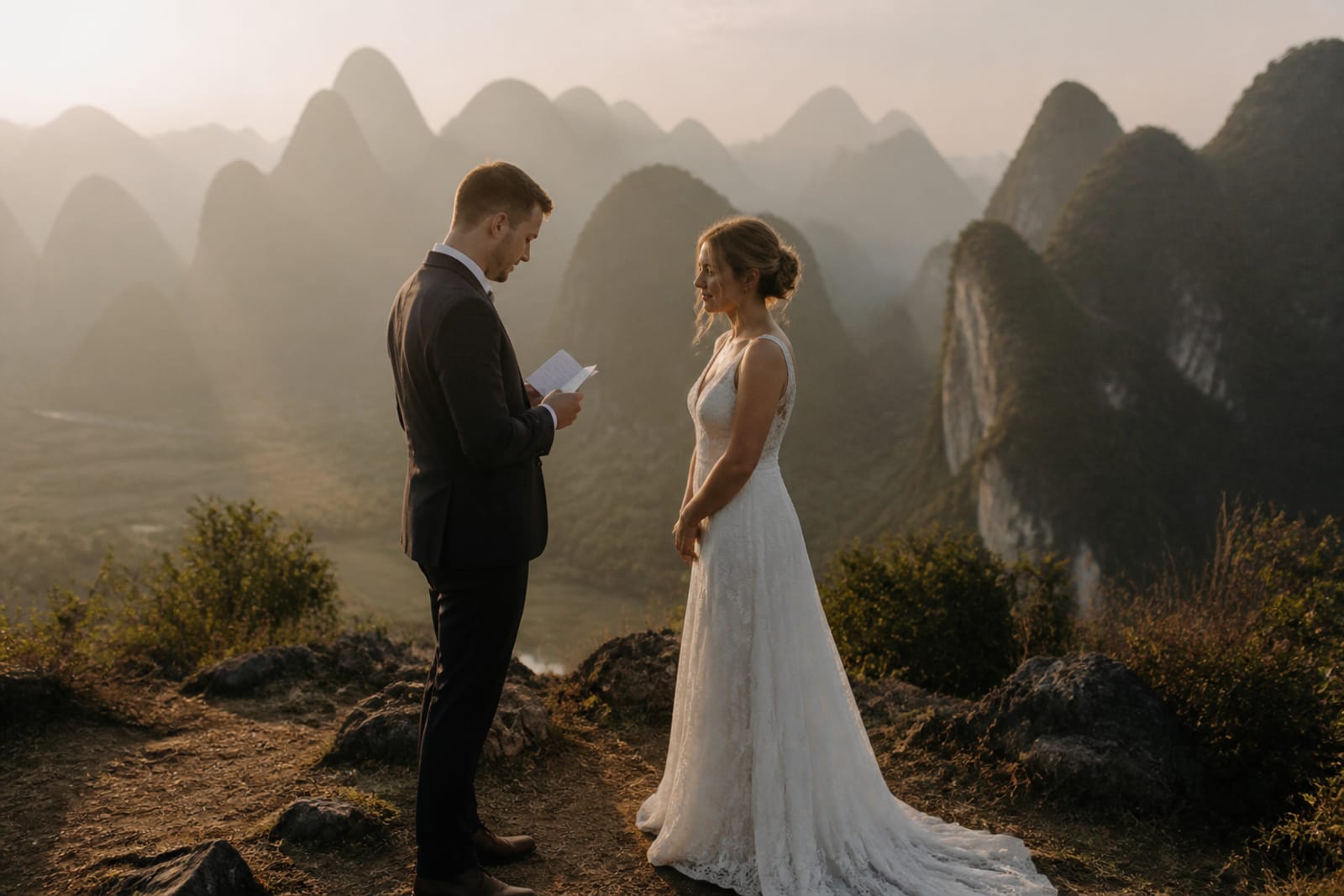
Sapa's stepped terraces (northwest, ~1600 m elevation) create layered, almost abstract compositions—thick morning fog adds drama but demands fast apertures and high ISO. Ninh Binh's Tam Cốc paddies (south of Hanoi, sea-level) are flatter but framed by limestone karsts; light bounces off water and rock, flattering skin tones but raising overexposure risk at midday. Ha Giang's northwest plateau terraces sit between mountains; isolation and scale make couples feel small and romantic, but roads are rough and access requires early starts. Hoi An's rice belt (south and west of the Ancient Town) has wide, open paddies ideal for full-body framing and easier footwork in ao dai—fewer deep steps, more walking paths. For pre-wedding ease and aesthetic, Ninh Binh and Hoi An balance beauty, accessibility, and reliable light windows. Sapa and Ha Giang reward couples willing to wake at 4:00 a.m. and navigate muddy terrain for moody, editorial results. Cáo Studio shoots in Hanoi and Hoi An; ask on WhatsApp for terrace location scouting and logistics.
What light times and weather should you plan for?
| Scenario | Best Season | Light Window | Why It Works | Risk |
|---|---|---|---|---|
| Golden glow into fields | May–June | 5:30–6:45 p.m. | Sun low, paddies backlit; warm tones | Clear sky required; overcast kills effect |
| Soft morning mist | September–October | 5:30–8:00 a.m. | Fog diffuses light; green is vivid; cool breeze | Mist burns off by 9 a.m.; humidity high |
| Blue-hour drama | Feb–Aug | 6:30–7:15 p.m. (post-sunset) | Sky deep blue; paddies silhouette; editorial feel | Requires fast lens, high ISO; short window |
| Midday (avoid) | Any | 10 a.m.–3 p.m. | — | Harsh overhead shadows; glare; heat exhaustion for couple and crew |
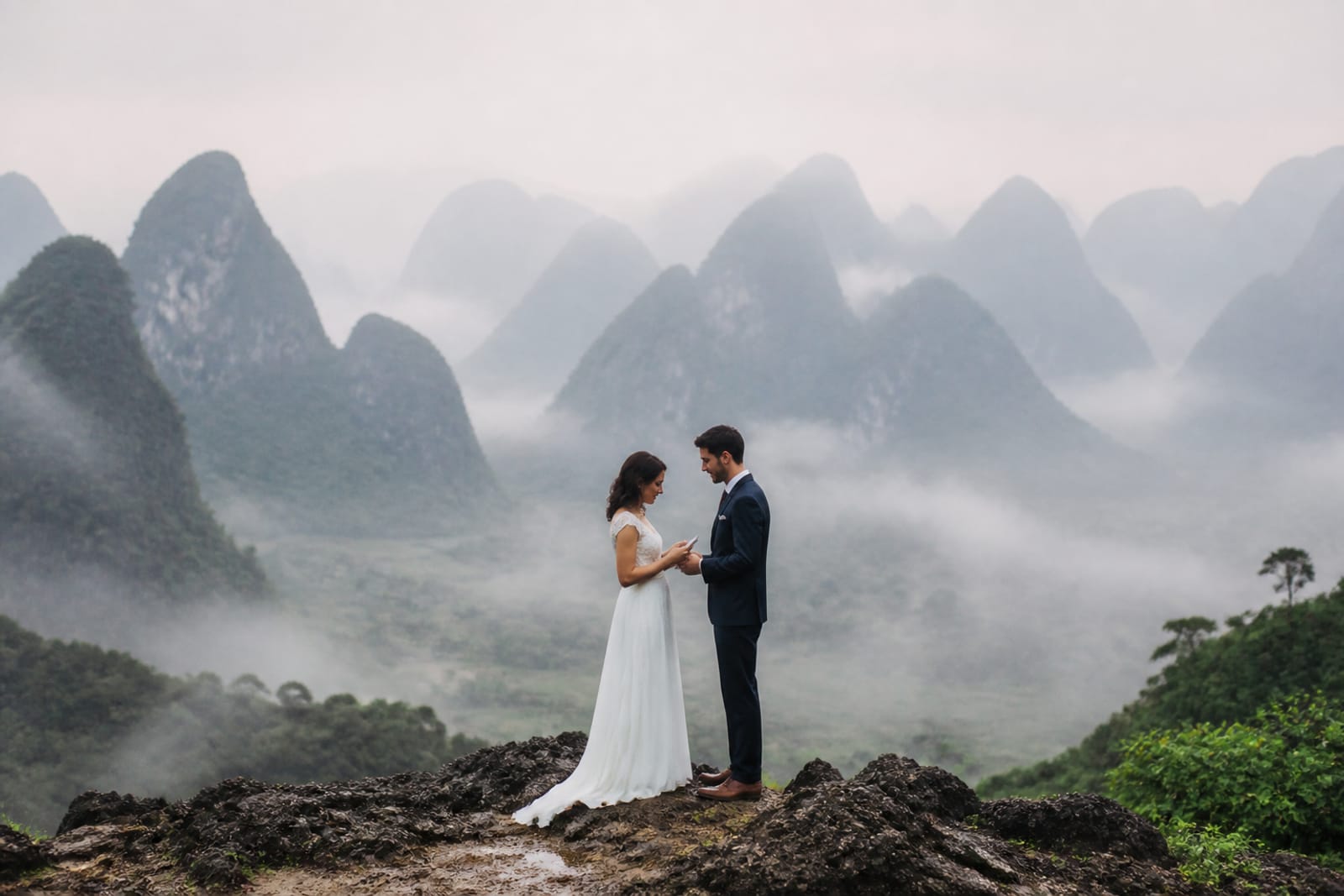
The monsoon belt (north, May–Sep; central, May–Nov) brings afternoon thunderstorms—they arrive fast and drench fields, muddying paths. A 30-minute window can vanish. Seasons overlap: choose your priority (gold light or mist or isolation) and accept the tradeoff. Northern winter (December–February) is cool and dry but grey—skies lack punch unless you use the dullness intentionally for moody, contrasty blacks and whites. See Cáo Studio's lookbook for how different seasons look in real shoots.
How do you dress for rice terrace shoots without damaging the outfit?
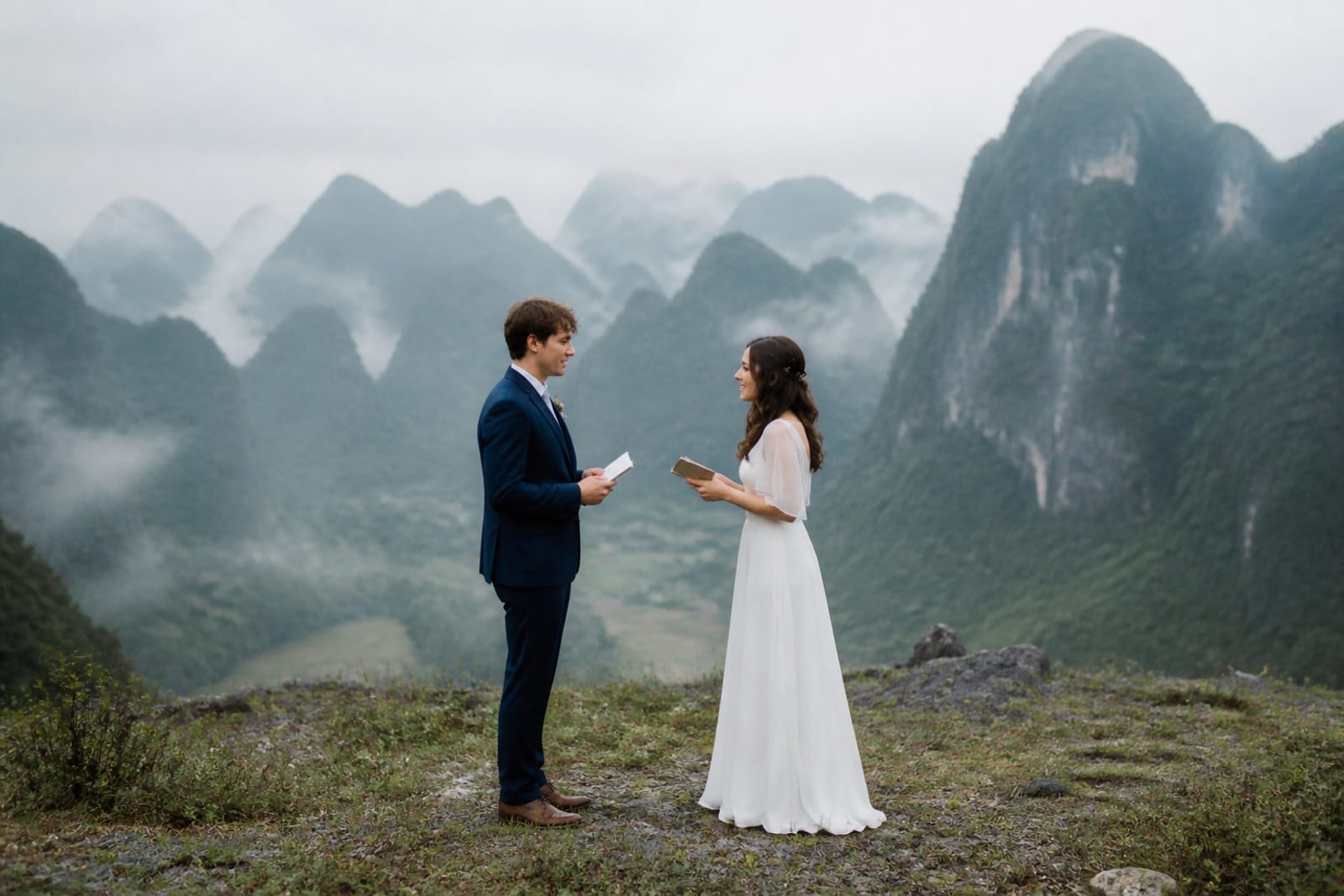
An ao dai on wet, stepped terrain is glamorous and fragile. The long tunic snags on rice stubble, mud cakes the hem, and the ankle-length split skirt tangles on risers. Solutions: wear a slip short or cycling short underneath the ao dai (prevents tripping and upskirt risk on stairs), choose a lightweight cotton or linen ao dai over silk (easier to clean, less slips), and bring flat, closed-toe boots or grippy sandals—never heels. If shooting in a Western wedding dress, opt for knee-length or midi; ball gowns trap mud and become unwearable. Undergarments are non-negotiable: in 28–32°C heat and 70–85% humidity, body-friction sweat stains show within 10 minutes. A thin, moisture-wicking undershirt or slip prevents visible marks. Bring a change of undergarments; makeup crew can refresh sweat on skin between shots.
Hair pins and lightweight accessories stay; heavy jewelry tugs on wet fabrics. One groom wore a full suit jacket—he overheated, sweat poured into his eyes, and the shoot shortened by 30 minutes. Linen suits or shirt-only (with suspenders) photograph richer and breathe better. Makeup & hair at your hotel services include styling for terrain; the team knows which products resist humidity and which don't run if you sweat or the mist settles on your face.
What's the step-by-step process for booking a rice terrace session?
- Decide your dates 3–4 months ahead. Check the climate guide: north (cool/grey Dec–Feb, hot/rainy May–Sep), central (driest Feb–Aug, worst typhoons Oct–Nov). Avoid Tet (late January–mid-February) when many services close.
- Choose your terrace region based on mood and difficulty. Sapa = dramatic, remote, 4 a.m. wakeup; Ninh Binh = accessible, balanced, 5:30 a.m. start; Hoi An rice belt = relaxed, walkable, flexible timing.
- Contact Cáo Studio on WhatsApp (+84 338 762 340) with your dates, location preference, and vibe (gold light, mist, editorial, romantic). The team confirms availability and logistics.
- Plan your outfit(s) with the studio: ao dai fit, undergarments, backup dress, weather contingencies. Discuss makeup durability (waterproof products for humidity/mist).
- Finalize light and location 1–2 weeks before. Weather forecasts improve; the team scouts if conditions shift.
- Arrive 30 minutes early. The crew handles makeup touch-ups on-site while light is checked. First shot starts exactly when planned (light windows are short).
- Bring water, a towel, and phone fully charged. You'll walk 1–2 km, climb 50–100 steps, and need breaks.
The entire process, from inquiry to final images, typically spans 1–2 months for scheduling, scouting, and post-production. Check the FAQ for specific timelines and see pricing for options.
What to check before you book a rice terrace pre-wedding shoot
- Terrace accessibility: Can the crew carry lighting gear and backup outfits to the site? Muddy roads in monsoon season may require 4WD or hiring a local porter.
- Couple fitness: Shooting at 1600 m (Sapa) is high-altitude; couples with heart conditions should consult a doctor. Flat terraces (Hoi An) are low-exertion.
- Weather backup: Does your booking include a rain date or refund if typhoons close the area? Confirm with WhatsApp.
- Outfit care post-shoot: Mud-caked ao dai needs hand-washing within hours. Is dry-cleaning included or your responsibility?
- Lighting kit and crew size: Do you want natural light only (faster shots, wider movement) or supplemental strobes (dramatic, requires still poses)? This affects session length and walking speed.
- Image count and delivery: Confirm exact number of final edited images and timeline on WhatsApp—don't assume.
- Travel time: Factor in 2–4 hours each way from Hanoi or Hoi An. Early 5:00 a.m. pickups are common; ensure your hotel is ready.
---
FAQ
Is September–October better than May–June for rice terrace pre-wedding photos?
Both excel differently. May–June offers golden, dramatic backlit light and dry paths; September–October brings mist, vivid green, and intimate mood but demands fast shooting before fog burns off. Choose based on your aesthetic priority—warmth vs. calm.
Can you shoot pre-wedding photos in rice terraces during monsoon season (July–August)?
Yes, but with caution. Light is diffuse, paddies are muddy, and afternoon downpours can strike fast. The upside: fields are empty, light is flattering, and moisture adds texture. Confirm weather 48 hours before; rain dates are essential.
What ao dai style is safest for rice terraces—silk or cotton?
Cotton or linen is smarter. Silk stains easily, slips on wet steps, and costs more to clean. Lightweight cotton breathes in heat, hides minor mud splatters, and survives hand-washing. Choose a terracotta, sage, or cream tone to hide soil.
Do I need a groom's outfit rental for a rice terrace shoot?
No, but yes if you want cohesion. Renting a tailored ao groom's suit or linen suit from Cáo Studio's suit rental ensures colors and fit match your bride's aesthetic and the landscape. Otherwise, dark jeans and a crisp shirt work.
How early do I need to wake for a terrace shoot with good light?
4:00–4:30 a.m. for pickups; you'll be shooting by 5:30–6:00 a.m. in the field. Mist and soft light peak 5:30–8:00 a.m. If you prefer evening gold (5:30–6:45 p.m.), you can sleep in and start at 3:00 p.m. prep.
Will my pre-wedding album look different if I shoot in terraces vs. a temple or urban location?
Yes. Terraces are intimate, timeless, and romantic; temples add cultural reverence; cities are modern and dynamic. Many couples mix all three for narrative variety. Ask Cáo Studio about multi-location packages and how images flow in a wedding photo album.
FAQ
Is September–October better than May–June for rice terrace pre-wedding photos?
Both excel differently. May–June offers golden, dramatic backlit light and dry paths; September–October brings mist, vivid green, and intimate mood but demands fast shooting before fog burns off. Choose based on your aesthetic priority—warmth vs. calm.
Can you shoot pre-wedding photos in rice terraces during monsoon season (July–August)?
Yes, but with caution. Light is diffuse, paddies are muddy, and afternoon downpours can strike fast. The upside: fields are empty, light is flattering, and moisture adds texture. Confirm weather 48 hours before; rain dates are essential.
What ao dai style is safest for rice terraces—silk or cotton?
Cotton or linen is smarter. Silk stains easily, slips on wet steps, and costs more to clean. Lightweight cotton breathes in heat, hides minor mud splatters, and survives hand-washing. Choose a terracotta, sage, or cream tone to hide soil.
Do I need a groom's outfit rental for a rice terrace shoot?
No, but yes if you want cohesion. Renting a tailored ao groom's suit or linen suit from [Cáo Studio's suit rental](/suit-rental) ensures colors and fit match your bride's aesthetic and the landscape. Otherwise, dark jeans and a crisp shirt work.
How early do I need to wake for a terrace shoot with good light?
4:00–4:30 a.m. for pickups; you'll be shooting by 5:30–6:00 a.m. in the field. Mist and soft light peak 5:30–8:00 a.m. If you prefer evening gold (5:30–6:45 p.m.), you can sleep in and start at 3:00 p.m. prep.
Will my pre-wedding album look different if I shoot in terraces vs. a temple or urban location?
Yes. Terraces are intimate, timeless, and romantic; temples add cultural reverence; cities are modern and dynamic. Many couples mix all three for narrative variety. Ask [Cáo Studio](/pre-wedding-photoshoot) about multi-location packages and how images flow in a [wedding photo album](/photo-album).
Ao dai, makeup, hair and a local photographer in Hanoi or Saigon — one WhatsApp message.