/pre-wedding-photoshoot
Pre-wedding photoshoot at Bai Dinh Pagoda, Ninh Binh: complete guide
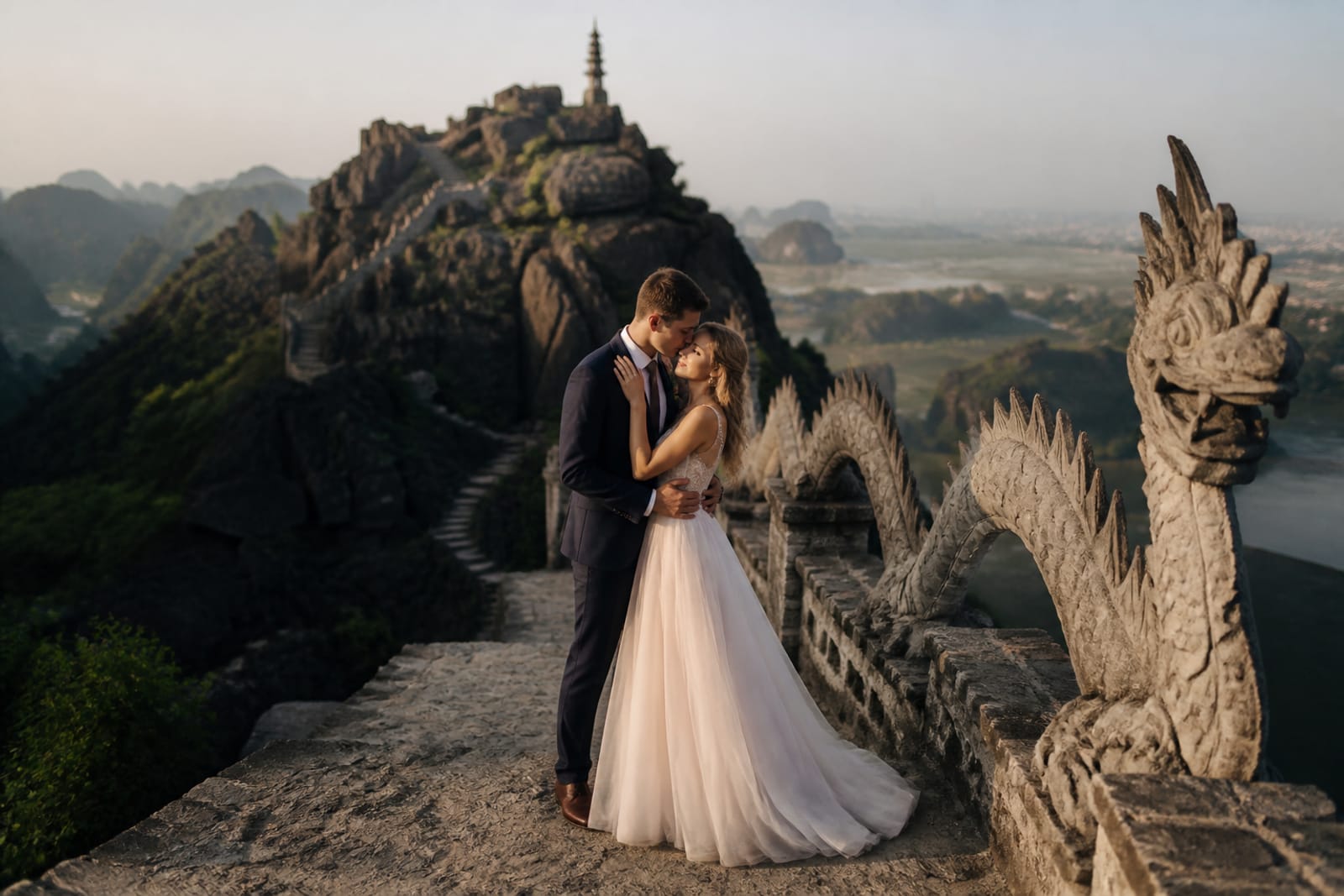
A pre-wedding photoshoot at Bai Dinh Pagoda means climbing about 500 stone steps through incense and gilded Buddhist halls to capture couple portraits against carved archways, pagoda roofs and valley views. Sessions typically run 2–4 hours: you arrive in the early morning (best light is 6–8 a.m., before crowds and heat); a local Ninh Binh photographer or freelancer guides the shoot, moving between the main temple complex, bell pavilion and upper terraces. Bai Dinh works best March–May and September–November when skies are clear and temperatures manageable; avoid June–August (scorching, monsoon rains) and December–February (grey, cool light). Wear lightweight, breathable outfits—traditional áo dài works beautifully but swap into comfortable shoes for stairs. Cáo Studio – Makeup & Photoshoot operates in Hanoi, Ho Chi Minh City and Hoi An; we do not have a Ninh Binh branch, but this guide helps you find and vet a skilled local photographer to deliver the same professional standard.
Bai Dinh Pagoda, Vietnam's largest Buddhist temple, sprawls across hillsides near Nho Quan in Ninh Binh province. Its iconic stone staircases, bronze Buddha statues and ornate prayer halls create a naturally photogenic setting. Pre-wedding couples are drawn to the spiritual atmosphere, dramatic height and golden architecture—but success hinges on timing, outfit choice and hiring a photographer who knows the location's light and logistics.
Why Bai Dinh works for pre-wedding shoots
Bai Dinh's multi-level layout and diverse backdrops suit couples seeking variety without traveling between venues. The lower temple grounds feature intricate carvings and smaller archways; mid-level terraces offer views across rice fields and neighboring valleys; the upper bell pavilion delivers high vantage points and isolation from daytime crowds. Unlike urban locations, Bai Dinh's spiritual energy translates powerfully in portraits—the reverent silence and incense smoke create mood without artifice. A skilled photographer can shoot intimate close-ups against statuary, wide-angle couple portraits framed by architecture, and environmental shots that place you within the landscape. The challenge is that every detail—stone texture, gilt reflection, stair geometry—demands precise exposure and composition; a mediocre shooter produces flat, washed-out frames. Visit in person before booking to scout sightlines and understand the layout.
📸 Book on WhatsApp — ao dai photoshoot
Which season delivers the best light and comfort?
The most reliable window runs March to May and September to November. During these months, Ninh Binh skies are often clear or lightly overcast—ideal for diffused, even skin tones and vibrant temple colors. Sunrise sessions (6–8 a.m.) reward early risers with soft, golden sidelighting and minimal crowds; by 9 a.m., day-trippers begin arriving. Rain is unlikely in these windows unless a late-season storm passes. Temperatures hover in the comfortable 20–28°C range, manageable for climbing stairs in formal wear.
Avoid June to August: heat peaks above 35°C, monsoon rains arrive suddenly, and the sky turns oppressive white. December to February offers cooler conditions but skies are often grey and overcast for days, yielding flat, blue-tinted images. Late September to November carries slight typhoon risk—check the weather forecast 7–10 days before and be ready to reschedule.
| Season | Light quality | Crowds | Temperature | Rain risk | Best shoot window |
|---|---|---|---|---|---|
| Mar–May | Clear, soft golden morning light | Light to moderate | Warm, walkable (20–25°C) | Low | 6–8 a.m. |
| Jun–Aug | Harsh, white sky; monsoon clouds | High | Hot, exhausting (30–36°C) | High (sudden storms) | Avoid if possible |
| Sep–Nov | Clear to overcast, even exposure | Moderate to high | Comfortable (22–28°C) | Low (late season: medium) | 6–8:30 a.m. |
| Dec–Feb | Flat, grey; inconsistent | Light | Cool (15–20°C) | Low | Sunrise still best, expect grey tones |
What to wear: áo dài, shoes and practicality
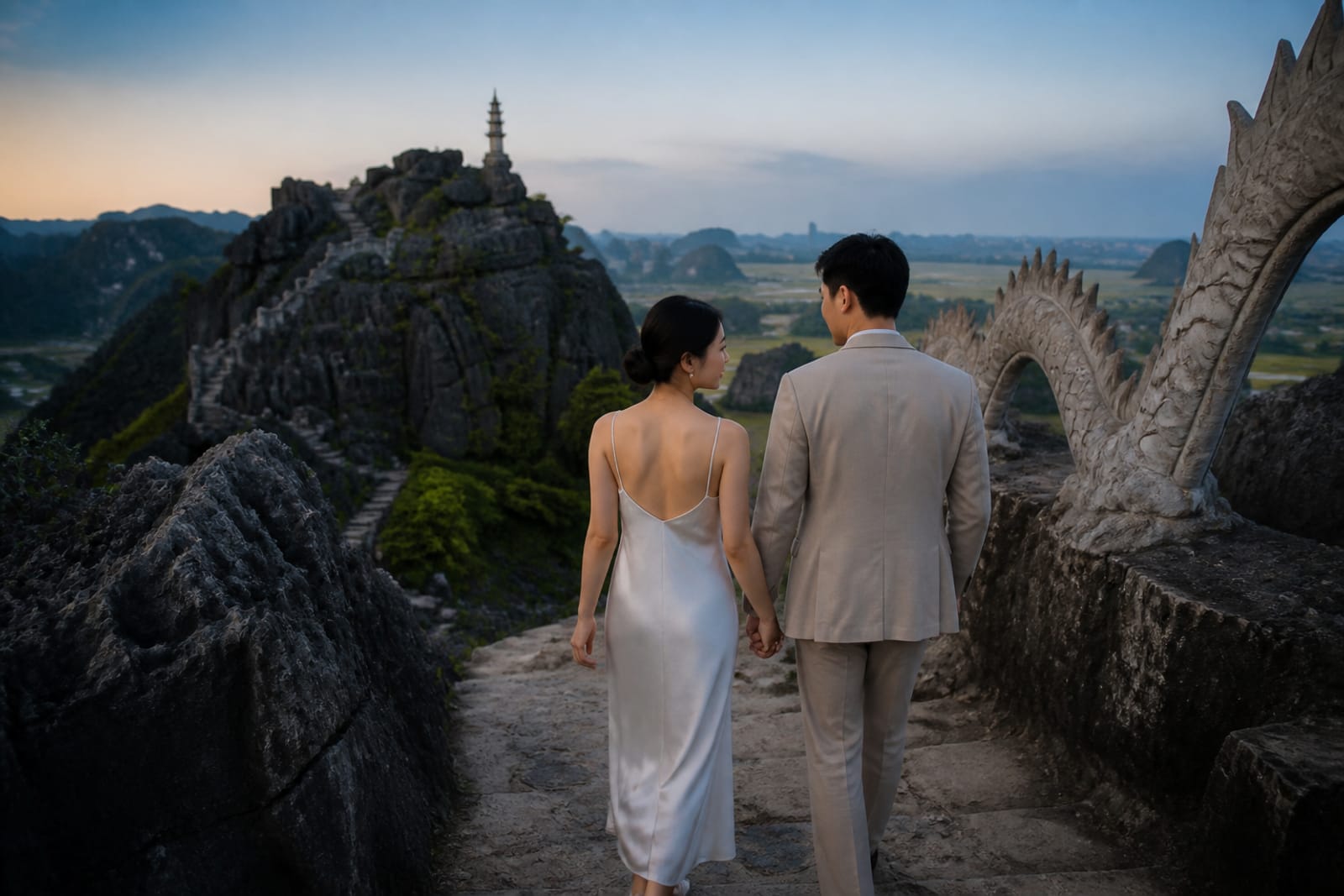
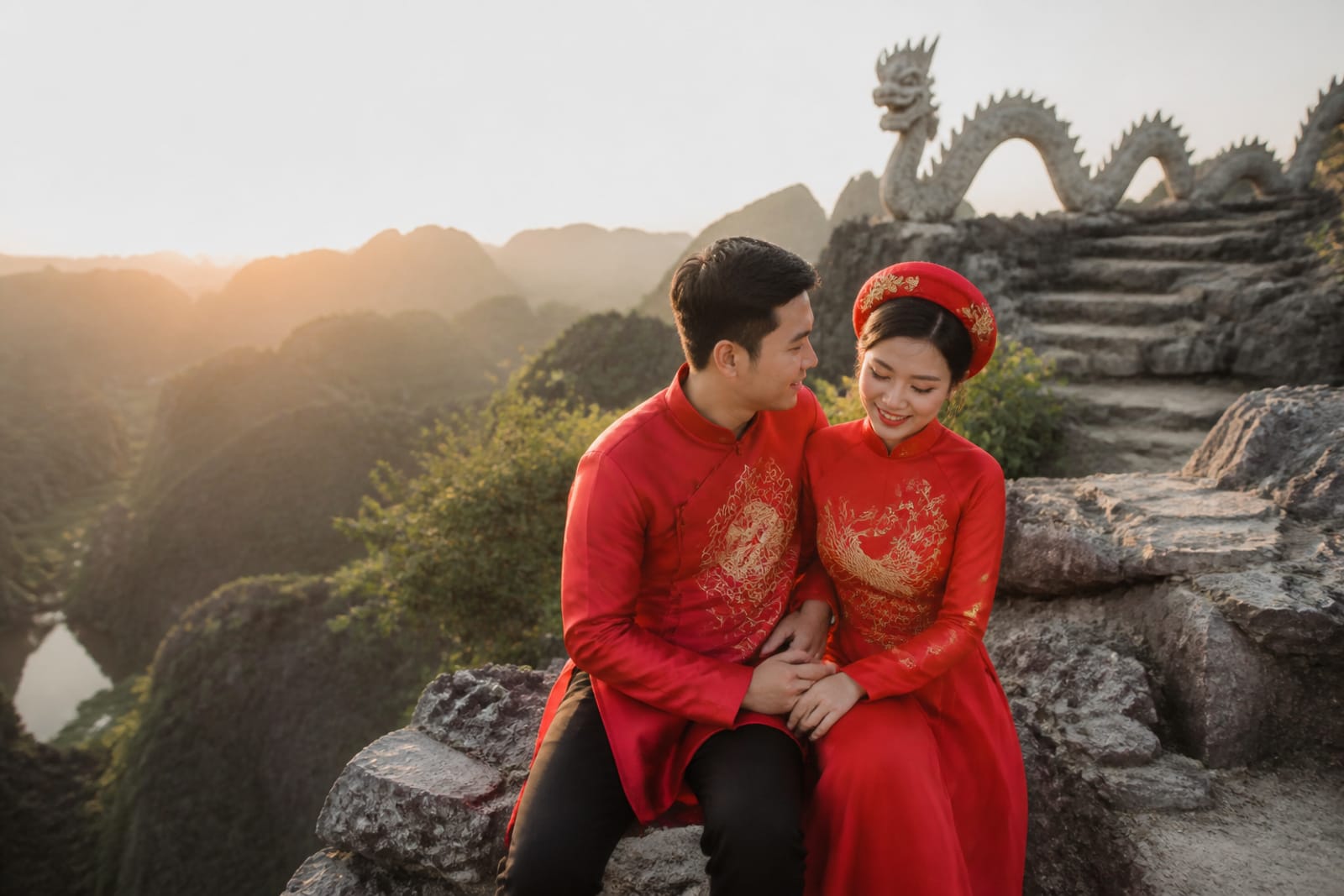
Áo dài is the obvious choice for Bai Dinh—the formal Vietnamese gown's flowing silhouette complements stone staircases and temple architecture. Silk or linen versions (not polyester) photograph richly and drape naturally on stairs. Have your photographer capture movement: walking up steps, turning on landings, sitting cross-legged on terraces. Pastels (cream, blush, pale gold) and jewel tones (emerald, sapphire, burgundy) photograph better than pure white or black under variable temple lighting.
Shoes matter critically. The stairs are uneven, worn stone with no handrails in places; slipping risks injury and ruins continuity. Wear flat, non-slip shoes (ballet flats, soft leather loafers, climbing sneakers) for the hike. If you want formal footwear in final frames, bring a second pair and swap at a mid-level terrace where you're safely elevated. Many couples wear sneakers to the shoot location, then swap for heels or formal sandals in the final 30 minutes at the bell pavilion or upper grounds where you can pose without climbing.
Bring a lightweight shawl or pashmina—mornings are cool at altitude, and you'll want coverage in certain temple halls out of respect. Avoid heavy jewelry; it catches sunlight unpredictably and clutters compositions. Keep makeup simple and long-lasting; incense smoke and humidity will test your base, so work with a makeup artist who understands temple conditions (ask your photographer for a recommendation or ask Cáo Studio for guidance on WhatsApp, even if you're shooting locally).
Finding and vetting a local Ninh Binh photographer
Cáo Studio – Makeup & Photoshoot does not operate a Ninh Binh branch, but we shoot regularly in Hanoi and Ho Chi Minh City, and can advise on finding a skilled local photographer for Bai Dinh. Here's how to evaluate candidates:
1. Portfolio review: Ask to see 5–10 recent Bai Dinh shoots (not edited highlights, but a real session). Look for technical basics: sharp focus, correct white balance (temple golds should be warm, not orange or grey), natural skin tones in variable light, and composition that uses architecture as framing, not distraction. Beware of over-saturated, heavily filtered work—temples and silk deserve subtlety.
2. References and response time: Request contact details from 1–2 past couples (language: ask for English-speaking references if that matters to you). Gauge the photographer's professionalism: do they respond within 24 hours? Do they ask about your vision, timeline and outfit before quoting?
3. Technical knowledge of timing: A good Bai Dinh photographer will volunteer that early sunrise (6–8 a.m.) is non-negotiable, explain crowd patterns, and suggest a route that balances dramatic backdrops with rest and safety. They'll know which terraces catch light at which hours and warn you about harsh noon sun at the bell pavilion.
4. Insurance and contract: Confirm they have third-party liability insurance and a written agreement covering shoot duration, image delivery timeline, editing style, and reshoot policy if weather forces cancellation.
5. Local guides: Many photographers partner with temple guides who can arrange private or semi-private access during off-peak hours (ask if this is possible and how it affects cost and schedule). A guide also ensures respectful behavior—Bai Dinh remains an active pilgrimage site.
Search channels: Instagram (hashtag #BaiDinhWedding, #BaiDinhPhotography), wedding forums (e.g., Vietnam Expats), and direct referrals from your hotel or travel agent. Always meet via video call before committing to review samples, discuss your vision and confirm logistics.
Practical shoot-day timeline and logistics
A typical Bai Dinh session runs 3–4 hours and unfolds like this:
- 5:30–6:00 a.m.: Meet at the pagoda base or a nearby hotel. Arrive via taxi or hired driver (arrange the night before; Uber operates in Ninh Binh but response times are unpredictable).
- 6:00–8:30 a.m.: First climbing and shooting phase—lower complex, archways, statuary. Light is soft and directional. Stairs are still quiet. Your photographer works around the few early pilgrims; expect natural bystanders in some frames (many couples like this authenticity).
- 8:30–9:15 a.m.: Rest, outfit change if planned, hydration. Crowds begin trickling in. Sky is brightening.
- 9:15–10:30 a.m.: Final push—bell pavilion, upper terraces, environmental portraits with valley views. Light gets harder; your photographer will likely position you in shade or use overcast patches.
- 10:30–11:00 a.m.: Descend, debrief, confirm editing timeline.
Bring water, electrolyte drinks and light snacks. Climbing 500+ steps in formal wear on a cool morning is exertion. Wear a light base layer under your áo dài if you'll be warm afterward. Apply sunscreen the evening before (morning application can interfere with makeup).
Respectful behavior matters—you're in a working temple. Don't pose in prayer halls during active worship. Remove shoes in certain areas. Avoid loud voices or disruptive behavior. A local photographer will guide these norms; a visitor won't, so clarify in advance.
Editing, delivery and next steps
Before booking, agree on deliverables in writing:
- Number of edited files (typically 100–200 for a full session).
- Editing style (natural and colour-graded, or more heavily retouched—clarify your preference).
- Delivery timeline (often 2–4 weeks for a complete gallery).
- Digital format (high-resolution JPEGs for prints, originals with RAW files available).
- Print and album options (does the photographer offer these, or do you source separately?).
If your photographer shoots only digital, consider working with a print service (e.g., wedding photo albums or photo prints & frames) to create a physical keepsake. Many couples pair their Bai Dinh shots with engagement or wedding-day coverage from a studio like Cáo—we offer pre-wedding & elopement shoots in Hanoi and Ho Chi Minh City, and can advise on coordinating your visual style across multiple sessions.
Reschedule gracefully if weather turns: sudden rain, thick fog or a typhoon forecast means postponing, not pushing forward. A professional photographer will enforce this; a desperate amateur won't. A postponement clause in your contract protects both parties.
What to check before you book
- Portfolio: 5+ Bai Dinh or similar temple shoots; correct exposure, sharp focus, natural color.
- References: Contact a previous couple; confirm response time and professionalism.
- Contract: Written agreement covering date, duration, delivery timeline, reshoot/reschedule policy, editing scope.
- Timing: Confirm 6:00 a.m. start is non-negotiable; photographer knows sunrise light and crowd patterns.
- Outfit coordination: Discuss your áo dài and shoe plan; confirm photographer has experience shooting formal wear on stairs.
- Insurance: Ask if they carry third-party liability.
- Backup plan: What happens if typhoon or major weather forces cancellation?
- Local logistics: Will they arrange temple access, guide or recommend a guide, and coordinate meeting location?
FAQ
Can I wear a Western wedding dress at Bai Dinh instead of áo dài?
Yes, but white dresses show dirt on stairs and can snag on stone. Many couples wear áo dài for Bai Dinh (spiritual setting, photogenic silhouette, practical) and Western dress elsewhere. If you choose a dress, pale or champagne colors hide stains better than pure white, and flat shoes are essential. Discuss practicality with your photographer before the shoot.
Do I need a permit to shoot at Bai Dinh Pagoda?
Bai Dinh allows photography by visitors and couples; you do not need a formal permit for a small personal session. Large commercial shoots (crews, drones, multiple outfits) may require permission—ask your photographer to clarify and arrange if needed. Always check current temple rules on their official website or via your guide.
How early is "too early" for a 6:00 a.m. session?
6:00 a.m. is when light begins softening after dawn; earlier (5:00–5:30 a.m.) yields very dim, blue-tinted frames unless you're using off-camera flash, which Bai Dinh's crowds and temple etiquette make difficult. 6:00–8:00 a.m. is the sweet spot. Morning shoots require waking around 4:30–5:00 a.m.; arrange transportation the night before and confirm your driver will be on time.
Can we book a private temple session to avoid crowds?
Informal private sessions (just you, your photographer and maybe a guide, shooting before official hours) are sometimes possible—ask your photographer if they've arranged this and what additional cost applies. Official "private ceremony" bookings are different; contact Bai Dinh's management directly via your guide or photographer to explore. Early morning (6:00–7:30 a.m.) typically means few crowds anyway.
How much does a Bai Dinh pre-wedding shoot cost?
A local Ninh Binh photographer's rate depends on experience, session length, number of edited images, and whether they're traveling from a distance. Costs vary widely; ask candidates for a quote and compare what's included (driving time, edited files, editing style, print options). Request quotes in writing to compare transparently. If you want makeup and hair services coordinated with your shoot, ask the photographer for a trusted makeup artist recommendation, or contact Cáo Studio on WhatsApp for guidance on preparation.
Should I book a photographer from Hanoi or hire someone based in Ninh Binh?
Both have trade-offs. A Ninh Binh local knows Bai Dinh intimately and minimizes travel time; a Hanoi-based photographer may have a larger portfolio and more polished editing but charges travel fees. Check portfolios and references regardless of location. Some Hanoi photographers specialize in Ninh Binh shoots and factor driving time into their rate—ask directly and compare total cost (session fee + travel) before deciding. === 📸 Book on WhatsApp — pre-wedding photoshoot | 💄 Makeup & hair at your hotel | 🌸 See the lookbook
FAQ
Can I wear a Western wedding dress at Bai Dinh instead of áo dài?
Yes, but white dresses show dirt on stairs and can snag on stone. Many couples wear áo dài for Bai Dinh (spiritual setting, photogenic silhouette, practical) and Western dress elsewhere. If you choose a dress, pale or champagne colors hide stains better than pure white, and flat shoes are essential. Discuss practicality with your photographer before the shoot.
Do I need a permit to shoot at Bai Dinh Pagoda?
Bai Dinh allows photography by visitors and couples; you do not need a formal permit for a small personal session. Large commercial shoots (crews, drones, multiple outfits) may require permission—ask your photographer to clarify and arrange if needed. Always check current temple rules on their official website or via your guide.
How early is "too early" for a 6:00 a.m. session?
6:00 a.m. is when light begins softening after dawn; earlier (5:00–5:30 a.m.) yields very dim, blue-tinted frames unless you're using off-camera flash, which Bai Dinh's crowds and temple etiquette make difficult. 6:00–8:00 a.m. is the sweet spot. Morning shoots require waking around 4:30–5:00 a.m.; arrange transportation the night before and confirm your driver will be on time.
Can we book a private temple session to avoid crowds?
Informal private sessions (just you, your photographer and maybe a guide, shooting before official hours) are sometimes possible—ask your photographer if they've arranged this and what additional cost applies. Official "private ceremony" bookings are different; contact Bai Dinh's management directly via your guide or photographer to explore. Early morning (6:00–7:30 a.m.) typically means few crowds anyway.
How much does a Bai Dinh pre-wedding shoot cost?
A local Ninh Binh photographer's rate depends on experience, session length, number of edited images, and whether they're traveling from a distance. Costs vary widely; ask candidates for a quote and compare what's included (driving time, edited files, editing style, print options). Request quotes in writing to compare transparently. If you want makeup and hair services coordinated with your shoot, ask the photographer for a trusted makeup artist recommendation, or contact Cáo Studio on WhatsApp for guidance on preparation.
Should I book a photographer from Hanoi or hire someone based in Ninh Binh?
Both have trade-offs. A Ninh Binh local knows Bai Dinh intimately and minimizes travel time; a Hanoi-based photographer may have a larger portfolio and more polished editing but charges travel fees. Check portfolios and references regardless of location. Some Hanoi photographers specialize in Ninh Binh shoots and factor driving time into their rate—ask directly and compare total cost (session fee + travel) before deciding. === [📸 Book on WhatsApp — pre-wedding photoshoot](/pre-wedding-photoshoot) | [💄 Makeup & hair at your hotel](/makeup-and-hair) | [🌸 See the lookbook](/lookbook)
Ao dai, makeup, hair and a local photographer in Hanoi or Saigon — one WhatsApp message.