/pre-wedding-photoshoot
Pre-wedding photoshoot at Cau Dat tea hills, Da Lat
Cau Dat tea hills lie in Da Lat's cool highlands, roughly 15 minutes south of the city center, and rank among Vietnam's most photographed pre-wedding backdrops because of mist-soaked mornings (sunrise–8 am) and soft afternoon light (3–5 pm). A typical shoot runs 2–3 hours and requires an entry fee paid on-site (check the current price locally). Wear layers: temperatures drop sharply at dawn, and rain arrives unpredictably May–November. You'll need a pre-wedding photoshoot coordinator who either travels to Da Lat or knows local photographers; Cáo Studio – Makeup & Photoshoot operates Hanoi and Ho Chi Minh City branches and books Hoi An trips, but for Da Lat shoots you'll hire a local team or ask us on WhatsApp about referrals. Avoid mid-morning (10 am–2 pm) when light flattens and crowds peak; book December–April for dry, stable weather.
A pre-wedding shoot at Cau Dat tea hills works because the landscape does most of the storytelling for you. The steeply terraced rows, emerald canopy, and highland mist create depth and emotion without needing elaborate styling. But Cau Dat isn't a simple backdrop—it demands timing, stamina, and a team that understands how tea-hill light behaves hour by hour.
Why does Cau Dat work so well for pre-wedding shoots?
Cau Dat's appeal lies in three things: layered terrain (rows at different elevations frame subjects naturally), changeable light (mist and cloud cover shift the mood every 10 minutes), and scale (you're surrounded by hundreds of meters of unbroken tea, so wide shots feel epic without crowding). The rows also run at angles that create leading lines toward the couple—a photographer's gift. Morning shoots capture the mist; late afternoon captures warm side-light on the leaves. Neither time is "better"—they suit different moods.
The tradeoff: the site is active farmland. Workers arrive at dawn; tours pass through mid-morning. Your photographer must navigate foot traffic, secure clear lines of sight, and work quickly during the window when light and crowds align. A rush job looks hurried; poor timing costs you the mist and soft light that justify the travel.
📸 Book on WhatsApp — ao dai photoshoot
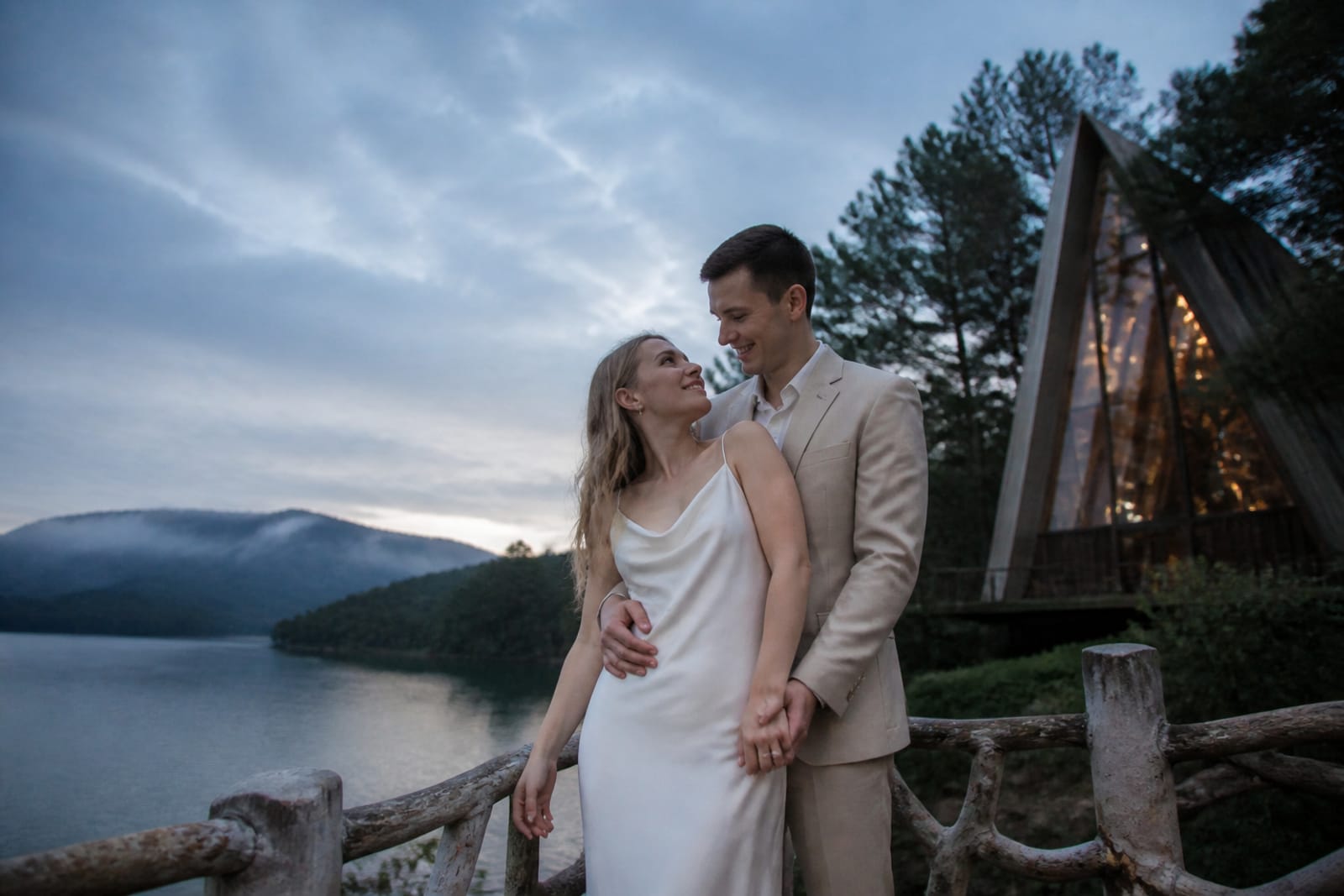
When is the best season to shoot at Cau Dat?
Da Lat's highland climate keeps temperatures between 15–25°C year-round, so comfort doesn't narrow your options. What matters is dry season (December–April): mornings are reliably misty, skies stay overcast (diffusing harsh sun), and rain doesn't interrupt shoots. Late January–February may catch wild sunflowers (da quy) scattered on nearby hillsides—an accidental bonus.
Rainy season (May–November) doesn't close Cau Dat, but mornings are hit-or-miss; afternoon showers arrive fast and strand you. October–November brings the worst risk: typhoons and flash flooding. If you must shoot May–September, book very early (before 8 am) and scout an indoor fallback—a nearby cafe or hotel with big windows. December is ideal: cool, dry, mist is thick, and Tet crowds haven't arrived yet. Avoid mid-February onward through April if crowds bother you; Tet travelers and domestic tourists peak then.
What should you wear under an ao dai for Cau Dat light and terrain?
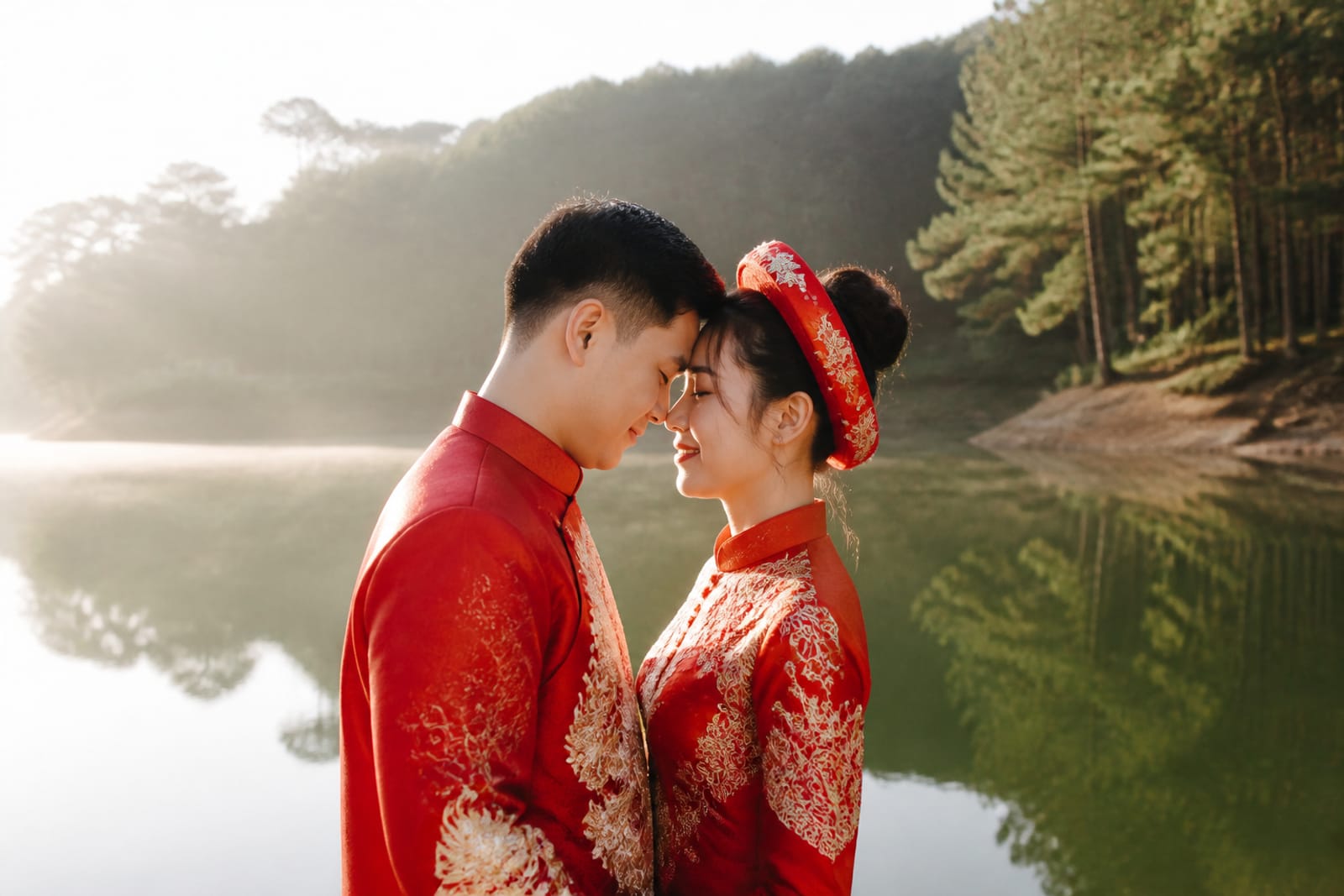
If you're wearing an ao dai photoshoot, your foundation matters more at Cau Dat than on flat urban streets. The ground is uneven—packed earth, shallow steps, hidden roots—and wet morning grass soaks the hem and your shoes. Wear light, breathable layers: a silk slip or fitted dress under the ao dai (loose fabric catches wind on hillsides), and closed, gripped shoes (not heels or sandals; tea workers wear rubber boots, and you'll understand why). Bring a shawl or cardigan—mist feels colder than 20°C, and you'll stand still for long shots.
If you're in Western dress, choose fabrics that move (linen, cotton blends) and avoid white or pale pastels on misty mornings—they blend with the fog and kill definition in photos. Jewel tones (deep reds, teals, burgundy) and earth tones (ochre, brown, black) pop against the green and grey. Avoid busy patterns; tea rows are busy enough. Flat shoes are non-negotiable; one twisted ankle ends the session.
How do you choose between a local photographer and a studio-booked shoot?
This is the key decision. Compare:
| Option | Best for | Light/season advantage | Why it works |
|---|---|---|---|
| Local Da Lat photographer | Couples comfortable with a smaller, independent team; tight budgets | Knows Cau Dat intimately—sunrise timing, worker schedules, weather patterns. Can pivot to backup spots in 10 minutes. | They shoot there weekly. They know the mist forecast and can reschedule if it's weak. |
| Studio from Hanoi/HCMC | Couples wanting consistency with their pre-wedding album; makeup/hair included | Brings professional styling and lighting backup. Higher production value; longer team. | Coordination is centralized. You're not hiring a stranger. But they must travel, adding cost and fatigue for the team. |
| Cáo Studio referral (WhatsApp) | Couples wanting Cáo's style and professionalism without paying for travel overhead | Vetted local contacts; Cáo's editing and album design. You get Hanoi/HCMC quality without a 5-hour drive. | Ask on WhatsApp—we can point you to a trusted local team and coordinate remotely. |
Local photographers often charge less and move faster because they work Cau Dat year-round and know what's realistic in one 3-hour session. A studio team from the city brings polish and consistency but eats time and fuel on the drive. Neither is wrong—it depends whether you prioritize cost or comfort.
If you book a local photographer, vet them hard: ask for Cau Dat-specific work (not generic Da Lat landscapes or studio portraits), check their editing style matches what you want, and confirm they've shot pre-wedding couples in that exact location. A bad fit here is a wasted day; the landscape can't save a photographer who doesn't know light.
What light times and weather should you check before booking?
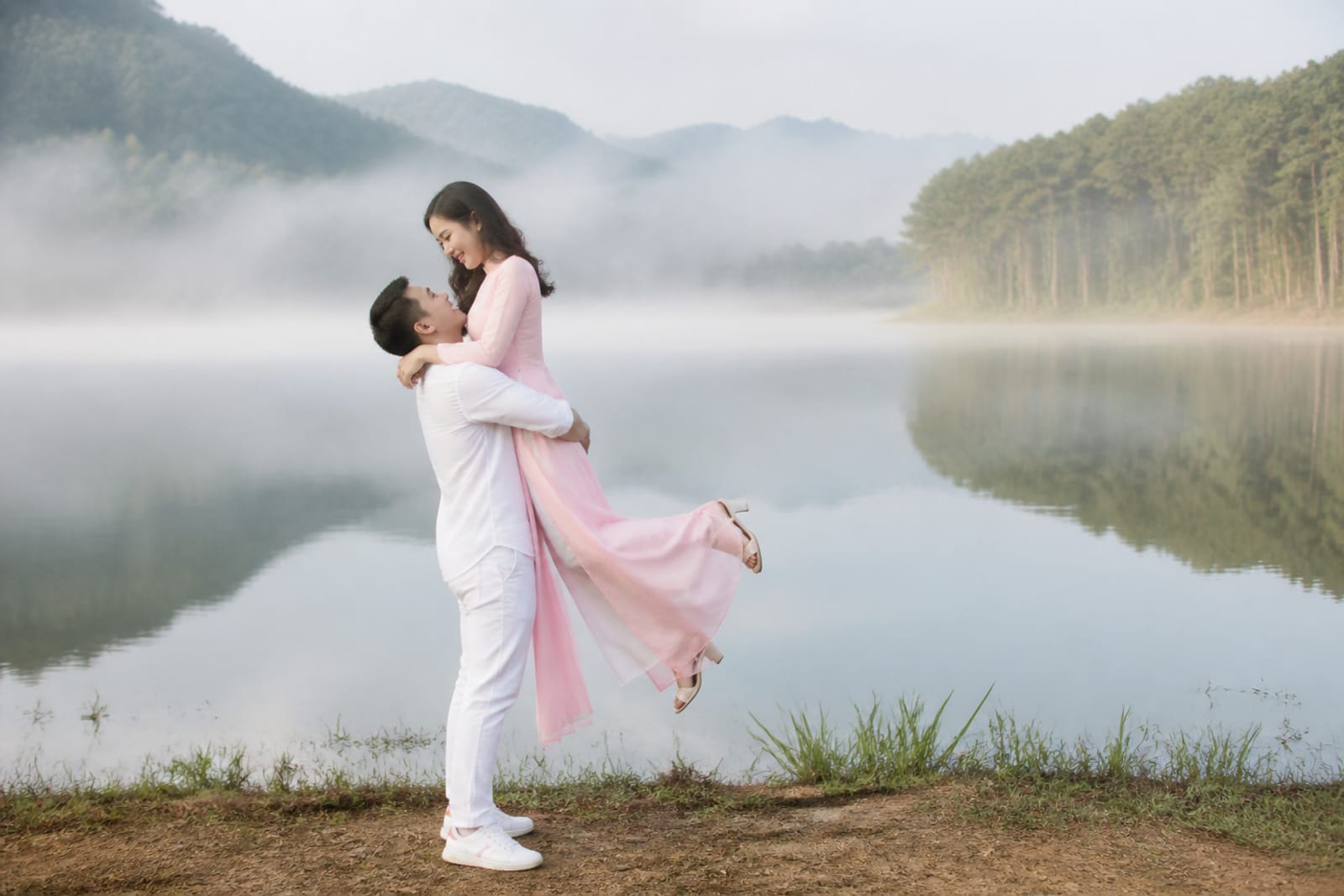
Sunrise to 8 am delivers thick mist that softens everything—romantic but moody. You'll need higher ISO and a tripod if your photographer uses available light. Works beautifully in December–January; in May–June, mist burns off by 7:30 am.
10 am–2 pm is a dead zone. Sun overhead, no mist, long shadows, crowds at their peak. Skip it.
3–5 pm (golden hour) is warm, directional light that flatters skin and makes the tea glow. Mist often returns as clouds roll in. This window is more forgiving: less dependent on season or weather. But it means a late start (10 am call time) and a finish close to dusk—you lose twilight shots.
What to check before booking:
- 7-day weather forecast (not the monthly average—Cau Dat's weather shifts fast). Check local sources; international apps often underestimate mist.
- Farm activity calendar (phone ahead; workers thin crops during certain months, which can open or block sightlines).
- Sunrise/sunset times (in December they shift by 20 minutes per week; in March by 2–3 minutes per day—don't assume 6:30 am dawn will be perfect).
- Your photographer's backup plan (if mist doesn't arrive, do they pivot to a dryer time or a different site like Tuyen Lam Lake?).
- Tet holidays (if shooting late January–mid February, confirm the tea farm is open; many sites close or reduce access).
How does a Cau Dat shoot actually run, step by step?
A realistic timeline:
- 4:30 am pickup (if shooting mist). Meet your team at your hotel or a prearranged point in Da Lat city.
- 5:15–5:45 am arrival & entry. Pay the site fee. Scout positions while light is grey and mist is thickest.
- 5:45–7:30 am first session. Shoot while mist lasts. You'll change outfits once, move across 2–3 terraces. The ground is wet; watch for slips.
- 7:30–8:00 am break. Mist burns. Regroup, eat, let the light settle. Your photographer checks images and plans the next window.
- 10:00 am–noon alternative timing (only if you're okay with harsher light). This rarely happens—most couples skip mid-morning and reconvene for golden hour.
- 3:00–5:30 pm second session (warm light, fewer tourists). Change outfits again if energy allows. Wrap as light goes blue-grey.
- 5:45 pm departure back to the city.
Total on-site time: 5–6 hours. Active shooting: 3–4 hours. That sounds long, but you're moving slowly (steep terrain), changing clothes, and waiting for light. Fatigue is real; wear comfortable shoes and eat breakfast.
One thing that often trips couples: the walk down is harder than up. Legs and knees feel it on the way out. Plan for a quiet evening after; you'll be sore.
---
What to check before you book
Booking questions to ask your photographer:
- Have you shot Cau Dat before? Show me 3 pre-wedding sessions from that site. (Not just landscape photos—actual couples, recent, in the same season you're booking.)
- What's your backup plan if mist doesn't show up? (A real answer: "We pivot to 4 pm and shoot near the lake" or "We move to Tuyen Lam Lake." A vague answer is a red flag.)
- Do you include makeup and hair? (If no, budget for a separate team or book one beforehand—doing your own makeup in a 4 am car ride never works out.)
- How many outfits fit in the timeline, and how much moving are we doing? (If they say "5 outfits in 3 hours," they haven't scouted the site. Two outfits, maybe three if you're fast and fit.)
- What happens if it rains hard? (Cau Dat becomes a mud pit. Confirm refund or reschedule terms in writing.)
- How long until I see edited images? (A reasonable answer: 2–4 weeks for a full gallery. Ask for the exact number of edited files and when delivery happens.)
If your photographer hesitates or deflects on any of these, find another. The landscape is gorgeous, but a tired, unprepared team will waste it.
---
For couples based in Hanoi or Ho Chi Minh City, and interested in coordinated pre-wedding work, Cáo Studio can help. Ask us on WhatsApp for local Da Lat photographer referrals and guidance on outfits, makeup, and editing direction—we'll keep your pre-wedding vision cohesive even though the shoot happens locally. For Hoi An photoshoots, we travel directly; for Da Lat, we connect you with a trusted team.
FAQ
Do I need a permit to shoot at Cau Dat tea hills?
No formal permit exists, but you must pay an entry fee at the farm gate. The amount is set by the farm—check the current price on arrival or ask your photographer to confirm beforehand. Groups larger than 8 should notify the farm in advance.
What happens if mist doesn't show up on my shoot day?
A skilled photographer pivots: shoots later in the day when warm light compensates, or relocates to a nearby backup spot like Tuyen Lam Lake. Confirm your photographer's plan before booking. Don't accept "we'll figure it out"—vague plans lead to rushed, flat images.
Can I shoot at Cau Dat in the rainy season (May–November)?
Yes, but mornings are unreliable. You'll get mist some days, downpours on others. October–November is especially risky; typhoons and flooding are possible. If you must shoot then, book very early morning (before 7 am), have a full-day backup plan, and confirm cancellation/reschedule terms in writing.
Should I wear an ao dai or Western dress for a Cau Dat shoot?
Both work beautifully. An ao dai (especially deep jewel tones) looks stunning against the green and grey. Western dress in solid colors (earth tones, reds, teals) also pops. Avoid white or pale pastels on misty mornings—they blur into the fog. Most importantly, wear closed, gripped shoes and layers; the terrain is wet and uneven.
How many photos do I typically get from a Cau Dat shoot?
That depends on your photographer and package. A 3–4 hour session usually yields 400–600 raw images; edited galleries are typically 80–150 finalized photos (your photographer selects, edits, and delivers these—ask how many before booking). Confirm the exact number and delivery timeline in your contract.
Can Cáo Studio photograph my pre-wedding shoot at Cau Dat?
Cáo Studio operates in Hanoi, Ho Chi Minh City, and travels to Hoi An. For Da Lat shoots, ask us on WhatsApp—we can recommend a vetted local photographer, advise on styling and outfits, and coordinate your editing and album design remotely so your images feel cohesive with any other sessions (couple portraits, proposal & anniversary shoots, etc.).
FAQ
Do I need a permit to shoot at Cau Dat tea hills?
No formal permit exists, but you must pay an entry fee at the farm gate. The amount is set by the farm—check the current price on arrival or ask your photographer to confirm beforehand. Groups larger than 8 should notify the farm in advance.
What happens if mist doesn't show up on my shoot day?
A skilled photographer pivots: shoots later in the day when warm light compensates, or relocates to a nearby backup spot like Tuyen Lam Lake. Confirm your photographer's plan before booking. Don't accept "we'll figure it out"—vague plans lead to rushed, flat images.
Can I shoot at Cau Dat in the rainy season (May–November)?
Yes, but mornings are unreliable. You'll get mist some days, downpours on others. October–November is especially risky; typhoons and flooding are possible. If you must shoot then, book very early morning (before 7 am), have a full-day backup plan, and confirm cancellation/reschedule terms in writing.
Should I wear an ao dai or Western dress for a Cau Dat shoot?
Both work beautifully. An ao dai (especially deep jewel tones) looks stunning against the green and grey. Western dress in solid colors (earth tones, reds, teals) also pops. Avoid white or pale pastels on misty mornings—they blur into the fog. Most importantly, wear closed, gripped shoes and layers; the terrain is wet and uneven.
How many photos do I typically get from a Cau Dat shoot?
That depends on your photographer and package. A 3–4 hour session usually yields 400–600 raw images; edited galleries are typically 80–150 finalized photos (your photographer selects, edits, and delivers these—ask how many before booking). Confirm the exact number and delivery timeline in your contract.
Can Cáo Studio photograph my pre-wedding shoot at Cau Dat?
Cáo Studio operates in Hanoi, Ho Chi Minh City, and travels to Hoi An. For Da Lat shoots, ask us on WhatsApp—we can recommend a vetted local photographer, advise on styling and outfits, and coordinate your editing and album design remotely so your images feel cohesive with any other sessions (couple portraits, [proposal & anniversary](/proposal-and-anniversary) shoots, etc.).
Ao dai, makeup, hair and a local photographer in Hanoi or Saigon — one WhatsApp message.