/pre-wedding-photoshoot
Pre-wedding photoshoot at Da Lat Railway Station: complete guide
Da Lat Railway Station is a heritage-listed 1932 French colonial building in central Da Lat that works as a pre-wedding photoshoot location for couples seeking architectural romance and soft highland light. The station sits at roughly 1,500 m altitude in Vietnam's temperate central highlands; its platform, ticket hall, and arched brick facades offer textured backdrops with dappled shadow. Shoots typically run 1–2 hours, starting at sunrise (6:00–6:45 a.m., softest light, fewest crowds) or late afternoon (4:00–5:30 p.m., golden hour). You'll need a local photographer familiar with the site, permits for professional use (ask locally), and ao dai or formal Western wear that photographs well in cool, misty conditions. Best seasons are Dec–Apr (dry, crisp light, misty mornings); avoid May–Nov (afternoon rain, grey sky). Cáo Studio – Makeup & Photoshoot operates in Hanoi and Ho Chi Minh City; for Da Lat shoots, we guide you to vetted local photographers via our WhatsApp team. ---
Why is Da Lat Railway Station a pre-wedding classic?
The station's French colonial architecture—arched brick portals, weathered timber platforms, vintage signage—creates instant narrative depth that plain urban backdrops lack. Its quieter, elevated location (compared to Hanoi or Saigon) forces slower, more intimate posing. The cool highland air and frequent morning mist add emotional texture to frames without needing color grading. Most couples choose it for exactly one reason: it feels like stepping into a 1950s stills photograph. That timelessness costs less visual effort than a trendy café or beach because the building does the heavy lifting. However, its popularity means weekend morning shoots can draw other tourists; early arrival (5:45 a.m.) is non-negotiable if you want solitude.
📸 See our pre-wedding lookbook | 💄 Makeup & hair at your hotel
What season and time of day give the best light?
| Season | Light quality | Crowds | Mist/mood | Rain risk | Best shoot time |
|---|---|---|---|---|---|
| Dec–Feb | Crisp, low-angle sunrise; cool tones | Low weekdays, high weekends | Common at dawn; clears by 8 a.m. | Rare | 6:00–7:30 a.m. |
| Mar–Apr | Brighter, harsher midday sun; less mist | Moderate | Occasional | Rare | 5:30–6:30 a.m. or 4:00–5:30 p.m. |
| May–Nov | Dull, grey overcast; afternoon downpours | Moderate weekdays | Rare; humid haze | High (Sep–Nov worst) | Not recommended |
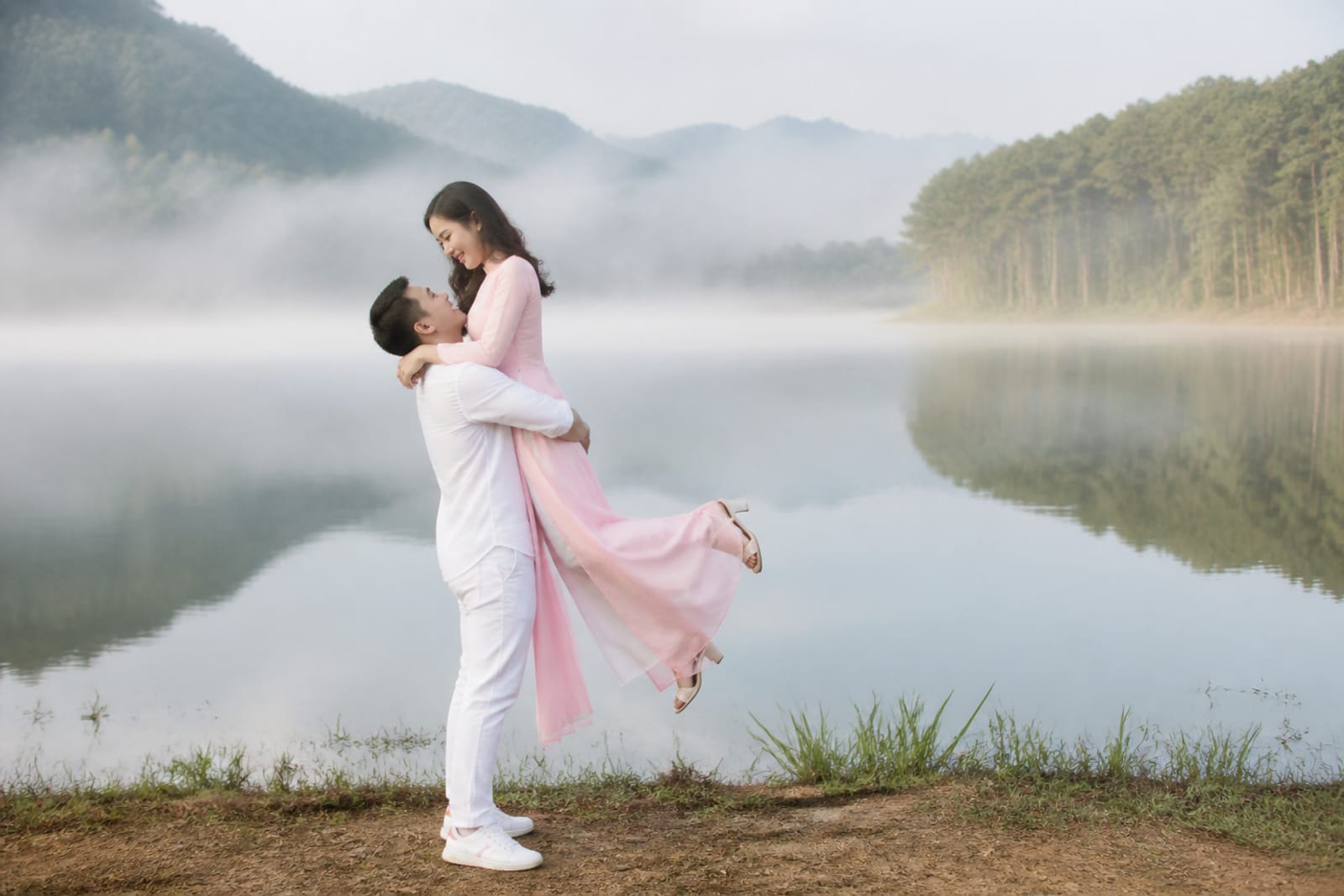
Sunrise (Dec–Apr) is non-negotiable. Da Lat's 1,500 m elevation means sunrise occurs 20–30 minutes later than Hanoi or Saigon; plan to arrive by 5:45 a.m. to scout and shoot by 6:15 a.m. Golden hour at the station lasts only 45 minutes before harsh shadows hit the brick facades. Afternoon light (4:00–5:30 p.m.) works March–April only, and requires a clear sky—unreliable outside dry season. Winter (Dec–Feb) brings mist that creeps across the platform at dawn, adding drama; it clears by 8:00 a.m. Avoid midday (11:00 a.m.–3:00 p.m.) entirely: shadows become black, skin appears washed, and tourists crowd the building. If you cannot shoot before 8:00 a.m., reschedule; no afternoon makeup will fix harsh overhead light.
What should you wear to photograph well at the station?
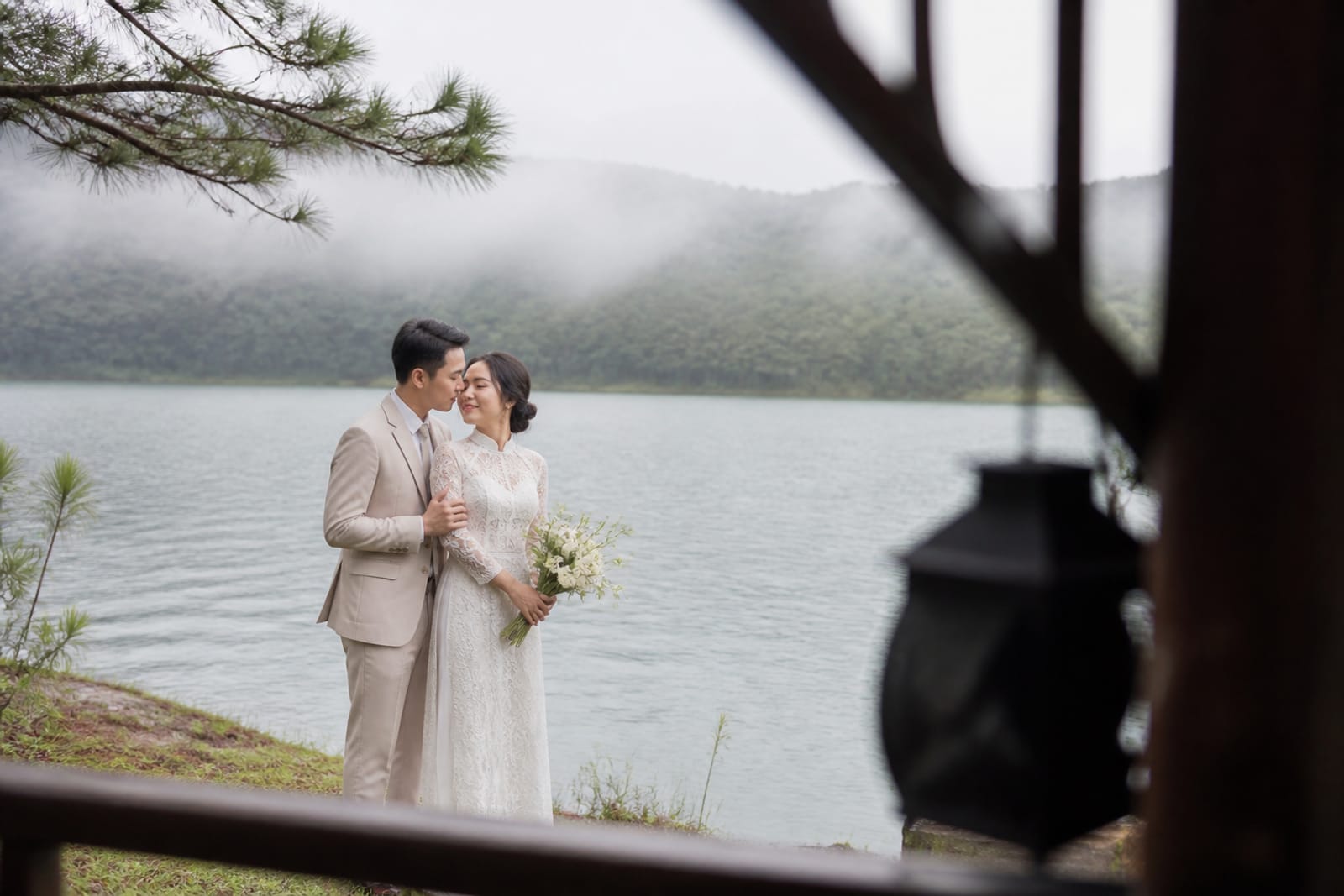
Ao dai is the obvious choice—its loose, flowing silhouette photographs beautifully in cool, misty conditions and respects the location's cultural heritage. Traditional colours (white, cream, peachy pastels, deep jewel tones) read clearly in soft dawn light without looking washed out. Avoid bright neon or saturated colours that compete with the station's weathered tones. If you prefer Western formal wear, choose matte fabrics (wool, cotton, silk) over shiny synthetics; glossy material photographs poorly in overcast highland light. Layering matters: Da Lat at dawn is cool (roughly 12–15°C in Dec–Feb). Wear a shawl, light cardigan, or jacket that works in-frame or removes cleanly for close portraits. Avoid delicate heels; the platform has uneven wooden planks and gravel—wear flat shoes or low heels with a solid grip. If you're renting ao dai, confirm it fits snugly enough to move and climb (some shots require stepping onto platform edges); ask the tailor about wind-resistant construction because highland breezes can flatten fabric folds. Hair and makeup should be "set" for cool, misty conditions: mist and dew will not ruin a good base if applied correctly, but sweating in warm makeup melts faster at altitude.
💄 We handle hotel makeup & hair in Hanoi and Ho Chi Minh City — for Da Lat shoots, ask a local photographer about makeup-inclusive packages on WhatsApp.
How do you book a photographer and navigate permits?
Da Lat does not have a Cáo Studio branch; couples booked with us in Hanoi or Ho Chi Minh City often ask how to extend a pre-wedding journey to Da Lat. Our recommendation: hire a local Da Lat photographer separately, 6–8 weeks before your shoot date. Vet them by asking for a portfolio from the exact location (not generic Da Lat or other heritage sites); a good photographer will have shot the railway station before and know where crowds gather, where light falls at 6:30 a.m., and which platform angles work. Ask if they've done pre-wedding shoots (not just tourists/families); pre-wedding demands posing direction and storytelling, not snapshots. Professional photoshoots at heritage sites technically require a permit from Da Lat's Department of Culture and Information (exact rules vary). A local photographer should handle permit application or advise if it's needed; never shoot without confirming locally—fines or seizure of files can result. Budget 2–3 weeks for permit approval if required. If you book with Cáo Studio first for pre-wedding shoots in Hanoi or Ho Chi Minh City, our team can recommend photographers we trust in Da Lat and coordinate timeline and style direction so your full pre-wedding series feels cohesive.
What are the real logistics and common mistakes to avoid?
Arrive 2 hours early. The station opens at 5:30 a.m.; aim to be there by 5:45 a.m. to scope light, clear tourists from background, and test angles. If you're not local, you'll lose 15 minutes navigating the platform layout. Bring a headlamp (the station has minimal lighting) and a power bank (phones die in cold). The platform itself has no facilities (no bathroom, no water, no shelter if weather turns)—handle these before arrival. Parking is behind the station; confirm access time with your driver or photographer. Wind is common at dawn; bring clips for ao dai folds or accept that they'll move in frames (not always bad—adds motion). Morning mist can be zero visibility at 6:00 a.m., clearing by 6:45 a.m.—don't panic; mist clears fast. If it rains lightly, the wet brick actually photographs beautifully (moody, reflective). If heavy rain or fog does not lift by 7:00 a.m., reschedule; no photographer can light through that. Never assume interior station shots are possible; ask permission and expect "no" during operating hours. Expect 150–200 frames from a 90-minute shoot; a professional edits 60–80 of those and delivers within 4–6 weeks (timelines vary by photographer). Do not shoot unguided; tourist snapshots of the station lack composition and often include unwanted background. A photographer's role is directing where you stand, how you move, and when to pause for light—that guidance is worth the cost.
📸 Book a pre-wedding shoot with us in Hanoi or Ho Chi Minh City
What to check before you book a photographer
- Portfolio: Has the photographer shot pre-wedding or couple sessions (not just portraits or events)?
- Da Lat station experience: Do they have a portfolio from this exact location showing time of day, season, and light quality?
- Permit clarity: Will they apply for or confirm a permit is not needed? Get this in writing.
- Backup weather plan: What's their policy if rain, mist, or light fail? Do they reschedule, offer a partial refund, or shoot anyway?
- Turnaround time: How long until you receive edited images? (Typical is 4–6 weeks; faster often means less refinement.)
- Revision rounds: Are revisions included, and how many? (Unlimited revisions are rare; expect 1–2 rounds standard.)
- File format and rights: Do you get high-resolution digital files, or only web-resolution previews? Can you print them, use them for a wedding album, or share on social media?
- Price structure: Ask about cost factors (number of hours, outfits changes, retouching level, rush delivery), not fixed price—this helps you understand what you're paying for.
For couples already shooting pre-wedding photos in Hanoi with Cáo Studio, we can advise on Da Lat extensions and recommend trusted local photographers; WhatsApp us to discuss.
---
FAQ
Is a permit required to shoot pre-wedding at Da Lat Railway Station?
Professional shoots at heritage sites typically require a permit from Da Lat's Department of Culture. A local photographer should confirm or handle the application. Ask explicitly before booking—do not assume it's unnecessary.
What is the best month for a pre-wedding shoot at Da Lat Railway Station?
December to April offers dry weather, crisp light, and misty mornings. Jan–Feb is coldest and most dramatic; March–April is brighter but loses morning mist. Avoid May–Nov due to afternoon rain and grey skies.
How early do we need to arrive?
Arrive by 5:45 a.m. to catch sunrise light (6:15–7:00 a.m.). The station opens at 5:30 a.m. Early arrival also lets you clear crowds and scout angles before shooting begins.
Can we shoot inside the station building?
Ask your photographer; interior shoots during operating hours may not be permitted. Exterior platform and arched façades are the primary pre-wedding locations and require no interior access.
What if we cannot wake up early or the weather is bad?
If early rising is impossible, reschedule. If weather fails on shoot day, a professional photographer should offer a reschedule or partial refund—confirm this in writing before booking.
Should we rent ao dai or wear Western formal wear?
Ao dai photographs beautifully at the heritage station and respects the cultural setting. Western formal wear works too, but choose matte fabrics and avoid shiny synthetics. Confirm fit allows you to move and climb platform edges.
FAQ
Is a permit required to shoot pre-wedding at Da Lat Railway Station?
Professional shoots at heritage sites typically require a permit from Da Lat's Department of Culture. A local photographer should confirm or handle the application. Ask explicitly before booking—do not assume it's unnecessary.
What is the best month for a pre-wedding shoot at Da Lat Railway Station?
December to April offers dry weather, crisp light, and misty mornings. Jan–Feb is coldest and most dramatic; March–April is brighter but loses morning mist. Avoid May–Nov due to afternoon rain and grey skies.
How early do we need to arrive?
Arrive by 5:45 a.m. to catch sunrise light (6:15–7:00 a.m.). The station opens at 5:30 a.m. Early arrival also lets you clear crowds and scout angles before shooting begins.
Can we shoot inside the station building?
Ask your photographer; interior shoots during operating hours may not be permitted. Exterior platform and arched façades are the primary pre-wedding locations and require no interior access.
What if we cannot wake up early or the weather is bad?
If early rising is impossible, reschedule. If weather fails on shoot day, a professional photographer should offer a reschedule or partial refund—confirm this in writing before booking.
Should we rent ao dai or wear Western formal wear?
Ao dai photographs beautifully at the heritage station and respects the cultural setting. Western formal wear works too, but choose matte fabrics and avoid shiny synthetics. Confirm fit allows you to move and climb platform edges.
Ao dai, makeup, hair and a local photographer in Hanoi or Saigon — one WhatsApp message.