/pre-wedding-photoshoot
Pre-wedding photoshoot at Hang Mua, Ninh Binh: complete guide
Hang Mua is a 652-metre limestone peak near Ninh Binh's Trang An Scenic Area, famous for its panoramic rice-field and karst views. A pre-wedding shoot there involves climbing roughly 500 stone steps with your photographer, typically taking 2–3 hours on-site. The best light and comfort occur in March–May and September–November when temperatures are mild and skies clearer; avoid June–August heat and December–February grey, cool weather. You'll want lightweight, breathable ao dai or formal wear that photographs well at altitude, plus solid footwear for uneven steps. Cáo Studio – Makeup & Photoshoot arranges pre-wedding shoots at Hang Mua; however, the studio operates from Hanoi, Ho Chi Minh City and Hoi An branches, so ask on WhatsApp whether a Hanoi team can travel to Ninh Binh for your session dates and what that involves.
A pre-wedding shoot at Hang Mua requires a different set of decisions than studio or urban sessions. The location is stunning but exposed, the climb is demanding, and the light changes fast at elevation. This guide walks you through what makes it work and what can go wrong.
Why do couples choose Hang Mua for pre-wedding photos?
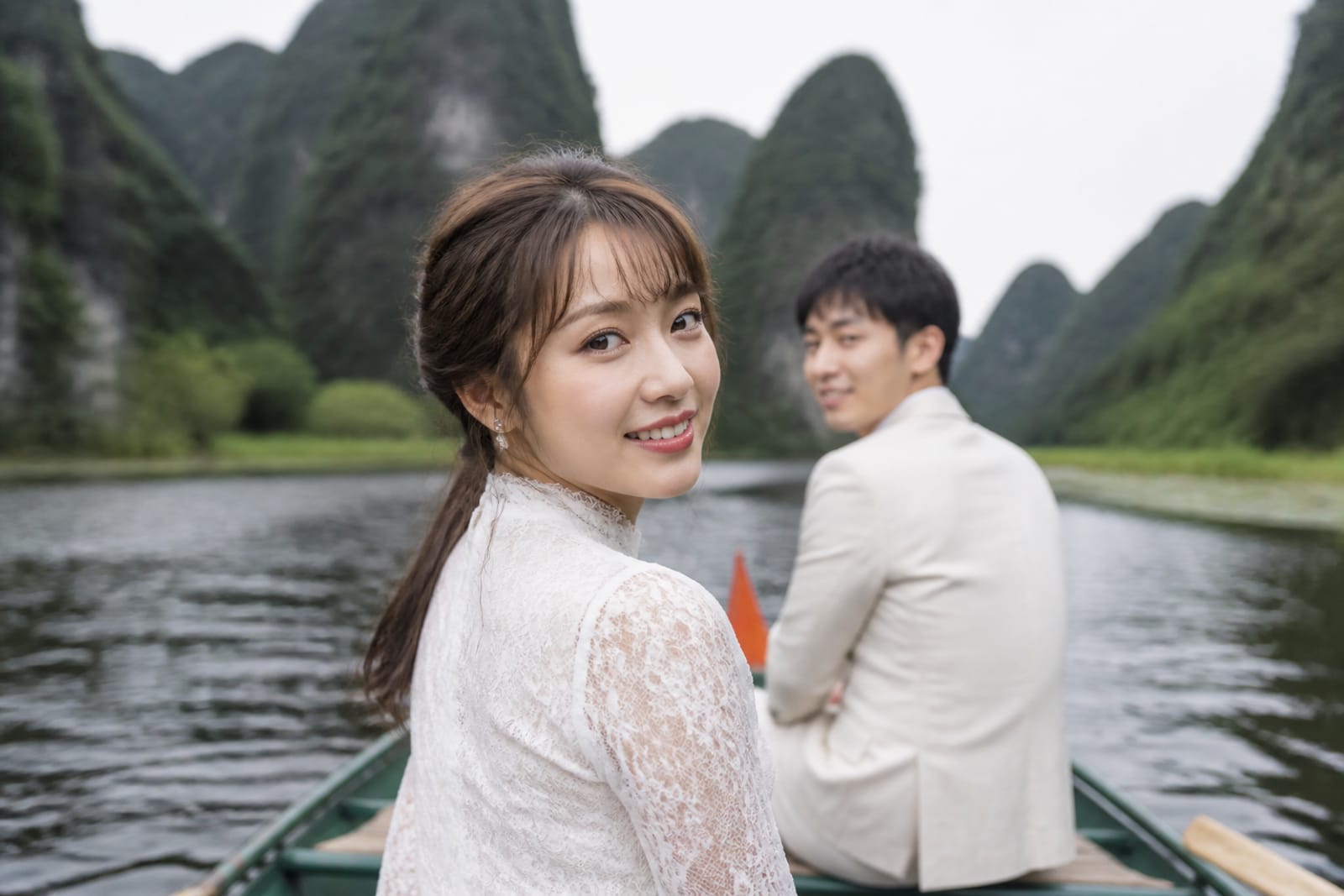
Hang Mua delivers a cinematic backdrop that no studio can replicate: layered karst mountains, rice fields at different heights, and a 360-degree horizon. The viewpoint also suits the romantic narrative many couples want—effort rewarded, two people at the top of the world. The stone steps and wooden platforms are visually interesting, and the scale makes couples feel small and intimate at once. One key advantage: it's less crowded than some Hanoi landmarks in early morning or late afternoon, though still popular. If you're drawn to dramatic landscape and willing to navigate steep terrain, Hang Mua is the choice; if you prefer a controlled, cooler environment, an ao dai photoshoot in a studio or heritage house is better.
What's the best season and time of day to shoot?
| Season | Light quality | Walking comfort | Best for | Why |
|---|---|---|---|---|
| Mar–May | Clear, warm, soft shadows | Cool mornings, warm midday | Golden light couple shots | Stable weather, low humidity, minimal rain |
| Jun–Aug | Bright, harsh midday; risky storms | Hot, exhausting on steps | Avoid or early 6–8am only | Heat exhaustion risk, afternoon downpours, harsh shadows |
| Sep–Nov | Golden, diffused, long shadows | Mild mornings, cool afternoons | Sunrise/sunset portraits, landscape | Dry window before typhoon; skip Oct–Nov rain peak |
| Dec–Feb | Grey, flat, cool light | Cold mornings, crisp air | Avoid or accept muted tones | Cool but overcast; limited golden light |
Best time of day: Arrive by 6–7am for sunrise light and empty steps, or after 4pm for golden hour when crowds thin. Midday (10am–3pm) produces harsh shadows and heat stress. Plan 2–3 hours on-site; the first ascent takes 30–45 minutes depending on fitness and outfit.
Weather checks: March–May and September–November offer the highest success rate. December–February skies are often grey for days, limiting dramatic light. June–August brings afternoon storms that can trap you on an exposed viewpoint; check forecasts 3–5 days ahead and have a backup date ready.
What should you wear for a Hang Mua pre-wedding shoot?
Hang Mua demands compromise between beauty and practicality. An ao dai is iconic but its long, flowing panels catch wind at height, tangle on steps, and require careful footing. A Vietnamese groom in a formal suit faces heat and sweat; Western wedding wear (dress, suit) is heavy and impractical on a climb. Consider these options:
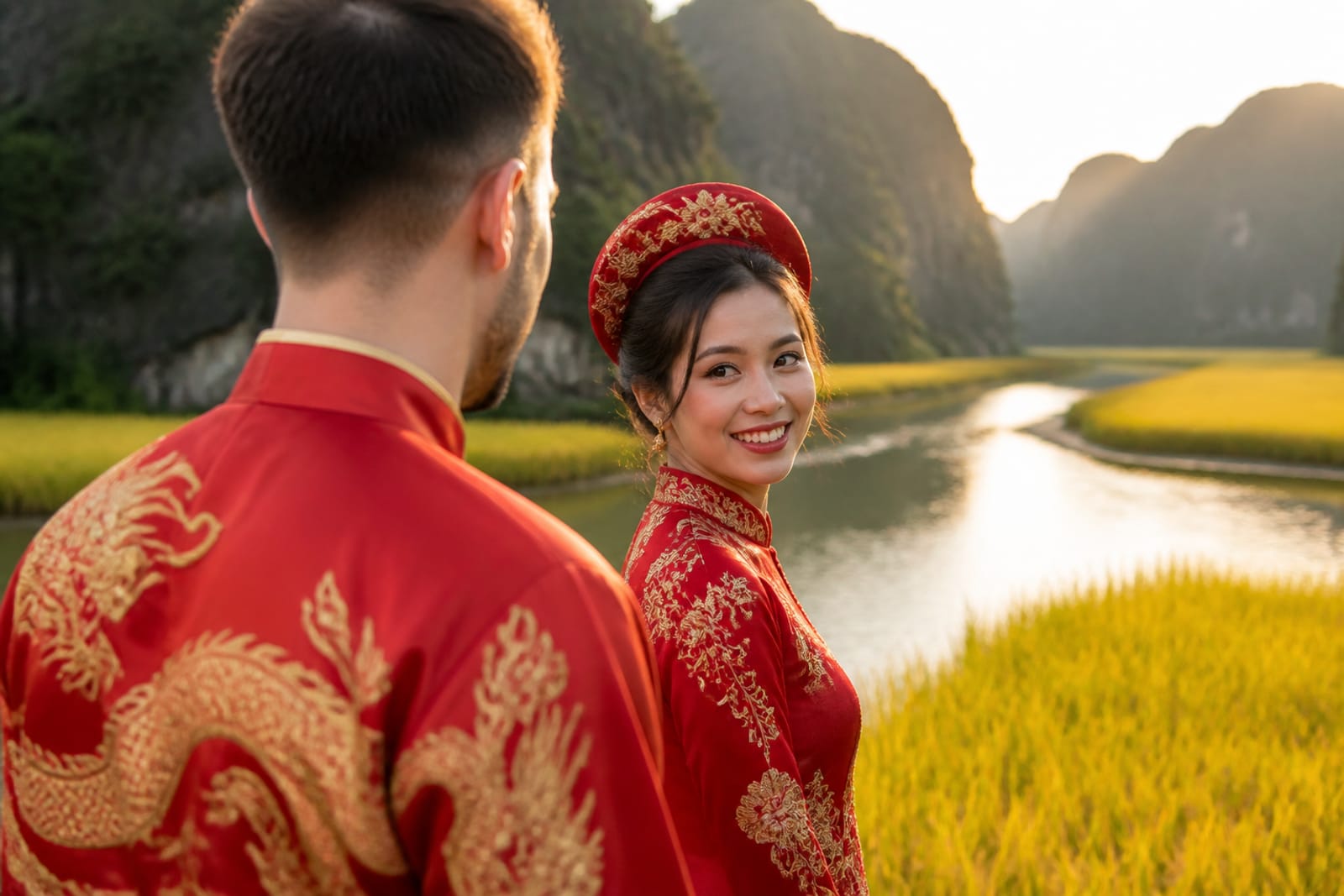
- Ao dai (silk, lightweight): Stunning in photos. Have your partner hold the back skirt on steep sections; wear ballet flats or soft-soled shoes (not heels—they crack steps and cause falls). Plan for wind at the summit; ask your photographer to time shots between gusts.
- Tailored áo dài in cotton or linen: Cooler and less slippery than silk. Works for March–May and September–November.
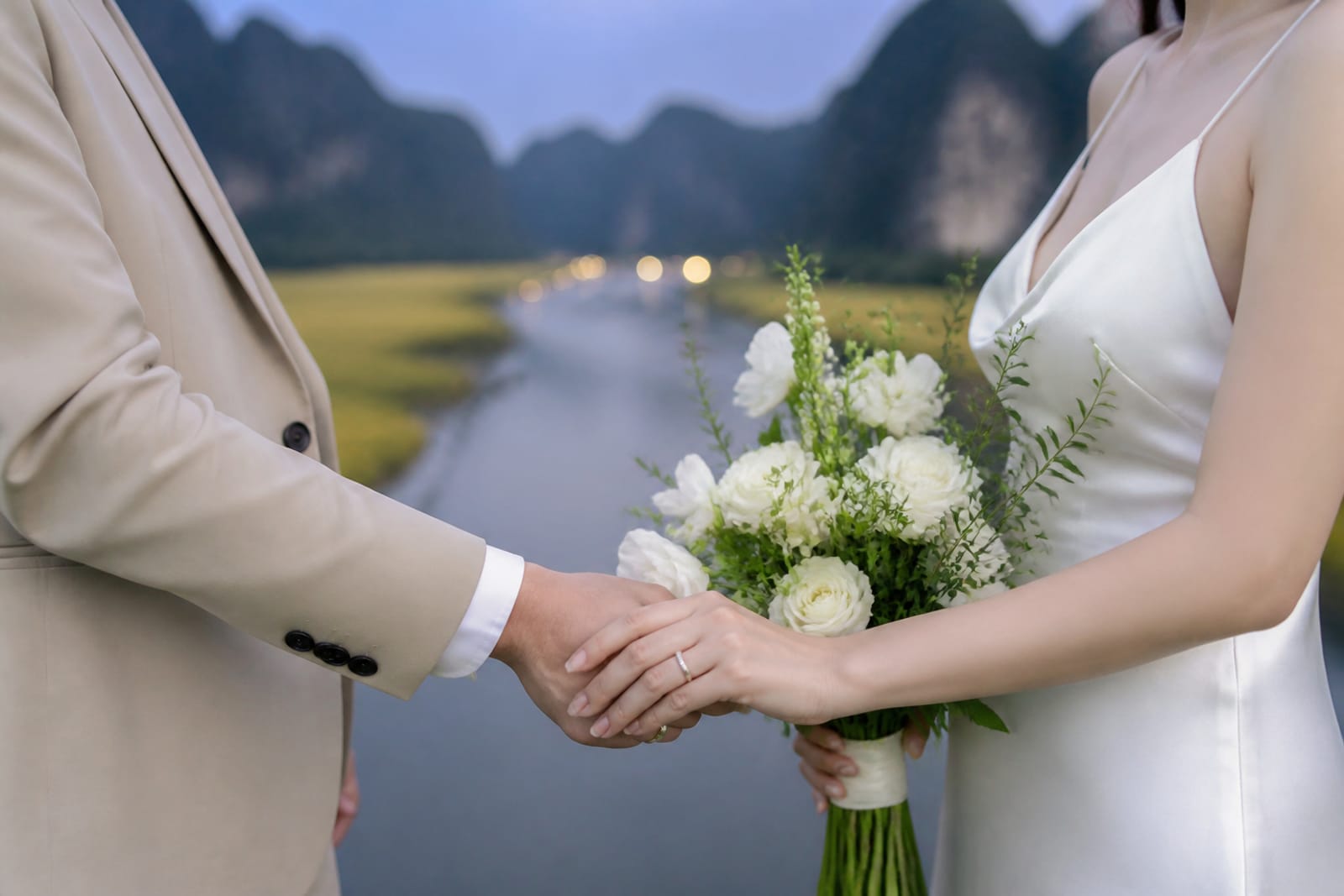
- Western dress (short, knee-length or midi): Easier to move in. Pair with a linen jacket or embroidered vest for formality. Avoid floor-length skirts on steps.
- Groom's suit (lightweight linen or cotton blend): Choose unstructured fabrics. A waistcoat without the jacket works in warm months.
Footwear: Wear closed-toe walking shoes, trainers, or ballet flats with grip. Wet stone is slippery; avoid heels, sandals and socks alone. Break in shoes beforehand—new footwear causes blisters at altitude.
Undergarments: Moisture-wicking layers reduce sweat visible in photos. Avoid heavy underlayers; they show under silk ao dai. A slip or seamless dress underneath prevents transparency in bright light.
Hair & makeup: Book makeup and hair at your hotel in Ninh Binh town the morning of the shoot, not before the climb—sweat and humidity will undo the work. Ask the makeup artist for long-wear, sweat-proof products. Bring a hair clip; wind at the summit will loosen braids. Touch-up powder and a small mirror fit in a crossbody bag.
How do you plan logistics and avoid common mistakes?
A smooth Hang Mua shoot depends on details:
- Book entry tickets in advance. Trang An Scenic Area (which includes Hang Mua access) requires on-site payment. Confirm opening hours and entry times—arrive early to avoid queues that eat into golden-hour time.
- Hire a guide if you're unfamiliar with the route. The main path is clear, but a local guide can suggest less-crowded angles and warn of step hazards.
- Bring water, snacks and a small first-aid kit. The climb is strenuous; dehydration and low blood sugar cause fatigue that reads in photos.
- Plan transport to and from Ninh Binh town. A private driver or taxi reduces stress; public buses are cheaper but less flexible for early starts.
- Have a backup date within 1–2 weeks. Weather at Ninh Binh is unpredictable, especially in shoulder seasons (May, October). A rain date avoids reschedule costs.
- Communicate outfit and mood to your photographer beforehand. Share inspiration photos. Discuss whether you want documentary-style climbing shots, posed summit portraits, or a mix—this shapes how they move through the shoot.
Common mistakes to avoid:
- Starting at midday when sun is harshest and crowds peak.
- Wearing new ao dai or formal wear that restricts movement—test-climb stairs at home.
- Underestimating the climb; unfit couples get winded and tense in photos.
- Ignoring weather windows; a shoot in grey, drizzly December looks flat despite effort.
- Forgetting that stone steps require grip; wet shoes and poor footing lead to slips and injury.
How do you book a photographer for Hang Mua?
If you're working with Cáo Studio – Makeup & Photoshoot, contact the team on WhatsApp to ask whether they can travel from Hanoi to Ninh Binh for your pre-wedding dates. The studio operates in Hanoi, Ho Chi Minh City and Hoi An; Ninh Binh is a travel destination that requires custom coordination. Confirm:
- Photographer availability on your preferred dates and times.
- Travel time and how the studio factors that into logistics.
- What's included in the session (hour count, edited files, delivery timeline).
- Whether they provide a backup photographer or reschedule guarantee if weather cancels.
If booking a local Ninh Binh photographer: Check their portfolio for mountain-top shoots—not all photographers excel at altitude and wind. Ask whether they've shot Hang Mua in your desired season. Request references, a contract that includes a rain date, and clarity on file delivery (edited, unedited, timelines). Meet the photographer in person or call beforehand to discuss your vision.
Pre-wedding vs. other options: A Hang Mua shoot is best as a pre-wedding photoshoot rather than a wedding-day session (the climb is too demanding on a wedding morning). Many couples pair it with a couple photoshoot at a secondary location—a heritage house, rice field, or village—to create variety and let you change outfits comfortably. Some also add an ao dai photoshoot at a studio or historic site in Hanoi or Hoi An to balance professional control with outdoor drama.
📸 Book on WhatsApp — pre-wedding photoshoot | 💄 Makeup & hair at your hotel | 🌸 See the lookbook
What to check before you book
- Season & forecast: Confirm your dates fall in March–May or September–November. Check the 10-day forecast a week ahead; if rain is forecast, reschedule 3–5 days forward.
- Your fitness level: Walk stairs at home for 20 minutes. If you're out of breath, train beforehand or adjust to fewer summit shots and more lower-slope angles.
- Photographer's Hang Mua experience: Ask to see portfolio shots from the location. Look for varied angles, good use of light, and couples that look comfortable (not stressed).
- Outfit practicality: Try your ao dai or formal wear on stairs. Ensure shoes have grip and don't slip on stone.
- Timing & light: Agree with the photographer whether you're shooting sunrise (4–6am), golden hour evening (4–6pm), or another time. Midday is not recommended.
- Backup & reschedule policy: Understand what happens if weather cancels—is there a free reschedule, or a fee? A contract should cover this.
- Files & delivery: Ask how many edited photos you'll receive, in what format, and by when. Allow 1–2 weeks for editing.
For detailed comparison of pre-wedding shoot styles—mountain-top, studio, heritage, proposal & anniversary sessions—see the full pre-wedding photoshoot guide.
📸 Book on WhatsApp — couple photoshoot | 💄 Makeup & hair at your hotel
FAQ
Do I need to be fit to shoot at Hang Mua?
The 500-step climb is steep and takes 30–45 minutes. You don't need to be a hiker, but gentle training (stairs, walking) beforehand helps. If fitness is a concern, ask the photographer to shoot more on lower slopes and fewer summit-top shots to reduce strain and allow recovery time between poses.
Can I wear a floor-length Western wedding dress on Hang Mua?
Floor-length dresses are risky on steep, wet stone steps—they tangle, absorb dirt, and increase fall risk. Choose knee-length or midi instead. If a gown is essential, bring a seamstress to hem it, or plan a studio pre-wedding photoshoot and reserve Hang Mua for a simpler ao dai or tailored outfit.
What's the best light for pre-wedding photos at Hang Mua?
Sunrise (5–7am) and golden hour (4–6pm) offer soft, directional light and fewer crowds. Midday sun is harsh and creates dark shadows under eyes. Overcast days in the dry season (March–May, September–November) produce even, flattering light without harsh contrasts.
How long does a Hang Mua pre-wedding shoot typically take?
Plan 2–3 hours on-site: 30–45 minutes to climb, 45–90 minutes for photos (summit, slopes, descending), and rest time. Discuss session length with your photographer beforehand and confirm it matches your energy and schedule.
Can I hire a local guide to help during the shoot?
Yes. A local guide knows quieter paths, safety hazards, and alternate angles that tourists miss. Many guides also carry water and first aid. Arrange one through your hotel or hire independently; costs vary—confirm with your accommodation or directly on-site.
What happens if it rains on my scheduled shoot date?
Stone steps become very slippery in rain, posing injury risk. A professional photographer will recommend rescheduling if heavy rain is forecast. Ensure your contract includes a free reschedule clause with at least one backup date 3–5 days ahead. Light drizzle in the dry season (March–May) can work if conditions are safe—ask your photographer for judgment.
Should I book Hang Mua as my main pre-wedding shoot or a secondary location?
It works best as a primary shoot if you love dramatic landscape and are comfortable with the climb. Many couples pair it with a couple photoshoot at a calmer location (heritage house, rice field, village temple) to maximize variety and reduce physical demand. Discuss your vision with the photographer to structure the day.
FAQ
Do I need to be fit to shoot at Hang Mua?
The 500-step climb is steep and takes 30–45 minutes. You don't need to be a hiker, but gentle training (stairs, walking) beforehand helps. If fitness is a concern, ask the photographer to shoot more on lower slopes and fewer summit-top shots to reduce strain and allow recovery time between poses.
Can I wear a floor-length Western wedding dress on Hang Mua?
Floor-length dresses are risky on steep, wet stone steps—they tangle, absorb dirt, and increase fall risk. Choose knee-length or midi instead. If a gown is essential, bring a seamstress to hem it, or plan a studio [pre-wedding photoshoot](/pre-wedding-photoshoot) and reserve Hang Mua for a simpler ao dai or tailored outfit.
What's the best light for pre-wedding photos at Hang Mua?
Sunrise (5–7am) and golden hour (4–6pm) offer soft, directional light and fewer crowds. Midday sun is harsh and creates dark shadows under eyes. Overcast days in the dry season (March–May, September–November) produce even, flattering light without harsh contrasts.
How long does a Hang Mua pre-wedding shoot typically take?
Plan 2–3 hours on-site: 30–45 minutes to climb, 45–90 minutes for photos (summit, slopes, descending), and rest time. Discuss session length with your photographer beforehand and confirm it matches your energy and schedule.
Can I hire a local guide to help during the shoot?
Yes. A local guide knows quieter paths, safety hazards, and alternate angles that tourists miss. Many guides also carry water and first aid. Arrange one through your hotel or hire independently; costs vary—confirm with your accommodation or directly on-site.
What happens if it rains on my scheduled shoot date?
Stone steps become very slippery in rain, posing injury risk. A professional photographer will recommend rescheduling if heavy rain is forecast. Ensure your contract includes a free reschedule clause with at least one backup date 3–5 days ahead. Light drizzle in the dry season (March–May) can work if conditions are safe—ask your photographer for judgment.
Should I book Hang Mua as my main pre-wedding shoot or a secondary location?
It works best as a primary shoot if you love dramatic landscape and are comfortable with the climb. Many couples pair it with a [couple photoshoot](/couple-photoshoot) at a calmer location (heritage house, rice field, village temple) to maximize variety and reduce physical demand. Discuss your vision with the photographer to structure the day.
Ao dai, makeup, hair and a local photographer in Hanoi or Saigon — one WhatsApp message.