/pre-wedding-photoshoot
Pre-wedding photoshoot at Hoi An Ancient Town: complete guide
A pre-wedding photoshoot at Hoi An Ancient Town is a professional session capturing you as a couple against the town's yellow-walled heritage buildings, lanterns, and surrounding rice terraces. Cáo Studio – Makeup & Photoshoot books shoots in Hoi An by appointment; the team travels from Hanoi or Ho Chi Minh City. Sessions typically run from early morning (sunrise 5:30–6:30 a.m.) through mid-morning to avoid crowds and heat, or at dusk for lantern backdrops. The dry season (February–April) is ideal for consistent light and mild temperatures; May–August is hot but cloudless for dramatic photos; September–December is rainy with flooding risk in the Ancient Town (worst October–November). Exact inclusions—hours, outfit changes, edited files, makeup—are confirmed on WhatsApp. Avoid midday (intense shadows, crowds) and plan for early booking to secure dates. Start a conversation on WhatsApp to discuss your vision and season. 📸 Book on WhatsApp — pre-wedding photoshoot ---
Why February to April is the best window for Hoi An pre-wedding shoots
The dry season from February through April offers mild temperatures (18–25°C), soft overcast light that flatters skin and fabrics, and lush green rice fields in nearby villages. Rain is rare, so your timeline stays on track. The Ancient Town feels less congested than summer months before peak tourist season peaks in May. Lanterns glow warmly at dusk against clear skies. Humidity is manageable, so makeup holds better and you'll feel comfortable in layers or a full ao dai without overheating by 8 a.m. This window suits couples who want natural light and flexibility to shoot outdoors for four to five hours without heat exhaustion.
How heat and glare change your shoot strategy in May to August
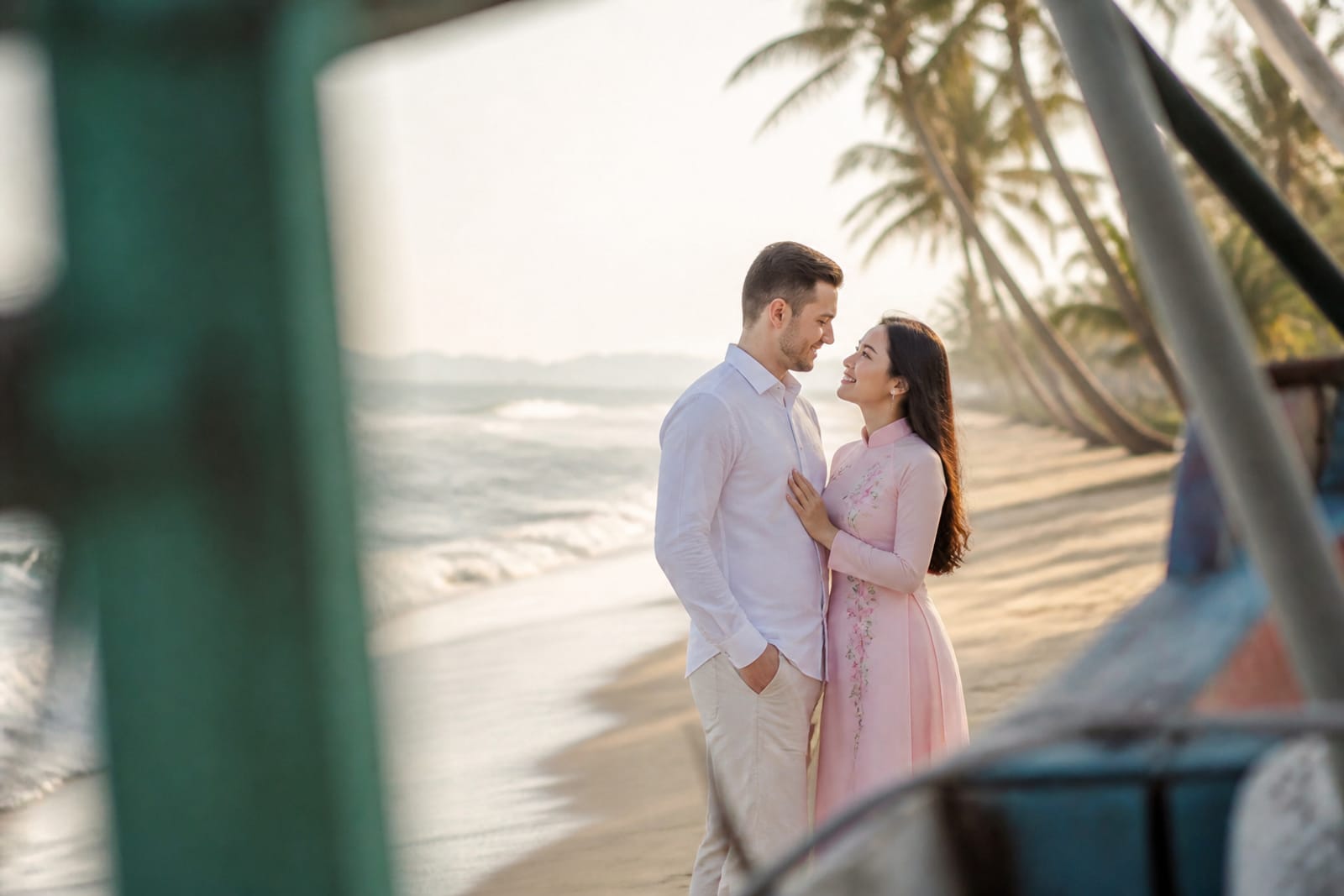
Summer in Hoi An is dry but intense—often 35°C+ by 9 a.m.—so light becomes harsh and shadows deep. Many couples who book May–August shoot only at sunrise (5:30–6:30 a.m.) or at dusk (5:30–7 p.m.), skipping midday entirely. Rice fields are still green but the Ancient Town crowds peak. Makeup requires touch-ups every 90 minutes in heat. Fabrics (silk ao dai, linen shirts) wrinkle and stick to skin. The trade-off: cloudless skies create dramatic, saturated colors in edited photos. Plan for shorter active shooting time and schedule breaks indoors or under covered market arcades. If heat concerns you, defer to February–April.
| Timing | Light quality | Crowds | Comfort | Best for |
|---|---|---|---|---|
| 5:30–6:30 a.m. (sunrise) | Soft gold, low angle | Very few locals; quiet streets | Cool, fresh | Drama; intimate; golden-hour ao dai detail |
| 7–9 a.m. | Warm, directional; shadows form | Growing foot traffic | Warm but bearable | Variety; rice fields; temple courtyards |
| 10 a.m.–2 p.m. | Harsh, contrasty; deep shadows | Peak tourists; crowded | Hot; exhausting in summer | Avoid unless you love high-contrast black & white |
| 4–5 p.m. | Soft, warm, lower angle | Still busy; many groups | Cooler; manageable | Second golden hour; lantern-building interplay |
| 5:30–7 p.m. (dusk) | Warm amber fading to blue; lanterns on | Crowds thin; locals leave | Cool, pleasant | Lanterns lit; romantic; intimate couples moment |
Hoi An Ancient Town access, crowds, and what to expect on shoot day
The Ancient Town requires an entrance ticket and opens at 6 a.m., so sunrise shoots (5:30–6:30 a.m.) happen before the gate officially opens—confirm access and any pre-booking requirements with the management on WhatsApp before your session. By 7 a.m., early tourists arrive; by 9 a.m., buses flood the narrow lanes. Mid-morning (10–11 a.m.) is peak season for tour groups. Late afternoon (4–5 p.m.) sees a second wave. The quietest windows are sunrise (5:30–6:30 a.m.) and dusk (6–7 p.m.), though dusk means less time before dark. Most couples book a sunrise start plus an inland rice-field or village session afterward. Bring a light layer—early mornings are cool—and comfortable walking shoes; the cobblestones are uneven and your ao dai or formal wear will pick up moisture and dust. Avoid October–November entirely if flooding is a concern; the Ancient Town can be submerged during typhoon season.
What to wear under an ao dai and how to prep your outfit for all-day comfort
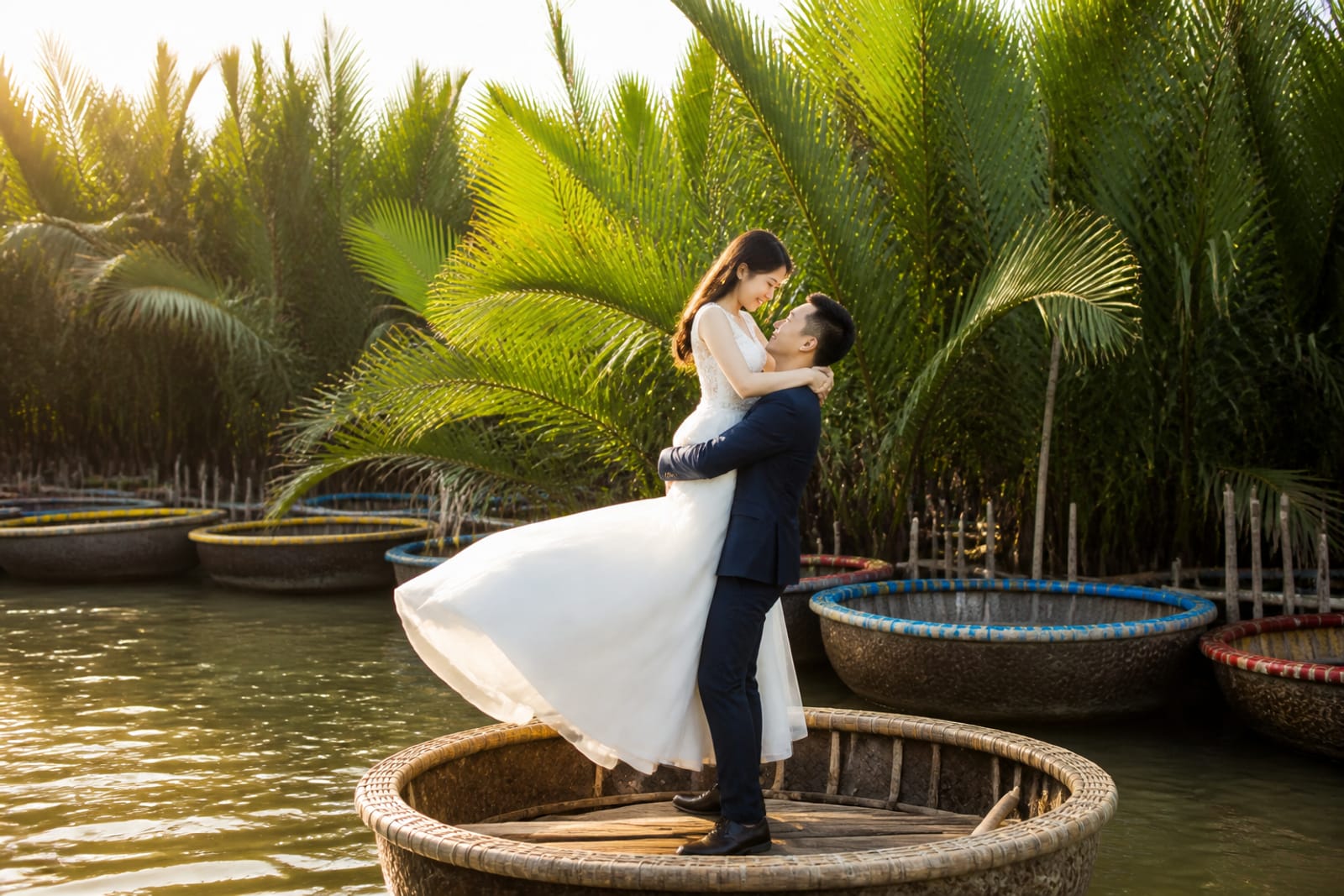
Wear a lightweight, breathable slip or camisole (white or your ao dai's base color) under the áo (tunic). The slip prevents the silk from clinging to your body in humidity and allows you to move freely without the top shifting. If wearing a traditional áo with high neckline, a thin long-sleeve white shirt underneath adds elegance and reduces sweat stains. For pants, choose tapered, flat-front trousers in black, cream, or navy—traditional straight-leg styles photograph best and avoid bunching at the ankles. Avoid bright patterns under sheer áo; they distract. If renting an ao dai, try it on the day before your shoot and walk in it indoors to break it in. Bring a small steamer or iron for touch-ups if you're staying nearby. For groom attire, a fitted linen shirt (cream or pale blue) with tailored dark trousers suits Hoi An's heritage setting and breathes in heat. Discuss outfit choices and rental options on WhatsApp before booking; Cáo Studio can advise on what photographs best in the Ancient Town's light.
Seasons to avoid: September to December and the flooding risk
The monsoon and typhoon season (September–December) brings unpredictable rain, afternoon downpours, and significant flooding risk in Hoi An Ancient Town, especially October–November when drainage fails and streets flood 20–30 cm deep. You could arrive for a 6 a.m. shoot to find standing water, rendering planned routes impassable and ruining expensive outfits. Even early-morning sessions risk an incoming afternoon storm that cancels dusk backups. December–January is cooler and drier than October–November but often cloudy and drizzly, softening light and limiting outdoor time. If you're set on November or December, plan indoor backup shots (covered market, lantern shop interiors, riverside pavilions) and book a photographer experienced in low light. For peace of mind, book February–April. If monsoon timing is unavoidable, discuss contingency shots and indoor alternatives on WhatsApp before committing.
Choosing between Hoi An, Hanoi, and Ho Chi Minh City for your pre-wedding shoot
Hoi An Ancient Town is iconic for heritage aesthetics—lanterns, yellow walls, water reflections—and suits couples wanting timeless, romantic imagery rooted in Vietnamese culture. The town is small and intimate; a full shoot often includes the Ancient Town (2–3 hours) plus a nearby rice-field or village session inland, all within walking or short-drive distance. Hanoi offers urban contrast, temple courtyards, colonial architecture, and French Quarter charm, plus green spaces like West Lake and Tay Ho village. Saigon (Ho Chi Minh City) features modern skylines, riverside elegance, and a faster, more cosmopolitan vibe. Cáo Studio books pre-wedding shoots in Hanoi, Ho Chi Minh City (Saigon), and Hoi An by appointment. Each location has distinct light, weather patterns, and cultural backdrops. Hoi An requires travel coordination since it's not a branch office; Hanoi and Saigon shoots offer more flexible scheduling. Discuss your vision and timeline on WhatsApp to find the best location for your couple story.
---
What to check before you book a Hoi An pre-wedding shoot
Exact date and season: Confirm your preferred month; February–April is ideal, but if you're set on May–August or September–December, expect heat constraints or weather contingencies. Ask what time range the team recommends.
Inclusions on WhatsApp: Get written confirmation of session length, number of outfits included, total edited photos, and delivery timeline. Don't assume—different packages vary.
Outfit and rental: Clarify whether you're bringing your own ao dai and groom shirt or renting. Cáo Studio partners can advise; ask for recommendations on WhatsApp.
Makeup and hair: Confirm whether makeup and hair are included or booked separately (see hotel makeup & hair service for standalone options).
Backup plan: Ask how the team handles rain, flooding, or unexpected crowds—is a second date offered, or indoor backups included?
Hoi An access and permits: Verify whether Cáo Studio handles Ancient Town entry coordination or if you arrange your own ticket. Sunrise shoots require early coordination.
Travel to Hoi An: Confirm who coordinates transportation and timeline. Hoi An is about 30 km south of Da Nang; the team travels from Hanoi or Ho Chi Minh City—ask about scheduling and travel costs.
Payment and cancellation: Clarify deposit amounts, payment schedule, and cancellation policy on WhatsApp.
Gallery and album: Ask if a wedding photo album or prints are available separately (see photo album options and prints & frames).
---
FAQ
What is the best time of day to shoot at Hoi An Ancient Town?
Sunrise (5:30–6:30 a.m.) is quietest and offers soft golden light. Mid-morning (7–9 a.m.) balances crowds and light. Dusk (5:30–7 p.m.) features lit lanterns but fading daylight. Avoid 10 a.m.–3 p.m. due to harsh shadows and peak tourist crowds.
Do I need to book Hoi An shoots months in advance?
Yes. Since Cáo Studio travels to Hoi An, availability is limited. Contact via WhatsApp early—especially for February–April dates. Aim for two to three months' notice.
Can we shoot indoors if there's rain or flooding?
Yes, but coverage is limited. Lantern shops, covered markets, and riverside pavilions offer options. Discuss contingencies on WhatsApp when booking; outdoor backups depend on weather.
What is the difference between Hoi An and Hanoi pre-wedding shoots?
Hoi An is heritage and lantern-focused; light is intimate and warm. Hanoi offers temple courtyards, colonial architecture, and urban contrast. Both are available; Hoi An requires team travel by appointment.
Can we include both ao dai and Western wedding dress in one Hoi An shoot?
Yes, and both suit Hoi An's backdrop. Ao dai is culturally rooted; wedding dress adds contrast. Confirm number of outfit changes on WhatsApp—each change adds time.
Is makeup included in the pre-wedding package?
Inclusions vary. Some packages include makeup and hair; others don't. Confirm on WhatsApp, or book hotel makeup and hair service separately if needed.
How many edited photos do we receive?
Varies by package. Confirm exact number and delivery timeline on WhatsApp before booking. Ask also about raw files, digital only, or if prints and albums are separate.
What should we wear under the ao dai for comfort and photos?
Wear a lightweight white or matching-colored slip under the tunic to prevent clinging and sweat stains. For pants, choose flat-front, tapered trousers in black, navy, or cream. Walk in the ao dai indoors before the shoot day.
FAQ
What is the best time of day to shoot at Hoi An Ancient Town?
Sunrise (5:30–6:30 a.m.) is quietest and offers soft golden light. Mid-morning (7–9 a.m.) balances crowds and light. Dusk (5:30–7 p.m.) features lit lanterns but fading daylight. Avoid 10 a.m.–3 p.m. due to harsh shadows and peak tourist crowds.
Do I need to book Hoi An shoots months in advance?
Yes. Since Cáo Studio travels to Hoi An, availability is limited. Contact via WhatsApp early—especially for February–April dates. Aim for two to three months' notice.
Can we shoot indoors if there's rain or flooding?
Yes, but coverage is limited. Lantern shops, covered markets, and riverside pavilions offer options. Discuss contingencies on WhatsApp when booking; outdoor backups depend on weather.
What is the difference between Hoi An and Hanoi pre-wedding shoots?
Hoi An is heritage and lantern-focused; light is intimate and warm. Hanoi offers temple courtyards, colonial architecture, and urban contrast. Both are available; Hoi An requires team travel by appointment.
Can we include both ao dai and Western wedding dress in one Hoi An shoot?
Yes, and both suit Hoi An's backdrop. Ao dai is culturally rooted; wedding dress adds contrast. Confirm number of outfit changes on WhatsApp—each change adds time.
Is makeup included in the pre-wedding package?
Inclusions vary. Some packages include makeup and hair; others don't. Confirm on WhatsApp, or book [hotel makeup and hair service](/makeup-and-hair) separately if needed.
How many edited photos do we receive?
Varies by package. Confirm exact number and delivery timeline on WhatsApp before booking. Ask also about raw files, digital only, or if prints and albums are separate.
What should we wear under the ao dai for comfort and photos?
Wear a lightweight white or matching-colored slip under the tunic to prevent clinging and sweat stains. For pants, choose flat-front, tapered trousers in black, navy, or cream. Walk in the ao dai indoors before the shoot day.
Ao dai, makeup, hair and a local photographer in Hanoi or Saigon — one WhatsApp message.