/pre-wedding-photoshoot
Pre-wedding photoshoot at Hoi An rice paddies: complete guide
A pre-wedding photoshoot at Hoi An rice paddies is an on-location session timed around the paddy's growth cycle and golden-hour light, typically starting before sunrise (5:30–6:30 a.m.). You work with a local photographer—Cáo Studio – Makeup & Photoshoot travels to Hoi An by appointment—who knows which fields are accessible and which season offers lush or near-harvest backdrops. Sessions last several hours and involve multiple outfit changes; you'll walk between paddies in early light, then shoot in open terrain. Best months are February to April (dry, mild, green fields) and August (mature plants, harder light). Avoid October–November (typhoons, flooding, muddy access). The trade-off: early starts, wet grass, no shelter—but no entry fees or crowds. Book via WhatsApp to confirm dates; the team travels, so ask availability before committing. ---
How do rice paddy seasons affect your shoot look?
Hoi An's rice fields follow two planting cycles. From February to April, paddies are flooded and newly planted—water reflects light and creates mirror effects, fields glow green, and the landscape feels untouched. May to August, crops mature: stems thicken, color deepens, and the mood shifts from ethereal to earthy. September to November brings typhoons, downpours, and flooding in low-lying fields—access is unpredictable and water becomes muddy brown. December to January is post-harvest: stubbled, bare fields with stark beauty but no lush frame. Choose your season by the mood you want, not just beauty. Green fields suit romantic, dreamy tones; mature crops feel grounded and timeless. Bare paddies work for minimalist, contemporary couples. Wet-season shoots are risky and require thorough logistical planning with your photographer.
📸 Book on WhatsApp — ao dai photoshoot
What time of day gives the best light in rice paddies?
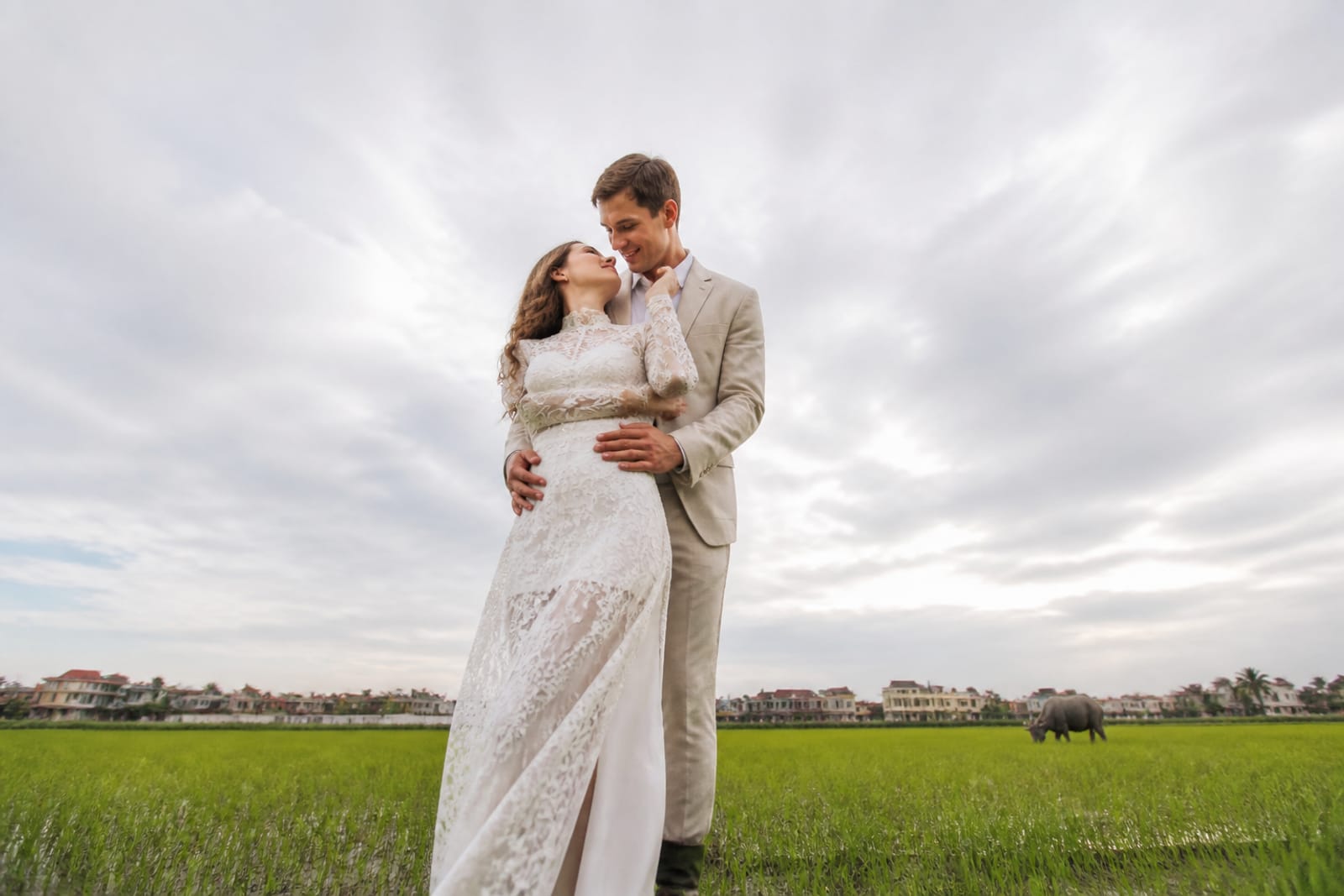
Sunrise (5:30–6:30 a.m., depending on the month) is non-negotiable for Hoi An paddy shoots. Light arrives soft, warm, and low—it skims the water and plants, creating depth and glow without harsh shadows. By 7:30–8:00 a.m., the sun climbs too high; by noon, paddies become flat and blown-out. Late afternoon (4:30–6:00 p.m.) can work if clouds roll in, but wind picks up and farmers are active in fields, reducing privacy. Early morning also means fewer people—no hikers, no other couples, no tourists. You'll be alone with your partner, photographer, and makeup artist (if booking on-site). The catch: you must wake early, travel in darkness, and finish by mid-morning. For those unused to pre-dawn starts, this is the single hardest part of a paddy shoot—not the terrain, not the outfits, but the clock.
Should you wear a traditional ao dai or a wedding dress in paddies?
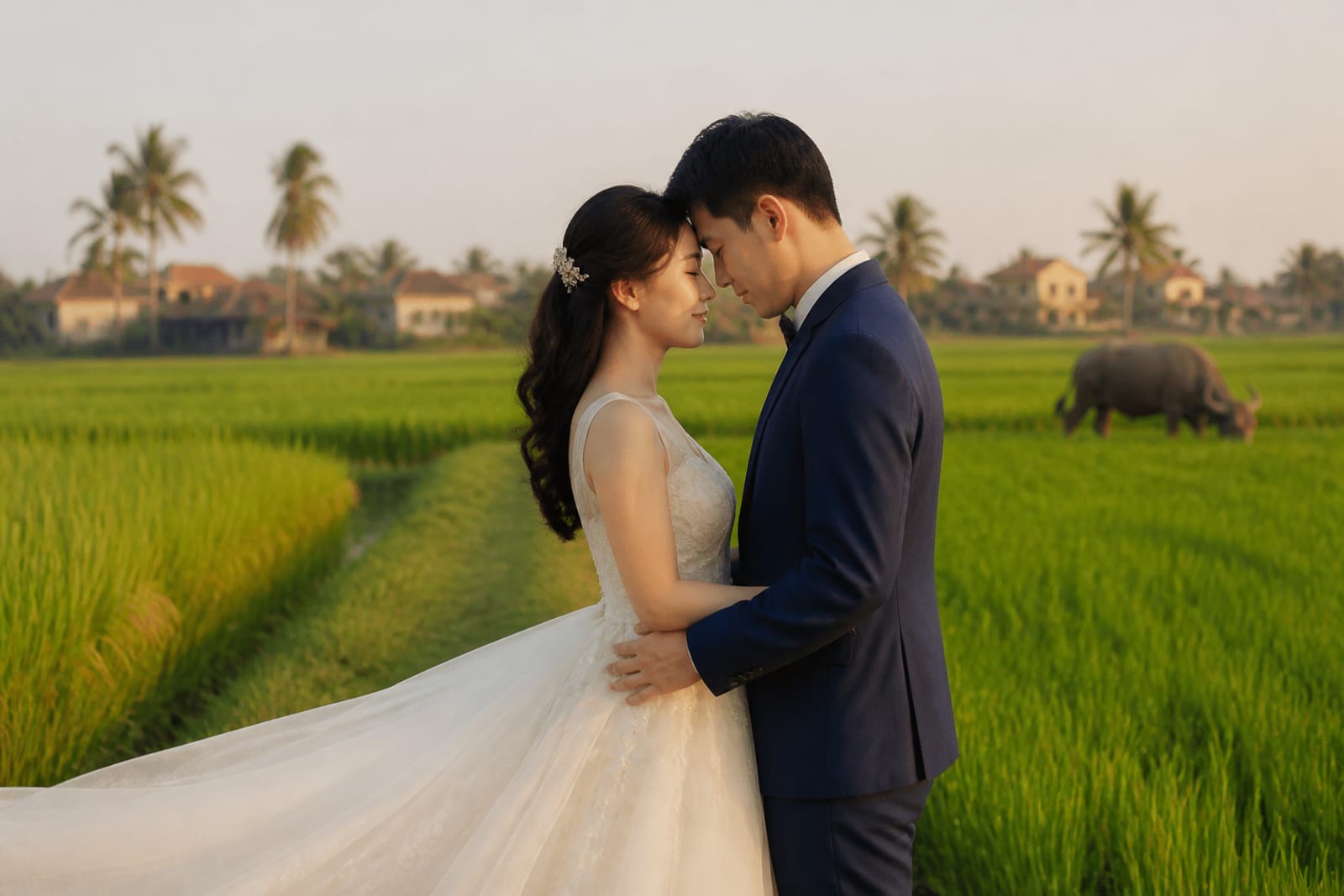
This is a core choice that shapes the entire mood. An ao dai—especially in silk, pale cream, white, or soft pastels—flows with rice-paddy geometry and reads as effortlessly elegant. The fabric moves in breeze, reflects light beautifully, and frames you without competing with the landscape. Ao dais also honor Vietnamese heritage, a natural fit for Hoi An's cultural setting. A Western wedding dress (ball gown, mermaid, A-line) works but demands careful styling: heavy fabrics drag in wet grass; trains collect mud; the formality can feel at odds with the rural, intimate paddy setting. Some couples do both—an ao dai for sunrise, a dress for a second outfit mid-morning. Whatever you choose, wear flat shoes or removable sandals; you'll step in mud, water, and uneven ground. Bring a change of shoes and socks. If renting, confirm the piece fits comfortably for walking and sitting; paddies offer no dressing rooms. Cáo Studio's wedding dress rental and ao dai rental services can guide fit and care.
| Option | Best for | Fabric behavior | Season note |
|---|---|---|---|
| Ao dai (silk, white/cream) | Romantic, heritage-focused, timeless photos | Flows gracefully, catches light, dries quickly | Works in all dry seasons; stunning Feb–Apr |
| Wedding dress (light fabric, knee-length) | Modern couples, mixed indoor/outdoor shoots | Easier to manage than ball gowns; dries slower | Feb–Apr to avoid heat; Aug for dramatic color |
| Two outfits (ao dai + dress) | Couples who want both traditions | Requires longer shoot window, makeup touch-ups | 3–4 hours; ask photographer availability |
| Wedding dress (ball gown/train) | High-fashion, styled shoots | Heavy, muddy, requires constant care | Risky in Feb–Apr wet grass; best Aug–Sep morning |
What do you need to bring and prepare?
Logistics matter as much as style in paddy shoots. Footwear: bring flats (white canvas sneakers, ballet flats, removable sandals) for walking; change into photo shoes (barefoot, heels, or formal shoes) only for the actual image. Wet grass stains cream satin fast. Weather kit: even in dry season, dew soaks grass at dawn; bring a towel, extra socks, and a light wrap (shawl or cardigan) for temperature drops before sunrise. Hoi An in February can feel chilly before 7 a.m. Hair and makeup: if booking makeup and hair at your hotel on the day, allow 60–90 minutes before travel; paddies have no mirror or power outlet for touch-ups. Bring a compact powder, lipstick, and bobby pins for restyling mid-shoot. Humidity and dew will affect your look by mid-morning. Hydration and snacks: you'll be moving for 2–3 hours on an empty stomach. Bring water and light snacks (fruit, energy bars); your photographer may not have breaks. Phone and contact: share your photographer's number with your hotel concierge; farms are in rural areas without obvious landmarks. A screenshot of the field location helps. Ask your photographer if you need a permit or if they've arranged farmer access—most Hoi An shoots work through informal arrangements, but confirmation prevents delays.
How does this compare to other Hoi An pre-wedding locations?
Hoi An offers distinct pre-wedding backdrops, each with different logistics and costs. The Ancient Town (UNESCO site) requires entry tickets and attracts crowds after 8 a.m.; lantern-lit shoots happen at dusk and suit cultural, romantic couples. Shooting there means navigating narrow alleys, permitting concerns, and competing for quiet angles. Beach shoots (nearby Cua Dai Beach) offer sea light and sand but work only Feb–April or Aug (dry season); May–November typhoon swells make the beach unshootable. Mountains and forest (Cham Island, Hai Van Pass) require boat or drive time; light and weather are unpredictable. Rice paddies sit in the sweet spot: free access, minimal logistics, intimate light, and zero entry fees—you pay only your photographer and travel. The trade-off is the 5 a.m. wake-up and muddy conditions. Couples seeking ease often choose the Ancient Town; those after remote, natural beauty choose paddies. Cáo Studio – Makeup & Photoshoot shoots in both environments; the team travels to Hoi An by appointment, so ask on WhatsApp which location matches your vision.
---
What to check before you book
- Photographer availability in Hoi An: Cáo Studio travels to Hoi An, so confirm dates at least 2–3 weeks ahead on WhatsApp.
- Season and weather: February–April and August are safest; avoid October–November.
- Outfit fit and shoes: test walking in your ao dai or dress before the shoot; bring flats for the walk.
- Makeup longevity: early light and humidity mean touch-ups mid-shoot; ask if your makeup artist will be on-site.
- Early-morning readiness: the team will depart your hotel before dawn; confirm your hotel can provide early breakfast or packed items.
- Farmer access: confirm your photographer has arranged paddy access; trespassing risks delays and poor photos.
- Travel logistics: paddies are 10–20 minutes by car from central Hoi An; factor in pre-dawn travel time.
---
For full details on Cáo Studio's pre-wedding shoots, visit the main page or ask about options in Hanoi or Ho Chi Minh City. To discuss Hoi An dates and inclusions, contact the team on WhatsApp.
📸 Book on WhatsApp — pre-wedding photoshoot
---
FAQ
What is the best month to shoot at Hoi An rice paddies?
February to April offers lush green fields, mild temperatures, and predictable dry light. August works for mature crops and dramatic color but brings 35°C+ heat by mid-morning. Avoid October–November (typhoons, flooding, muddy access).
Do I need to wear an ao dai, or can I wear a wedding dress?
Both work. Ao dais flow beautifully in paddies and honor Vietnamese heritage; wedding dresses are modern and formal but heavier fabrics collect mud. Many couples shoot in both outfits. Confirm fit and walking comfort with your rental service; Cáo Studio offers ao dai and wedding dress rental.
How early do I need to wake up for a rice paddy shoot?
Plan to depart your hotel by 5:00–5:30 a.m. to reach the paddies by sunrise (5:30–6:30 a.m.). The shoot runs 2–3 hours; you'll finish by 8:30–9:00 a.m. and return to your hotel by mid-morning.
What happens if it rains on the day of my shoot?
In dry season (Feb–Apr, Aug), rain is rare but possible. Discuss rescheduling or indoor alternatives with your photographer when booking. October–November shoots are risky due to typhoons and flooding; paddies may be inaccessible.
Do I need to pay entry fees or get a permit to shoot in rice paddies?
No entry tickets are required for paddies (unlike the Ancient Town). Your photographer arranges informal farmer access. Confirm this before booking to avoid last-minute complications.
Can Cáo Studio book my Hoi An pre-wedding shoot?
Yes. Cáo Studio – Makeup & Photoshoot travels to Hoi An by appointment. Contact the team on WhatsApp to discuss dates, locations, outfit options, and inclusions. Ask about makeup and hair services as well.
How much does a Hoi An rice paddy shoot cost?
Pricing depends on shoot duration, number of outfits, and whether makeup and hair are included. Ask for a quote on WhatsApp; the team will outline exact inclusions once you confirm your date and vision.
FAQ
What is the best month to shoot at Hoi An rice paddies?
February to April offers lush green fields, mild temperatures, and predictable dry light. August works for mature crops and dramatic color but brings 35°C+ heat by mid-morning. Avoid October–November (typhoons, flooding, muddy access).
Do I need to wear an ao dai, or can I wear a wedding dress?
Both work. Ao dais flow beautifully in paddies and honor Vietnamese heritage; wedding dresses are modern and formal but heavier fabrics collect mud. Many couples shoot in both outfits. Confirm fit and walking comfort with your rental service; Cáo Studio offers [ao dai](/ao-dai-rental) and [wedding dress rental](/wedding-dress-rental).
How early do I need to wake up for a rice paddy shoot?
Plan to depart your hotel by 5:00–5:30 a.m. to reach the paddies by sunrise (5:30–6:30 a.m.). The shoot runs 2–3 hours; you'll finish by 8:30–9:00 a.m. and return to your hotel by mid-morning.
What happens if it rains on the day of my shoot?
In dry season (Feb–Apr, Aug), rain is rare but possible. Discuss rescheduling or indoor alternatives with your photographer when booking. October–November shoots are risky due to typhoons and flooding; paddies may be inaccessible.
Do I need to pay entry fees or get a permit to shoot in rice paddies?
No entry tickets are required for paddies (unlike the Ancient Town). Your photographer arranges informal farmer access. Confirm this before booking to avoid last-minute complications.
Can Cáo Studio book my Hoi An pre-wedding shoot?
Yes. Cáo Studio – Makeup & Photoshoot travels to Hoi An by appointment. Contact the team on WhatsApp to discuss dates, locations, outfit options, and inclusions. Ask about [makeup and hair services](/makeup-and-hair) as well.
How much does a Hoi An rice paddy shoot cost?
Pricing depends on shoot duration, number of outfits, and whether makeup and hair are included. Ask for a quote on WhatsApp; the team will outline exact inclusions once you confirm your date and vision.
Ao dai, makeup, hair and a local photographer in Hanoi or Saigon — one WhatsApp message.