/pre-wedding-photoshoot
Pre-Wedding Photoshoot at Mu Cang Chai: Planning Your Terraces Session
Mu Cang Chai is a mountain village in Yen Bai Province, northern Vietnam, famous for amphitheater-like rice terraces that photograph best when water-filled (May–Jun) or golden (mid-Sep to early Oct). A pre-wedding shoot there takes a full day: 3–4 hours driving round-trip from Hanoi, 2–3 hours on location during optimal light (early morning or late afternoon), with outfit and hair changes in a basic local setup. The terraces demand a photographer comfortable with uneven ground, long walks, and golden-hour timing; monsoon fog (Jun–Aug) and typhoon rains (Oct–Nov) create unpredictable light. Cáo Studio operates in Hanoi, Ho Chi Minh City, and Hoi An only — for Mu Cang Chai, you'll need to hire a local or travel-based photographer familiar with the terrain and season.
Which season gives you the best light and water on the terraces?
Mu Cang Chai has two peak windows: May–June, when terraces flood and reflect sky, and mid-September to early October, when rice ripens gold. May–June offers mirror-like water and lush greens but brings monsoon humidity and frequent morning fog that clears by 9–10 am — timing matters. Mid-September to early October has the clearest, warmest light and deep amber tones, but terraces are drier; crowds peak during this window. July–August and November–December are risky: monsoon rains cause landslides and reduce visibility, while December–February brings cool, grey skies. March–April is dry but bare terraces offer less visual interest. Choose May–June if you want water reflection and drama; choose late September if you want golden hour clarity and fewer crowds.
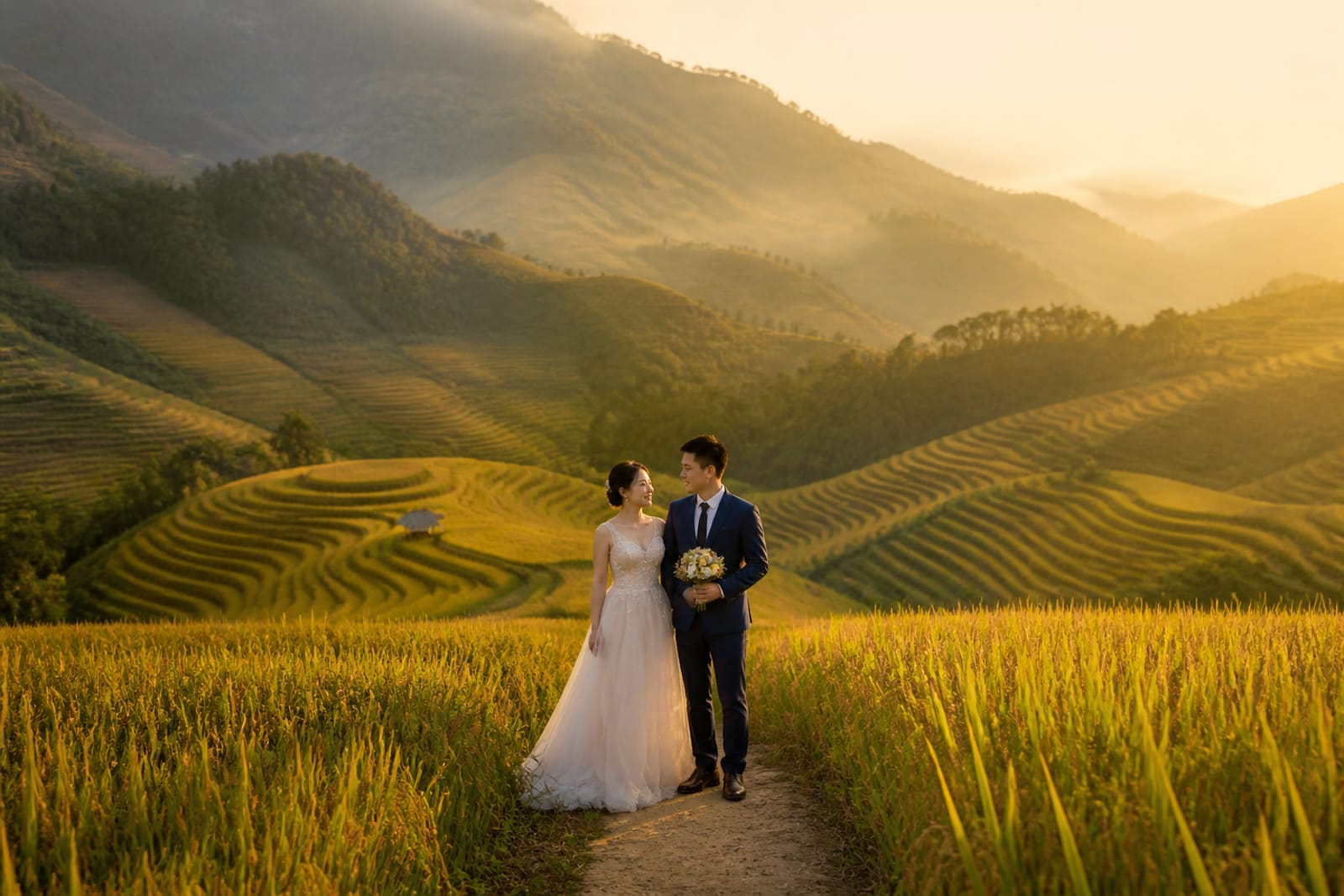
What's the real difference between shooting early morning vs. late afternoon?
Early morning (5:30–7:30 am) gives soft side light across the terraces, creating depth and shadow definition — ideal for drama and texture. You'll need to leave Hanoi at midnight or arrive the night before; hotels in Mu Cang Chai are basic. Late afternoon (4–6 pm) delivers warm, raking light that turns terraces amber; you can drive up day-of, but the window is narrower and depends on clear skies. Morning shoots risk fog cover; afternoon shoots risk cloud roll-in or haze. Most pre-wedding couples choose late afternoon because logistics are simpler — no overnight stay required — but morning light is technically superior for terrace texture.
How do you move safely on terraces in an ao dai or wedding dress?
Terrace paths are narrow, steep, and wet — especially May–June. If wearing traditional ao dai, choose a lightweight fabric (silk linen blends) that dries fast; avoid trailing silk that catches on terrain. Wedding dresses must be rented or selected with rugged mobility in mind; ball gowns are impractical. Wear flat, closed hiking shoes or specialty water sandals; change into them after outfit shots at a safe, level spot. A local guide or your photographer must walk ahead to spot safe footing. Plan for 10–15 minutes of terrace walking per outfit, not more. Bring spare fabric clips, a lightweight shawl for morning cold, and accept that hems will get wet and muddy — it's part of the story, not a failure.
How do you compare hiring a local photographer vs. traveling with a team?
| Option | Best for | Logistics | Trade-offs |
|---|---|---|---|
| Local Yen Bai photographer | Budget-conscious couples, local knowledge priority | Meet on-site; minimal travel cost | Language barriers; unknown track record; limited flexibility on timing |
| Hanoi-based travel photographer | Couples wanting a known portfolio; Vietnamese + English direction | 3–4 hour drive from Hanoi; pre-shoot consultation | Higher day rate; you manage hair/makeup separately |
| Full team (Cáo Studio in Hanoi, with local support) | Couples wanting one message (outfit, makeup, photography); premium finish | Cáo Studio books local guide + handles direction; you travel | Logistics complex; longer day; requires earlier booking |
Hiring a local Yen Bai photographer keeps costs lower and provides terrain familiarity, but you're betting on portfolio quality and communication across a language gap. A Hanoi-based travel photographer brings a proven eye and English direction but adds 3–4 hours of driving and you'll still need to source hair and makeup locally. Cáo Studio offers integrated pre-wedding shoots at /pre-wedding-photoshoot in Hanoi and other Vietnam locations; for Mu Cang Chai, you'll coordinate a local guide and hire a regional photographer separately, then align timing with Cáo Studio's Hanoi base if you want makeup and styling there first.
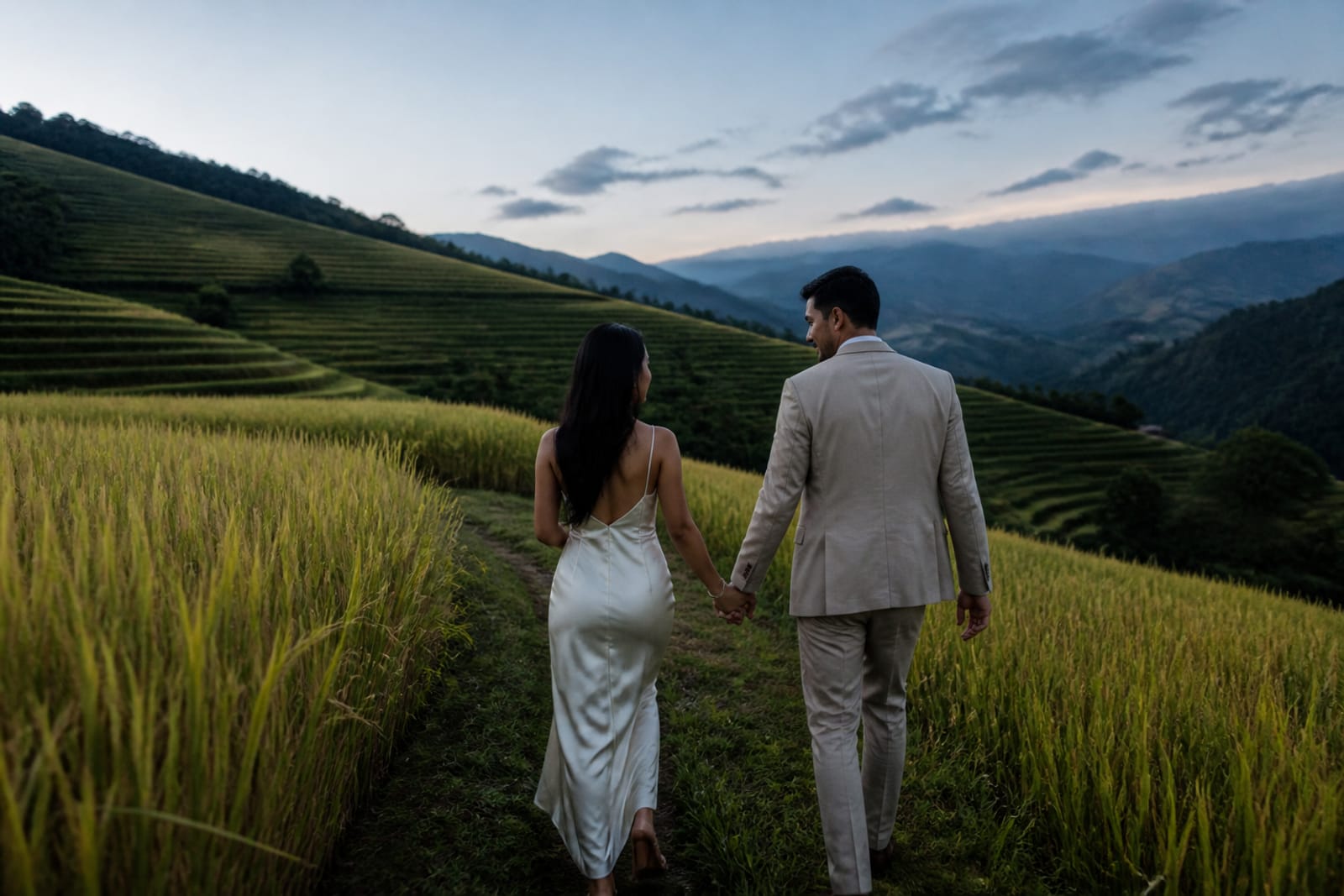
What outfit and styling details work on Mu Cang Chai terrain?
Traditional ao dai photographs beautifully on terraces — the vertical silhouette contrasts terrace lines, and the fabric's movement catches light. Choose embroidered or brocade styles in jewel tones (deep red, navy, emerald) over pastels; they stand out against green and brown. For Western wedding dresses, consider a knee-length or midi cut over a full ball gown; wrap shawls and layered pieces photograph well and adapt to temperature swings (cool early morning, warm midday). Hair must be secured tightly — buns, braids, clips — because wind on open terraces is constant. Makeup needs waterproof bases and long-wear products; touch-ups require a kit brought on-site. Plan at least two outfits: one ao dai or formal dress for terrace wide shots, one lighter or simpler piece for walking shots among the rice. Avoid white dresses on misty mornings (they vanish into fog) or bright neons (they flatten in harsh midday light).
📸 Book on WhatsApp — ao dai photoshoot
How do you find and vet a local photographer in Mu Cang Chai?
Start by searching Instagram hashtags #mucangchaiportraits, #yenbaifotografer, or asking guesthouses in the village for referrals. Message 3–5 candidates with the same questions: Which seasons do you shoot most? Do you have a portfolio from May–June and September–October? Are you comfortable with couples in formal dress on terrace terrain? Ask for references from past couples (not just Instagram counts). Request a detailed quote that specifies: drive time, on-site hours, number of edited photos, delivery timeline, and what happens if weather forces a reschedule. Confirm they understand the difference between a romantic walk shot and a posed family portrait — Mu Cang Chai works best with documentary-style direction, not stiff poses. Agree on a deposit and final payment schedule before booking. Check reviews on Google Maps and on local Hanoi travel forums; avoid photographers with no terrace portfolio.
For a more integrated experience — pre-wedding styling in Hanoi, a professional makeup artist, and curated direction — consider booking a pre-wedding photoshoot session with Cáo Studio in Hanoi first (hair, makeup, and test shoots on Hanoi landmarks), then hiring a local Yen Bai photographer for the Mu Cang Chai terraces day. This two-step approach gives you professional styling and direction standards, then local terrain expertise on the day.
What should you confirm before you book?
Photographer availability and track record
Ask when they're next available in your target season (May–June or late September–October). Verify they've shot at least five pre-wedding sessions on Mu Cang Chai terraces and can show you 10+ photos from different lighting conditions. Confirm they understand the specific light windows your chosen month offers — this is non-negotiable.
Logistics and timing
Clarify departure time from Hanoi or your hotel, drive duration, arrival time on terraces, on-site hours, and return time. Ask how they handle weather delays — is a full refund or reschedule guaranteed if rain or fog makes light impossible? What's the cancellation policy if you need to reschedule after booking?
Deliverables and timeline
How many edited photos do you receive? When — 1 week, 2 weeks, 1 month after the shoot? Do you get access to raw files or low-res previews before final edits? Will they provide a short vertical video (Instagram Reels format) in addition to stills?
Outfit and styling support
Does the photographer help coordinate outfit changes, or do you manage that? Where on the terraces will you change clothes — are there private, level spots? Do they work with local guides to manage the group's safety and pacing?
Cost factors (not amounts)
Prices vary by photographer experience, season, distance, number of outfit changes, and whether they provide a local guide or assistant. Off-season (July–August, November–December) is typically less expensive than peak water or harvest times. Request a written quote that itemizes services, not just a total, so you can compare fairly.
---
If you want a fully coordinated pre-wedding experience — from outfit selection and professional makeup in Hanoi to a curated day-of direction and rapid editing — explore Cáo Studio's pre-wedding services in Hanoi or Ho Chi Minh City. For a Mu Cang Chai shoot, you'll partner a local photographer with your own styling prep, but Cáo Studio can advise on outfit choices, makeup durability, and photo direction before you hire locally. Chat us on WhatsApp to discuss how a Hanoi session might prep you for a Mu Cang Chai day.
FAQ
What's the best month for a pre-wedding shoot on Mu Cang Chai terraces?
Late September to early October offers the clearest light, golden rice, and fewer crowds. May–June gives water-filled terraces but brings monsoon fog and humidity. Avoid July–August (monsoon rains, poor visibility) and November–February (grey skies, bare terraces, typhoon risk).
Can I shoot in an ao dai on Mu Cang Chai terraces?
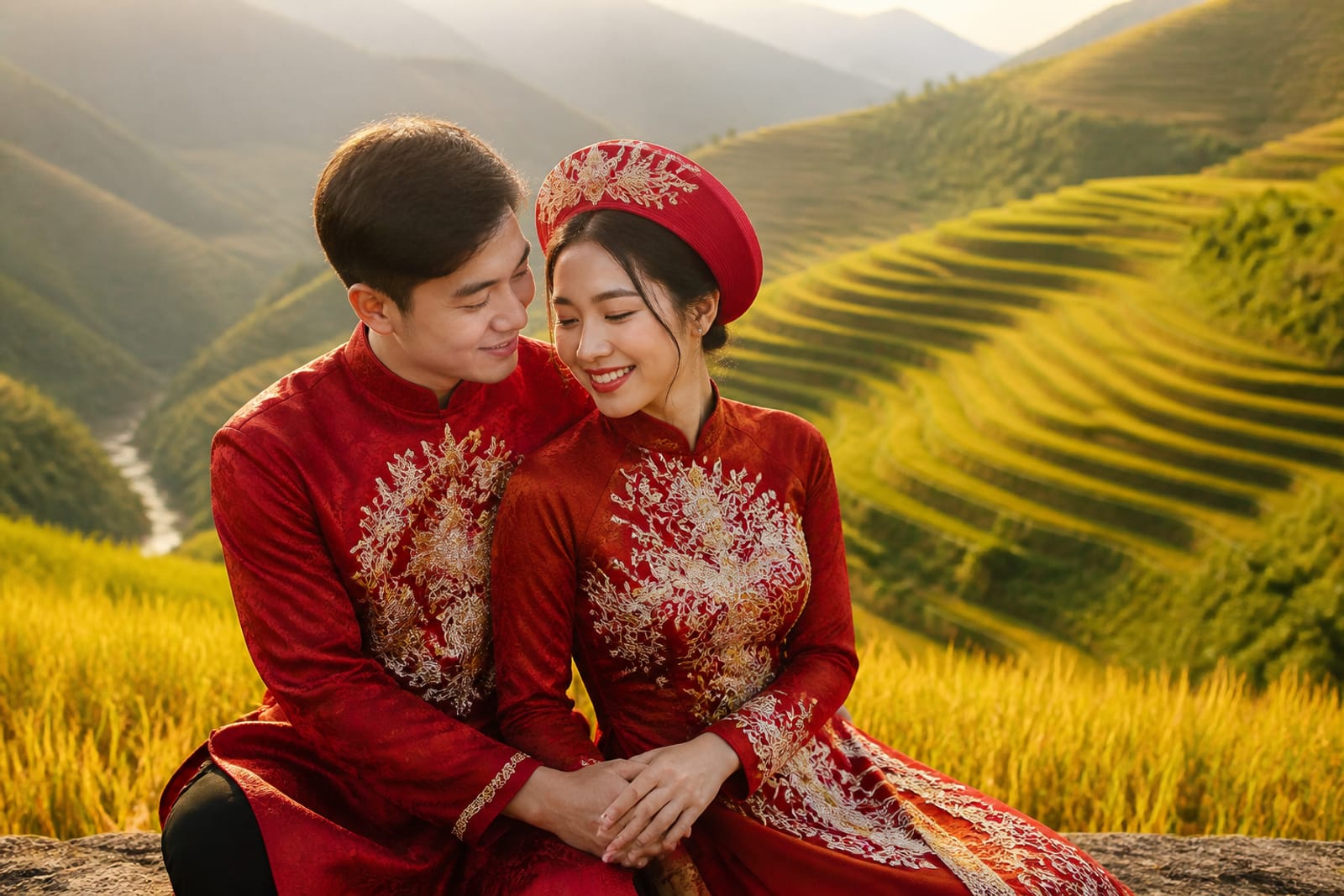
Yes — ao dai photographs beautifully there. Choose embroidered or brocade styles in jewel tones over pastels. Select lightweight fabrics (silk-linen blends) that dry fast. Wear flat hiking shoes for terrace walking; hems and fabric will get wet and muddy. This adds authenticity to the final images.
How many hours should I budget for a Mu Cang Chai pre-wedding shoot?
Budget 8–10 hours total: 3–4 hours driving round-trip from Hanoi, 1–2 hours setting up and waiting for optimal light (dawn or dusk), 2–3 hours on-site shooting multiple outfits and locations. Plan for a full day; half-day shoots are too tight for this terrain.
Should I hire a photographer from Hanoi or a local in Yen Bai?
A local Yen Bai photographer costs less and knows the terrain; a Hanoi-based travel photographer brings a proven portfolio and English direction but adds travel time and cost. For the best result, hire a local with a strong terrace portfolio and references, or coordinate with Cáo Studio's Hanoi team for styling prep before meeting a local photographer on-site.
What happens if weather ruins my shoot day?
Confirm the photographer's weather policy before booking — most offer a full reschedule within the same season or a refund. Avoid booking during typhoon season (October–November). Early morning shoots have better fog management than afternoon shoots; build in a backup date if possible.
How quickly will I receive edited photos after the shoot?
Most local photographers deliver within 2–4 weeks. Ask for a written timeline before booking. Verify whether you get all edited photos, a curated selection, or raw files. Request a few preview images within 3–5 days so you can confirm direction before final edits.
FAQ
What's the best month for a pre-wedding shoot on Mu Cang Chai terraces?
Late September to early October offers the clearest light, golden rice, and fewer crowds. May–June gives water-filled terraces but brings monsoon fog and humidity. Avoid July–August (monsoon rains, poor visibility) and November–February (grey skies, bare terraces, typhoon risk).
Can I shoot in an ao dai on Mu Cang Chai terraces?
Yes — ao dai photographs beautifully there. Choose embroidered or brocade styles in jewel tones over pastels. Select lightweight fabrics (silk-linen blends) that dry fast. Wear flat hiking shoes for terrace walking; hems and fabric will get wet and muddy. This adds authenticity to the final images.
How many hours should I budget for a Mu Cang Chai pre-wedding shoot?
Budget 8–10 hours total: 3–4 hours driving round-trip from Hanoi, 1–2 hours setting up and waiting for optimal light (dawn or dusk), 2–3 hours on-site shooting multiple outfits and locations. Plan for a full day; half-day shoots are too tight for this terrain.
Should I hire a photographer from Hanoi or a local in Yen Bai?
A local Yen Bai photographer costs less and knows the terrain; a Hanoi-based travel photographer brings a proven portfolio and English direction but adds travel time and cost. For the best result, hire a local with a strong terrace portfolio and references, or coordinate with Cáo Studio's Hanoi team for styling prep before meeting a local photographer on-site.
What happens if weather ruins my shoot day?
Confirm the photographer's weather policy before booking — most offer a full reschedule within the same season or a refund. Avoid booking during typhoon season (October–November). Early morning shoots have better fog management than afternoon shoots; build in a backup date if possible.
How quickly will I receive edited photos after the shoot?
Most local photographers deliver within 2–4 weeks. Ask for a written timeline before booking. Verify whether you get all edited photos, a curated selection, or raw files. Request a few preview images within 3–5 days so you can confirm direction before final edits.
Ao dai, makeup, hair and a local photographer in Hanoi or Saigon — one WhatsApp message.