/pre-wedding-photoshoot
Pre-Wedding Photoshoot at Nhat Tan Flower Village, Hanoi
Nhat Tan, a flower-growing hamlet on the Red River's western bank (Tay Ho district, Hanoi), is a pre-wedding photoshoot destination because blossoms, waterside light, and working village aesthetics create layered, natural frames—but only if you choose the right season and book a photographer who knows the tight logistics. Peach and cherry blossom season (roughly late January to mid-February, peaking in the 1–2 weeks before Tet) draws heavy foot traffic and limits vehicle access; off-season (March–May, October–November) offers clearer light, emptier lanes, and easier movement but fewer flowers. A typical session runs 2–4 hours across the village's nurseries, riverside paths, and homestay interiors; timing matters—dawn or late afternoon avoids midday heat and harsh shadows, but winter mornings (December–February) mean overcast skies and 10–15°C cold. Cáo Studio – Makeup & Photoshoot books Nhat Tan sessions within their Hanoi practice, handling makeup on-site and scouting for light and crowd windows. Common mistakes: showing up during peak Tet without a booked photographer (resulting in tourist chaos), wearing heavy gowns on muddy paths, or expecting indoor-studio quality in shifting natural light. Success requires a detailed pre-shoot conversation about your vision, season choice, outfit practicality, and whether Nhat Tan suits your style or whether a pre-wedding photoshoot in a different Hanoi location (Old Quarter, Hoan Kiem, French Quarter) might align better. ---
Why does Nhat Tan appeal to pre-wedding couples?
Nhat Tan's draw is authenticity: real flower growers, working nurseries, and narrow brick paths feel lived-in, not staged. Couples see themselves in a working landscape rather than a manicured garden. The Red River creates leading lines and reflections; homestay interiors offer intimate, worn-wood backdrops. Sunrise or sunset turns the river into a soft mirror. However, this authenticity demands flexibility—you share the space with locals, water levels rise in monsoon, and blossom timing is unpredictable. A photographer familiar with Nhat Tan knows which lanes face afternoon light, which homestay owners permit shoots, and how long you actually have before crowds peak. That local knowledge separates a cohesive session from a frustrating, time-squeezed scramble.
When does Nhat Tan blossom, and how does that affect your shoot?
Season table: Nhat Tan flowering and photoshoot conditions
| Season | Flowers | Light | Crowds | Temperature | Best for |
|---|---|---|---|---|---|
| Late Jan–mid Feb (Tet peak) | Cherry & peach full | Golden, soft | Very heavy | 10–15°C, can be drizzly | Blossom romance; book early |
| Mid Feb–Mar (post-Tet) | Peach fading, spring buds | Clearer, shorter drizzle risk | Moderate | 15–20°C | Transition look, fewer tourists |
| Apr–May (spring) | Green foliage, occasional blooms | Warm, hazy mid-day | Low | 25–32°C, humid | Verdant, airy feel; haze challenge |
| Jun–Sep (monsoon, summer) | Lush greens | Harsh midday, heavy rain | Very low | 30–35°C+, frequent downpours | Moody greens; logistics risky |
| Oct–Nov (autumn) | Foliage, no flowers | Clear, golden, crisp | Low–moderate | 20–25°C | Ideal light; no blooms—accept it |
| Dec–early Jan (winter) | Pre-blossom prep | Overcast, soft | Low | 10–18°C, overcast | Moody, muted tones; patience needed |
Peach and cherry blossoms peak in the 1–2 weeks before Tet (dates vary yearly; check a lunar calendar). This window is Nhat Tan's most requested season—expect throngs of tourists, extended waits at access points, and photographers stepping over one another. If you dream of blossom abundance, book 6–8 weeks ahead with Cáo Studio. If you prioritize calm, light quality, and intimate shots, October–November (Hanoi's dry, mild autumn) or March–April (post-Tet green) deliver clearer golden light and far fewer onlookers, though without flowers. April–May risks afternoon haze that softens detail; June–September monsoon rains can cancel sessions mid-shoot and turn paths into muddy slicks.
📸 Book on WhatsApp — pre-wedding photoshoot
What should you wear to Nhat Tan, and how do outfits perform there?
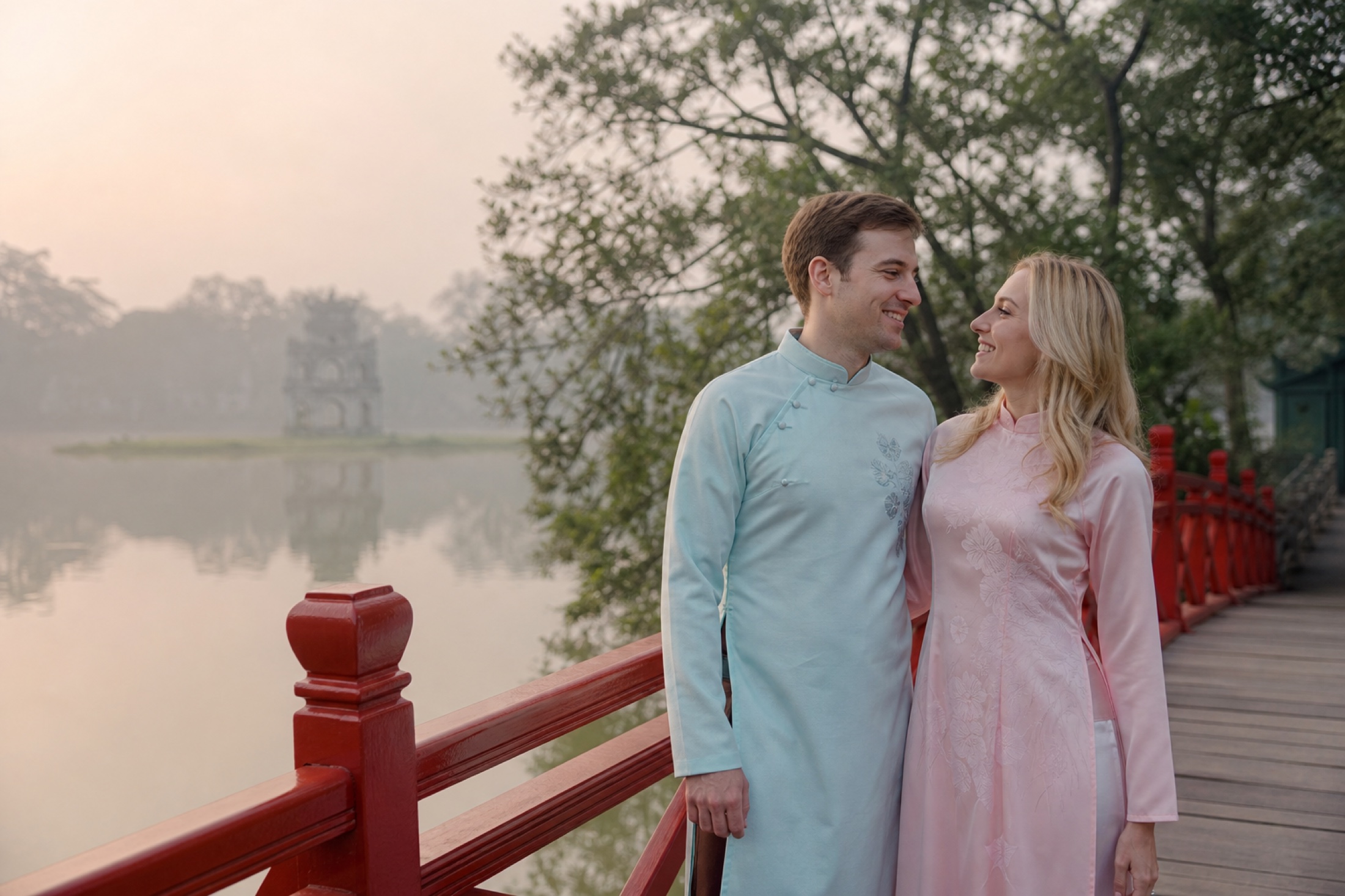
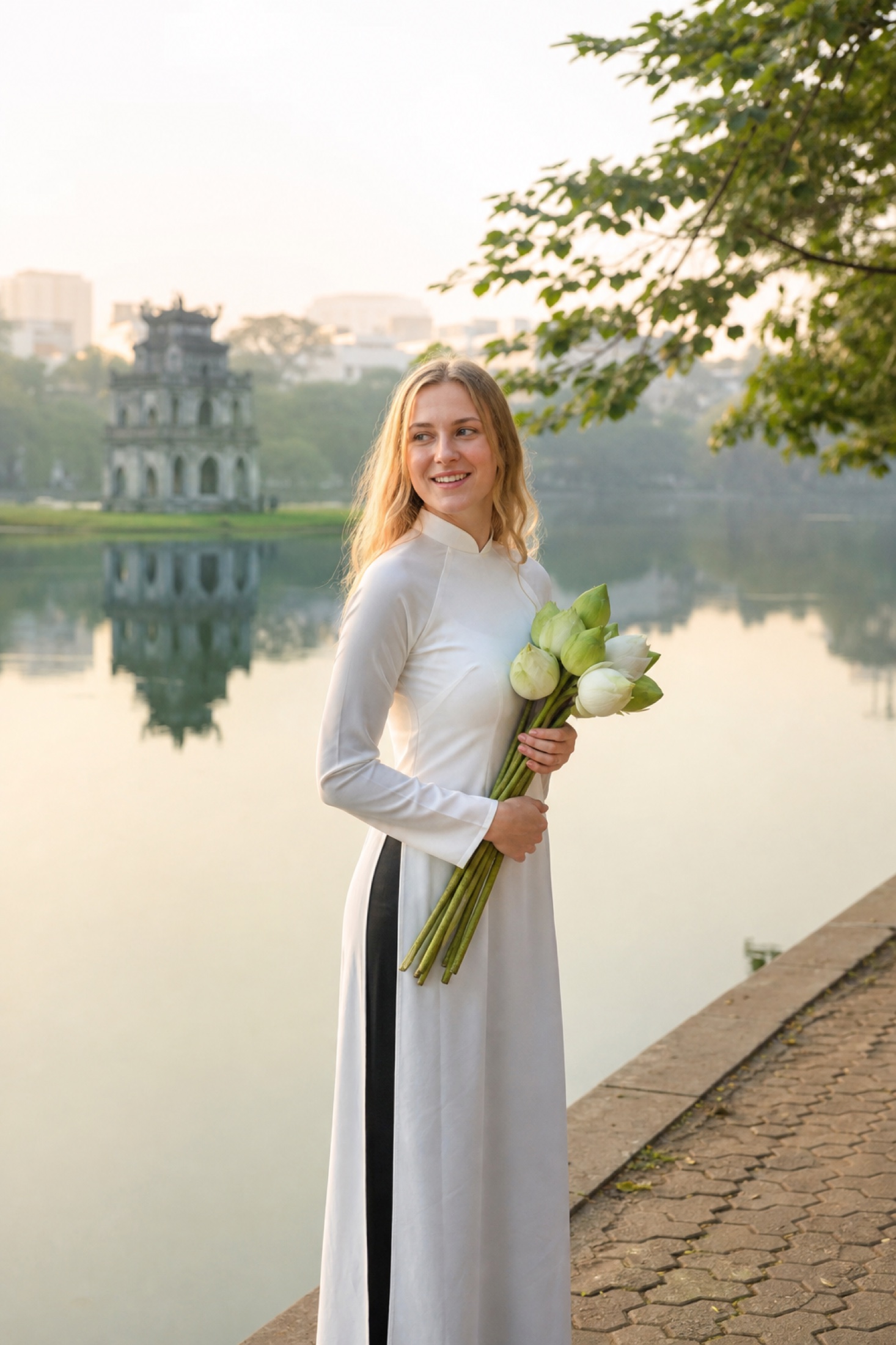
Nhat Tan's terrain is tighter and muddier than polished venues. Ao dai (traditional Vietnamese gown) works beautifully—the flowing silk photographs well in breeze and river light, and locals respond warmly—but the lower panel drags through damp soil on rainy days and narrow paths, risking stains and tears. If you choose ao dai, confirm sleeve length (shorter sleeves expose arms to winter cold; long sleeves suit autumn), and book makeup & hair that dries quickly if touch-ups happen outdoors. Western bridal gowns (heavy satin, long trains) are impractical: you'll need a handler constantly lifting fabric, and muddy hems become a post-shoot cleaning crisis. Lightweight, knee-length or midi options (clean cotton, linen, or chiffon in cream, blush, or sage) move freely, suit the rustic aesthetic, and allow walking without tripping. Groom or partner: linen shirts, tailored trousers, and loafers or clean sneakers. Avoid soles that slip on wet brick. Bare feet in blossoms photograph dreamily but risk cuts and cold. Bring a spare pair of shoes and ask your photographer to pack towels or a waterproof tarp for sitting on damp steps or beside water.
How do timing and crowd logistics work in practice?
Dawn at Nhat Tan (6:30–8:00 a.m.) means empty lanes, soft pre-sunrise glow, and mist on the water—stunning frames but cold and dim for makeup touch-ups. By 8:30 a.m., locals open shop, and tourists trickle in. Peak chaos (10 a.m.–4 p.m. during blossom season) turns the village into a pedestrian market; your photographer will waste hours repositioning to avoid crowds. Late afternoon (4:30–6:30 p.m. in winter; 5:00–7:30 p.m. in summer) brings golden hour and fewer families, but you're racing the sunset and may lose light mid-shoot if you're slow to move. A four-hour session typically runs 6:00–10:00 a.m. (early, fewer tourists, cold makeup challenge) or 4:00–8:00 p.m. (golden light, dinner-time villagers, time pressure). Longer sessions (6–8 hours) require a break and location pivot—perhaps Old Quarter or Hoan Kiem in midday (2:00–4:00 p.m.) to avoid harsh shadows and Nhat Tan fatigue. Off-season (March, April, October, November), timing is less critical; morning light is crisp, afternoon haze is moderate, and crowds don't dictate your pacing.
Should you shoot at Nhat Tan, or is another Hanoi pre-wedding location better for you?
Nhat Tan suits couples seeking rustic charm, water reflections, and seasonal romance—particularly peach-blossom devotion or autumn foliage moods. If your priority is blooms, accept that you're competing with tourists and timing is narrow. If you're drawn to Nhat Tan's aesthetic (old-world village, nurseries, intimate passages) but want to avoid crowds and seasonal risk, shoot there in October–November (ideal light, solitude, no flowers) and frame it as an autumn-foliage story, not a blossom one. The Old Quarter (Hanoi's dense, shadowy 36 streets) delivers colonial architecture, cyclo encounters, and moody, candid energy—better for couples wanting urban texture and busy-street romance. Hoan Kiem Lake's tree-lined promenade (especially Phan Dinh Phung street in autumn when foliage glows) offers public, accessible parkland that photographs cinematic without early-morning logistics. French Quarter (cream-and-terracotta villas, tree-lined avenues, bougainvillea) suits elegant, airy aesthetics and poses less mud-and-crowd risk. A photographer's job is to be honest: if Nhat Tan's peak season doesn't fit your timeline or temperament, a different Hanoi location may deliver a calmer, more beautiful shoot. Cáo Studio scouts all these zones and can steer you toward what genuinely suits your vision and schedule.
What should you check before you book a Nhat Tan pre-wedding shoot?
Pre-shoot checklist:
- Season and blossom dates. If blooms matter, confirm this year's Tet dates and the 2-week flowering window. Ask Cáo Studio if they've shot Nhat Tan recently and how the blossoms looked. Off-season shoots? Reframe as foliage or moody-light stories.
- Outfit practicality. Will you wear ao dai, Western gown, or separates? Try walking on muddy paths in your planned outfit beforehand (or accept that hemlines may stain). Confirm your photographer has handled your outfit type there and can advise on accessories and footwear.
- Makeup and touch-ups. Will makeup be applied on-site (usually at a homestay or hotel before the shoot)? Early dawn shoots demand weatherproof makeup; Cáo Studio can prep you on-site if you're staying nearby.
- Photographer familiarity. Ask if your photographer has shot Nhat Tan before—specifically, which homestays permit shoots, which lanes catch golden light, and when crowds peak. A first-timer wastes time scouting.
- Session length and backup plan. 2 hours is tight for Nhat Tan's spread-out beauty; 4 hours is standard. Will your photographer pivot to another location if weather turns or crowds are unbearable? Confirm this upfront.
- Crowd and vehicle reality. During peak Tet (late January to mid-February), expect to share frames with dozens of tourists. If exclusivity matters, shift to off-season or a different Hanoi venue.
- Exactly what's included. Confirm on WhatsApp with Cáo Studio whether makeup, hair, outfit changes, or additional locations are part of your package. Pricing and package details are discussed directly, not guessed at.
---
For couples envisioning a pre-wedding story rooted in Hanoi's soul, Nhat Tan flower village remains potent—if you enter with eyes open to its seasons, crowds, and logistics. Cáo Studio – Makeup & Photoshoot knows the village's rhythms and can craft a session that honors your vision without frustration. Reach out on WhatsApp to discuss your timeline, style, and whether Nhat Tan or a complementary Hanoi location makes the stronger frame for your story.
---
FAQ
Are peach blossoms guaranteed to be blooming when I shoot?
No. Blossom timing depends on temperature, rainfall, and lunar calendar; they typically peak 1–2 weeks before Tet but can be early, late, or sparse. Ask Cáo Studio for recent photos taken at Nhat Tan before locking your dates.
Can I wear a heavy bridal gown at Nhat Tan?
You can, but it's impractical—muddy hems, tripping on paths, and constant fabric handling frustrate both you and your photographer. Lightweight, knee-length or midi gowns, or ao dai, move freely and suit the setting better. Confirm outfit fit with your photographer during the pre-shoot call.
What time of day has the best light at Nhat Tan?
Early morning (6:30–8:30 a.m.) is soft and empty; golden hour (4:30–6:30 p.m. winter, 5:00–7:30 p.m. summer) is warm but time-constrained. Midday (11 a.m.–3 p.m.) is harsh and crowded. Ask your photographer to recommend based on season and your outfit.
Is Nhat Tan crowded during off-season (March–May, October–November)?
Not heavily. March–May risks afternoon haze; October–November is Hanoi's clearest season but has no blossoms. Both allow slower pacing and photographer flexibility without the Tet-season throngs.
Do I need a permit to shoot at Nhat Tan flower village?
Nhat Tan is a working village and public space; no formal permit is required for small-group shoots. Respect locals, avoid blocking paths, and ask permission before photographing inside homestays or private nurseries. Cáo Studio handles etiquette and site relationships.
How does weather in December–February affect a Nhat Tan shoot?
December–early January is overcast and 10–18°C; expect muted, moody light and cold fingers. Mid-late February (pre-Tet blossom peak) is warmer but unpredictably drizzly. Bring layers and confirm your photographer's experience with low-light, wet conditions.
FAQ
Are peach blossoms guaranteed to be blooming when I shoot?
No. Blossom timing depends on temperature, rainfall, and lunar calendar; they typically peak 1–2 weeks before Tet but can be early, late, or sparse. Ask Cáo Studio for recent photos taken at Nhat Tan before locking your dates.
Can I wear a heavy bridal gown at Nhat Tan?
You can, but it's impractical—muddy hems, tripping on paths, and constant fabric handling frustrate both you and your photographer. Lightweight, knee-length or midi gowns, or ao dai, move freely and suit the setting better. Confirm outfit fit with your photographer during the pre-shoot call.
What time of day has the best light at Nhat Tan?
Early morning (6:30–8:30 a.m.) is soft and empty; golden hour (4:30–6:30 p.m. winter, 5:00–7:30 p.m. summer) is warm but time-constrained. Midday (11 a.m.–3 p.m.) is harsh and crowded. Ask your photographer to recommend based on season and your outfit.
Is Nhat Tan crowded during off-season (March–May, October–November)?
Not heavily. March–May risks afternoon haze; October–November is Hanoi's clearest season but has no blossoms. Both allow slower pacing and photographer flexibility without the Tet-season throngs.
Do I need a permit to shoot at Nhat Tan flower village?
Nhat Tan is a working village and public space; no formal permit is required for small-group shoots. Respect locals, avoid blocking paths, and ask permission before photographing inside homestays or private nurseries. Cáo Studio handles etiquette and site relationships.
How does weather in December–February affect a Nhat Tan shoot?
December–early January is overcast and 10–18°C; expect muted, moody light and cold fingers. Mid-late February (pre-Tet blossom peak) is warmer but unpredictably drizzly. Bring layers and confirm your photographer's experience with low-light, wet conditions.
Ao dai, makeup, hair and a local photographer in Hanoi or Saigon — one WhatsApp message.