/pre-wedding-photoshoot
Pre-wedding photoshoot at Tam Coc, Ninh Binh: complete guide
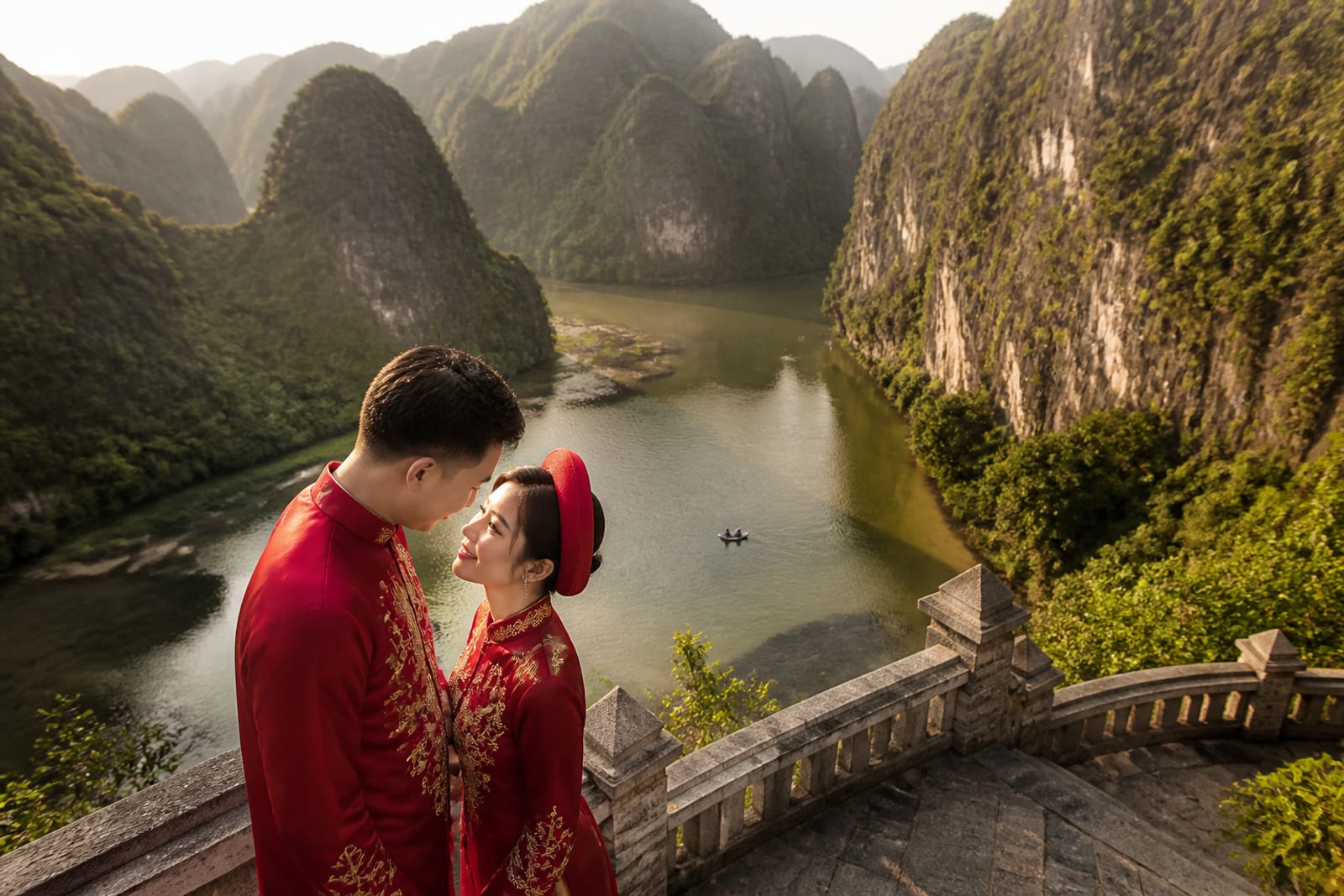
Tam Coc pre-wedding shoots happen year-round in Ninh Binh's northern region, where karst peaks frame flooded rice fields and boat passages. Sessions typically run 2–4 hours, split between Hang Mua viewpoint (500 stone steps), Tam Coc boat trips (rowed by local operators), and paddies or village roads. Best light: 07:00–10:00 and 16:00–18:30. Avoid June–August (heat, storms, muddy paddies) and Dec–Feb (cool grey skies, slippery paths). Cáo Studio – Makeup & Photoshoot operates in Hanoi, Ho Chi Minh City and Hoi An only; for Ninh Binh, hire a local photographer via referral networks or portfolios, vet their experience with ao dai and karst terrain, and confirm edits, delivery and retake policy in writing before deposit.
A pre-wedding shoot at Tam Coc captures one of Vietnam's most photographed landscapes: limestone peaks reflected in flooded rice paddies, rope-pulled boats threading narrow waterways, and ancient village temples. The challenge is timing—seasons dramatically shift light, water levels and mud—and logistics: the best viewpoint requires a steep climb, boats run on local schedules, and wet terrain demands outfit planning. This guide walks you through season selection, outfit and makeup choices, local photographer vetting, and how to structure a session that avoids wasted travel time and reshoot costs.
Why does Tam Coc work for pre-wedding photos?
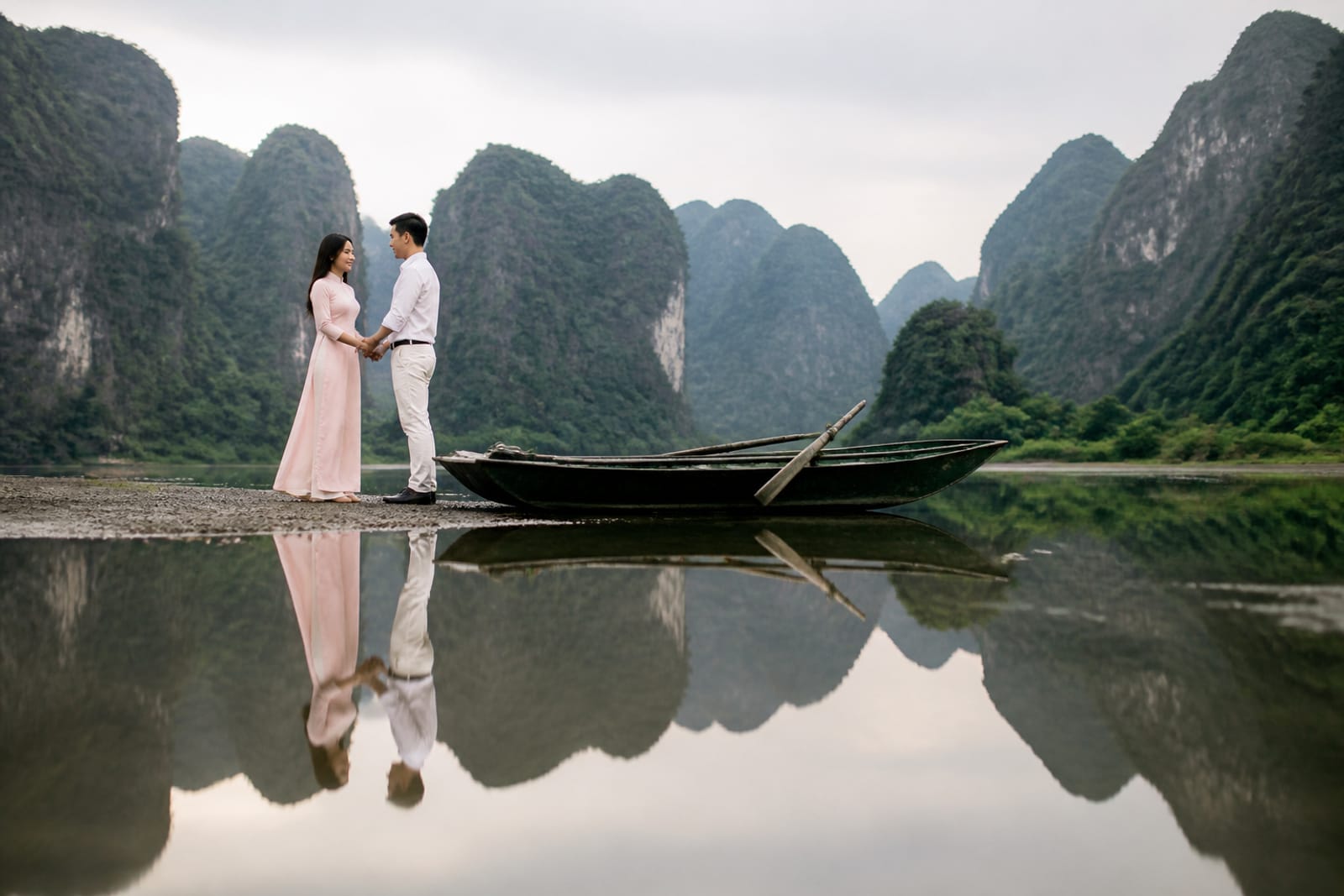
Tam Coc's appeal lies in three distinct zones. Hang Mua viewpoint overlooks the entire valley—soft morning light hits the peaks from the east, and afternoon sun creates golden paddies. Boat trips through Tam Coc and Ngo Dong rivers put you among the limestone towers, with reflections and layered depth. Village roads and temple grounds offer intimate framing and cultural context. Most couples shoot all three in one session, which demands careful timing and outfit changes. The landscape is dramatic because it's unmanicured: water levels fluctuate, mist rolls in unpredictably, and paths are seasonal. A photographer who knows Tam Coc's moods—and the local boatmen—saves you hours of wasted positioning.
What season delivers the best light and access?
| Season | Light quality | Water/paddies | Walkability | Best for ao dai | Why it works |
|---|---|---|---|---|---|
| Mar–May | Soft golden, clear skies | Fields drying, some water | Easy, dry paths | Yes, full drape | Comfortable walk to Hang Mua; paddies still reflect; no rain risk |
| Jun–Aug | Harsh midday, grey storms | Flooded but muddy access | Slippery, high humidity | Risky; fabric clings | Heat exhaustion on steps; afternoon downpours; mud stains fabric |
| Sep–Oct | Clear, warm, lower humidity | Fields filling, good reflections | Damp but manageable | Yes | Second rice crop ripens golden; fewer tourists; cooler than summer |
| Nov–Feb | Cool, grey, occasional mist | Full water, landscape soft | Slippery steps, mud | Yes, but layers | Mist suits moody shots; cold on steps; winter grey skies less dramatic |
March–May and September–November are optimal: paths are passable, light is directional, water levels reflect peaks, and ao dai fabric drapes without clinging. June–August is risky (storms close Hang Mua, heat exhausts climbers, mud stains white fabric). December–February works if you embrace grey tones and wear layers under ao dai; many couples choose this for fewer crowds.
How do you plan outfit changes and makeup durability?
Tam Coc sessions involve three environments—viewpoint (500 steps, wind exposure), boat (spray, humidity), village (shaded, intimate)—each affecting fabric and makeup differently. Ao dai is the romantic choice, but plan changes strategically:
- Hang Mua climb: wear ao dai over trousers (easier descent than full skirt); bring a light layer for wind at the top. Makeup faces direct sun for 45 minutes; use long-wear, waterproof base and avoid cream products.
- Boat trip: splashing is rare but humidity is high. Bring blotting paper and powder; ao dai is photogenic from the boat, but consider a change into casual linen or a second ao dai if the first gets damp.
- Village/temple: shaded and intimate; ao dai shines here. Makeup lasts longer without direct sun; bring touch-ups for shine.
Pack a small bag with blotting papers, powder, lip colour touch-ups and a fresh hair clip. Wear shoes with grip (not flip-flops or heels)—the steps are uneven and wet in shoulder seasons. If you're using makeup applied before the session, agree with your photographer on touch-up timing; many local photographers don't offer on-site makeup, so budget for a separate makeup artist or do trial runs beforehand. Cáo Studio's makeup & hair service operates in Hanoi, Ho Chi Minh City and Hoi An—not Ninh Binh—so arrange local support or plan DIY touch-ups.
📸 Book on WhatsApp — ao dai photoshoot | 💄 Makeup & hair at your hotel | 🌸 See the lookbook
How do you find and vet a local Tam Coc photographer?
Cáo Studio – Makeup & Photoshoot operates in Hanoi, Ho Chi Minh City and Hoi An only; Ninh Binh requires a local hire. Use this vetting framework:
- Portfolio: ask for 10+ Tam Coc pre-wedding shoots. Specifics to check: ao dai draping in wind, boat reflections, Hang Mua perspective consistency, muddy-season handling, fabric clarity in damp light. Avoid generic landscape portfolios—you need someone who understands wedding-day constraints.
- Local knowledge: ask how they handle Hang Mua crowds (timing, permits if any, boat operator relationships). Do they scout new locations or repeat the same 3 spots? Repeatable doesn't mean bad, but variety in their portfolio shows adaptability.
- Contract & delivery: confirm in writing—before deposit—hours, outfit changes included, edited-photo count, delivery timeline (often 4–8 weeks for local studios), retake policy if light is poor, and payment schedule. Get contact details for their local boat operator or guide, if separate.
- Communication: can they explain how they'll light an ao dai on the boat, or why 07:00 start is crucial? Vague answers suggest limited Tam Coc experience.
- References: ask for 2–3 past couples' contacts. A photographer with 20 Tam Coc shoots and zero referrals is a red flag.
Expect to pay session costs that reflect travel time (Hanoi is 2 hours away) and local logistics; the cost factors are day length, outfit count and edited-photo turnaround, not flat rates. Agree these upfront.
What logistics and safety precautions should you plan?
Tam Coc is a 2-hour drive from Hanoi. Arrive early (06:30 for a 07:00 start) to scout light and manage boat operator schedules; boats depart in waves. Bring water, sunscreen (reapply every 90 minutes if not in direct sun), insect repellent (twilight can trigger mosquitoes), and a small first-aid kit. Wear grip-sole shoes rated for wet stone; the Hang Mua steps are uneven and algae-slick after rain. Check the 5-day forecast—flash floods close Hang Mua in heavy rain (Sep–Nov risk is highest), and afternoon downpours in Jun–Aug are common. Have a backup indoor location (a temple, homestay interior) or a rain-date plan with your photographer before the session.
If you're not a local, hire a guide familiar with Tam Coc permits and access times. Some boat operators and homestays employ guides; your photographer may include this, so confirm. Be respectful at temples—wear covered shoulders and knees, ask permission before photographing locals, and avoid disrupting morning prayers.
📸 Book on WhatsApp — ao dai photoshoot
How does Cáo Studio – Makeup & Photoshoot help if you're based elsewhere?
While Cáo Studio doesn't operate in Ninh Binh, couples often combine a Tam Coc shoot (via local photographer) with studio sessions in Hanoi or Hoi An. For example: hire a local Tam Coc photographer for a 3-hour karst session, then book a pre-wedding shoot with Cáo Studio in Hanoi for a second day (urban backdrops, controlled lighting, makeup included). This spreads the budget, reduces pressure on one session, and lets you explore different aesthetic styles. Cáo Studio's ao dai photoshoot service includes makeup, hair and styled outfits—a stark contrast to a self-managed Ninh Binh outdoor session. Many international couples do exactly this: adventure in the countryside, polish in the city.
If you need makeup or hair for your Tam Coc session, Cáo Studio can provide service in Hanoi the day before (trial run, bridal prep), and you carry that look to Ninh Binh. Arrange this on WhatsApp +84 338 762 340 when you're planning your wider trip.
For couple photoshoots, family sessions, or post-wedding photo albums, Cáo Studio handles production in its three offices only. Check the FAQ for specifics on what's included in studio packages, and the pricing page for cost factors by location and session length.
📸 Book on WhatsApp — ao dai photoshoot | 🌸 See the lookbook
What to check before you book
- Contract: written confirmation of hours, location(s), outfit changes, edited-image count, delivery date, and reshoot/refund terms.
- Photographer experience: portfolio of 10+ Tam Coc pre-wedding shoots, with ao dai and varying seasons.
- Backup plan: weather contingency (indoor location, rain date, or reschedule clause).
- Deposit policy: what % is non-refundable, and under what circumstances (e.g. photographer illness, couple cancellation, poor light).
- Edits & delivery: turnaround time (4–12 weeks typical), number of edited photos, file format and resolution, and whether prints/albums are separate.
- Communication: can the photographer explain their Tam Coc approach and Hang Mua timing upfront?
---
FAQ
Can we do a pre-wedding shoot in Tam Coc with Cáo Studio – Makeup & Photoshoot?
No, Cáo Studio operates in Hanoi, Ho Chi Minh City and Hoi An only. For Tam Coc, hire a local photographer via referral or portfolio research. Cáo Studio can provide makeup & hair in Hanoi the day before, or you can book a studio shoot in Hanoi after your Ninh Binh session for a second-day polish.
What's the best time of year for Tam Coc pre-wedding photos?
March–May and September–November are optimal: dry paths, directional light, good water reflections, and comfortable temperatures for ao dai. Avoid June–August (storms, mud, heat exhaustion on the 500-step climb). December–February works for grey moody tones but means slippery steps and cold layers under ao dai.
How long does a typical Tam Coc pre-wedding shoot take?
Most sessions run 3–4 hours and cover Hang Mua viewpoint, boat trips on Tam Coc or Ngo Dong rivers, and village/temple grounds. Start early (07:00) to catch soft light and beat afternoon rain. Budget 2+ hours for Hang Mua (including the climb and descent).
Do I need a guide or can we shoot with just a photographer?
A local guide familiar with Tam Coc access, boat operator schedules and permits is valuable but not always necessary. Many local photographers include a guide or have relationships with boatmen. Confirm this before booking and factor it into cost estimates. Non-locals benefit from guided timing and cultural etiquette.
What should I wear under an ao dai for the boat trip and climb?
Wear fitted white trousers under ao dai for the Hang Mua climb (easier descent than a full skirt) and undergarments designed for ao dai (fitted slip or bodice—check with your tailor or rental shop). Bring a second pair of socks; the climb wets your feet. For the boat, wear moisture-wicking layers; ao dai stays dry if you sit still, but spray is possible during transfers.
How do local photographers differ from studios like Cáo Studio?
Local Tam Coc photographers specialize in outdoor karst shoots, timing with seasonal water and light, and navigating boat operators and village access. Studio photographers (like Cáo Studio) control lighting, backdrop logistics and often include makeup & hair. Many couples book both: a 3-hour Tam Coc adventure with a local, then a controlled studio session for bridal/groom portraits and indoor backdrops.
What if it rains during my Tam Coc session?
Light rain is manageable; Hang Mua closes in heavy downpours or flood risk. Agree a rain-date or backup indoor location (temple, homestay) with your photographer before booking. Confirm whether rescheduling is free or paid, and what counts as "too wet" to proceed. September–November carry the highest flood risk in Ninh Binh.
FAQ
Can we do a pre-wedding shoot in Tam Coc with Cáo Studio – Makeup & Photoshoot?
No, Cáo Studio operates in Hanoi, Ho Chi Minh City and Hoi An only. For Tam Coc, hire a local photographer via referral or portfolio research. Cáo Studio can provide makeup & hair in Hanoi the day before, or you can book a studio shoot in Hanoi after your Ninh Binh session for a second-day polish.
What's the best time of year for Tam Coc pre-wedding photos?
March–May and September–November are optimal: dry paths, directional light, good water reflections, and comfortable temperatures for ao dai. Avoid June–August (storms, mud, heat exhaustion on the 500-step climb). December–February works for grey moody tones but means slippery steps and cold layers under ao dai.
How long does a typical Tam Coc pre-wedding shoot take?
Most sessions run 3–4 hours and cover Hang Mua viewpoint, boat trips on Tam Coc or Ngo Dong rivers, and village/temple grounds. Start early (07:00) to catch soft light and beat afternoon rain. Budget 2+ hours for Hang Mua (including the climb and descent).
Do I need a guide or can we shoot with just a photographer?
A local guide familiar with Tam Coc access, boat operator schedules and permits is valuable but not always necessary. Many local photographers include a guide or have relationships with boatmen. Confirm this before booking and factor it into cost estimates. Non-locals benefit from guided timing and cultural etiquette.
What should I wear under an ao dai for the boat trip and climb?
Wear fitted white trousers under ao dai for the Hang Mua climb (easier descent than a full skirt) and undergarments designed for ao dai (fitted slip or bodice—check with your tailor or rental shop). Bring a second pair of socks; the climb wets your feet. For the boat, wear moisture-wicking layers; ao dai stays dry if you sit still, but spray is possible during transfers.
How do local photographers differ from studios like Cáo Studio?
Local Tam Coc photographers specialize in outdoor karst shoots, timing with seasonal water and light, and navigating boat operators and village access. Studio photographers (like Cáo Studio) control lighting, backdrop logistics and often include makeup & hair. Many couples book both: a 3-hour Tam Coc adventure with a local, then a controlled studio session for bridal/groom portraits and indoor backdrops.
What if it rains during my Tam Coc session?
Light rain is manageable; Hang Mua closes in heavy downpours or flood risk. Agree a rain-date or backup indoor location (temple, homestay) with your photographer before booking. Confirm whether rescheduling is free or paid, and what counts as "too wet" to proceed. September–November carry the highest flood risk in Ninh Binh.
Ao dai, makeup, hair and a local photographer in Hanoi or Saigon — one WhatsApp message.