/pre-wedding-photoshoot
Pre-wedding photoshoot at Tam Giang Lagoon, Hue: complete guide
Tam Giang Lagoon, near Hue, is a vast shallow lagoon famous for pre-wedding shoots because of its mirror-like water and soft light during sunrise and early morning. Sessions typically run 2–3 hours, starting before dawn to catch the first light reflecting off the water. You can book a local Hue-based photographer or travel photographer on-site, or arrange a shoot with Cáo Studio – Makeup & Photoshoot if you're also planning sessions in Hanoi, Ho Chi Minh City, or Hoi An. The lagoon is best visited February through August (dry season); avoid September–December (typhoon and flood risk). Wear ao dai or Western wedding wear, bring a change for variety, and plan for wet sand and saltwater spray. Check with your photographer about boat access, tide times, and whether permits are required before booking. ---
Why Tam Giang Lagoon works for pre-wedding photos
Tam Giang is Southeast Asia's largest lagoon. Water is shallow, glassy at dawn, and reflects sky and clothing vividly. The landscape is minimal: water, fishing boats, and horizon. This simplicity lets couples and outfits dominate the frame without competing background detail. Sunrise floods the scene with soft, directional light that flatters skin and fabric. By 8 a.m., overhead sun washes out contrast. Early timing is essential.
Fishermen and local boats add authentic texture to wide shots. Some couples prefer these; others request clear water. Discuss this with your photographer before booking. The lagoon's scale means you can shoot intimate close-ups and cinematic wide scenes on the same location, which saves travel time compared to visiting multiple spots around Hue.
📸 Book on WhatsApp — couple photoshoot
---
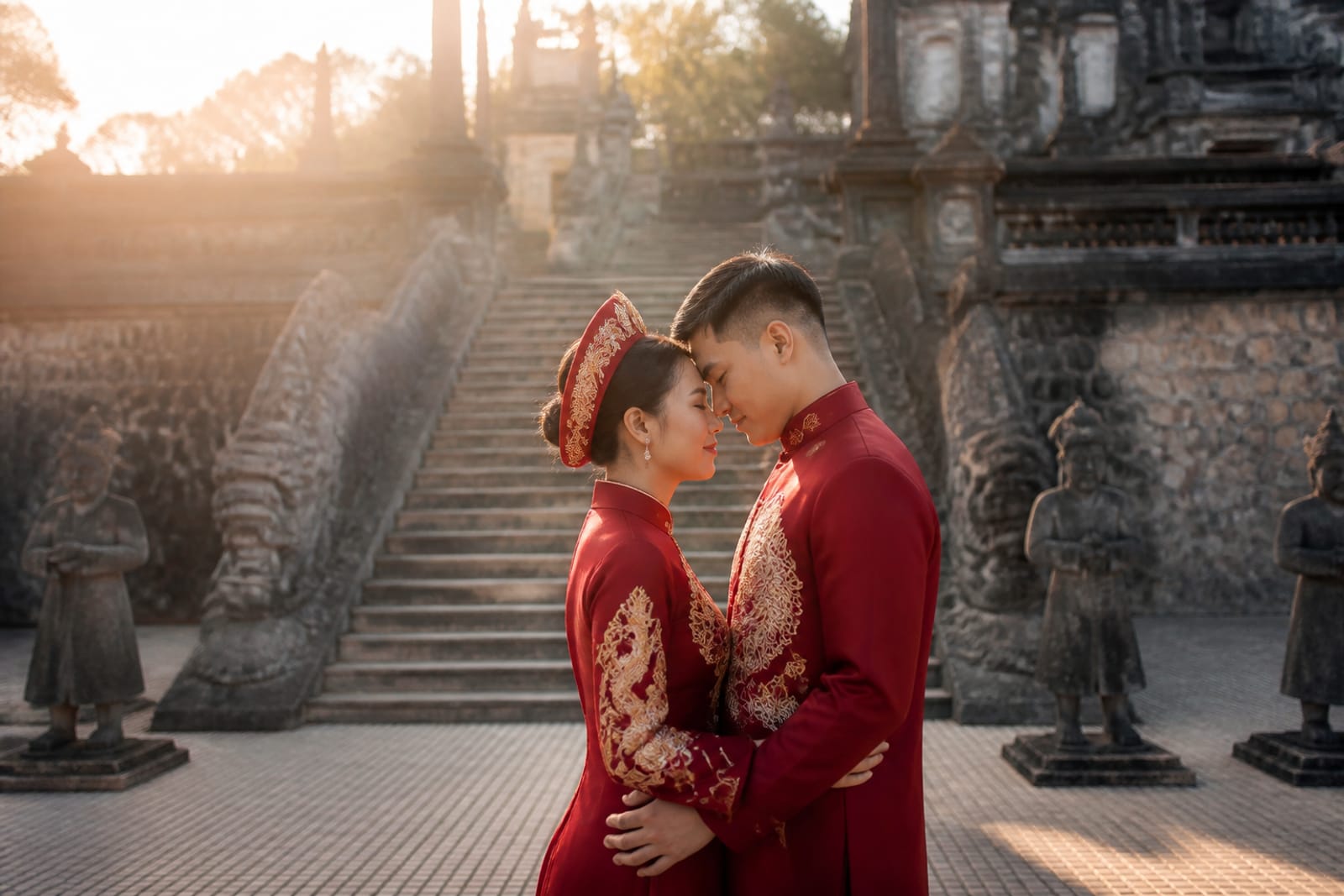
Best season and light conditions at Tam Giang
| Timeframe | Light quality | Water state | Crowds | Why choose it | Why avoid it |
|---|---|---|---|---|---|
| Feb–Apr | Soft, angled, no haze | Calm, reflective | Light; some tourist boats | Dry, predictable, golden hour | Hot by mid-morning |
| May–Aug | Bright, strong shadows by 7 a.m. | Calm; occasional algae blooms | Moderate; fewer boats | Dry season, reliable | Intense midday heat; harsh noon light |
| Sep–Dec | Overcast, flat, diffused | Rough; flood risk; brown water | Fewer tourists; some closed areas | Free from crowds | Heavy rain, typhoons, unsafe water; worst Oct–Nov |
Sunrise timing: February–August, sunrise is 5:30–6:15 a.m. Boat access and golden-hour shooting window close by 7:30 a.m. Arrive at the lagoon by 5 a.m. to position, anchor, and prepare.
Light behavior: First 90 minutes after sunrise offer directional, warm light. Clouds break it into dappled patches, which flatter skin and fabric texture. By 8 a.m., light flattens. Afternoon shoots (4–6 p.m.) are possible but less popular because water reflects harsher light and the horizon is backlit, which silhouettes subjects.
Monsoon and flood risk: September–December is Hue's heavy rain and typhoon season (worst October–November). Lagoon water becomes brown, boat access is unsafe, and outdoor shoots often cancel. If you're set on a Hue pre-wedding shoot during these months, consider pre-wedding photoshoots in protected urban settings or move your shoot to the dry season.
---
What to wear: ao dai, Western dress, and practical tips
Ao dai at Tam Giang: Traditional Vietnamese silk ao dai photographs beautifully in soft morning light. The fabric catches and drapes over wet sand without heavy soiling if you wear it over trousers (not bare legs). Wet hems are unavoidable; silk dries and cleans well. Choose jewel tones or pastels that contrast the water. Avoid white or pale silk unless you're prepared for discoloration. Bring a second ao dai or outfit to change into after 7 a.m., when light hardens but you're still shooting.
Western bridal wear: A-line, mermaid, or ballgown skirts gather water and sand quickly. Ball gowns are impractical for wading; sheaths and A-lines work. Bring a wrap or shawl for wind and early-morning chill (lagoon breeze can be cool before sunrise). Some couples wear a rehearsal dress at the lagoon and save the wedding gown for another shoot (e.g., a family photoshoot in Hanoi or a proposal & anniversary package setting closer to the city).
Groom and groomsmen: Linen or cotton suits in neutral tones (cream, grey, navy) stay cooler and photograph less wrinkled than wool. Shoes will wet; plan to go barefoot or wear washable leather. Rolled trousers or cropped pants keep sand off hems.
Practical checklist:
- Bring a dry bag or large towel for phones, wallets, shoes.
- Wear water-safe jewelry or remove it.
- Apply waterproof makeup; ask a makeup artist to include setting spray. If you're booking with Cáo Studio, confirm makeup & hair preparation for water and sun exposure.
- Rent ao dai or suits locally if traveling light; ask your photographer or hotel for referrals.
---
How to book a photographer and understand your options
Option 1: Local Hue-based photographer Pros: knows tide schedules, boat logistics, and weather patterns; can shoot same-day or on flexible dates. Cons: English communication may be limited; portfolio variety might be narrow.
How to vet: Ask to see 5–10 recent Tam Giang shoots. Look for sharpness (lens quality), consistent color grading, and variety in pose and framing. Check whether they cover hair/makeup coordination, outfit changes, and post-production timeline. Ask how many edited images you receive and when delivery happens. Confirm they own a boat or have a reliable contact; some photographers pay daily fees to use local boats, which affects your quote.
Cost factors (not amounts): Sunrise premium (early arrival), number of outfits, boat rental, and editing rounds all influence quotes. Ask for a written quote before committing.
Option 2: Cáo Studio – Makeup & Photoshoot (if you're shooting elsewhere too) Cáo Studio operates in Hanoi, Ho Chi Minh City, and Hoi An. If you're planning a multi-location pre-wedding series—e.g., ao dai photoshoot in Hanoi, then a coastal session in Hoi An—Cáo Studio can coordinate styling and editing consistency. Tam Giang is not part of the studio's regular service area, but the team can advise on local partnerships. Contact via WhatsApp to discuss.
Option 3: International travel photographer Pros: portfolio usually includes diverse styles; may be based in-country already. Cons: travel fees, time-zone coordination, and unfamiliarity with local tides.
Vetting: Same as local—request recent work, clarify deliverables, confirm they've shot water-based sessions before.
Comparison framework:
| Photographer type | Best for | Local knowledge | English comfort | Editing speed | What to confirm |
|---|---|---|---|---|---|
| Local Hue-based | Budget-conscious, simple logistics, flexible reschedule | Excellent | Basic to fluent | 2–4 weeks | Boat access, weather protocol, image count, payment terms |
| International travel | Specific aesthetic, multi-location series, West-facing editing | Varies | Fluent | 2–8 weeks | Visa/legal status in Vietnam, insurance, cancellation policy |
| Cáo Studio (Hoi An or remote coordination) | Consistent styling across multiple shoots, makeup/hair on-site, Western client service | Good (Hoi An); limited (remote) | Fluent | Per studio timeline | Ask on WhatsApp for Tam Giang coordination details |
Before you book, confirm:
- Boat cost: is it included in the photographer's fee or paid separately?
- Tide schedule: does the photographer adjust timing, or do you?
- Weather backup: what happens if rain or flood risk closes the lagoon?
- Image delivery: how many edited photos, file format, copyright terms?
- Makeup/hair: is it included, or do you hire separately?
---
Logistics: getting there, boat access, and what can go wrong
Location and access: Tam Giang Lagoon sits 20 km northeast of Hue city center. Drive time from Hue is 30–45 minutes depending on traffic and which lagoon dock you use. The main entry points are at Tam Giang town (north side) and Kim Long (south side). Hotels and tour operators in Hue can arrange transport; some photographers include it, others don't—confirm in your quote conversation.
Boat logistics: Most shoots require a small wooden or fiberglass boat for positioning in the water. Boats hold 4–6 people (couple, photographer, makeup artist, assistant). Rental is typically negotiated daily by the photographer or arranged through a local boatman. Tides affect water depth and accessibility; high tide (9 a.m.–1 p.m.) is safest for boats. Sunrise shoots catch low or rising tide, which can mean shallow water and sand bars. Your photographer should know the tidal calendar and position accordingly.
What can go wrong—and how to avoid it:
- Tide timing mismatch: Photographer doesn't account for spring or neap tides; boat runs aground. Fix: Ask your photographer to share the lunar tide table for your shoot date two weeks beforehand. Confirm sunrise start time is achievable given tide height.
- Sunrise weather: Heavy fog, cloud cover, or rain washes out light. Fix: Have a rain date or a backup indoor/urban shoot location (ask your Hue hotel or photographer). Don't plan only one shoot date if timing is critical.
- Algae bloom or water discoloration: Green or brown water photographs poorly. Fix: Algae blooms (May–July, rare but possible) are weather-driven. Book February–April or August for water clarity. Ask your photographer about current lagoon conditions before locking a date.
- Overcrowding by tourist boats: Tour groups and fishermen intrude on your shot. Fix: Confirm your boat goes out by 5:30 a.m., before tourist boats launch. Some photographers negotiate exclusive access with boatmen; ask.
- Coordination breakdown: Makeup artist arrives late; boat is delayed; couple's outfit isn't water-safe. Fix: Plan logistics 48 hours in advance. Send your photographer a checklist: arrival time, outfit photos, makeup brief, weather forecast, boat confirmation.
Weather protocol: If your shoot is February–August, rain risk is low but wind can kick up water and create ripples. Overcast mornings are actually ideal for diffused, even light. Cancel only if the lagoon is officially closed (typhoon warning, flood alert). Check with your photographer or the local tourism office (Hue) for closure status the day before your shoot.
---
Comparing Tam Giang to other Hue pre-wedding locations
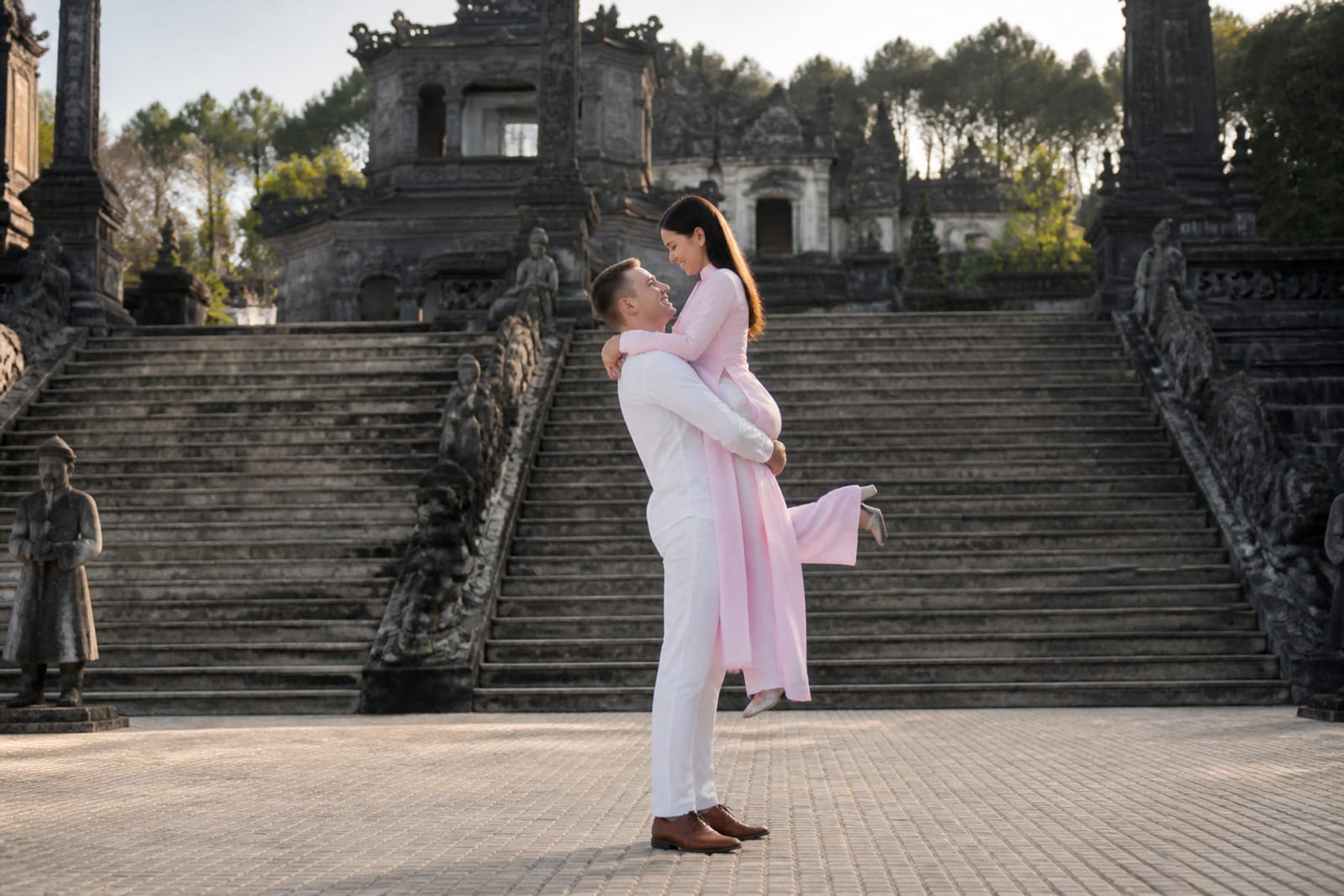
Hue offers other settings—the Perfume River, royal tombs, and urban gardens. Tam Giang is chosen for its landscape drama and water reflections, but it's not the only option. Understanding alternatives helps you decide if Tam Giang fits your vision.
| Location | Light | Water | Accessibility | Outfit fit | Permit/restrictions | Best season |
|---|---|---|---|---|---|---|
| Tam Giang Lagoon | Soft sunrise; mirror reflections | Shallow, calm; algae risk in summer | 30–45 min drive; boat required | Ao dai, bridal wear, wedding suit | No formal permit; boat rental negotiated | Feb–Aug |
| Perfume River (Hue city) | Urban reflected light; bridge backdrop | Deeper, faster current; scenic but less intimate | 10–15 min from city center | All styles; less water contact | No permit; public access | Feb–Apr (dry, cooler) |
| Royal Tombs (Minh Mang, Khai Dinh) | Garden light; architectural framing | No water; temple grounds | 20–30 min drive | Formal ao dai; Western wear acceptable | Entry ticket required; tripods may be restricted—check at gate | Feb–Apr, Sep–early Oct (dry) |
| Hue Citadel & city gardens | Urban and temple light; layered history | No water; moat surrounds citadel | 5–15 min from city center | All styles; formal preferred | Entry ticket required; photography rules vary by section | Feb–Apr |
Why choose Tam Giang specifically: If your vision centers on water, reflection, and minimalist landscape—a serene, intimate moment rather than architectural grandeur—Tam Giang delivers this. If you want traditional temple or citadel backdrops, the royal tombs are better. If you prefer river-side urban aesthetics, the Perfume River works with less travel and no boat coordination.
Multi-location pre-wedding in Hue: Many couples shoot 2–3 locations on one trip: sunrise at Tam Giang (2–3 hours), then brunch, then a 1–2 hour session at the Citadel or a royal tomb. This requires one full day and flexible weather. Discuss with your photographer how many locations are realistic and how travel time between them affects the schedule.
---
Cost factors and when to book
Pre-wedding shoots at Tam Giang vary in price depending on distance (if you're hiring from Hanoi or Saigon), number of outfits, boat rental, makeup/hair services, and editing scope. Rather than citing figures (which change by season and negotiation), understand the cost drivers so you can compare quotes fairly.
What affects your quote:
- Photographer location: Local Hue photographers are typically less expensive than international or Hanoi-based shooters because there's no travel fee. International shooters charge travel time and may require insurance.
- Session length and outfit changes: A 2-hour sunrise session with one outfit is simpler than a 4-hour multi-location day with three outfits and makeup touchups.
- Boat rental: Boatman fees vary by season and group size. Peak season (Feb–Apr) may have higher daily rates.
- Makeup and hair: If included, it's a value add. If you hire separately, it's an additional cost. Cáo Studio can coordinate makeup & hair if you're also shooting in Hoi An or another service area.
- Editing and delivery: Editing time (1–2 weeks vs. 4+ weeks) and the number of finished images affect the final quote.
Seasonal booking: February–April books up fastest because weather is predictable and light is ideal. May–August is less crowded, water can be warmer (algae risk is slight), and photographers may offer flexibility. Book 4–6 weeks in advance during peak season; 2–3 weeks is sufficient off-season.
When to book with a local photographer vs. coordinate through Cáo Studio: If Tam Giang is your only shoot, hire a local Hue photographer—they know the logistics and are cost-effective. If you're planning a broader pre-wedding series (e.g., ao dai photoshoot in Hanoi, then a coastal session in Hoi An, then family photos), Cáo Studio can coordinate styling and editing. Contact the team on WhatsApp to discuss multi-location options.
---
What to check before you book
Before committing to a Tam Giang pre-wedding shoot, clarify these points with your photographer:
- Boat confirmation and cost: Is boat rental included in the quote, or is it extra? What's the daily rate, capacity, and cancellation policy if the lagoon is unsafe?
- Sunrise timing and tide schedule: Ask for the exact start time for your shoot date. Confirm the tide height allows boat access. Request the tidal calendar and sunrise time two weeks before the shoot.
- Backup plan for bad weather: What happens if rain, wind, or flood risk closes the lagoon? Is there a rain date, or is the session fee non-refundable?
- Image delivery scope: How many edited images do you receive? What file formats (RAW, JPEG, web)? When are they delivered? Are you paying for additional editing rounds, or is one revision round included?
- Makeup and hair coordination: If you're booking makeup separately, clarify with your photographer how they'll communicate timing. If Cáo Studio is coordinating other shoots for you, ask on WhatsApp whether they can advise on local makeup artists or provide remote prep guidance for Tam Giang.
- Outfit and styling guidance: Does the photographer provide styling tips or outfit recommendations, or do you research independently? If you're renting an ao dai or wedding dress locally, ask your photographer for referrals to trusted rental shops in Hue.
- Travel and transport: Is transport from your hotel included, or do you arrange it? If hiring a photographer from outside Hue, confirm their travel costs are separate from the session fee.
- Cancellation and rescheduling policy: What's the cancellation deadline, and how much notice is required to reschedule?
- Copyright and usage rights: Who owns the final images? Can you use them for social media, prints, or web? Are there restrictions on the photographer's use?
- Insurance and liability: If shooting on a boat, confirm the boatman has liability insurance. Ask the photographer about their professional insurance (covers damage to equipment or injury during the session).
A straightforward conversation with your photographer before booking—via email, WhatsApp, or a phone call—prevents misalignment and ensures a smooth shoot day.
---
Choosing Tam Giang or exploring other options
Tam Giang Lagoon is a stunning pre-wedding location because of its water, light, and scale. But it's not the only option in Hue, and it's not suitable for all couples or budgets.
Choose Tam Giang if:
- You prioritize water reflections and minimalist landscape.
- You're comfortable with early mornings (5–6 a.m. start) and boat logistics.
- Your shoot date is February–August.
- You want a location that's recognizable and distinct from city backdrops.
- You're hiring a local Hue photographer and don't want travel fees.
Consider alternatives if:
- You prefer architectural or temple settings (royal tombs, Citadel).
- You want an afternoon shoot (Perfume River, urban gardens).
- Your dates fall in typhoon season (Sep–Dec).
- You're nervous about boat safety or water-based shoots.
- You're looking for a quick, low-logistics option close to your hotel.
If you're planning multiple shoots across different regions—e.g., an ao dai photoshoot in Hanoi, a family session in Ho Chi Minh City, and a couple's portrait in Hoi An—reach out to Cáo Studio – Makeup & Photoshoot. The team can coordinate styling, makeup, and editing consistency across your shoots. Message on WhatsApp to discuss your vision and multi-location logistics.
For a Tam Giang shoot, hire a local photographer 4–6 weeks in advance (or 2–3 weeks off-season), confirm tides and sunrise timing, and have a weather backup plan. Arrive early, bring water-safe clothing, and trust the boat crew and photographer—they've navigated lagoon shoots hundreds of times.
📸 Book on WhatsApp — couple photoshoot
---
FAQ
What is the best time of year to shoot at Tam Giang Lagoon?
February through August (dry season) offers calm water, predictable weather, and soft morning light. Avoid September–December (typhoon and flood season). February–April books up fastest because of ideal conditions and mild temperatures.
Do I need a permit to shoot at Tam Giang Lagoon?
No formal photography permit is required for private shoots. However, boat rental is negotiated directly with boatmen or through your photographer. Confirm boat access and any fees with your photographer before booking.
Can I wear a traditional ao dai for a Tam Giang shoot?
Yes. Ao dai photographs beautifully in soft morning light and drapes well over wet sand. Wear it over trousers, not bare legs, to avoid hem damage. Silk washes and dries well. Bring a second outfit if shooting beyond 7 a.m., when light hardens.
How early do I need to wake up for a Tam Giang pre-wedding shoot?
Plan to arrive at the lagoon by 5 a.m. to allow time for boat positioning, makeup final touches, and poses before sunrise (typically 5:30–6:15 a.m., depending on the month). Best light lasts about 90 minutes after sunrise.
What happens if it rains on my shoot day?
Rain is rare February–August, but if it occurs, discuss a rain date or backup location with your photographer beforehand. Confirm their cancellation and rescheduling policy in writing. Typhoon warnings (Sep–Dec) may close the lagoon; in this case, cancel and reschedule rather than attempt to shoot.
Can I book a photographer who is based outside Hue for a Tam Giang shoot?
Yes, but confirm travel fees and their familiarity with lagoon logistics. Local Hue-based photographers know tide schedules and boat access better. International photographers may offer different aesthetics but charge travel costs. Get a detailed quote before committing.
Is Tam Giang the only pre-wedding location in Hue, or are there alternatives?
Hue also offers the Perfume River (urban, riverside), royal tombs (architectural, garden), and the Citadel (historic, layered framing). Tam Giang is best for water and reflection; choose alternatives if you prefer temple or city backdrops. Many couples shoot 2–3 locations on one trip.
Does Cáo Studio – Makeup & Photoshoot shoot at Tam Giang Lagoon?
Cáo Studio operates in Hanoi, Ho Chi Minh City, and Hoi An. Tam Giang is outside the studio's regular service area, but the team can advise on local photographer coordination and styling if you're planning a multi-location pre-wedding series. Contact via WhatsApp to discuss.
How do I find a reliable local photographer for Tam Giang?
Ask your Hue hotel for referrals, search local wedding photographer directories, and review their Tam Giang portfolio (request 5–10 recent images). Confirm boat access, editing timeline, image delivery, and weather backup plan before booking. Ask for a written quote.
What should I wear under my ao dai for a water-based shoot?
Wear fitted white or neutral trousers under your ao dai to protect your legs and prevent the inner fabric from soaking. Avoid cotton, which takes longer to dry; opt for quick-dry athletic fabric. Bring a dry change if you're shooting for more than 3 hours.
FAQ
What is the best time of year to shoot at Tam Giang Lagoon?
February through August (dry season) offers calm water, predictable weather, and soft morning light. Avoid September–December (typhoon and flood season). February–April books up fastest because of ideal conditions and mild temperatures.
Do I need a permit to shoot at Tam Giang Lagoon?
No formal photography permit is required for private shoots. However, boat rental is negotiated directly with boatmen or through your photographer. Confirm boat access and any fees with your photographer before booking.
Can I wear a traditional ao dai for a Tam Giang shoot?
Yes. Ao dai photographs beautifully in soft morning light and drapes well over wet sand. Wear it over trousers, not bare legs, to avoid hem damage. Silk washes and dries well. Bring a second outfit if shooting beyond 7 a.m., when light hardens.
How early do I need to wake up for a Tam Giang pre-wedding shoot?
Plan to arrive at the lagoon by 5 a.m. to allow time for boat positioning, makeup final touches, and poses before sunrise (typically 5:30–6:15 a.m., depending on the month). Best light lasts about 90 minutes after sunrise.
What happens if it rains on my shoot day?
Rain is rare February–August, but if it occurs, discuss a rain date or backup location with your photographer beforehand. Confirm their cancellation and rescheduling policy in writing. Typhoon warnings (Sep–Dec) may close the lagoon; in this case, cancel and reschedule rather than attempt to shoot.
Can I book a photographer who is based outside Hue for a Tam Giang shoot?
Yes, but confirm travel fees and their familiarity with lagoon logistics. Local Hue-based photographers know tide schedules and boat access better. International photographers may offer different aesthetics but charge travel costs. Get a detailed quote before committing.
Is Tam Giang the only pre-wedding location in Hue, or are there alternatives?
Hue also offers the Perfume River (urban, riverside), royal tombs (architectural, garden), and the Citadel (historic, layered framing). Tam Giang is best for water and reflection; choose alternatives if you prefer temple or city backdrops. Many couples shoot 2–3 locations on one trip.
Does Cáo Studio – Makeup & Photoshoot shoot at Tam Giang Lagoon?
Cáo Studio operates in Hanoi, Ho Chi Minh City, and Hoi An. Tam Giang is outside the studio's regular service area, but the team can advise on local photographer coordination and styling if you're planning a multi-location pre-wedding series. Contact via WhatsApp to discuss.
How do I find a reliable local photographer for Tam Giang?
Ask your Hue hotel for referrals, search local wedding photographer directories, and review their Tam Giang portfolio (request 5–10 recent images). Confirm boat access, editing timeline, image delivery, and weather backup plan before booking. Ask for a written quote.
What should I wear under my ao dai for a water-based shoot?
Wear fitted white or neutral trousers under your ao dai to protect your legs and prevent the inner fabric from soaking. Avoid cotton, which takes longer to dry; opt for quick-dry athletic fabric. Bring a dry change if you're shooting for more than 3 hours.
Ao dai, makeup, hair and a local photographer in Hanoi or Saigon — one WhatsApp message.