/pre-wedding-photoshoot
Pre-wedding photoshoot at Thien Mu Pagoda, Hue: complete guide
Thien Mu Pagoda — Hue's 17th-century riverside landmark with a soaring octagonal tower and manicured gardens — is a coveted pre-wedding location. Sessions typically run 60–90 minutes across the main courtyard, tower base and waterfront platforms; morning light (6–9 a.m.) is golden and uncrowded, while midday creates harsh shadows. The pagoda requires entry tickets; professional photography (especially tripods) may need prior permission — check at the gate on arrival. Cáo Studio – Makeup & Photoshoot does not operate in Hue, so you'll need to hire a local Hue-based photographer or travel vendor; this guide helps you choose wisely and avoid common pitfalls like permit delays and outfit restrictions in cramped stairwells.
How does light timing shape your Thien Mu shots?
Early morning (6–9 a.m.) delivers soft, golden side-light across the tower and gardens, minimizing blown highlights and shadows under archways. Midday (11 a.m.–2 p.m.) hardens shadows and reduces detail in fabric; avoid this window unless you want bold, high-contrast drama. Late afternoon (4–6 p.m.) offers warm backlight ideal for silhouettes and hair rim-light, but crowds peak and clouds often roll in by 5 p.m. during the rainy season. Choose early morning for the best color rendition and the fewest tourists in your frames.
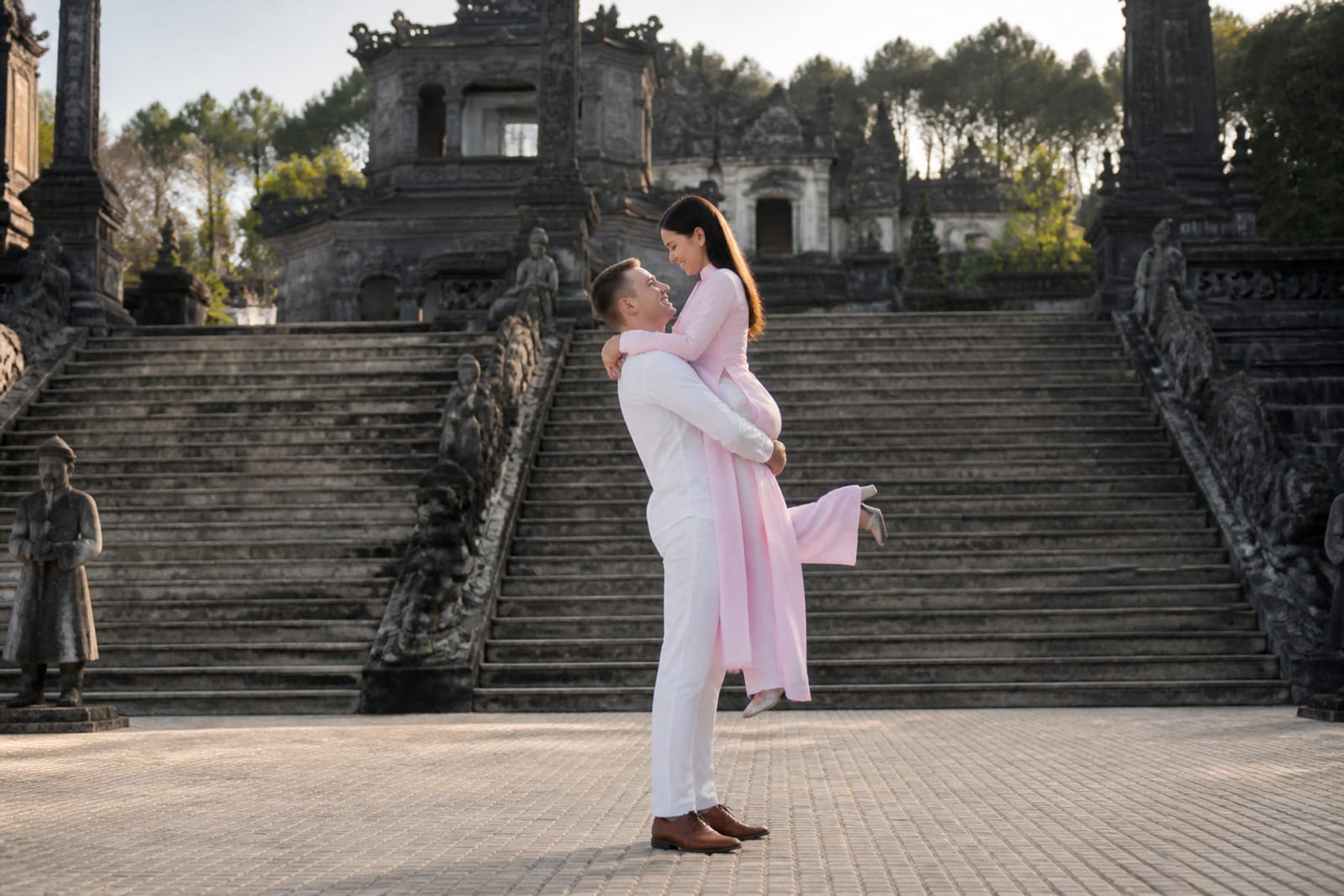
What months and weather conditions work best?
Hue sits on the central coast but has wetter winters than nearby Da Nang — it's best to shoot February through April, when skies are mostly clear and humidity is manageable. May–August is brutally hot and bright, creating squinting subjects and sweat-damaged makeup; June–September sees scattered afternoon showers. October–November is the heavy typhoon and flood season — pagoda access may close, and rain is unpredictable and heavy. December–January is cool and grey, with soft light but overcast skies; if you love moody, diffused tones, it works. Check Hue's extended weather forecast one week before, and have an indoor backup plan for the rainy season.
Which ao dai colors and styles suit the pagoda setting?
Ao dai fit and pagoda access: a comparison
| Ao dai style | Best for | Fit challenge | Why it matters |
|---|---|---|---|
| Fitted tunic, slim pants | Modern, sleek couples | Tower stairwell stairs (narrow) | Tight bodice restricts movement in tight spaces |
| Loose, flowing layers | Traditional, romantic frames | Humid fabric cling (May–Aug) | Fabric drapes beautifully in still morning air |
| Bold jewel tones (emerald, sapphire, gold) | Contrast against white plaster, greenery | Full sun (midday) washes out saturation | Shoot early morning or cloudy days for color pop |
| Soft pastels (blush, lavender, cream) | Ethereal, timeless look | Dirt and tile stains visible | Pagoda grounds are clean; pastels photograph cool-toned indoors |
| Red and orange (traditional) | Ceremonial, warm-toned | Oxygen absorption under trees | Stunning in backlighting; avoid midday glare |
Practical fit notes: The pagoda's central stairwell is narrow and uneven — avoid heavy layers or overly wide pants legs that catch on steps. Bare feet or light sandals are required indoors; bring slippers to change into after climbing. If wearing a tunic with a high slit, coordinate with your photographer to frame shots above the knee or plan shots in the courtyard only, not the tower interior.
📸 Book on WhatsApp — ao dai photoshoot
How do permits and pagoda permissions affect your shoot timeline?
Entry tickets are required for all visitors — check the current price and hours on the official Hue tourism site, as timings shift seasonally. Professional photography with tripods or reflectors often needs advance permission from the pagoda's administrative office; some days they require a small crew fee or restrict equipment in certain halls. Arrive 15 minutes early to clarify what's allowed; verbal permission at the gate is not binding — ask for written confirmation or a receipt. Weekend shoots (Friday–Sunday) attract more tourists and stricter enforcement; weekday early-morning sessions (Tuesday–Thursday, 6:30–8 a.m.) face fewer crowds and more flexible permissions.
Local photographer vs. travel vendor: who should you hire?
Local Hue photographers (based in the city, with portfolios on Instagram or local wedding sites) know current pagoda access rules, staff names and light patterns across seasons — invaluable if permits or access hours change. They typically charge by the hour and work in Vietnamese; communication may require a translator unless they speak English. Verify portfolio samples shot specifically at Thien Mu in the same month and time of day as your booking; generic "pagoda shots" don't prove they've navigated the site's challenges. Ask them directly: Have you shot here in [your month]? Do you have written permission or a standing arrangement with the pagoda office?
Travel vendors and studio chains (like Cáo Studio – Makeup & Photoshoot, which operates in Hanoi, Ho Chi Minh City and Hoi An only, not Hue) can coordinate with local freelance photographers in Hue, but the handoff introduces delays and communication gaps. If you choose a studio-coordinated shoot, confirm in writing who the actual photographer is, when they'll arrive and whether the studio guarantees access if the pagoda denies permission. Studios handle makeup and hair at your hotel (useful for early starts) but cannot promise on-site styling after travel.
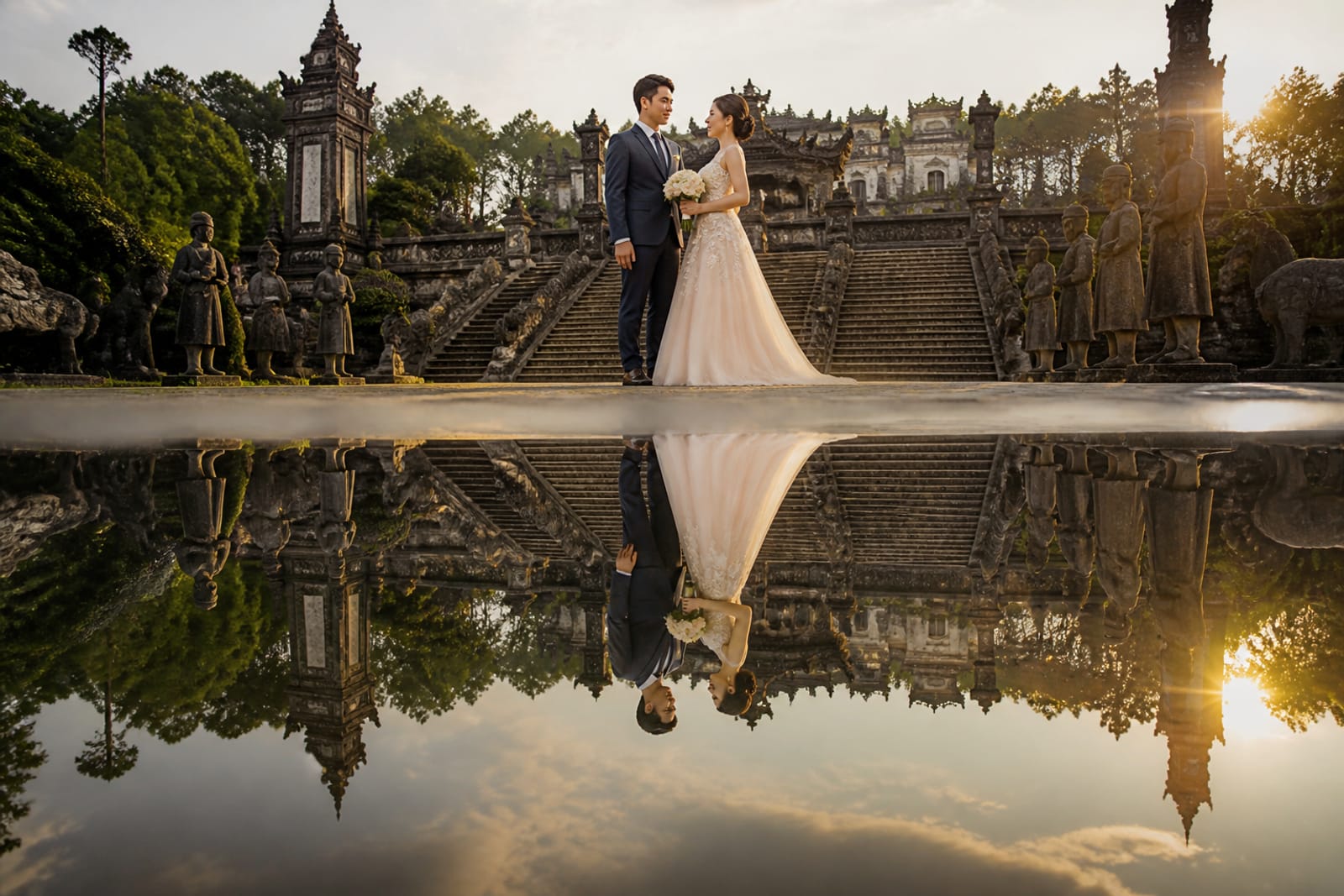
What outfit, timing and logistics checklist prevents common failures?
Pre-shoot checklist (2 weeks before)
- Confirm entry-ticket prices and pagoda opening hours on the official Hue tourism website.
- Contact the pagoda's office (phone or in-person) to ask if tripods or professional equipment need advance notice.
- Book your photographer and confirm they have current pagoda access — ask for a WhatsApp message with a photo of their permission or a past booking receipt.
- Check the extended weather forecast; if rain is forecast, agree on a backup indoor location (temple interior, hotel courtyard) with your photographer before the shoot day.
- If renting an ao dai, confirm the tailor has your measurements two weeks early and try it on 5 days before the shoot — report fit issues (seams, length, fabric stiffness) immediately.
- Schedule makeup and hair the morning of the shoot at your hotel (leave 90 minutes before first light); confirm your artist has the photographer's phone number in case traffic delays arrival.
On shoot day
- Arrive at the pagoda 20 minutes before the scheduled start; carry entry-ticket confirmations and photographer's contact details.
- Change into your ao dai in a quiet corner or vehicle (not the pagoda — it's disrespectful). Avoid sitting in ao dai for more than 10 minutes before photos; fabric creases easily.
- Let the photographer shoot the tower and courtyard first (light is best at the top of the hour); save garden and waterfront shots for when sun angles shift (every 30 minutes, light quality changes noticeably).
- Bring a small towel or blotting sheets for makeup touch-ups; humidity and perspiration accelerate meltdown in May–August.
Why book with a vetted local vs. an online stranger?
An Instagram profile or booking site alone doesn't prove a photographer has permitting experience at Thien Mu. Before paying any deposit, ask to video-call the photographer and discuss:
- Their last three shoots at the pagoda — month, time of day, outfit types, any access issues.
- Whether they have a written arrangement or standing permission with the pagoda office, or if they wing it on shoot day (high risk).
- What happens if the pagoda denies access on your shoot date — do they offer a refund, reschedule, or substitute location?
- How they handle weather pivots — do they have an indoor backup plan, or do they cancel?
- Their editing timeline — turnaround matters; if they promise quick files, ask how they avoid over-editing or color-grading mistakes.
If a photographer cannot answer these in detail, or defers to "we'll figure it out on the day," book someone else.
---
What to check before you book
- Photographer's pagoda portfolio: Request 3–5 images shot at Thien Mu in the same month and time of day as your booking. Generic "pagoda" or "temple" images don't prove site familiarity.
- Permission in writing: Ask if the photographer has a pagoda-office contact or a standing arrangement. If "I just ask when I arrive," plan extra time for on-site negotiation and be prepared to reschedule.
- Ao dai tailor lead time: Book rental or custom tailoring at least 4 weeks early; last-minute fits fail, and alterations take 7–10 days.
- Makeup artist's humidity experience: If shooting May–August, confirm your makeup artist uses waterproof products and has a touch-up kit; hotel AC doesn't always reach pagoda courtyards.
- Backup plan: Confirm the photographer's backup location (another temple, hotel interior, urban street) and whether a reschedule is free or incurs a rescheduling fee if weather cancels the original shoot.
- Turnaround and delivery: Agree on the number of edited files, delivery date and format (digital files, prints, album) in a signed contract or WhatsApp confirmation — verbal promises don't hold up if delays happen.
---
Want professional makeup and styling for your Hue shoot?
If you're booking a photographer based outside Hue (e.g., Cáo Studio from Hanoi or Ho Chi Minh City), coordinate makeup and hair at your hotel in advance to ensure the artist arrives before sunrise — this is essential for early-morning pagoda sessions. Most artists can match the photographer's arrival time and provide touch-ups between outfit changes.
Alternatively, find a local Hue makeup artist through Instagram or wedding directories; ask if they have experience with ao dai (heavy fabric and jeweled accessories demand different blending techniques) and humidity-resistant products.
---
For more inspiration and planning, browse our pre-wedding photoshoot guide, ao dai photoshoot samples and lookbook — they show session flow and styling ideas for temples and heritage sites.
---
FAQ
Do I need a permit to photograph at Thien Mu Pagoda?
Entry tickets are required for all visitors; professional tripods and equipment may need advance permission from the pagoda office. Arrive early to clarify with staff on the gate — some days permission is verbal, but weekends often require a crew fee or written approval. Check locally one week before.
What time of year has the clearest skies?
February through April offers mostly clear skies and manageable humidity — ideal for color saturation and soft light. May–August is hot and bright; October–November is the rainy season. Avoid dates within the week before or after Tet (Lunar New Year, late January–mid February), as the pagoda is crowded.
Can I wear a regular Western wedding dress instead of an ao dai?
Yes, but stairwells are narrow and uneven — full ball-gown trains catch on steps and are difficult to navigate. Slim, column or A-line silhouettes with minimal layers work better. The pagoda's marble floors are slippery; wear flats or soft-soled shoes, and plan most shots in the courtyard and gardens, not the tower interior.
How long does a typical pre-wedding shoot at Thien Mu take?
Allow 60–90 minutes on-site: 20–30 minutes for main-tower and courtyard shots, 20–30 for gardens and waterfront platforms, and buffer time for outfit changes or light-angle shifts. Start at sunrise to capture the best light before crowds arrive around 8 a.m.
What should I do if the weather turns rainy on my shoot day?
Agree on a backup location with your photographer before the shoot — typically a covered temple hall or indoor courtyard at a nearby hotel. If the pagoda is flooded (rare but possible in October–November), you'll need an alternative. Confirm your photographer's policy: is a reschedule free, or does it incur a fee?
Can Cáo Studio shoot my pre-wedding at Thien Mu?
Cáo Studio operates in Hanoi, Ho Chi Minh City and Hoi An only. For a Hue shoot, hire a local Hue-based photographer and coordinate makeup and hair through a local artist. Use this guide to vet photographers and confirm pagoda access before booking.
FAQ
Do I need a permit to photograph at Thien Mu Pagoda?
Entry tickets are required for all visitors; professional tripods and equipment may need advance permission from the pagoda office. Arrive early to clarify with staff on the gate — some days permission is verbal, but weekends often require a crew fee or written approval. Check locally one week before.
What time of year has the clearest skies?
February through April offers mostly clear skies and manageable humidity — ideal for color saturation and soft light. May–August is hot and bright; October–November is the rainy season. Avoid dates within the week before or after Tet (Lunar New Year, late January–mid February), as the pagoda is crowded.
Can I wear a regular Western wedding dress instead of an ao dai?
Yes, but stairwells are narrow and uneven — full ball-gown trains catch on steps and are difficult to navigate. Slim, column or A-line silhouettes with minimal layers work better. The pagoda's marble floors are slippery; wear flats or soft-soled shoes, and plan most shots in the courtyard and gardens, not the tower interior.
How long does a typical pre-wedding shoot at Thien Mu take?
Allow 60–90 minutes on-site: 20–30 minutes for main-tower and courtyard shots, 20–30 for gardens and waterfront platforms, and buffer time for outfit changes or light-angle shifts. Start at sunrise to capture the best light before crowds arrive around 8 a.m.
What should I do if the weather turns rainy on my shoot day?
Agree on a backup location with your photographer before the shoot — typically a covered temple hall or indoor courtyard at a nearby hotel. If the pagoda is flooded (rare but possible in October–November), you'll need an alternative. Confirm your photographer's policy: is a reschedule free, or does it incur a fee?
Can Cáo Studio shoot my pre-wedding at Thien Mu?
Cáo Studio operates in Hanoi, Ho Chi Minh City and Hoi An only. For a Hue shoot, hire a local Hue-based photographer and coordinate makeup and hair through a local artist. Use this guide to vet photographers and confirm pagoda access before booking.
Ao dai, makeup, hair and a local photographer in Hanoi or Saigon — one WhatsApp message.