/pre-wedding-photoshoot
Pre-wedding photoshoot at Tra Que vegetable village, Hoi An: complete
Tra Que vegetable village, a 3km northeast of Hoi An Ancient Town, is a working organic farm where pre-wedding shoots thrive in early morning light (5:30–7:30 a.m.). Couples walk between raised beds, sit with farmers, and wear áo dài or casual Western dress against soft, misty backdrops. Sessions typically run 90–120 minutes on-site; many combine it with other Hoi An locations (rice fields, temples, the Ancient Town itself). Best months are February–April (cool, dry, green growth) and May–August (dry but very hot—dawn shoots essential). October–November brings typhoon flooding that can make fields muddy or inaccessible. Cáo Studio – Makeup & Photoshoot offers pre-wedding shoots in Hoi An by appointment (the team travels from Hanoi or Saigon); for independent bookings, hire a local Hoi An-based photographer who knows farm access, lighting, and logistics. Avoid midday; mud after rain; and heavy áo dài fabric in heat—these are the most common regrets. ---
What makes Tra Que the right pre-wedding backdrop?
Tra Que works because it is real. Farmers are genuinely there at 5:30 a.m., tending seedlings and watering rows—not staged. The scale is intimate: narrow pathways, human proportions, organic textures. Most pre-wedding locations in Hoi An are tourist attractions (temples, the Ancient Town, rice paddies); Tra Que is a working village where outsiders are novelties. This authenticity shows in photographs: soft morning light, genuine community presence, and unpredictable (but often stunning) moments. The downside is logistics—you cannot "pop in" at 2 p.m.; the farm is busiest and most photogenic between 5:30 and 7:30 a.m. You also need to respectfully negotiate with farmers, understand weather hazards, and choose outfits suited to narrow, sometimes muddy ground.
---
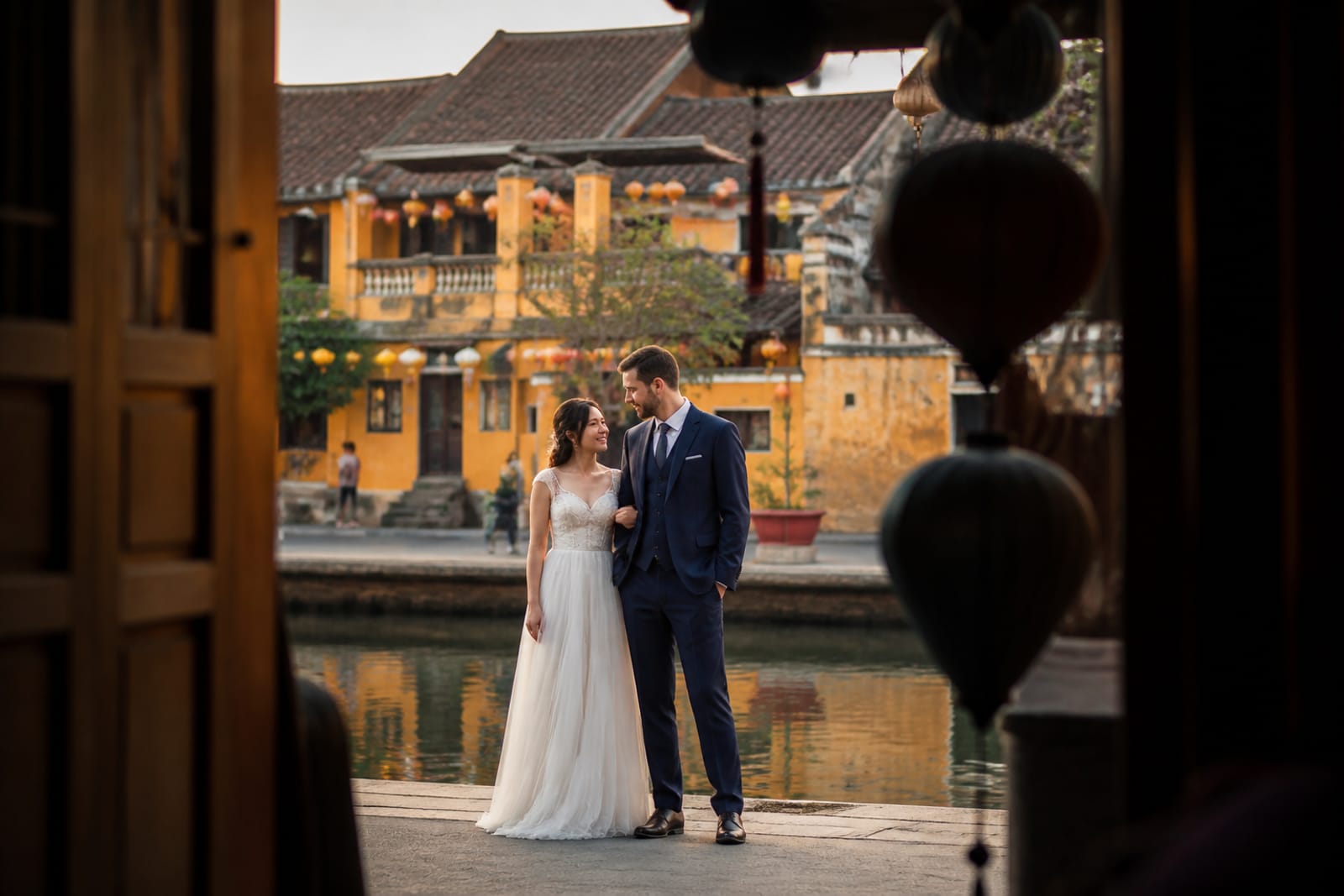
When is the best season to shoot at Tra Que?
| Season | Light & Weather | Outfit Fit | Why It Works (or Doesn't) |
|---|---|---|---|
| Feb–Apr | Cool, dry, mist at sunrise; mild daytime temps | Áo dài layering ideal; Western dress comfortable | Lush green growth; soft light; longest comfortable shooting window; no typhoon risk |
| May–Aug | Dry, very hot (35°C+) by 7:30 a.m.; intense noon sun | Áo dài heavy; Western fabrics cling; mud dry but dusty | Dramatic light before 6 a.m.; risk of overheating; few clouds for softness; shorts/sleeveless better than formal wear |
| Sep–Dec | Rainy, typhoons Sep–Dec (worst Oct–Nov); wet soil | Áo dài hem drags in mud; shoes slip; fabric waterlogged | Flooding in Oct–Nov makes pathways unsafe; fields often submerged; Dec–Jan drizzly but clearer; avoid Oct–Nov entirely |
Verdict: February–April is the professional choice. May–August demands a 5:30 a.m. start, light outfits, and acceptance of heat. September–December: avoid October–November; December–January is cool and sometimes dry, but cloudy. Plan 18+ months ahead if you want Feb–Apr dates (peak season fills fast).
---
How do you avoid mud, outfit damage, and access delays?
Pre-wedding couples often arrive expecting photo-ready conditions and leave with muddy áo dài hems and regrets. Here's what actually happens on the ground:
Before arrival:
- Check the 5-day weather forecast 2 weeks prior; if heavy rain is forecast, shift the date or shorten the Tra Que portion.
- Confirm farm access with your photographer at least 1 week ahead (weather, farmer schedules, and farm maintenance can change).
- If wearing an áo dài, bring a protective slip or ask your stylist whether a lightweight underdress is feasible—mud splatters are permanent on silk.
On the morning:
- Arrive at the farm entrance (not the Ancient Town) at 5:15 a.m.; the team will be there or shortly after. Delays past 5:45 a.m. lose soft light and increase heat.
- Wear closed shoes with grip (áo dài can be paired with practical sneakers; they will be out of frame or easily edited). Open sandals slip on wet soil.
- Agree with your photographer which pathways are walkable; after rain, some beds are off-limits. This is not negotiable—you're guests on a farm.
- Bring a small towel or cloth to dry hands and shoes between outfit changes if switching from muddy paths to pristine fabric.
During the shoot:
- Limit changes of outfits at Tra Que itself to one or two (carrying garment bags on muddy ground is impractical). Reserve outfit transitions for the next location (temples, rice fields, or the Ancient Town where you can change indoors).
- Sit or pose deliberately on designated clean spots. Candid walking shots are stunning, but avoid sprinting across beds or leaning on irrigation channels.
- Work with your photographer on timing: if you want a shot of farmers working naturally, arrive when they're there (usually 5:30–6:30 a.m.); by 7:00–7:30 a.m., many have moved to other sections or finished.
After: Request edits to remove mud splashes from fabric (most photographers include this), but manage expectations—heavy mud contact may need re-shooting or creative cropping.
---
Should you book Tra Que as a standalone shoot or combine it with other Hoi An locations?
Tra Que alone fills 90–120 minutes of actual shooting time—dawn light, outfit changes, and interaction with the farm. Standalone sessions work for couples who want depth: multiple outfits, varied poses with farmers, sunrise to early morning progression. Many photographers offer this as a standalone package.
But most couples combine Tra Que with other Hoi An locations—and this is smarter:
- Tra Que + rice fields (10 minutes away): Shoot the farm at dawn, then move to nearby rice paddies by 7:00 a.m. while light is soft and paddies are mist-covered. Change into a second outfit at a roadside stop or café. This adds texture and variety without extra travel time.
- Tra Que + Ancient Town (in-town locations like the Japanese Bridge, lantern shops, or temple courtyards): Finish the farm shoot by 7:30 a.m., return for breakfast and outfit change (2 hours), then shoot the Ancient Town from 10:00 a.m.–noon (different aesthetic: crowds, architecture, lanterns). Requires a longer day (8 a.m.–1:00 p.m.) but covers two distinct narratives.
- Full-day itinerary (Tra Que + rice fields + Ancient Town + somewhere else): Popular for couples willing to commit 10+ hours and multiple outfit/makeup changes. Logistics are complex—you'll move by van or motorcycle between sites, and fatigue can show in later photos.
Decision framework:
- Tra Que only: You want intimate, agricultural depth; you have 2–3 outfits; half-day is your preference.
- Tra Que + rice fields: You want visual variety but minimal travel; you want soft light throughout; a full morning (3–4 hours) works.
- Full day (Tra Que + Ancient Town + rice fields): You're willing to manage outfit/makeup logistics; you want maximum editorial coverage; a professional, experienced photographer is essential.
Cáo Studio – Makeup & Photoshoot offers pre-wedding shoots tailored to your choice—ask on WhatsApp about multi-location itineraries for Hoi An.
📸 Book on WhatsApp — pre-wedding photoshoot
---
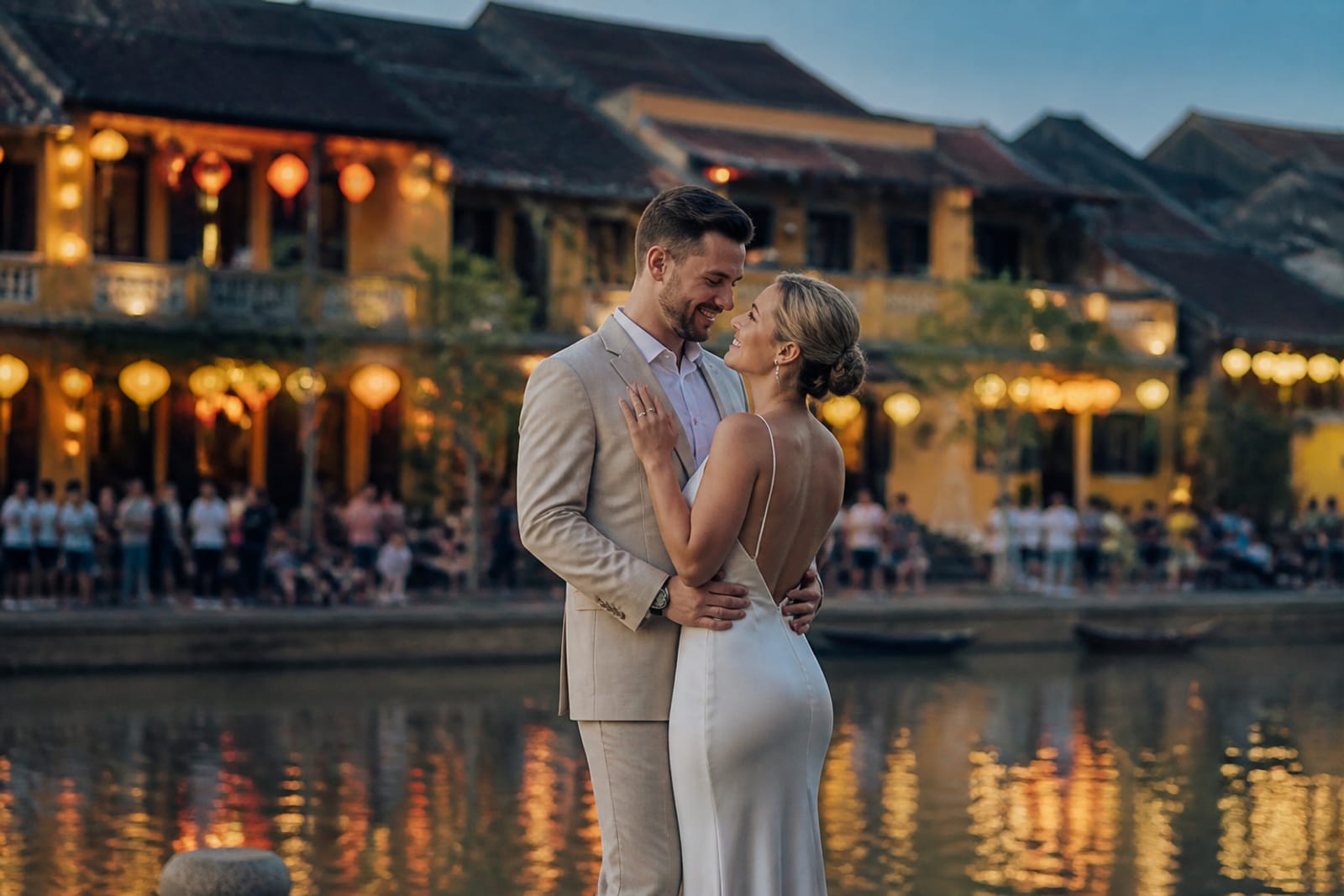
How do you hire the right photographer for Tra Que?
Tra Que is farmland, not a managed tourist site. A Hanoi or Saigon studio sending a photographer who has never worked at the village will struggle with access, timing, and light management. Here's what to evaluate:
Local knowledge (non-negotiable):
- Has the photographer shot at Tra Que before? Ask for a portfolio showing at least 3 sessions from different seasons. Lighting, outfit condition, and farmer interaction matter.
- Do they know the farm entrance, which pathways are safe year-round, and whether to ask permission before approaching farmers? This is learned through repeated visits, not research.
- Are they aware of October–November flooding and May–August heat constraints? A photographer who books Tra Que in November without mentioning typhoon risk is not ready.
Equipment and logistics:
- Can they arrive by 5:00 a.m.? Travel to Hoi An from Hanoi takes 14+ hours by car. From Da Nang (1.5 hours away) or locally, it's feasible. If your photographer is based elsewhere, confirm arrival timing a week before.
- Do they have backup lighting or reflectors for overcast dawn conditions? Natural light at Tra Que is soft but sometimes dim; a professional brings tools.
- Can they handle a van or motorcycle to transport you and outfits? Muddy pathways are not stroller-friendly.
Communication and boundaries:
- Do they explain what to wear and why? A good photographer advises on fabric weight, footwear, and layers—not just aesthetics.
- Are they experienced negotiating with farmers? Tra Que is a private, working village. A photographer who has built relationships will secure better access and etiquette.
- Do they offer a timeline before the shoot (5:30–7:30 a.m., then where?) and a bad-weather alternative?
Cáo Studio approach: Cáo Studio – Makeup & Photoshoot books pre-wedding shoots in Hoi An by appointment; the team travels from Hanoi or Saigon. On WhatsApp, specify Tra Que and ask about their Hoi An logistics, local partnerships, and what seasons they recommend. They'll give you honest constraints (travel time, weather, outfit planning) rather than sell a perfect day that doesn't exist.
---
What to check before you book a Tra Que pre-wedding shoot
- Season and weather: If you want Tra Que, book February–April. If your wedding date is outside this window (especially October–November), ask your photographer whether shifting the pre-wedding to a different location is wiser.
- Outfit practicality: Will you wear an áo dài? If yes, confirm with your photographer whether it's practical for the terrain (or whether a lightweight, shorter version is better). Bring a backup pair of shoes.
- Photography experience at Tra Que: Ask for a portfolio from the same location. Generic "Hoi An pre-wedding" photos might not show Tra Que's specific logistics or light.
- Travel and timing: Confirm the photographer can arrive by 5:00–5:15 a.m. and that they've planned the dawn-to-midday timeline (Tra Que, then next location, then return).
- Inclusions and editing: Clarify what is included—outfit changes, makeup on-site, number of edited photos, and delivery timeline. These vary by photographer and package.
- Contingency plan: If weather forces a cancellation, what happens? Can you reschedule, or do you lose the booking? Ask upfront.
- Cost factors (not amounts): Travel to Hoi An, pre-dawn arrival, on-site styling, and multi-location itineraries all affect pricing. Confirm what drives your quote before you commit.
---
Combining Tra Que with broader pre-wedding planning
A Tra Que shoot is one chapter of your pre-wedding story. Many couples also book:
- Ao dai photoshoot: A dedicated session in traditional dress, often in a studio or cultural setting. Tra Que uses áo dài in a working landscape; a studio shoot emphasizes the garment and heritage.
- Couple photoshoot: A general pre-wedding or engagement session at landmarks, outdoors, or lifestyle settings. Tra Que is a specialized subset of this.
- Proposal & anniversary package: If you're planning an anniversary re-shoot or a surprise photoshoot at Tra Que, explore this option.
- Makeup & hair at your hotel: Professional styling on-site before the farm shoot ensures you're camera-ready at 5:30 a.m. Essential for early morning light.
See the lookbook for real Hoi An pre-wedding shoots and inspiration.
---
Pre-wedding shoots elsewhere in Hoi An (if Tra Que doesn't fit)
If Tra Que doesn't align with your season or logistics, Hoi An offers alternatives:
- Rice fields (Cam Thanh or nearby): Green year-round except during harvest. Similar dawn light to Tra Que, less navigational complexity (wider, drier paths). Works well May–August when Tra Que is too hot.
- Hoi An Ancient Town (temples, Japanese Bridge, lantern shops): Pedestrian, crowded by mid-morning, but stunning architecture and lanterns at dusk. Best photographed 5:30–7:00 a.m. or 5:30–7:00 p.m. Works any season (avoid Oct–Nov flooding in low-lying areas).
- Thanh Ha pottery village (15 minutes west): A quieter, less-traveled village with clay kilns and artisans. Fewer crowds than Ancient Town, warm earth tones, early light ideal. Less muddy than Tra Que.
- Cam Thanh coconut village (motorboat): Kayak through mangrove channels at dawn or dusk. Requires water-appropriate outfits and confidence on boats. Dramatic, moody light.
Each works best in specific seasons and suits different aesthetics. Discuss with your photographer which aligns with your vision and wedding date.
📸 Book on WhatsApp — pre-wedding photoshoot
---
FAQ
Do I need permission to shoot at Tra Que vegetable village?
Yes. Tra Que is a private, working farm, not a public tourist site. A reputable local photographer has permission and relationships with farmers. Do not arrive unannounced with a camera crew. Always confirm access 1 week before your shoot.
Is an áo dài practical to wear at Tra Que?
Yes, but plan carefully. An áo dài's long hem and silk fabric are at risk on muddy paths. Wear a lightweight underdress, bring a protective slip, and choose closed shoes with grip. Confirm with your photographer that the outfit works for the terrain. Many couples change into áo dài after the farm portion.
What time of year is Tra Que safest and most beautiful?
February–April is ideal: cool, dry, lush green growth, and soft light. May–August is dry but very hot; arrive by 5:30 a.m. or risk heat and harsh light. Avoid October–November (typhoons and flooding). December–January is cool but often cloudy and drizzly.
Can I do a full pre-wedding day (multiple locations) starting at Tra Que?
Yes. Typical itinerary: Tra Que 5:30–7:30 a.m., rice fields 7:30–9:00 a.m., breakfast and outfit change 9:00–10:30 a.m., Ancient Town 10:30 a.m.–1:00 p.m. Requires coordination, multiple outfits, and professional logistics. Confirm your photographer can manage the timeline.
What should I wear under an áo dài at Tra Que?
A lightweight slip (white or neutral) that blocks transparency and protects the outer fabric from mud and sweat. Avoid heavy undergarments in hot months. Wear closed, non-slip shoes (sneakers edit out easily; open sandals slip on wet soil). Ask your photographer or stylist for outfit-specific advice.
How far is Tra Que from Hoi An Ancient Town?
About 3km (roughly 10–15 minutes by van or motorcycle). It is north of the town center, accessible via Cua Dai Road. Allow extra travel time if you're combining Tra Que with other Hoi An locations.
What happens if it rains the morning of my shoot?
Tra Que becomes muddy and sometimes flooded. Confirm a weather contingency plan with your photographer before booking: Do you reschedule, shift to an indoor location, or proceed with a shorter session? Early decision saves stress on shoot day.
Does Cáo Studio – Makeup & Photoshoot shoot at Tra Que?
Yes, Cáo Studio – Makeup & Photoshoot offers pre-wedding shoots in Hoi An by appointment; the team travels from Hanoi or Saigon. Contact them on WhatsApp +84 338 762 340 to discuss Tra Que availability, seasonal timing, and multi-location options. Ask about makeup & hair styling on-site.
FAQ
Do I need permission to shoot at Tra Que vegetable village?
Yes. Tra Que is a private, working farm, not a public tourist site. A reputable local photographer has permission and relationships with farmers. Do not arrive unannounced with a camera crew. Always confirm access 1 week before your shoot.
Is an áo dài practical to wear at Tra Que?
Yes, but plan carefully. An áo dài's long hem and silk fabric are at risk on muddy paths. Wear a lightweight underdress, bring a protective slip, and choose closed shoes with grip. Confirm with your photographer that the outfit works for the terrain. Many couples change into áo dài after the farm portion.
What time of year is Tra Que safest and most beautiful?
February–April is ideal: cool, dry, lush green growth, and soft light. May–August is dry but very hot; arrive by 5:30 a.m. or risk heat and harsh light. Avoid October–November (typhoons and flooding). December–January is cool but often cloudy and drizzly.
Can I do a full pre-wedding day (multiple locations) starting at Tra Que?
Yes. Typical itinerary: Tra Que 5:30–7:30 a.m., rice fields 7:30–9:00 a.m., breakfast and outfit change 9:00–10:30 a.m., Ancient Town 10:30 a.m.–1:00 p.m. Requires coordination, multiple outfits, and professional logistics. Confirm your photographer can manage the timeline.
What should I wear under an áo dài at Tra Que?
A lightweight slip (white or neutral) that blocks transparency and protects the outer fabric from mud and sweat. Avoid heavy undergarments in hot months. Wear closed, non-slip shoes (sneakers edit out easily; open sandals slip on wet soil). Ask your photographer or stylist for outfit-specific advice.
How far is Tra Que from Hoi An Ancient Town?
About 3km (roughly 10–15 minutes by van or motorcycle). It is north of the town center, accessible via Cua Dai Road. Allow extra travel time if you're combining Tra Que with other Hoi An locations.
What happens if it rains the morning of my shoot?
Tra Que becomes muddy and sometimes flooded. Confirm a weather contingency plan with your photographer before booking: Do you reschedule, shift to an indoor location, or proceed with a shorter session? Early decision saves stress on shoot day.
Does Cáo Studio – Makeup & Photoshoot shoot at Tra Que?
Yes, Cáo Studio – Makeup & Photoshoot offers pre-wedding shoots in Hoi An by appointment; the team travels from Hanoi or Saigon. Contact them on WhatsApp +84 338 762 340 to discuss Tra Que availability, seasonal timing, and multi-location options. Ask about makeup & hair styling on-site.
Ao dai, makeup, hair and a local photographer in Hanoi or Saigon — one WhatsApp message.