/pre-wedding-photoshoot
Pre-wedding photoshoot at Tran Quoc Pagoda, Hanoi: complete guide
Tran Quoc Pagoda, on an islet in West Lake (Tay Ho), is Hanoi's oldest temple and a top pre-wedding photoshoot location for its minimalist waterfront views, red-brick walls, and golden hour light reflecting off the lake. A typical session lasts 2–3 hours, running from late afternoon to dusk to catch the best natural light. Cáo Studio – Makeup & Photoshoot books shoots here year-round, coordinating with temple authorities and timing shoots to avoid peak tourist hours (mid-morning to early afternoon). Key considerations: pagoda etiquette requires modest dress and respectful behavior; ao dai often photographs best in autumn (Oct–Nov) when light is softest; you'll need a local photographer familiar with temple access rules and light angles. Booking early and confirming permit requirements with your team avoids last-minute cancellations.
Tran Quoc Pagoda sits on a narrow peninsula jutting into West Lake, its cream-colored stupas and dark timber framing reflected in still water during late afternoon. The pagoda dates to the 6th century, making it one of Vietnam's oldest temples, and its compound feels intimate despite Hanoi's urban sprawl nearby. For pre-wedding couples, the appeal is twofold: the architectural geometry of red walls and archways photographs sharp in soft light, and the water backdrop creates natural depth without crowds if you shoot in the right window—typically after 4 p.m. when tour groups leave.
The biggest misconception is that you can show up anytime. Tran Quoc is an active place of worship, and photographers must respect prayer schedules and visitor flow. A professional team like Cáo Studio coordinates timing with temple staff, ensuring you're not shooting during ceremonies and that your ae dai isn't flagged as disrespectful (sleeveless or transparent fabrics cause friction). This coordination is the difference between a rushed, cramped session and one where you move freely across the pagoda's stone walkways and gardens.
When should you book a Tran Quoc Pagoda pre-wedding shoot?
Hanoi's light and weather shift dramatically across seasons. Autumn (Oct–Nov) delivers the most consistent results: dry, mild air (about 20–25°C), soft directional light that wraps around the pagoda's curves, and minimal haze. Spring (Mar–Apr) is mild but humid with frequent overcast skies and drizzle, which diffuses light but can leave you wet and cold during outfit changes. Summer (May–Sep) is hot, very humid, and prone to sudden downpours; afternoon light is harsh and flat, requiring shade work or golden-hour-only timing. Winter (Dec–Feb) is cool (10–20°C) and often grey, but on clear mornings, the low-angle sun creates dramatic shadows across the temple walls. Book at least 4–6 weeks ahead so your team can reserve the optimal time slot and confirm light-friendly dates; last-minute bookings risk off-peak hours or weather conflicts.
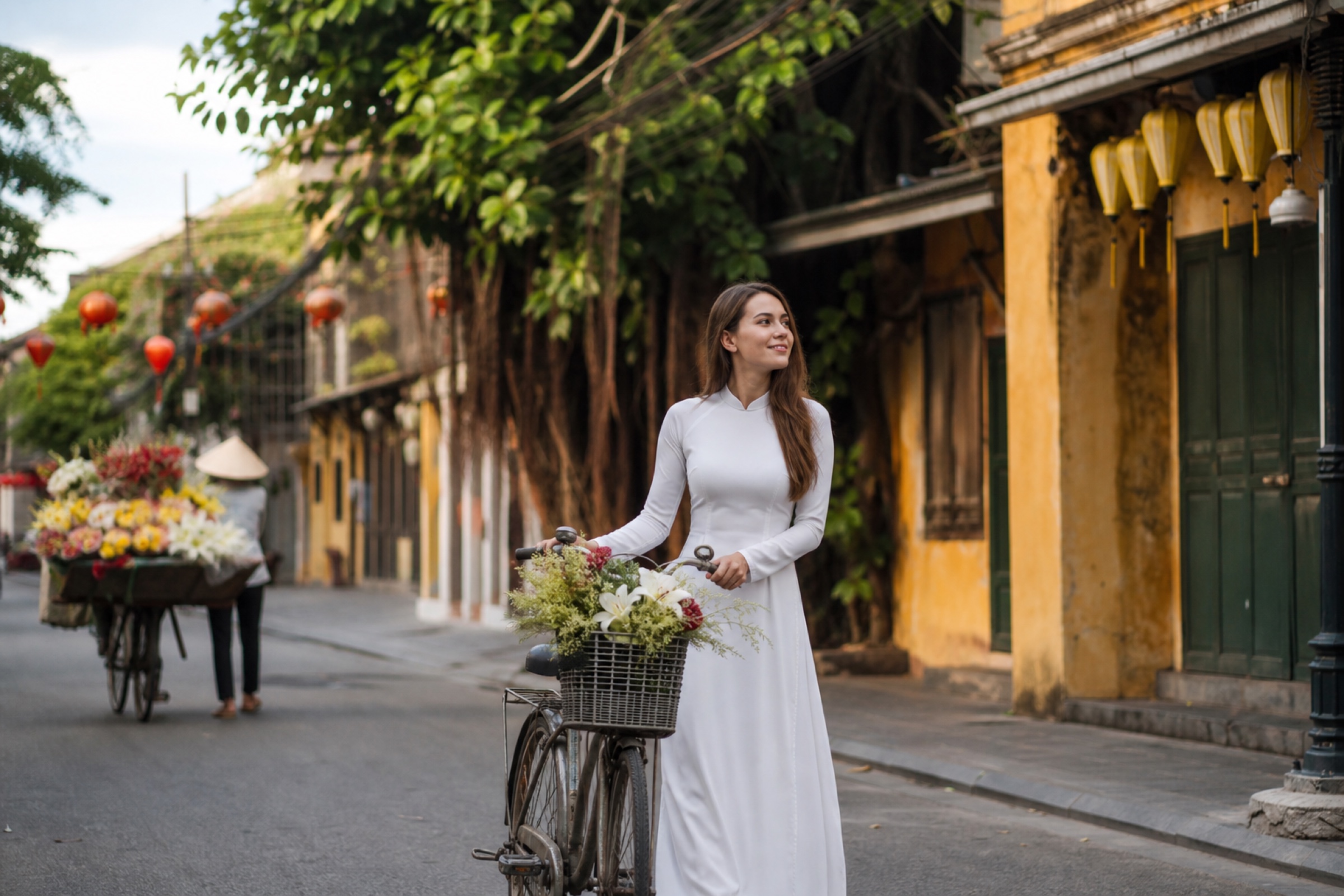
What should you wear under and with your ao dai?
An ao dai's silhouette relies on precise layering. Under the outer layer, wear a fitted long-sleeved áo lót (inner tunic) in white or a shade matching your skin tone—this prevents transparency and adds structure. The outer áo dal must be tailored snugly through the bodice and shoulders; loose fabric reads as costume in photos rather than custom garment. For pre-wedding shoots, opt for jewel tones (emerald, sapphire, burgundy) or pastels (blush, ivory, pale gold) that photograph richer than neon or washed-out shades. Pair the ao dai with high-waisted, full-length silk trousers (quan) in a complementary neutral—black, white, navy, or champagne. At Tran Quoc, avoid ao dai with heavy metallic beading or sequins; they reflect light unevenly and read as "event wear" rather than timeless. Simple embroidery on the sleeves or hem photographs better. If you're shooting couple portraits, coordinate colors by tone (both jewel, both pastel) rather than matching; this reads as intentional, not costume-y. Cáo Studio's makeup team can advise on fabric choices and tailor timing to your ao dai's fit during the booking call.
📸 Book on WhatsApp — ao dai photoshoot | 💄 Makeup & hair at your hotel | 🌸 See the lookbook
How does light and timing differ from other Hanoi pre-wedding spots?
| Spot | Best for | Light peak | Why it works for pre-wedding |
|---|---|---|---|
| Tran Quoc Pagoda | Intimate, architectural, water reflections | 4:30–6:30 p.m. (autumn/winter); 5:00–6:45 p.m. (spring/summer) | Low angle light, minimal crowds, temple geometry, natural framing |
| Hoan Kiem Lake (north shore) | Open-air, urban, busy energy | 6:00–7:00 p.m. (all year) | Tourist backdrop, flexibility, no access restrictions; busier than Tran Quoc |
| Old Quarter (Phan Dinh Phung) | Street-level, candid, autumn foliage | 4:00–5:30 p.m. (Oct–Nov only) | Seasonal leaf canopy, narrow framing, traffic noise mid-shoot |
| Thay Pagoda (Son Tay day trip) | Nature-centric, fewer tourists | 3:00–5:00 p.m. (spring/autumn) | Mountain backdrop, longer travel, 1+ hour from Hanoi center |
| French Quarter (colonial villas) | Vintage, garden-focused | 5:00–6:30 p.m. (autumn best) | Softer architecture, manicured settings, no water, requires villa permission |
Tran Quoc's edge is its water—reflections double the depth of the frame, and the open islet prevents cramped sightlines. Hoan Kiem is busier and less architecturally intimate. Autumn leaf cover at Old Quarter is stunning but only works Oct–Nov; Tran Quoc works year-round if you plan for season-specific light. For couples prioritizing a serene, photo-focused environment over sightseeing flexibility, Tran Quoc wins.
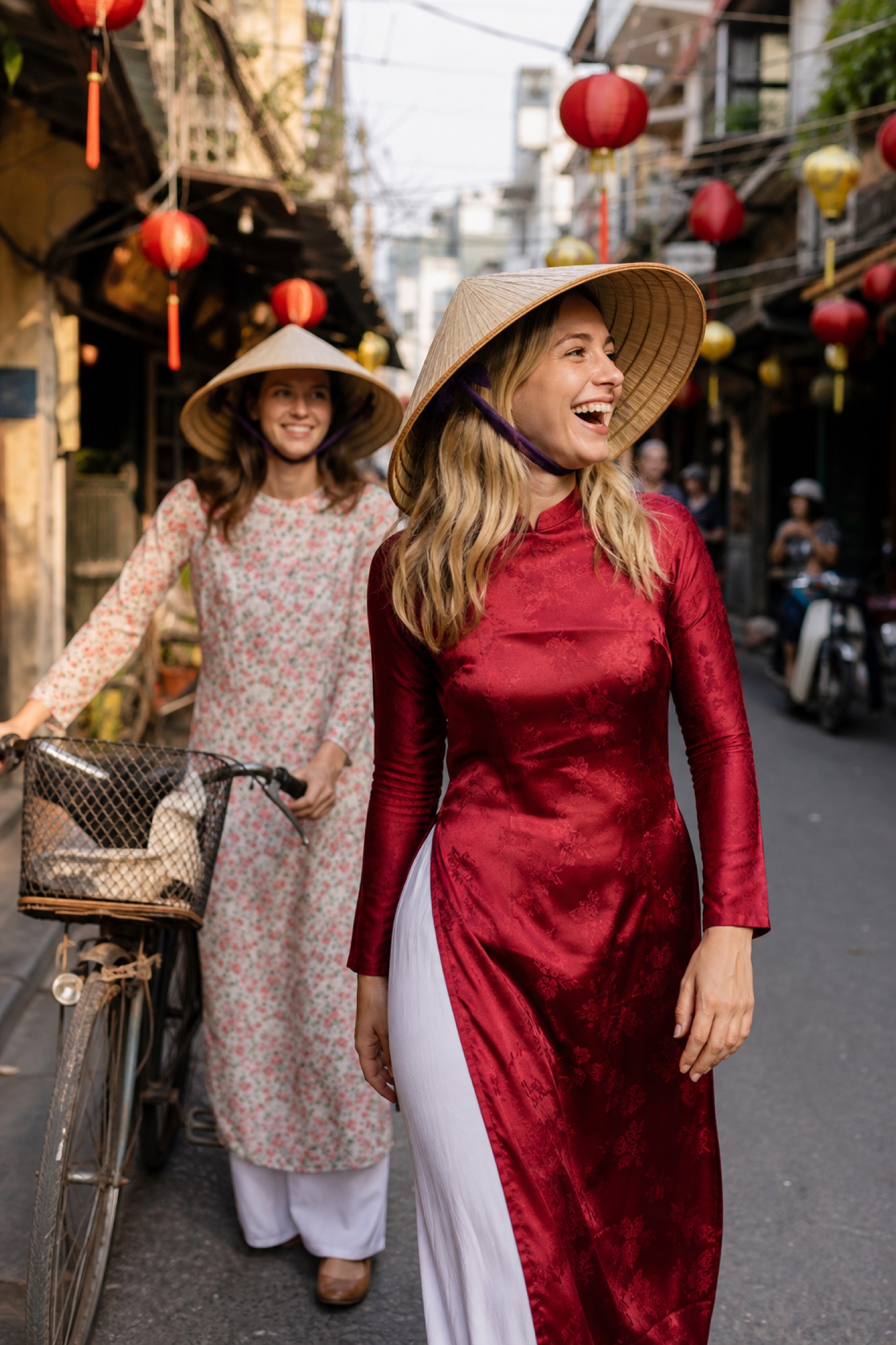
What permits and etiquette rules do you need to know?
Tran Quoc Pagoda is a working Buddhist temple, not a photo park. Photography for personal use is allowed, but commercial shoots (pre-wedding, engagement, any professional hire) require advance coordination with temple management. A professional photography team like Cáo Studio handles this—they have relationships with pagoda staff, know fee structures, and confirm access 1–2 weeks before your shoot date. You should expect that your team will contact the temple, confirm a narrow time window (usually 1.5–2 hours), and ensure all participants dress modestly: knees and shoulders covered, no see-through fabrics, no excessive jewelry. During your session, bow respectfully when entering prayer halls, don't touch altars or Buddha statues, and avoid loud music or shrill laughter near worshipers. If monks are present, let them pass without blocking paths. These rules aren't bureaucratic friction—they're respect for a sacred space, and following them unlocks the pagoda's best light and access. Teams that ignore permits often get shut down mid-shoot, losing time and money.
Should you hire a local team or shoot solo?
| Option | Best if | Pros | Cons |
|---|---|---|---|
| Local studio (Cáo Studio) | First visit, non-negotiable image quality, peace of mind | Access permits, timing expertise, backup equipment, ao dai styling advice, English-speaking coordination | Higher cost; less spontaneity; pre-booked time slots |
| Solo or friend photographer | Budget-tight, exploring casually, no ao dai wear | Lower cost; total creative freedom; flexible timing | No permit coordination; light/composition errors; ao dai styling gaps; access conflicts with temple |
| Hybrid (studio for portraits, self-guide for casual shots) | Want both polish and candid moments | Professional backdrops + personal exploration | Requires two time blocks; more logistics; uneven image quality |
Tran Quoc is too permit-restricted and light-dependent for amateur solo shoots. A professional local studio absorbs the logistical stress, coordinates with temple management, positions you for optimal light, and ensures your ao dai photographs correctly. If budget is tight, Cáo Studio's couple & family photoshoots offer packages tailored to pre-wedding couples—ask on WhatsApp for inclusions and what factors affect cost (season, outfit count, time of day). Solo adventuring at Tran Quoc risks wasting peak light on permit confusion or missed composition angles.
What should you check before booking your shoot?
Your decision checklist:
- Season match: Do you want soft autumn light (Oct–Nov) or are you flexible year-round? Winter grey skies suit black and white; spring/summer require overcast timing. Ask your team which month suits your ao dai color.
- Ao dai status: Do you own the garment, need rental, or want styling advice? Confirm whether your team offers ao dai rental or makeup + styling at your hotel beforehand—it affects logistics and timing.
- Couple or solo: Pre-wedding typically means both partners, but engagement couples or solo bride-to-be shoots are also booked. Clarify group size so the team reserves the right time window (duo shoots are quicker than family groups).
- Permit coordination: Confirm your team will handle temple coordination—ask directly, "Will you confirm access with Tran Quoc Pagoda management on our behalf?" A vague answer is a red flag.
- Light preferences: Do you want golden-hour sunset (4:30–6:30 p.m.), soft afternoon (3:00–4:00 p.m.), or twilight (after sunset)? Light color shifts the mood; confirm this with your photographer during the booking call.
- Backup date: Hanoi's rain and temple scheduling conflicts happen. Ask your team if weather or permit issues allow reschedule at no extra cost, and what notice they need.
- Delivery timeline: Image editing and file delivery times vary. Ask how long until you receive edited photos and in what format (digital files, prints, album—confirm what your package includes on WhatsApp).
Contact Cáo Studio – Makeup & Photoshoot on WhatsApp to discuss Tran Quoc Pagoda timing, ao dai prep, and cost factors—no quote is final until you confirm season, outfit count, and shoot duration. For broader context on pre-wedding photoshoots in Hanoi, explore timing by month, venue options, and how to prepare.
---
FAQ
Do I need permission to shoot pre-wedding photos at Tran Quoc Pagoda?
Yes. Commercial photography requires advance coordination with temple management. A professional local team like Cáo Studio handles this; amateur/solo shoots risk access denial. Always book through a photographer who has existing relationships with the pagoda.
What's the best month to shoot at Tran Quoc Pagoda?
Autumn (Oct–Nov) offers the softest light and most stable weather. Spring (Mar–Apr) is mild but often hazy; summer (May–Sep) is too hot with harsh light; winter (Dec–Feb) is cool but frequently grey. Any season works with the right timing; confirm with your photographer.
How long does a typical pre-wedding shoot at Tran Quoc Pagoda take?
2–3 hours, typically starting around 3:30–4:00 p.m. to capture golden hour and early dusk light. The exact duration depends on outfit changes, pose variety, and whether you're booking a couple or group session—ask your team during booking.
Can I wear an ao dai that's not traditional Vietnamese style?
Modern or fusion ao dai work, but avoid sleeveless, sheer, or heavily sequined versions—temples flag these as disrespectful. Stick to classic silhouettes in jewel tones or soft pastels with long sleeves and high necklines.
What if it rains on my shoot date?
Confirm your team's rain policy before booking—some offer rescheduling at no extra cost, others charge a rebooking fee. Soft drizzle can work (it creates mood), but heavy rain risks safety and image quality. Ask your photographer directly.
How much does a Tran Quoc Pagoda pre-wedding shoot cost?
Cost depends on season, number of outfits, time of day, and whether you need makeup, ao dai rental, or additional services. Contact Cáo Studio on WhatsApp for a quote tailored to your needs.
FAQ
Do I need permission to shoot pre-wedding photos at Tran Quoc Pagoda?
Yes. Commercial photography requires advance coordination with temple management. A professional local team like Cáo Studio handles this; amateur/solo shoots risk access denial. Always book through a photographer who has existing relationships with the pagoda.
What's the best month to shoot at Tran Quoc Pagoda?
Autumn (Oct–Nov) offers the softest light and most stable weather. Spring (Mar–Apr) is mild but often hazy; summer (May–Sep) is too hot with harsh light; winter (Dec–Feb) is cool but frequently grey. Any season works with the right timing; confirm with your photographer.
How long does a typical pre-wedding shoot at Tran Quoc Pagoda take?
2–3 hours, typically starting around 3:30–4:00 p.m. to capture golden hour and early dusk light. The exact duration depends on outfit changes, pose variety, and whether you're booking a couple or group session—ask your team during booking.
Can I wear an ao dai that's not traditional Vietnamese style?
Modern or fusion ao dai work, but avoid sleeveless, sheer, or heavily sequined versions—temples flag these as disrespectful. Stick to classic silhouettes in jewel tones or soft pastels with long sleeves and high necklines.
What if it rains on my shoot date?
Confirm your team's rain policy before booking—some offer rescheduling at no extra cost, others charge a rebooking fee. Soft drizzle can work (it creates mood), but heavy rain risks safety and image quality. Ask your photographer directly.
How much does a Tran Quoc Pagoda pre-wedding shoot cost?
Cost depends on season, number of outfits, time of day, and whether you need makeup, ao dai rental, or additional services. Contact [Cáo Studio on WhatsApp](/book) for a quote tailored to your needs.
Ao dai, makeup, hair and a local photographer in Hanoi or Saigon — one WhatsApp message.