/pre-wedding-photoshoot
Pre-wedding photoshoot Da Nang March: weather, light and crowds
March is Da Nang's sweet spot for pre-wedding shoots—warm, dry weather with reliable light from sunrise to late afternoon. The central coast's dry season (February–August) peaks in stability here; rainfall is minimal. Crowds thin compared to summer holidays. Sessions run best between 5:30–7:00 am (soft side light on My Khe beach or Huc Bridge-equivalent riverside spots) and 4:30–6:00 pm (golden hour before the city lights up). Cáo Studio operates in Hanoi, Ho Chi Minh City, and Hoi An by appointment—Da Nang shoots require booking a local photographer who knows tidal rhythms, temple closing times, and where to walk an ao dai without traffic noise. Plan your timeline, scout light angles, and confirm outfit changes and hair/makeup logistics before the session date. 📸 Book on WhatsApp — ao dai photoshoot | 💄 Makeup & hair at your hotel | 🌸 See the lookbook
March delivers Da Nang's most consistent light for pre-wedding work. The central coast sits in its dry season (February–August), meaning minimal rain, stable humidity, and predictable sun angles. Unlike the rainy, typhoon-prone months (October–November), March lets you commit to an outdoor timeline without weather cancellations. Morning shoots catch soft side light; evening sessions warm into gold. Crowds remain manageable—summer holidays haven't started, and Tet (Lunar New Year, late January–mid February) traffic has cleared.
However, Da Nang is not served by Cáo Studio. The studio operates in Hanoi, Ho Chi Minh City, and Hoi An by appointment. For a Da Nang pre-wedding shoot, you'll need to research and vet a local photographer who understands the city's tidal patterns, temple etiquette, and how to move an ao dai or wedding dress through heat and urban streets.
---
When does the light actually work best in Da Nang in March?
Sunrise (5:30–7:00 am) on My Khe beach delivers soft side light with minimal backlit glare. The sun angles from the north-northeast, raking across skin and fabric. By 6:30 am, the sand catches warm undertones and the water reflects pale gold. Tourist foot traffic is near zero—locals swim, but posed sessions feel natural. Golden hour (4:30–6:00 pm) mirrors this softness on inland routes: riverside walks, colonial architecture, narrow streets with overhead shadows. Midday (11:00 am–3:00 pm) produces harsh, contrasty light unsuitable for skin tones and fabric texture unless you're shooting white ao dai in full sun deliberately (high contrast, dramatic, harder to edit). Overcast mornings (rare in March but possible) flatten color and reduce shadows—useful for detail shots (hands, rings, embroidery) but less cinematic for wide landscape frames. Conclusion: commit to dawn or dusk; scout your location's exact sun angle at your chosen time on Google Maps' sun-angle tool or a scouting walk the day before.
📸 Book on WhatsApp — ao dai photoshoot
---
What weather and crowd changes happen through March?
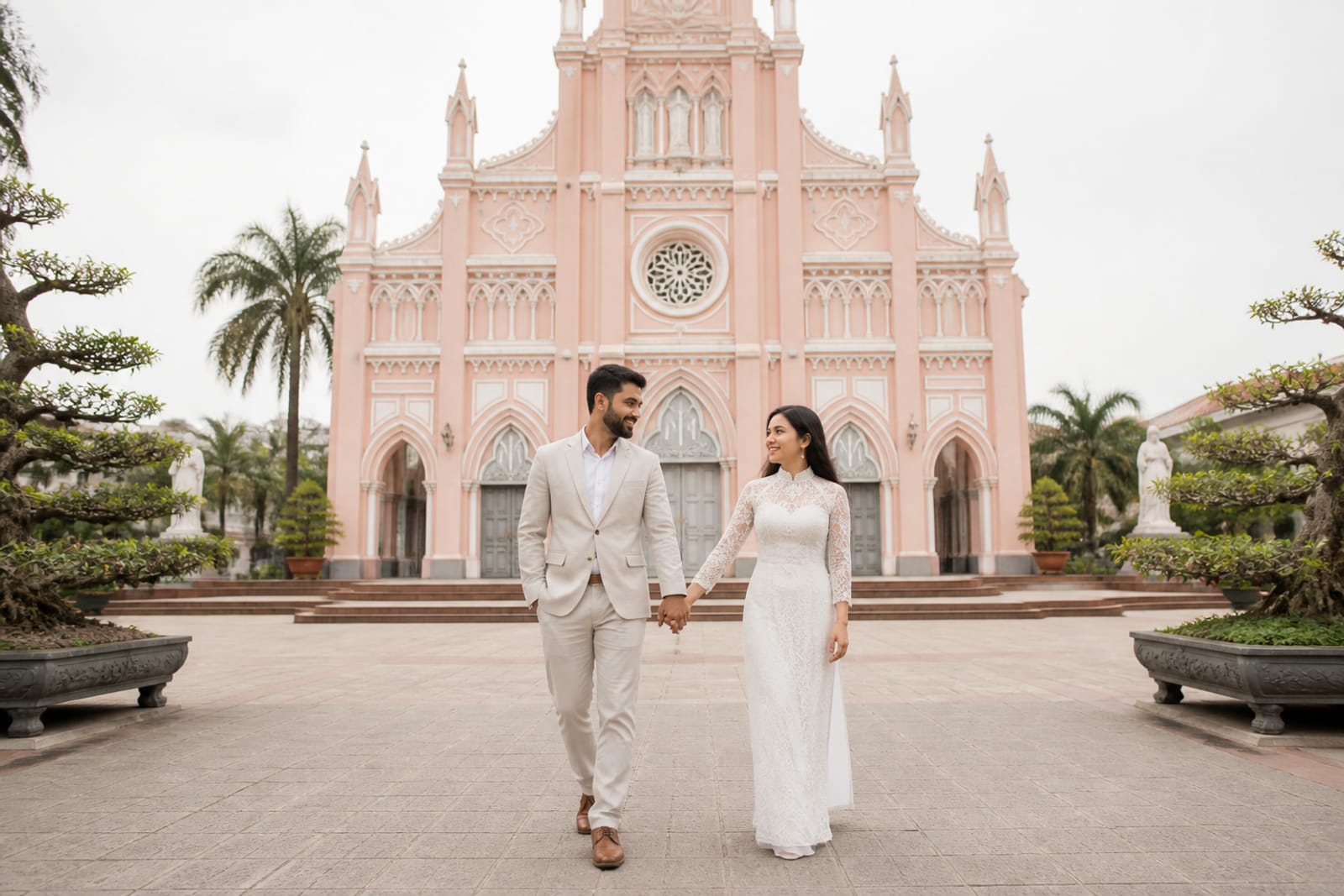
Early March (1–10) tends slightly cooler and drier than late March; temperatures hover around 24–28°C (75–82°F). Late March warms toward 28–32°C (82–90°F) but rain remains rare. Humidity creeps up as the month progresses—makeup and hair will set faster in March than April, but still require touch-ups if you're shooting longer than two hours outdoors. Tourist counts spike weekends and around Vietnamese school holidays (mid-March has some local vacation); book weekday sessions for emptier streets. Beach crowds peak 8:00–10:00 am and 5:00–7:00 pm (sunset viewers), so sunrise (before 6:30 am) and very-early-evening (after 6:30 pm) slots avoid foot traffic. Local markets (Hàng Mắc, Con Market) are fullest 6:00–9:00 am; shoot them later if you want human texture without chaos. Conclusion: book dawn sessions for light and solitude, and plan weekday dates to minimize crowds on visible streets.
---
How do you move an ao dai or wedding dress through Da Nang without damage?
An ao dai's fitted silk body and flowing front panels snag easily on urban details: rough walls, market stalls, motorcycle mirrors, and pedestrian traffic. A supporting assistant (your partner, a friend, or someone the photographer briefs) walks behind and to the side, holding the front panels above knee height when turning corners or crossing streets. Footwear matters: flat sandals or soft shoes prevent stumbles on uneven pavement; heels work for static frames only. If you're changing outfits mid-session, book a nearby hotel room or quiet café with a private space—Da Nang's heat means sweat marks appear within 10–15 minutes of outdoor walking. Makeup touch-ups and hair pins re-setting are non-negotiable between looks. If your dress is a rental, confirm damage liability before the shoot (most rental agreements permit normal wear, not tears or stains). Choose routes with level pavement when possible; cobbled old quarters (like Hoi An) demand much more care than My Khe's smooth sand or flat riverside promenades. Bring a breathable wrap or shawl to shield fabric from direct sun between shoots. Conclusion: plan outfit changes around nearby facilities, brief your support person, and scout walking routes for texture and obstacles.
---
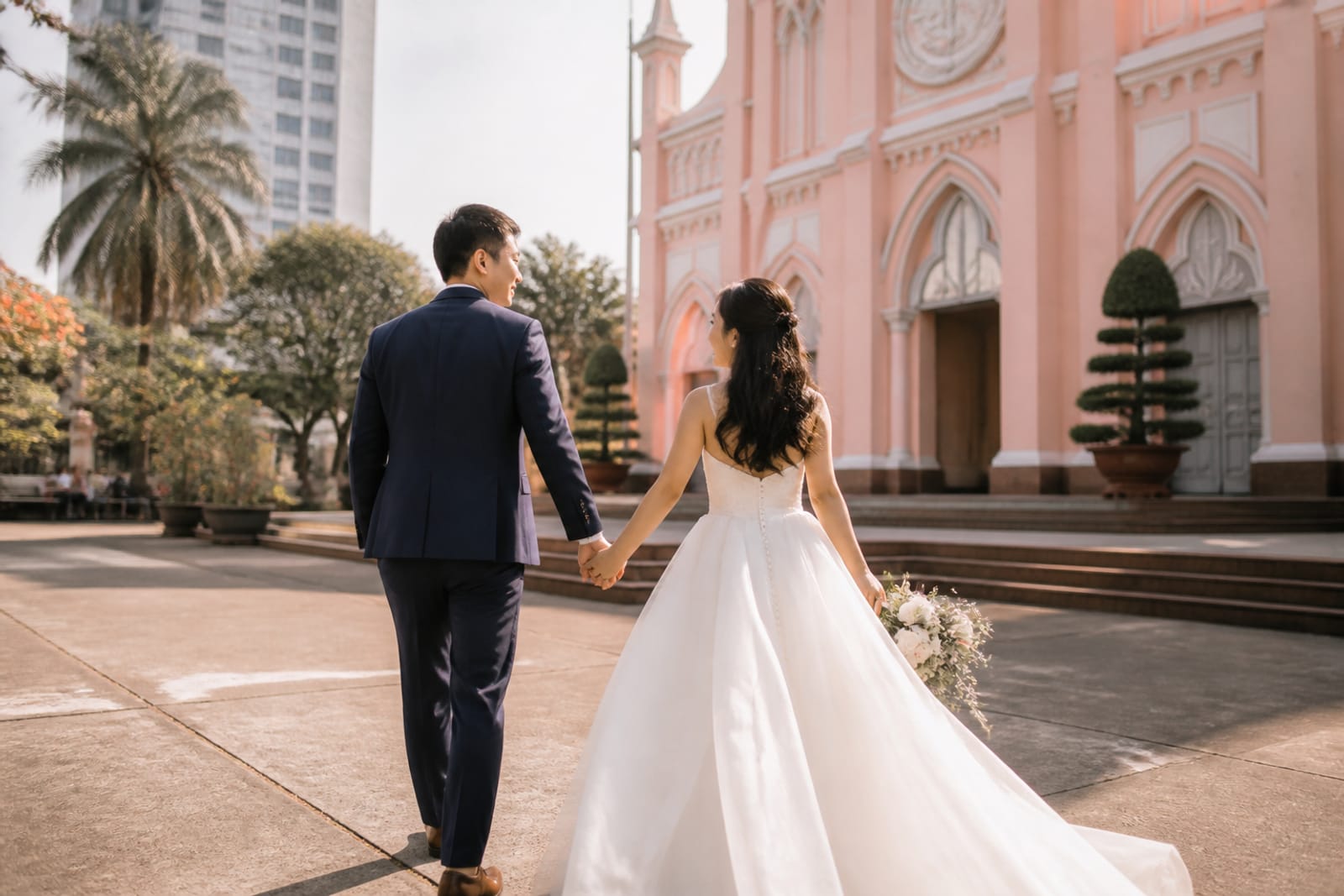
Da Nang pre-wedding: timing, location and light comparison
| Location | Best for | Light window (March) | Why it works | Logistics |
|---|---|---|---|---|
| My Khe beach, sunrise | Soft morning glow, minimal crowds | 5:30–7:00 am | Side light, golden tones, empty sand | Park near lifeguard station; bring flip-flops; arrive 15 min early |
| Hàng Dương riverside (Han Market area) | Urban texture + water reflection | 6:00–7:00 am or 5:00–6:30 pm | Narrow streets frame reflections; low angle light | Busy by 8:00 am; tight pedestrian space; scout beforehand |
| Marble Mountains foothills | Layered landscape depth | 4:30–6:00 pm golden hour | Misty mountain silhouettes catch warm light | Steep walking; cooler temperature; cable car opens late morning |
| Hoi An Ancient Town (nearby, 30 min) | Lantern + water at dusk | 5:15–6:30 pm | Iconic yellow-lit architecture + river reflections | Crowded; entry ticket required; hire local guide familiar with least-trampled routes |
| Linh Ung Pagoda overlook | Elevated perspective, softer air | 4:45–6:15 pm | Golden hour on coast below; fewer tourists than beach | Steep approach; pagoda etiquette required (covered shoulders/knees); confirm photography permission in advance |
---
How to find and vet a Da Nang pre-wedding photographer since Cáo Studio operates in Hanoi, Saigon and Hoi An
Because Da Nang falls outside Cáo Studio's service area, you'll research local photographers directly. Start by reviewing Instagram portfolios filtered by "Da Nang" and "pre-wedding" or "engagement"—look for consistent light handling (soft not blown-out skin), movement (walking, natural gestures, not stiff poses), and location familiarity (they know where sun angles fall at specific times). Ask each candidate three questions: (1) How do you handle midday heat and sweat marks during a two-hour session? (2) Which three locations do you shoot most, and why? (3) Do you shoot both stills and video, or stills only? Their answers reveal whether they've worked through March heat and whether they move between locations fluidly. Request a scouting call or site visit 2–3 days before your shoot—they should tell you exact times to arrive, where to park, and how long each location takes. Confirm outfit changes, makeup/hair touch-ups, and backup indoor space in writing. Ask for a partial payment upfront and the remainder due on delivery; avoid booking anyone who demands full payment before the session. Check their turnaround time for edited files (Cáo Studio delivers within 48 hours; local photographers vary—confirm in advance). Conclusion: vet three candidates, compare their light work and location knowledge, and require a scouting meeting before committing.
---
What to confirm before your Da Nang pre-wedding shoot
Photographer contract:
- Session length, number of locations, outfit changes permitted
- Turnaround time for edited files and format (digital download, prints, video clip)
- Cancellation and rescheduling terms if weather worsens (rare in March, but possible)
Location and timing:
- Exact addresses, arrival times, parking details
- Which sunrise/sunset window you're shooting (5:30–7:00 am or 4:30–6:00 pm)
- Backup indoor space if weather shifts unexpectedly
- Any permits needed (private temple, pagoda, gated beach areas)
Outfit and appearance:
- Whether the photographer has moved ao dai or wedding dresses before (ask to see samples)
- Makeup/hair artist availability or whether you'll hire separately
- Sweat marks on your chosen fabric—ask the photographer about color and heat handling
- Footwear suitability for your location (sand requires different shoes than pavement)
Files and keepsakes:
- How many edited images you'll receive
- Whether they offer prints, albums, or heirloom packaging (Cáo Studio offers photo albums and prints & frames, but a local photographer's offerings will differ)
- Copyright: who owns the images for future reprints and social media
Budget factors (not prices, but what determines cost):
- Distance between locations (longer drives = longer session)
- Number of outfit changes (more changes = more time and hair/makeup touch-ups)
- Whether the photographer includes a videographer or works solo
For inspiration on pre-wedding framing, styling and session flow, explore Cáo Studio's pre-wedding and elopement work and lookbook, even though your Da Nang session will be with a local photographer. You'll see how directed, light-aware shoots differ from posed generic work.
---
FAQ
Can Cáo Studio shoot my pre-wedding session in Da Nang?
No—Cáo Studio operates in Hanoi, Ho Chi Minh City, and Hoi An by appointment. For Da Nang, you'll need a local photographer familiar with the city's tidal patterns and street logistics. Ask us on WhatsApp for referrals if helpful.
What's the best time of day to shoot in Da Nang in March?
Sunrise (5:30–7:00 am) on My Khe beach or riverside walks offer soft side light and near-zero crowds. Golden hour (4:30–6:00 pm) works equally well. Avoid midday (11:00 am–3:00 pm) unless you're deliberately shooting high-contrast white ao dai.
Will March weather ruin my pre-wedding shoot?
Unlikely. March falls in Da Nang's dry season (February–August); rainfall is minimal and rain showers rare. Humidity creeps up late March, but not enough to cancel. Heat may require makeup touch-ups every 45 minutes.
How long does it take to move between locations in Da Nang during a pre-wedding session?
My Khe to Marble Mountains is 20 minutes by car; riverside spots in the city center are 5–10 minutes apart. Plan 15–20 minutes per outfit change (bathroom, touch-ups, hair). A three-location, two-outfit session takes 3–4 hours total.
What should I wear under an ao dai for a pre-wedding shoot in the heat?
Wear a neutral slip (nude or white cotton) to prevent sweat marks and fabric cling. Skip heavy undergarments; breathable layers only. Confirm fabric weight with your tailor or rental vendor—silk ao dai absorbs sweat faster than polyester blends, which may favor structured lightweight fabrics for March heat.
Should I hire a separate makeup and hair artist or ask the photographer for a referral?
Ask your photographer for a referral first—they work regularly with trusted artists who understand heat, light, and quick touch-ups between locations. Cáo Studio includes makeup and hair service at your hotel for sessions in its service areas; a local Da Nang photographer's bundle will differ.
Can I shoot in Hoi An instead of Da Nang for better aesthetics?
Yes—Hoi An's lantern-lit Ancient Town is iconic for pre-wedding frames, and Cáo Studio does shoot in Hoi An by appointment. It's 30 minutes from Da Nang, cooler in March, and deeply photogenic. Ask on WhatsApp for Hoi An dates and availability. ===
FAQ
Can Cáo Studio shoot my pre-wedding session in Da Nang?
No—Cáo Studio operates in Hanoi, Ho Chi Minh City, and Hoi An by appointment. For Da Nang, you'll need a local photographer familiar with the city's tidal patterns and street logistics. Ask us on WhatsApp for referrals if helpful.
What's the best time of day to shoot in Da Nang in March?
Sunrise (5:30–7:00 am) on My Khe beach or riverside walks offer soft side light and near-zero crowds. Golden hour (4:30–6:00 pm) works equally well. Avoid midday (11:00 am–3:00 pm) unless you're deliberately shooting high-contrast white ao dai.
Will March weather ruin my pre-wedding shoot?
Unlikely. March falls in Da Nang's dry season (February–August); rainfall is minimal and rain showers rare. Humidity creeps up late March, but not enough to cancel. Heat may require makeup touch-ups every 45 minutes.
How long does it take to move between locations in Da Nang during a pre-wedding session?
My Khe to Marble Mountains is 20 minutes by car; riverside spots in the city center are 5–10 minutes apart. Plan 15–20 minutes per outfit change (bathroom, touch-ups, hair). A three-location, two-outfit session takes 3–4 hours total.
What should I wear under an ao dai for a pre-wedding shoot in the heat?
Wear a neutral slip (nude or white cotton) to prevent sweat marks and fabric cling. Skip heavy undergarments; breathable layers only. Confirm fabric weight with your tailor or rental vendor—silk ao dai absorbs sweat faster than polyester blends, which may favor structured lightweight fabrics for March heat.
Should I hire a separate makeup and hair artist or ask the photographer for a referral?
Ask your photographer for a referral first—they work regularly with trusted artists who understand heat, light, and quick touch-ups between locations. Cáo Studio includes [makeup and hair service at your hotel](/makeup-and-hair) for sessions in its service areas; a local Da Nang photographer's bundle will differ.
Can I shoot in Hoi An instead of Da Nang for better aesthetics?
Yes—Hoi An's lantern-lit Ancient Town is iconic for pre-wedding frames, and Cáo Studio does [shoot in Hoi An by appointment](/hoi-an). It's 30 minutes from Da Nang, cooler in March, and deeply photogenic. Ask on WhatsApp for Hoi An dates and availability. ===
Ao dai, makeup, hair and a local photographer in Hanoi or Saigon — one WhatsApp message.