/pre-wedding-photoshoot
Pre-wedding photoshoot Dai Yem waterfall Moc Chau: complete guide
Dai Yem waterfall sits in Moc Chau district (Son La province, northwest Vietnam), a 3–4 hour drive from Hanoi. The waterfall flows year-round but shines in dry season (Oct–Jan) when light is softest and paths are safest; December–February brings mist and cool air ideal for emotive frames. A pre-wedding shoot here typically runs 3–4 hours, combining wide shots of the cascade, medium frames of you walking among tea rows, and detail work on hands, rings, fabric. Best light is 6–8 am or 4–5 pm; midday is flat and harsh. Cáo Studio does not operate in Moc Chau, but this guide covers what to look for: a photographer who knows the waterfall's light by month, arrives with hair and makeup artist (not separate vendors), and directs you to move and interact rather than pose stiffly. Cost factors are season, travel time from Hanoi, number of outfits, and whether the team is local or based in Hanoi. ---
What makes Dai Yem waterfall a pre-wedding destination?
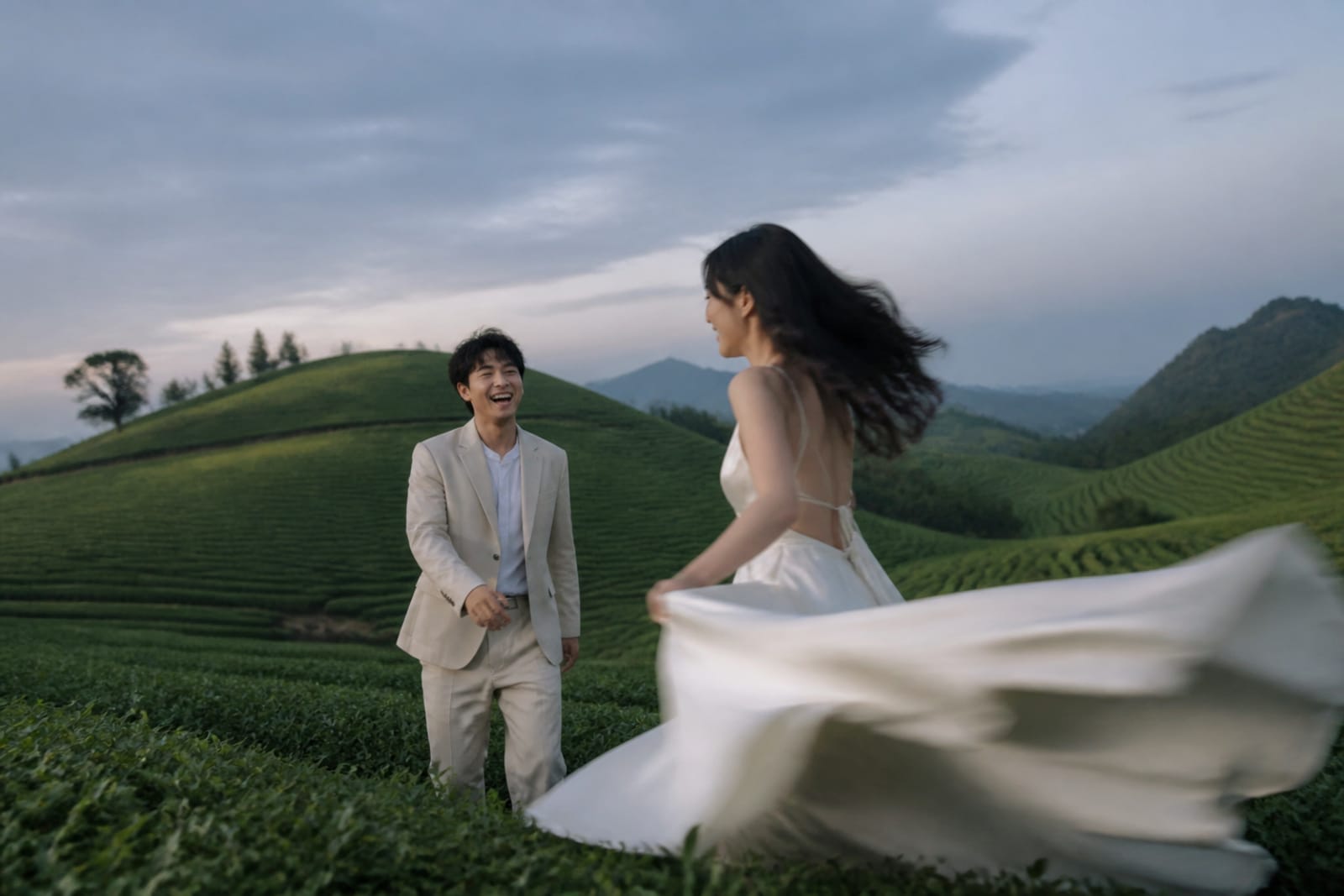
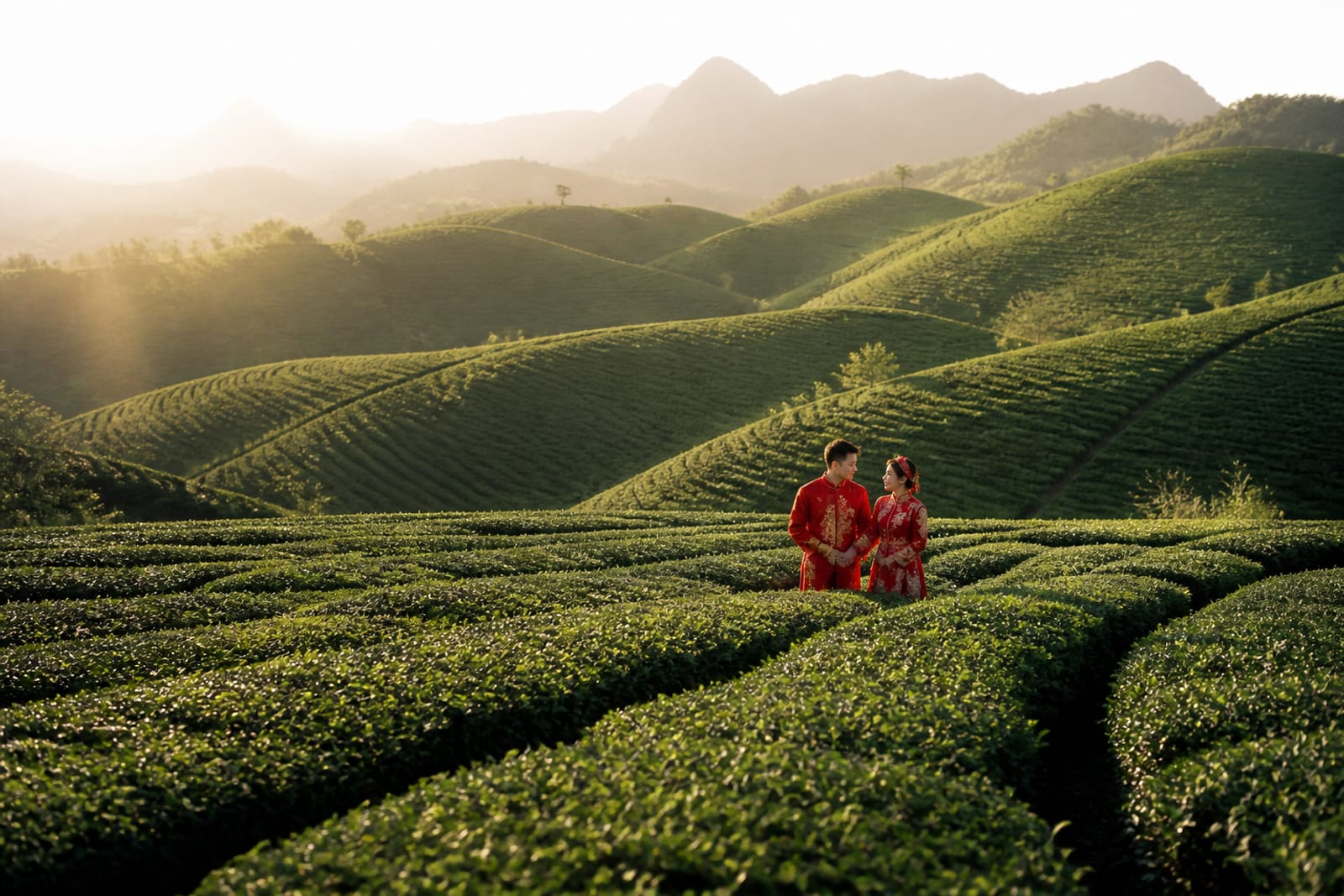
Dai Yem is a modest cascade set in terraced tea plantations, not a dramatic cliff-face. The appeal is intimacy: you can stand in the flow, walk across moss-covered rocks, and frame the waterfall as an accent, not a monument. Morning mist softens the backdrop; afternoon side light catches water spray. The tea rows around the waterfall offer rhythm and depth—ideal for wide shots that show scale without crowding the frame. Few couples shoot here, so the space feels unhurried. The challenge is access: a guide and solid footwear are essential, and the path becomes slippery after rain.
📸 Book on WhatsApp — pre-wedding photoshoot
When is the light and season right for this shoot?
October through January is optimal: the dry season means clear skies, soft morning light, and stable paths. December–February adds cool air and occasional mist—romantic, but dress warmly under your ao dai or gown. March–September is the rainy season; afternoon downpours arrive with little warning, and moss-wet rocks become hazardous. If you shoot during monsoon, plan for contingency frames closer to the road or at a nearby tea plantation house. Late afternoon (4–5 pm) in dry season gives golden-hour glow across the water; early morning (6–7 am) produces softer, directional light that flatters skin without harsh shadows. Avoid midday (10 am–3 pm)—the sun is high and flat, and the waterfall loses its glow.
Dai Yem or a tea plantation backdrop—which suits your story?
| Backdrop | Best for | Light/Season | Why it works |
|---|---|---|---|
| Dai Yem waterfall | Couples who want flow, movement, and intimacy | Early morning or late afternoon, Oct–Jan | Water catch light; mist softens backdrop; you move through the frame |
| Tea plantation rows | Couples who want landscape scale and walking narrative | Morning (any season), Dec–Feb for mist | Green rhythm; you walk away or toward; no water hazard |
| Mountain road or village house | Couples who want a fallback if weather turns | Flexible, any season with clear sky | Quick access; no slippery terrain; makeup and hair stay fresh |
The waterfall is the main draw, but tea rows are the fallback plan. A experienced team books a plantation house or nearby village backdrop as a second location—so if clouds roll in or the waterfall is too powerful after rain, you still have compelling frames. Couples who prioritize drama and movement choose the waterfall; those who want a relaxed, walking-focused narrative sometimes prefer the plantation backdrop alone and skip the waterfall entirely.
What should you wear—and what goes under it?
An ao dai works beautifully here if you choose a breathable silk or linen blend; long skirts and grooms' suits also suit the landscape. The challenge: you'll be climbing rocks, crossing shallow water, and stepping over moss. Wear shoes you can grip in; sandals slip. If you're in an ao dai, have a second outfit (jeans, simple dress) for the walk to the waterfall and the walk back—change at a tea plantation house or your vehicle. Bring a shawl or light jacket; early morning is cool (10–15°C in winter), and you'll be standing near falling water. Makeup should be long-wear and waterproof; a team that travels with you can retouch after the walk and before the shoot. Consider a lightweight veil or hair clip that won't catch on branches; long hair in a simple braid is safer than loose waves.
How should you book a team for Moc Chau?
Cáo Studio's base is Hanoi and Ho Chi Minh City; we do not run regular shoots in Moc Chau. However, if you're planning a pre-wedding session in northern Vietnam, you can book a Hanoi-based team who travels to nearby locations, or you can hire a local Moc Chau photographer and coordinate separately. Here's how to vet either option:
If booking a traveling team (e.g., from Hanoi):
- Confirm they've shot Dai Yem before. Ask for 3–5 past frames. Light and composition vary month to month; their portfolio shows whether they understand the waterfall's specific challenges.
- Check if hair and makeup are included or bundled. A single team (photographer, artist, stylist) shoots faster and more cohesively than three vendors meeting for the first time on-site.
- Ask about travel logistics: when they arrive, how long the shoot runs, how many outfits and locations, and when edits arrive (48 hours is industry standard, but confirm).
- Confirm backup plan if weather turns. Do they shoot the plantation or village instead, or refund/reschedule?
If booking local:
- Ask to see their Dai Yem portfolio. Instagram alone doesn't show seasonal light or how they direct couples—request unedited selects.
- Hire a separate hair and makeup artist; confirm they meet the photographer on-site and can touch up after the walk.
- Discuss contingency locations before the shoot day.
- Ask about file turnaround and whether final edits are included.
What checklist should you use before booking?
- Light & season: Confirm the photographer has shot in your month and can name the best time window (e.g., "6:15 am on a clear day in December").
- Outfit fit: Ask whether the team brings safety advice (sturdy shoes, backup outfit, waterproof makeup) or if you source it.
- Team structure: Confirm ONE point of contact (photographer or coordinator) who handles timing, location access, and backup plans—not three separate vendors texting different instructions.
- Travel from Hanoi: Check their vehicle, fuel and time cost (discussed as a factor, not a fee line item); confirm whether they start early enough to catch morning light.
- File delivery: Clarify file format, number of edits, and timeline. Ask for a sample of their editing style (color, cropping, how they handle water spray).
- Contingency: Request the name and location of the backup spot, and ask to see frames from that location in your season.
- Local permit or guide: Confirm whether a local guide is needed and who arranges it. Waterfall access sometimes requires a guide; a coordinated team will handle this.
---
What's the difference between a pre-wedding shoot and an ao dai session?
A pre-wedding photoshoot is a full narrative: outfit changes, multiple locations, directed movement, and a cinematic edit that tells the story of you and your partner. An ao dai photoshoot is typically one outfit focus—the ao dai itself—often in a single backdrop (Old Quarter, temple, garden) in 2–3 hours. Dai Yem suits a pre-wedding approach because you'll use the landscape (waterfall, tea, light) across multiple frames and outfit changes.
---
How does a couple photoshoot differ from a pre-wedding session?
A couple photoshoot can be a vacation or anniversary session: shorter, fewer outfits, one location. A pre-wedding session is longer, more locations, typically includes hair and makeup services, and focuses on narrative and emotion. For Dai Yem, a pre-wedding framework makes sense because the travel time from Hanoi justifies a full day and multiple frames.
---
Can you add makeup and hair to a Moc Chau shoot?
Yes. If you book a team that coordinates makeup and hair services, they arrive with a stylist. However, a team based in Hanoi typically does makeup at your hotel before departure, not on-site at Dai Yem. This means makeup must withstand a 3–4 hour drive and a walk to the waterfall. A long-wear or waterproof formula is essential. The team can do minor touchups at the location, but not a full reapplication. Local photographers sometimes arrange on-site makeup if it's in their service package—confirm before booking.
---
What about alternatives near Moc Chau or in northwest Vietnam?
If Dai Yem is booked or weather looks poor, tea plantation house backdrops (Tu Le, Pu Luong) are 30–60 minutes away and offer similar light and mood. Tram Tam Lake (also in Moc Chau) has clearer water and a simpler, less slippery landscape. For a pre-wedding session in northwest Vietnam, many couples choose Hanoi's Old Quarter and temples as the main shoot, then add a day trip to Moc Chau for a second outfit and landscape frames—this spreads the team travel cost across two days. Ask a Hanoi-based team if they offer multi-day pre-wedding packages that include both city and nature.
---
FAQ
What's the best month to shoot at Dai Yem?
December–January offers cool air, mist, dry paths, and soft morning light. October–November is also dry and clear, but warmer. Avoid May–September (rainy season); paths are slippery and afternoon storms arrive with little warning.
Do I need a local guide to reach Dai Yem?
Yes, a guide is strongly recommended. The path crosses streams and steep terrain; a local knows safe routes and can arrange access. Ask your photographer or booking coordinator if they include a guide or if you arrange one separately.
Can I wear a full wedding dress to Dai Yem?
A light, long skirt or simple gown works; train a dress is risky on wet rocks. An ao dai or similar flowing outfit is safer and more practical. Save the full wedding dress for a controlled venue or your ceremony.
How early do I need to wake up for 6 am morning light?
Plan to wake at 4:30 am and leave your hotel by 5 am if you're in Hanoi. Makeup is done before departure; hair and outfit changes happen in the vehicle or at a tea plantation house near Dai Yem. Confirm exact timing with your photographer.
Will the team shoot if it's cloudy or misty?
Yes—mist is romantic and softens light, especially in December–February. Heavy rain or storms mean a shift to the backup location (tea plantation or village backdrop). Confirm the contingency plan before booking.
How many final edited photos will I receive?
This depends on the team's package. A typical pre-wedding session includes 100–200 edited images; confirm the exact number and format (digital downloads, USB, print album) when you book.
FAQ
What's the best month to shoot at Dai Yem?
December–January offers cool air, mist, dry paths, and soft morning light. October–November is also dry and clear, but warmer. Avoid May–September (rainy season); paths are slippery and afternoon storms arrive with little warning.
Do I need a local guide to reach Dai Yem?
Yes, a guide is strongly recommended. The path crosses streams and steep terrain; a local knows safe routes and can arrange access. Ask your photographer or booking coordinator if they include a guide or if you arrange one separately.
Can I wear a full wedding dress to Dai Yem?
A light, long skirt or simple gown works; train a dress is risky on wet rocks. An ao dai or similar flowing outfit is safer and more practical. Save the full wedding dress for a controlled venue or your ceremony.
How early do I need to wake up for 6 am morning light?
Plan to wake at 4:30 am and leave your hotel by 5 am if you're in Hanoi. Makeup is done before departure; hair and outfit changes happen in the vehicle or at a tea plantation house near Dai Yem. Confirm exact timing with your photographer.
Will the team shoot if it's cloudy or misty?
Yes—mist is romantic and softens light, especially in December–February. Heavy rain or storms mean a shift to the backup location (tea plantation or village backdrop). Confirm the contingency plan before booking.
How many final edited photos will I receive?
This depends on the team's package. A typical pre-wedding session includes 100–200 edited images; confirm the exact number and format (digital downloads, USB, print album) when you book.
Ao dai, makeup, hair and a local photographer in Hanoi or Saigon — one WhatsApp message.