/pre-wedding-photoshoot
Pre-wedding photoshoot Ha Giang September: weather, light, crowds
A pre-wedding photoshoot in Ha Giang in September means shooting in warm, humid conditions (27–32°C) with afternoon rain risk and significant tourist traffic on main roads. Golden hour starts around 5:50–6:00 am and ends around 5:30 pm. Best locations—Quan Ba Heaven's Gate, Hoang Su Phi rice terraces—are busiest 9 am–4 pm. Cáo Studio does not operate in Ha Giang; the two-hour drive from Hanoi and mountain terrain require a multi-day trip and a local photographer. Plan for authentic, unhurried shooting: start before dawn, finish by mid-morning, rest during midday heat and crowds, then scout locations on foot before committing to a time. Avoid peak tourist hours, and always have a backup indoor or shaded plan for afternoon downpours. 📸 Book on WhatsApp — ao dai photoshoot | 🌸 See the lookbook | 💄 Makeup & hair at your hotel ---
What is September light like in Ha Giang for portraits?
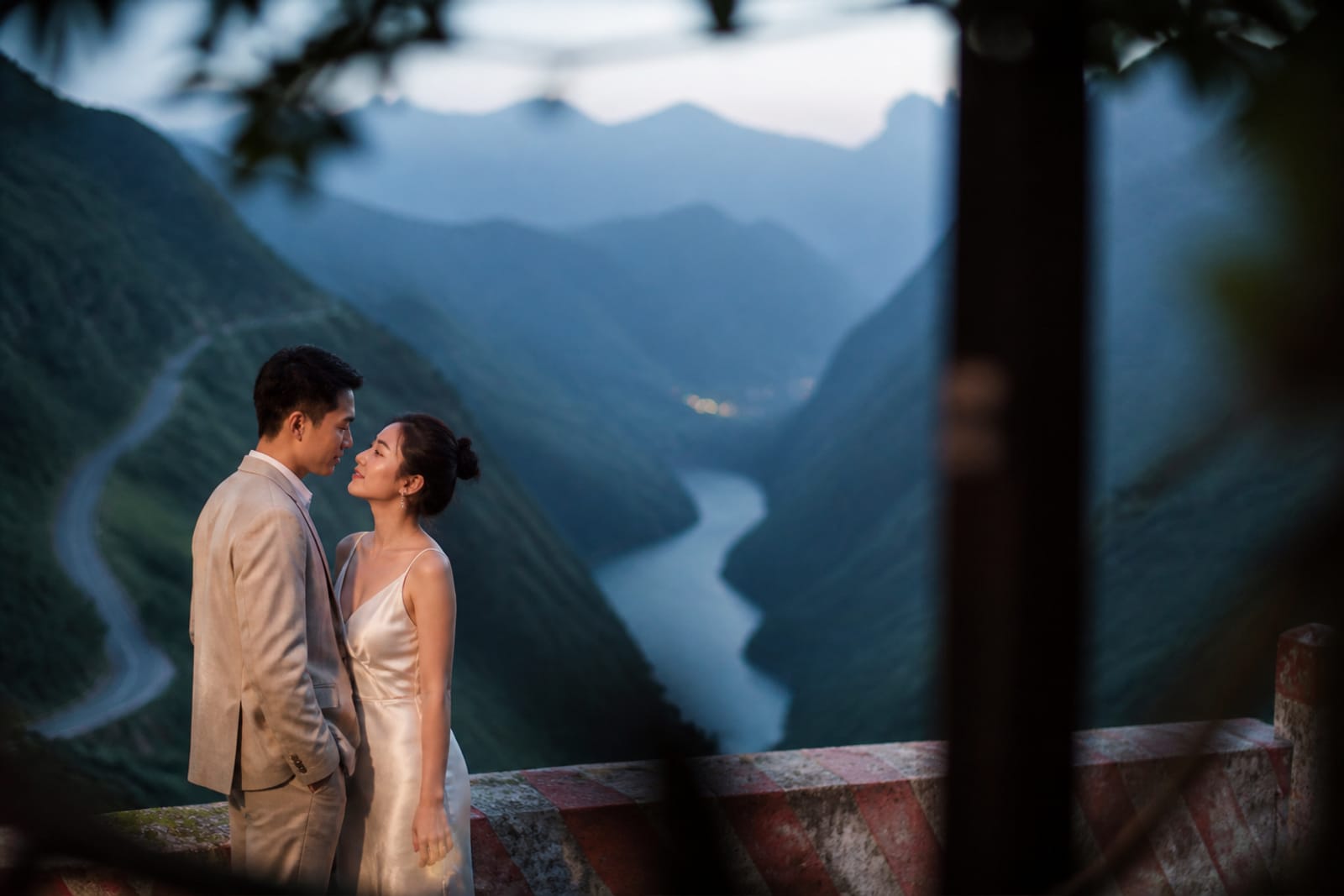
September light in Ha Giang is soft and directional early morning, but harsh and flat by 10 am. Dawn—5:50 to 7:00 am—offers warm side light perfect for walking shots and detail frames of fabric or jewelry. By 8:30 am, sun climbs steeply; by noon, overhead light flattens faces and landscape texture. Late afternoon (4:30–5:30 pm) brings warm, diffused light again, but clouds roll in quickly and rain often falls 3–6 pm. Humidity (80–90%) creates natural diffusion, softening shadows. Wind gusts through valleys, moving clouds and creating dynamic light. The photographer's key choice: shoot early or shoot slow and wide, accepting flat midday light and waiting for breaks in cloud cover.
Best light window: 5:50–7:15 am and 4:30–5:15 pm (before rain). Midday: avoid or shoot texture and wide landscape only.
---
How crowded are Ha Giang locations in September?
Ha Giang sees a surge in domestic and international tourists starting September, especially weekends and holidays. Quan Ba Heaven's Gate—the most photographed viewpoint—fills by 9 am with tour groups and selfie seekers. Hoang Su Phi rice terraces, 90 minutes by motorbike north, are quieter but still active 10 am–3 pm. Small villages and isolated passes remain peaceful. September is still before peak October–November harvest season, so crowds are moderate, not overwhelming. However, "empty" means arriving before 7 am or walking 20+ minutes off main roads. Local knowledge—asking your team which hour and which path avoids crowds—is essential. Tour buses, once they arrive, stay 45–60 minutes; timing your shoot around their departure windows saves time.
Strategy: confirm current tour schedules with your local photographer; plan to shoot before 7:30 am or after 4:00 pm.
---
What rain and weather risk should a pre-wedding couple expect?
September is the tail end of Vietnam's summer monsoon. Ha Giang averages 3–4 rainy days per week, mostly afternoon (2–6 pm), lasting 20 minutes to 2 hours. Morning rain is less common but possible. Rain often arrives as a brief downpour, not all-day drizzle. Temperature ranges 24–32°C; humidity is consistently 75–90%, making heat feel heavier. Fog blankets valleys early morning (5:30–7:30 am), then burns off by 8:30 am—this fog is beautiful for moody, diffused light but obscures distant views. Humidity demands extra care for makeup and hair: waterproof products, frequent touch-ups, and cool timing between outfit changes. Wet roads after rain are slippery; motorbike travel becomes risky. Always scout locations and weather the evening before. A backup indoor venue—a homestay, a cafe with character light, a village shop interior—transforms a rained-out shoot into an intimate alternative.
Check real-time weather the morning of; pack a tarp and a backup indoor plan.
---
Which pre-wedding locations work best, and when?
| Location | Best for | Light + crowd timing | Why it works |
|---|---|---|---|
| Quan Ba Heaven's Gate | Landscape + couple framing | 6:00–7:00 am (empty, soft light) | High viewpoint, directional morning light, iconic backdrop; empty before 8 am |
| Hoang Su Phi rice terraces | Walking shots, layers of light | 6:30–8:00 am (fog lifting, no crowds) | Multiple depth planes, warm morning glow on stacked fields, silent for 2+ hours after arrival |
| Yen Minh passes (Ma Pi Leng, Sung La) | Dramatic wide frames | 5:50–7:00 am + 5:00–5:30 pm | Sheer cliffs, winding roads, soft light frames couple against scale; midday harsh and crowded |
| Local villages (homestays, markets) | Intimate ao dai moments | 6:00–8:00 am or 4:00–5:00 pm | Real life, soft interior and doorway light, no tourists, authentic interaction |
| Pha Long waterfall area | Water + lush green | 7:00–9:00 am (water lit, few people) | Cool alternative on hot mornings; rain makes waterfall dramatic but roads risky |
Takeaway: Pick one main location, arrive 30 minutes before first light, finish a full session by 8:30 am. Afternoon is scouting or rest.
---
How does a couple actually plan and book a pre-wedding shoot here?
Pre-wedding shoots in Ha Giang require 3–4 days minimum: one day travel, one–two days shooting with breaks for location changes, one day return. Cáo Studio does not shoot in Ha Giang; the distance and mountain terrain demand a local photographer who knows current road and weather conditions, access to homestays, and permission for on-site outfit changes. A real planning process looks like this: (1) decide on dates, avoiding peak weekends; (2) contact a vetted local photographer with portfolio proof of pre-wedding work; (3) specify outfit changes (ao dai, Western dress, casual wear) and ask what they can source locally vs. what you must bring; (4) confirm a 4–5 am start time and lock in locations (ask for their top three for September); (5) arrange accommodation near shooting locations, not in the main town; (6) have a rain backup plan and a second full-day itinerary. If you prefer an all-in-one team—makeup, hair, wardrobe, photography, editing—book a pre-wedding session in Hanoi or Ho Chi Minh City with Cáo Studio, then coordinate a separate Ha Giang local shoot for specific landscapes.
Timeline: decide date (60 days ahead ideally) → book local photographer → arrange transport + accommodation → confirm weather, crowd times, backup plan 1 week before.
---
What should you wear and bring for September conditions?
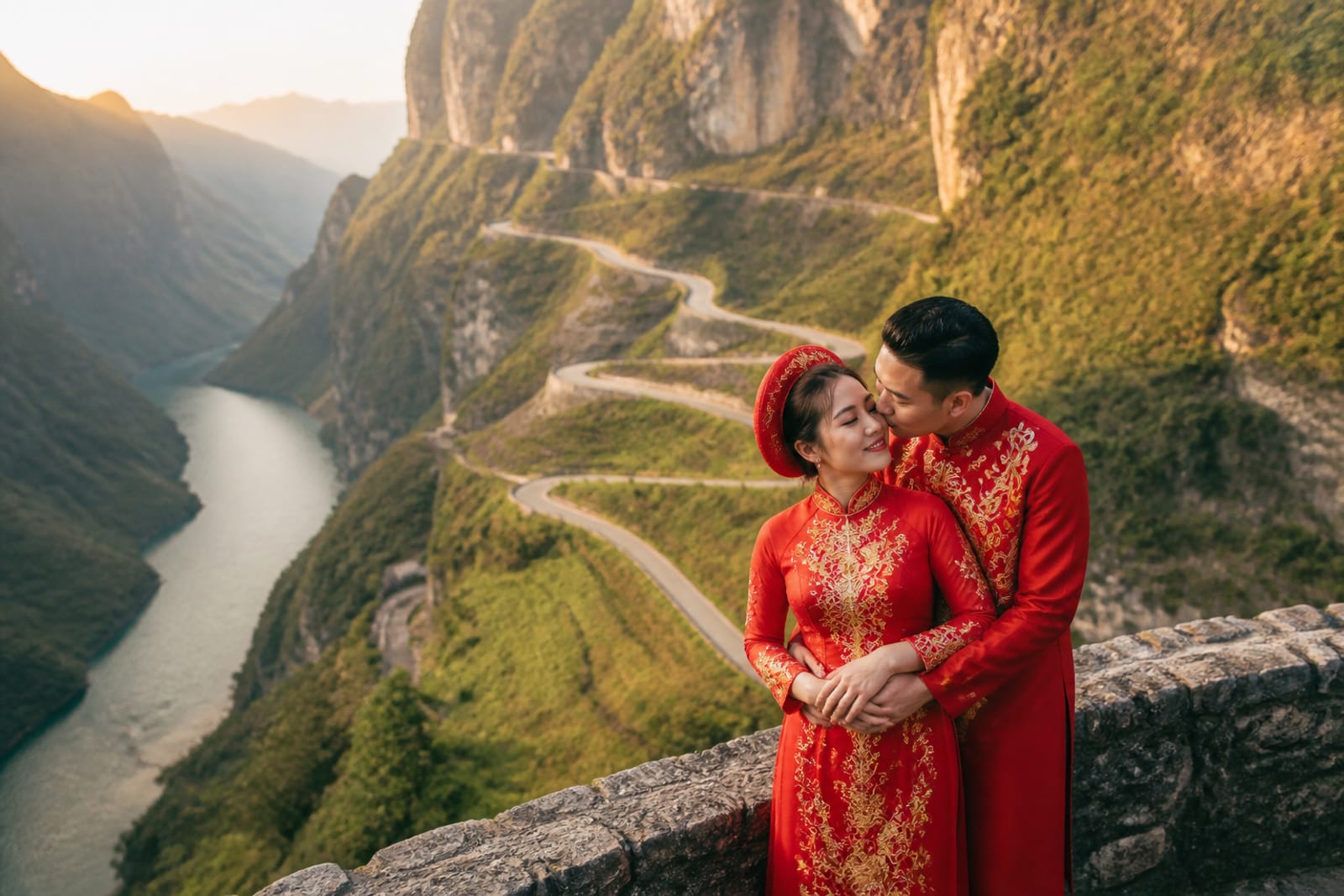
Ao dai works beautifully in Ha Giang—silk or cotton drapes well in humidity and contrasts with landscape. Bring a lightweight inner layer (camisole or slip), as some daytime heat can be intense and fabric clings in sweat. Shoes: flat, gripped soles (Converse, leather loafers) for slippery wet paths; heels are risky on uneven terrain. Jewelry: avoid heavy gold in humidity (sweat marks skin) and loud colors that pull focus from faces. For a Western dress option, lightweight cotton or linen, fitted enough to move freely. Bring: sunscreen (reapply 2-hourly), hat, small umbrella, extra hair clips and makeup blotters, a change of undergarments and socks (wet feet are miserable), and a soft dry cloth for camera lens after rain. Sunglasses for driving through bright morning glare. Avoid white or cream fabrics if rain is forecast—they stain easily and dry slowly in humidity. Ask your photographer or accommodation host which colors read well against rice terraces and mountain rock (jewel tones, deep blues, burnt orange, and black all photograph well).
Pack light, breathable, and practical. Wet feet and sweat-stained fabrics ruin later frames.
---
When should you actually visit Ha Giang for a pre-wedding shoot?
September sits in a timing sweet spot: summer heat breaks slightly, landscape is green and lush from monsoon rain, and autumn tourists arrive but peak crowds don't hit until late October. However, September rain risk is real—3–4 rainy days per week, afternoon downpours. October–November is arguably better: lower rain frequency, golden light, buckwheat flowers (late Oct–Nov in some areas), and sunrise light is often clearer. If you must shoot in September, book a flexible schedule (extra backup days) and confirm weather constantly. December–February is cool and dry but popular, driving up accommodation and local photographer rates. March–May is hot and increasingly dry. June–August: summer rains and heat are intense; less ideal for outdoor comfort. For a pre-wedding photoshoot that combines multiple regions—Hanoi base with Cáo Studio, then a multi-day Ha Giang trip—October is the sweet spot: reliable light, lower rain, fewer crowds, and travel is safe.
Book September only if flexible; October–November is the safer choice for Ha Giang pre-wedding shoots.
---
What to check before you book
- Local photographer credentials: demand a pre-wedding or couple-shoot portfolio, not just landscape or tourism work; check Google Maps reviews and ask for references from other couples.
- Real sunrise/sunset times: confirm the exact time with your photographer one week before; weather apps vary by ±10 minutes.
- Road conditions: call ahead to accommodation or a local guide; September rain can close mountain passes.
- Outfit transport: clarify who carries ao dai, shoes, and backup clothes—you, the photographer, or a separate assistant. Cramped motorbikes don't allow large garment bags.
- Backup plan: have a confirmed indoor location (homestay common room, cafe, village shop) with decent natural light; a verbal "we'll figure it out" won't work in a downpour.
- Editing timeline: ask how long turnaround takes; mountain internet can be slow, delaying delivery.
- Your team's experience with altitude and humidity: Ha Giang is 700–1200 m elevation; if anyone has heat sensitivity or altitude issues, discuss ahead.
---
Next steps: Pre-wedding sessions closer to Hanoi
If Ha Giang appeals but the logistics are daunting, Cáo Studio's pre-wedding photoshoot in Hanoi offers directed, unhurried sessions with your own makeup artist and photographer—no coordination with strangers, no mountain roads. You can shoot ao dai photoshoots in the Old Quarter, West Lake, or Temple of Literature with soft morning light and no tourist crowds if timed early. Couple photoshoots in Hanoi include similar location strategy: arrive early, finish by 8:30 am, avoid peak hours. For a full pre-wedding journey, many couples book a 2–3 day Hanoi session with Cáo Studio, then hire a local Ha Giang photographer independently for a multi-day mountain trip. That split keeps the core work—makeup, outfit choices, cohesive vision—in one expert team's hands, then adds a dramatic landscape experience.
💄 Makeup & hair at your hotel | 📸 Book on WhatsApp — pre-wedding photoshoot | 🌸 See the lookbook
---
Can Cáo Studio work with me if I choose Ha Giang?
Cáo Studio does not have a team or base in Ha Giang. The studio operates in Hanoi, Ho Chi Minh City, and by appointment in Hoi An. If a Ha Giang pre-wedding shoot is central to your plan, book a Cáo Studio session in Hanoi first (makeup, hair, photography, direction, editing all in-house), then arrange a local Ha Giang photographer independently for the mountain leg. Alternatively, ask on WhatsApp about coordinating: the studio may recommend a vetted local photographer or guide a couple through the booking process. Every couple's vision is different. If Ha Giang is non-negotiable, a hybrid approach—studio session in Hanoi + local expertise in the mountains—often delivers the best result: polished, directed work in the city, and authentic, dramatic frames in the landscape.
📸 Book on WhatsApp — talk to Cáo Studio
FAQ
Is September a good month for a pre-wedding shoot in Ha Giang?
September is warm and wet—afternoon rain is common, and crowds are moderate but rising. Shoot early (before 7:30 am) for best light and fewest tourists. October–November is more reliable; September works only if you're flexible and have a solid backup plan.
What time should we start our pre-wedding shoot?
Arrive 30 minutes before sunrise—roughly 5:30 am in September. Golden light lasts until 7:15–7:30 am. After 9 am, sun is harsh and tourists arrive; most couples finish their main session by 8:30 am.
Can we rent an ao dai in Ha Giang, or must we bring one from Hanoi?
Ha Giang towns have basic ao dai rental shops, but selection is limited and quality varies. Bring your own or order in Hanoi and transport it. Confirm with your local photographer whether they've worked with specific rental shops.
How do we protect makeup and hair in humidity and rain?
Use waterproof mascara, long-wear foundation, and hair spray before you leave your accommodation. Bring blotting papers and hair clips for mid-shoot touch-ups. A small umbrella or tarp protects you between locations; a dry cloth keeps the photographer's lens clear.
Do we need permits or permission to shoot at Quan Ba or Hoang Su Phi?
No formal permit is required for couples shooting at these viewpoints, but check with your local photographer for current regulations or local customs; some homestays or villages request a small courtesy fee or ask you to eat/stay with them. Always ask before setting up tripods or poses.
How do we find a trustworthy local photographer in Ha Giang?
Search Instagram hashtags #hagiang #hagiangtourism or ask your hotel for referrals. Demand a pre-wedding portfolio (not just landscapes), read Google Maps reviews, and ask for references. Have a video call to discuss your vision and their experience with couples; mistrust vague answers about timing or backup plans.
FAQ
Is September a good month for a pre-wedding shoot in Ha Giang?
September is warm and wet—afternoon rain is common, and crowds are moderate but rising. Shoot early (before 7:30 am) for best light and fewest tourists. October–November is more reliable; September works only if you're flexible and have a solid backup plan.
What time should we start our pre-wedding shoot?
Arrive 30 minutes before sunrise—roughly 5:30 am in September. Golden light lasts until 7:15–7:30 am. After 9 am, sun is harsh and tourists arrive; most couples finish their main session by 8:30 am.
Can we rent an ao dai in Ha Giang, or must we bring one from Hanoi?
Ha Giang towns have basic ao dai rental shops, but selection is limited and quality varies. Bring your own or order in Hanoi and transport it. Confirm with your local photographer whether they've worked with specific rental shops.
How do we protect makeup and hair in humidity and rain?
Use waterproof mascara, long-wear foundation, and hair spray before you leave your accommodation. Bring blotting papers and hair clips for mid-shoot touch-ups. A small umbrella or tarp protects you between locations; a dry cloth keeps the photographer's lens clear.
Do we need permits or permission to shoot at Quan Ba or Hoang Su Phi?
No formal permit is required for couples shooting at these viewpoints, but check with your local photographer for current regulations or local customs; some homestays or villages request a small courtesy fee or ask you to eat/stay with them. Always ask before setting up tripods or poses.
How do we find a trustworthy local photographer in Ha Giang?
Search Instagram hashtags #hagiang #hagiangtourism or ask your hotel for referrals. Demand a pre-wedding portfolio (not just landscapes), read Google Maps reviews, and ask for references. Have a video call to discuss your vision and their experience with couples; mistrust vague answers about timing or backup plans.
Ao dai, makeup, hair and a local photographer in Hanoi or Saigon — one WhatsApp message.