/pre-wedding-photoshoot
Pre-wedding photoshoot Ha Long Bay March: weather, light, crowds
Pre-wedding shoots in Ha Long Bay in March happen in ideal conditions: water is calm (typhoon season ends October), temperature ranges 18–22°C, and dawn light on the limestone karsts is soft and directional—perfect for romantic framing. Most couples book a full day: sunrise on a private or semi-private boat, outfit changes on deck or in a sheltered cove, and golden hour shots on shore or at a viewpoint. March is the driest month (check the port's sailing schedule—Jun–Sep occasionally sees cancellations, but March rarely does), and crowds are manageable before Easter school holidays peak in late March. Hire a local photographer familiar with boat logistics, or contact Cáo Studio's Hanoi base to discuss options—Ha Long Bay shoots require a guide and boat operator coordination that a studio team from the city arranges rather than executes on-site. Budget 2–3 days for the round trip from Hanoi, and bring layers: mornings are cool, afternoons are warm. 📸 Book on WhatsApp — pre-wedding photoshoot ---
What makes March the best month for Ha Long Bay pre-wedding shoots?
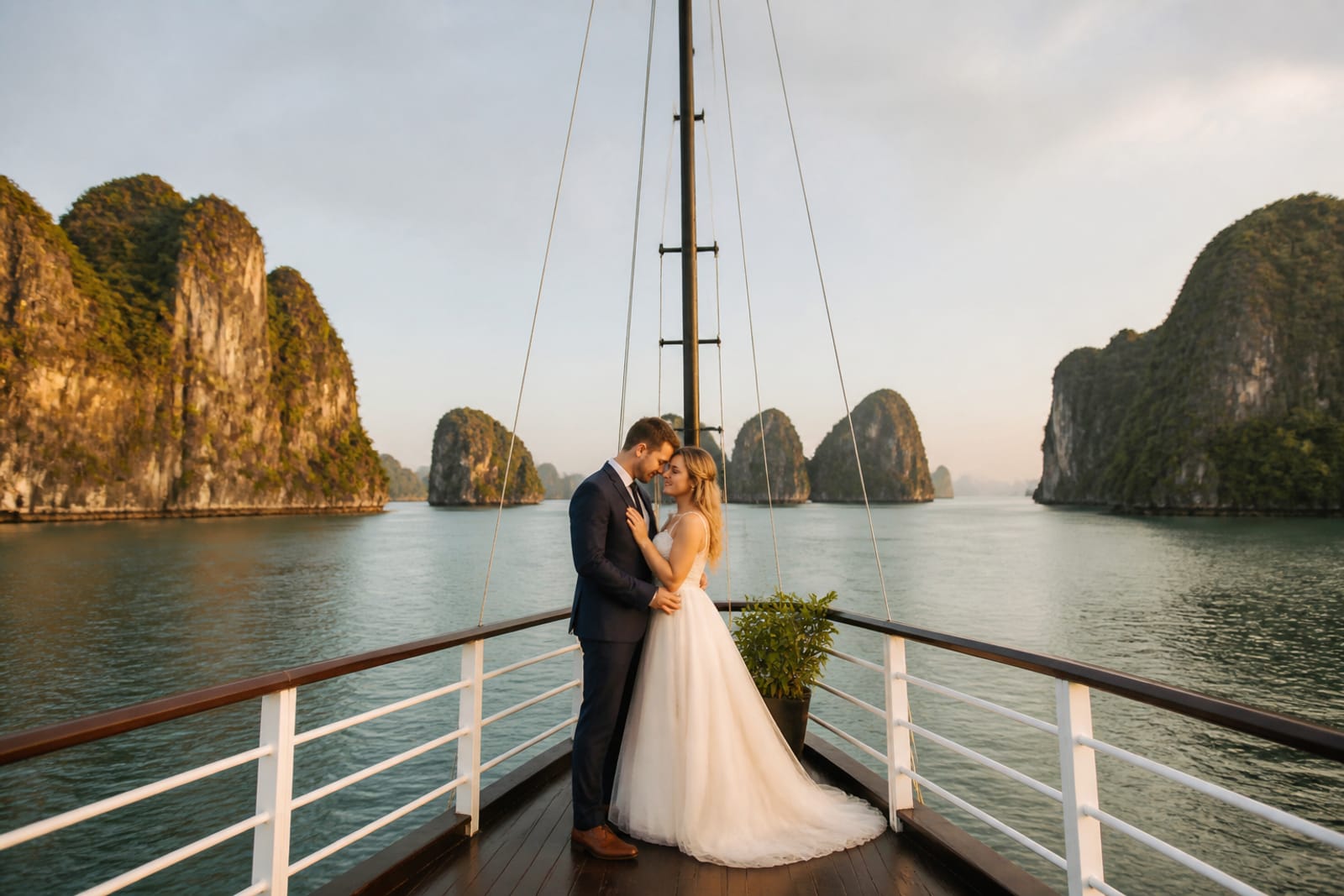
March sits between winter cool (Dec–Feb, often misty) and the typhoon risk of June onwards. Water temperatures hover 18–22°C, calm enough for boat operations without the midday heat that flattens light in summer. Sunrise at 6:30–7:00 am casts long, warm shadows across the water and stone—the kind of directional light that defines romantic couples' framing. By late morning, overcast days in March provide even, shadowless fill light (rare in tropical climates), and afternoons often clear to full sun. Spring storms are rare; the port authority rarely cancels sailings in March. Conclusion: March combines predictable light, calm seas, and low cancellation risk.
---
How do you plan an outfit strategy for a floating photoshoot?
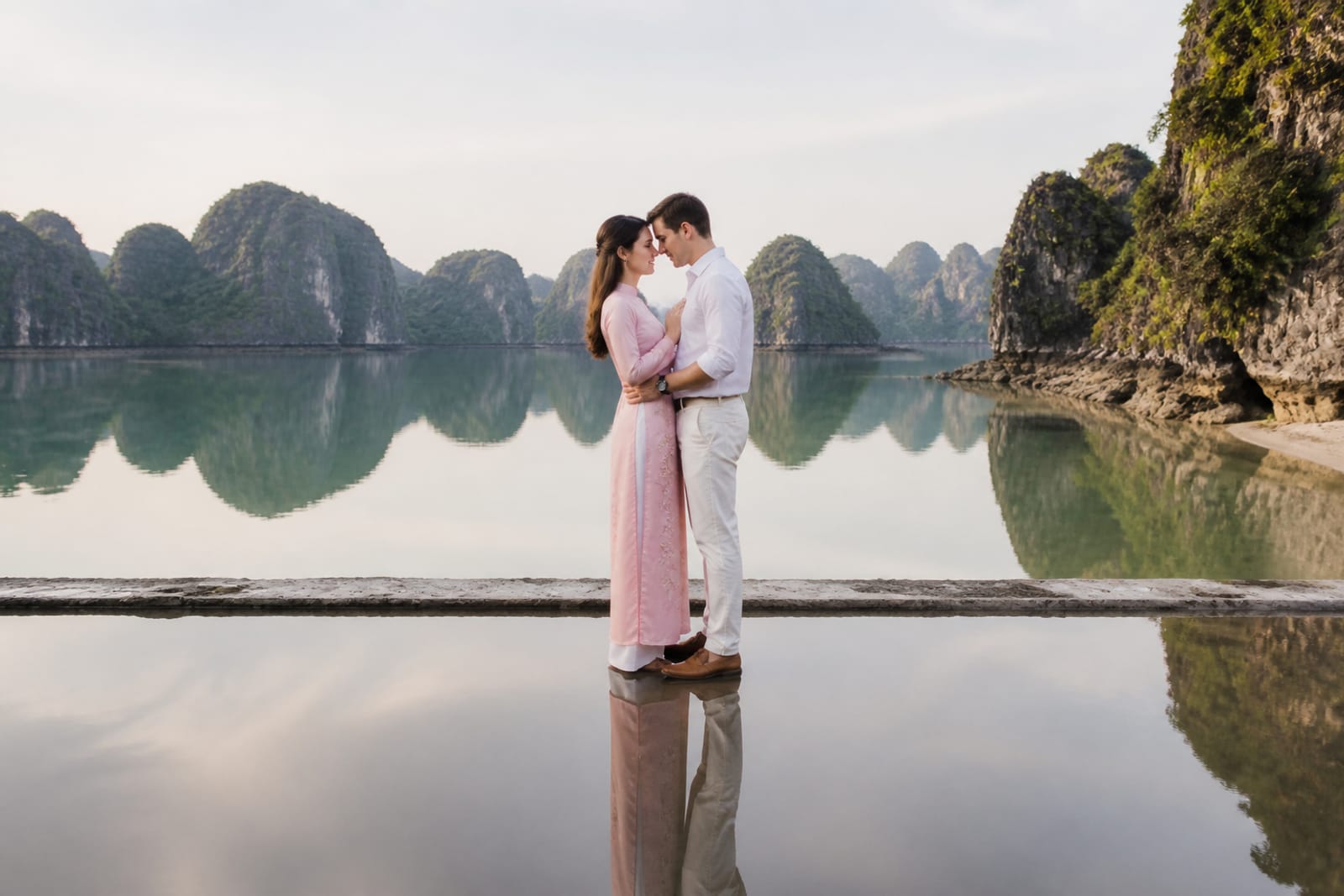
On a boat, outfits must work in three contexts: sunrise deck shoots (cold, spray risk), midday shore exploration (sun, heat, wind), and golden hour framing (backlit, dramatic). Choose a light ao dai in silk or cotton (easier to move in than heavy brocade, dries faster if splashed)—ivory, pale pink, or gold photograph warmly against limestone and sky. Bring a second outfit for contrast: perhaps a modern white dress or a tailored suit for deck shots, then change to the ao dai for the limestone viewpoint. Undergarments matter: wear a slip under silk to prevent show-through in bright light, and bring a shawl or light jacket for pre-dawn. Pack a waterproof bag and accept that boat spray will touch your hem; a good local photographer works with that, not against it. Conclusion: layer by light and location, embrace the water element.
---
When should you shoot: sunrise, golden hour, or a full-day arc?
| Timing | Light character | Boat crowds | Best for | Logistics |
|---|---|---|---|---|
| Sunrise (6:30–7:30 am) | Warm, directional, long shadows | Minimal (tour boats leave later) | Romantic detail, silhouettes, intimate framing | Cold, calm water; early wake-up; makeup must set quickly |
| Mid-morning (9:00–11:00 am) | Bright, even, overhead sun | Peak tour traffic | Shore exploration, limestone texture, wide landscapes | Harsh shadows on faces; heat builds; easier logistics |
| Golden hour (4:30–6:00 pm) | Warm, diffused, low angle | Departing tours, quieter viewpoints | Couple portraits, backlighting, dramatic skies | Requires afternoon energy; best light lasts 45 min; sunset glare can blow exposure |
| Full day (sunrise to sunset) | All above, varied narrative | Managed if private/semi-private boat | Complete visual story (morning intimacy, midday adventure, evening romance) | Most demanding; requires outfit changes, crew stamina, meal breaks |
Sunrise + golden hour (split day) balances light quality with energy and cost. Most couples book this 10-hour window. Full-day shoots suit those shooting a wedding-day prelude or a multi-day elopement (ask Cáo Studio about pre-wedding & elopement packages). Conclusion: sunrise and golden hour together capture Ha Long's tonal range.
---
How does sea state affect framing and safety?
March brings Beaufort 1–2 conditions (flat to slight chop), ideal for handheld photography and couple movement on deck. Photographers can shoot at 1/500s without motion blur, and reflections in the water add depth to wide-angle frames. Higher swells (Beaufort 3–4, rare in March but possible) force slower shutter speeds, tighter crops, and safety limits on moving around the bow. Always use a professional boat operator and brief the crew before shooting: they'll position the vessel to use wind and current to frame the karsts, and they'll know which spots permit drone shots (check the operator's permit—commercial aerial work needs permission). Never lean over railings for "edgy" framing; a slip costs the session and more. Conclusion: calm March seas let you frame freely and safely.
---
What's the honest reality of traveling from Hanoi to Ha Long and back?
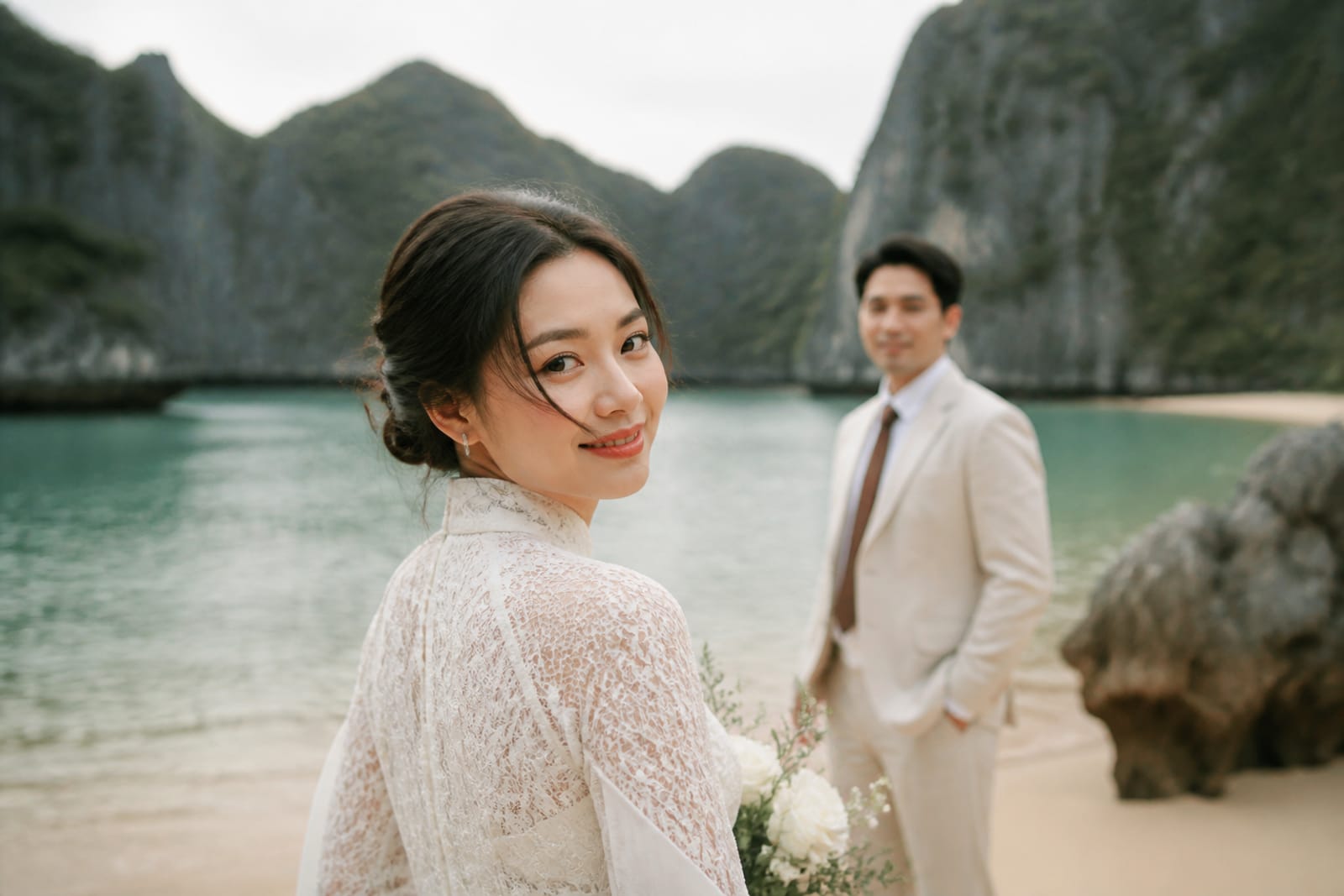
Hanoi to Ha Long is 160 km by car, 2.5–3 hours each way depending on traffic and your boat's port of departure (Tuan Chau, Bai Chay, or Cat Ba). Most couples arrive the evening before (book a hotel), shoot the next full day, and return the following evening. A driver, guide, and photographer coordination adds logistics that Cáo Studio's Hanoi team manages rather than leads on-site—you're hiring local boat operators and a trusted local photographer (or, for outfit, makeup, and creative direction, Cáo coordinates with a local shooter). Entry to Ha Long Bay requires a permit (included in tour bookings); ask the boat operator for confirmation. Meals are often basic on the boat—bring snacks, water, and sunscreen. Weather can shift: pack a waterproof layer even in calm March. Conclusion: plan 2–3 days total, budget for guides and local logistics, and expect a working journey.
---
Which viewpoint or cove should you prioritize for the best light and isolation?
Ha Long Bay has 3,000 limestone islets; most tours hit the same crowded anchors (Surprise Grotto, Ti Top Island). For pre-wedding shoots, request your boat operator steer to quieter northern arms (Lan Ha Bay side) where caves and smaller islets see fewer tour groups—sunrise especially clears these areas. Viewpoint logic: east-facing karsts catch morning sun (warm shadows on your face, silhouettes if backlit); west-facing shores suit golden hour (sun behind you, karsts in warm light). Shore landings vary by season and permit; your guide will know which beaches allow midday breaks. Private or semi-private boats (vs. large tour junks) cost more but guarantee flexibility to linger where light peaks and retreat when it flattens. Document your plan with the operator a week before: route, timing, outfit-change spots, drone zones (if your photographer uses one). Conclusion: sunrise in Lan Ha, golden hour on west-facing stone, saves time and light.
---
What to check before you book
- Local photographer vetting: Ask for Ha Long-specific portfolios (boat light, water reflections, couple movement in confined spaces). Meet or video-call them before committing.
- Boat operator's commercial shooting agreement: Confirm they permit professional photography and understand outfit changes on deck.
- Permit and legal status: Ensure your guide holds valid permits for foreign guests and commercial shoots.
- Weather window: March is safe, but ask the operator to confirm sea forecast 5 days before. Cancellation coverage should be negotiated upfront.
- Outfit logistics: Discuss changing areas (onboard cabin, island shelter) and drying time—salt spray and humidity require quick turnarounds.
- Crew availability: A good boat operates with a fixed crew; hiring an extra spotter or assistant for your shoot should be pre-arranged.
- Drone compliance: If your photographer uses drones, Ha Long Bay requires flight permits—ask who holds them.
---
Ready to explore pre-wedding shoots in Vietnam?
Ha Long Bay is one axis. Many couples pair it with ao dai shoots in Hanoi (the cultural anchor), or book a couple photoshoot at Cáo Studio Hanoi for flexibility on outfits and timeline. For makeup and styling on the morning of a Ha Long adventure, ask about on-location hair & makeup services. Browse pre-wedding and elopement portfolios and the lookbook to see how light, water, and framing work together.
Reach out on WhatsApp to discuss your Ha Long vision, timeline, and budget for coordination or on-site creative direction.
📸 Book on WhatsApp — pre-wedding photoshoot
---
FAQ
Is March crowded at Ha Long Bay?
Tour-boat peaks occur Easter and Tet; mid-March is moderate. Early-morning sunrise shoots see few tourists. Semi-private boats avoid peak-hour anchors entirely. Late March crowds build fast.
Can I rent an ao dai in Hanoi and wear it on the boat?
Yes. Rent from Hanoi, pack it flat, bring a steamer. Salt spray stains silk—wear a shawl over the hem during boat spray, or choose a rental in hardy cotton. Confirm durability with the rental shop.
What if the boat rocks and I can't stay still for the shot?
Professional boat operators position the vessel to minimize yaw. Slower shutter speeds (1/250s+) and wide-angle lenses forgive slight motion. Stay near the centre of the boat, not the rails. Your photographer should have boat-shoot experience.
Do I need a permit to shoot pre-wedding photos in Ha Long Bay?
Foreign tourists don't; commercial shoots require operator permission (usually included in boat bookings). Confirm with your guide. Drone flights need a separate permit—ask your photographer if they hold one.
Can we do a full sunrise-to-sunset shoot in one day?
Yes, but it's 12+ hours on a boat with outfit changes and crew coordination. Most couples book sunrise + golden hour (10 hours) instead. Discuss stamina and rest breaks with your photographer first.
How much is the boat rental for a pre-wedding shoot?
Costs vary by boat type, crew, duration, and season. Ask your local guide or Cáo Studio's Hanoi contact for a referral—they'll quote based on your preferences. It's a separate booking from photography.
FAQ
Is March crowded at Ha Long Bay?
Tour-boat peaks occur Easter and Tet; mid-March is moderate. Early-morning sunrise shoots see few tourists. Semi-private boats avoid peak-hour anchors entirely. Late March crowds build fast.
Can I rent an ao dai in Hanoi and wear it on the boat?
Yes. Rent from Hanoi, pack it flat, bring a steamer. Salt spray stains silk—wear a shawl over the hem during boat spray, or choose a [rental](/ao-dai-rental) in hardy cotton. Confirm durability with the rental shop.
What if the boat rocks and I can't stay still for the shot?
Professional boat operators position the vessel to minimize yaw. Slower shutter speeds (1/250s+) and wide-angle lenses forgive slight motion. Stay near the centre of the boat, not the rails. Your photographer should have boat-shoot experience.
Do I need a permit to shoot pre-wedding photos in Ha Long Bay?
Foreign tourists don't; commercial shoots require operator permission (usually included in boat bookings). Confirm with your guide. Drone flights need a separate permit—ask your photographer if they hold one.
Can we do a full sunrise-to-sunset shoot in one day?
Yes, but it's 12+ hours on a boat with outfit changes and crew coordination. Most couples book sunrise + golden hour (10 hours) instead. Discuss stamina and rest breaks with your photographer first.
How much is the boat rental for a pre-wedding shoot?
Costs vary by boat type, crew, duration, and season. Ask your local guide or Cáo Studio's Hanoi contact for a referral—they'll quote based on your preferences. It's a separate booking from photography.
Ao dai, makeup, hair and a local photographer in Hanoi or Saigon — one WhatsApp message.