/pre-wedding-photoshoot
Pre-wedding photoshoot in Da Lat for Indian couples: planning guide
A pre-wedding photoshoot in Da Lat means a dedicated session (typically 2–4 hours) before your wedding day to capture couple portraits and romantic moments in the cool, pine-covered mountains of Vietnam's central highlands. Da Lat sits at roughly 1,500 m elevation, delivering soft, diffused light even in midday—ideal for photography. The best window runs December to April (dry, clear mornings with misty lakes). Cáo Studio – Makeup & Photoshoot operates in Hanoi, Ho Chi Minh City, and Hoi An; for Da Lat, we recommend scouting local photographers who know seasonal conditions and have shot couples in formal or ao dai attire there. Key factors affecting your choice: season (dry Dec–Apr shoots easier than rainy May–Nov), outfit fit in cool air (layering under ao dai or groom suits), and travel time for hair and makeup on shoot day. Avoid booking the week before Tet (late January–mid February) when services close. ---
Why is Da Lat a popular choice for Indian pre-wedding shoots?
Da Lat's cool, misty landscape offers a sharp visual contrast to tropical lowlands—ideal if you want romantic, moody backdrops without intense heat. The town's colonial architecture, terraced flower gardens, and pine-lined roads suit both traditional and modern couple aesthetics. Indian couples often choose Da Lat for pre-wedding shoots because the mist and soft light flatter skin tone, the cooler air means less sweating during long sessions, and the romantic vibe (pine forests, lakeside paths, waterfalls) aligns with bridal magazine aesthetics. Local vendors—florists, cafés with vintage décor—integrate naturally into shots. The elevation also means fewer midday shadows, so photographers can shoot comfortably from 9 a.m. to 4 p.m. without the harsh contrast of lowland Vietnam.
What is the best time of year to shoot in Da Lat?
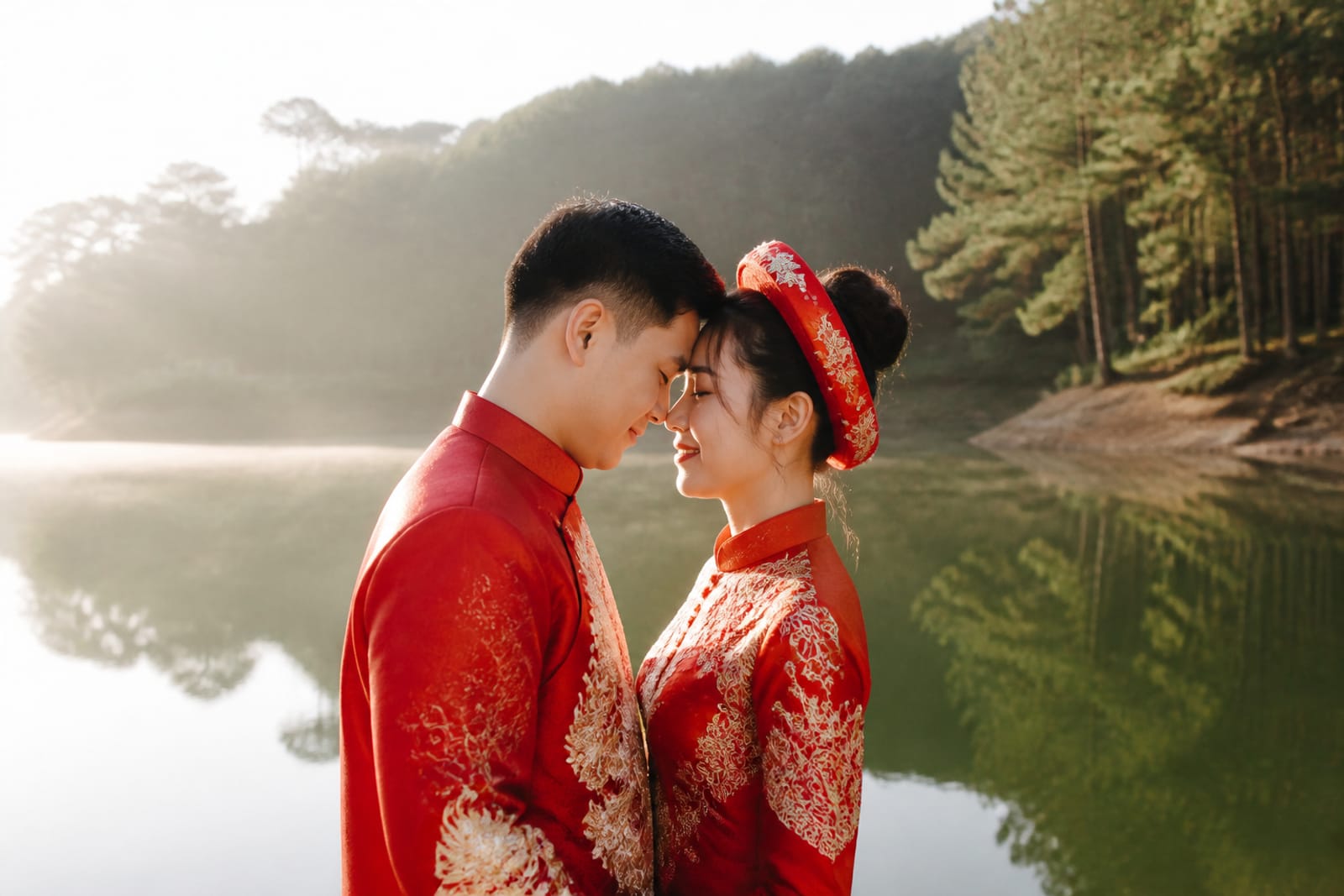
December to April is optimal: dry mornings, stable mist, clear skies, and daytime temps around 15–20°C (wear layers). Avoid May–November (afternoon showers, floods, unpredictable clouds). Late January–mid February (Tet) closes most services and floods landmarks with crowds—book around it. November occasionally brings wild sunflowers (da quy) on hillsides, adding a bonus seasonal element. January–February cherry blossoms appear in some gardens. Early morning (6–7 a.m.) captures mist over lakes; late afternoon (3–5 p.m.) offers golden hour on pine slopes. Conclusion: book December–March for reliability; January–February for seasonal flowers but navigate Tet closures carefully.
How should you choose outfits for Da Lat's cool climate?
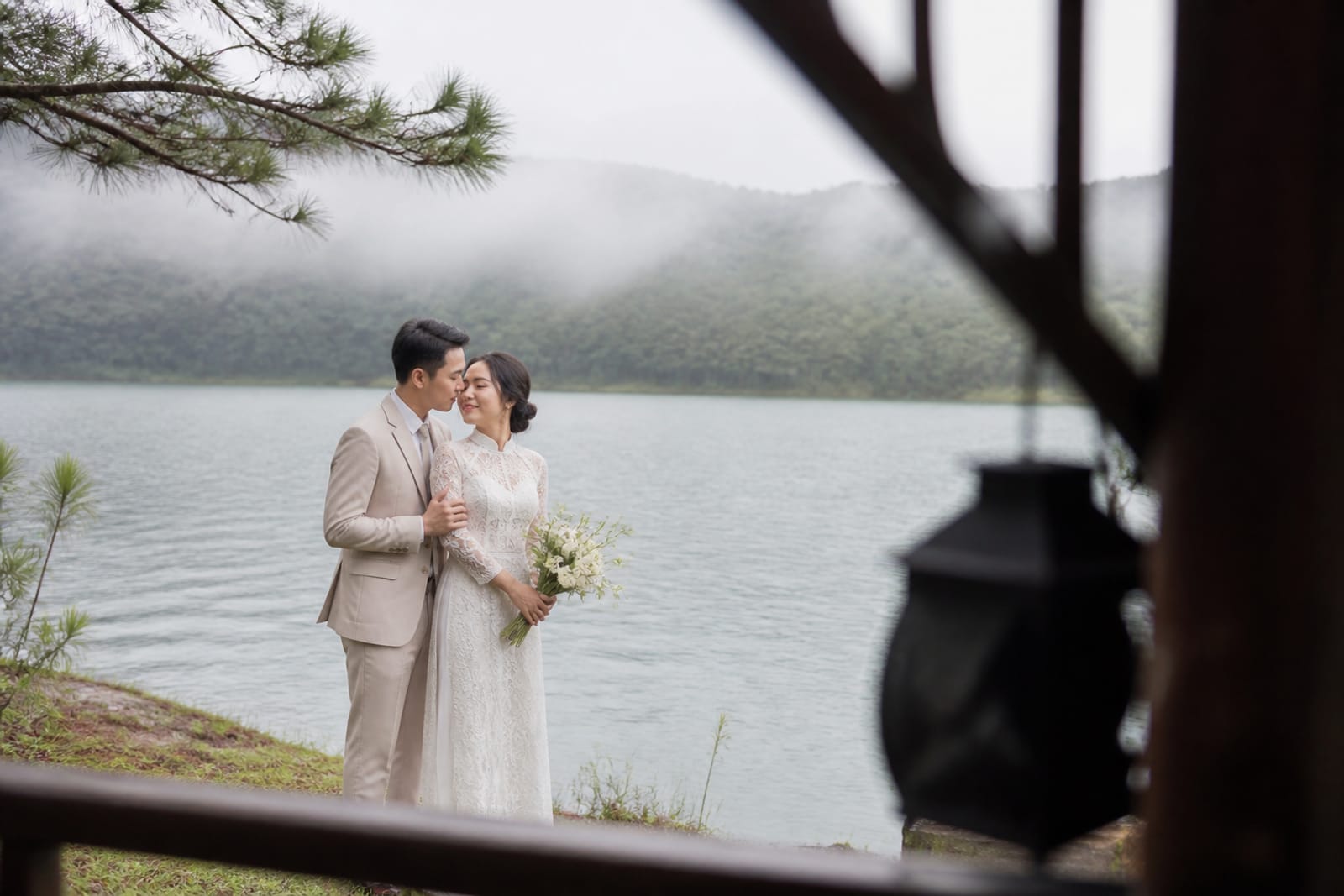
Ao dai works beautifully—its drape suits mist and soft light—but plan layers underneath: thermal leggings, long sleeves under sheer overlays. For Indian bridal wear (lehenga, saree), consider a fitted shawl or dupatta in complementary fabric; the cool air reduces sweat marks. Groom suits in navy or charcoal suit the moody tone. Shoes matter: leather dress shoes may slip on misty, damp paths; consider ankle boots or embellished flats for stability. Avoid heavy makeup in cool air (it can look cakey in soft light); opt for dewy, minimal foundation. Bring a lightweight shrug or silk scarf to drape for romantic shots without compromising dress fit. Hair: loose waves or braids withstand mist better than tight styles. Conclusion: layer smartly, choose slip-resistant shoes, and keep makeup dewy to suit Da Lat's cool, diffused light.
| Outfit choice | Best for | Season/light fit | Why it works |
|---|---|---|---|
| Ao dai + layered thermals | Romantic, cultural blend | Dec–Apr mist | Drape suits soft light; layers manage cool temps |
| Indian lehenga + silk shawl | Vibrant, traditional | Feb–Mar dry mornings | Color pops against grey-green pines; shawl adds movement |
| Groom suit (charcoal/navy) | Formal, moody aesthetic | Any dry day, late afternoon | Rich tones match forest tone; avoids wash-out in mist |
| Saree + embroidered blouse | Elegant, minimal bulk | Mar–Apr warm mornings | Light fabric breathes; drape photographs well in diffused light |
What are the main photo locations in Da Lat, and how does light differ?
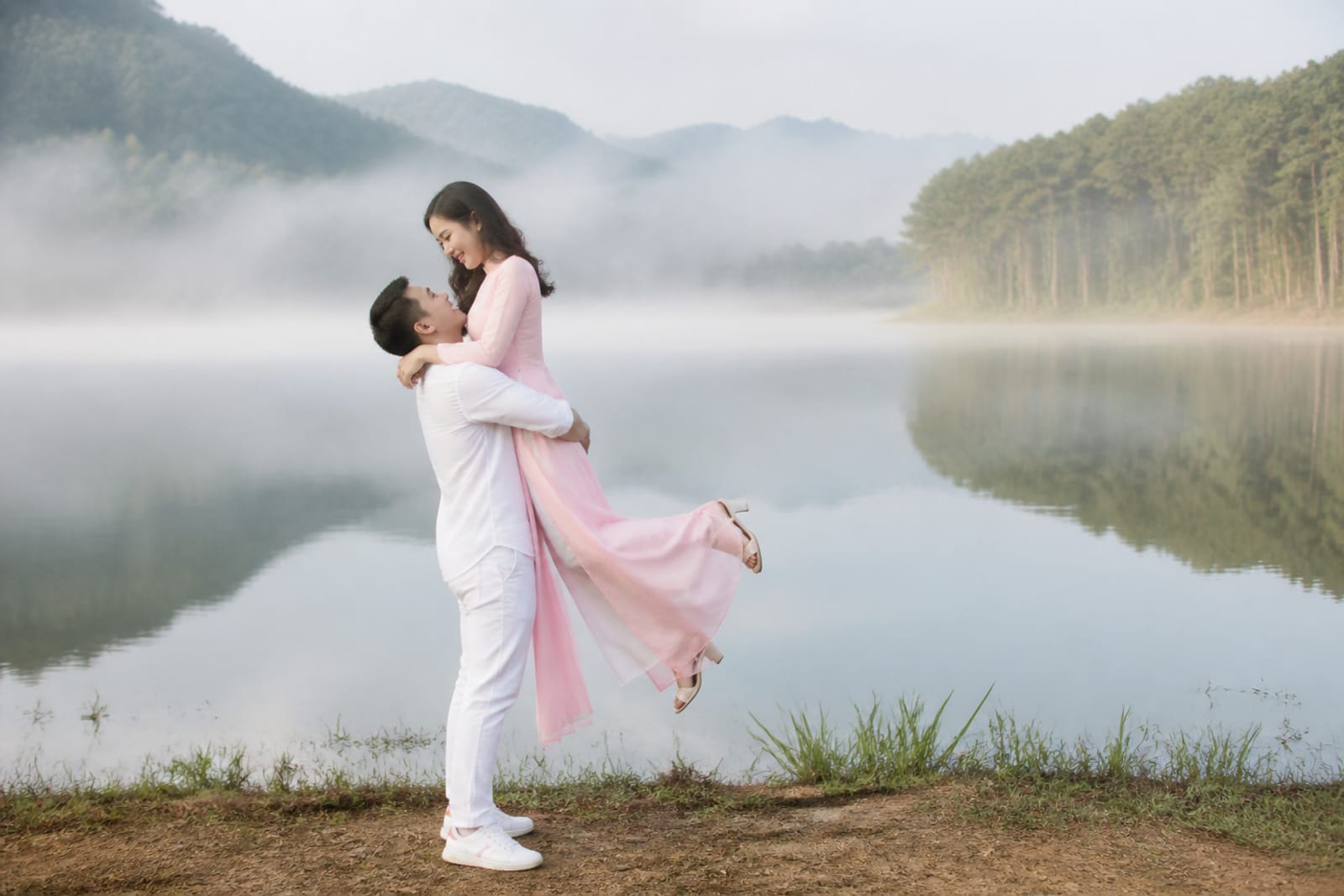
Xuan Huong Lake (early morning, 6–7 a.m.): mist rises off water, soft backlighting, damp grounds require slip-proof shoes. Best for silhouette and romantic couple shots; plan 90 min.
Pine forests (Valley of Love, Pine Hill): diffused greenery light, cool air, winding paths. Ideal 9 a.m.–12 p.m.; watch for tour groups mid-morning.
Flower gardens (Da Lat Flower Park): structured blooms provide foreground framing; entry tickets required. Light is flattering 8–10 a.m. and 3–4 p.m.; midday too bright.
Waterfalls (Pongour, Dalat): mist and spray create dreamy backdrops. Shoot early (7–9 a.m.) before crowds; paths are slippery and muddy—wear grips.
Colonial architecture (Hang Nga Guesthouse, Dalat Palace): textured walls, arched doorways suit close portraits. Any time, but afternoon gold hour (3–4 p.m.) is most flattering.
Terraced vegetable fields (outskirts): geometric patterns, soft light. Morning shoots (8–10 a.m.) avoid harsh shadows. Travel time from town ~30 min. Conclusion: mix lakeside (mist), forest (soft light), and structured spots (garden, architecture) for variety; book shoots that span 8 a.m.–4 p.m. to capture multiple locations.
📸 Book on WhatsApp — ao dai photoshoot
How do you find and vet a photographer for Da Lat if you're not using Cáo Studio?
Since Cáo Studio operates in Hanoi, Ho Chi Minh City, and Hoi An (ask on WhatsApp for Hoi An availability), here's how to source a local Da Lat photographer:
- Check Instagram hashtags: #DaLatWeddingPhotographer, #DaLatPreWeddingPhotos. Look for 10+ posts of couples in similar cultural attire (ao dai, Indian bridal). Avoid single-shot portfolios.
- Ask your wedding planner or hotel concierge: they know reliable locals and can vouch for reliability (punctuality, weather adaptability).
- Request a location scout: a good photographer knows which paths are muddy after rain, where crowds peak, and best light angles. Ask them to name 3–4 favorite spots before booking.
- Confirm experience with your attire: show them your ao dai, lehenga, or groom suit. Ask how they'd pose you in it. Poor answers = move on.
- Verify backup plan: ask what happens if weather turns (rain, heavy mist). Do they reshoot? Offer an indoor session?
- Check recent testimonials: not Instagram likes—actual written feedback from couples mentioning reliability, editing speed, and how they felt during the shoot.
- Agree on deliverables in writing: number of edited photos, delivery timeline, raw file access, use rights. Misunderstandings happen fast in cultural shoots.
Conclusion: vet photographers on location experience, cultural knowledge, and clear communication before signing a contract.
---
Comparison: Cáo Studio vs. local Da Lat photographers
| Factor | Cáo Studio (Hanoi/HCMC/Hoi An) | Local Da Lat photographer |
|---|---|---|
| Logistics | Travel fee + coordination; known process | Based in Da Lat; immediate location knowledge |
| Cultural touch | Vietnamese & Western teams; ao dai expertise | Likely familiar with Indian & Vietnamese fusion shoots |
| Weather pivot | Operates multiple zones; rescheduling is standard | Knows Da Lat rain patterns; may offer indoor backup |
| Makeup & hair | On-site teams at Hanoi/HCMC/Hoi An; hotel visits available | Must coordinate separately or book local MUA |
| Editing timeline | Confirmed process on WhatsApp | Varies; clarify in contract |
| Cost factors | Travel time + team day rate | Lower day rate; potential extra for makeup/styling |
When to book Cáo Studio: you want consistency, full-service hair/makeup coordination, and are comfortable with travel logistics. Book when combining a Da Lat shoot with sessions in Hoi An or other service areas.
When to book local: you're on a tight timeline, want someone who shoots Da Lat weekly, or prefer direct negotiation with one photographer.
---
What to check before you book
- Dry season window: confirm your dates fall in Dec–Apr. Rain or heavy mist mid-May–Nov may require rescheduling.
- Outfit fit on cool air: try on your ao dai, lehenga, or suit indoors at normal room temperature (not air-conditioned studios). Check for layers, shoe traction, and makeup melt-resistance.
- Photographer's location experience: ask for 5+ recent Da Lat couple shoots. Request testimonials mentioning light, outfit handling, and rescheduling if weather shifted.
- Makeup & hair plan: if not using Cáo Studio's hotel service, book a local MUA with pre-wedding bridal experience. Test makeup in cool, misty conditions (not studio lighting). Clarify timing: aim for hair/makeup 2 hours before first shot.
- Transport & shot list: confirm all location travel times (Xuan Huong Lake vs. flower gardens; some are 45 min apart). Agree on a shot checklist so nothing essential is skipped.
- Delivery & editing: get in writing: number of edited photos, timeline (e.g., 50% in 1 week, 100% in 3 weeks), raw file access, and re-edit policy if you dislike tone/crop.
- Backup date & weather clause: ask photographer's policy if rain hits or mist is too heavy. Can you reshoot for free? On what dates? Confirm in contract.
---
Next steps: booking your Da Lat pre-wedding shoot
If you're considering Cáo Studio services for other locations (Hanoi, Ho Chi Minh City, Hoi An):
Message WhatsApp +84 338 762 340 to discuss pre-wedding options, makeup & hair coordination, and ao dai rental or styling. We can also advise on combining a Da Lat shoot with sessions in Hoi An or another service area.
If you're booking a local Da Lat photographer:
Use the vetting checklist above. Get clear written terms on deliverables, weather rescheduling, and editing timeline. Plan a site visit 1–2 weeks before your shoot to scout light and paths.
For comparison: review our pre-wedding photoshoot pillar page to understand session structures, lookbook to see couple framing styles, and FAQ for common questions.
📸 Book on WhatsApp — ao dai photoshoot
---
FAQ
Can we shoot pre-wedding in Da Lat in August?
Not ideal. August is mid-rainy season (May–Nov); expect afternoon downpours, heavy mist, and muddy paths. Dry season (Dec–Apr) offers stable mornings. If you must shoot August, plan early morning sessions (6–9 a.m.) and confirm weather rescheduling with your photographer. A local Da Lat photographer knows microclimates better than outsiders.
What's the best time of day for couple shots in Da Lat?
Early morning (6–7 a.m.) captures mist and soft backlighting over lakes. Mid-morning (9–11 a.m.) offers even, diffused light in forests. Late afternoon (3–4 p.m.) delivers warm golden tones on architecture and pine slopes. Avoid 12–2 p.m. (harsh overhead, even at high elevation). Combine early and late for diverse moods across a 6-hour shoot.
Do we need a permit to shoot in Da Lat gardens and public spaces?
Most public spots (Xuan Huong Lake, roads, forests) allow unpaid photography. Da Lat Flower Park and some colonial sites (Dalat Palace) require entry tickets—check current pricing on their official sites. Private gardens (Hang Nga Guesthouse) may ask permission. Confirm all locations and permits with your photographer before booking.
How should we prepare our ao dai for cool, misty conditions?
Layer thermal leggings or long undershirts underneath to manage 15–20°C temps and moisture. Choose heavier silk or silk-blend ao dai fabric (not gossamer) to hold shape in mist. Test makeup beforehand in cool rooms; use waterproof primer and dewy setting spray. Bring a shrug or silk scarf for draping without compromising the dress line. Wear slip-resistant shoes (leather boots, embellished flats) on damp paths.
Can we combine Indian bridal wear and ao dai in one session?
Yes. Many couples do outfit changes: ao dai for romantic forest shots, lehenga or saree for vibrant garden and architectural shots. Plan 30 min per outfit change (makeup touch-up, styling). A 4-hour session fits 2–3 looks comfortably. Local Da Lat photographers familiar with Indian weddings know how to frame both styles. Cáo Studio's makeup & hair team (available in Hoi An or as hotel visits) can help coordinate these transitions.
What's the difference between pre-wedding shoot and engagement shoot?
Pre-wedding typically happens 4–12 weeks before your wedding and is a full couple session (2–4 hours, multiple outfits, curated locations). Engagement is earlier, often casual, fewer outfit changes, and focuses on your story/connection. Both suit Da Lat. If unsure which fits your timeline, ask your photographer or message us on WhatsApp for guidance on framing and logistics.
FAQ
Can we shoot pre-wedding in Da Lat in August?
Not ideal. August is mid-rainy season (May–Nov); expect afternoon downpours, heavy mist, and muddy paths. Dry season (Dec–Apr) offers stable mornings. If you must shoot August, plan early morning sessions (6–9 a.m.) and confirm weather rescheduling with your photographer. A local Da Lat photographer knows microclimates better than outsiders.
What's the best time of day for couple shots in Da Lat?
Early morning (6–7 a.m.) captures mist and soft backlighting over lakes. Mid-morning (9–11 a.m.) offers even, diffused light in forests. Late afternoon (3–4 p.m.) delivers warm golden tones on architecture and pine slopes. Avoid 12–2 p.m. (harsh overhead, even at high elevation). Combine early and late for diverse moods across a 6-hour shoot.
Do we need a permit to shoot in Da Lat gardens and public spaces?
Most public spots (Xuan Huong Lake, roads, forests) allow unpaid photography. Da Lat Flower Park and some colonial sites (Dalat Palace) require entry tickets—check current pricing on their official sites. Private gardens (Hang Nga Guesthouse) may ask permission. Confirm all locations and permits with your photographer before booking.
How should we prepare our ao dai for cool, misty conditions?
Layer thermal leggings or long undershirts underneath to manage 15–20°C temps and moisture. Choose heavier silk or silk-blend ao dai fabric (not gossamer) to hold shape in mist. Test makeup beforehand in cool rooms; use waterproof primer and dewy setting spray. Bring a shrug or silk scarf for draping without compromising the dress line. Wear slip-resistant shoes (leather boots, embellished flats) on damp paths.
Can we combine Indian bridal wear and ao dai in one session?
Yes. Many couples do outfit changes: ao dai for romantic forest shots, lehenga or saree for vibrant garden and architectural shots. Plan 30 min per outfit change (makeup touch-up, styling). A 4-hour session fits 2–3 looks comfortably. Local Da Lat photographers familiar with Indian weddings know how to frame both styles. Cáo Studio's makeup & hair team (available in Hoi An or as hotel visits) can help coordinate these transitions.
What's the difference between pre-wedding shoot and engagement shoot?
Pre-wedding typically happens 4–12 weeks before your wedding and is a full couple session (2–4 hours, multiple outfits, curated locations). Engagement is earlier, often casual, fewer outfit changes, and focuses on your story/connection. Both suit Da Lat. If unsure which fits your timeline, ask your photographer or message us on WhatsApp for guidance on framing and logistics.
Ao dai, makeup, hair and a local photographer in Hanoi or Saigon — one WhatsApp message.