/pre-wedding-photoshoot
Pre-wedding photoshoot in Da Lat for Japanese couples
A pre-wedding photoshoot in Da Lat works best during the dry season (December–April), when mornings bring mist over pine hills and lakes—ideal for soft, romantic light. The highland climate stays cool year-round (roughly 15–25°C), so couples can layer without overheating. Sessions typically run 3–4 hours, covering landmarks like Tuyen Lam Lake, Valley of Love, and Flower Gardens; shoots happen early morning (6–8 a.m.) to catch mist and avoid afternoon heat. Japanese couples often prefer couple & family photoshoots that honor local temple etiquette—remove shoes indoors, avoid loud voices, photograph respectfully. Cáo Studio – Makeup & Photoshoot (based in Hanoi, Ho Chi Minh City, and Hoi An) does not operate a Da Lat branch; instead, this guide walks you through planning locally or traveling with a Hanoi team to Da Lat by appointment. ---
Why Da Lat suits Japanese couples seeking intimacy
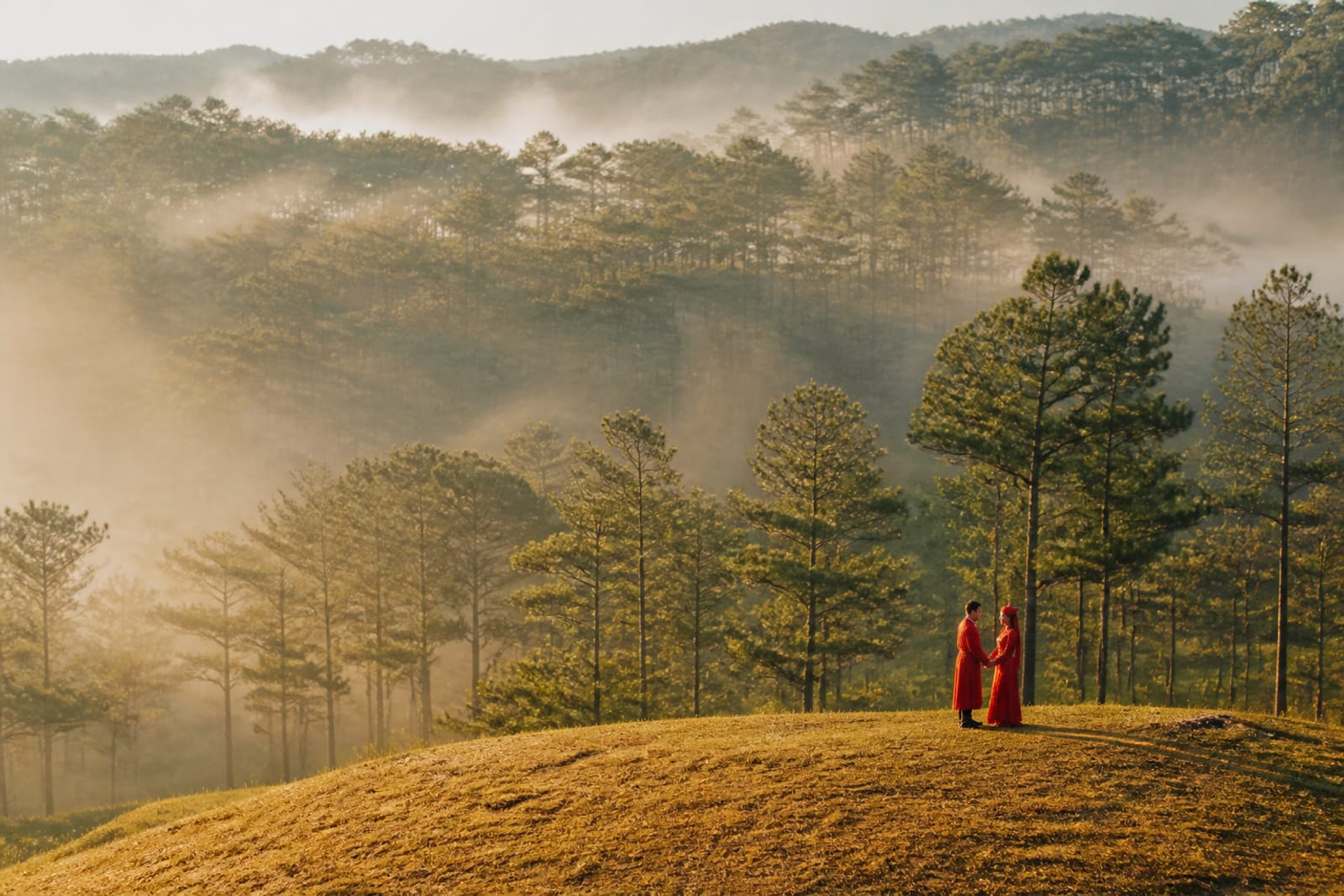
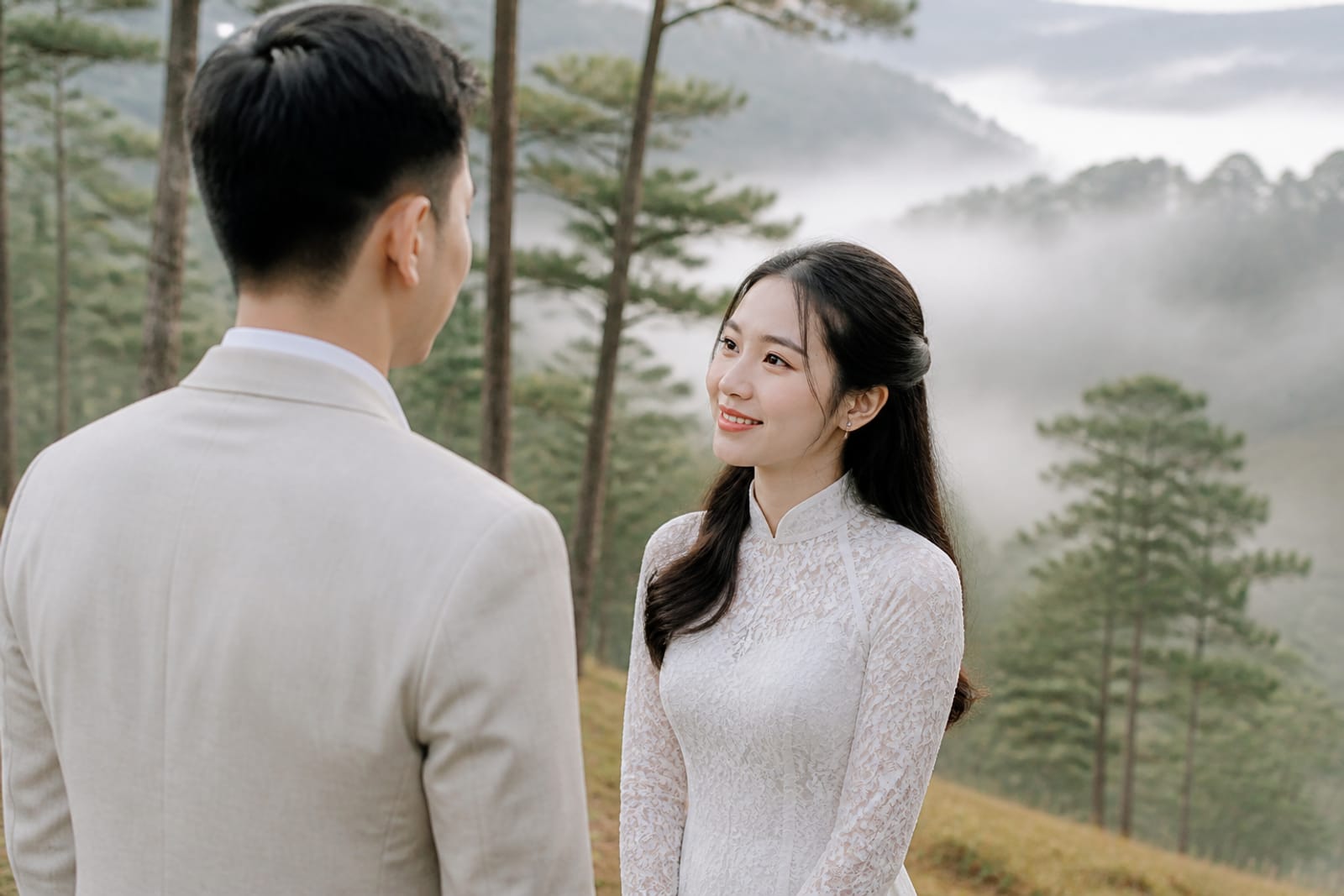
Da Lat's highland romance—misty mornings, quiet pine forests, soft diffused light—matches the aesthetic Japanese couples often chase in pre-wedding imagery. Unlike Hanoi's urban chaos or Ho Chi Minh City's tropical heat, Da Lat offers isolation and mood. Mist lingers from sunrise to mid-morning (6–9 a.m.), creating natural soft-focus without harsh shadows. The cool, crisp air means couples stay comfortable in layered outfits—flowing dresses over long sleeves, light jackets, or traditional áo dài without sweating. Japanese couples frequently cite wanting "quiet moments" and "nature-only backgrounds" in their briefs; Da Lat delivers both. Winter mist (Dec–Feb) is thickest; summer (May–Sep) brings afternoon showers but rarely ruins early shoots. The town's slower pace also suits couples unaccustomed to Vietnam's noise—fewer motorcycles, less traffic, more space to breathe between frames.
Best months and light windows for shooting in Da Lat
Dry season (December–April) is peak: mist is thickest at dawn, skies stay overcast (diffused light), and rain is rare. January–February often brings cherry blossoms near the Flower Gardens and mist so dense you lose the horizon—romantic, moody, timeless. March–April is sunnier but still cool and misty in early hours. Avoid booking mid-May through November; afternoon downpours are frequent and unpredictable, though mornings (6–9 a.m.) often stay dry. For light timing, arrive on-site by 6 a.m.; mist peaks at 6:30–8 a.m., then burns away by 10 a.m. As mist clears, pine forests and lake reflections emerge—secondary light window. Sunset (5–6 p.m.) is warm but often hazy; use it for silhouettes or backlighting through mist. Overcast days (common Dec–Mar) are actually ideal: no harsh shadows, skin tones stay even, colors pop without blown highlights.
📸 Book on WhatsApp — pre-wedding photoshoot | 💄 Makeup & hair at your hotel
Outfit strategy: layering, áo dài fit, and local dress codes
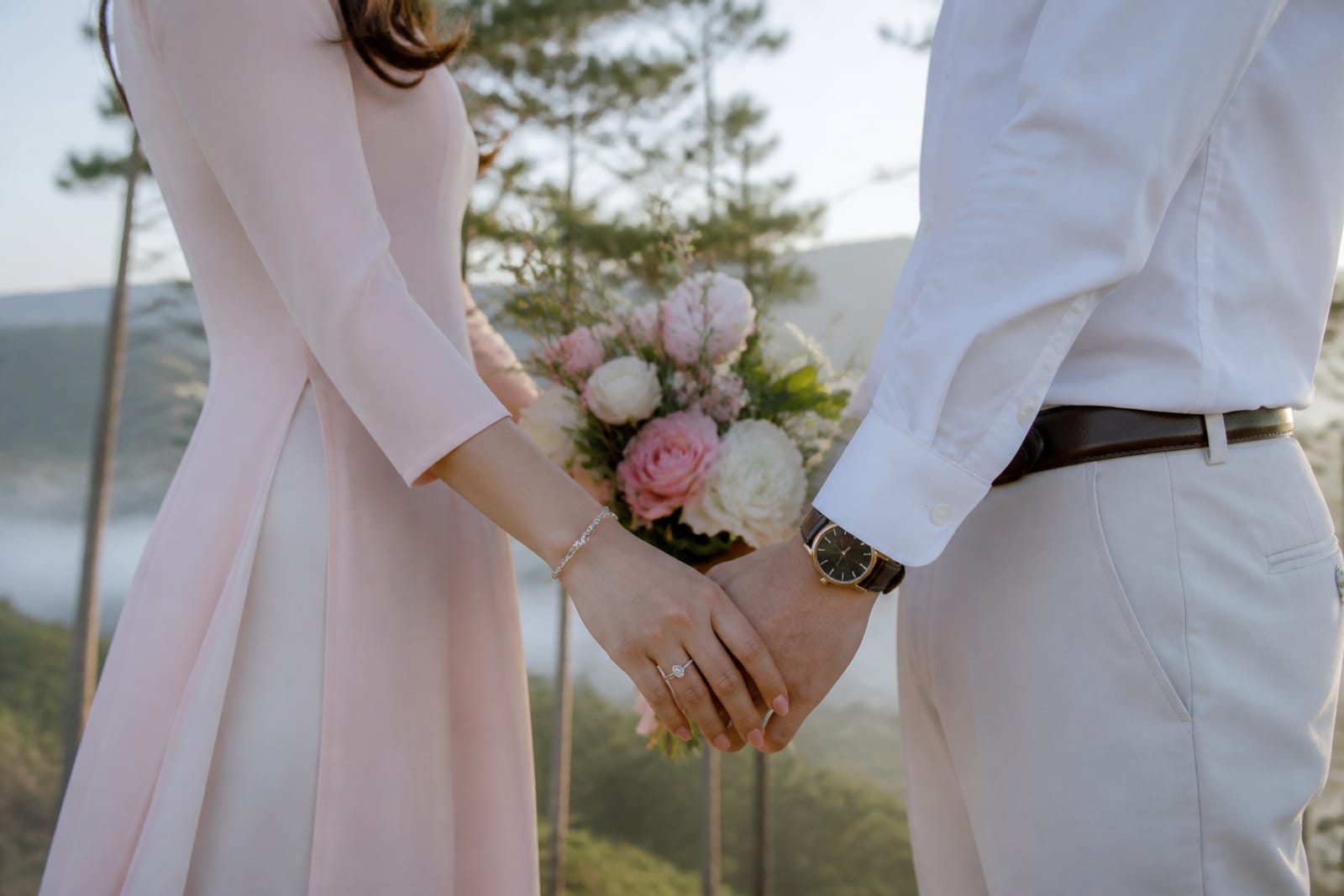
Pre-wedding in Da Lat demands smart layering. Mornings are 12–15°C; by noon, 20–22°C. Bring a light cardigan, denim jacket, or faux-fur wrap—remove it as the sun climbs. Áo dài (the traditional Vietnamese tunic) is iconic but requires fitted underpinnings: wear a long slip or fitted leggings underneath to prevent wrinkles and maintain silhouette in mist and movement. If you rent áo dài locally or through áo dài rental, confirm the slip and pants fit first—too loose, and fabric photographs as shapeless in soft light. Japanese brides often layer áo dài over long-sleeve white shirts for texture and warmth; this works beautifully in mist. Grooms can wear formal suits (check humidity tolerance—Da Lat stays cool, so suits won't wrinkle as fast as in the south) or áo dài with dress pants. Avoid all-black or heavy fabrics that absorb mist and look flat. Pastels, cream, soft reds, and earth tones photograph well against grey mist and green pines. Flat shoes or ankle boots are mandatory—Da Lat's paths are muddy, especially near Tuyen Lam Lake and the Flower Gardens. Heels will sink and break; boots keep your feet dry and look elegant.
Visit temples or pagodas (Hang Nga, Linh Phuoc) respectfully: wear covered shoulders and knees, remove shoes at entrances, and never photograph Buddha statues close-up unless a monk gives permission. These etiquette points are crucial for Japanese couples accustomed to shrine photography at home—Da Lat temples operate on similar respect-first principles.
Choosing a photographer: local hire vs. traveling studio
| Option | Best for | Logistics | Why choose it |
|---|---|---|---|
| Local Da Lat photographer | Budget-conscious, 1–2 location shoots, minimal travel coordination | Meet on-site; no studio prep needed; quick turnaround | Knows light, weather patterns, and access roads; lower travel costs; direct local contact |
| Hanoi studio (Cáo Studio team on appointment) | Japanese couples wanting familiar briefing, makeup/hair prep, consistent editing style | Team travels; requires advance booking; makeup at hotel or on-site; longer coordination | Bilingual communication, pre-wedding experience with Japanese aesthetics, professional hair/makeup included, edited gallery within agreed timeframe |
| Solo Vietnam-based photographer (not Cáo Studio) | Specific artistic vision, flexible scheduling | Coordinate via email/messaging; test portfolio first | Potentially lower cost than studios; full creative control; but verify experience with pre-wedding and Japanese client expectations |
Hiring a local Da Lat photographer: ask your hotel concierge for referrals or search Instagram for "#Da Lat pre-wedding" filtered by local tags. Look for portfolios showing mist, early-morning shoots, and natural couple moments—not overly edited. Message them directly on Instagram; confirm they've shot pre-weddings (not just casual tourists). Agree on session length, number of locations, delivery timeline (usually 2–4 weeks for edited files), and a deposit. Meet in person the day before to scout locations and discuss light. Avoid photographers who claim they can "fix" poor light in editing—mist and mood require real timing.
Traveling with Cáo Studio – Makeup & Photoshoot: the team is based in Hanoi but can book Da Lat shoots by appointment. Contact them via WhatsApp (+84 338 762 340) with your dates, preferred locations, outfit count, and any makeup/hair needs. They'll quote based on travel time (Hanoi to Da Lat is roughly 11–12 hours by car), session length, and inclusions. Japanese couples benefit from pre-briefing via video call, makeup and hair services at your hotel (or on location), and a consistent aesthetic across their portfolio. Turnaround for edited files is confirmed on WhatsApp.
Iconic Da Lat locations and timing logistics
Tuyen Lam Lake – best at 6:30–8 a.m. (mist hangs over water, pine forest silhouettes emerge). Parking is nearby; walk to the lakeside boardwalk (15 min, flat, no special access needed). Expect local joggers but minimal crowds before 8 a.m. Bring bug spray.
Valley of Love (Thung Lung Tinh Yeu) – grassy meadows with pine groves, ideal for movement shots (walking, hand-in-hand). Shoot 7–9 a.m. for soft light and mist in the background. Entry requires a fee (check current price on the official site). Path is muddy after rain; wear boots.
Hang Nga Pagoda – sculptural cave temple, unique backdrops. Shoot early (before 9 a.m.) to avoid tour groups. Wear covered shoulders, remove shoes at sanctuary. Lighting is tricky (cave interiors are dark); bring a fast lens or allow extra time for setup. Respect "no tripod" signs.
Flower Gardens (Dalat Flower Gardens) – best in Dec–Feb when blooms peak (cherry blossoms, wildflowers). Entry required (check official price). Avoid weekends (10 a.m.–4 p.m. is crowded); book for early morning or weekday shoots. Paths are wide and maintained—easier in heels than Tuyen Lam.
Da Lat Market (Cho Da Lat) – vibrant, narrow alleys, local color. Shoot 6–7 a.m. before vendor setup peaks. Respect vendors' right to refuse photo. Bright clothing pops here; muted tones blend into stalls. Keep moving (vendors get annoyed if you block stalls).
A typical session covers 2–3 locations in 4 hours (including travel, setup, outfit changes, and rest). Plan 20–30 minutes per location for positioning, multiple angles, and natural moments.
🌸 See the lookbook | 📸 Book on WhatsApp — proposal & anniversary
What to check before booking your Da Lat pre-wedding shoot
1. Photographer experience with couples and mist shoots. Ask for portfolios specifically showing pre-weddings in Da Lat or similar highland mist settings. Generic vacation photos don't guarantee they'll nail romantic, moody light.
2. Makeup and hair capability. If booking locally, confirm whether makeup is included or whether you need to hire separately. Cáo Studio includes makeup/hair coordination on appointment; check what's covered on WhatsApp before committing.
3. Weather backup plan. Ask: if rain arrives mid-shoot, do you reschedule, relocate to indoors, or shoot anyway? Heavy rain (rare in dry season) can derail the day; clarify refund or rebooking policy in writing.
4. Delivery timeline and format. When do you get edited photos? Do they send a digital gallery, USB drive, or cloud link? How many shots are culled (best-of) vs. full gallery? Confirm editing style matches your vision (Japanese couples often prefer natural, unfiltered skin tones over heavy makeup in the finals).
5. Outfit and styling prep. Will the photographer or makeup artist advise on what to bring? Ask them to review your outfit choice beforehand (via photo or video call). Avoid surprises on the shoot day.
6. Travel and logistics. If hiring locally, how do you get to each location? Is there parking? Do they meet you at the hotel? Confirm transport logistics to avoid time waste. Cáo Studio coordinates logistics on WhatsApp.
7. Copyright and usage rights. Can you print and share photos on social media or in wedding materials? Clarify before signing.
---
Alternative: blend Da Lat with an urban shoot in Hanoi or Ho Chi Minh City
If you're already traveling through Vietnam, consider splitting your pre-wedding across Da Lat (nature, mist) and Hanoi or Ho Chi Minh City (urban, cultural). Cáo Studio has branches in Hanoi and Saigon (Ho Chi Minh City), and can coordinate a multi-city shoot: one day in Da Lat (hired locally or with the Hanoi team traveling), then 1–2 days in Hanoi for ao dai photoshoot or urban couple sessions. This approach gives you range—intimate nature, cultural depth, city landmarks—and spreads the shoot across 2–3 days for fresher energy and outfit variety. Hanoi to Da Lat travel takes 11–12 hours by car; factor in an overnight or rest day between locations.
💄 Makeup & hair at your hotel | 📸 Book on WhatsApp — couple photoshoot
---
FAQ
Is December–February really the best time to shoot in Da Lat, or is it the most crowded?
December–February has the thickest mist and coolest temperatures, ideal for aesthetic pre-wedding shots. Tourist crowds peak during Tet (late January–mid-February) at major landmarks, but early-morning shoots (6–8 a.m.) avoid them. Mist is thickest Dec–Jan; Feb–Mar is slightly sunnier but still misty. Budget extra time on peak-season days.
Do I need to hire a professional makeup artist, or can I do my own makeup for a Da Lat shoot?
Professional makeup ensures your face reads well in soft, diffused light and survives long hours and temperature changes. Mist and cool air won't wilt professional makeup as quickly as heavy tourist-day makeup. If hiring locally, ask the photographer for referrals; Cáo Studio includes makeup/hair prep on Da Lat shoots by appointment—confirm via WhatsApp.
Can we shoot in the rainy season (May–November) if we go early in the morning?
Mornings (6–9 a.m.) are often dry even in rainy season, but afternoon showers are frequent and unpredictable. You'd lose the mist aesthetic (rain clouds are hazy, not romantic mist) and risk cut sessions if storms arrive. Dry season (Dec–Apr) is strongly recommended for reliability and mood.
How much does a pre-wedding shoot in Da Lat cost, and who's cheaper—a local photographer or Cáo Studio?
Cost varies by session length, locations, inclusions (makeup, outfits, number of edited files), and travel distance. Cáo Studio quotes are sent on WhatsApp based on your specifics; local photographers typically quote lower base rates but may charge separately for makeup and travel. Request quotes from 2–3 photographers to compare what's included—don't assume the cheapest option covers all services.
We're flying from Japan and only have 2 days in Da Lat—is that enough time?
Yes. Dedicate one full day (morning start, 4–5 hours) to the shoot across 2–3 locations, then rest and explore on day two. If you want makeup/hair prep and location scouting beforehand, add a half-day. Hire locally to avoid studio travel time, or book Cáo Studio in advance so they can plan travel from Hanoi.
Do temples in Da Lat have specific photography rules or restrictions?
Most temples welcome photography in public areas but forbid close-ups of Buddha statues and require covered shoulders and knees. Always ask a monk or staff member before shooting. Hang Nga Pagoda and Linh Phuoc Pagoda are pre-wedding favorites; respect their rules, and you'll get stunning shots.
Should we rent áo dài in Hanoi before traveling to Da Lat, or rent locally?
Renting in Hanoi via áo dài rental gives you time to fit and alter if needed. Renting in Da Lat is possible (ask your hotel) but offers less choice and no alteration buffer. If booking with Cáo Studio, they can advise on rental logistics. Either way, confirm the slip and fit a few days before the shoot.
FAQ
Is December–February really the best time to shoot in Da Lat, or is it the most crowded?
December–February has the thickest mist and coolest temperatures, ideal for aesthetic pre-wedding shots. Tourist crowds peak during Tet (late January–mid-February) at major landmarks, but early-morning shoots (6–8 a.m.) avoid them. Mist is thickest Dec–Jan; Feb–Mar is slightly sunnier but still misty. Budget extra time on peak-season days.
Do I need to hire a professional makeup artist, or can I do my own makeup for a Da Lat shoot?
Professional makeup ensures your face reads well in soft, diffused light and survives long hours and temperature changes. Mist and cool air won't wilt professional makeup as quickly as heavy tourist-day makeup. If hiring locally, ask the photographer for referrals; Cáo Studio includes makeup/hair prep on Da Lat shoots by appointment—confirm via WhatsApp.
Can we shoot in the rainy season (May–November) if we go early in the morning?
Mornings (6–9 a.m.) are often dry even in rainy season, but afternoon showers are frequent and unpredictable. You'd lose the mist aesthetic (rain clouds are hazy, not romantic mist) and risk cut sessions if storms arrive. Dry season (Dec–Apr) is strongly recommended for reliability and mood.
How much does a pre-wedding shoot in Da Lat cost, and who's cheaper—a local photographer or Cáo Studio?
Cost varies by session length, locations, inclusions (makeup, outfits, number of edited files), and travel distance. Cáo Studio quotes are sent on WhatsApp based on your specifics; local photographers typically quote lower base rates but may charge separately for makeup and travel. Request quotes from 2–3 photographers to compare what's included—don't assume the cheapest option covers all services.
We're flying from Japan and only have 2 days in Da Lat—is that enough time?
Yes. Dedicate one full day (morning start, 4–5 hours) to the shoot across 2–3 locations, then rest and explore on day two. If you want makeup/hair prep and location scouting beforehand, add a half-day. Hire locally to avoid studio travel time, or book Cáo Studio in advance so they can plan travel from Hanoi.
Do temples in Da Lat have specific photography rules or restrictions?
Most temples welcome photography in public areas but forbid close-ups of Buddha statues and require covered shoulders and knees. Always ask a monk or staff member before shooting. Hang Nga Pagoda and Linh Phuoc Pagoda are pre-wedding favorites; respect their rules, and you'll get stunning shots.
Should we rent áo dài in Hanoi before traveling to Da Lat, or rent locally?
Renting in Hanoi via [áo dài rental](/ao-dai-rental) gives you time to fit and alter if needed. Renting in Da Lat is possible (ask your hotel) but offers less choice and no alteration buffer. If booking with Cáo Studio, they can advise on rental logistics. Either way, confirm the slip and fit a few days before the shoot.
Ao dai, makeup, hair and a local photographer in Hanoi or Saigon — one WhatsApp message.